


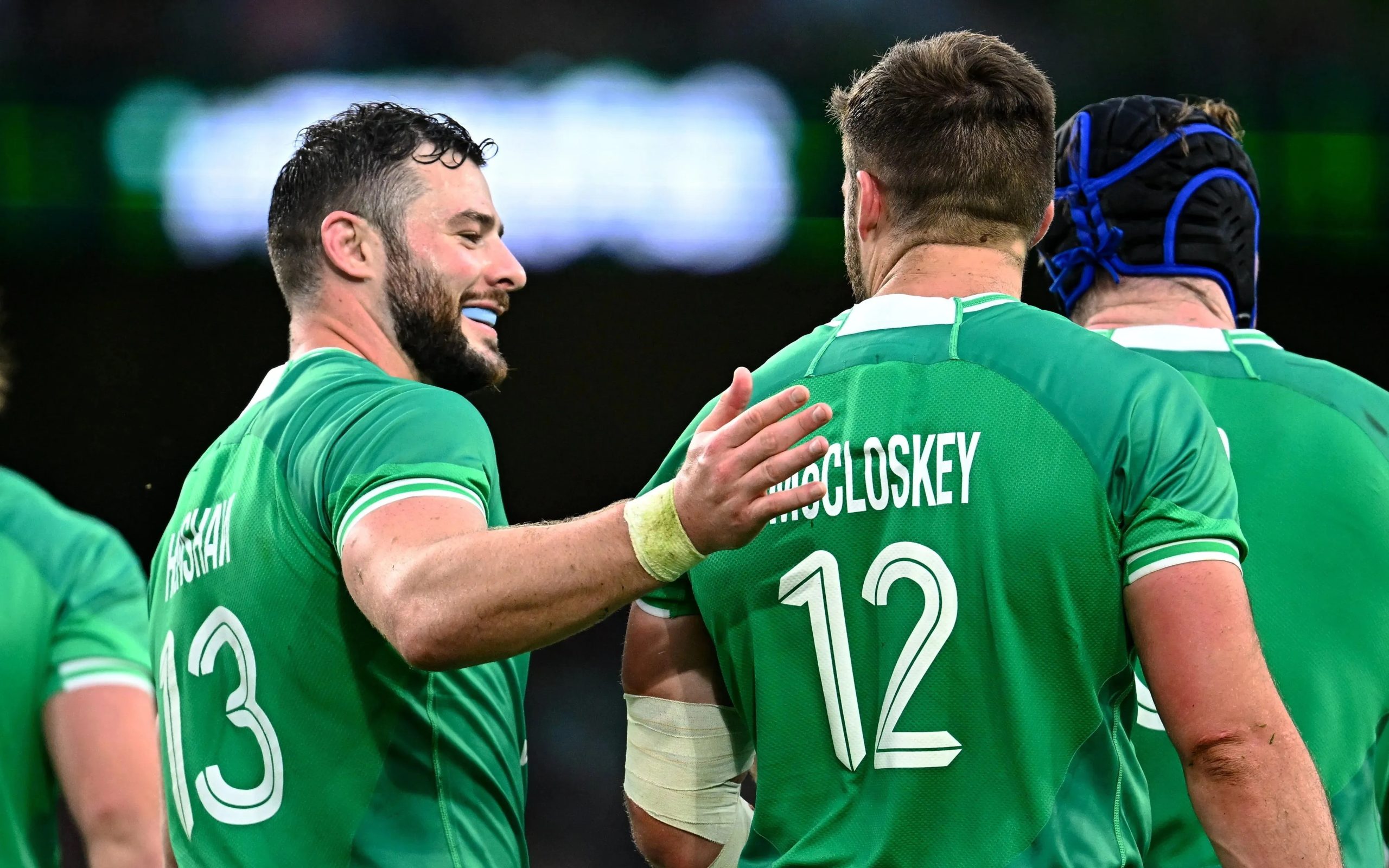
Andy Farrell spoke about “clunkiness” in the direct aftermath of this game as if it was something he was surprised to see. That took me a little off guard on hearing it because I genuinely would have been surprised if we didn’t look clunky, given the number of changes we saw from the cohesive Ireland matchday 23 that everyone – our opponents included – could name off by. heart at this stage.
Farrell’s demeanour after the game was that of someone who’d ordered a fish curry at a new Indian restaurant only to find a fish head and tail staring back at him when the plates drop. It is what he ordered, but he had something else in mind, I feel.
Whenever I watch rotated versions of Andy Farrell’s Ireland, I get the feeling of that fishhead curry plonking down in front of me. Yes, I eat fish. Yes, I enjoy fish. Yes, I enjoy fish curry. No, I don’t want to see the actual fish in my curry. I don’t need to eyeball this fish. When Ireland play any side on the verge of T2 status with nothing of any value at stake, you’ll eyeball that fish for the duration of the meal.
This is because the Irish side that Farrell selects when there’s something at stake – every game of consequence since 2021, it seems – is the cohesive Ireland that everyone knows. That team will play back-to-back, week-to-week and when someone new has to be added in, it’s always with the core of the system already in place. You can introduce a guy like Mack Hansen during the 2022 Six Nations, for example, and have go incredibly smoothly because he was the only member of that starting XV that wasn’t already a heavily established international with a tonne of in-unit and in-framework minutes at test level and club level.
When Farrell’s Ireland have to rotate away from settled, long-standing unit-to-unit and inter-unit combinations, that’s when you start to see a lot of un-Ireland things. Look at Ireland vs Fiji, look at Ireland A in 2022, and look at any game where Ireland are playing T2 opposition. Multiple new combinations. Debuts off the bench. And the clunkiness Andy Farrell spoke about after the game in spades.
This is because Peak Ireland is an extension of Peak Leinster – it’s the cohesion factor that’s the envy of the world game at test level – so when Farrell deviates too far from that Leinster build, cohesion levels drop, errors rise and results can become unpredictable. Ireland were incredibly incohesive in the second half through substitutions and knocks. We lost the second half as a result.
After a Lucozade and a bun, Farrell admitted to the cohesion factor in the post-game presser.
“Yeah, it is a little bit frustrating, getting in our own way from time to time a little bit. On reflection, it is to be expected with a juggling of selection, being the first game etcetera.”
To an extent, that jankiness makes the game quite hard to assess fairly. This is the gift and curse of the World Cup warmup. They’re as meaningful as you want them to be and as meaningless as a “warm-up” implies.
***
The first thing that stood out to me in the first half was how much Ireland played directly off #10 – we did so repeatedly and relentlessly for the first half. It was a little bit different from what we’ve seen from this Ireland side over the last few years. Sure, Ireland – like Leinster – like to start games quickly with bursts of high Pass Per Carry rugby before sitting back to a less cardiovascularly demanding counter-transition game.
That didn’t happen here.
We only kicked 4.7% of our possession in this game which is our lowest percentage in some time. As a reference point, last November against South Africa we kicked 8.9% of our possession. Against Australia a few weeks later we kicked 10.1%. In the Six Nations against France, we kicked 9.1% of our possession. Italy aren’t in the same bracket as these three sides, regardless of how strong they went here, so perhaps we felt they were a good workout for a look at a more on-ball approach. Either way, for Ireland to reduce our kicking like that is notable, even against Italy. As a reference point, we kicked 6.1% of our possession against Italy back in February.
What does this mean in practice? Well, in the first half, it meant a lot of playing off #10 as I mentioned earlier. It looked a lot like this sequence of play.
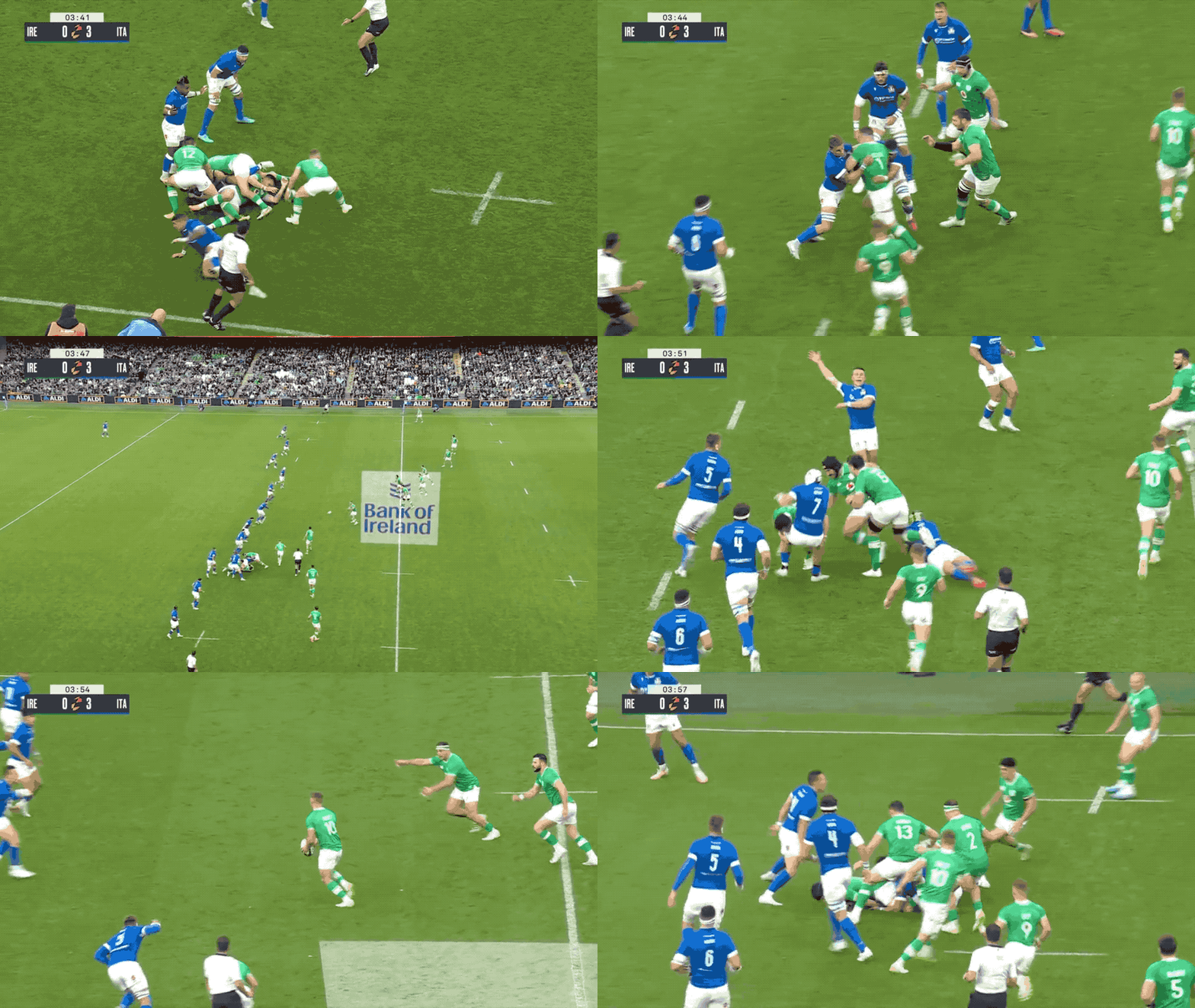
Massive width off the pass from Casey to Crowley, with Crowley picking out options outside him. These are the kind of set pod plays you say Sexton running against France back in the Six Nations.
With Casey chopping 20m of the defensive line out with his passing and the movement threat of Crowley holding the D/E defenders for a heartbeat, the pass to the middle of the pod meant forward runners hitting a part of the Italian defence where there could only be a seam.
It was really effective and ran on two key principles – Casey’s passing range, speed to the breakdown and consistency combined with Crowley’s insane reloading phase for phase, his athletic threat and his flat-to-the-line mid-range passing off both sides.
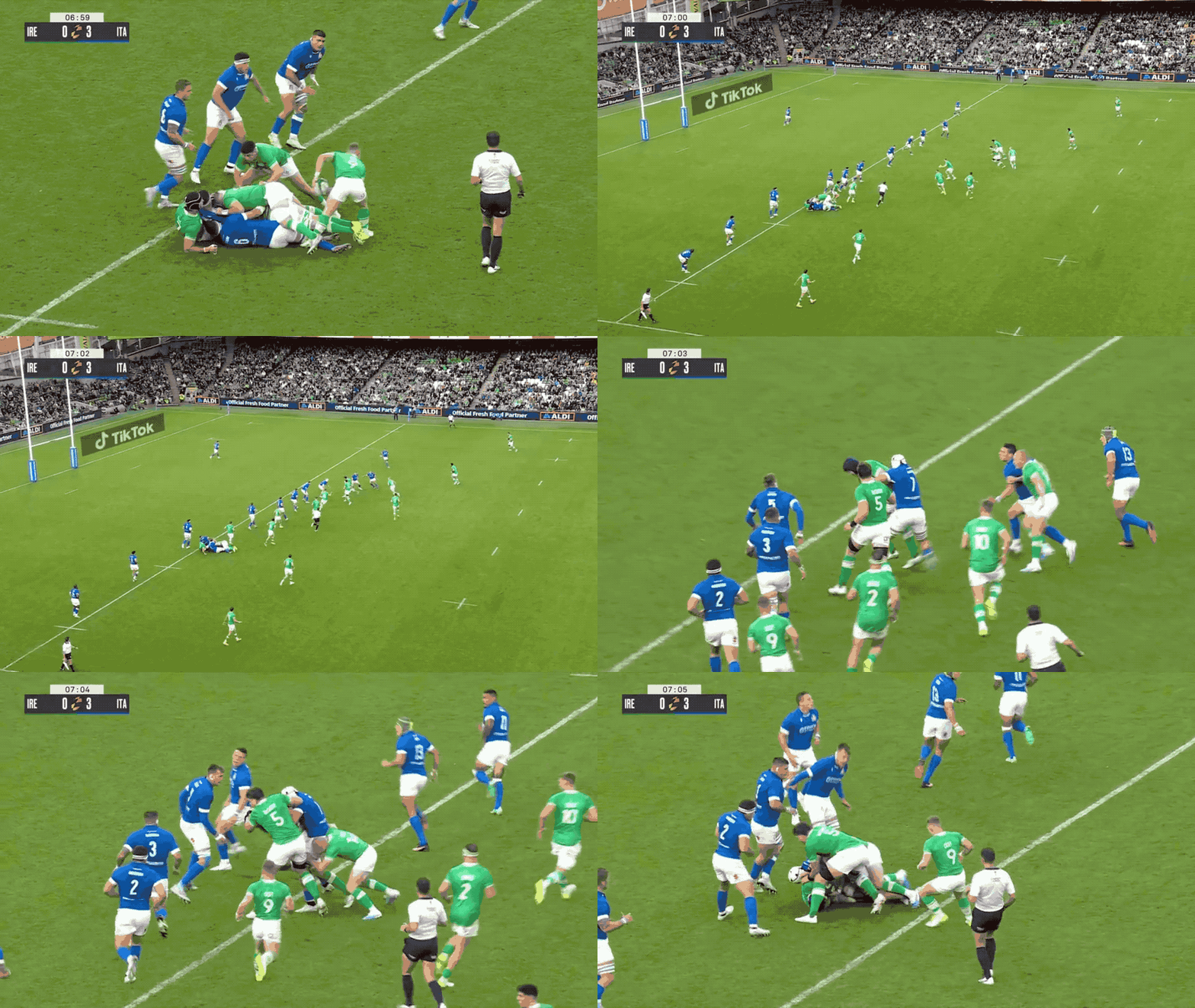
That late flat pass was there all day from Crowley when he was at #10 and we looked surprisingly smooth in the first 30 minutes as a result.
That high Pass Per Carry approach can be seen in the passing charts.
In the first half, Ireland had 17 possessions – defined here as a sequence of ruck phases where a pass action was taken to a player away from the ruck.
Casey passed directly to Crowley 19 times in that first half. 35% of all Casey’s passes from the ruck went to Crowley and, of those passes, 24 of them lead to another pass on that phase. So, essentially, those 19 passes from Casey to Crowley lead to 24 further passes to be made after Crowley passed the ball on. This is a team that is looking to play with width – but not too much width – and it consistently upset the Italian defence. You don’t want to be mindlessly shipping the ball on, to be clear, because you’ve got to engage defenders in the middle of the field in some regard and in the first half, Ireland really struck a good balance on this.
Crowley took 14 passes on the screen and made 8 passes off those screens to give you an idea of how Ireland were looking to build compressions into the game and it worked – Italy conceded a tonne of penalties and Ireland should probably have scored two or three more tries.
So why did that run not continue into the second half?
In the second half, Blade passed to Frawley 13 times – which was 34% of all his passes and these lead to 17 extra passes once Frawley released the ball. Frawley only took three screen passes in the entire second half and passed on two of them – you’ll see why this is an issue in a minute.
In the first half, Ireland had 17 possessions and made 28 extra passes on the rucks in those sequences.
In the second half, Ireland only had 10 possessions and made 40 extra passes.
Why is this a problem? For me, that kind of excess passing tells me that you’re not committing defenders phase for phase sequence for sequence. That shows me that you’re trying to pass around defenders that are still active in the line and not compressed.
Part of this was down to a shift in the back five build mid-game, yes, but part of it was down to the switch in half-backs too. Instead of the width off #9/#10 in the first half, we got compressed hit-ups off #10 into packed defences.
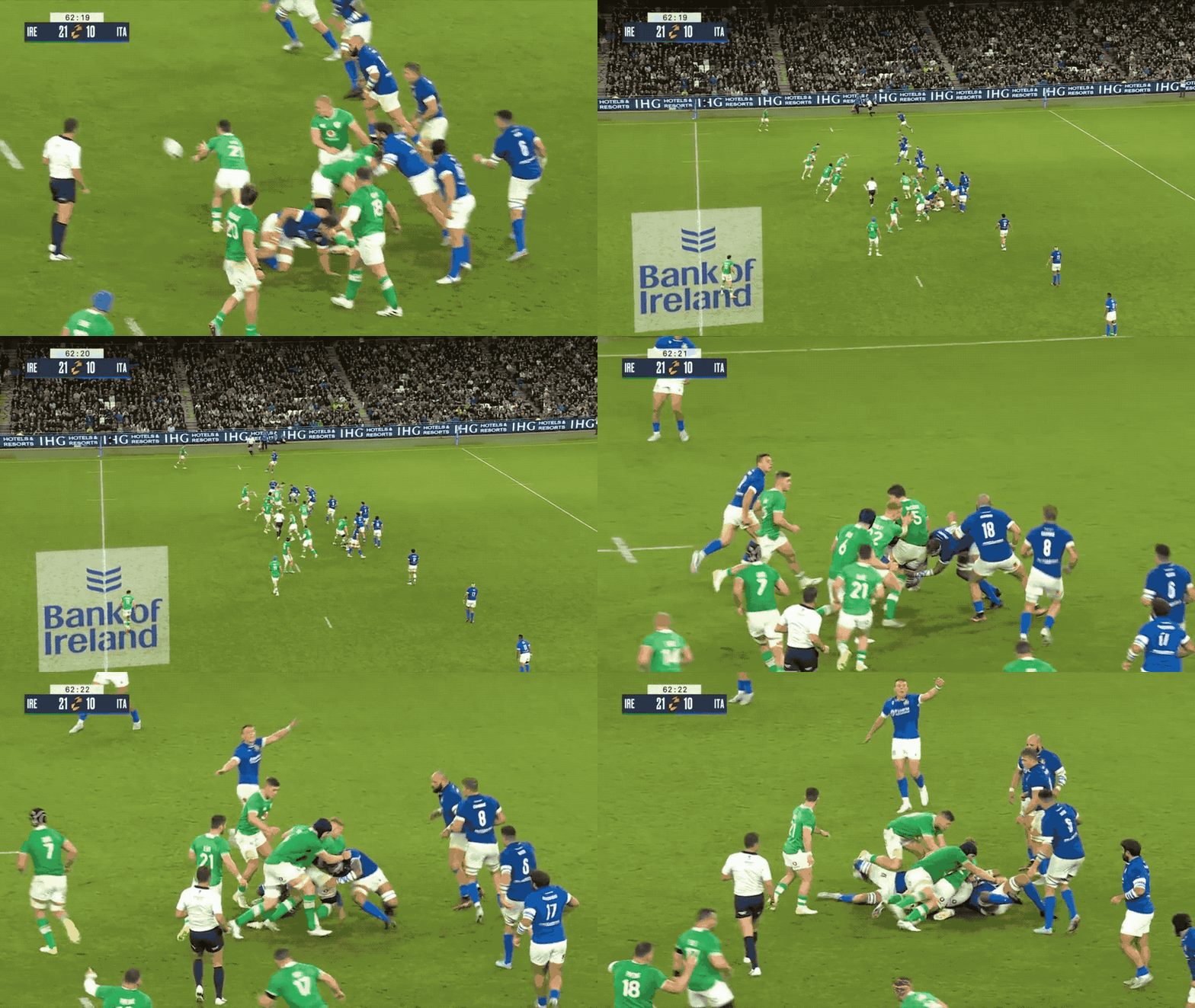
There were more Irish passes in more compressed spaces so almost everything we did involved the Italian defence more. If you felt that Ireland’s attack seemed to narrow and slow down with Casey off the field, this is what you were seeing and the extra passes you see ruck for ruck across just 10 possessions in the second half showcase that. We tried to replace the width we got naturally from Casey with lots of extra handling. We had 74% of our possession in the Italian half and wildly underperformed on the scoreboard. That high volume of excess passes in the second half has a lot to do with that, I think.
Compare this GIF with the ones I showed you from the first half. Look at how involved and packed the Italian defence is on this one, compared to the first few examples.
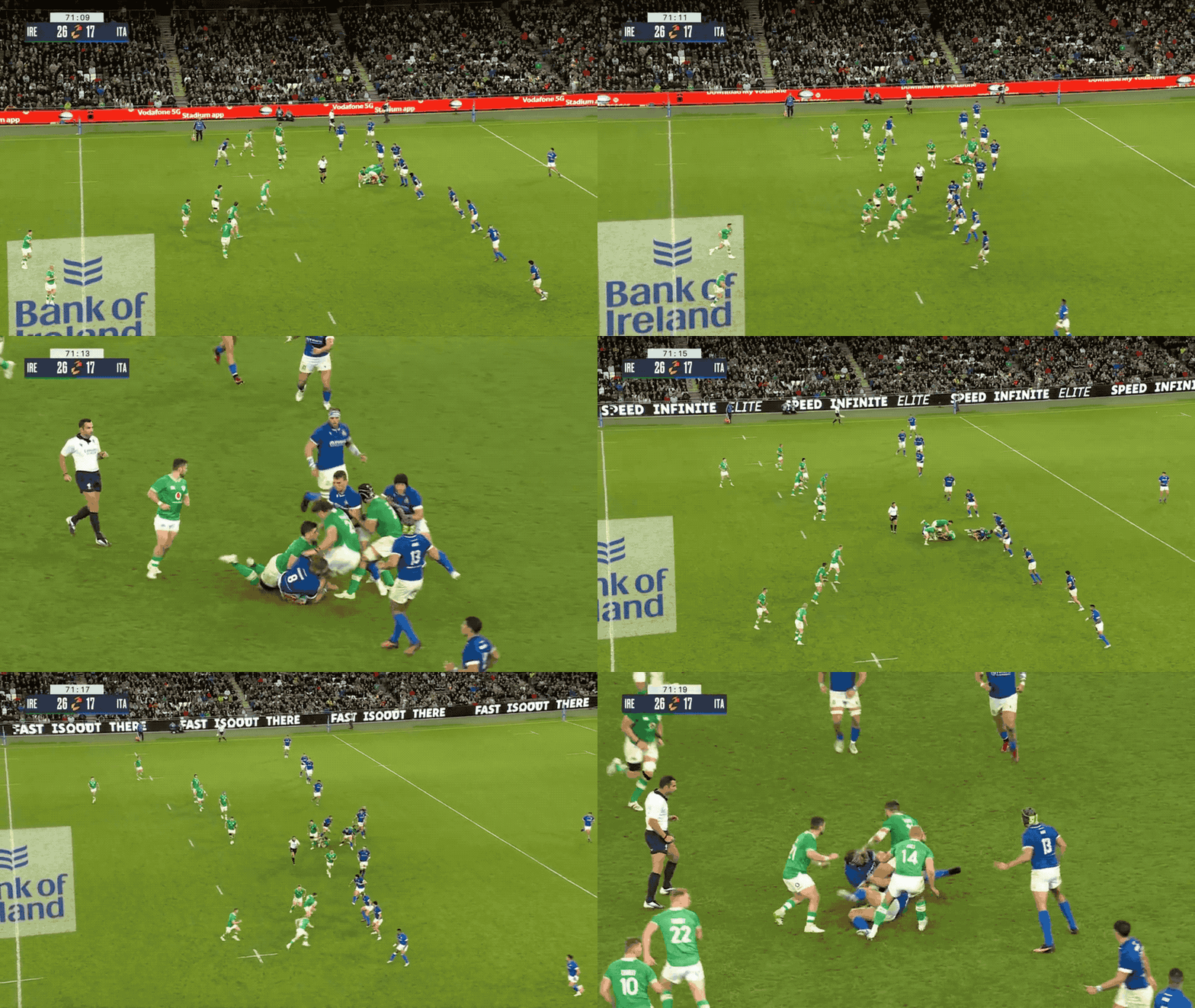
It’s not bad but… it wasn’t effective and it showcased some of the issues with fixtures like these in that I think some players went away from what worked in favour of what might look good on a stat sheet with a plane seat up for grabs.
I don’t see the point in Star Rating friendlies so I’ll just mention a few of the guys that stood out to me.
Notable Players
Joe McCarthy reminds me of a slightly bulkier James Ryan. He’s raw – I lost count of the number of times I saw other players shooing him into position on both sides of the ball and at the set piece – but he’s got great natural athleticism and a good pop in his carry. He needs to up his game IQ pretty quickly if he wants to get access to bigger games.
I thought Ian Henderson was really good alongside him and brought some really tight physicality throughout his time on the field. Good presence.
I thought Jack Crowley and Craig Casey looked like the best halfbacks on the pitch by a mile and showcased the kind of synchronicity that coaches love to build around. Two big characters feeding into each other’s strengths like this is a powerful mix.
Caelan Doris showed everyone that numbers on the back are pretty meaningless, for the most part. He played the Irish #7 role for the first half and showed up well as the +1 in the lineout but mostly ran the same lines in open play as he would wearing #6 or #8. He is Ireland’s utility wrench and he ensures that Farrell can put him in almost any back five build he could look to play.
