


I have a habit that I just can’t quit. Well, two habits. The first is Red Bull. I love it and I’m not quitting. You can’t make me. The second habit is actually more damaging, in my opinion, but it’s to my soul, not my blood sugar levels. I’m ready to admit right now that I read Cereal Winnah Soccer Twitter. It’s not good for me. These are the lads who believe that the only thing that matters in pro-sport is winning trophies. It’s fascinating to me because, in a purely factual sense, they’re right. Pro sport is about winning trophies. That is the aim, after all. For me, though, that’s a boiled-down, dehydrated view of the game and games in general, actually. I think that black and white, “you’re first or you’re last” view of sport snatches all the soul out of it.
So they’re not wrong but, like, they’re just assholes.
Some are harmless Roy Keane cosplayers. Some are the textbook definition of sociopaths. I think I read them to innoculate myself against the type of cynicism that turns people in this game – content creation/punditry/analysis – into withered bores.
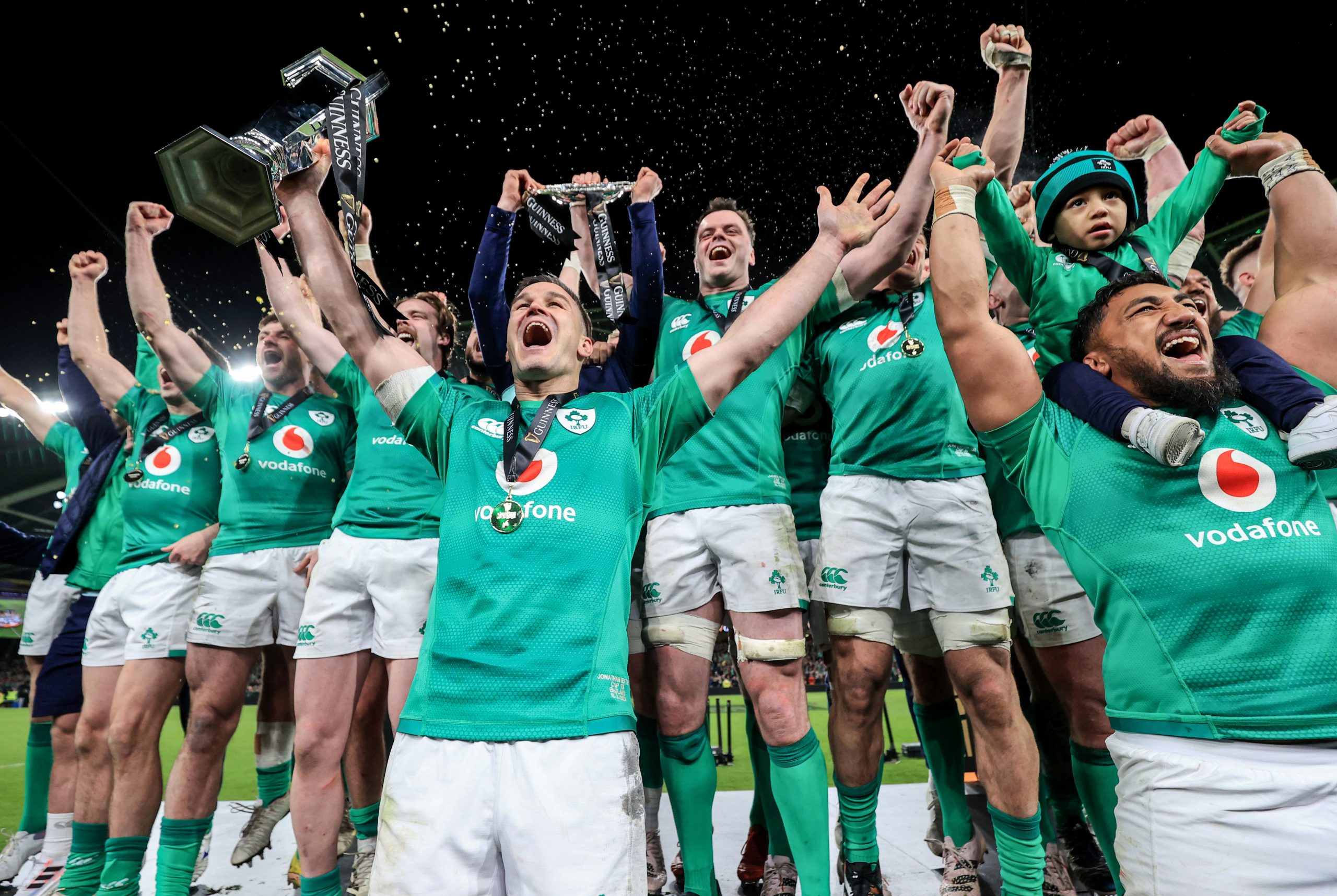
Yes, there’s a time for winning and delivering on expectations but there’s also a time for appreciating that what’s rare is beautiful. Four Grand Slams in 148 years is rare, so it’s beautiful. Seeing this Irish side deliver on the hype and promise is beautiful. Seeing it happen sitting next to my daughter, even though she didn’t have a clue what was happening – despite me taking the time to really go into detail on what counter-transition is – was beautiful too.
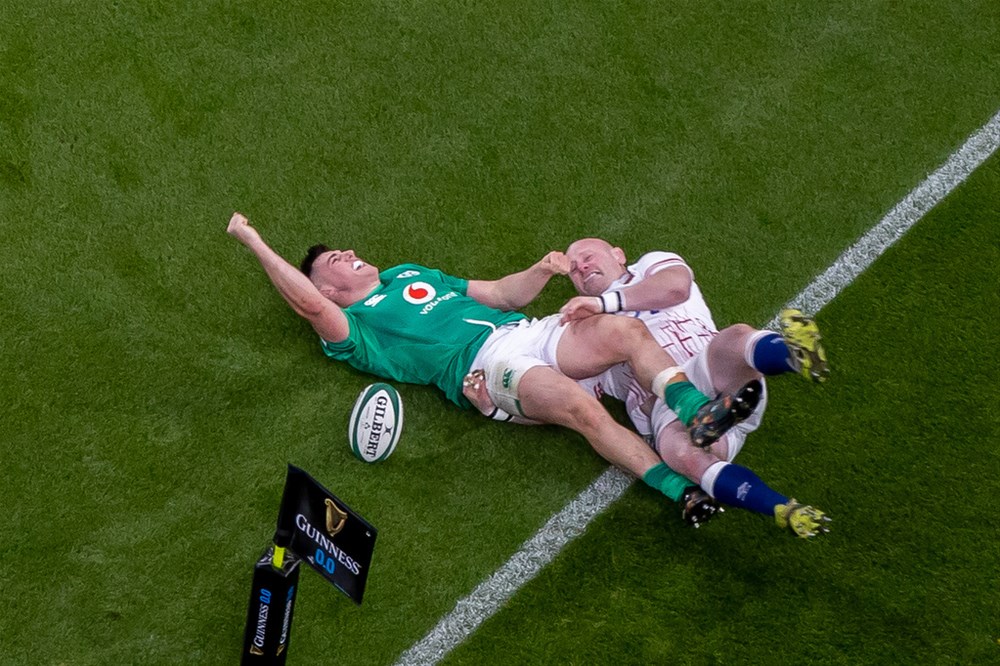
For me, sport is about the people you experience with. Family, friends, the random people you meet at the stadium or in the pub or even with me through the words on this screen – sport is at its best when it’s rooted in people. Talking about the game with your dad, feeling your little boy squeeze your hand as you walk into a stadium together for the first time, going bananas with your best friends in the pub when James Lowe scores in the corner or even silently fist-pumping when Robbie Henshaw powers over to give Ireland some breathing room in this game so you don’t wake the six-week-old dozing on your chest. Those are the moments that Cereal Winnahs will never understand as they crow about trophies they didn’t do anything to win or that they’ll never even touch.
It’s not always about silverware.
It’s about how the game made us feel.
For 60 minutes, this game wasn’t going to the script that many had visualised unless the script was actually an underdog story for the ages, with Steve Borthwick as the protagonist. England as the plucky underdogs? Not for me. World War 2 movies only, I’m afraid. That said, in reality, they were the underdogs by some distance but for 60 minutes they bucked that label with a gritty, physical performance that threatened to detail the story Ireland have been building since last summer.
One of my biggest bugbears in sports media is when a player, coach or, worse again, an actual journalist or pundit describes a fairy tale sports ending as something “you couldn’t write”. I think you’ll find that it’s the exact kind of thing that people write all the time, to the point that “local hero wins everything they ever wanted on the last day they can possibly win it” is one of the biggest tropes there is in schmaltzy American sports movies that go straight to DVD, not even streaming, of which I’m a huge fan. I think what they mean is that you shouldn’t write an ending as schmaltzy as what Johnny Sexton experienced in the Aviva on Saturday because it’ll only really appeal to 40-year-old weirdos like myself.
To win your second Grand Slam and break Ronan O’Gara’s Six Nations scoring record in your last ever game of the tournament in the stadium that you made your own over the last 12 years against the traditional sporting Ould Enemy?
You very much could write that, film it on a budget of €50,000 max which means a green screen Aviva Stadium, slather vaseline over the lens, hire Sean Bean to play Andy Farrell and Aidan Gillen as Sexton and away you go, straight to DVD, just how I like it.
How they explain the transition and counter-transition battle in this movie – well, I’m open to working as a consultant for a fee of €49,000.
My theory on this Ireland team is that the side that will beat them on the big day will be a high-volume, long-distance kicking team with elite transition defence and a top-class defensive and offensive set-piece game. A ball-dominant team that can take Ireland’s counter-transition starter kicks – the kind of long in-field relief kicks you often see from Sexton, Lowe and Keenan, in particular – and chew through the phases on transition/post-transition has a big chance too but finding a team that can do that at test level with all the on-ball cohesion you’d need to make it work is a big ask.
England showed that the off-ball, high-kicking volume game can work against Ireland but they just ran out of steam in the aftermath of Freddie Steward’s red card right before halftime. Until Robbie Henshaw’s try – which came off the back of a huge defensive play by Ryan Baird and then another by Sexton – England were right in this contest and had all the momentum… right up until they didn’t.
How did they stick in there for so long?
They understood, for the most part, how Ireland create the game states that win us games and create further opportunities to press home our advantage. It’s never really about how much Ireland kick because it really depends on the context of the game. With that said, it’s incredibly rare that
Look through the balance of England’s kickers in their backline. You’ll see a similar breakdown to Ireland. Only Tuilagi and Arundell carried or passes 100% of their possessions. Van Poortvliet and Steward kicked 23% of all their possessions, Watson kicked 13% of his and, most notably, Farrell kicked 37% of all his possessions. What does mean in practicality? That England understood Ireland would kick at them and that the best medicine for that in all but the most extreme circumstances is to kick back at them almost every time.
This is a good example; Ireland knocked on in midfield, England won the ball back, created a pod structure and kicked deep into the backfield within five seconds of the turnover, chased incredibly hard and bought a poor exit from Hansen.

England won three points from the resulting lineout. In the first 60 minutes, England were able to match up Ireland’s counter-transition starter kicks with good fielding and long returns. The only notable error they made in the first half was Steward deciding not to come for this excellent contestable by Sexton which allowed Keenan to make a game-breaking high take over Dombrandt – something Ireland would have identified as a possible “in” pregame.

Ireland won a penalty a few phases later and used that platform to score a fantastic try off the back of the lineout, another thing they would have seen pre-game with England and that will be covered extensively elsewhere so I won’t bother breaking it down again here.
In short, it was another excellent maul feint, which Ireland have used to excellent effect this season to the point where our actual offensive maul is almost an afterthought.
It was created by Ireland’s commitment to and excellence in the counter-transition kicking game and when England stuck to the key principles of defeating that game, they were able to keep Ireland revving in third gear for key parts of the game.
When they lost patience and ran back counter-attacking options that weren’t on, as Arundell did here after what had been a really good kicking exchange to that point, Ireland made the system work.

After Steward’s red card, Ireland were always going to up the kicking volume. This wasn’t just to take advantage of England being shorthanded in the backfield without one of the most aerially dominant fullbacks in the game today, but to also unbalance England on the kick return.
For most of the third quarter, however, England weren’t biting.
Sexton kicked crossfield early on to seize on some early positional confusion.

Ireland would go back to this strategy over and over again in the early part of the game because England were proving to be quite physical in defence and, bar a few positional mistakes from Kyle Sinkler and their now traditional first phase try concession, the English had a good handle on Ireland’s structures.
It makes sense to kick like this in context but England’s response was to rotate Farrell back into a deeper position and he started making real hay with his own kicks in response to Ireland’s backfield probing. This kick forced an error from O’Brien, which England won a scrum penalty from – another three points to England.

For a while in that third quarter, Ireland just kept kicking the ball away and England just kept kicking it back, then pressing the receipt and Ireland’s post-transition phase play. It had us spooked. When England refused to engage in carries from the first phase of transition, Ireland had no purchase in the game and when England kicked really well in response – Farrell was outstanding in this regard – it was Ireland who looked like we were down a man.
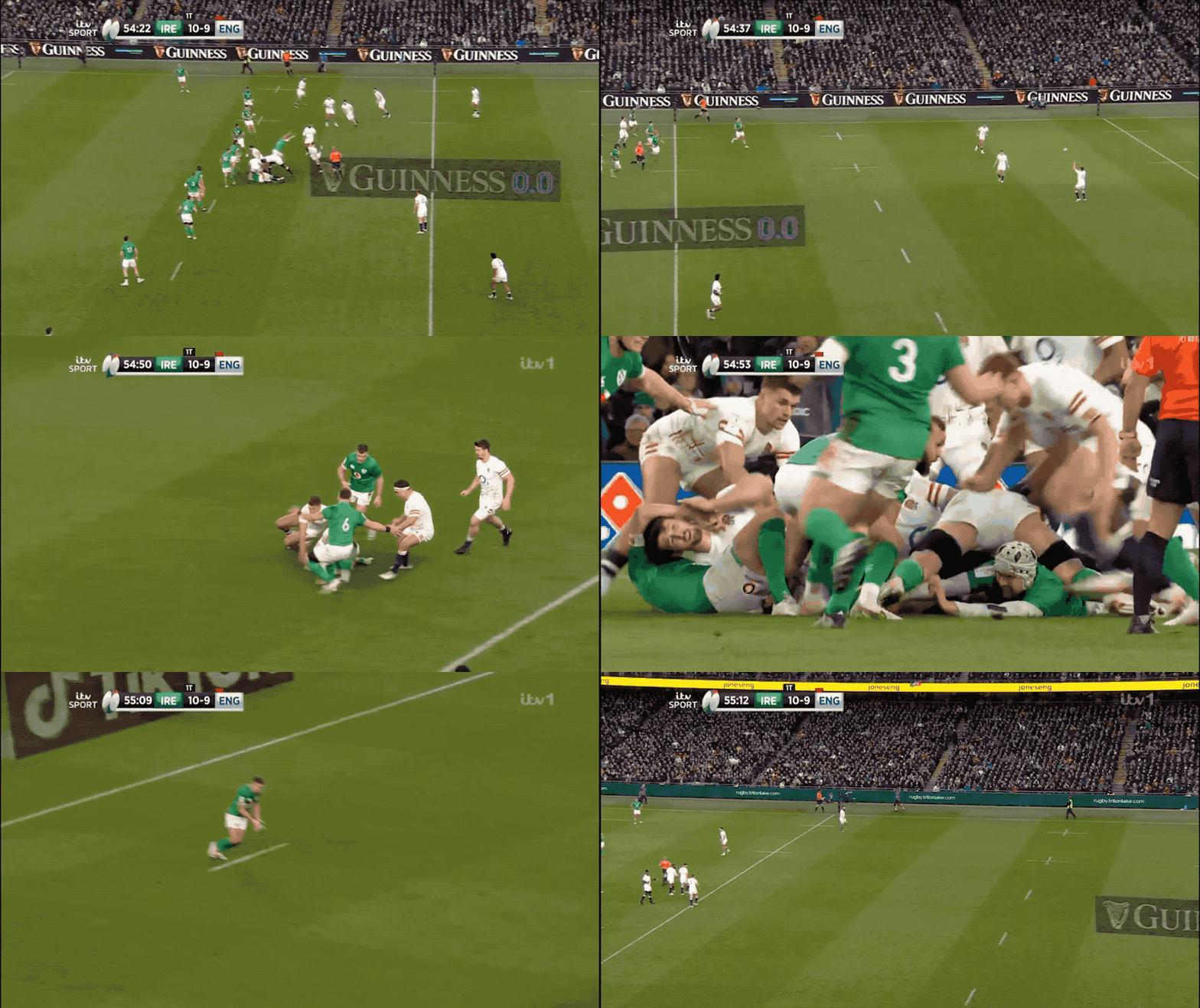
Ridiculously poor maul building allowed Jack Conan to make a big play and Ireland were off the hook. From the resulting scrum up the field, England won a massive scrum penalty on Porter but Ryan Baird, once again, made a huge play in defence and Ireland were off the hook again.
From that lineout, Sexton was able to take advantage of England’s Stewardless backfield with the aid of a great crossfield kick and a lucky bounce.

We all need a bit of luck every now and then and that awkward hop behind Watson was exactly the break that Ireland needed. Sure, it also needed the clearest scrum penalty you’ve ever seen being ignored but Ireland got the try we needed to turn the game around in our favour.
Once we had that, England crumpled because they had no way to realistically overhaul an eight-point deficit with (a) 14 players and (b) an attacking system that does not create linebreaks as it is currently constructed. When Alex Dombrandt conceded a dumbass penalty a few minutes later, Ireland would kick deep and with that field position against a tiring opponent, Dan Sheehan would seal the Slam after an outstanding offload from Jack Conan.
And that was that.
A little bit of history was made in the Aviva Stadium, with enough on-field difficulty, for the most part, to make it the antithesis of Bland Excellence. A bit like the game against Scotland, Ireland will have learned more about our framework as it currently stands than a resounding 30-5 pumping would have.
I feel that the Springboks might also have learned a lot about what they could do with a limited enough form of kick pressure and a much, much bigger pack but that’s a problem for another day. For now, Ireland stands on top of the World Rankings with a Grand Slam in the back pocket and every reason to believe that this team can win it all later this year.
We are favourites for the World Cup and have to embrace that reality to become what we’re capable of. We had a target on our back since the series win over New Zealand, we had a large bullseye there since beating the Boks in November and now we’ve got the eyes of the world on us for the next six months.
Soon, the shadow games of the last year will be over.
Can this Ireland side handle the heat?
I think they can, but the crucible of the World Cup will soon be here. There will be plenty of time for that. For now, enjoy the Slam, enjoy the feeling it gives you and enjoy the people you experienced it with.
That is what it’s all about.
| Names | Rating |
|---|---|
| Andrew Porter | ★★★★★ |
| Dan Sheehan | ★★★★ |
| Tadhg Furlong | ★★ |
| Ryan Baird | ★★★★ |
| James Ryan | ★★★★ |
| Peter O'Mahony | ★★★★ |
| Josh Van Der Flier | ★★★★ |
| Caelan Doris | ★★★ |
| Jamison Gibson Park | ★★★ |
| Johnny Sexton | ★★★ |
| James Lowe | ★★★★ |
| Bundee Aki | ★★★★ |
| Robbie Henshaw | ★★★ |
| Mack Hansen | ★★★★ |
| Hugo Keenan | ★★★★★ |
| Rob Herring | N/A |
| Cian Healy | N/A |
| Tom O'Toole | ★★★ |
| Kieran Treadwell | N/A |
| Jack Conan | ★★★★ |
| Conor Murray | N/A |
| Ross Byrne | N/A |
| Jimmy O'Brien | ★★★ |
