


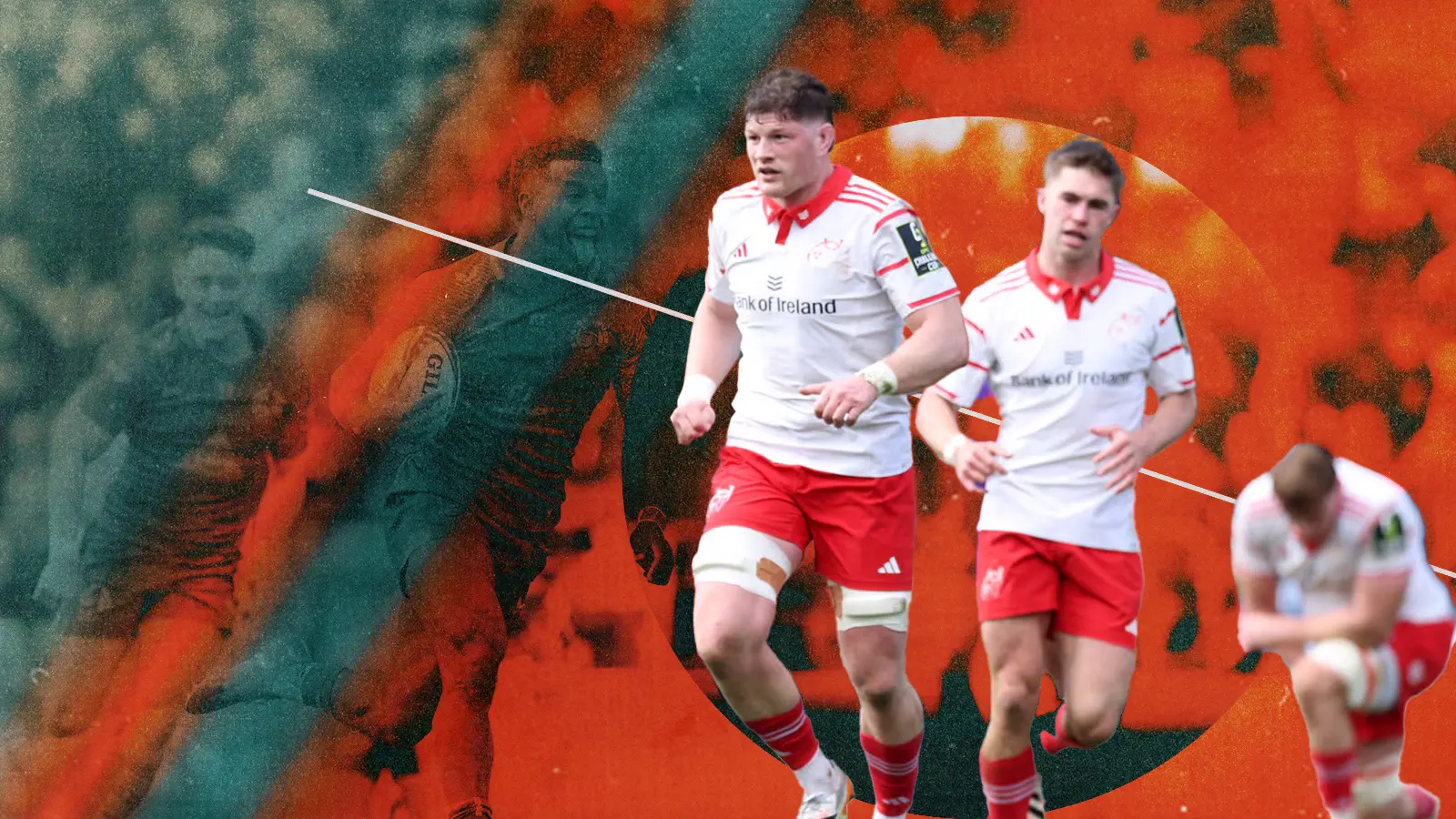
After a loss like that, another first-half dud to go with the sloppy, feckless displays against Bath, Ulster, the Dragons and the Sharks, you spot a pattern.
This isn’t the Wally Ratings. That, unfortunately, awaits me tonight. Right after full time and my TRK Radio live stream, I went downstairs and let my little girl watch a bit of TV. Normally, European weekends mean the TV gets booked out for Daddy — he has to work — but not Saturday.
I busied myself by helping make what turned out to be really nice Southern-fried chicken burgers from scratch.
Fuck rugby.
Normally, I’d be on Discord, putting some post-game analysis in, but you know what, fuck that too.
Where was I?
Oh yes.
The pattern.
Munster are probably the easiest team in Europe to play against at the moment if you get your tactical approach right. I’ve been over the reasons for this multiple times: a weak scrum, unpredictable, scatty lineout, no real maul to consider at all, and an overall attacking/tactical concept that suited us in 2022/23/24, but not now, both in a general game sense globally, and from a personnel perspective.
That is, in part, down to the squad staying broadly the same since the 2023/24 loss to Glasgow in the URC semi-final, and very few of the players who have remained have improved in that period. If anything, most have dropped a few levels or a few percentage points, whichever way you’d like to stratify it. It’s not that the players aren’t trying — that would be a different conversation entirely — it’s just that, for the most part, most players are playing worse than they have in years, and look to be the worse for wear athletically, which is as much to do with miles on the clock as anything, outside of those who are in their mid-to-late 30s. More on that later.
Off the field, things have gotten worse, too. You won’t have missed the news of Munster seeking voluntary redundancies on the business/staff side of the house in the last few weeks. If Munster’s CEO Ian Flanagan was somewhat unpopular before that point, you could double that sentiment now.
He was in South Africa when the news broke — I heard about it the day before — so he had to fly back from South Africa to Limerick, where he was to deliver the news in person, as it wasn’t felt to be appropriate for that announcement to be done remotely. Did he know the cuts were coming? If so, why was he in South Africa? If he didn’t know the cuts were coming, why not?
A lot of the things laid at Flanagan’s door are the general features of malaise that he doesn’t quite have full responsibility for, but blame will always — and must always — flow to the top of the organisation when problems arise.
I think the biggest thing I could accuse Flanagan of, and that it would be mostly true, is obliviousness. People I’ve spoken to don’t really feel like he’s in touch with what they’re feeling, rightly or wrongly. Maybe it’s a cultural thing.
He comes from a background in a Premier League football club. Maybe a bit of distance there is to be expected. I’ve often felt that when Munster were at our best, we were the biggest senior hurling club on the planet that also played rugby, with a structure to match. That means the gap between a player and someone behind the scenes is paper-thin. We’re all playing the game this weekend. None of us is there for a jolly. That’s what Munster Rugby is, ultimately. We’re all playing.
When he was hired, the view was that he would enhance Munster’s commercial engine at a time when money was scarce after the 2010s, when the geographic, economic and demographic province, along with the team itself, faced a lot of financial challenges that ranged from mass migration to Dublin and abroad, and everything that flows from that. If anything, that’s getting worse now. How many young people do you know who have left for Australia in the last few years? I’ve seen three or four leaving parties on Instagram in the last month alone.
That isn’t to say that Flanagan hasn’t had successes — the Cork HPC, which opened this year, will be, and already is, an excellent bit of infrastructure that will serve the province for decades, along with the creeping integration with DHL. He was there for the Virgin Media Park sponsorship and has played a big role in the multiple big games in Pairc Ui Chaoimh, which have been a cultural and commercial hit, albeit unpopular in Limerick.
Flanagan’s biggest success — at least in my view, anyway — was his work with the 1014 group, a private group of wealthy Munster supporters who helped out financially with big name signings and renewals, even though their impact has waned in recent years post Snyman, De Allende and, to an extent, Fekitoa, as well as being broadly unpopular with the IRFU at the time, who enjoy the control that owning the provincial purse strings in near totality brings.
If money is one of your selling points, you are judged on it. For me, he will need to activate that side of the house again, and soon. Is he under pressure? Any CEO overseeing voluntary redundancies is under pressure. How he reacts, what he produces, have never been more important. And it needs to be seen.
In a broader sense, the financial crunch that has led to the pursuit of those voluntary redundancies is outside any CEO or C-Suite’s remit to control. Money is down everywhere, and when it’s not down, it’s tight, with the expectation that it’ll be down sooner rather than later. Costs are going the opposite way. Is the CEO blameless? No. Is he to blame? Also, no.
This directly translates to Munster’s attendances at the macro and micro level, but they have been broadly stable this season, so it’s not the easy catch-all that it might seem. In a general sense, though, with the team performing badly and vibes in the toilet, it’s very difficult to justify a trip to Thomond Park in a few weeks for the Ulster or Lions game from anywhere outside Limerick City when petrol and diesel could be north of €2.50 a litre at that point. Or more, who knows.
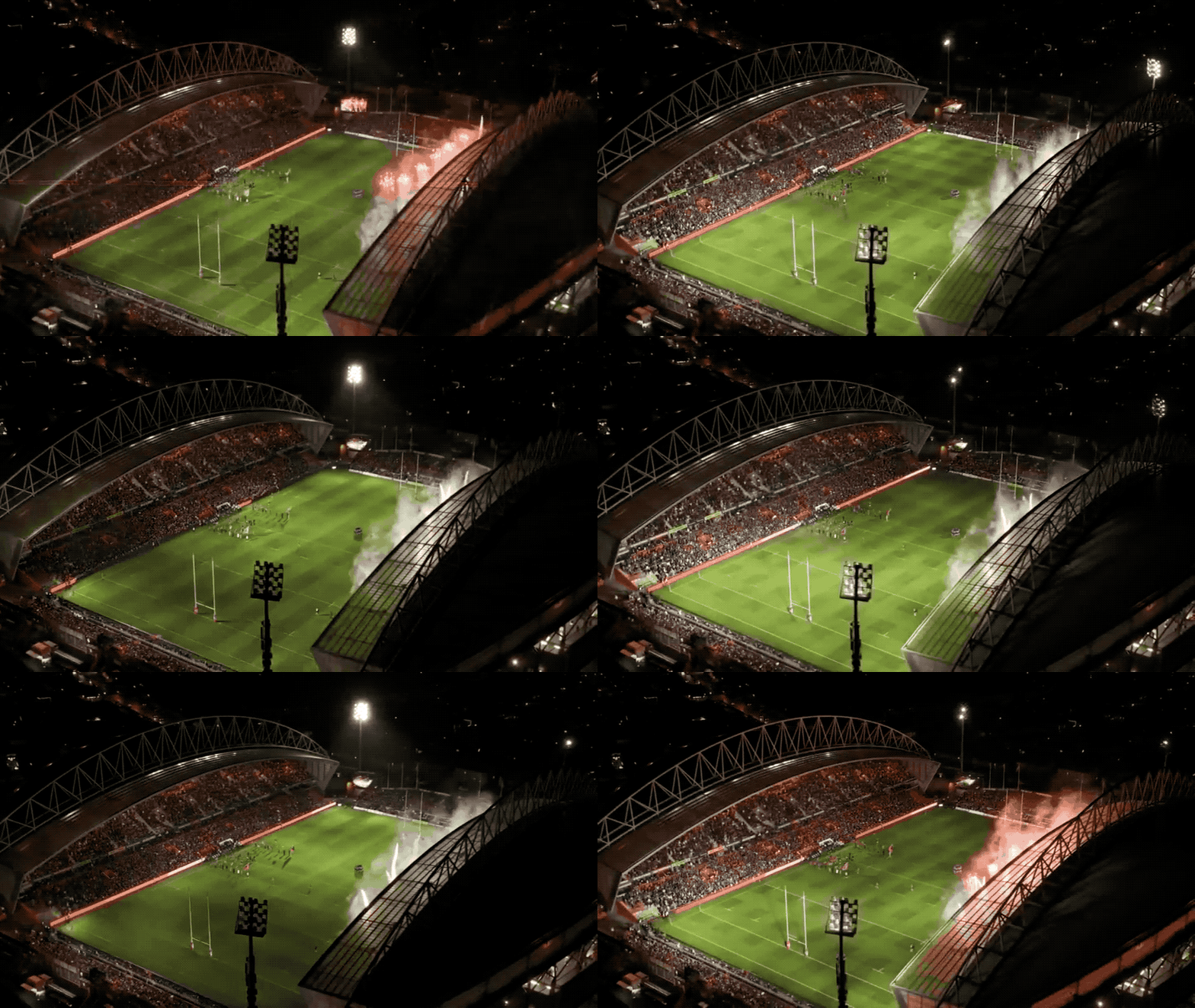
The live events business — which is Munster’s primary activity — is suffering all over the place, especially with a bread-and-butter URC product that gives you nine home games a year, most of them missable or at inconvenient times for at least one significant percentage of the support, coupled with a deeply diminished European Cup campaign that only gives you two home games, and it’s the luck of the draw.
How much more business would Munster have done even this year if they had Toulon and Bath in Cork and Limerick, rather than Gloucester and Castres? Why do you think Munster keep drawing big crowds to away games? They are “events”, a weekend away that it’s easier to get a pass for, and too many home games outside of Leinster or the odd big-name luck-of-the-draw European home game are not.
There are no easy answers for Munster on the business side at the moment. Season tickets will be tough to sell this season for on-field and general economic off-field reasons. At some point, people are going to have to be excited by the prospect of something. Outside of that, the CEO and his team have a lot of work to do, mirrored by the rugby side of the house.
Fundamentally, Munster Rugby is not a gravy train for anyone. To paraphrase my old foreman when I worked on the sites, we’re either all flying business class, or none of us are.
From a squad perspective, Munster look like any team who are currently falling between two stools of a veteran layer ageing out as the season develops, a top quality core of players who would play for any side in Europe, a mix of players who either haven’t turned out as expected, or have been forced into roles beyond their ability relative to our expectations, and the first corps of players from the refreshed academy structure post-reset in 2017 at varying levels of development.
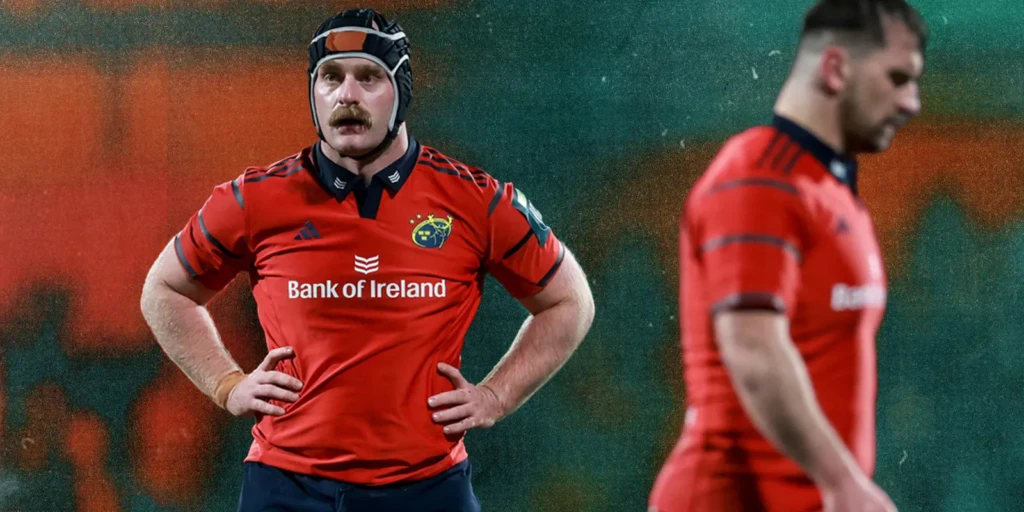
Some of those guys are in the Ireland frame, without establishing themselves as squad regulars as of yet, but hopefully will. Gleeson, Edogbo, Ahern, hopefully, guys like Kendellen, Quinn, and others down the line, are in that bracket. Others have flitted in and around the test environment for a time without establishing themselves, and others have topped out below that level to varying degrees.
Our test squad mainstays — Beirne, Casey and Crowley — are as important as any Munster players have been to any squad in recent history.
In a general sense, the squad needs to be significantly overhauled to a point where our outstanding players from the last few seasons of Irish U20s can come through and develop. This will be done with game time, eventually, but they also need to be braced by base-level athleticism and unit strength until they are ready to step in fully.
That means signings, arguably five or six in the next two contract windows, with significant squad trimming on the other side.
In the last few seasons, we’ve ended up suffering quite a bit from Munster-friendly depth contracts who, for one reason or another, have ended up playing significantly more minutes than anyone expected.
Every squad needs depth, but when you have to rely on a core of depth players who might not be featuring for any other province in the country, the idea of raising the floor of performances becomes risible.
The budget cuts during and post-COVID have had the effect of inflating the middle, while quality was cut at the top. Some of those decisions were logical endpoints. When Ben Healy decided to pursue a test career with Scotland at the same point that Crowley was stepping up to be a test-calibre #10, it didn’t make any sense to retain a skittish and injury-prone Joey Carbery to anything near what he was when he signed his last deal here.
It didn’t make any sense, financially or on grass. That has led to several short-term fixes to try to cover the all-encompassing hole that Crowley leaves in this team when he doesn’t play. We’ve tried Billy Burns for a year, and that didn’t work. We then pivoted to JJ Hanrahan and, to date, that hasn’t worked either. Both of those players were signed because there was no real confidence in Tony Butler to take on any serious minutes. Why was he on a senior deal to begin with? Depth. Something of a developmental punt. It didn’t work.
You have Tom Wood, now, looking like a quality player, but he’s still a Y1 academy player this season. You have Charlie O’Shea loading in the background, too, but he’ll be a Y1 academy player next season. These guys need time, varying levels of it, to avoid warping them into half-versions of what they might be. We have a pretty good example of what that looks like elsewhere in the country.
It’s the same thing at #9. We were blessed in the last few seasons to have a late-stage Conor Murray — whether he played well or not, there was still belief in him — and Craig Casey, who is as important as Crowley to this squad, if not slightly more so. Casey is the heart of this team and will almost certainly captain the squad in the next 12/18 months officially, if not unofficially now.
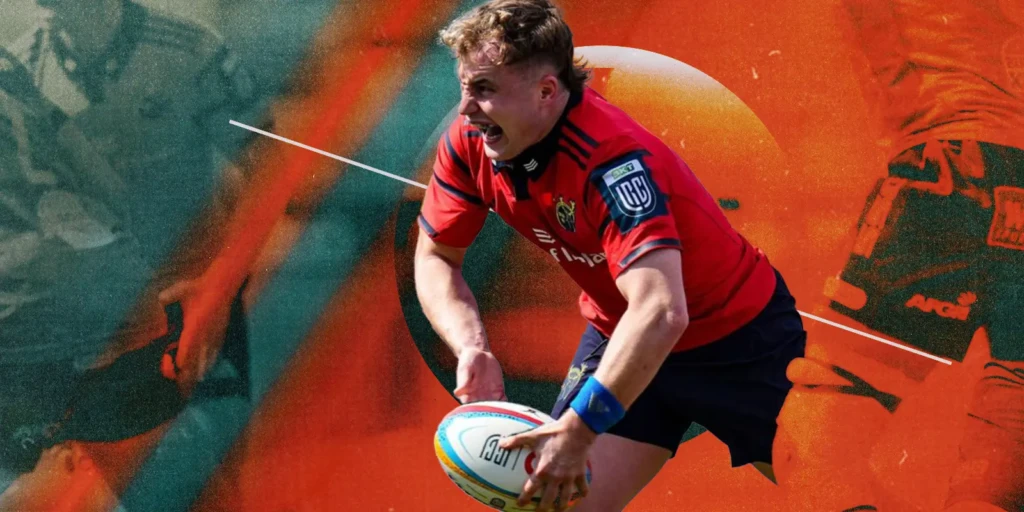
And then you have a front five which, bar Edwin Edogbo this season — he looks like a potential generational talent already — has collapsed in top-end output. As far as I’m aware, the intent this season was for Jager and Salanoa to take up most of the minutes, with a short-term NIQ covering both men at different points to keep everyone fresh, and John Ryan playing more of a mentor/training/Cat C game bench role at this stage of his career.
Injuries blew that up in a game where the scrum has increased incrementally in importance. Jager has played six games, in between a three-month concussion stand-down. Salanoa was trending incredibly well in preseason before his progress stalled out, in between worries over triggering a new deal for a guy who wasn’t — and might never be — fully fit.
That has meant that Michael Ala’alatoa and John Ryan have played most of the minutes at tighthead, outside some early-season minutes for Ronan Foxe in the academy.
It’s a fact that Munster have been repeatedly denied NIQ signings in core front row positions until this last season.
It is also a fact that, in that light, we’ve retained several guys who are past their use-by date at the highest level in an attempt to get to a point where we either develop options internally, sign someone IQ who is suitable (vanishingly rare), or ideas change at an IRFU level on signings.
What was the alternative? That’s the catch-22. You can’t just magic up elite front row talent — they are either in your system and ready for pro-rugby, or they aren’t. It’s been the fundamental issue with this Munster team since the late 2010s, and the solutions then are still, broadly, the solutions we’re using today.
The problems start there and radiate backwards. We’re a team who need signings to get us from where we are now to where we will be, hopefully, in two years when the young talent we have in the academy and beneath it can break through.
That’s true in the front row, it’s true at halfback, and it’s true in the back three. To get there, we need to be more aggressive in how we contract our middle layer and depth because, as this season has shown so far, it’s that layer that’s holding us back.
The coaching side also needs a look, as I’ve gone into elsewhere. It’s no secret, at this stage, that our attack and set piece have been key handbrakes on our progress this season. They needed to be solid, at worst, and now we’re looking at them being solid at best. This comes back to personnel and coaching, directly. We don’t have elite scrummagers fit and available, but our scrum lacks the basic ability to retain our own put-in at even a decent level.
Our lineout has veered from solid but toothless to something you’d think was ropey at junior rugby. This is natural. At this point in the season, everyone has seen our weaknesses, and they are squeezing them. Exeter did it. The Sharks did it. Plenty more will try the same.
The attack is, for me, plainly not suited to the senior players we have in 2026, as they are in 2026. What worked at the tail end of 2022/23 and for a lot of 2023/24 — in the URC at least — is not working now. Core components of our forward play and attacking structure enhance our weaknesses, not our strengths.
That comes back on the coaches. Half measures. Mixed messages. Players who were a good fit last year and the year before are struggling as other parts of the system can’t hold up their end. Exeter blitzed us all day and slowed down our ruck. The fix to that is running big men to get over the gainline. We tried to do that, but found that outside of Edogbo, we didn’t have them.
A common enough refrain in the last few years.
Is it the players or the coaches? It’s both. Each side is letting the other down as it stands. We don’t have the scrum or back three to play off-ball rugby, we don’t have the hitters to play on-ball rugby, so we’re in a nasty position where we rely on individual brilliance, unsustainable and inefficient hard work, and opposition errors to get into positions to succeed. All too often, that hard work and endeavour leave us exposed to high-risk, high-reward options where it’s either a linebreak or an error that leads to a killer score for the opposition.
That happened against the Bulls, and it happened against Exeter.
Whatever coaches come in this summer have to be the right fit for what we expect to have next season, because we’re not the high-skill possession team we seem to want to be. We don’t have the horses as it stands, and it requires Jack Crowley and Craig Casey to have all-timer performances just to stay at par against any decent opposition.
But sport moves on quickly. Union, in particular. Four or five players in the right spots, playing a system that suits them, can make a bad season disappear immediately. We saw that in 2016/17 under Rassie Erasmus, after the next worst season in professional rugby that Munster have had after this one in 2015/16. The talent is there. What we have in the squad are capable of better than they’ve produced in the last five months. We have to get them to a position where they can show it.
That’s got to be the aim for everyone, whether you wear a suit on matchdays, sit behind a laptop, or cross that white line.
And if you love Munster Rugby as a fan, if you’re hurt by the last few months, and burned out, you have an option. Either help it improve with a season ticket, or leave it to chance.
That’s our power. I’m getting another season ticket this season to go with my one for this season. I believe that this club can be better. I think it’s so ridiculously close, as long as we get out of our own way. We just all need to be on the same page, sitting in the same bus, going to the same place.
If you could jump over the hoarding on a matchday and get to the back of the maul to help win a game for Munster, you’d do it. If you could help shove a Munster player over the tryline to snatch a win at the death, you’d do it. At its best, Munster and the fans were never on a conditional basis. That’s easy when things are going well. Harder when it’s not.
If you can get a season ticket this April, do. If you can’t, try to get to a game anyway next season. We need Munster, but they need us more.
