


Over the last few weeks, I’ve been focusing on the changes that Clayton McMillan might bring to Munster, based on what has worked for him at the Chiefs over the past five years of his coaching career. The Big Reset is speculative, ultimately. I don’t know exactly what McMillan will look to do, or how he’ll react once the rubber hits the road on the season, but as with everything, what has happened in the past is a good indicator of what will happen in the future.
As a new head coach, the first four months of his tenure will be about finding out what he has, what he needs and getting rid of the players (and characters) who don’t fit his model. Sometimes, who these players are can be quite surprising for those on the outside looking in, but every coach has his way of determining what the right blend is. Technically, tactically and interpersonally. McMillan will be no different.
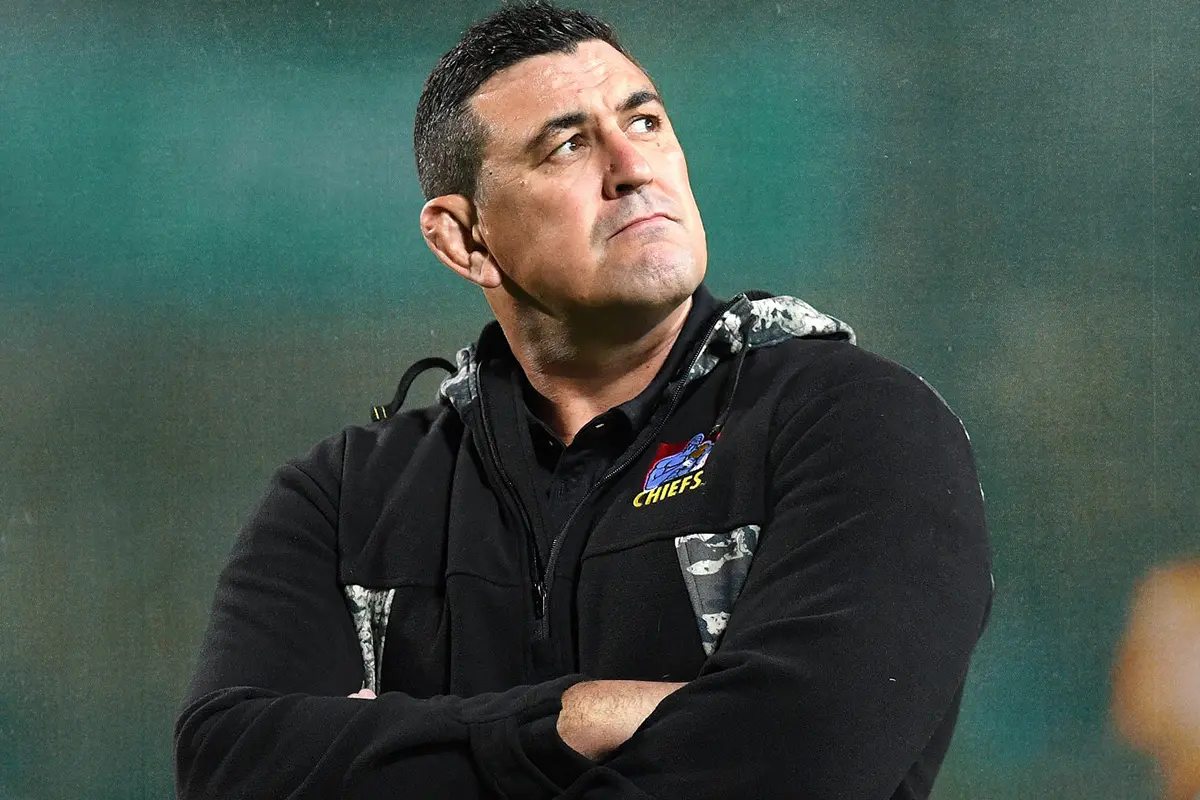
At Munster, medium-to-longer-term succession planning is handled by the General Manager, Ian Costello. McMillan’s focus is on the shorter-to-medium term and identifying holes in the immediate playing group. As ever, when it comes to reshaping a playing group, a lot depends on funds. The more money you have to spend, the more flexibility you have and when you already have a deep squad, those funds can be spent on genuine level raisers.
But getting the squad to that level is the key point — if it were easy, everyone would have one. That’s for another article. For now, McMillan will be assessing players directly* over the preseason and seeing who you have to nail down, who you can afford to lose with a view to rolling their contract value into a signing.
*While some players might be told they can leave the province during the season if they can find a suitable club, either on loan or full-time, while technically under contract, it should be taken that most players will be part of the squad this season until the first of July 2026.
Let’s get into the weeds by laying out what contracts are expiring this season, based on the publicly announced contract terms on the Munster Rugby website in all cases.
Scale of 2026 Expiry Group
- 25 players total in the senior + final year academy pathways are due to expire in July 2026.
- This is a front-loaded expiry year — a major squad management milestone — and while it’s not on the scale of the 2025 contract cycle, it’s got enough high-importance players as to be notable.
- Includes a high concentration of core starters, especially in the tight five, back row, and outside backs.
Senior Contracts Expiring in 2026 Group
These are established matchday XV or wider senior squad players who will likely require proactive renewal discussions by late-2025 to avoid risk, laid out in their general positional unit.
- Front Row: John Ryan, Roman Salanoa, Jeremy Loughman, Mark Donnelly, Diarmuid Barron, Niall Scannell.
- Second Row: Edwin Edogbo, Jean Kleyn, Conor Ryan.
- Back Row: John Hodnett, Brian Gleeson, Jack O’Donoghue.
- Half-backs: Craig Casey, Paddy Patterson, Ethan Coughlan.
- Midfield: Tom Farrell.
- Back Three: Thaakir Abrahams, Andrew Smith, Diarmuid Kilgallen, Calvin Nash, Fionn Gibbons.
For this instalment of the series, I’ll be focusing on each position in turn. Up first?
Tighthead Prop
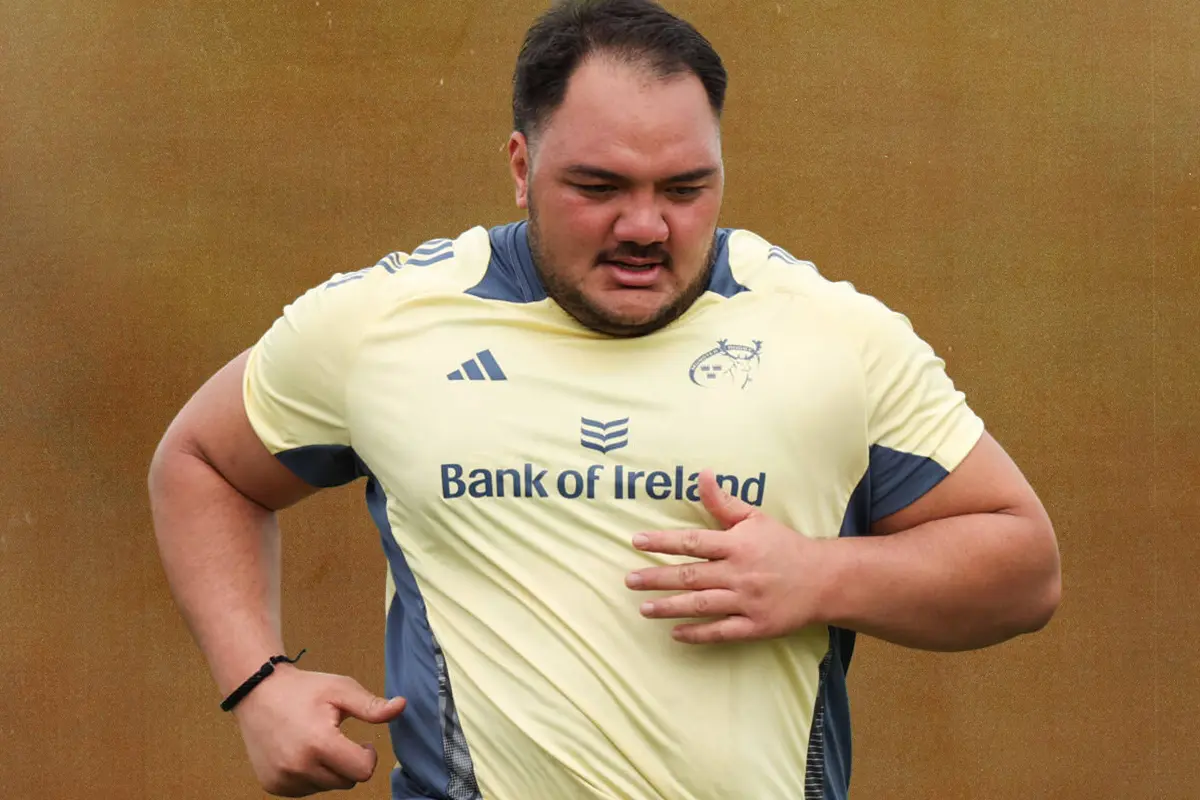
Let’s lay out the main players in this cycle, first and foremost, what they bring, where they’re at and a few words on their usage during 2024/25.
Tighthead Prop
John Ryan – 2026
-
Veteran technical scrummager, way more usage last year than expected.
-
Provides depth and mentoring, but this is probably his last professional contract.
-
Valuable as insurance if injuries hit, but his contract could be repurposed elsewhere post-2026.
Roman Salanoa – 2026
-
Powerful scrummager and explosive ball-carrier.
-
Missed two full seasons with injury; hoped to return strongly, but it can only be known how ready he is for that level of rugby once he gets through preseason.
-
Potential long-term TH1B if fitness holds, and has potential for the Irish national side.
Daragh McSweeney (ACAD4) – 2026
-
Highly rated academy tighthead with proper size and mobility.
-
Targeted for URC minutes in 2025/26 to accelerate readiness.
- Given another year in the academy (IRFU-funded) to showcase durability. His biggest limiting factor so far in his academy career has been injury. He needs a fully fit year.
Ronan Foxe (ACAD3) – 2026
-
Development project with a solid scrummaging base.
-
Likely to continue gaining experience in AIL and in the senior training environment, with targeted preseason friendlies and C-tier URC appearances throughout the season.
Oli Jager is the main man in this chart, and having him constantly available during the season is a major point of concern for Munster.
In any given season, Munster have to account for 29 fixtures. Of those fixtures, 22 are guaranteed — 18 regular season URC games + 4 European pool games. After that, you have three possible URC knockout games (quarter-final, semi-final, final) and four European fixtures (R16, quarter-final, semi-final, final), making up the maximum number of competitive fixtures we can play.
Last season, Munster played 25 of those fixtures, and Oli Jager was available for just 56% of them, which is far from the lowest availability ranking in the squad, but it was particularly hurtful given his importance to our season.
That was a familiar story across the squad, as you probably wish you could forget.
Munster 2023/24 – Props, Hookers and Locks Availability Rates
| Player | Games Played | Availability % | Adjusted Context |
|---|---|---|---|
| Niall Scannell | 23 | 92.0% | Most durable hooker |
| Fineen Wycherley | 23 | 92.0% | High availability |
| John Ryan | 20 | 80.0% | Senior squad regular |
| Michael Milne | 4 | 80.0%* | Joined final 5 games, played 4 |
| Stephen Archer | 19 | 76.0% | Senior squad regular |
| Diarmuid Barron | 19 | 76.0% | Injury absence mid-season |
| Tadhg Beirne | 19 | 76.0% | Ireland duty cut Munster games |
| Tom Ahern | 19 | 76.0% | Core squad availability, a few knocks |
| Jean Kleyn | 14 | 56.0% | Injured from December to April |
| Oli Jager | 14 | 56.0% | Missed time with a neck injury + concussion |
| Lee Barron | 3 | 60.0%* | Joined final 5 games, played 3 |
| Josh Wycherley | 12 | 48.0% | Injured for middle part of season |
| Jeremy Loughman | 8 | 32.0% | Two major injuries |
| Mark Donnelly | 4 | 16.0% | Development player |
| Dave Kilcoyne | 2 | 8.0% | Long-term injury |
| Roman Salanoa | 0 | 0.0% | Season out injured |
| Edwin Edogbo | 0 | 0.0% | Season out injured |
As a guideline, getting 75% plus from a regular international is great going, for everyone else, I’d put the bands at;
- 0-30% — Disastrous
- 30-60% — Painful at the 30/40 end, unreliable at 40/50 and workable at 50/60
- 60-70% — One mid-level injury during the season, which takes in a lot of current professionals, and is pretty decent
- 70-90% — Good availability
You want your key players fit for the important games and that their availability, even if it’s 50/60%, is good if that availability coincides with those fixtures. With that said, for the most part, you want to be getting 75%+ from non-regular internationals, and anything below that is varying degrees of not ideal.
Looking at this table puts it pretty starkly; we had to rely on two 35-year-old tightheads for well over half the season. Oli Jager is on contract until July 2027, though, and, to be fair, he missed the last three games of the season with a bad concussion. If he doesn’t get that injury — which can happen to every player, even non-injury-prone ones — he’s at 68% for the season, which is right on the cusp of what we’d want from a super-heavyweight tighthead.
What we need is better availability from Salanoa, and that’s the big question mark.
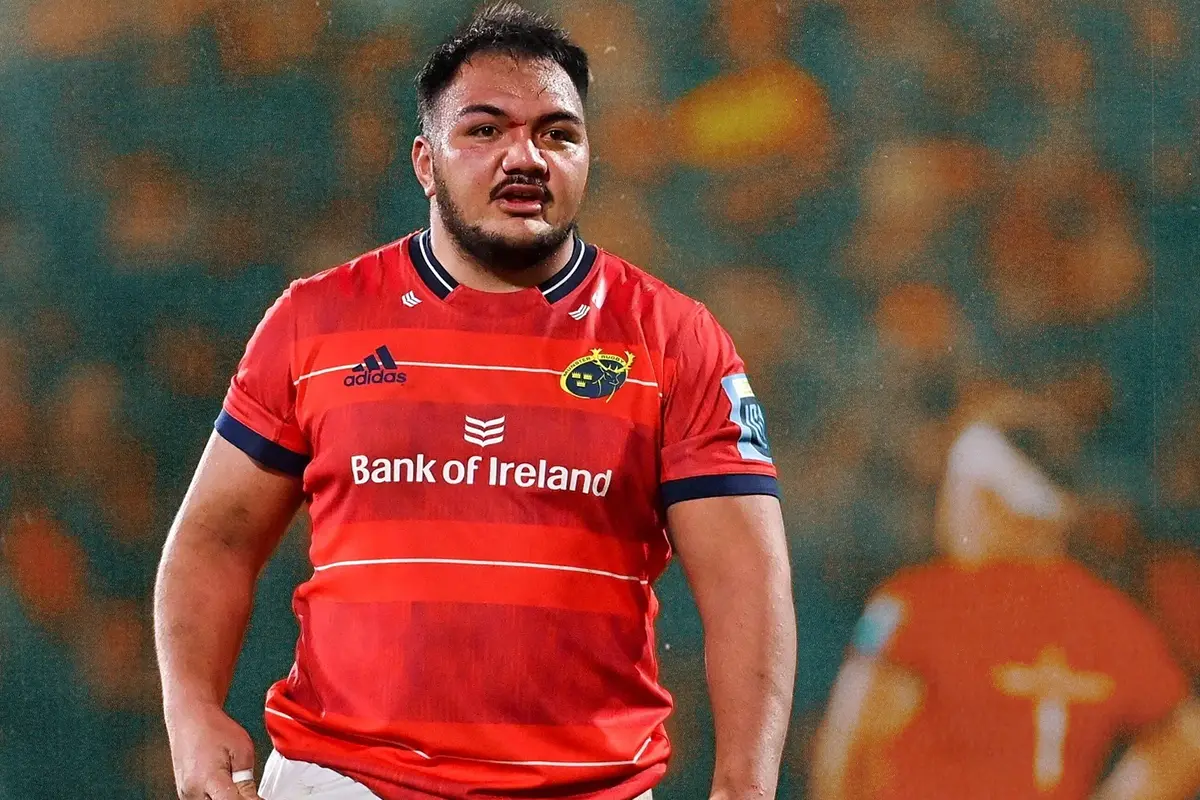
A fully fit and firing Salanoa, giving us 60-70% availability for the season, is a level-raiser for this front five. I genuinely believe that. To go one further, if Salanoa had been fit for the last two seasons, I think it’s an inevitability that he gets capped and probably has 8-10 caps at this point.
How does he break through Farrell’s glass ceiling? Power. He has it. It’s the intoxicating prospect that underpins why Wes Liddy and Eddie O’Sullivan scouted him in the US in the first place, why Leinster took a punt on him as a project player, and why they were so furious that Salanoa wanted to move to Limerick in the summer of 2020, right in the middle of the pandemic.
At a basic level, Roman Salanoa has the kind of explosiveness and horsepower at tighthead that very few players in his position have access to. He’s 6’0″, well north of 125kg, wide as a door all the way around, and he can move with the kind of speed and punch that immediately stands out..
This isn’t theory; we’ve seen this during his breakout year in 2022/23, where he played a massive role in Munster’s URC title-winning season. Before that year, I was told by one of the coaches that Roman had “pulled it all together” after his first two years were snake-bitten by ankle issues. Sure, the scrummaging was a work-on — as it almost always is for tightheads in their mid 20s — but he got to the stage that the only looseheads who were giving him actual hassle were crafty veterans. All in all, he was a huge positive and was called up to the wider Ireland camp at the time.
He was on an expiring three-year contract last season, and Munster announced late enough in the campaign that he was going to sign a new one-year deal. As contract renewals go, it wasn’t universally popular in the fan space. I think the primary reason for that has roots in the RG Snyman “situation”, which played out in the previous 12 months. Snyman, who arrived at Munster at the same time as Salanoa, spent all four seasons either injured or recovering from serious injury before leaving for Leinster in a move engineered through conditions by then IRFU Performance Director, David Nucifora. Salanoa, who at the time of his re-signing hadn’t played a game for Munster since the URC final in 2023, missed the final two years of his three-year deal in its entirety. I think that reminded people of the ride RG Snyman took the club on, especially in his last season. But that shouldn’t apply to Salanoa.
On its own, Salanoa’s re-signing made complete sense. In last season’s Depth Chart series, I posited the following;
[…] the rumours are that he’ll get a 12-month extension to prove his fitness, so we can decide whether he can deliver on his undoubted physical attributes by October/November of this year, but this hasn’t been confirmed. In my opinion, it’s as likely that both the player and Munster might look at parting ways this summer as Salanoa finishes his three-year deal. I’d get him a 12-month deal to see where we are after the pre-season if it were my call, and the budget allowed.
If he was back fit at the end of last season — and he was, Munster just didn’t risk him when it wasn’t seen as necessary — giving him a one-year deal was the pragmatic thing to do for a guy with qualities so few props have.
Look at the maul stop that Salanoa and Edogbo pulled off against South Africa A in Cork.
Not every prop (or lock) has this in their locker. Roman Salanoa does, and that’s valuable, so you have to make a read on him early in this preseason.
I was told by two guys who had been in and around the preseason training so far, and they both said that he was either looking “scary” or “like a monster”. I know there’s the danger of making this into Ben Simmons Summer Jump Shot, but I should add that both guys were fairly certain that he would (and should) be cut last season, so nobody was huffing hopium. Ultimately, the real test will come when the preseason friendlies and then the initial rounds of the URC roll around. At that point, every appearance Salanoa makes ups his contract value for 2026/27, and increases his suitors elsewhere because they are also looking for a player who does exactly what he does.
I think that, if Salanoa gets through the first three games of the season — and I’m including both friendlies in this — and he looks like he’s handling the return to competitive, live rounds rugby, signing him to a new two-year deal that starts in July 2026 before October is a no-brainer.
***
John Ryan is someone I see retiring at the end of this season, but, until then, I think he’ll fill a pretty valuable role with availability — both his own availability and the availability of others — as the main factor in his usage.
Let’s consider a 27-game season just to make sure we’ve got the timing right. We have to consider that using Jager and Salanoa together is our ideal 1A+1B combination, but that we can’t burn them out.
- Jager fit 70% → ~19 games
- Salanoa available 60% → ~16 games
- Expected overlap (both available in the same game) ≈ 0.7 × 0.6 × 27 ≈ 11 games → those 11 can be covered by Jager + Salanoa without John Ryan in the squad. I’d schedule both Leinster interpros, all four European pool games where an ideal qualification is in the balance, home South African opponents, plus knockouts for that full 1A+1B usage.
- That leaves roughly: 8 games with Jager-only, 5 with Salanoa-only, 3 with neither = 16 games where a second/any tighthead is needed.
If McSweeney & Foxe take some of those as development appearances, Ryan fills the rest.
How many games for John Ryan?
- Conservative Development for Younger Props: Ryan needed for ~12 games (9 of the “one-available” + all 3 “neither”).
- Moderate Development: Ryan for ~10 games (7 + 3).
- Aggressive Development: Ryan for ~8 games (5 + 3).
I’d plan for 8–12 John Ryan appearances, with ~10 as the sensible midpoint if you give McSweeney/Foxe around six combined development games across the season.
If John Ryan is needed for 10 games, I think that’s a pretty decent return from a veteran prop whose primary role at this stage of his career is, ideally, on the training pitch. But if Jager and Salanoa drop below their expected availability, there could well be trouble.
McSweeney, if he can prove his fitness, will likely get a one-year senior deal for next season, and I’d put Foxe in the same boat. If one or both of them end up having an eye-catching run of games before December, that might jump to two-year deals, but, at the same time, I’d suggest that if McSweeney has another year of injuries, he’s likely going to be looking for a new club by December. Quite a bit on the line for him.
***
I think it’s inevitable that Munster will sign another tighthead prop — IQ or NIQ — in the next 12 months, and I’d be fairly sure that one could be in situ by the end of November this year.
Why?
Availability. Positional importance. Pragmatism.
McMillan’s system put a lot of weight on a dominant scrum, and if Jager and Salanoa pick up some knocks during the early season, and it’s pragmatic to expect that they will, either together or individually, then Munster will need to fill that space with European Rugby on the horizon.
Financially speaking, Munster will look at this year’s European Cup draw and see a viable path to a home run of knockout games. A home Round of 16 and Quarter-final is not unrealistic. Achieving that means having power in core areas and tighthead is vitally important, both in general, and specifically to this system. Do not be surprised to see an NIQ coming in on a short-term deal that turns into a one year, or longer.
