


The main bulk of Munster’s backrow retention was done last season, when Gavin Coombes, Ruadhan Quinn and Alex Kendellen all extended until 2027, while Jack Daly, Cian Hurley and Peter O’Mahony all departed the province.
All by itself, Peter O’Mahony’s retirement signals the end of several eras.
O’Mahony was the last link to Munster’s Golden Generation of the 2000s and early 2010s — he’s the last player I’d describe as a certain starter in the mid 2020s who would have been seen as a peer of the likes of Ronan O’Gara and Paul O’Connell at the tail end of their careers.
Whatever happens in the post-O’Mahony era will be… new. Sure, he wasn’t the same physical force at the end of his career as he was in his physical and tactical peak, say, from around 2017 to 2022, but he was always capable of making himself a focal point in some form or another. He could be an emotional touchstone, an aggressive flashpoint, a tactical resource at the lineout; even though he was fading physically, he was still the War God. Maybe not to the same game-altering level he was at his peak — although you could argue Ireland, rather than Munster, got to see that guy more often — but still incredibly useful.
In his absence, Munster have a few players who can close the experience gap, if not fully, or with the same breadth of qualities across 100+ tests for Ireland and the Lions, never mind 200 appearances for Munster.
John Hodnett is one of them.
In the High Performance Centre last week, Clayton McMillan marked Hodnett out as a quiet leader around the place, and it’s not really all that surprising. Hodnett has become a mainstay in the Munster backrow over the last four seasons and, alongside Alex Kendellen, have been the primary small forward build players preferred under Van Graan latterly, then Rowntree, and then last season post-Rowntree. One starts, one finishes and, the odd time, they play alongside each other.
It is not a wild theory to suggest that McMillan might use them in a similar way.
Small Forwards
Both Hodnett and Kendellen are classic Small Forward build backrows. They’re actually a really good starting point in my ongoing crusade against calling any player under 6’3″ an “openside” because, while they both might get labelled in that classic position, they are very different players who do very different things on the field, in very different areas.
To illustrate this, I broke down Hodnett and Kendellen’s metrics on a per/80 minute basis against some of the players who play in broadly the same role who are also in their physical prime, or close enough to it; there is a few interesting wrinkles in this one, for sure.
Attacking Metrics (per 80 minutes)
| Player | Try Inv | Carries | Dom Carry % | Gainline % | 2+ Tacklers % | Tack Evasion % | Att. Rucks | Att. Ruck Eff % | |
|---|---|---|---|---|---|---|---|---|---|
| John Hodnett | 0.55 | 6.55 | 56.1 | 62.5 | 61.1 | 16.7 | 11.74 | 86.0 | |
| Alex Kendellen | 0.42 | 10.74 | 36.6 | 59.8 | 62.7 | 12.8 | 21.26 | 86.1 | |
| Sam Underhill | 1.42 | 8.26 | 21.2 | 60.0 | 65.7 | 16.1 | 15.58 | 86.4 | |
| Jac Morgan | 0.10 | 8.24 | 43.8 | 58.6 | 49.4 | 21.8 | 18.37 | 84.0 | |
| Ben Earl | 0.48 | 11.20 | 40.4 | 59.0 | 64.1 | 26.4 | 12.15 | 88.2 | |
| Tom Curry | 0.39 | 6.85 | 40.4 | 60.4 | 62.3 | 11.1 | 10.86 | 89.3 |
Defensive Metrics (per 80 minutes)
| Player | Tackles | Tack Succ % | Dom Tack % | TO Tackles | B/D Steals | Total TOs | Def. Rucks | Def. Ruck Eff % |
|---|---|---|---|---|---|---|---|---|
| John Hodnett | 16.75 | 92.9 | 6.0 | 0.27 | 0.27 | 0.55 | 6.37 | 18.6 |
| Alex Kendellen | 16.11 | 88.2 | 4.6 | 0.11 | 0.53 | 0.84 | 4.74 | 17.8 |
| Sam Underhill | 17.94 | 88.2 | 7.9 | 0.00 | 0.24 | 0.24 | 8.02 | 20.6 |
| Jac Morgan | 18.46 | 94.4 | 11.8 | 0.38 | 1.04 | 1.42 | 8.05 | 23.5 |
| Ben Earl | 13.49 | 87.9 | 9.9 | 0.29 | 0.67 | 0.96 | 6.41 | 16.4 |
| Tom Curry | 17.06 | 87.1 | 10.6 | 0.13 | 0.65 | 0.78 | 7.50 | 15.5 |
Jac Morgan is the most complete defensive player on these metrics on a volume and effectiveness basis, while Hodnett shows up favourably in dominant carry and gainline stats against some pretty big names.
Offensively, there’s a fairly clear differential between the small forwards who carry in the edge spaces primarily — Hodnett, Earl — and the rest, who tend to carry more off #9. Alex Kendellen also stands out as being the highest volume ruck player in those metrics on the offensive side of the ball.
Comparing the data, I found some interesting comps;
John Hodnett
Closest Player: Tom Curry
-
Both are strong in defensive fundamentals, with high tackle success and quality tackling technique (Curry with 77.9% tackles above hips; Hodnett with excellent reliability).
-
They both have powerful carry traits, but Hodnett’s dominant carry rate (56.1%) even exceeds Curry’s (40.4%), aligning with their role as impactful but efficient carriers often operating in both tight and slightly wider channels.
-
Hodnett’s propensity to carry with maximum impact per touch, combined with strong defensive skills, reflects Curry’s role as the technical and physical backbone around the ruck.
Contextual Fit: Hodnett’s slightly wider carrying compared to Curry’s tighter play suggests Hodnett blends power and impact effectively in spaces, but his core profile is closest to Curry’s in terms of defensive work and technical skill.
Alex Kendellen
Closest Player: Ben Earl
-
Kendellen and Earl both operate as tempo controllers, with high attacking ruck involvements (Kendellen leads all players in attacking rucks per 80) and high carry volumes.
-
They contribute significantly to breakdown work and turnovers, although Kendellen’s style is a bit more compact, reflecting his role closer to the ruck compared to Earl’s wider ball-carrying.
-
Kendellen’s all-around high work rate and turnover creation mirror Earl’s dynamic versatility and ability to influence attack continuity and defense.
Contextual Fit: Kendellen’s tighter, ruck-heavy style combined with his volume metrics aligns well with Earl’s profile as a versatile, high-tempo player who balances carrying and breakdown contributions.
Kendellen plays like a tighter Ben Earl, Hodnett like a wider bore Tom Curry; that’s what the data tells us. Not like for like role clones, but players with enough complimentary data points to be interesting.
Where it gets really interesting is when you compare Kendellen and Hodnett to their main Irish rival for this role in the test squad — Josh Van Der Flier.
Attacking Metrics (per 80 minutes)
| Player | Try Inv | Carries | Dom Carry % | Gainline % | 2+ Tacklers % | Tackle Evasion % | Att Rucks | Att Ruck Eff % | |
|---|---|---|---|---|---|---|---|---|---|
| Josh van der Flier | 0.98 | 8.35 | 64.4 | 58.8 | 56.9 | 28.0 | 21.28 | 86.9 | |
| Alex Kendellen | 0.42 | 10.74 | 36.6 | 59.8 | 62.7 | 12.8 | 21.26 | 86.1 | |
| John Hodnett | 0.55 | 6.55 | 56.1 | 62.5 | 61.1 | 16.7 | 11.74 | 86.0 |
Defensive Metrics (per 80 minutes)
| Player | Tackles | Tack Succ % | Dom Tack % | TO Tackles | BD Steals | Total TOs | Def Rucks | Def Ruck Eff % |
|---|---|---|---|---|---|---|---|---|
| Josh van der Flier | 13.9 | 88.2 | 3.5 | 0.16 | 0 | 0.16 | 7.04 | 0 |
| Alex Kendellen | 16.1 | 88.2 | 4.6 | 0.11 | 0.53 | 0.84 | 4.74 | 17.8 |
| John Hodnett | 16.8 | 92.9 | 6.0 | 0.27 | 0.27 | 0.55 | 6.37 | 18.6 |
Again; really interesting stuff. Van Der Flier primarily carries the ball in the wider spaces, which explains his evasion metrics being so much higher than everyone else but that reveals something too; he’s very fast, very agile and a very difficult guy to tackle when he does carry in his spots. He’s also a very high volume ruck player — Kendellen is close, but Van Der Flier stretches out on volume with a slight edge in efficiency — but what really surprised me was how Van Der Flier had dropped off as a defensive impact player.
On the evidence of last season, Van Der Flier was a far more impactful attacker than he was on the defensive side of the ball, even allowing for his decent defensive ruck attendance.
The larger context here is Andy Farrell excluding Van Der Flier from his test Lions squads — the only Irish player to miss out on selection despite being fully fit the entire time — and whether or not that produces an opportunity for Munster’s small forwards. Offensively, Van Der Flier still looks like the better pick, but is there room for manoeuvre on the defensive side of the ball and as a tighter carrier?
I think there is, but whether or not that impacts Munster’s contracting remains to be seen.
Hodnett is coming to the end of the two year deal he signed after Munster’s URC title win in 2022/23, and he’s as important to Munster as he was during that season.
Hodnett’s importance, though, seems to be as a partial component on big matchdays. He’s always involved in big interpros or knockout games in Europe and the URC. Hodnett averaged 56 minutes across 21 games last season, and Kendellen managed 47 minutes across 22. It really shows how the interim coaching group tried to use both players small forward qualities in tandem last season, but rarely at the same time. Last season, Munster only used Kendellen and Hodnett at the same time from the start of the game only once — away to Glasgow during the Six Nations window.
Does this affect Hodnett’s offer?
I would say not. He’s plainly a big player in the squad and was marked out as a leader by Clayton McMillan last week and, as it stands, his lack of involvement with Ireland is net bonus, especially if Kendellen continues to be involved in wider squads this coming season.
As a result, I think a solid two year deal makes a ton of sense for John Hodnett as he comes right into his physical prime. I do think the usage of Hodnett and Kendellen as a pairing will come to a head at some stage — as in, eventually, it’ll have to be one or the other — but not this season.
***
Brian Gleeson is out of contract this season and, for me, this is an easy re-signing that should already be in motion. He’s only shown glimpses of what he’s capable at senior level in the last two seasons, but that’s all we’ve seen — a glimpse. His u20 career was up there with one of the best overall performances of a forward since the days of Caelan Doris, James Ryan or Andrew Porter.
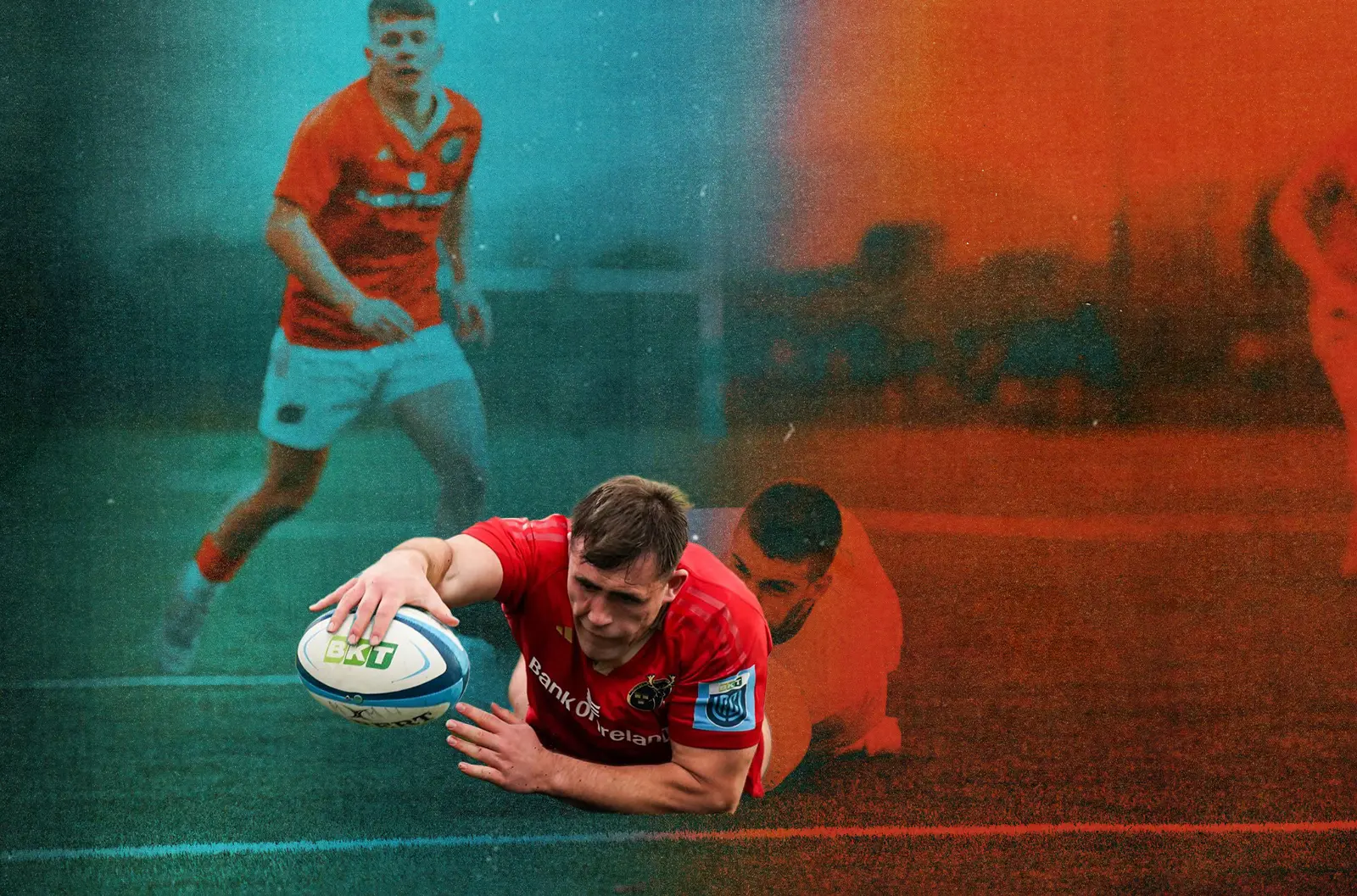
Gleeson shares some similarities with Doris. They both played two years of u20s, they both jumped up to a senior contract after one year in the academy, and they were — or are, you could say — incredibly highly rated. Both are #8s, however, they play very different roles. Doris was capped in his second full season as a regular starter for Leinster at just 21 and while that’s certainly possible for Gleeson this year, it would require a really strong start to the season.
The shift in roles is really important here because while Caelan Doris was certainly a big player for Leinster by his second full season, he was able to play a slighty wider, slightly lighter role where his handling and line running skillset could really shine. If Caelan Doris is a Combo Flanker who could arguably play in anyone of Ireland’s usual backrow rolesets, Brian Gleeson maps like a Power Forward or Half Lock Power Forward, in a similar vein to Gavin Coombes with who he is competing with this year from a Munster perspective.
In a functioning test system, Gavin Coombes has 20+ caps for Ireland at this stage on top of being a squad regular — if not always in every match day 23 than certainly in most — but that’s not how it’s panned out. Andy Farrell likes his backrow roles in very specific areas and I feel that what Coombes does at a world class level doesn’t quite fit with that vision systemically.
As a result, that usually means that Gavin Coombes is heavily involved with Munster throughout each season and, in the last few years, has found himself covering the second row mid-game, alongside starting there when the injury crises get really bad, as they often did.
I think, as long as Gleeson continues to develop his lineout game, there are multiple spots in Munster’s backrow that he can start to stack minutes in. He’ll need time, too, as a player with a power forward profile like Gleeson needs a little bit more time to translate their power game from u20s to full senior rugby. Honestly, I think his best spot is in a pack with Gavin Coombes where he can show off his physicality in a secondary way, in a similar way that Arno Botha did for Coombes back in the late 2010s.
He’s an easy retention, for me, at least when it comes to the decision to keep him. Of course you do. He will likely be contested by Connacht and maybe Ulster, as well as some English/French teams so going early is advisable. With a bit of luck with injury, I think he could be a top player for club and country inside the next two seasons.
***
The last player on a senior deal is Jack O’Donoghue who, in the absence of Peter O’Mahony, is Munster’s most capped backrow. I think he’s actually Munster’s most capped player, full stop, this season.
Jack signed a one year extension last season that was sensible business all around. Munster needed veteran, versatile squad depth this season — especially in that lineout dominant combo flanker roleset — and Jack O’Donoghue loves playing for the club. One year deals tend to be holding patterns, however, and could spell a move for O’Donoghue next summer as younger options start to fill up the spots he has traditionally thrived in, either as a starter in the early and middle stage of his career, or a glue guy in the last couple of years.
His heaviest recent usage was in 2022/23, as he played 23 games, 21 of those as a starter. He’s slowly tapered off since then, filling a complimentary role across all three starting backrow slots, or off the bench. This season he’ll be 32 and I think he might struggle to hold off the challenge of the younger guys coming through who offer more specialist role sets, especially in a forward system that looks to be very collision dominant, which hasn’t ever really been O’Donoghue’s primary skillset.
However, he is a good lineout guy in a smaller pack and a really strong lineout guy in a big one, so I wouldn’t count him out from getting more gametime than expected this year, especially with Munster’s lineout and maul being a real focal point during preseason.
I wouldn’t be surprised to see him make a move a Premiership side or a lower half of the TOP14 club ahead of next season, though, especially if Quinn or Gleeson or both hit the ground running.
***
From an academy perspective, I see Michael Foy and Sean Edogbo getting a few URC opportunities this season with a fair wind injury wise. Both players have a massive future and offer varying rolesets that can complement any backrow build. Gavin Coombes will be a very important player when it comes to setting the framework for players like Foy and Edogbo and, come to think of it, Ruadhan Quinn and Brian Gleeson. Keep an eye out for Foy and Sean Edogbo jumping onto senior deals or hybrid 1+2 deals this season.
Oisin Minogue is a small forward build backrow, and I expect him to rack up minutes in the AIL and Munster A alongside Luke Murphy, who missed a lot of last season due to a nasty shoulder injury. He needs time to get back up to speed, but don’t be surprised to see him getting a URC appearance or two in the early or middle block if we’ve started the season well.
