


The Cork vs Limerick “thing” in Munster Rugby – with “thing” doing a lot of heavy lifting – is arguably the most tiresome part about writing about rugby in the province. This villagism has its tendrils in way too many pockets of the province’s business, but it’s especially visible whenever the topic of playing more competitive “big” games in Cork’s Páirc Uí Chaoimh pops up.
Since professionalism, there was historically a pretty even split between the number of games played between Cork and Limerick until the early 2000s.
So how did it get to the stage we’re at now, where every single important competitive game is at Thomond Park, while Musgrave Park (now called Virgin Media Park) gets between three and four lower-tier URC games a season?
If you go back to the late 90s, you’ll often see a pretty even split before and immediately after Thomond Park’s first expansion post-professionalism in 1998 ahead of the 1999 World Cup.
In 1999/2000, Munster played one of their three home pool games in Cork’s Musgrave Park, with the other fixtures played in the newly modernised Thomond Park. Thomond Park had the larger capacity – around 14,000 vs 9,000 at the time – so as Munster became the hottest rugby ticket in town, more of the “big” games filtered towards Thomond Park to accommodate the insane demand for tickets.
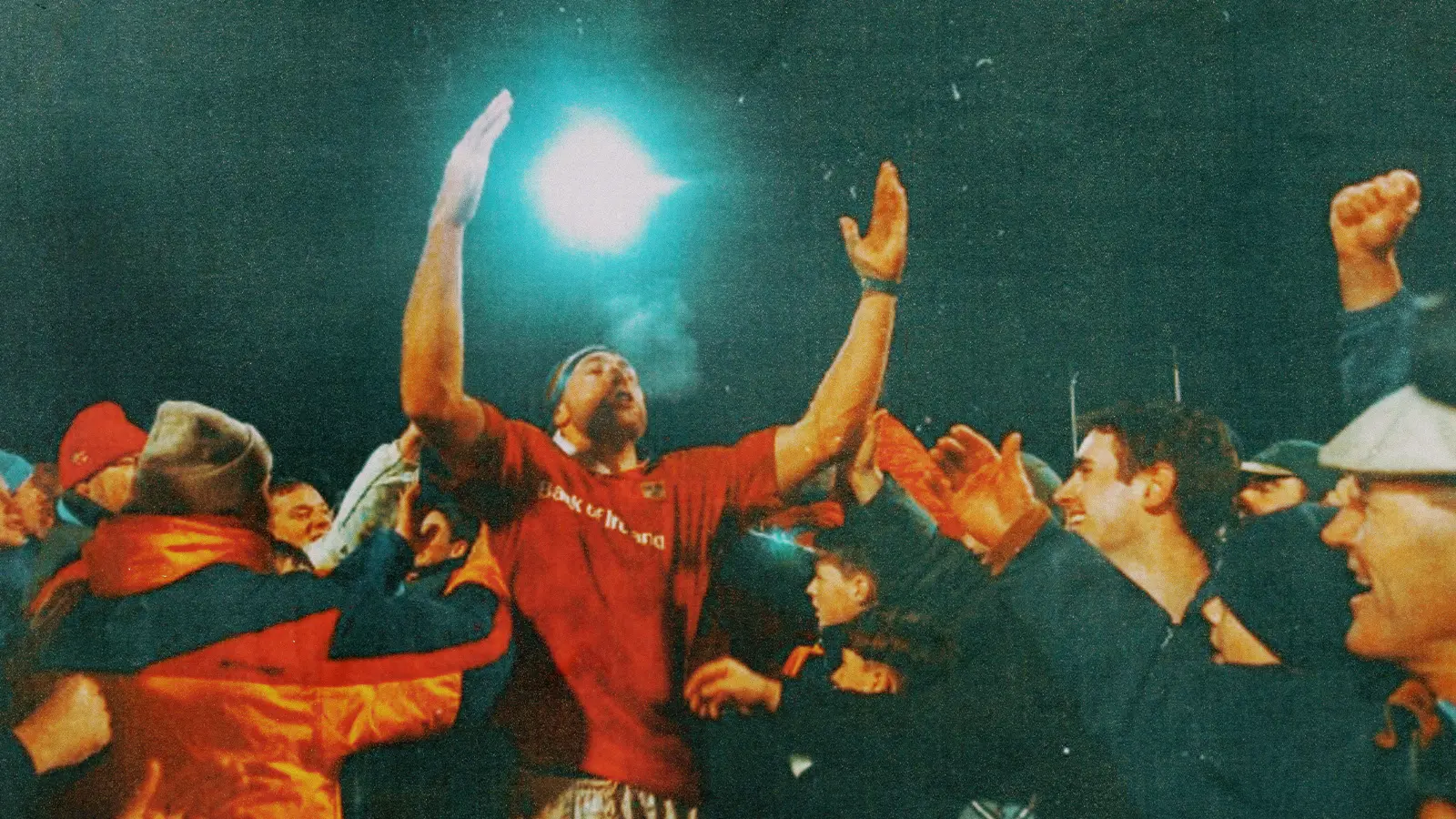
As someone who lived through this period of Munster Rugby, it’s hard to overstate just how hot a commodity these tickets were. A lot of it was down to Munster actually winning games against the French and English teams who had been slapping Ireland around the place at test level in the 90s – winning always draws a crowd. It wasn’t only that, though. Munster became something of a cultural touchstone. You wanted to be in on it – to be part of the story that was capturing the imagination of European rugby right as professionalism took hold.
This popularity made holding games in the smaller capacity Musgrave Park very difficult for the nascent professional organisation to stomach. With professionalism came a world of bills to pay, and everything has a price when you’re trying to be the best team in Europe. The more fans you could get through the turnstiles, the better. Munster could have easily fit around 10k more people into the old, 14k capacity Thomond Park back then and by 2003/04, all Heineken Cup pool games were being held in Limerick. Cork rugby people weren’t too thrilled at that, if I recall correctly, but the financial argument was unquestionable. Moving any Heineken Cup game to Cork would have been leaving thousands of euro on the table and creating a horde of pissed off fans for deliberately limiting the number of spectators while you were at it.
By the mid-2000s, investing in the infrastructure of Munster Rugby was not only sensible but long overdue. The IRFU and Munster planned to increase Thomond Park’s capacity to 26,000, a project that would cost an estimated €40m part part-funded by the National Lottery, private investment and a loan from the IRFU itself. The reasoning for this was sound. ERC regulations stated that any knock-out game had to be played “in the best possible stadia” and the feeling was that with Munster playing European knockout games in Lansdowne Road right up until 2005/06. In 2008/09, just a few months after the initial opening of the stadium, Munster played a home quarter-final against the Ospreys in Thomond Park – all was right with the world.
But the plans didn’t stop there.
Before the economic crash and gigantic recession of 2008, Munster had planned to expand the capacity of Musgrave Park out to 14,000 people.
In that article, former Munster branch president Niall O’Donovan said the following;
“We’re at the design stage with Wilson architects and they’ll come back to us before we go for planning, which will happen in a few months. I expect building to commence in 2009, subject to planning, of course. I don’t want to see Cork losing big fixtures, like Munster-Leinster in the Magners League, for example. Tickets for that game before Christmas were sold out six weeks in advance and I don’t want that kind of fixture going to Thomond Park just because Musgrave Park wouldn’t be capable of taking the crowds.
There will be Heineken Cup games in Cork again in the future, but only for the likes of an Italian team, for example. Thomond Park will continue to stage all the big games.
And in fairness, the Limerick people have said they will support Musgrave Park in the same way we’ve supported Thomond Park.”
The recession of 2008 – that only began to truly bite a few years later – put paid to a lot of these plans, but even as recently as 2010, there were significant plans to boost Musgrave Park’s capacity to nearly 20,000. There were a number of reasons for this, but chief amongst them was the feeling amongst many in the Munster Branch that “big” games should be split more between Cork and Limerick.
O’Donovan said explicitly that he didn’t want to see big games like Munster vs Leinster in the league leave Cork in January 2008, but that’s exactly what happened within a year. Munster last played Leinster in Cork in 2007/08 and the fixture ultimately went to Limerick for the same reason that the Heineken Cup games did – higher demand means selling more tickets means making more money.
So, if things were to become more balanced, Musgrave Park’s capacity had to increase.
This is an official post on the IRFU website from 2010.
The Development Committee of the Munster Branch of the IRFU had identified plans to develop a new 20,000 capacity stadium at Musgrave Park, following on from the successful development of Thomond Park.
[…] Phase 1 of this development is to build a 6,000 capacity stand, replacing the existing West Stand and West Terrace. This will incorporate dressing rooms, medical room facilities and a weights room on the ground floor, with Branch offices and hospitality facilities on the first floor. Phase 2, which is subject to a number of factors, is to develop a further 6,000 capacity stand on the East side with North and South stands, delivering a 20,000 capacity stadium.
As you’ve probably guessed by now, Phase 2 of this plan never materialised for a few reasons – planning permission for a wider commercial and residential complex that Munster wanted to use to fund the project was refused and the worsening economic conditions – in general and in Irish Rugby as a whole – led to a scaling back of the project. The projected capacities of 12k-20k never materialised, and the new West Stand helped to bring the capacity to just 8,008, albeit with a decision to change the grass pitch to a full 4G pitch in 2018 as both a revenue-generating and cost-cutting measure.
The last time a European Cup game was played in Cork was 2003 against Viadana. The last time an Irish province played a league game in Cork was on the 22nd March, 2008. At every step, the decision to move these games to Thomond Park was based on practicality – bigger capacity = bigger gate = more money. That became particularly true as the economic downturn of 2008-2015 bit into rural Ireland more so than centres like Cork, Dublin and, for many, including myself, abroad.
The practicalities of moving those games to make more money from the bigger capacity, especially in a world where Munster Rugby were struggling financially, were undeniable. Had the world economy not blown up in 2008, I think we’d probably have a municipal stadium in Musgrave Park right now with a capacity of 14k that maybe has Cork City FC as a tenant, and that hosts three interpros and two Heineken Cup pool games across a two-season cycle, plus another three or four league games a season.
When you compound the Munster HPC going to Limerick and UL, who offered a ton of incentives, financial and otherwise, to base the project there, rather than at CIT in Cork, who also bid for it, the feeling in Cork was that all of these decisions kept being pragmatically moved to Limerick, away from the biggest population and financial centre outside of Dublin. As in, things kept getting moved to Limerick for financial reasons, but in doing so, reduced the ability of Cork to be a massive financial engine room for the club.
It wasn’t a stitch-up; all the decisions made sense in isolation, but the optics were that Munster was becoming Limerick RFC, with a few Welsh, Scottish and Italian teams directed to Cork by way of consolation.
When you roll the AIL rivalries between Cork and Limerick clubs into the mix, and the branch men who come from those clubs in the orbit of either north or south Munster and who want to bring as much as they can to their area, it can get very political and very nasty very quickly.
Enter The Pairc
In 2017, Cork GAA finally completed their regeneration of Pairc Ui Chaoimh after a very difficult spell that saw budget and scope issues plague the project from the get go. In February of 2018, the tragic passing of the former Manchester United and Celtic footballer Liam Millar soon saw a testimonial organised in Cork to honour his memory later that year. It was originally due to be held in Turner’s Cross but when the tickets sold out in under a minute, public pressure began to grow for the game to be held in the 45,000 capacity Pairc Ui Chaoimh.
Cork GAA were “receptive” to the idea but tried to pass the buck to GAA Central Congress who could only vote on an exemption to Rule 42 in February of 2019. The GAA initially refused the request on this basis, but this was challenged by Cork lawyer Tim O’Connor in the Examiner, who stated that the use of State aid to fund the project meant they could not object to the holding of the game on those grounds;
But there is no doubt the grant of €30m was made on the basis that the Páirc would be open to other sports, and was cleared by Europe on that basis.
The County Board agreed to this. These conditions were not forced on them; they agreed to them as conditions for getting money from the taxpayer. The Cork County Board does not get an exemption from EU or Irish law just because it is the Cork County Board.
It is hard to see how a blanket refusal to comply with these terms — and making no effort to comply with them two years after clearance on these terms — can be justified by the County Board. It is even harder to see a better example of a voluntary sporting event than a charity match to raise funds for the family of a late Cork sportsman.
The Cork County Board were given taxpayers’ money on the condition that the Páirc be opened.
The people of Cork are entitled to ask that those conditions be complied with; and if they aren’t, to ask why not.
The GAA relented, and the stadium was opened for the testimonial game that year and was a massive success. It also opened up the possibility for the Cork County Board, who were struggling financially in the aftermath of the stadium’s rebuild, to bring other sports and events to the stadium to generate income.
Munster Rugby saw the opportunity to begin a rebalancing of the “big game equation” that had plagued the province since the late 2000s and, in 2021, began to plan to hold a big friendly in the Cork stadium.
In August 2022, Cork GAA requested the GAA Central Council to open up Pairc Ui Chaoimh for Munster Rugby and it was approved. Munster would play South Africa in the 45k capacity stadium in November of that year. After some initial scepticism from Limerick – and local annoyance at the loss of a big economic night for the city and surrounds – the game sold out in under a week and almost sold out in the presale.
By any metric, it was an incredible success both as an event and as a money spinner and showed Munster that the appetite for bigger events in Cork was voracious.
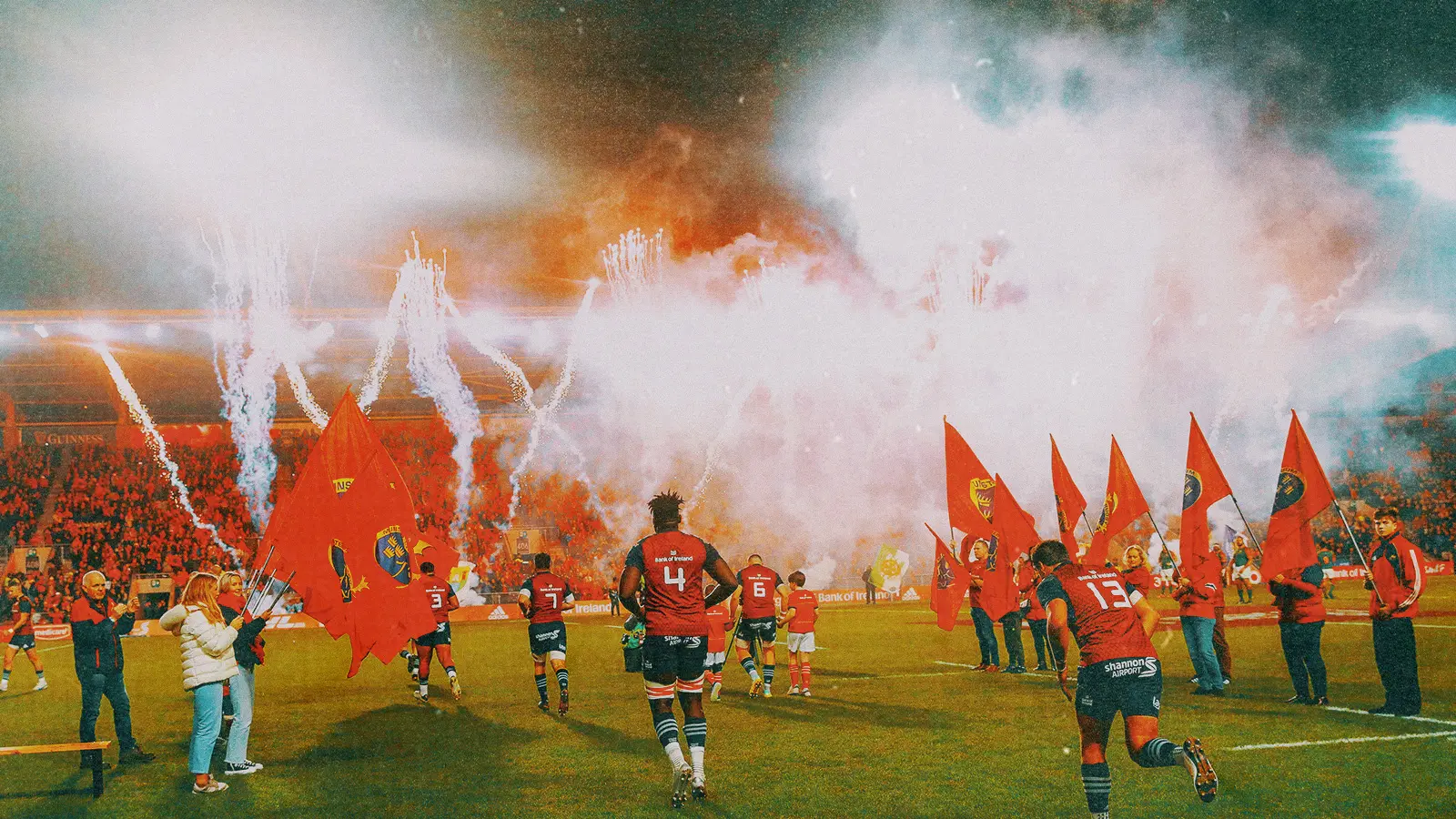
Sure, there were teething problems with stewarding, access to big screens and other issues, but nothing insurmountable. Another friendly was arranged against the Crusaders in February 2024, and while it wasn’t as hot a ticket and arguably had more issues with stewarding and big screens than the previous game against South Africa (Select XV), it was another big financial success.
The way forward was pretty clear.
Expanding Musgrave Park beyond its 8000 capacity was no longer financially viable, but with access to Pairc Ui Chaoimh and a good relationship with the Cork County Board in place, it was now feasible to move bigger games back to Cork in a way envisioned by the organisation since the early 2000s.
Of course, the obstacle now would be making sure that this was seen as a rebalancing and not just taking something from Limerick, which is easier said than done. Munster Rugby is a huge economic driver for Limerick city and while it isn’t anyone’s fault that all of the major games had to be held in Limerick for this long, the polarity is reversed on the logic of the 2000s. If Munster can sell out 45k seats in Pairc Ui Chaoimh once or twice a season, those extra 19,000 bodies through the turnstiles on each occasion fulfill the same financial logic that dictated the Leinster game move from Cork to Limerick in the late 2000s, even with the rent Munster pay to use the stadium.
Prior to that last Leinster game in 2007/08 – that I attended – only one previous Leinster game appeared in Thomond Park since the 2000s. That was seen as a compromise post-2003/04 that, if Thomond Park had the Heineken Cup pool games, it was only fair that Cork had the Leinster interpro plus one of Connacht/Ulster.
It isn’t about taking anything from Limerick – it’s about rebalancing to something closer to what was there when we won two Heineken Cups.
This week, Munster announced that the European Cup would return to Cork for the first time since 2003 next season – assuming we make it, which it looks like we will.
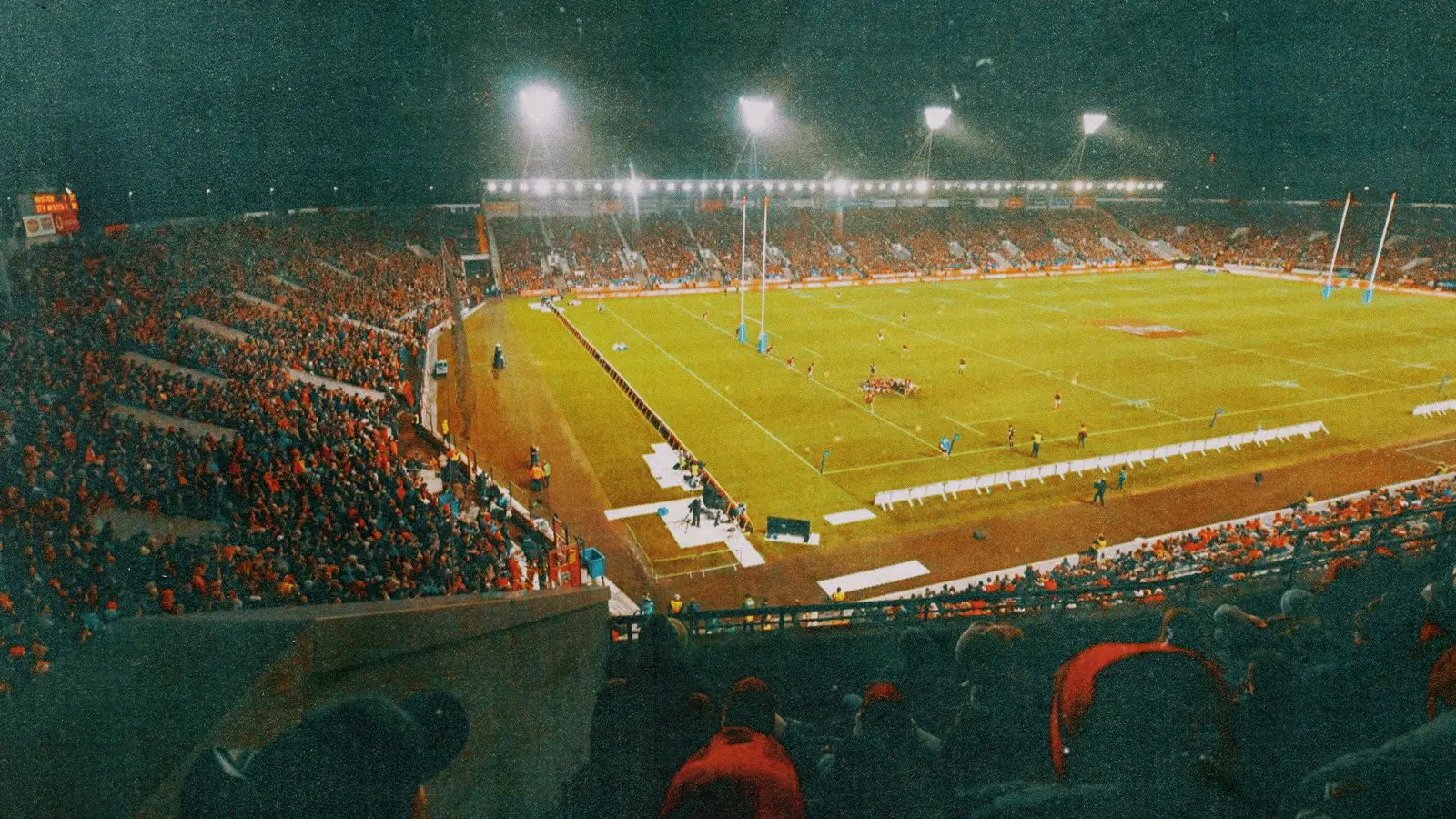
The announcement proved to be quite controversial on Twitter but, then again, what isn’t. Even on Bluesky, I received a few very negative messages about the prospect of one of the two pool games being moved to Cork. There is a feeling in Limerick that if you give Cork an inch, they’ll take a mile. Almost as if the 15 years of Munster bedding into Limerick might be somehow reversed in the next 15 years for the same financial reasons that mandated the current lopsided situation in the first place.
There is nothing to suggest this, of course. Musgrave Park remains too small for any serious game to be held there and the need to get permission for Pairc Ui Chaoimh many months in advance when it comes to competitive games – for season ticketing and GAA approval – means that only one or two big games maximum a season will be moved, and usually with a lot of notice.
Will the Leinster game be one of them? I think it’s inevitable that it will, as some stage, and we might see a rotating system every two seasons of an alternating European pool game or the Leinster interpro going to Cork.
It’s important for Munster to maintain that balance so, for example, that might mean hosting a few more glamour test window friendlies in Thomond Park this season’s immensely successful All Blacks XV game that drew an easy sellout and a ton of money to the Limerick area.
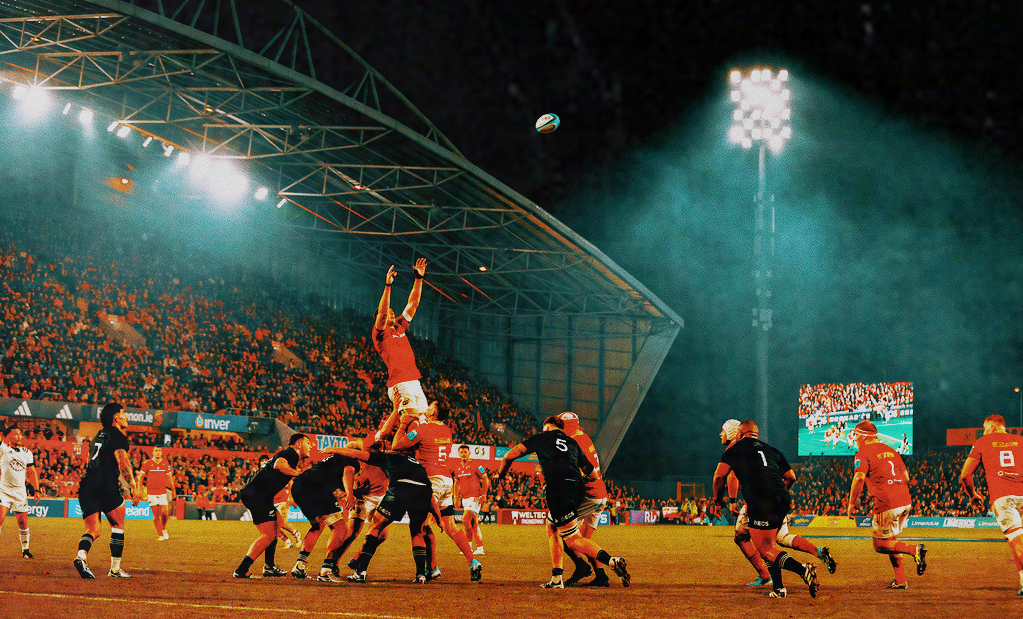
Munster are bringing an Argentinian representative side to Thomond Park this November coming and that promises again to be a money spinner for the area, even without the draw of the All Blacks jersey. In fact, I think this season’s All Blacks game and the signing of Los Pumas XV for season is a showcase of that need for balance – if a game gets moved to Cork, Limerick will get something instead.
That’s how it worked before in the 2000s for the sake of making the province the most amount of money and there’s no reason why that shouldn’t be the case again going forward.
We can’t afford to get bogged down into villagism and gombeen thinking; the future of this club, north and south Munster together, is too bright to let squabbling tarnish it, even for a second.
