


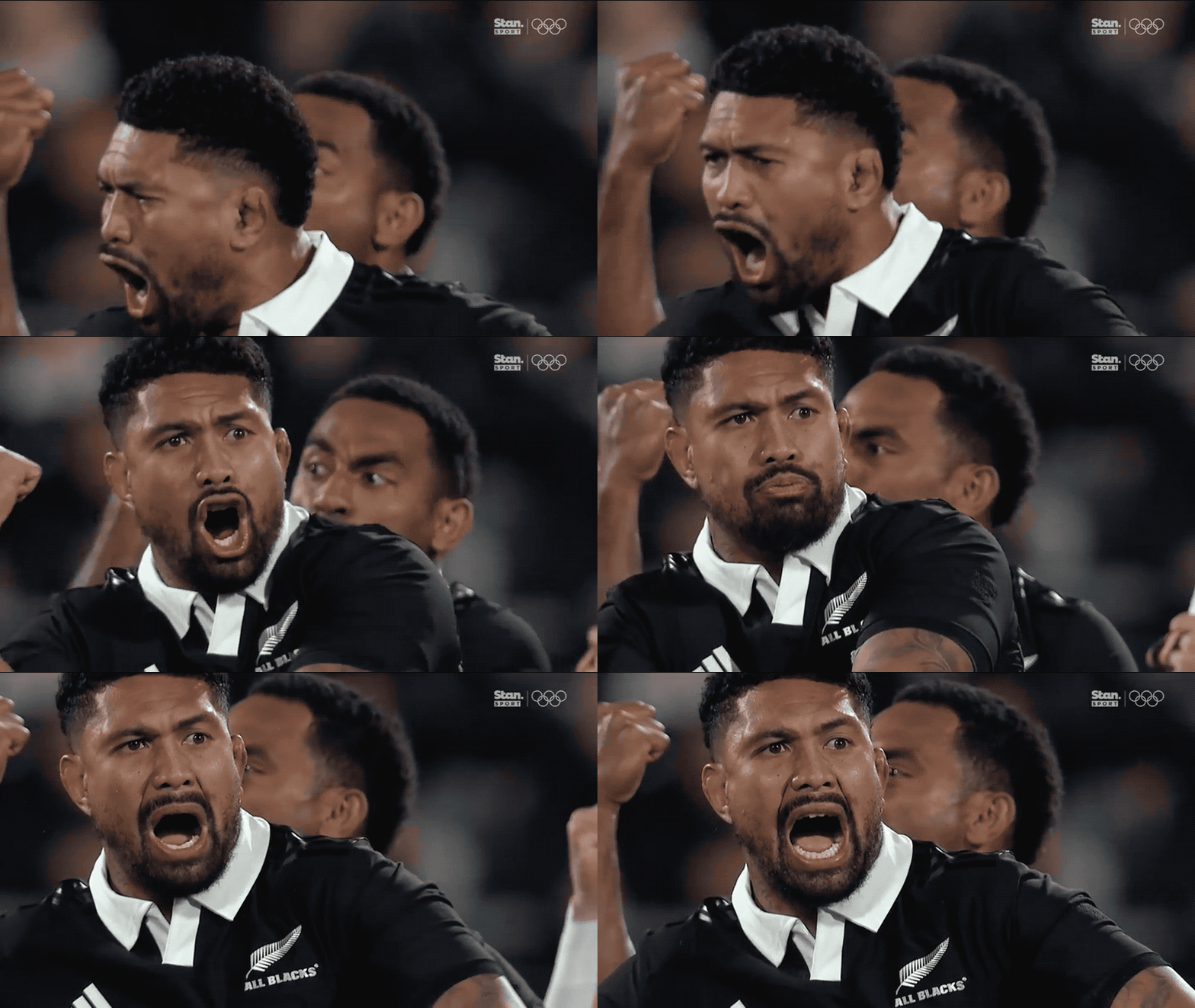
“I said that when Scott Robertson got hold of this team, I hope that he has thought really long and hard about how the All Blacks go back to attacking across the park; one hundred metres, the full width and breaking that defence down, but we really struggled. The thing that frustrated me when I watched that game was we had half-backs box-kicking from halfway again because they felt they had no other option. To me, that was massively negative and that’s not the way we play.”
Former All Black Justin Marshall
It’s not enough for Scott Robertson to win as All Black head coach, he must also do so in a style becoming of what New Zealand thinks the All Blacks should represent. So win, but win with style. Grinding out tough wins against hardy opponents as the All Blacks did against England doesn’t get the pulse racing.
When the All Blacks lose, however, it can feel like you’ve got a performance review with five million people who think they know how to do the job better than you. When you lose at home, those five million people walk in the door of that performance review thinking you’re a fucking idiot with a black mark against your name for daring to lose.
This is the battle between pragmatism and aesthetics that all coaches must grapple with as they get their feet under the table at a new gig. Robertson is no different and that battle is a tough one right now as he struggles between the opportunity of replacing some ageing old stagers with all the uncertainty that comes with that.
When you have prime Brodie Retallick, Sam Whitelock, Aaron Smith or, to go back a few years, prime Jerome Kaino, Conrad Smith, Kieran Read and Ma’a Nonu in your team, performances take care of themselves for the most part. The next generation of All Black might well get to that level but for now, their overall quality is in question.
For me, they are lacking in the back row, half-back and midfield in particular and this is seriously hurting them at the moment. Not enough to lead to critical failures – although their hardest games are the next three in the Rugby Championship before heading north – but enough to have them solidly as a top-five team in the world. That is not good enough for the All Blacks; Scott Robertson knows this and I think he also knows where his All Blacks side is weak. In the last few weeks, I’ve seen him trying to compensate for these weaknesses from a formation perspective, a role tweak perspective and a game state perspective.
In the first game against England, for example, the All Blacks approached the contest quite like they would against Argentina last weekend before tightening up out of fright a week later for the second test.
I think this All Blacks side is better when they lean on their super-strength right now, which is offensive transition but with that comes problems.
To generate this game state consistently, they need to kick the ball long, meet the opposition on the defensive transition line and invite a kickback that they can then attack through Beauden Barrett, Damian McKenzie, Mark Telea and, ideally, Will Jordan with Ardie Savea, Rieko Ioane and others supporting this transition unit.
It’s where they’ve looked at their most dangerous in the last few weeks. This try against Argentina didn’t come from a kick transition event but it worked on some of the same principles.
Look at the way the players on the outside snap into line behind McKenzie to offer a route to the wide areas.
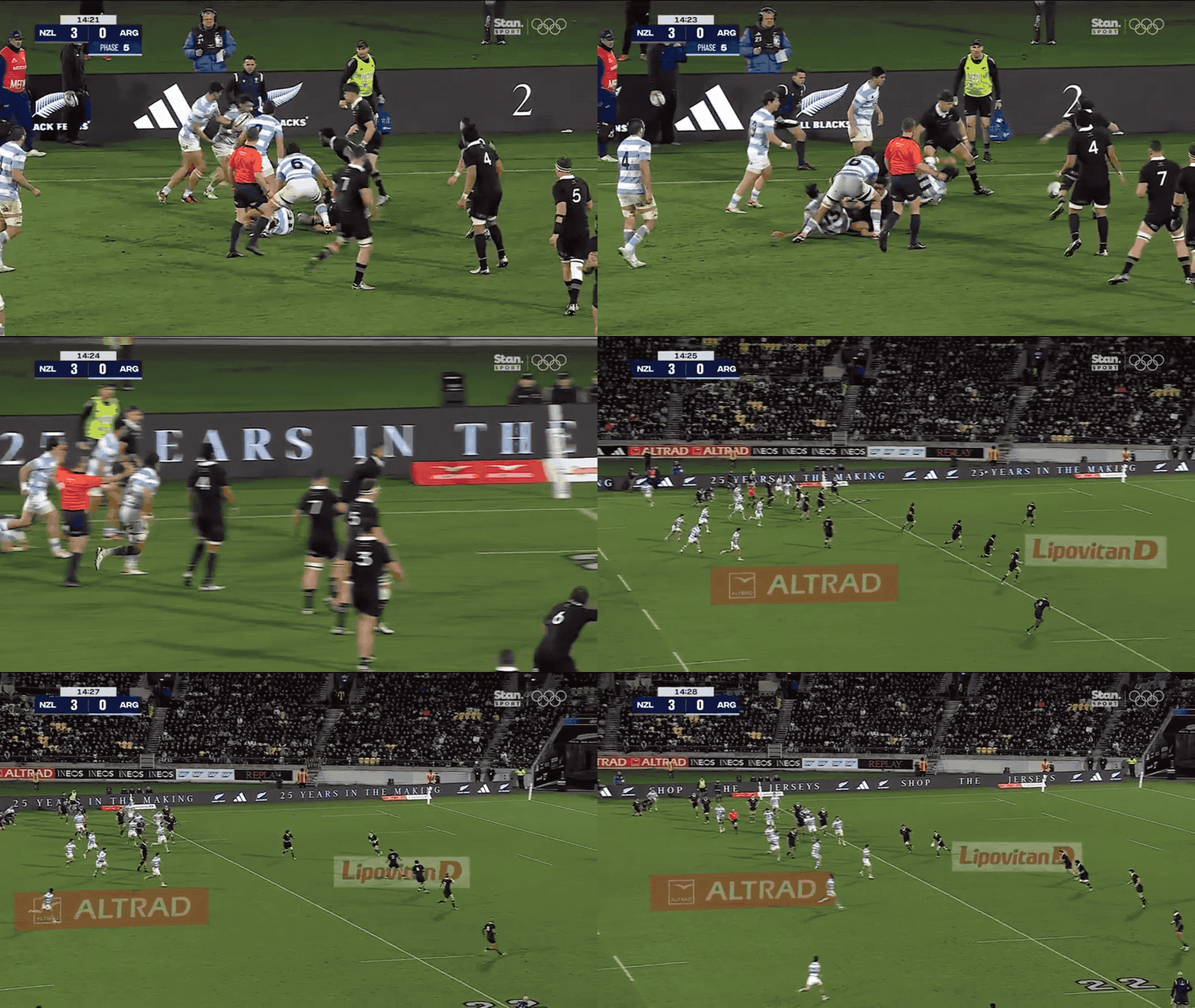
McKenzie doesn’t need them and chooses to kick into the pocket of space he sees behind Argentina’s scrambling defence;
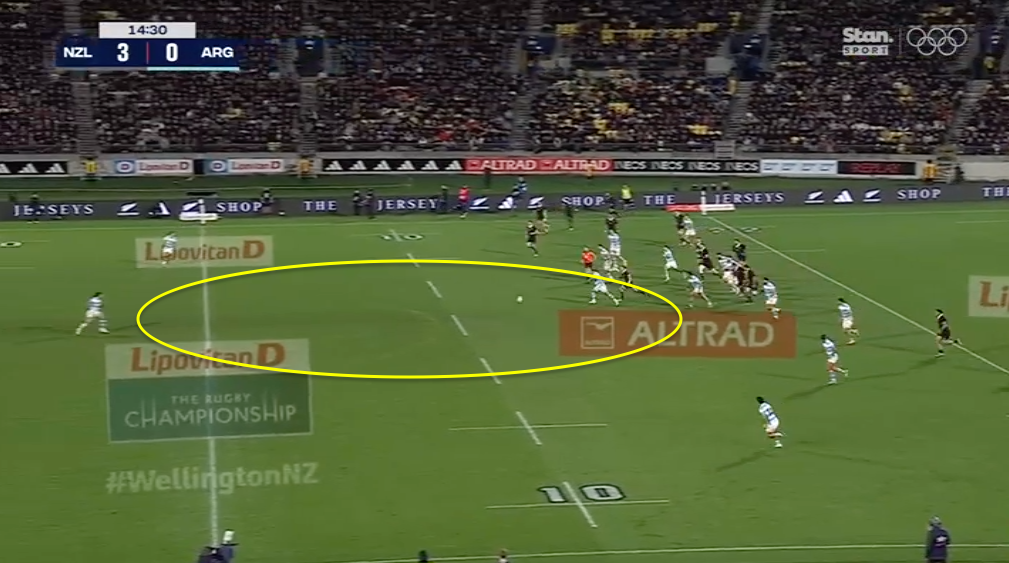
This is the higher-risk play – and Barrett is 100% advancing ahead of the kicker – but it’s the kind of play that this All Blacks team are devastatingly effective at. Let’s accept that McKenzie’s pass here is forward and accept the play for what it is.
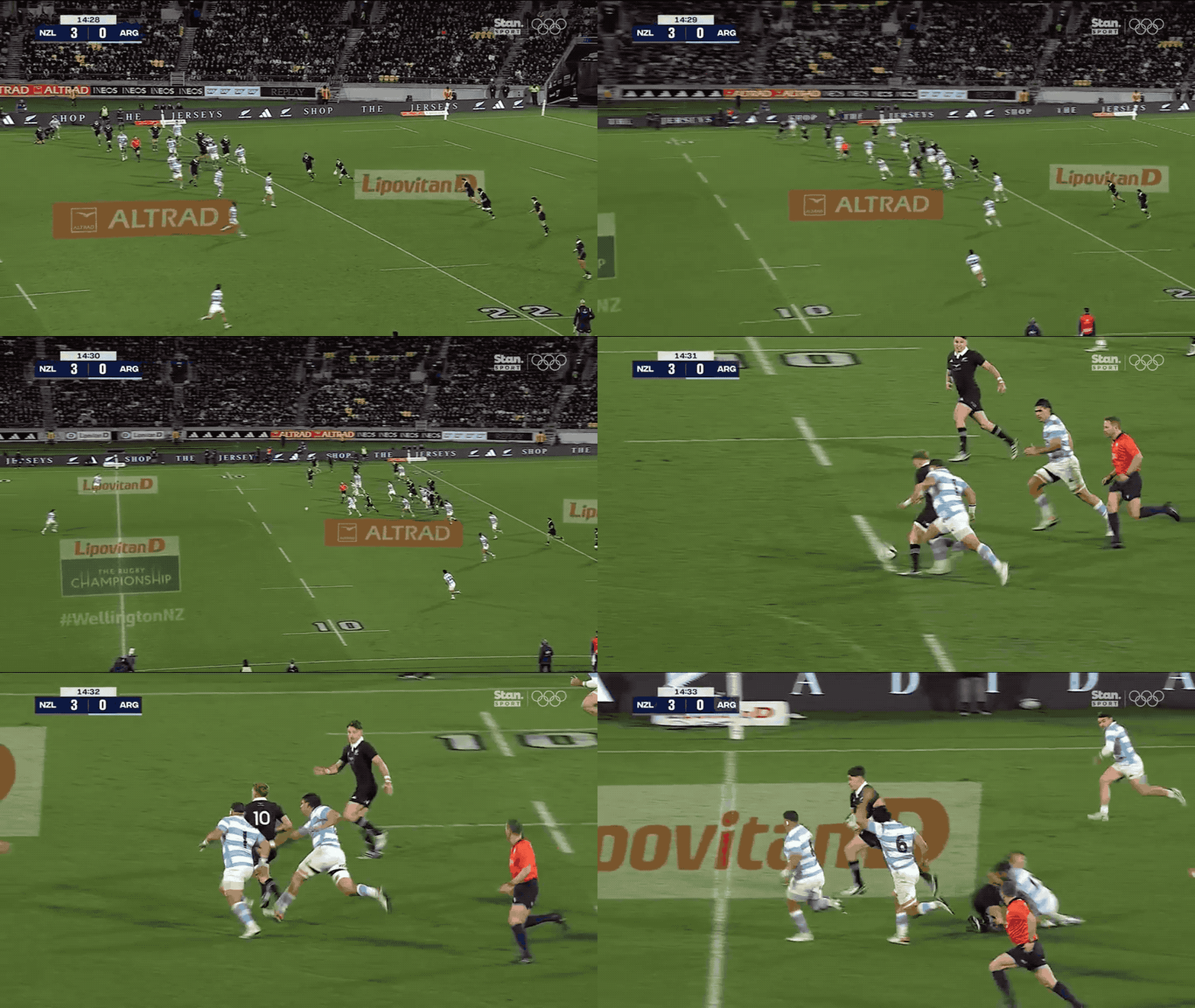
They ended up scoring the try here in the only way possible. Barrett’s line took him away from a realistic pass off his right side to the supporting runners behind him so he hit the angled kick inside to the runners streaming forward. The kick is aimed at Taylor’s line and sure, Darry is a little fortunate with the bounce but this is high-level stuff.
Ambitious, high pace, high skill – that’s the All Blacks. They almost scored a try right from a Marcus Smith contestable that showcased the same collective ambition. Smith’s kick isn’t bad but McKenzie’s elusiveness and acceleration create separation. That’s all they need. This would have been a try if not for some overplaying by Telea and outstanding defence from Marcus Smith.
If the opposition gets greedy with the kicking, the All Blacks hurt you, but that instinct must also be controlled. It’s like Robertson understands that offensive transition is the best thing his All Blacks do so, in turn, he’s selected his best transition backline and halfbacks.
This is a good example of what I think is really hurting the All Blacks in the early throes of Robertson’s tenure. A lack of tactical discipline and, perhaps, looking for too much out of anything that even looks like an opportunity.
Lienert-Brown’s play at the end of that clip is a great example; a play that should have been kicked turns into an improbable and unsupported linebreak that is duly taken and then exited pragmatically by Argentina. That was the pattern of the game – Argentina kicking long, scrambling on transition, getting a few lucky bounces and then taking their chances when they popped up.
In the general environment of Perernara and McKenzie overplaying and snatching at opportunities that weren’t quite there, that was a winning strategy. Look at this as an example of Perenara seeing space that wasn’t there. It’s a small window into the indulgence of his performance against Los Pumas.
Perenara is probably the most skilled scrumhalf in the game behind Antoine Dupont but you see stuff like this in his game quite regularly. TJ either destroys the opposition or slowly punctures his own team’s tyres, I find. But I don’t think he’s alone in that quality either; this All Blacks side only plays with winning pragmatism when they fear defeat. This means knowing the difference between moments where you just need to get the ball up or off the field, and when you should have a crack.
The ultimate example of this would be this moment against Argentina off a lineout just inside their own 10m line.
I mean… you have to kick this, right? Right? There is no short side to attack here.
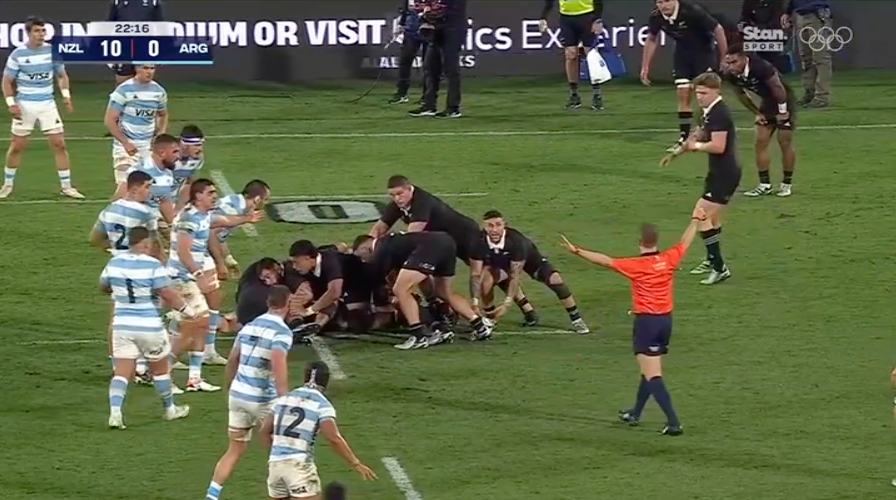
It’s 15m of space covered by four defenders against three attackers. Yes, Sevu Reece gets a one-in-ten offload out the back to Blackadder but only a one-in-ten defensive mistake would let Blackadder get any further than he does. Even after that play, the All Blacks are so narrow that the only thing that makes sense is a kick exit but it’s too late;
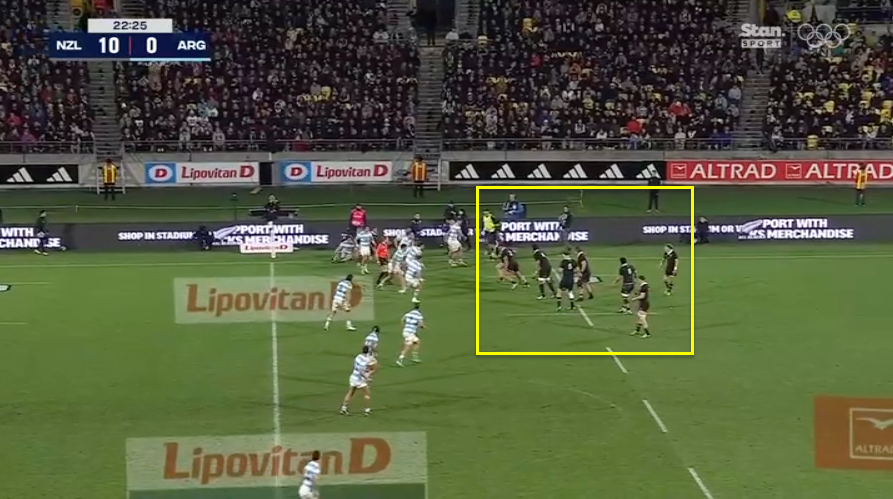
They get stripped and when the ball goes through two pairs of hands – that’s all – they have absolutely nothing to defend with.
It’s an easy try that could have easily been avoided if Perenara, Jordi Barrett or Damian McKenzie had their eye on playing the opposition, not the moment.
Expect a much different, far more pragmatic performance this weekend.
