


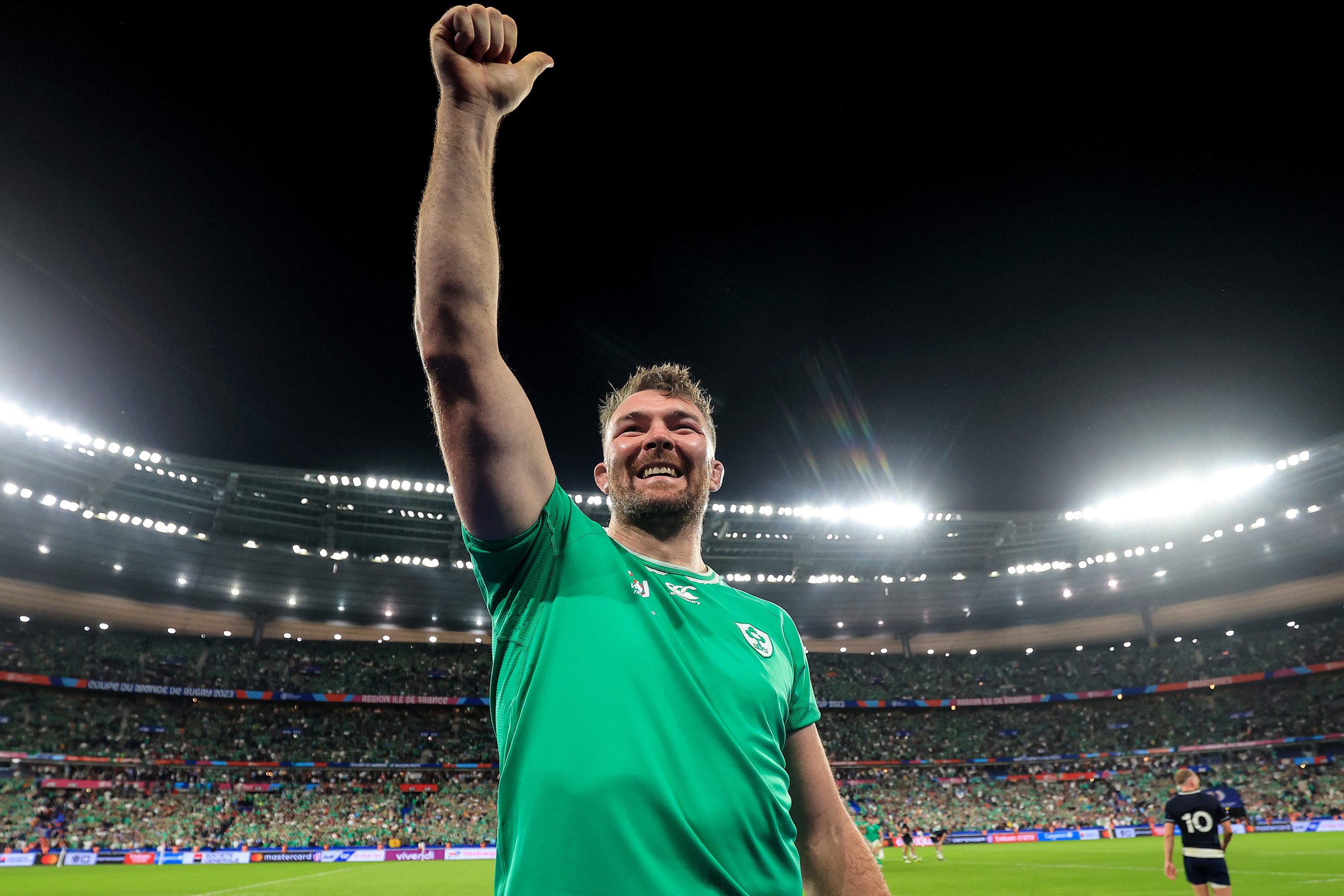
Here’s what we know for sure.
As of Friday the 26th of January 2024, neither the IRFU nor Munster Rugby have announced a contract extension for Peter O’Mahony. If that contract is not extended, O’Mahony will be free to leave Munster – or, to be specific – the IRFU, as he is a centrally contracted player with the union, as he has been since 2013/14.
Just because a contract has not been announced does not mean it isn’t signed and sealed, of course, and we must also remember that late-in-the-season announcements have been made before. Iain Henderson’s central contract extension was only announced in June 2023, a few months before the World Cup, after a protracted negotiation. Robbie Henshaw had his deal announced in April 2022, after the Six Nations for that season ended.
So, for all we know, Peter O’Mahony could already be sitting on a fresh extension.
Now, here’s what we think we know before going back to the things we know for sure later.
According to multiple sources, Peter O’Mahony was informed that he would not get a central contract extension at some point after the World Cup. For reference, see Bundee Aki’s extension announcement on the 27th of October to get a guideline on when negotiations with incumbents might have been active. We presume that around this time, O’Mahony would have been told by IRFU Performance Director David Nucifora that his 11-year central contract tenure would end and the impetus for his contract would be sent back to Munster for negotiation.
Again, this is all conjecture based on reports.

The next part of the story is murky and less reliable. After deciding to stay playing – O’Mahony said he seriously considered retiring post-World Cup 2023 – and with the IRFU reportedly declining to offer him a new deal, Munster allegedly told Peter O’Mahony that they would not be able to contract him for next season based on the wage demands he had as a then-starting international, either in full or in part as a Player of National Interest. This was due to Munster’s desire to engage in something of a squad rebuild in the new coaching staff’s first full contract window to reshape the squad in their image with younger, physically fresh players internally and externally in core areas.
If Peter O’Mahony wanted €300k a year, as a rough example, and Munster were to pay 50/75% of that, it would represent a fairly hefty slice of their provincial budget for a 35-year-old player they had been getting “for free” over the previous 11 years. Essentially, that €150k could go to; signing a badly needed hooker, helping to repopulate the senior wing depth chart after Earls and Conway retired, stacking out the loosehead depth chart, or bringing in senior cover at #10 to replace Joey Carbery and take the workload off Jack Crowley.
If Munster were to give a one-year deal to O’Mahony and/or Murray, that would likely amount to close to €300k for one year’s expenditure at the very least on two players likely on their last contract.
Downgrading from a central deal to a provincial one has been a relatively common occurrence in the last few years. Both Cian Healy and Devin Toner have gone from central to provincial contracts when they hit their mid-30s, as an example. The Leinster context is probably the most pertinent here because, as with most things in this game, it comes down to money.
Another fact for you – it is easier and less taxing on your effective budget to contract club veterans coming off central deals when you have a critical mass of central contracts covering the top end of your squad.
In 2022/23, Munster had four central contracts. As of the start of 2024/25, we are currently projected to have one, Tadhg Beirne, if Conor Murray and Peter O’Mahony are not extended by the union this season. The fourth central contract belonged to Keith Earls, who retired after the World Cup.
The more central contracts you have, the more space you have to retain higher-grade players on higher wages without having to make tough decisions.
Remember, central contracts are considered a massive advantage because they allow you to cover the top end of your squad – which has a finite number of players – for free. When you also consider that the IRFU pay for your academy contracts, that means that if you have eight central contracts in a squad of 44 senior players as Leinster does, your provincial budget only has to cover 36 full professionals. Next season I expect that to be nine central contracts covering a similar number of senior professionals.
At the moment, Munster have three remaining central contracts covering 42 players so our provincial budget has to cover 39 full professionals. We are paying for more of our squad than Leinster are so, immediately, that means that if the provincial budgets are more or less the same, you’re cutting corners somewhere.
But when you’re doing your contracts, you don’t consider this season – you have to look at next season.
So Munster can’t look at three central contracts out of 42, they have to assume that they’ll only have one. As a result, before anything else happens, we’re already going to be spending more on the squad as it stands than we were this season given we’ve committed to Edwin Edogbo starting a two-year senior contract in July of 2024.
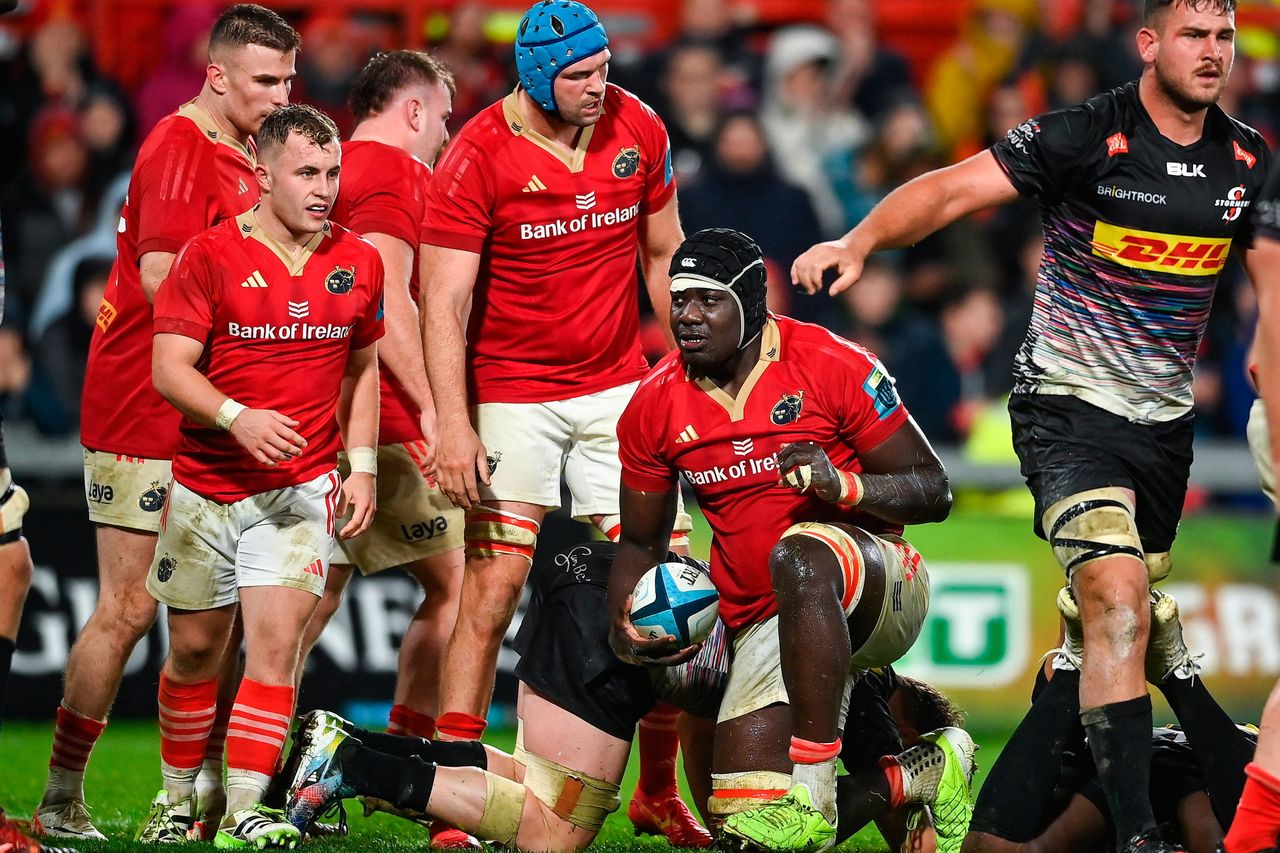
So Munster will be spending a similar provincial budget as Leinster on 36 players on 41 players as things stand. That can’t work, obviously, so it’s inevitable that Munster will have to trim players from the squad. Including the players we know for sure are departing, I expect Munster to release around 11 senior players this off-season.
That will bring us back to 31 senior professionals. I would expect guys like Tony Butler, Brian Gleeson and Ruadhan Quinn to get senior contracts to get us up to 34 senior professionals with three or four incoming signings to round out the squad where we need it – loosehead, hooker, half-lock and wing. That would bring us to 38 senior pros, paying for 37 of them.
Some of the players who we know we’re losing are on pretty significant contracts – Snyman*, Carbery plus a few others – so we get more space in our budget with those departures.
* Snyman isn’t fully counted here as he was funded by the 1014 and there’s no guarantee the money spent on him would be freely available for another player.
Knowing what you know about those numbers and how tight they are, how much space do you think Munster has for 35-year-old Peter O’Mahony and Conor Murray? They would bring us back to 40 senior professionals and, even if they are partly paid for as Players of National Interest, it would inevitably mean cutting significant funds from somewhere else.
These decisions have, for the most part, already been made as early as before preseason began back in the summer of 2023.
Munster – Ian Costello, Graham Rowntree and others – met with the IRFU early in the off-season to finalise the budget and positional needs for 2024/25 with the idea that a rebuild of sorts would be needed. Essentially, these are the players we want to keep, these are the guys we would like to sign and these are the players we are considering for release.
When it comes to players you want to retain, you have a rough budget amount in mind when you’re offering them the contract but if they need more money or have a bigger deal abroad that you have to match, you may then need to go to the IRFU for help to retain this player. If they are a Player of National Interest, there should be money there for them. If they aren’t a Player of National Interest, then you’re on your own.
For the most part, you will know who will qualify as a PONI and who won’t ahead of time, should assistance be needed.
At the moment, Munster doesn’t have a tonne of guys in that bracket due to selection patterns nationally so difficult decisions have to be made to keep the team competing where we’re expected to.
When you also include the emergence of Tom Ahern as a potentially elite half-lock in a position in Munster’s system typically occupied by Peter O’Mahony, it becomes even more complex.
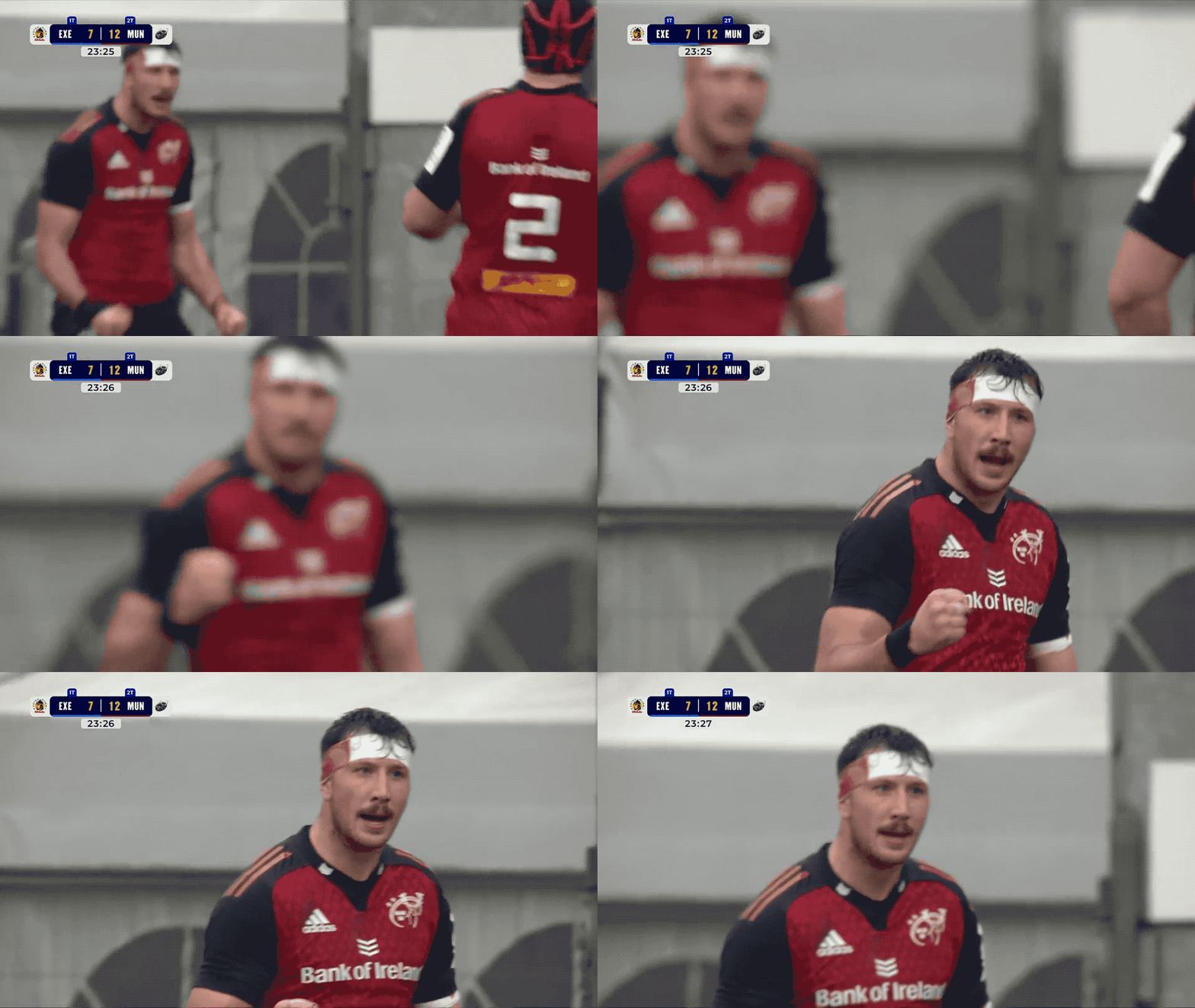
Tom Ahern is off contract at the end of next season and, if he continues on his current trajectory, he will be a player likely to need PONI intervention as well as being started consistently in big games.
This brings us back to O’Mahony.
How much, realistically speaking, should Munster commit to retaining him?
Let’s go back to facts.
On the 17th of January 2024, Andy Farrell named Peter O’Mahony as Ireland captain for the 2024 Six Nations.
Will he be the captain beyond that? Who knows. I do know that even as late as the week before the announcement, a lot of rugby people in Leinster assumed that it would be Garry Ringrose. Hell, even I assumed it would be Ringrose. The selection of O’Mahony was something of a wildcard – even though it’s entirely in line with how Farrell has run the Ireland operation since he started – because it doesn’t make any sense with what we’ve seen from the union.
If it’s true that the Performance Director bounced O’Mahony’s contract back to Munster for the province to pay for him, either in whole or in part, did he do so knowing that Farrell was going to make him captain? If so, that would be the first time in the modern era of central contracts that the named captain of the Irish national team would be doing so as they’re about to be downgraded from a central contract.
If O’Mahony is the captain for the summer tour to South Africa – fitness allowing, of course – he would be starting that tour on a provincial deal, were Munster to sign him to one. Did David Nucifora know this in advance and try to pass the cost of contracting the current national team captain onto Munster in whole or in part?
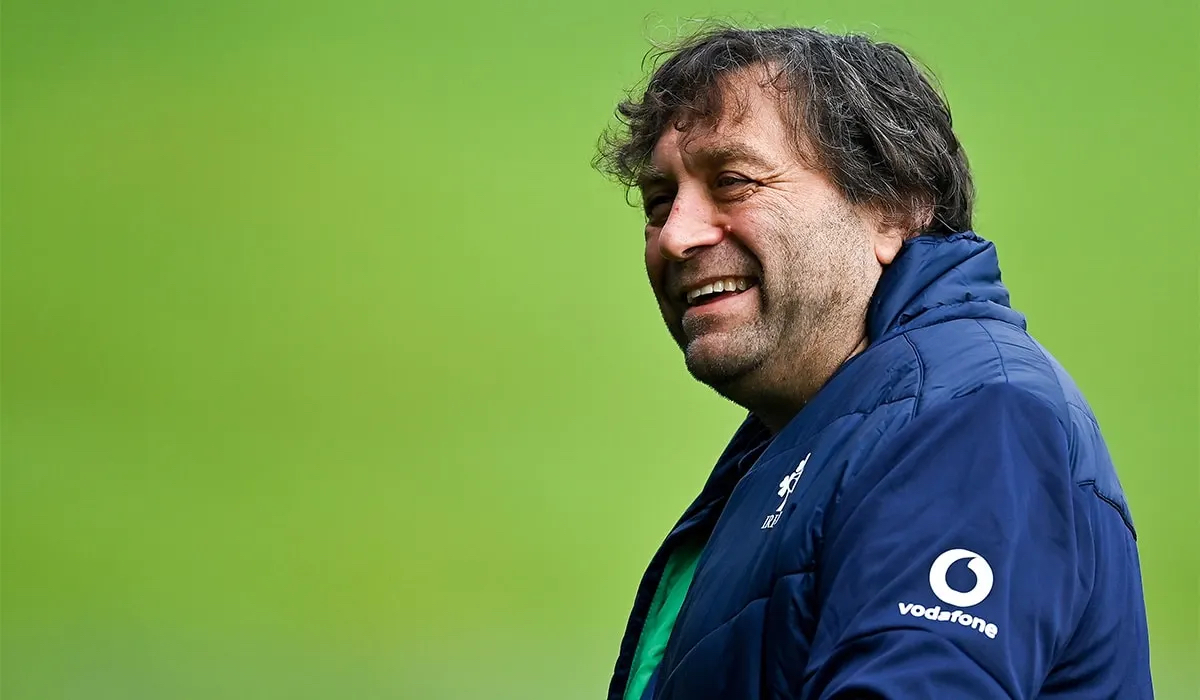
Or was it a case that the Performance Director didn’t know Andy Farrell’s plans to name O’Mahony as captain before deciding not to fully centrally contract him? If that’s the case, it would seem that the man mostly responsible for central contracting isn’t in sync with the thoughts of the head coach.
I get the union’s desire to manage their central contract budget, as well as the idea that a 35-year-old forward might not be the best investment on paper, but that all changed when O’Mahony was named captain.
For me, the only decision that makes any budgetary sense to Munster is retaining Peter O’Mahony as a playing asset through a fully IRFU-funded central contract. That would allow Munster to commit the funds they need to rebuild core areas of the squad and invest in Tom Ahern financially and game-time-wise as O’Mahony’s long-term replacement while using O’Mahony as a horses-for-courses option in the back five or an elite, veteran closer off the bench.
Even a 50/50 PONI deal doesn’t make much sense to Munster, given the reported wage demands of a veteran player who is still very much in international contention. If O’Mahony remains the international captain for 2024/24 as a 35-year-old flanker in an abrasive position at test level – and we don’t know the medium-term plans there – how much use would Munster get out of the 50% wages they’d be paying in that scenario?
And, realistically speaking, Peter O’Mahony shouldn’t be cutting his wage demands either. He’s the test captain. He’s still obviously a core part of this Ireland side and, sure, 2024/24 is likely his last season but why should he cut his wages? This is a dangerous game that can end careers at any time and, being frank, why should he take a cut-price deal when his predecessors certainly didn’t?
If O’Mahony hadn’t been named captain of the national team by Farrell and a process of phasing him out nationally commenced, this would have been a simple decision between Munster’s budget plans for 24/25 and sentiment. Munster could find the money somewhere or not and it would be pretty simple. Sign him up, yes or no.
But, when he was named national captain, this became a matter for the Performance Director to re-assess what we believe to be his initial assessment after the World Cup and contract O’Mahony centrally from July ’24 to July ’25.
