


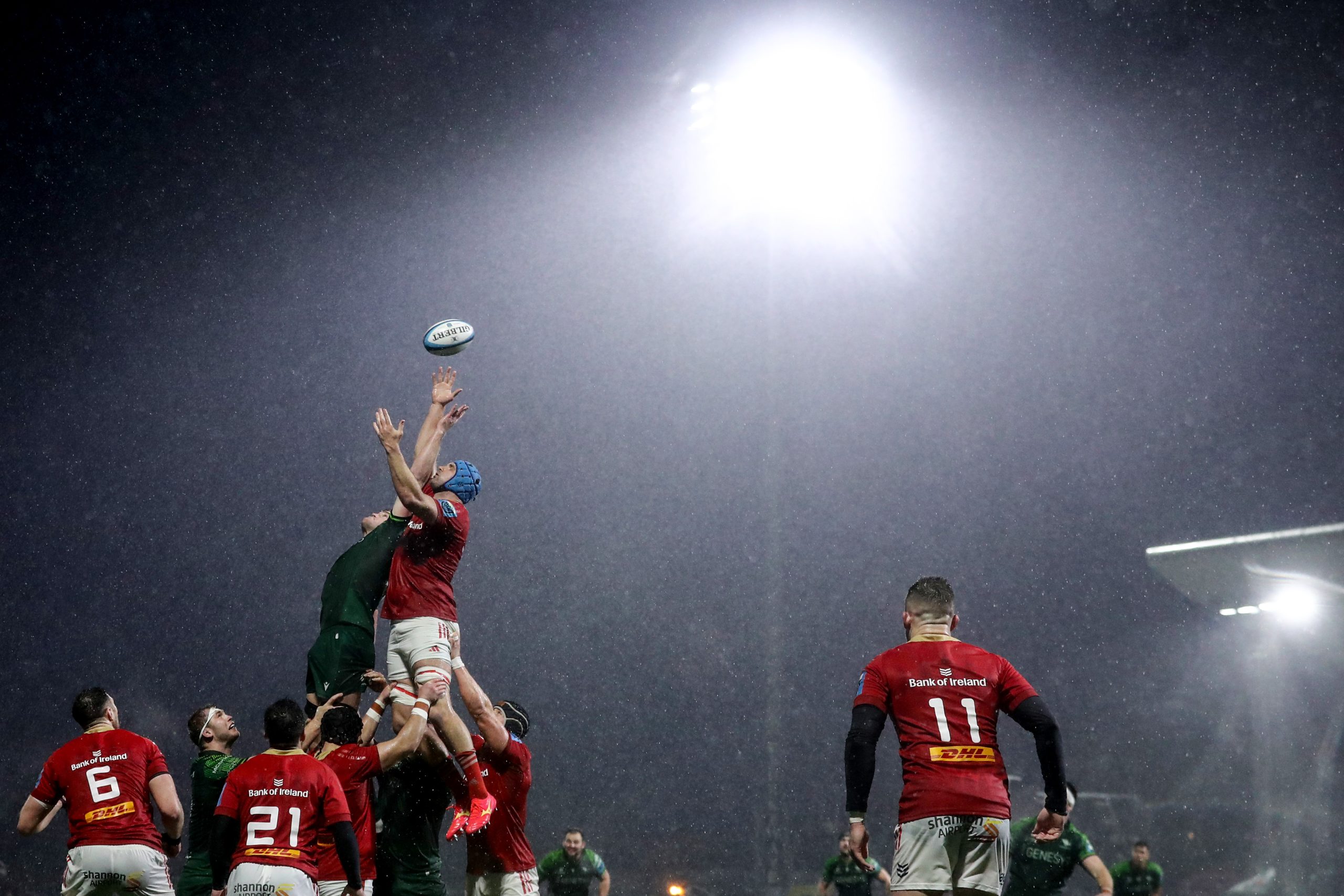
Injuries. Errors. Defeat. Repeat.
This stretch of games from Glasgow in Cork at the start of December to Bayonne, Exeter, Leinster and Connacht has been brutal. Injuries have piled up to a level you might see if a bus ran through the HPC and that’s had a knock-on effect on everything. 43% of the senior squad are now injured, with most of those injuries in the front five. That doesn’t just mean that the players replacing them have to keep going regardless of their injury status or fitness. Players like Gavin Coombes, for example, might well have rotated out of the starting XV in the last few weeks for at least one or two games but he just can’t do that. It also means that Munster can’t train fully week to week, especially in areas that are dependent on competent numbers in the front five. We’re down to the bare bones at hooker and lock so, with reduced sessions and third/fourth choice hookers stepping up in high-pressure games, you can imagine what Munster were, rightly, concerned about coming into the game.
Turns out they were right. The lineout cost us the game.
Now, we’re still competitive in these games – we’ve led at some stage in most of them and this is the first game we’ve lost by more than a score – but as each game goes on, the attrition grows, the impact of the remaining fit players decreases and it feels like the weight on the group increases with every knock.
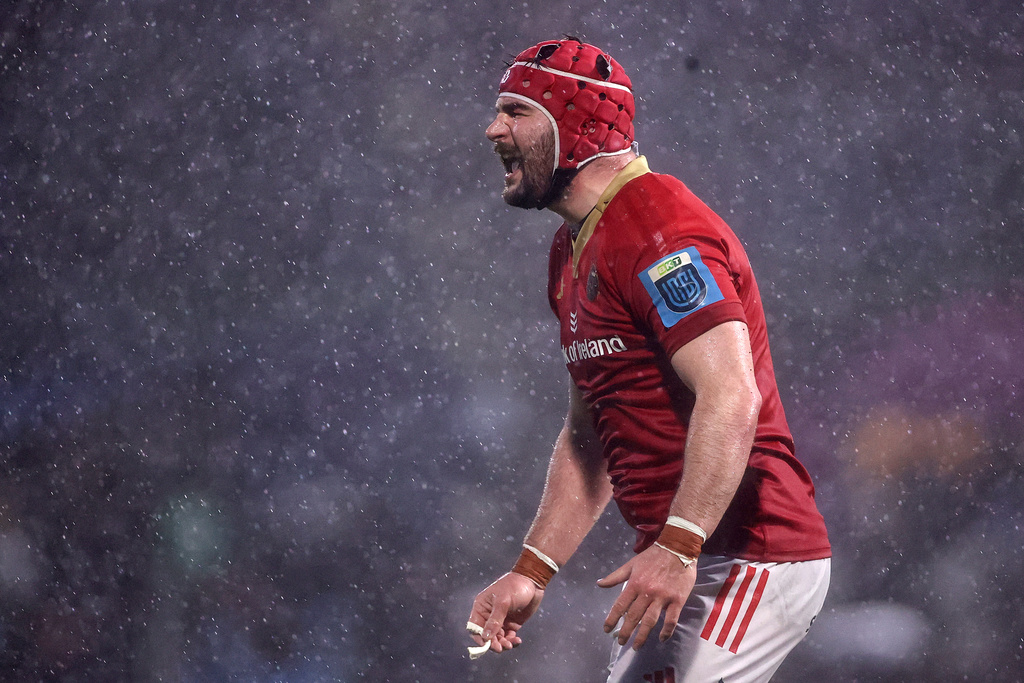
Losing Clarke and Wycherley before the game would add to that weight. Losing Jager inside ten minutes to a sickening challenge from Bealham and Joyce threw on another few cases of woe. Losing O’Donoghue to what looks like a year-ender knee injury on the stroke of half-time… made it feel like a horror movie where your friends keep disappearing as you walk through the house.
This game was a good example of what people mean by reducing the substitutes or precluding substitutes from being used unless there’s an injury. Connacht switched out five of their starting pack between the 52nd and 70th minute of this game. During that time they scored six points that turned a 6-9 deficit into a 12-9 lead. At that point – the 7oth minute – Munster hadn’t made one planned substitution in the forwards. Connacht stretched their lead to 15-9 shortly after.
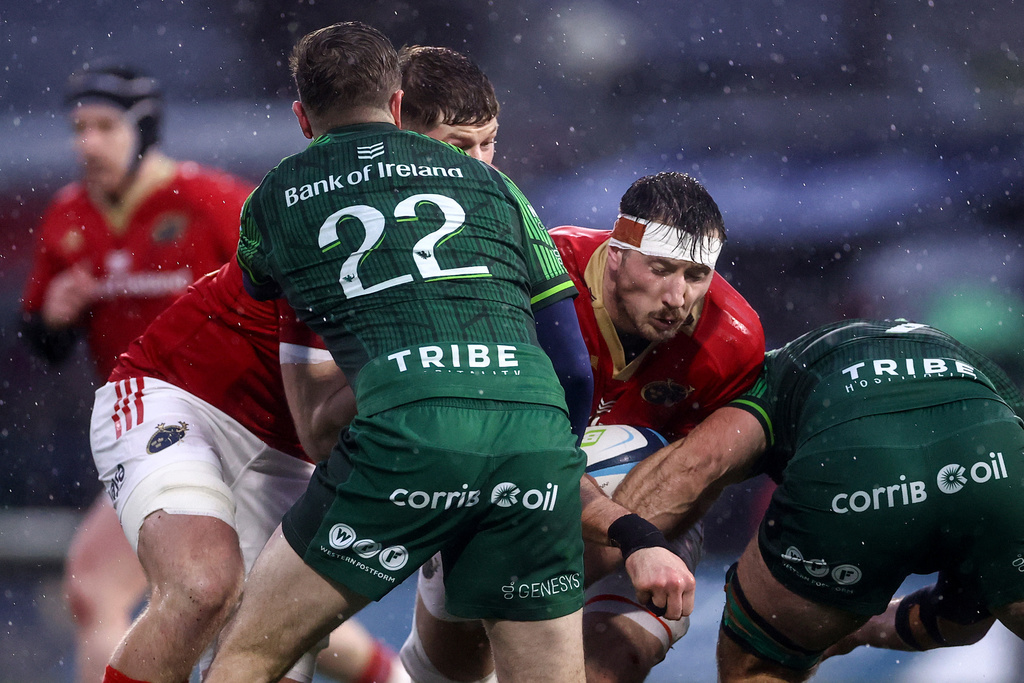
Munster didn’t make any forward substitutions until the 76th minute when we brought on Josh Wycherley and 19-year-old Brian Gleeson. On the next play, we overthrew a 5m lineout and Connacht put the game out of sight. Our replacement hooker, Chris Moore, stayed on the bench.
Of our eight replacements, we used six and four of those were made in the last 10 minutes when we were already losing.
Could they have come on earlier? I mean you’d have to say “yeah”, right? But that would have meant switching out Loughman – who was our most effective front-five forward in the loose and the scrum – and replacing him with a player in Josh Wycherley who’s shown vulnerability in the scrum as of late.
Keep in mind that this was on a day when game-hinging scrums were incredibly likely the deeper we went into the 80 minutes.
Was bringing Moore in for his first-ever game at this level when he’s shown issues with his lineout at AIL level the right idea? Could he have been any less reliable than Scott Buckley was in this game? Who knows. You have to trust the coaches on that one.
Either way, the lineout cost us a foothold in this game and a way to make our defensive pressure reflect momentum back on Connacht.
***
When you’re down your first-choice hooker pairing, the lineout is going to suffer because both of those players are your first-choice rotation for a reason. Take Dan Sheehan and Ronan Kelleher out of Leinster’s front row, for example, and things get unpredictable. It’s even more pronounced at Munster. Scott Buckley is a good young player who could and should have a decent pro career ahead of him. Unfortunately, when your training reps are limited during the week – Eoghan Clarke was due to start this game before a late withdrawal – and you’ve had a bad season throwing the ball anyway, an implosion like this was always possible, especially in the weather conditions.
But that shouldn’t distract from the fact that our base-lineout schemes are really poor. When you combine that with a nervous thrower on a day you wouldn’t put a rat out in, it leads to a variety of problems.
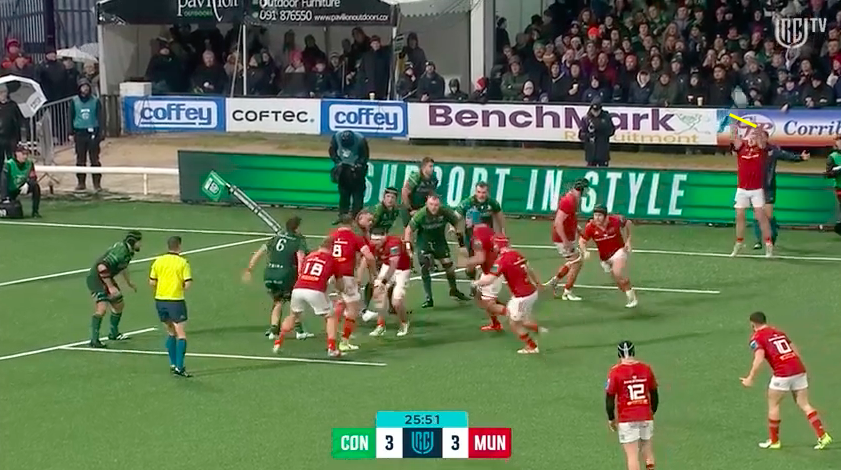
In this instance, our scheme was quite simple – Beirne getting lifted at the tail of the back of the middle with no animation before the throw.
Buckley’s throw is too low and gets swatted by a trigger counter-launch at the front by Murray. Even if Murray’s counter-launch failed, Connacht had Joe Joyce in the air also – even if he’s getting thrown across the lineout in this instance – but the underthrow means a penalty is a tough give.
The problem here is that Buckley’s throw peaks in height around a metre in front of Murray’s counter-pod, so it was always going to fall right in his wingspan.
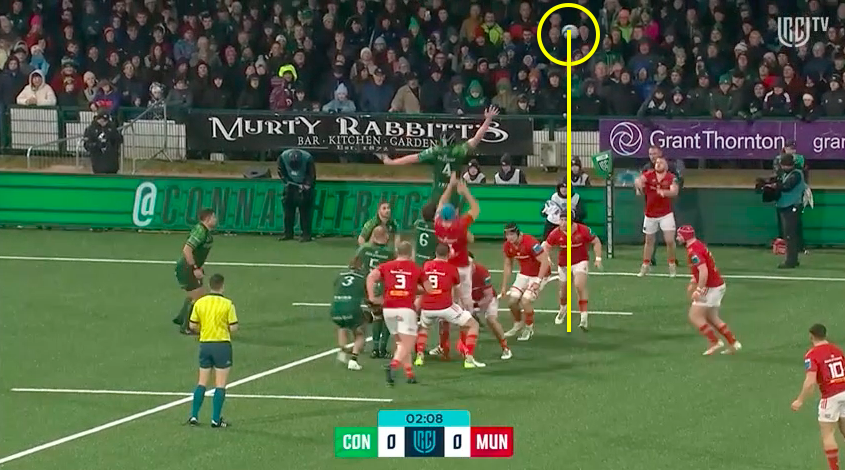
Our setup here looked to punish Connacht’s double launch – something they do quite often – with a maul that would jog right through them given they had six forwards engaged in the air. We tried the same scheme a few minutes later but switch Coombes with Beirne and we got a free take. This tells us that Connacht were likely focusing on marking Beirne and Ahern, but also that there would be space at the tail if we could nail our throwing.
Buckley does well on this one, even if he was a little too honest by stepping back towards the Connacht side when he’d manage to sneak two steps across.
As the conditions worsened, we were faced with a few more difficult positions to work with. This one, right on our own 22, put us under immense pressure.
We understood at this point that we needed to shake off Connacht’s double counter-pod because they were almost sure to throw both into the air in this position.
Let’s see how it played out.
It’s another underthrow but look at how little heed Connacht give to our cutouts and jump fakes. Why? Because they know that Buckley will have to throw to the tail because Murray is going up at the front – again – so Joyce doesn’t need to mark any jumper in particular, he just needs to mark the space.
Coombes hops and feints are a waste of time. Beirne’s route to the front as a lone runner is pointless too because we’re hardly going to throw it to him in this position.
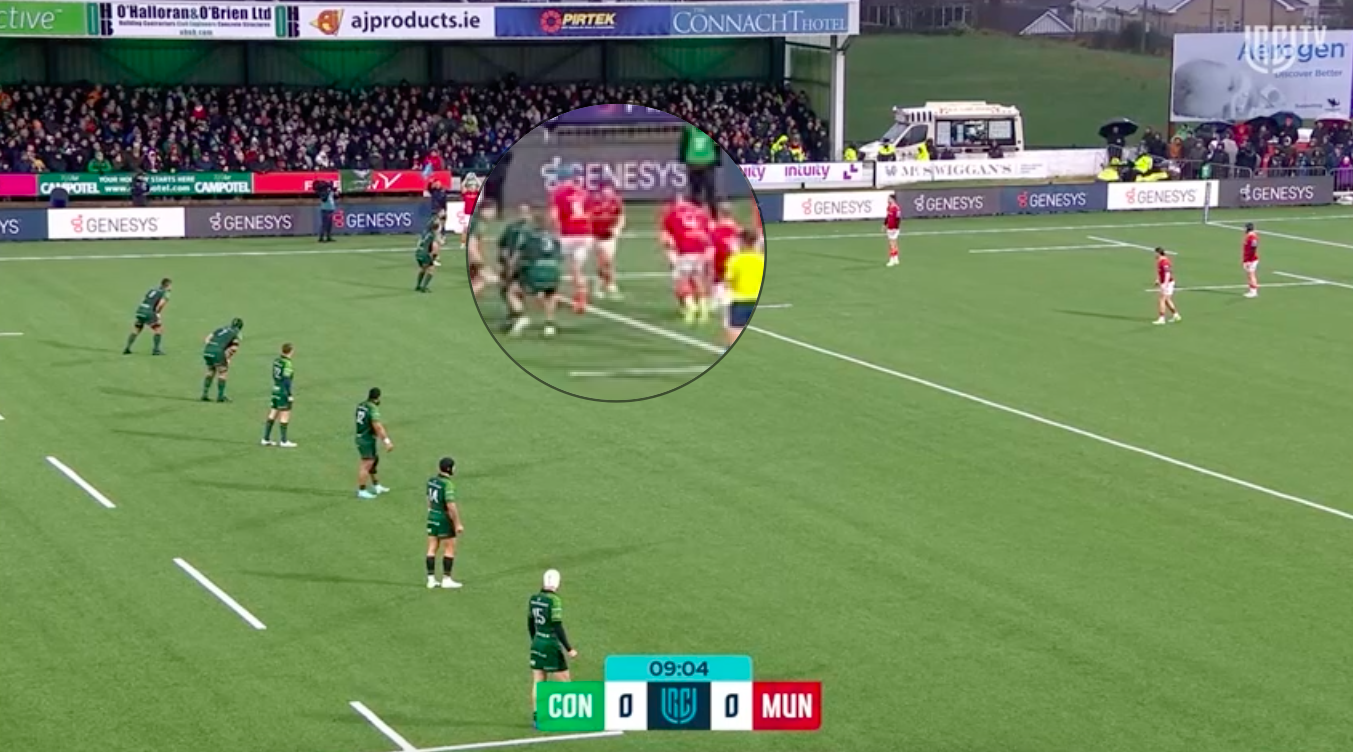
Ahern is the target here so you could argue that the action near the tail is to trigger Joyce into lifting early but Bealham has a good eye on our movement – none of our sliding runners here look like legitimate lifters.
We’d have a chance of retaining the ball directly if the ball wasn’t underthrown, but it was.
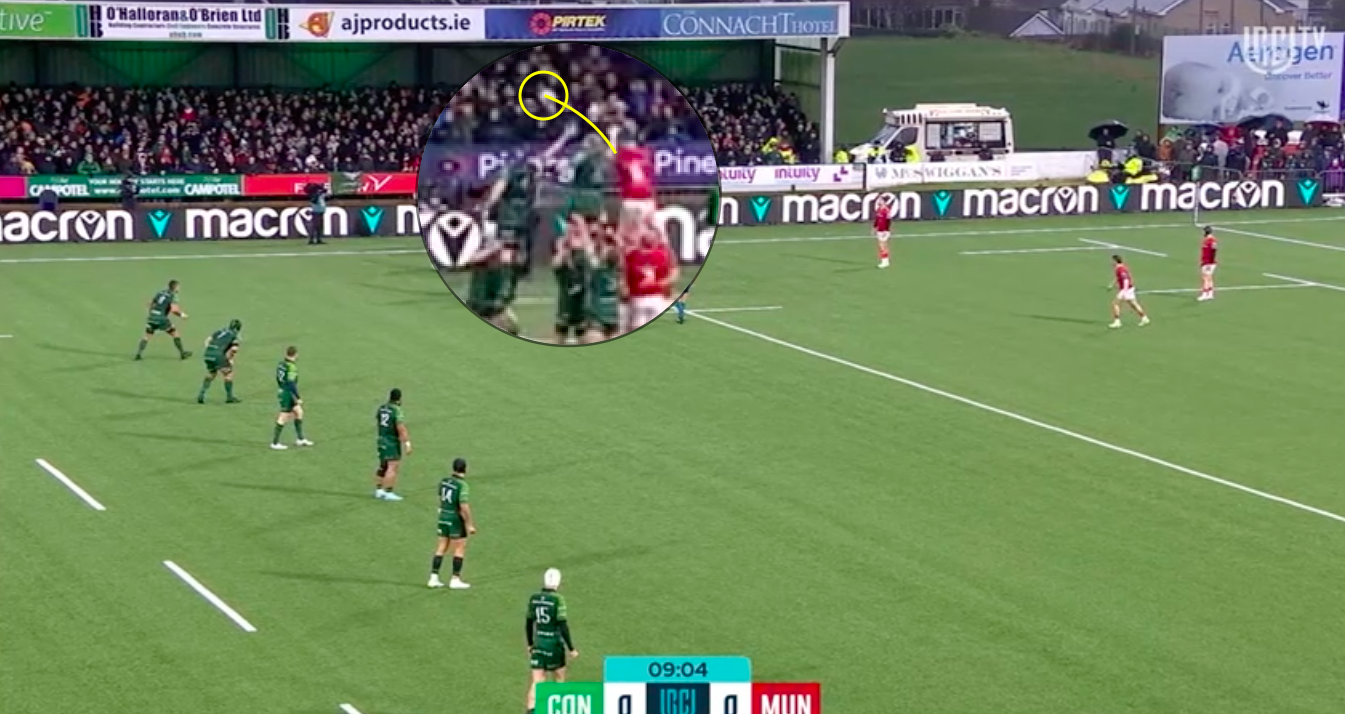
Buckley’s release point is a little too soon – the kind of thing you get from an anxious thrower under pressure – and the speed of the ball isn’t what it could be. Connacht disrupt it but we just about hang onto the ball. This wasn’t counted as a lost lineout but it absolutely should. You can see the issues are already building up inside the first 10 minutes.
Buckley’s throwing began to degrade as the game went on. Conditions didn’t help – at all – but inconsistencies in Buckley’s throw action started to compound.
The release point of his hands here shows a little imbalance between his guide hand (left) and power hand (right). That can cause a dud spiral, which we can actually see in slow motion.
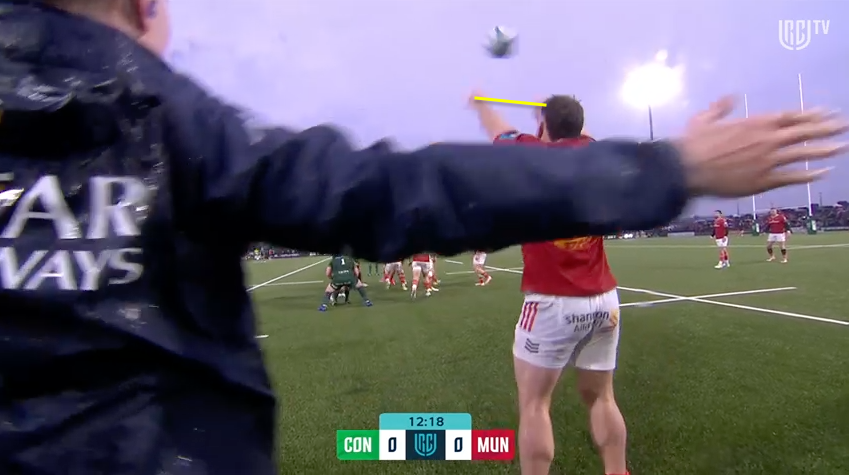
If you watch the trajectory of the ball as it progresses, you see the nose of the ball pointing towards our line on the diagonal, with the tail of the ball leaking off to Connacht’s side. This slows the ball in the air and kills its forward momentum which means it dips early and, again, right into the range of Joyce.
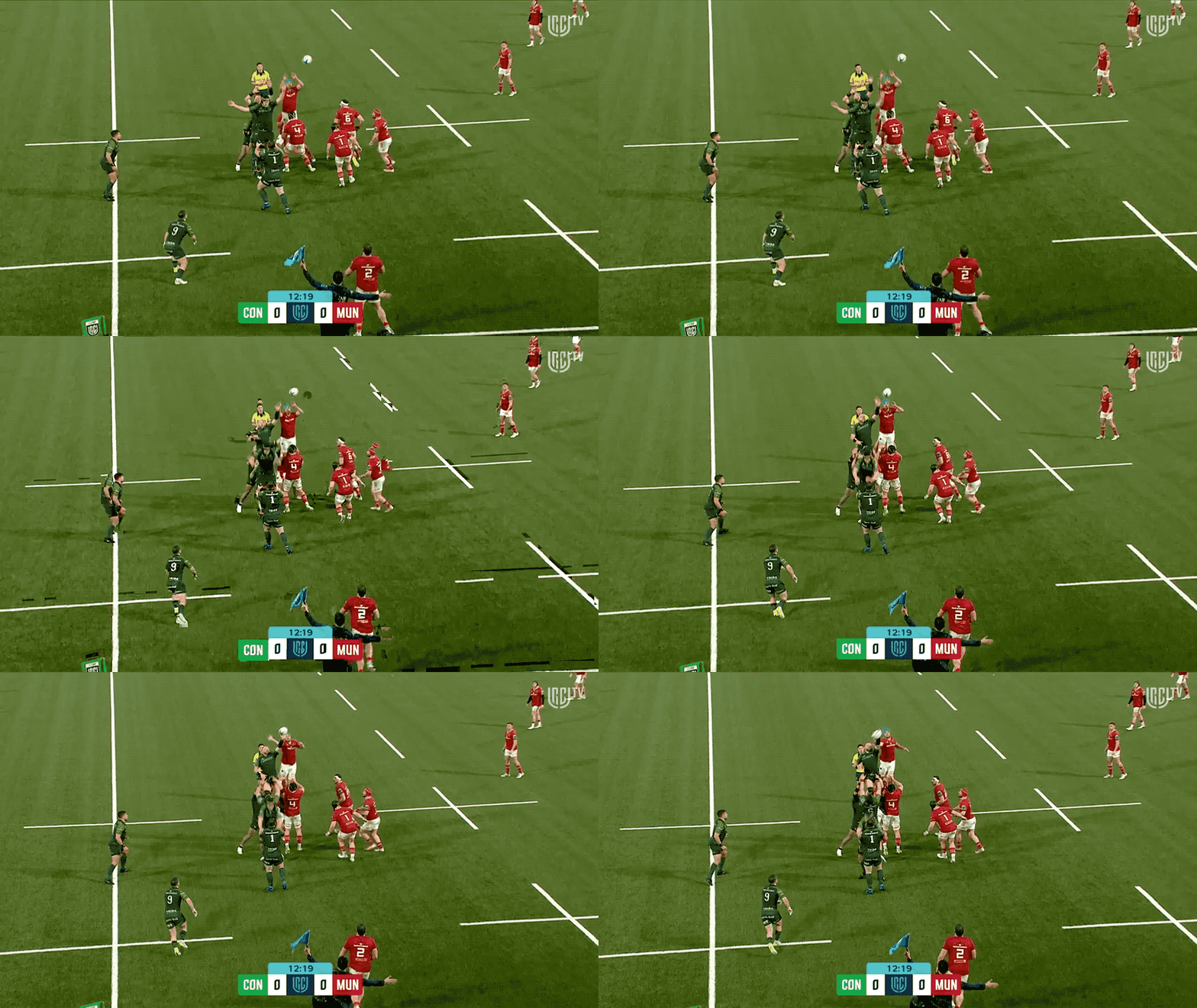
Buckley gets the ball over Murray at the front but it seems like he’s overcompensated to arc it over him and messed up his release of the ball with another underthrow.
Midway through the first half, we had a great opportunity to convert a close-range lineout after Tony Butler’s top-class 50/22. We wanted to hide Coombes at the front of the lineout so he could peel around to hit an isolated Hurley-Langton.
Our scheme here actually works – it creates an uncontested throw at the tail of the lineout but Buckley’s throw was crooked. Again, look at Buckley’s release. He’s got too much on the power-hand side so the guide hand can’t keep it straight.
The release shows his hands tilting towards the side which would ultimately lead to the crooked throw. He’s trying to compensate for the wind, yes, but this seemed like another hurried release.
This pattern of over/underthrowing in response to Connacht’s counter-launches at the front meant we were constantly seeing the ball tailing off once it hit the middle.
The killer score came right at the end and it was probably one of Buckley’s better throws in a high-pressure situation. This is a bit of an overthrow in the circumstances but Beirne’s arm is played in the air by Murray – it’s a penalty to Munster – but all the misses and fumbles up this point play a part in inexperienced assistant referees at this level missing things like this.
Ahern sees it immediately. Maybe Beirne bats that down to Patterson and we escape with a losing bonus point.
Scott Buckley had a bad day at the office against an aggressive lineout defence on a rotten night at the tail end of the week where he wouldn’t have got the reps he probably needed with a lineout lacking true size and heavy jumping options. He also knew that once Clarke was hurt pre-game he would have to do 80 minutes.
That takes bollocks to go out there like that, knowing you’re third choice, knowing the bad games that came before, coming in late and sticking it out. He never shrank away from the throws and he threw himself into every other aspect of the game. He made 10 carries, 10 tackles and hit breakdowns all game but the lineout was what it was. If he can sharpen up his consistency at the line and his release points, there’s a good pro there.
He’s doing his best in a tough situation. Everyone is.
And, ultimately, these are not easy games.
With a full deck – or even a 75% full deck – six or seven of our match day 23 would be doing well to be a reserve for a game of this stature. With a clear head, we’ve played every other Irish province away from home in the first half of the season as well as second-place Benetton in Treviso. We’ve come away with four points from those games. We’ve played third-placed Glasgow at home, the Dragons, the Stormers (right before they started their injury boogaloo) and an optimistic Hollywood Bets Sharks before the arse fell out of them. To date, the only lower half of the table teams we’ve played have been the Dragons and the Sharks.
We’ve gone through all of these games while carrying an injury list that looks like an A&E intake. Until that injury load lightens – or the opposition/conditions become more suited to the teams we can deploy right now – games like this will happen. We will tail off against teams who play a 6/2 against us with any kind of size relative to what we can field in the back five currently. It’s no surprise that our performances in the last four games have coincided with brutal weather conditions that prevent us from extending teams to mitigate our size differential, or we get bombed out of it by mass replacements in the second half coupled with brutal individual errors.
We’re not as far away as we probably should be, given the circumstances.
With a bit of luck, the tail end of the season will show more of what this group is capable of.
| Name | Rating |
|---|---|
| Jeremy Loughman | ★★★ |
| Scott Buckley | ★★ |
| Oli Jager | N/A |
| Gavin Coombes | ★★★ |
| Tadhg Beirne | ★★★ |
| Tom Ahern | ★★★ |
| John Hodnett | ★★★★ |
| Jack O'Donoghue | ★★ |
| Conor Murray | ★★ |
| Tony Butler | ★★★ |
| Shane Daly | ★★ |
| Rory Scannell | ★★★ |
| Antoine Frisch | ★★★ |
| Calvin Nash | ★★ |
| Simon Zebo | ★★★ |
| Chris Moore | DNP |
| Josh Wycherley | N/A |
| John Ryan | ★★★ |
| Brian Gleeson | N/A |
| Alex Kendellen | ★★ |
| Paddy Patteron | N/A |
| Sean O'Brien | N/A |
| Shay McCarthy | DNP |
