


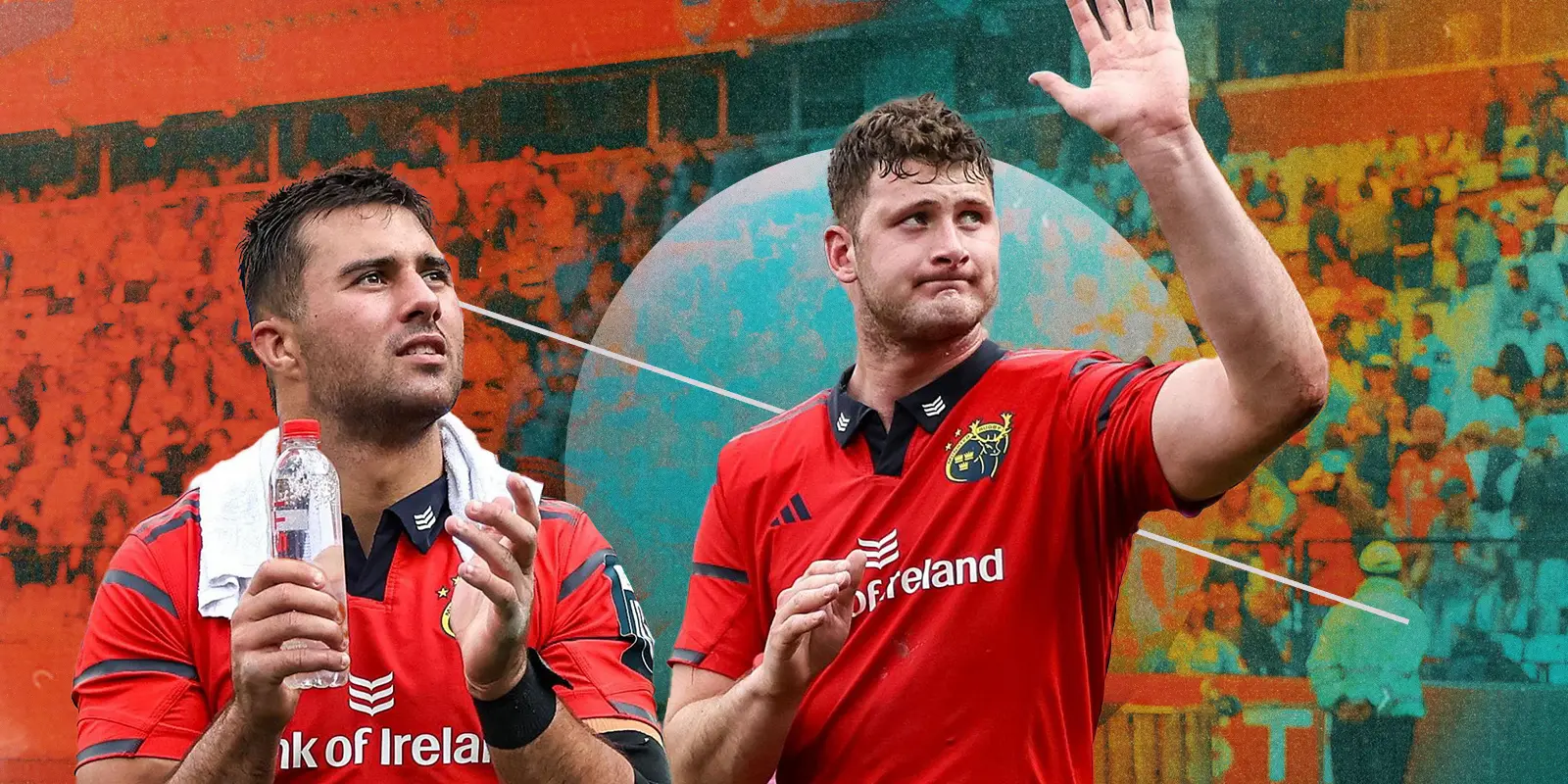

Functionally, this game was over when Cameron Hanekom barged over off the back of a close-range Bulls maul in the 38th minute; everything after that was the thin air slowly being let out of the balloon of a damaging, attritional season.
There was no shortage of fight. For a while, half an hour in, we had managed to pull back within three points. We had a bit of momentum, but it didn’t last long. When we played the Bulls last time out — a few weeks ago, in reality, but it feels like last season — the damage was done in the ten minutes before halftime, and around the 50-60 minute block, right when altitude begins to bite. The same thing happened here.
Right after we’d made it a three-point game, a massive, four-second hang-time restart bomb from Pollard gave Arendse the time to make an excellent defensive play off the restart, and we were slow to the clean. Penalty. Lineout. Maul. Penalty. Another maul. Try.
Soon after, they got another penalty for overenthusiastic counter-rucking by Alex Nankivell following another wide linebreak — close range lineout, Hanekom vs Hanrahan on the swivel play. Game over.
This isn’t a great tackle attempt by Hanrahan — it’s pretty diabolical actually — but there aren’t many #10s capable of stopping that guy from there when the lineout is that clean. The problem is the position.
That was the game, in truth. We spent the entire second half trying to ignore the siren song drawing us onto the rocks. Just speaking for myself, I welcomed the rocks in the end. It’s been that kind of season.
Three weeks ago, ahead of the Lions game, the vibe around the HPC was anxiety. The injuries, the pressure, the injuries. In the last week or so, the pressure had come off completely, and the vibe was very much “we’ll give it a lash”. Travelling down to South Africa for a one-off fixture — to altitude, in particular — is witheringly difficult at the best of times, but it’s doubly so for a playoff game without ten of your best players.
That will read as a cope, if you want it to, but it’s the reality of the situation.
The other reality is that, like most of our big games this season, we were nowhere near big enough, accurate enough or good enough to get the win. This season has been a step back, for any number of legitimate reasons, but it’s a step back nonetheless. We have to hope it leads to two steps forward next season.
The first place to look is the scrum, where we were under pressure for most of the game. This was somewhat predictable before the game, but an early scrum penalty against the head set the tone.
It was always going to be a problem — even with Wilco Louw out — because if we have one distinct, incredibly visible weakness this season, it’s been our scrum. Nothing we’re doing here is particularly bad, necessarily; we’re just getting overpowered. It’s the worst scrum match-up in the league outside of the Sharks, but you’d need to mitigate against it with quick strikes, and we didn’t get them at key points.
We had 12 put-ins to the scrum in this game, and they definitely drained us.
That was the story of the game in a nutshell. We looked drained, early, and that’s a recipe for disaster in Loftus Versfeld.
The scrum bled into everything else, because once you’re going backwards at the set-piece in Pretoria, you’re losing. And the air is where they really made us pay for it. Pollard’s boot, le Roux popping up at first receiver, Arendse and Jacobs hunting in behind — that’s a back three you cannot give a head start to, and a tired chase line gives them exactly that. Our own back three didn’t handle the aerial contest under the aerial bombardment, all things considered.
In the early game, those lost duels coughed up position and control, and let the Bulls in behind the gainline, where they were faster and stronger than us. The Daly exit around seven minutes was a particular killer, given the transition it coughed up on the same tramline he exited from, but he looked like a guy playing hurt all the way through.
When you’re not winning the aerial duel in Loftus Versfeld, it’s a treadmill — it only runs one way.
The rocks beckoned in the second half. We’ve talked about the two soft tries before the break, but the two after it were arguably worse, because they came from our own ball. We were inside their 22, building, looking like we might make a real game of it again — and then we cough it up. Papier is gone the length of the pitch before anyone’s even turned around. Five minutes later, it’s Vorster tidying a scrappy lineout and being allowed to skip clear, find Nortje, get it back, and a few phases later, Jacobs was running it over on the edge. That’s six tries to two. McMillan called those moments afterwards, and he’s right: playoffs are about a handful of them, and we lost every one that mattered.
None of which is to take anything away from the lads who did stand up. Nankivell was outstanding in the first half — that line break off the scrum in his own half that he then finished twenty-odd phases later was about the best individual moment we had all day. O’Donoghue’s try and the way we hauled ourselves back from 14-0 down inside ten minutes showed there’s no quit in this group. The fight was there. The fight is rarely the problem. It’s the gap between fight and the mechanics of winning a knockout game in South Africa that did for us, and that gap is mostly built out of bodies we didn’t have.
Because that’s the part where there’s no spinning, you can’t lose that many frontline players and expect to match a side peaking the way the Bulls are — they’ll fancy themselves against Glasgow in the semi, and on this evidence they should. We were always going to be running uphill.
Is there a world where we, somehow, dug ourselves to a freakish win here? Yeah, there is. Better work in the air, better kicking from our back three, and taking our opportunities cleanly. We were trying to play around the Bulls’ defensive collision dominance by attacking the seam outside Hanrahan and their fold across the ruck. The Bulls use Papier to cover that transit space, and we went after it two or three times. The pass from Casey here was good, but O’Brien — who had a decent game — couldn’t quite hang onto it.
A sickener, but the complexity needed to play around the fundamental fact of this game — they were bigger, stronger and faster than us in every single unit — always ran the risk of killer errors.
The question for next season isn’t really about this game; it’s about whether the depth gets to a point where a trip like this doesn’t feel like a lost cause, and the off-field situation doesn’t make everything outside qualifying for the Champions Cup — the bare minimum — seem like bonus territory.
In reality, the real game is making sure we’re not travelling to South Africa for a game like this in the first place.
That isn’t done in May. As we’ve seen this season, it’s managing January to April more competently.
I welcomed the rocks in the end, as I said. But I’d rather not be navigating these particular waters again next May.
| Players | Rating |
|---|---|
| 1. Jeremy Loughman | ★ |
| 2. Niall Scannell | ★★★ |
| 3. Michael Ala’alatoa | ★★★ |
| 4. Tom Ahern | N/A |
| 5. Evan O’Connell | ★★★ |
| 6. Jack O’Donoghue | ★★★ |
| 7. John Hodnett | ★★★ |
| 8. Brian Gleeson | ★★★ |
| 9. Craig Casey | ★★★ |
| 10. JJ Hanrahan | ★★★ |
| 11. Shane Daly | ★ |
| 12. Sean O’Brien | ★★ |
| 13. Alex Nankivell | ★★★★ |
| 14. Andrew Smith | ★ |
| 15. Mike Haley | ★★★ |
| 16. Diarmuid Barron | ★★ |
| 17. Josh Wycherley | ★★ |
| 18. Conor Bartley | N/A |
| 19. Fineen Wycherley | ★★★ |
| 20. Gavin Coombes | ★★ |
| 21. Ben O’Donovan | N/A |
| 22. Dan Kelly | ★★★ |
| 23. Alex Kendellen | ★★★ |
