



It felt chastening; it was chastening.
As starts to a European campaign go, this was about as difficult as it gets right now. Playing a Bath side who like to kick anyway, who kicked as much as they have all season in an early deluge, and who deliberately targeted a noted Munster weak spot — our lineout and the calling of it — alongside a scrum under pressure. Before we’d even started to loosen our boot laces, we were 28-0 down, and the contest, functionally, was gone.
That’s the first game we lost. The second one was our chase for two more tries that would have seen us finish the game with two match points, at least until Bath’s late score. We lost that one, too, as Bath suffocated us in contact and essentially saw out the game as a defensive exercise. We were “better” than we were in the first twenty minutes, but I always got the feeling that, if Bath got just one of their 38 kicks just right, we’d be right back under pressure again.
At a basic level, we looked undersized and underpowered for all but two ten-minute periods in either half. If Bath are going to contest in close enough to last four in Europe — as I expected them to before the game, and certainly feel they will watching it back — then, at the moment, we’re way off that level.
Maybe we always were, this season.
One thing, for sure, is that this loss, focused through the lens of last week’s loss to the Stormers, shows us exactly where we need to strengthen next season, and where we need to sharpen up this season.
Both of those are (a) in our control and (b) personnel dependent, but at a basic level, Stormers and Bath showed us pretty clearly where the meta of the game is right now, and how badly we stack up to it at the moment.
Let’s assess our KPIs from before the game.
This was, basically, the nightmare version of Bath I sketched out beforehand: we bent their structure, but they tore up our lineout and kick receipt, before burying us on finishing.
I’ll hit it in chunks.
Game shape: low-volume Bath, huge return
Score/flow
- Bath win 40–14, lead for 77 mins (95% of the game).
- We never lead; the points flow is all one-way stair-steps.
The weird bit: it’s not built on Bath’s usual possession dominance in and around the 22, even though their position was generated from the same kicking volume.
- Possession: Bath 40% – Munster 60%
- Rucks: Bath 39 – Munster 95
- Carries: Bath 69 – Munster 127
So we had way more ball, more phases, more carries, and still shipped 40.
This is Bath winning as a low-possession, ultra-efficient side rather than their usual Prem pattern of 90+ rucks and 12+ entries.
Territory & 22 occupancy – we actually bent their template
Possession map:
- Bath with ball: 21% own 22, 41% own half, 24% our half, 15% our 22
- Munster with ball: 5% own 22, 35% own half, 35% their half, 25% their 22
What we wanted pre-game:
- Keep Bath out of our 22 and stuck in their half.
- Spend serious time in their half and red zone.
What we got:
- Bath only had 15% of their possession in our 22 (their Prem average was ~37%). ✅
- Bath spent 62% of their ball in their own half (21% 22 + 41% 22–HT). ✅
- We barely saw our own 22 with the ball (5%) and lived in theirs more than they lived in ours (25% vs 15%). ✅
So structurally, this is a Munster game: we win territory and field position, Bath are playing out of their 22 a lot more than they like.
The problem is what happened once either side got into the 22.
22 entries: we win the volume, lose the war
22m Entries graphic
- Bath: 7 entries, 5.7 pts/entry → 40 points
- Munster: 10 entries, 1.4 pts/entry → 14 points
Roughly:
- Bath: 6 tries from 7 entries → ~86% conversion.
- Munster: 2 tries from 10 entries → 20% conversion.
Vs our KPIs / Bath’s season:
- Bath’s season norm: ~42% tries per entry, 2.9 PPE.
- Here, they more or less double both.
- Bath usually concede ~36% of entries as tries and 2.6 PPE.
- We come in at 20% and 1.4 PPE.
So we:
- Hold Bath to only 7 entries (vs their 11.8 seasonal average).
- Win the entry count 10–7. But…
- We got annihilated on finishing.
This is the whole game. All the possession, all the carries, all the territory — absolutely smoked in the 22.
Rucks, tempo & LBR – strike vs attrition
Ruck speed & volume
- Rucks: Bath 39 – Munster 95
- Fast ball (0–3s): Bath 36% – Munster 64%
- Slow ball (6+s): Bath 38% – Munster 10%
On the surface:
- We had more rucks and more fast ball, but this was mostly down to Bath realising that they could ignore most defensive breakdowns and fill the field on us, as we had very little for them creatively off #10 and midfield, and couldn’t really win collisions most of the time.
- Bath had lots of slow ball, because they mostly used their rucks to kick off #9. Ben Spencer kicked the ball on just over half of Bath’s 39 rucks.
But look at what they did with their limited phases.
Linebreaks & LBR
- Linebreaks: 4–4.
- LBR:
- Bath: 4 breaks on 39 rucks → 10.3 linebreaks per 100 rucks.
- Munster: 4 on 95 → 4.2 per 100.
Bath doubled our linebreak efficiency. They needed:
- 5.6 rucks per 22 entry
- We needed 9.5 rucks per entry
Even then, our entries were primarily driven by penalty access.
So even though we had more possession and “fast ball” — in theory — Bath were way more efficient at converting rucks into entries and linebreaks, then ruthlessly finishing once they got close.
We turned fast ball into multi-phase attrition. They turned slowish ball into short, sharp scoring sequences.
Set-piece & turnovers – volume with leaks
Set plays
- Scrums: Bath 10/10 – Munster 6/6 (100% each). They won multiple clean penalties and position on their scrum; we only managed one.
- Lineouts: Bath 10 @ 80% – Munster 26 @ 77%.
And turnovers:
- Turnovers lost: Bath 12 – Munster 19.
- Turnovers won: Bath 4 – Munster 5.
So:
- We had 26 lineouts and hit 77% – about 6 lost throws with a lot of scrappy wins.
- Add 19 turnovers lost on top of that.
Given our territory map, a lot of those are in good zones. Bath didn’t need to dominate the set-piece themselves — it was enough that our lineout bled and our handling at the end of long possessions cracked.
Leicester showed in the Prem that Bath can collapse if their set-piece goes. Here, ours did instead.
Kicking template
Kicks
- Total kicks: Bath 38 – Munster 25.
- Kick-to-pass: Bath 1:1.6 – Munster 1:7.7.
- For most of the game, Bath were around 1:2.1 before they spent most of the second half defending.
- Bath: 11 retained out of 38 kicks — 28.9% retention.
- Munster: 5 retained out of 25 kicks — 20.0% retention
- Both sides retained the ball really well from kicks, but because Bath kicked the ball so much more, they retained more ball in better areas, either directly or through Munster errors under the high ball. Almost 30% retention is borderline unheard of at this level, and we couldn’t handle it in the first half, in particular.

VS their Prem block (~1:3.6), that’s a massive shift: this was a deliberate “European” gameplan:
- Kick a lot, especially early when the K:P was 1:2.1,
- Retain possession on over a quarter of those kicks
- Force us to attack from deep,
- Trust their defensive system + our lineout fragility to choke off our long possessions,
- Then strike from short fields when opportunities appear.
We, by contrast, played the heavy ball-in-hand role:
- 192 passes vs their 60,
- 127 carries vs their 69,
- 302 post-contact metres vs 117 (≈ 2.38m post-contact per carry for us vs 1.7m for them).
We actually won the collision and volume metrics – and Bath were completely fine with that because the scoreboard pressure was in their favour from very early on and their 22 defence held.
What this tells you about Bath – and about us
Bath
- This is a different animal from the Prem “kick/heavy possession and entries” Bath.
- They showed they can win in Europe with:
- Low ruck volume (39),
- Heavy kicking (1:2.1 → 1:1.6),
- Minimal time in your 22 (15% of possession),
- But absurd efficiency when they get there (5.7 PPE, ~86% conversion).
- Their defence was happy to absorb 60% possession, 95 rucks, 127 carries and 302 post-contact metres as long as the 22 returns stayed at 1.4 PPE.
Munster
We actually met a lot of the structural KPIs I drew up:
- Won possession and territory,
- Kept Bath’s entries and their 22 time down. It didn’t matter in the end, but we did it on paper.
- Took their lineout down to 80% and didn’t give them many throws.
But we completely failed in the two decisive zones:
- Red-zone attack: 10 entries, 2 tries, 1.4 PPE.
- Red-zone defence: 7 entries against, 6 tries, 5.7 PPE.
All the positive numbers — carries, rucks, territory, fast ball, post-contact, time in their half — are real, but they were pre-conditions rather than guarantees of success. Bath reduced the whole game to “who scores when they get in the 22”, and we lost that 6–2.
So, essentially, we dragged Bath out of their Premiership comfort zone in almost every structural metric — possession, rucks, territory, even their 22 time. They just responded by being ultra-efficient: a 40-point return from 7 entries, built off a super conservative kicking game, rock-solid red-zone defence, all while Munster burned 10 entries with a malfunctioning lineout, maul and red-zone conversion rate for just 14 points.
That’s the game right there — both of them.

At a certain point, we have to ask why this squad starts so badly so often in big games like this.
You can’t discount the disruption before the game as a factor. Kleyn and Milne dropped out in the hours and minutes before kick-off, which threw off our bench structure and plan for this contest almost immediately. But that doesn’t explain it all, either. Not even close.
Is there a mental frailty in this squad when the heat comes on? We look skittish at the lineout still, something Beirne alluded to after the game when he took ownership for not adjusting to five-man, or five plus one lineout in the face of concerted Bath pressure at the front of the lineout.
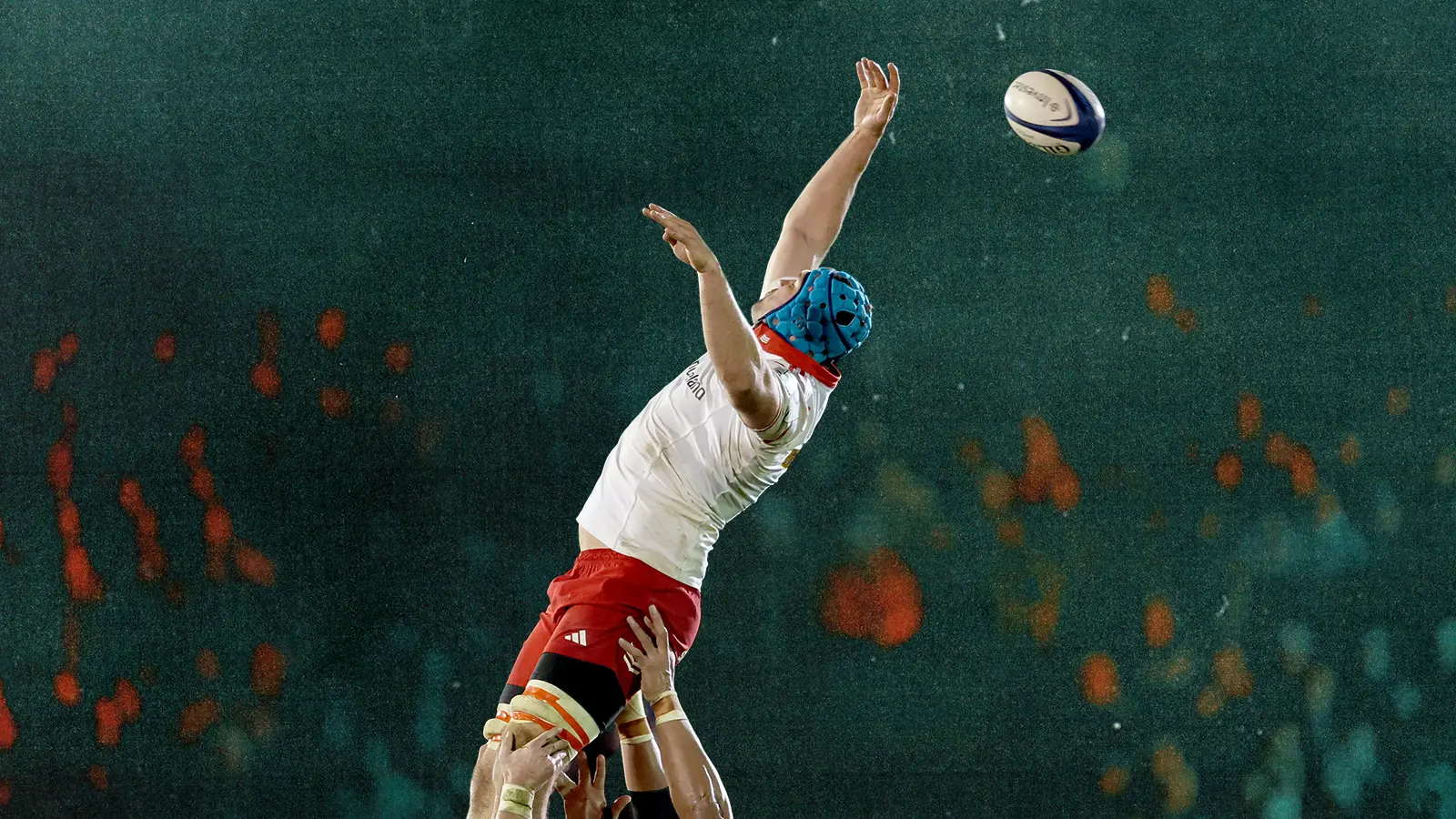
The rain was bucketing down at that point, so I understand Beirne’s rationale — we wanted to maximise the number of potential lifters to target the middle and back — but in the face of that pressure, with a greasy ball, wet hands for lifting, catching and throwing — we didn’t adjust. Bath kicked to touch over and over again, and we couldn’t counter it. We lost six lineouts in a row, and every single one of them hurt us. When we hit Ahern, we almost always took possession, but we didn’t use him often enough. Too often, Beirne took the heat on himself and got swallowed up under pressure with sub-par jumping, lifting and then overthrows mixed with good Bath pressure.
The first 20 minutes were almost like a different game. Everything that could have gone wrong did go wrong. No lineout, balls squirting out the side of the ruck after the best bit of attacking work we’d shown up to that point for a full seven-pointer as the kick went in behind a player down, hurt.
21-0.
Bath’s fourth try came from a ball they kicked up into the air from a scrum free kick, and that we couldn’t handle under heavy pressure. Knock on. Scrum, scrum shear, try two phases later.
In total, Bath’s first five tries came from a total of six rucks. Two maul tries from the 5m line, two short-range scrum launches, one unopposed run in. That’s a problem.
We couldn’t handle their kicking game, we didn’t get parity at the scrum until Ala’alatoa came on, and, when they got any kind of platform close in, we couldn’t stop them. Our maul defence shunted backwards all night. We looked lightweight at key points, against a team that selected heavy from the start. Does Kleyn help that? Probably. But we’ll never know how it would have gone, only how it did go.
We’re still a little too in love with our wide-wide game, and seemed to default to it early in an attempt to chase a two-try deficit — as if we panicked knowing that our lineout and kick receipt, with the resulting scrum pressure, meant kicking the ball away was likely to end 50m back up the field near our goal line.
In the second half, we needed two tries, but we looked wholly incapable of breaking them down. They double-tackled us, filled the field and watched as we tried ever more desperate offloads and pullbacks as both sides knew that, bar a clean retention, anything that came from a Munster contestable wouldn’t end well for us.
I’ve spoken a lot about the meta of the game in the last few weeks, and this was a clear example. The power in the game is right back at the scrum, lineout, maul, kicking game, chasing and kick reception. We seemed to understand that, at points, while also realising that, to take it to its natural extension would ultimately hurt us more than Bath. When we kicked, we risked more lineouts and more scrums, which ultimately equated to more penalties, more turnovers and more 22 entries for Bath.
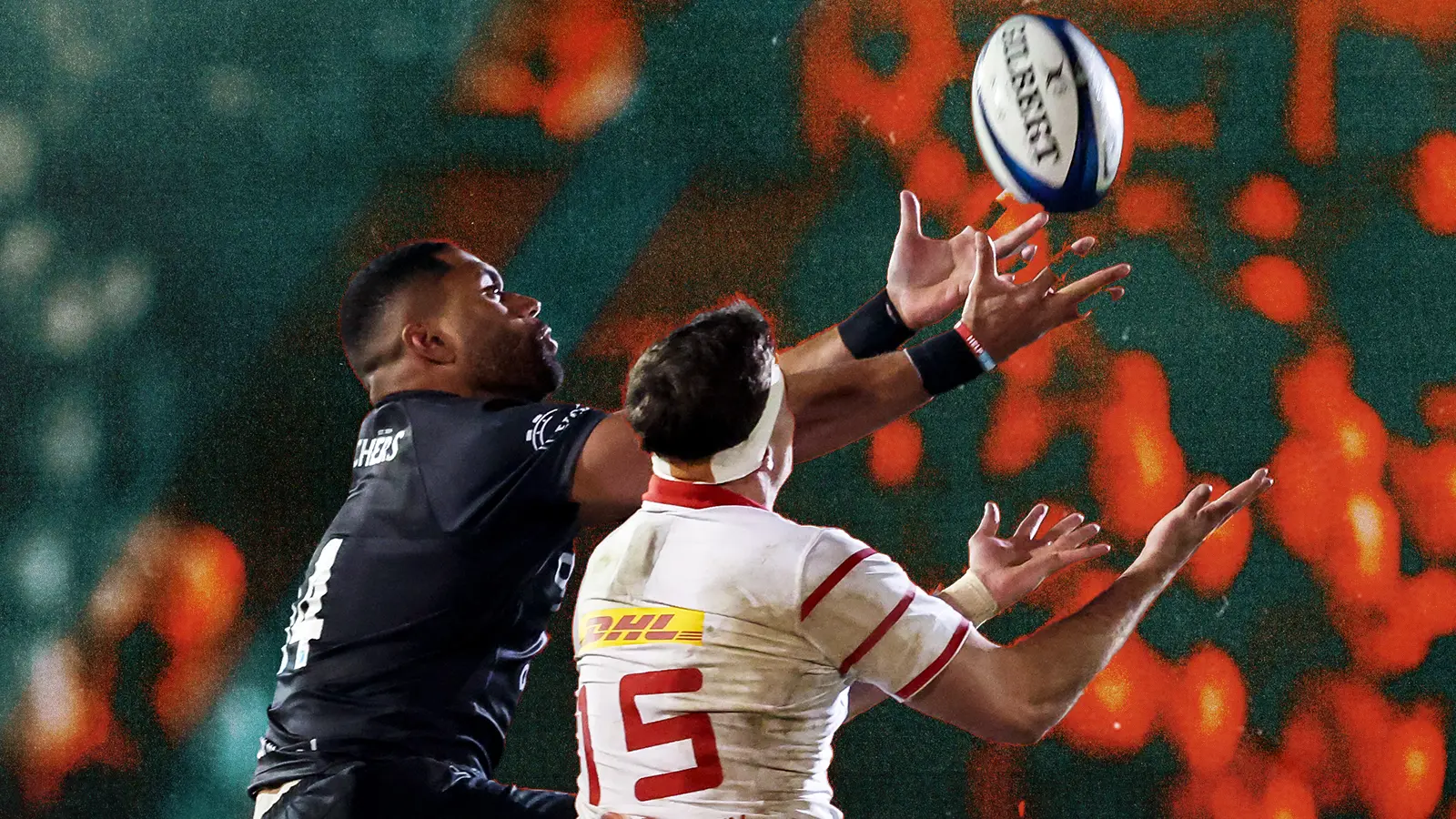
So what’s the fix? Against most teams we’ll play this season, we won’t face as much kicking excellence as we did here. Ben Spencer was doing this for Saracens in their prime, and he did the same here in conditions built for it. You might ask, “Why didn’t we start with that approach?”
It’s a good question, likely one that only the coaches can answer. We have often been far too naive with the ball in hand during games like this over the last four seasons. Too in love with “cherishing” the ball in a game that now punishes you for it. That has to change.
Some of it comes down to availability. Are we more threatening with Jack Crowley at #10 in that second half? Absolutely. Does that mean Hanrahan had a bad game? No. He actually kicked quite well when we went that route. It’s just that Bath treated him as a non-factor when we had possession and needed to keep the ball in hand, so he was a non-factor.
Is Jager + Ala’alatoa our best tighthead rotation now, even after 40 minutes of a debut where the Samoan captain still didn’t really know our lineout detail? Absolutely. We can’t use John Ryan in games like this, except that the only other option is putting a young man in Ronan Foxe into games well above his current XP level. While Jager recovers from his concussion — another month, give or take a few weeks either side — we will have to make do, especially as Salanoa is also nowhere near ready for back-to-back-to-back AIL games, never mind the sport at this level.
The scrummaging challenge won’t be quite as profound until, perhaps, Toulon/Castres, but it’s still a big issue.
In the backs, guys like Kilgallen and Abrahams will now likely find themselves behind the eight ball, as they were relentlessly targeted for the full 80 minutes. Both would be doing well to feature against Gloucester next week, and it puts real focus on our usage of Ben O’Connor, who seems like the perfect young player to exploit the new meta as it pertains to back-three players in particular. We’ll see. Calvin Nash has never been more missed and will hopefully be good to go next week.
Ultimately, what this game serves is as a temperature check for Clayton McMillan and Ian Costello as to where this squad is at. We need reinforcements for next season at hooker, tighthead and back-up scrumhalf. Arguably, in a few other places too. We also need to examine our structural approach from an attacking perspective. Are we set up to win big games as it stands in 2025/26 if we run into opponents with this mixture of approach and system suitability? Are we where we need to be tactically? We had a perfect game plan against Leinster, which would have worked as well against Connacht, Stormers and Leinster, but then we moved away from it. Why?
Sure, injuries and other unavailability have hurt core parts of that, but this much?
There is a lot for McMillan to digest, but I’d wager he knows a lot more about what he’s going to do today than he did on Saturday morning.
They are my big takeaways. And perhaps they will be what I’m thinking about all week.
| Players | Rating |
|---|---|
| 1. Jeremy Loughman | ★★ |
| 2. Diarmuid Barron | ★★ |
| 3. John Ryan | ★★ |
| 4. Edwin Edogbo | ★★★★ |
| 5. Tom Ahern | ★★★★ |
| 6. Tadhg Beirne | ★ |
| 7. John Hodnett | ★★ |
| 8. Gavin Coombes | ★★★ |
| 9. Craig Casey | ★★★★ |
| 10. JJ Hanrahan | ★★★ |
| 11. Thaakir Abrahams | ★ |
| 12. Dan Kelly | ★★★ |
| 13. Tom Farrell | ★★★ |
| 14. Diarmuid Kilgallen | ★ |
| 15. Shane Daly | ★★★ |
| 16. Lee Barron | ★★ |
| 17. Josh Wycherley | ★★ |
| 18. Michael Ala'alatoa | ★★★ |
| 19. Fineen Wycherley | N/A |
| 20. Ruadhan Quinn | ★★★ |
| 21. Ethan Coughlan | ★★ |
| 22. Alex Nankivell | ★★★ |
| 23. Alex Kendellen | ★★★ |
I thought Craig Casey had an excellent game, all things considered. No real forward platform to work with, under huge pressure tactically and sick as a plane to Lourdes all week, but he fought through it until he couldn’t fight anymore. A real leader. He wasn’t at his best, but he was the best he could be in the circumstances, and that’s all you can ask of a guy.
I thought Edwin Edogbo and Tom Ahern did really well, even allowing for Edogbo playing two-thirds more of the game than we’d have liked. Tom Ahern looked athletic, aerially dominant and capable of producing something with the ball in hand. Gavin Coombes ran into brick walls all day, but kept at it — we looked lighter and less threatening when he was off the field. He’d given about as much as anyone could have asked for.
My thoughts on Tom Farrell’s game are more nuanced. While he was undoubtedly excellent at beating defenders and line-running, I still feel that Nankivell and Kelly would be more suited to the verticality of the modern game. Does Farrell need to transition to a last 25 minutes player who can pick off dodgy alignments? Yes. I think so. No rhetorical questions here. I think we’re philosophically stuck between two stools at the moment, between Farrell’s edge creativity and the most complete performances we’ve seen from our midfield this season, which have been with Nankivell and Kelly, in my opinion.
Finally, a word on Michael Ala’alatoa, who, after two sessions as a Munster player, produced exactly what we signed him for.

Scrum solidity. Ala’alatoa came on for John Ryan at halftime and immediately turned the scrum from a liability into a stable platform. That’s why he’s here. We lost a little bit of heft when Loughman went off — Josh Wycherley went from scrummaging against Luke Masters at Cork Con last week, to Thomas Du Toit this week — but overall, we’ll be happy with what Ala’alatoa produced here.
It’ll be needed again next week and beyond.
