


I sometimes wonder what it would be like to cover a normal rugby team. One where there’s not a crisis every other month, either real or imagined. Maybe it’s boring. Maybe in that reality, where I cover a boring team, all I have to talk about is Just The Rugby. Maybe I’d be sick of it. Just the rugby, I mean. Maybe, secretly, I love the misery.
For Munster in the last months, it’s mainly misery interspersed with a few rugby games. Some went well, others didn’t. Mike Prendergast decided to leave for Bath, redundancies were sought among staff, and then Roger Randle was hired two and a half weeks ago.
That hire was immediately controversial, for reasons explained in the article above. As I explained then, it was about optics vs facts. The facts were — and remain — that Randle wasn’t tried for the allegation in question and has worked at multiple rugby clubs in different countries and national NZ organisations for years without issue or public complaint.
But, as I wrote two weeks ago;
“If we focus purely on optics and not facts, Randle probably should not have been hired, whatever the outcome that might have had on Clayton McMillan, who, we can infer, clearly wanted Randle in his coaching staff, having worked with him extensively for four or five years previously. The social media backlash, such as it has been so far, was entirely predictable but is unpredictable in its scope. There is no proof that Randle or the other men involved did anything wrong, but the allegations themselves become the relevant topic when we look at optics alone. What will someone think when they see the headline allegations in that article, regardless of it being 30 years ago, or the complexity built into the case? It entirely depends on the person. Should it be that way? It doesn’t matter. It’s the way it is.“
Ultimately, it seems that the battle between optics and facts, optics won out. Roger Randle will not, now, coach Munster. So after two weeks of bad press and the inflammation caused by the controversy internally, Munster get the worst of both worlds. All the damage, and no coach either — so it was all for nothing.
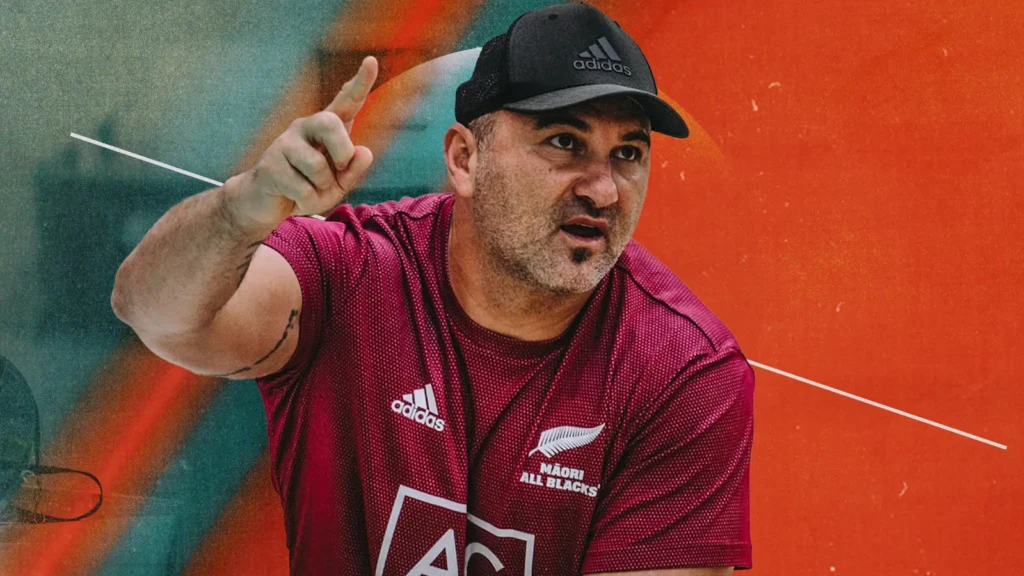
The details around the situation are vague at this point. From what I’ve heard from around 1700 on the 30th of April, it appears that Munster/IRFU cancelled the contract, rather than Randle deciding against the move — although I doubt he’s too devastated about it, given the tense environment he would have been bringing his family into. I later heard that it was far more mutual in nature than this. Munster’s press release directly quotes this.
“It became clear that the renewed public attention around these allegations had created circumstances where proceeding with the role was no longer the right outcome for our family. This is something that we accept with genuine sadness and disappointment.” — Roger Randle.
The opening line of the Munster announcement also directly mentions the mutual nature of it, although the percentage line between that mutuality will depend on what comes out in the fallout.
The real issue now is what happens with Clayton McMillan if it’s correct that Munster/IRFU had a bigger say in the cancellation of the contract under whatever terms are allowed for in that scenario. When I did my livestream yesterday, I felt that this outcome, as the 100% driver, was unlikely, purely because of the effort expended after the signing was announced.
Weeks of due diligence, McMillan explaining the situation and the reason for the hire to multiple different stakeholders, the players, other coaches, and then enduring the internal destabilisation at a C-suite level over the PGC resignations, before McMillan himself fronted up to the press about the hire in what was probably the most charged atmosphere I’ve ever experienced in a Microsoft Teams meeting.
If it’s true that the contract was primarily cancelled on the Irish end, I wouldn’t be at all surprised if McMillan felt critically undermined by those above him, both at Munster and at the IRFU. Hung out to dry, almost. He put out his neck for Roger Randle, asked the fans to trust him on the hire, only to see the deal collapse two weeks later.
For that reason alone, the last three weeks have been a total, incredibly damaging disaster.
As I wrote on this here, the reaction to the hire was predictable — there was always going to be a reaction — but the scope of the reaction was unpredictable. How far would the reaction go? From a media and fan backlash perspective, the story was mostly dead by the Thursday before the Ulster game. That’s natural enough. Most people can only care about something external to their own lives for around two weeks, maximum, especially when there are no facts to decide on. It becomes just another Thing That Happened A While Ago.
But the internal reaction was different, especially as it went through the seemingly endless Munster backrooms of voluntary boards and branch members. It takes longer to percolate. The supposed drop in season tickets predicted off the back of this was pretty much a non-factor, by all accounts, and mostly indistinguishable from the general malaise everyone outside of the TOP14 is feeling when it comes to committing money today to spend more money later in the year.
How did sponsors react? That’s an important question, and one I don’t have a proper answer for yet. I have heard that one sponsor in particular was unhappy with the hire from a purely optics level — going on the same article everyone else has read and nothing more — but that hasn’t been confirmed. I think it’s pretty much impossible to confirm, now that I’m thinking about it, so take that for what it is.
If there was that level of disquiet, there’s a reasonable argument that it contributed to the environment that made this outcome inevitable. We may never know for certain.
What we do know is in the press release itself, if you read it carefully. Ian Costello’s statement is measured and corporate — “difficult conclusion,” “best course of action,” back to business. It is the language of an organisation that has made a decision and wants to move on.
Clayton McMillan’s is not. He says he is “personally disappointed.” He says Randle is “an outstanding person and coach.” He says he believes Randle “would have brought real quality to the programme.” That is not the statement of a man who agreed with what happened, however it happened. That is the statement of a man who was ultimately overruled, or whom the situation overtook, and who wanted that on the record.
That is the live grenade sitting in the middle of this press release.
The question of what McMillan does next — whether he stays, whether he can stay, whether he wants to — is now the most important rugby question Munster faces going into next season. He put his credibility on the line for this hire. He explained it publicly. He endured the chaos internally. And then the rug was pulled. Whether that was primarily Munster, primarily the IRFU, or genuinely mutual, the damage to his position as head coach — his ability to make decisions, to have them stick, to be trusted by those above him — is real and needs to be addressed.
There is a version of this where McMillan absorbs it, says nothing publicly beyond what’s in the press release, and gets on with the job. He’s a pragmatic man and a good coach, and there are at least two games left in a season that still has something to play for. That version is possible. But it requires a level of institutional trust — a belief that the people above him have his back, that his judgment is valued, that this won’t happen again — that has to be actively rebuilt now, not assumed. You can’t ask a head coach to front a controversial hire, defend it under pressure, and then pull it without there being a conversation about what that means for his authority going forward. If that conversation hasn’t happened yet, it needs to happen yesterday. If not yesterday, then first thing this morning.
From a purely practical level, Munster do not have an attack coach for next season, and still need to sign a forwards coach. You can only do that if you know who the head coach is going to be with some degree of certainty. If that isn’t going to be McMillan, that throws the entire preseason into jeopardy because getting anyone of a similar stature would be practically impossible. That is now a radiating possibility off the back of the sequence of decisions made from Rowntree’s departure, the decision to go with McMillan over Prendergast last February, to Prendergast’s decision to leave, to this. Nobody at Munster predicted, when they made any one of these decisions, going all the way back to Rowntree in November 2024, that they would arrive here. Every choice you make in this game, in life, leads to new choices that you can’t predict.
Costello and Flanagan have questions to answer, too. Not about Randle — that argument is settled, whatever way you feel about how it was settled — but about how an organisation gets from a signed two-year contract to a mutual parting in two weeks, and what that says about the decision-making structures that allowed it to happen in the first place. If he was the right guy two weeks ago, what changed in the interim? How much of what changed could have been predicted in advance? Most of it was. The social media reaction, the news cycle — that was always coming. Maybe the PGC resignations weren’t, or the subsequent Commercial Advisory Group resignations that followed weren’t fully predictable. That was a gamble — or a blind spot — that came back to bite the entire organisation.
Costello signed off on this hire. Flanagan, too. The IRFU must have signed off on it also, even though they later distanced themselves from it. The due diligence was described, at the time, as thorough. McMillan briefed stakeholders. The players were told. It was, by all accounts, a process — not a rushed decision made in a snap 30-minute meeting. And then, within a fortnight of the announcement, it unravelled entirely under pressure that was, by any reasonable measure, foreseeable. The Mail & Guardian article was not new. The allegations were not new. The social media environment in which a story like this would land was not new. The vast majority of the forces that ultimately made this untenable did not emerge from nowhere in the two weeks after the announcement.
So the questions have to be asked. If he was the right person two weeks ago, what changed in the interim? And how much of what changed could — and should — have been predicted in advance? None of the facts have changed. What changed was the will to withstand the pressure of the optics. Whether that was the right call is, as I wrote two weeks ago, entirely in the eye of the beholder. But the decision to hire and the decision to unhire — however mutual — were made by the same people, in the same organisation, looking at the same information. That is the part that demands an explanation, to McMillan primarily, but also to the fans. It is an explanation that fans might never get, but it’s needed all the same.
The answers to those questions will make for an uncomfortable discussion at a leadership level. A shoe has to fall somewhere, but on whom?
All we know for sure is that the misery continues.
Just The Rugby can’t come soon enough.
