


“In my beginning is my end” — Eliot, East Coker
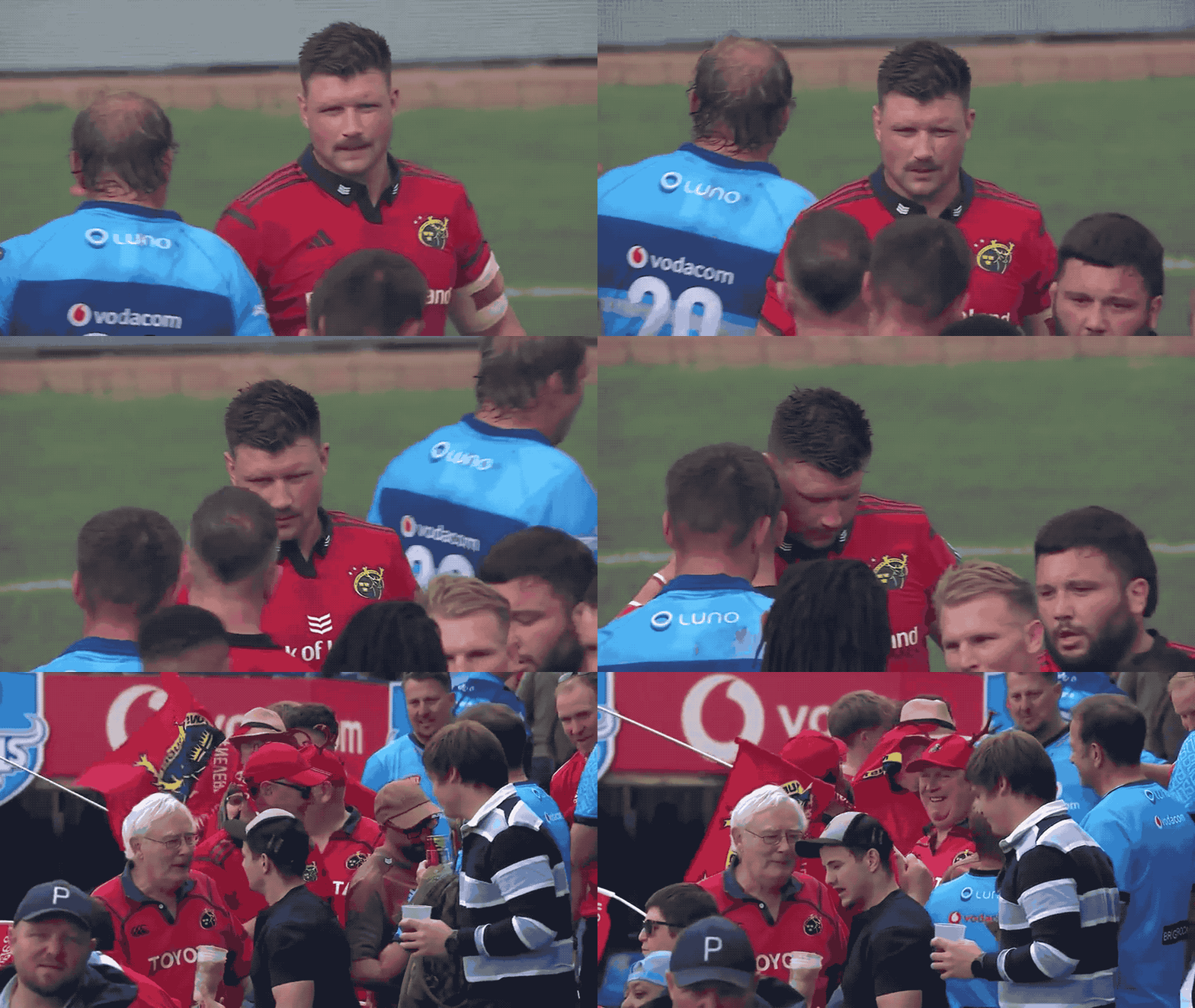
Eliot wasn’t writing about a rugby province caught between generations, but he might as well have been. Munster’s 2025–26 began as a kind of farewell — the old spine dismantled before the new coach had unpacked, a dressing room emptied of legendary players who had spent fifteen years defining what the red jersey was supposed to mean.
Clayton McMillan arrived to build, but the first thing any builder on this site had to do was clear the ground. And so the season ran in both directions at once: every fresh start carried the weight of a goodbye, every new combination a reminder of the one it replaced. By the end, it was a campaign measured in inches — a play-off place clawed at on the thinnest sliver of points difference, a European year that slid out of the Champions Cup and died quietly in a Challenge Cup knockout.
Not a fall, nothing close to a renaissance, either. A house mid-renovation, scaffolding still up, the old façade gone, and the new one not yet revealed. Which is the honest verdict on the year: Munster did not arrive anywhere in 2025–26. It started becoming something. In its beginning, the shape of its end.
But the truer drama of the season was never confined to the white lines. If the squad was a house mid-renovation, the foundations themselves were being inspected — and found wanting. By March, the province had opened a voluntary redundancy programme, the language of “aligning the cost base” doing its grim work over a club that had always sold itself on something less quantifiable than a balance sheet. Then came April, and the episode that crystallised everything: the appointment of Roger Randle as attack coach, and unpicked within a fortnight after the controversy surrounding a 1997 rape allegation — always denied by Randle and dropped when the complainant withdrew the charge — made the position untenable.
The team was rebuilding a spine post Kilcoyne, Archer, Murray and O’Mahony, in particular.
The province may need to rebuild something deeper.
The Fast Start
If we have 32-34 points by the end of December, Munster will probably make the top four in the URC. From there, Munster making the URC final would be considered a good domestic season for McMillan, with scope to improve the side again next July.
In Europe this season, I think the aim has to be a home Round of 16 game at least, which we can obtain with a good showing in what is a pretty well-balanced pool. Bath are an excellent side, Toulon are very good, Gloucester and Castres are something of an unknown quantity, but it feels like a pool that could see one, maybe two losses each. Win in Cork, go hard at Bath in the first round, and, with a bit of luck, we’ll be facing a disinterested Toulon side in early January with a home game to finish against a hopefully disinterested Castres side.
None of that is impossible, but as Rowntree found out, not winning your home European games puts your season on hard mode, regardless of what happens in the URC.
The Weight — September 2025
As it happens, we finished 2025 with 30 points — those four points, including a somewhat disastrous January, February and March — off the top end of my expectation ended up being the difference between an incredibly anxious last four games, and a straightforward run-in.
Our start in September was electric. Five wins from five to start the URC, including an outstanding win over Leinster in Croke Park. That would turn out to be the season’s highlight.
This was probably the best performance I’ve seen from a Munster team since the mid-2000s.
But don’t get carried away. It’s just an unprecedented — as in, we have never done this before — bonus point win against Leinster in Dublin during a regular season league game. We’ve beaten Leinster in Dublin during regular-season league play before, of course. Back in 2002/03, 2008/09 and 2014/15. That last one was our last regular-season league win before Saturday. In all of those wins, we failed to score a bonus point.
It’s our highest margin of victory over Leinster since we nilled them in the RDS back in 2008/09.
But don’t get carried away.
Super Deluxe Star Ratings — Leinster 14 Munster 31
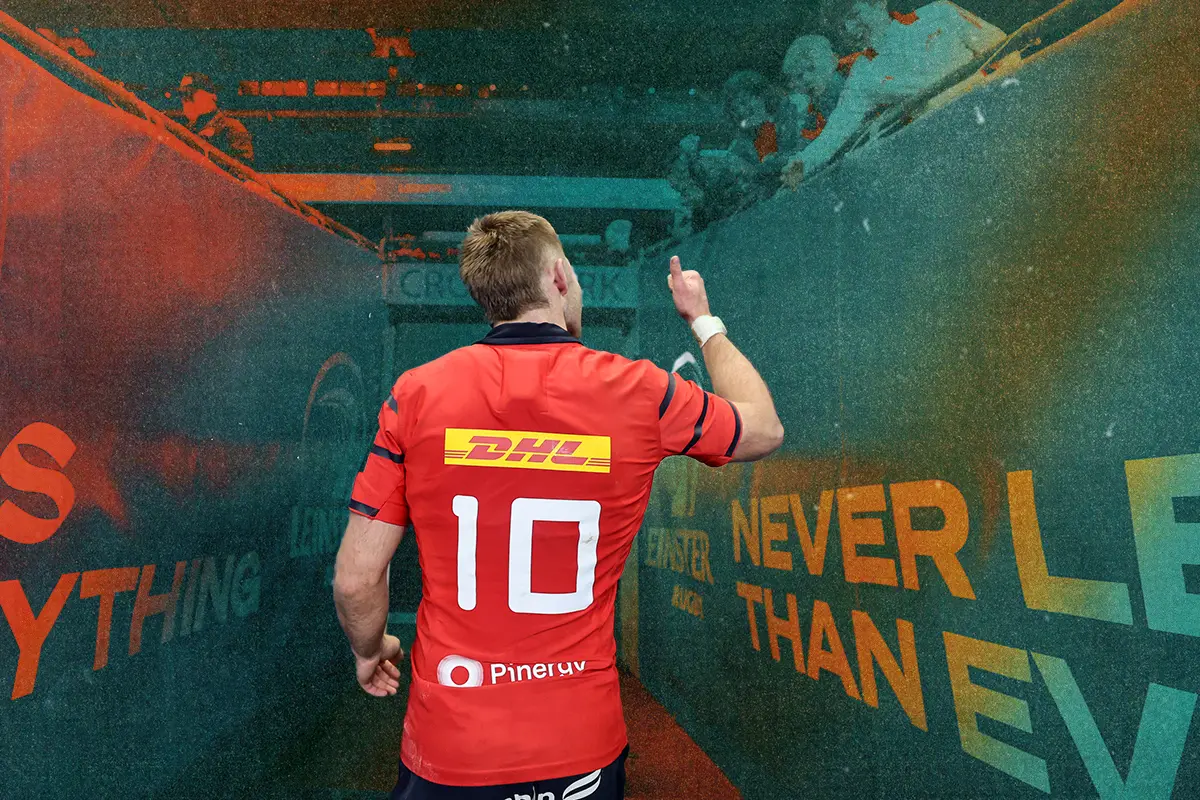
I’d hoped that it wouldn’t be a high-water mark, but that’s what it was. That game was the peak of our tactical and physical output in a fixture we’d specialised in losing, almost perennially. It was genuinely exhilarating to come out on the winning side so dominantly, in Croke Park of all places, especially with the manner of the performance. We were clinical. Tactically dialled in. Ruthlessly physical.
An exclamation point was put on the opening to the season with a fantastic win over Argentina XV in Thomond Park.
I looked up at that curve of the East Stand and I thought, This is a Special Club. A Proper Club. And we’re lucky to be associated with it, no matter how we came to it. By birth, by proximity, by choice. I’m a small, temporary cog in a big machine. One day, I’ll be gone, we’ll be gone, but Munster Rugby will still be there.
This is our thing. And it’s as special as we make it.
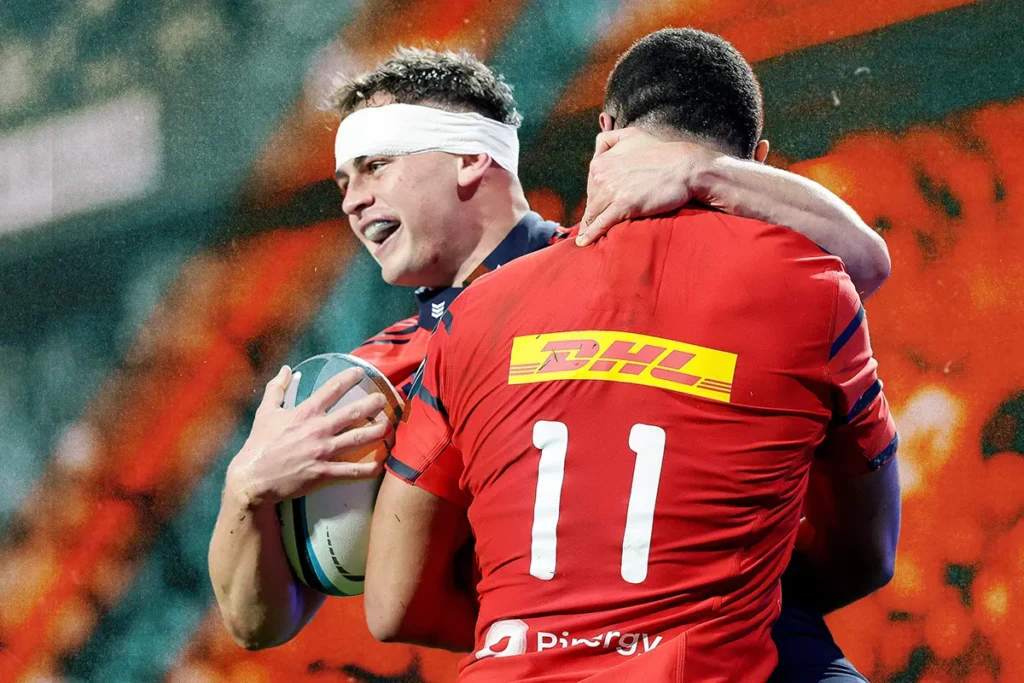
If the opening five games of the season were encouraging, this win over an Argentine selection was something of an exclamation point. A rousing, physical performance by a mostly second-choice, prospect-filled team in front of a hot crowd.
It’s hard to pinpoint how exactly we went wrong in the months to follow, but the roots of what was to come were visible in the home defeat to the Stormers after the November break. The week before, Ireland were thoroughly pumped in the scrum by the Springboks in Dublin. “Pumped” doesn’t really cover it. That would be repeated a week later in Thomond Park, where an excellent first-half performance was ultimately undone by a dominant scrummaging performance by the Stormers.
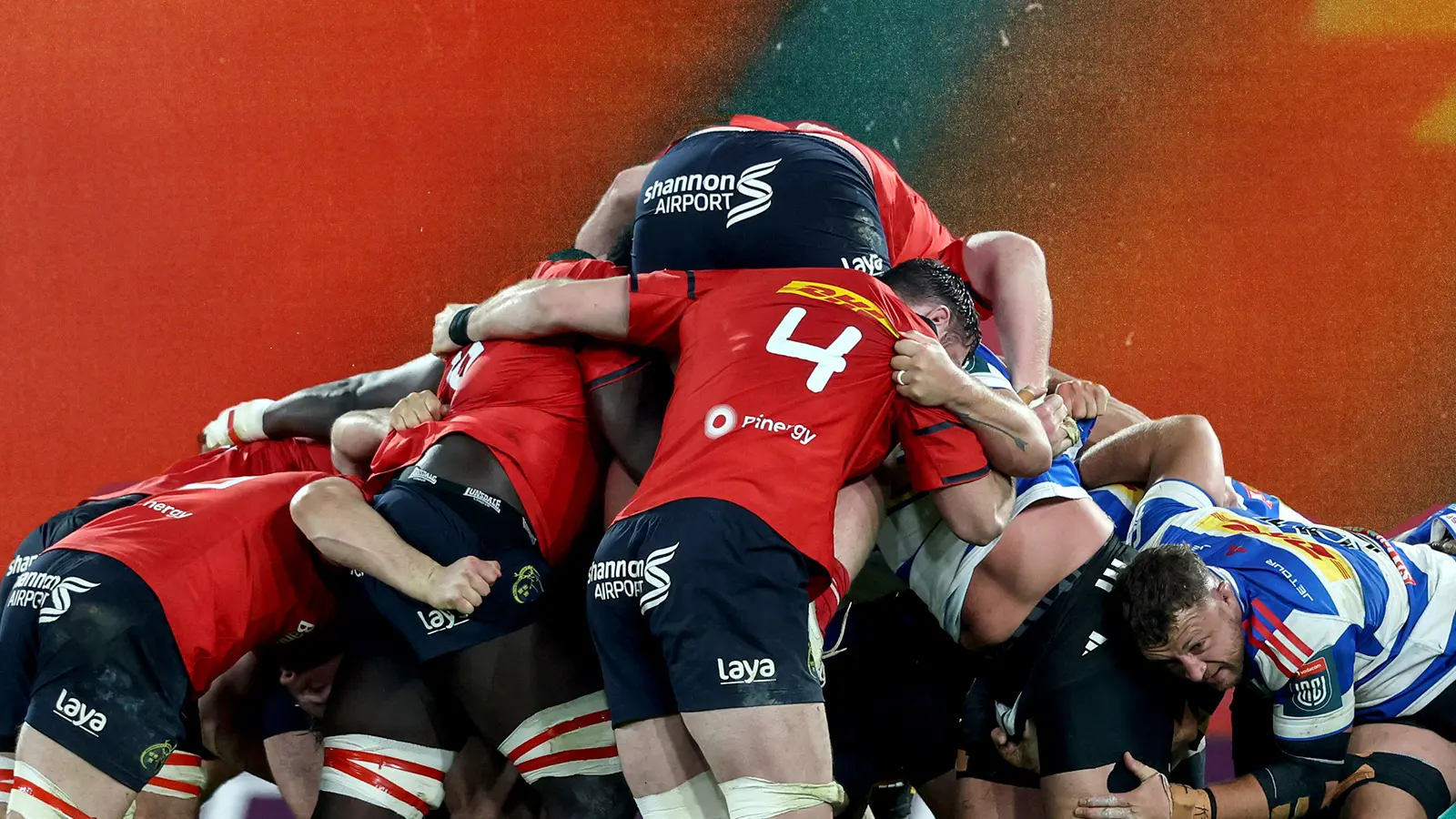
By this stage of the season, Munster’s tighthead roster — which was thin coming into the season regardless — had been cut down to the bare bones. Oli Jager picked up a bad concussion, not that there are any good concussions, in a narrow win over Edinburgh, and Roman Salanoa, who had done well in preseason, was still nowhere close to a return, nor would he be for the season. That heralded the short-term signing of Michael Ala’alatoa, and enhanced usage for John Ryan and, in the early going of the season, Ronan Foxe.
Late in the season, Clayton McMillan would highlight that Stormers’ loss as one that could be directly laid at the door of the scrum. While the scrum was less visibly impactful in the losses to come, it was always a decisive weak point in our season that had as much to do with the personnel we were missing — or didn’t have in the squad at all — as it did with the coaching, which was taken up by Sean Cronin on relatively short notice during the summer, in combination with his other roles as a Provincial Talent Coach. It was far from ideal, and a holdover from the mess caused by the previous season’s coaching flux, where our head coach — and scrum coach — departed mid-season.
It’s something that should have been sorted last season, but the money wasn’t there. That’s partly down to the right guy being unavailable, and partly due to how late in the season the new head coach was signed. Signing a coach — the right coach, in particular — is almost more troublesome than signing a player when it comes down to it. The hours are longer; they almost always have family considerations that might not align with the opportunity, as we’d see later in the season, and it’s very much project-dependent. Who’s the coach? Who am I working with? What are the expectations?
By far the most frustrating part of the season, as it turned out, was something I felt would be a strength. When McMillan arrived in the province in June 2025, his first order of business was to assess everything in place around him. He brought Brad Mayo and Martin Vercoe with him — two incredibly popular hires — but everything else was a pre-existing structure. Same attack coach, same lineout coach, same defence coach, broadly the same playing group. McMillan, who isn’t a specific unit coach himself (if anything, he’d be a lineout/forward guy), naturally took a fair bit of time to get his feet under the table to see what he was working with.
As a new coach coming into a pre-existing environment, it was good politics to come in with a view to working with what was here, at least initially, but I think that slowed the pace of the massive reset that was needed, as we would soon discover.
The Troublesome Middle Block
I’m going to jump around a bit here, timing wise, but it made the most sense to me as I was going through the season.
The biggest initial problem, as I see it now, was the apparent disconnect between Mike Prendergast and Clayton McMillan as the season progressed into the killer block of the season, but more problems followed. We started incredibly well and, despite the loss to the Stormers in Thomond Park at the end of November, there was real confidence that we could continue that run through Bath, Gloucester, Ospreys, Leinster, Ulster, Toulon and Castres. Not winning every game — although that would have been nice — but not the run of two wins from seven that followed.
Our scrum was an issue in a lot of these games, but a far bigger issue was our apparent lack of clarity. We seemed to be pulled between two different approaches. On the one hand, I think McMillan wanted more pragmatism — something undercut by ongoing issues with our scrum and lineout — but the system employed by Mike Prendergast for the last few seasons eschews pragmatism, almost by default. We want the ball, we want to move teams through phases, we want to dominate teams with possession, in a game that seems to, since the change to the escort law in late 2024, reward teams with big scrums, pragmatic kick chase structures, and a kind of “energy management” that sees extended phase play limited to anywhere from the opponents half to the line of their 22, based on your squad build.
Just my own opinion on it; it seems that McMillan wanted a narrower forward structure to help ball retention and build forward pressure, whereas Prendergast’s flatter version of a 1-3-3-1 needs the forwards to be more spread out to pull defences between possible pass options.
This was never more apparent than in the home loss to Castres, which sent the season into something of a tailspin post-January.
All duck or no dinner. Too often, as of late, there’s been no dinner. We play too wide for the forward line we have, and lack the pace across the back three to consistently offer loop threats. Too much of our play ends up wiring ball to Tom Farrell in the hope he can produce an offload or a short ball moment that breaks open a defence. He doesn’t really create chances with space around him, so everything is dependent on high-speed, low-percentage short passes hitting their mark under pressure. Defensively, he can’t cover the same ground, so it feels like any turnover automatically takes four players out of the transition phase that comes after.
It seemed like we wanted to be two different teams at once, but without the core to make either of those teams work at the highest level.
- A kick/turnover transition team without killer pace or creativity outside of Crowley
- A high-possession team without a core of heavy collision winners or a rock-solid set piece to fall back on
- A team that was good defensively, but not elite, and that couldn’t quite stem the bleeding that our attacking inefficiency produced across the campaign
Our best performances of the season — away to Leinster, Toulon and Benetton — showed we were actually probably best as a counter-punching kick-pressure team, albeit against two sides who have a structural weakness to that particular approach.
In a general sense, I felt that the middle block of games and subsequent damaging losses forced something of a schism between three different states.
What McMillan was learning about who we were, who we were under the previous coaching ticket (all still in situ) and what we were, as a playing group, in 2025/26.
In last year’s Anatomy of a Season, I wrote the following about Munster mid-way through the October block that ended with Rowntree’s departure.
We were going backwards. It was plain to see at that point, and the problems ran deep. The lineout was a mess, our phase play looked tired and predictable in between flashes of what we were capable of at our best. Worse again, we were leaking tries in the red zone as teams realised they could quite easily overpower our tight five in tight collisions.
You could argue that the same was true for most of this season.
In that block, even our wins added to the malaise. If the opening block, including Argentina XV, was a look at what we could be, the back-to-back losses to the Stormers and Bath were like getting a hangover after two pints the night before. We didn’t even get all that carried away, but the pain came back like we were dancing on tables.
Even our wins over Gloucester and Ospreys couldn’t shake it.
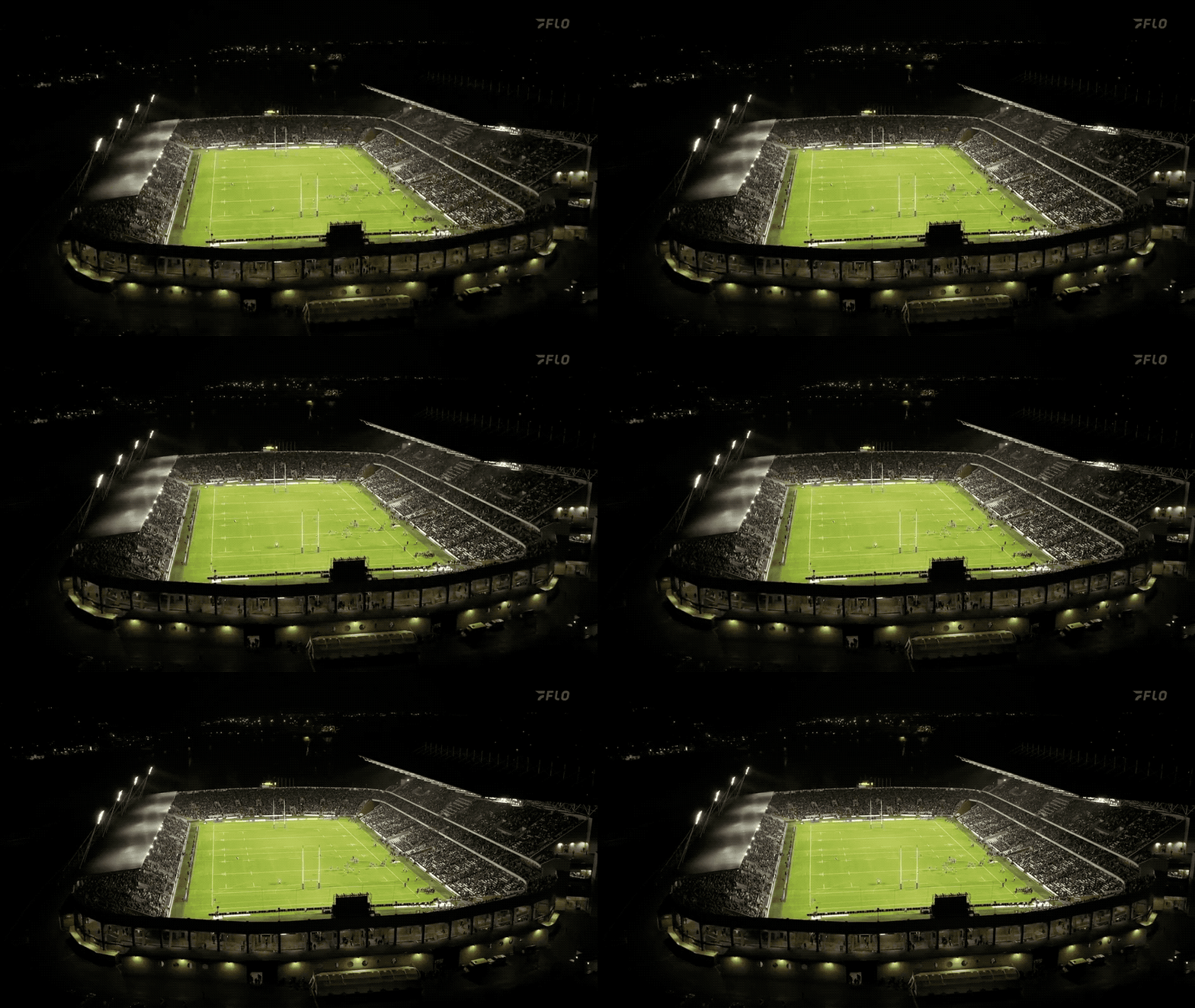
The eventual 31-3 win was played in wet, very windy conditions in Cork, and that, coupled with Gloucester’s shadow selection and kick pressure tactics, led to a very frustrating first half in particular, where we couldn’t really kick into the wind, so we kept producing an ultra frustrating combination of excellent phase play right up the point that a daft offload or handling error would kill the momentum stone-dead.
That summed up the December/January block as much as anything for me. Good stuff all the way through, but only in patches and almost always marred by a lack of clarity, maddening errors on both sides of the ball, killer moments of indiscipline at key moments, and constant oscillation between the lineout and scrum costing us in different games, sometimes the same one.
When you combine the dire losses to Ulster and Castres, alongside a narrow win over the Dragons in rotten weather conditions in Cork, where we looked like losing for most of it, and a disappointing loss away to Glasgow, January was arguably the killer month for the province’s season. A particular low-light was the Dragons fans in front of the press box singing, “Can we play you every week?”
At that point, they were 13-0 up and were a disallowed try away from making that 20-0 at one point in as bad a half of rugby I’ve seen from Munster in years.
There is a seam of inconsistency that runs through the squad at the moment like a fissure, in both core systems and individuals, that needs to be chiselled out, one way or another.
Until that inconsistency is addressed, we will continue to flap in strong winds, both of our making and those of our opponents.
Something was not right with the group. That was clear. The Six Nations break couldn’t have come at a better time for the club; we needed the time away from the game to workshop what had gone wrong and how it might be fixed, but much, much worse was to come.
The Randle Incident
You’re familiar with the steps — most of them — but a quick refresher nonetheless.
26 February 2026 — The vacancy opens. Munster confirm that senior coach Mike Prendergast will leave at the end of the 2025/26 season, with a move to Bath, reportedly, to follow. Having rejoined his home province as attack coach in 2022 and helped deliver the 2022/23 URC title, Prendergast leaves Clayton McMillan needing a new attack specialist.
28 February 2026 — Munster fail to win a bonus point over a rotated Zebre side in Thomond Park in the URC, following up on a desperate January.
14 April 2026 — Randle enters the frame. Reports link Roger Randle, an assistant coach at McMillan’s former club, the Chiefs, to the vacant role. Almost immediately, South African press reports from 1997 — referencing a rape allegation made against Randle in Durban while he was touring with the Hurricanes — begin recirculating on social media. Randle has consistently denied the allegation; he was charged at the time, but the case did not proceed, and there was no prosecution.
15 April 2026 — The appointment is confirmed. Munster formally announces Randle on a two-year deal from July, subject to a work permit. The province’s statement acknowledges awareness of the 1997 matter and states that due diligence was carried out during the recruitment process.
16 April 2026 — The resignations. Three independent members of Munster’s Professional Game Committee (PGC) — former players Billy Holland, Killian Keane and Mick O’Driscoll — resign. Reporting at the time indicated it was the lack of consultation over the appointment, rather than the choice of Randle in itself, that prompted them to step down, with the signing said to have been presented to the committee as a “done deal”.
17 April 2026 — The defence, and more departures. McMillan publicly backs the appointment, insisting the due diligence went well beyond his own endorsement and that several people across the organisation had been canvassed. The same period sees volunteer members of Munster’s Commercial Advisory Group step down, including its chairman, the businessman Aongus Hegarty.
Late April 2026 — The pressure builds. External criticism mounts. McMillan concedes the province needs to reflect on the process and signals uncertainty about the support around him.
30 April 2026 — The U-turn. Munster and Randle announce they have mutually agreed not to proceed with the appointment. Randle says he is deeply saddened that decades-old allegations he has always denied resurfaced and overshadowed the opportunity. This was as much to do with Randle himself as it was with the controversy on the Munster end.
12 May 2026 — The reckoning begins. Munster commission an Independent Governance and Organisational Review, all of it playing out against the backdrop of cost-cutting and what turned out to be single-digit compulsory redundancies at the province.
22–25 May 2026 — Flanagan breaks his silence. In his first interview since the controversy, given to Simon Lewis of the Irish Examiner, chief executive Ian Flanagan apologises, accepts responsibility for the failed process, and promises the situation will not recur. It is in this interview that the detail emerges, which invites fresh scrutiny.
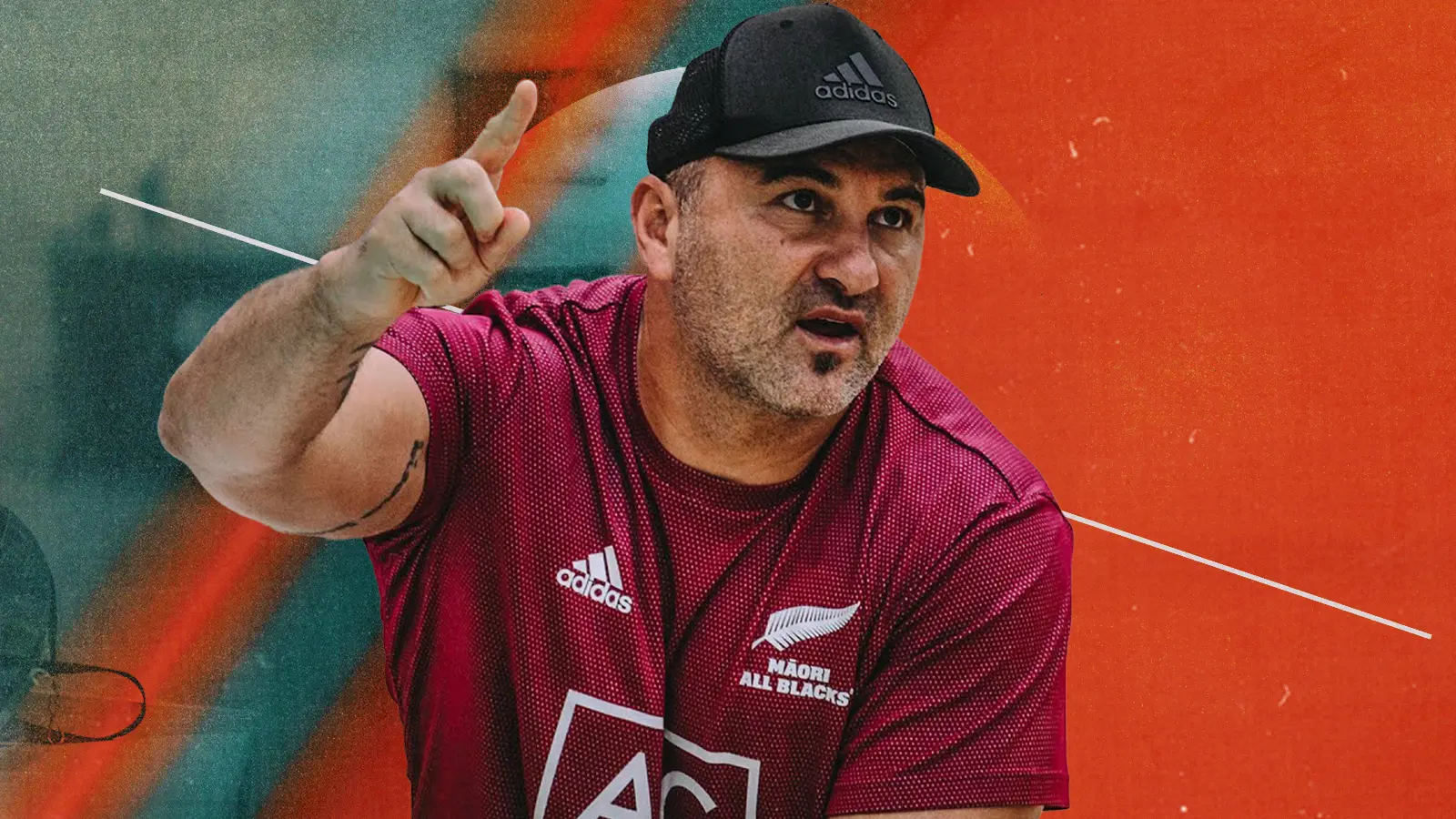
The Contradiction
The secondary reaction to the hire was built on a single, widely reported premise outside of the unproven historic allegation itself: that the PGC — the eight-person body meant to oversee major decisions at the province — had essentially been railroaded. The resignation of three of its independent members was the clearest possible signal that something in the decision-making chain had broken down, and it triggered the news cycle that followed, from the public backlash to the eventual governance review.
Yet in the Examiner interview, Flanagan’s account of how the due diligence was conducted places one PGC figure squarely inside the process. Asked about the vetting of Randle, he identifies the key people involved as general manager Ian Costello, head coach McMillan, and — notably — the chair of the Professional Game Committee. He goes on to describe a process that, by his telling, followed Munster’s standard procedure for any overseas recruit: extensive contact with people who knew Randle, two figures already inside the building who had worked with him for years (McMillan and team manager Martyn Vercoe), and character references sought in both Ireland and New Zealand, which he says came back “strongly”.
So which is it? If the PGC was kept out of the loop until late in the process, how was its own chairman one of the central figures conducting the due diligence?
The likely answer lies in a distinction Munster will need to explain clearly to rebuild trust. The members who resigned were the committee’s independent nominees — the external voices brought in precisely to provide challenge and oversight. The person Flanagan places at the heart of the vetting was the chair of the PGC. Both things can be true at once: that the chair was actively involved in assessing Randle, while the independent members were never meaningfully consulted before the decision was effectively made. That would be consistent with the reporting that the appointment was presented to the wider committee as a fait accompli.
But if that is the explanation, it does not resolve the governance problem so much as redefine it. A committee whose chair helps assess a decision — extensive due diligence is not done quickly, or without the assumption that a hire will follow — while its independent members are left out is not an uninformed committee, it is one that was divided, or one whose oversight function was, in practice, bypassed from within. Either reading raises hard questions about how power is distributed at the top of the province, and about whether the PGC functioned as a check or merely as a body to be informed after the fact. For me, it asks questions as to whether the PGC, as it currently operates, is fit for purpose at all.
This had a follow-on effect in the ever-busy Munster Rugby Rumour Mill. Costello was rumoured not only to have bypassed the IRFU — something functionally impossible in the Irish system, even if the union did distance itself from the process the moment the signing was announced — but to have actively conspired with McMillan and Flanagan to railroad the appointment through an uninformed and blindsided PGC.
The chair’s involvement in the due diligence doesn’t put that second claim to bed, exactly: a chair working on the vetting is perfectly compatible with the independent members’ feeling railroaded — that, after all, is the “bypassed from within” scenario set out above. What it undercuts is the narrower and more popular version, that the executive trio acted alone against a committee with no one of its own anywhere near the decision. On Flanagan’s account, that isn’t what happened — the most senior figure on the PGC was one of the people conducting the due diligence. Which prompts the obvious question: why have Flanagan, Costello, and, to a degree, McMillan absorbed almost all of the heat, when none of the initial reporting on the resignations so much as mentioned the chair’s role? That omission from the media reporting — which dictated so much of the reaction — is, to me, incredibly odd.
The PGC resignations set off a cascade of negative publicity that, to me, directly influenced the later resignations from the Commercial Advisory Group, as well as raining immense personal criticism onto Costello and Flanagan. Flanagan, who was already feeling the heat because of the sought redundancies, is somewhat understandable as CEO, but the focus on Costello, especially on the rumour mill, became more baffling as time went on. As the GM, his concerns must surely begin and end with what’s best for the rugby side of the organisation, yet he’s been framed as someone who should see around corners that aren’t his to look around. As the GM, you’re going to get heat regardless. A lot of the heat that Costello took in the aftermath of this particular incident was, for me, unfair. Like everyone else working at the club this year, and for the last few years, he’ll have to own his part of the slow deflation since 2022/23, but that’s about it as far as I can see today.
There are key questions the review needs to answer. The due diligence was, by Flanagan’s own description, far from a quick process. If it was not communicated to the rest of the PGC ahead of any ratification, why not — and why did the chair, of all people, not flag it? And when the resignations broke, why did the chair’s role in that due diligence not emerge alongside them? The reporting at the time does not indicate that it was disclosed, yet it was surely material: if the central story was that the PGC had been railroaded, the involvement of the committee’s own chairman in the vetting is exactly the context that was missing. This is at the heart of the communication issues that bedevilled the process from the start, and clarity is needed one way or another.
All this is shorthand for saying that we need to make better, faster, and more connected decisions. A reformed and reformatted PGC is critical to that. I think if you asked most people in the organisation about Randle, they’d tell you now that he should never have been hired in the first place. That hindsight was hard-earned, and may yet prove costly for senior C-suite leadership after the review is conducted.
The aftermath of the Randle Incident was particularly bruising.
It led to one of the tensest press conferences I’ve ever been a part of with Clayton McMillan, and a series of increasingly bizarre questions during an early-week press conference where players were repeatedly asked about a situation they either didn’t know about or couldn’t talk about.
When combined with the redundancies a month earlier — a news cycle all of its own in the middle of the South African tour mid-March — it felt like there was nowhere for the club to turn. Every single game became a pressure point all of its own; a chance to change the narrative off the field, when we were still looking incredibly vulnerable on it. That the news broke a few days after getting nilled in Durban added to the pressure.
A better performance away to the Bulls at the end of March gave a measure of relief — the two points we earned there were the difference between fifth and eighth in the final log, and an even higher pressure end to the season — but that would be followed up by another dire first-half performance away to Exeter in the Challenge Cup Round of 16 that led to another European loss.
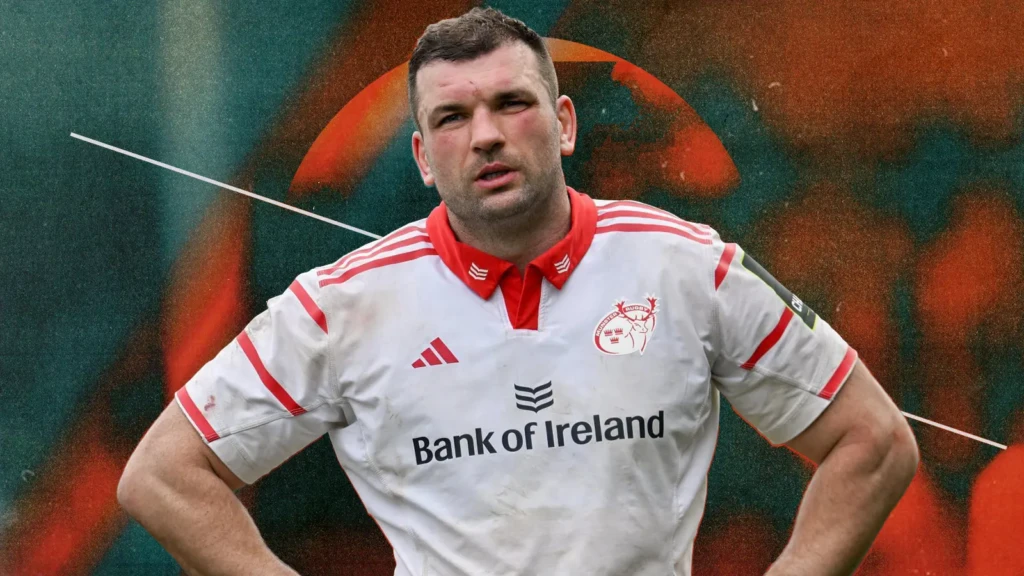
The Randle Incident happened two weeks later, and it felt like we couldn’t help but stand on whatever rakes were available.
We beat Benetton that weekend — our best win since the Leinster game — and it was massively cathartic after the mess of the previous few months, but the narrative showed no sign of turning. By that point, the narrative itself had something of a galvanising effect on the squad, who wanted to get back to what they could control once the European block was out of the way.
In the last few months, we have often been the team that has blown itself out on attacking phases — multiphase attack is so much more draining than multiphase defence, despite the received wisdom to the opposite — and because our defence and set piece held here, we were far more impactful when we did choose to push the button offensively.
Combined with better efficiency — this was our best points per 22 entry score in months — it led to a lopsided score that fully reflected Munster’s superiority on the night.
What that means for the last three games of the regular season remains to be seen, but on the face of it, anything close to this level of coherence against Ulster, Connacht and the Lions will see us finish comfortably inside the top eight.
We can only hope.
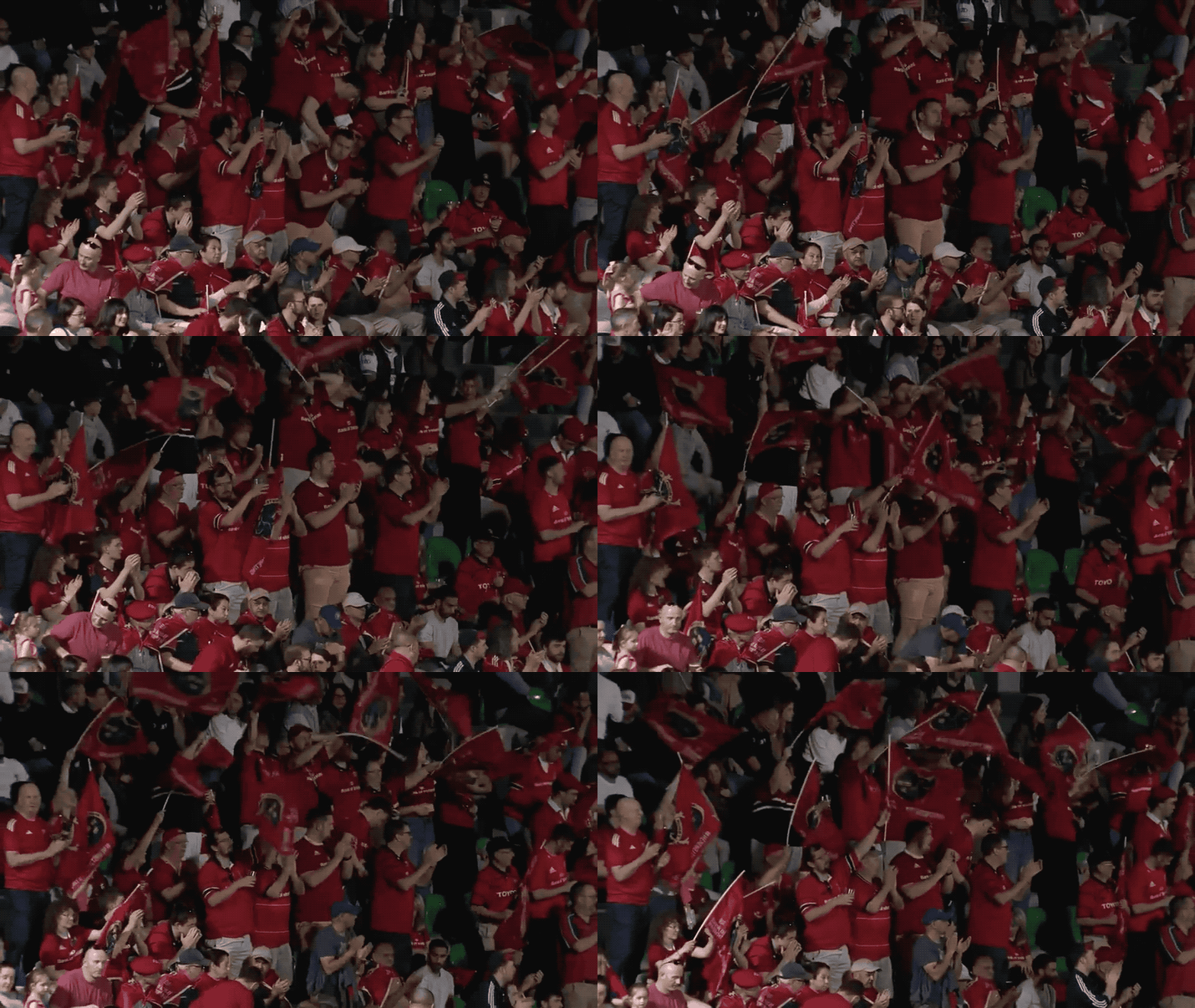
That bonus point on the road put us in a great position to seal a top-eight finish in the weeks to follow, and we compounded that with a bonus point win over Ulster in Thomond Park. Ulster, who had a Challenge Cup semi-final to navigate alongside an incredibly difficult URC run-in, decided to send, essentially, the Ulster Ravens for that game and were eventually put away after another scrappy Munster first half.
But the seeds of what would become a limp over the line were sown that day. Jack Crowley pulled out before the game with what would become a season-ending dead leg, to be followed by killer injuries to Jean Kleyn, Tadhg Beirne, Oli Jager, Calvin Nash, Michael Milne, and Tom Farrell. One game, seven first-teamers out for the season.
We’d go on to lose decisively to a buoyant Connacht two weeks later, alongside another injury we could ill-afford to Edwin Edogbo. A losing bonus point would have all but confirmed Champions Cup rugby, but we never looked close to getting it.
It was exacerbated by the comparison to Connacht, who had an inverse season to ours in many ways. They started the season like sick dripping off a toilet bowl, but improved wildly as the season went on under Stuart Lancaster. The comparison to Munster, with our new coach, was unpleasant, and that loss in the Dexcom cauterised that.
They had figured out what they wanted to be, and had three or four months of positive results as proof of concept, whereas we, by comparison, looked inarguably worse than we did at the start of the season, as the season went on. On-field and off, we looked like we couldn’t stop uppercutting ourselves, and, through the lens of ten senior injuries, no attack coach for next season, a departing forward coach, a review into governance structures and doubts over McMillan’s future at the club, we looked utterly tortured.
Last season, we had two games to save the season. This year, we had one. We started the game against the Lions in Thomond Park in ninth, knowing we needed one point, at least, to finish in eighth, where we would have the pleasure of waiting to see if Ulster could throw us into financial turmoil for the following season by beating Montpellier and consigning us to a full season in the Challenge Cup. The week of that game was one of the most anxious weeks I’ve heard about in the HPC. Multiple top players injured, a bunch of others carrying knocks, and a dangerous opponent in the Lions, who knew a bonus point win could send them to a knockout game in Pretoria, barely an hour down the road from Johannesburg, to a stadium they’d already won in this season.
In the end, we gutted out a deeply tense game against a side we were giving up a ton of size to — something close to arsenic for Munster throughout the season.
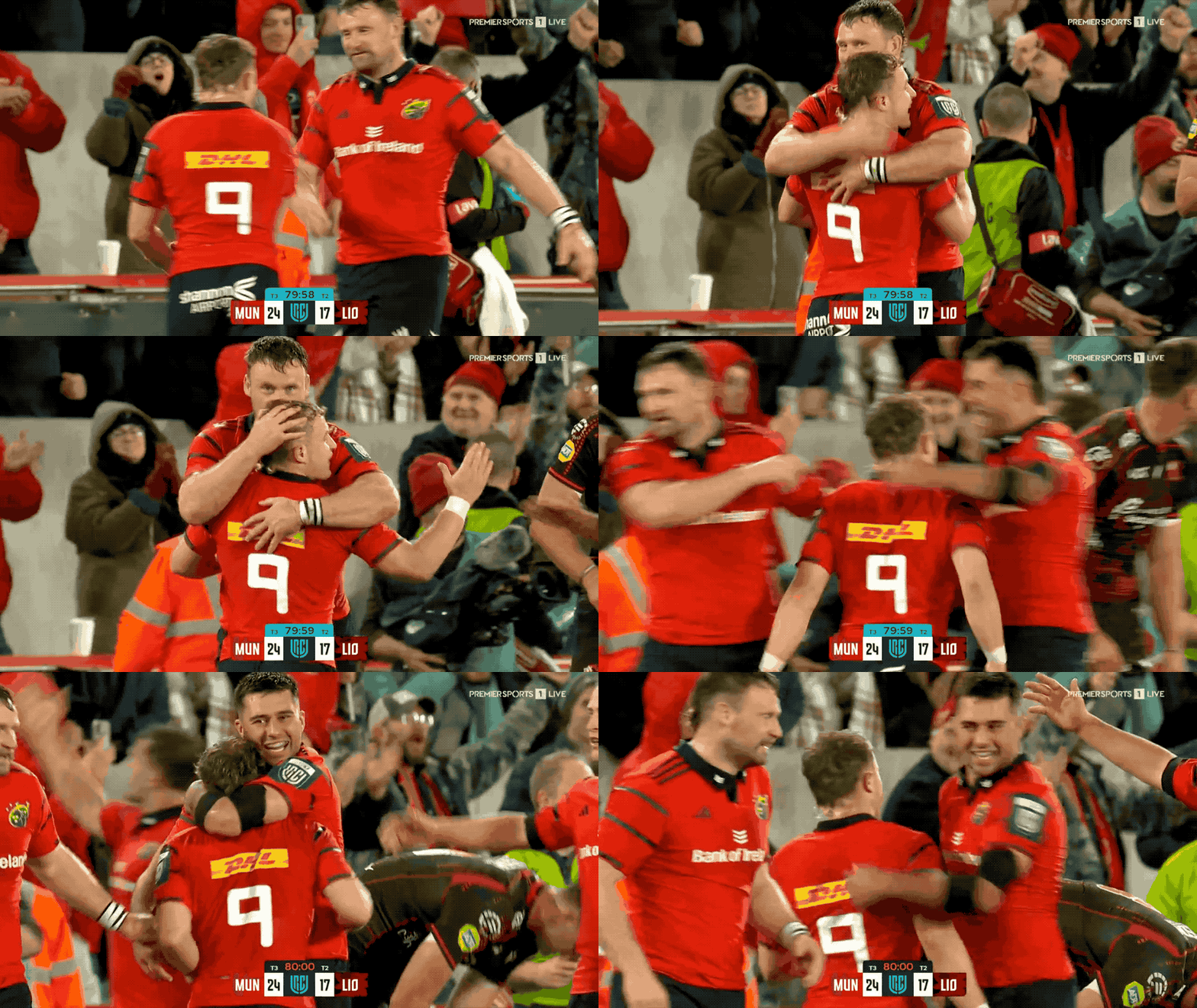
That secured a fifth-place finish and what would turn out to be an insurmountable obstacle in the playoffs, but that win against the Lions was deeply valuable on its own.
The last 20 minutes were all about guts, desire, and making that feeling of “we’re not losing this” a reality.
The Lions were held up or stopped in goal twice, the best one on 70 minutes, where Alex Kendellen got himself under the ball to prevent a try that would have given Smith a kick to tie it up with 10 minutes to go.
If they’d gotten that score, I think they would have ended up winning.
Instead, we kept shooting up to make tackles, even though the Lions’ big runners were powdering us. We kept our accuracy at the lineout. We kicked and chased incredibly well.
And we saw it out to the end.
We’ve been deeply vulnerable at Thomond Park this season — and the last few seasons, in truth — and at home in general. The Thomond Park fear factor is gone, long gone at that, and there is no mythic aura about the place that there might have been in the 2000s or parts of the 2010s.
When we lose at home, it’s for the same reasons; overpowered, and there’s nothing the ghosts of the Bone Yard on the Cratloe Road can do about it. If anything, Thomond Park seems to inspire the opposition. When Castres won there this season, they celebrated with their fans as if they’d just won the Bouclier.
That week, it felt like the Lions would do the same as the Stormers; overpower us in the scrum and maul, and strangle our season right there on the grass.
Instead, a group of half-injured players, depth guys and young lads scrambled around in the dirt, found the knife and saw out the base requirement of the season against the odds. Champions Cup rugby secured. The project still broadly on track. The Bone Yard claims one last victim for 2025/26. Maybe the ghosts have a few more horrors to show to opposing teams after all.
So where did we land? Fifth.
A play-off place clawed out of the dirt against the Lions and then handed back at the first time of asking. A European year that began in the Champions Cup and was buried on a stormy afternoon in Devon. Champions Cup rugby for next season secured — and not a great deal else you’d want to frame and hang in the hall.
The scaffolding’s still up. We knew that in September, it was the honest condition of the thing. What we didn’t know — what the spring taught us in the ugliest way available — was that the trouble was never only the façade. McMillan arrived to renovate a team and found himself standing in a house whose foundations were being dug up around him: the redundancies, the Randle mess, a PGC that may or may not be fit for purpose, a CEO apologising in the Examiner.
The season ended up as a failure in everything but the requirement of Champions Cup rugby for next season. That’s no different to last season — without the win away to La Rochelle in Europe — but this season felt infinitely worse, because it started so well. Looking back at it, those narrow wins that defined September and October were simply inverted for most of the rest of the season when we had a full deck to pick from. Narrow wins became narrow losses. The razor’s edge of perception lies in those wins and losses. Win by a score enough times, and you’ve got a hard edge that refuses to lose. Lose by a score enough times, and the project is on thin ice.
The full deck is the issue. When we’re at close to full strength — however you want to define that. With Crowley and Casey, with one or the other, with Beirne, with Jager, with some combination of the other guys we lacked at our worst — Ulster away, Connacht away, Sharks away, Bulls away — we could teeter at either edge of big wins or losses depending on the day. With that in mind, the truly damaging losses were away to Bath, at home to Castres, and away to Exeter in the Challenge Cup.
Our squad isn’t deep enough, we know that. We’re lacking quality and size in the front five, as much due to injury as it is to who isn’t and won’t be in the squad anytime soon. There’s no easy fix for that.
I can’t help but feel like I underestimated the loss of Peter O’Mahony before the season, too. By the end of 2024/25, I felt that O’Mahony was half the player he was at his peak, but I think we missed his leadership at times, too. Even with that, I think that new leaders emerged. Craig Casey, who should be the next Munster captain, flourished in his role. So did Crowley. We need others to follow.
More than that, though, we need stability. The review will do its work and be revealed sooner rather than later, hopefully when the inflammation of the last few months has gone down. Everyone is sick of tumultuous Munster news, at this point. At the time of writing, I’m pretty sure that Clayton McMillan will be here for next season, and he needs support around him — his own coaches to apply the vision he decides we need and players to support the areas of our squad that are weak.
As far as learning goes, I think he saw too little of our best and too much of our worst this season. He is not blameless in that, either, but I think he found himself embroiled in the drama of the last few years. I thought that his combination with Mike Prendergast would work well — it didn’t. How damaging was Prendergast missing out on the #1 spot last year? How did that affect this season as it moved from preseason, and the novelty of the new head coach became a day-to-day reminder of what he’d missed out on? I think we’ll only find out in the future when Prendergast speaks publicly about it.
Prendergast is gone, now, and a gap in the coaching squad remains at the time of writing. Whatever comes next has to be McMillan’s full vision. This year is somewhat excusable in the context of the disruption, as much to do with Prendergast and Codling being half in, half out for much of the season as much as any of the further off-field issues, but that only holds cache for so long. One season, in practicality. McMillan came into a pre-existing squad and, for the most part, found many of them wanting. Not for lack of effort, in almost every case, or even individual quality, but mostly in system. For too much of this season, it felt like a team caught in a trap of being asked to reproduce in whole or in part what worked in 2022/23, with broadly the same personnel in situ, in a game that has never been more hostile to a team that wants to play with long bouts of possession.
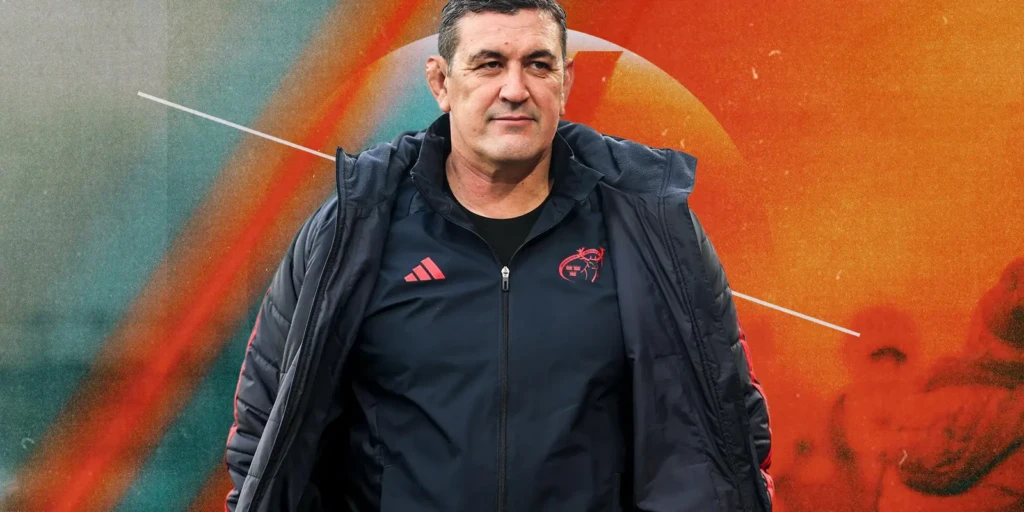
If I were to describe 2025/26 in one word, it would be compromise. If I were to use two, I’d use half measures. McMillan was brought in as head coach with only backroom staff as part of his vision — Vercoe and Mayo — and while they were great additions, much of everything else remained the same. When Prendergast missed out on the top job, should he have moved on then? Easy to say now, as it was functionally impossible at the time, such was the effort to keep him in situ once the job didn’t go his way, but it was a compromise. He would announce his departure exactly a year to the day that McMillan got the job, ostensibly ahead of him. Perhaps there was an inadvertent message there.
The season spinning out of control is hardly Prendergast’s fault, but if that’s true, it can’t really be laid fully at McMillan’s door either, or the departing legends, or even the off-field turmoil. The answer is more blunt than that. At a fundamental level, I think the squad we ended up relying on most often isn’t quite good enough to meet the expectations of the club, without Casey, Beirne or Crowley in the starting XV. Maybe that says more about the expectations than it does the squad.
We’ll never know how a full-strength Munster side might have managed the end to the season post-Ulster. If you’ll indulge me for a minute, maybe they beat Connacht. Maybe they get the full fiver against the Lions. Maybe we rob second place, and have a home quarter-final last weekend against the Lions again. Or maybe everything happens the same way it did. Maybe we underwhelm in Galway as we did in Exeter, beat the Lions, and we end up losing in Loftus Versfeld regardless.
That’s the thing with hypotheticals. They cut both ways.
I wrote a series last summer called The Big Reset and, from a functional perspective, very little of it actually happened. Outside of the first six games, where McMillan said he had full sway over selection and approach at the time, we looked broadly the same as we did for the previous season, and the season ended the same way as that did. Scrambling for Champions Cup, losing in South Africa in the quarter-final, and mostly underwhelming in Europe.
There was no big reset. That now must happen this offseason, but it can only happen with clarity and stability. If this year was Year Zero under McMillan, with all the good and bad we saw across the campaign, then Year One has to show the lessons learned this season. A visible, on-field identity and a coherent approach. This year, we were somewhat unlucky with how the scrum, in particular, impacted our game as part of wider trends in the sport and how that coincided with our tighthead chart being decimated. But we know that now, and it has to be addressed in the offseason. Our maul was a non-factor this season, and that, too, must be addressed.
For too much of this season, the “big rocks” of our game were too inconsistent, too vulnerable to opposition disruption. A blitz defence, big scrum, heavy kicking game and a good defensive lineout is our worst possible matchup, and everyone knows it. We have to show everyone, early, that we have the answers to those old questions, or we’ll be back here again next season. At a base level, we have to find easier ways to move up the pitch. That’s the core challenge facing whatever the coaching group ends up looking like.
Eliot gave us the line to start on. He gives us the one to finish on, too — East Coker doesn’t end where it begins; it turns the phrase over. In my end is my beginning. That’s the only verdict that sits right on 2025/26. Munster didn’t arrive anywhere. But a season that, by May, looked like it was quietly eating itself ended with the base requirement met and the ground — finally, brutally — cleared. I believe the pieces are there, either developing within the squad or within reach outside it. We just need to make sure that next season, everyone’s on the same page.
For the first time in nearly 20 years, I think we have the best young talent in the country between 19 and 23 when you look at the stand-out players of the last few seasons of the Irish U20s, including the World Championship team to come. They need time and a shot.
In Craig Casey and Jack Crowley, I think we have a future captain and soon-to-be incumbent international in the next two years, alongside the best #10 in the country. We can work with that. We must. They need support in the right areas, but the players are there. That’s all you need to go from where you are to where you want to be.
In its end, maybe, the start of the thing McMillan was actually brought in to build.
