


“There are years that ask questions and years that answer.”
— Zora Neale Hurston, Their Eyes Were Watching God
This era of Munster Rugby is over.
Over the last few days, I’ve spent some time trying to decipher just how far this era goes and, more importantly, how we define it. That’s what occupied my mind on the road from Castlegregory back up to Rathkeale on Monday.
You could say that it goes back to 2013, when modern greats like Peter O’Mahony and Conor Murray truly emerged onto the Munster and Ireland stage as the men who would take up the mantle from icons like O’Connell, Howlett and O’Gara. In the last few years, O’Mahony and Murray have seen a lot of their contemporaries from their iteration of Munster retire: Stander, Holland, O’Donnell, Conway, Earls, Zebo. This year, they will move on, along with Rory Scannell, Dave Kilcoyne and Stephen Archer.
That will mean John Ryan, Niall Scannell, and the returning JJ Hanrahan will be the only players in the squad for 2025/26 who will have played with Paul O’Connell; I think that’s a good reference point for venerability in the mid-2020s.
If you played with Paul O’Connell, you’re officially a crafty veteran.
So, sure, imagining what Munster looks like without Conor Murray and Peter O’Mahony, never mind another rake of 200+ cappers, is the end of an era, but not the era.
This season was certainly the end of the coaching lineage of Johann Van Graan and, you could say, large elements of the reforms enacted by Rassie Erasmus in 2016, when there was more or less a clean break between the coaching lineage to that point and what would come afterwards until this season.
Erasmus recommended Van Graan, who was hired so that he could continue the style that Erasmus and Nienaber had enacted quite successfully. Van Graan, in turn, brought in Larkham, Ferreira and Rowntree when Jones and Flannery departed. When Rowntree took over, he brought in Leamy and Prendergast, while promoting Kyriacou from within. New tickets, yes, but with a line of continuity running through it, enough to form part of a lineage.
Rowntree’s initial success at Munster – the eventual URC title win – was built, in part, on a rejection of core parts of Van Graan’s methods. Rowntree felt that Van Graan’s training was too slow and lacked intensity, and that his rugby style was too slow and a poor fit for the squad we had.
That was all true, I think. Even allowing for that, I think Van Graan deserves a lot of credit for that title win.
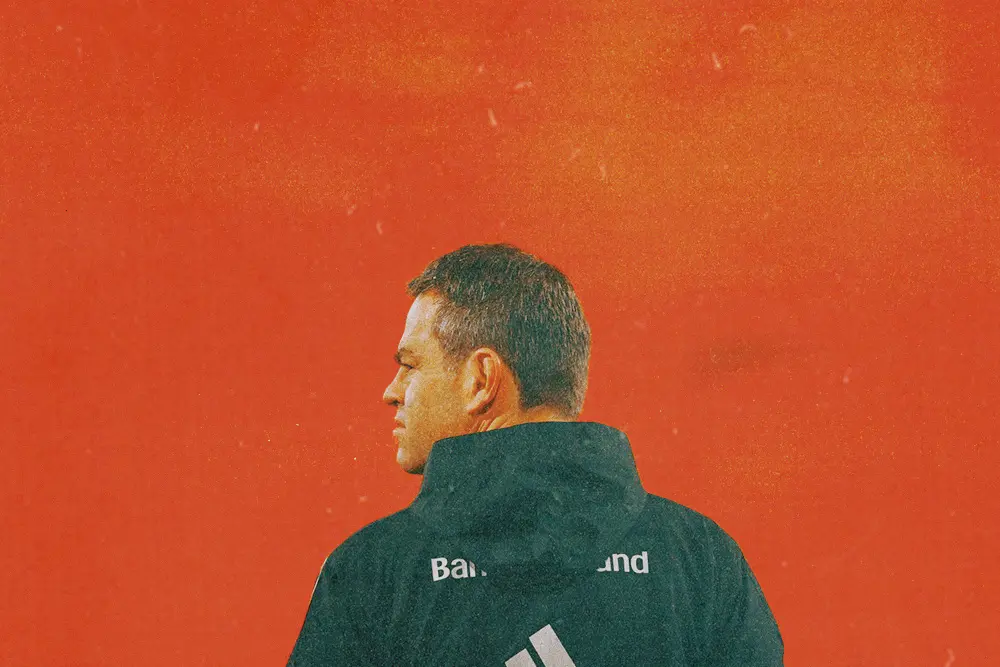
A lot of the players were his projects, a lot of the structures – like the lineout – were his, and while Rowntree’s tweaks were ultimately effective in his first season, I think the slow decline we’ve seen in the two seasons reflects a natural decline in an environment where change can only be gradual or, so badly needed that it can’t be denied.
I think it’s fair to say that this particular version of Munster peaked as a collective in 2022/23, topping off the Van Graan era with a trophy we probably deserved two seasons before, and what we’ve seen in the last two seasons has been a slow taper from that level.
I say that because this season was meant to be Year 3 of Rowntree’s project, when everything should have been reaching its apex, but that was not the case.
The way I see it, last season asked several questions of the coaching group and squad.
Can you keep 90% of the squad fit and available when it counts?
Can you improve your European performance?
Can you get back to a URC final and win it?
This season answered.
♛ ♛ ♛
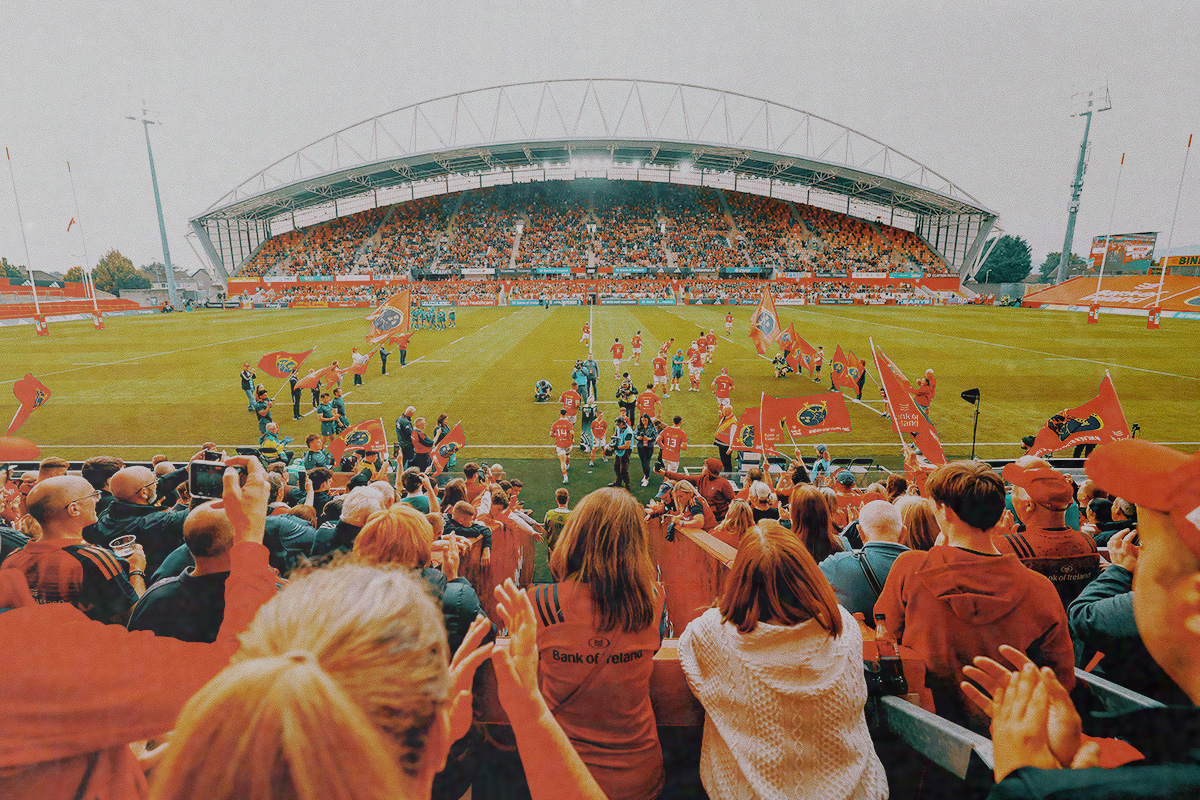
Munster cannot afford a slow start to the season this year. Not only that, I believe the slow starts to the previous two seasons have turned bad injury crises into disastrous ones, as each loss brings a need to redeem the next week. […]
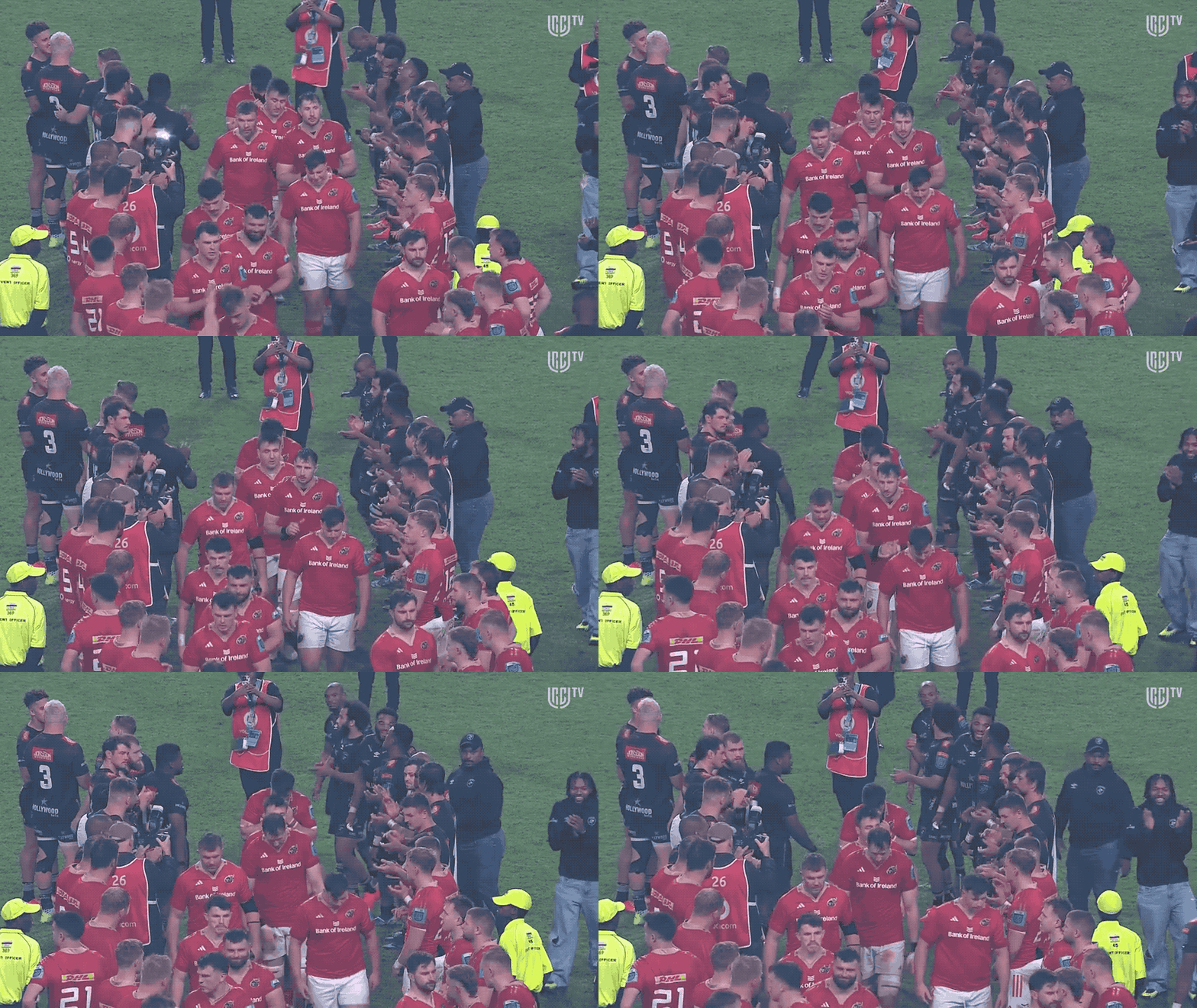
We can’t strip out the context of a biblical injury crisis in the first half of [last] season which reached its nadir during a run in December where we won once on the first of the month but then failed to win again until mid-January but that’s almost my point; the trophy won in the previous season kept the heat off until results were seriously in the pan. This season, there is only the bitter aftertaste of clapping Glasgow Warriors off the field in Thomond Park to keep the heat away, so, essentially, that means no protection at all. […]
We know we can finish seasons strongly, but my point is that we shouldn’t have to. We have six URC games between now and the November test window to get the 20 points that should put us in place to hit the three games in November/December and then the second half of the season strongly. Our opening schedule is slightly lighter this time around – with the South African tour in October, rather than April – so let’s make life a little easier for ourselves. You do that by winning, especially at home and especially in interpros.
Restructured quotes from “The Red Eye – Connacht (h)” ahead of Round 1 of the URC from September 2024
One thing you learn in this business is that you only get the real story after the fact. Up until then, you’ll get half of it, at the very most, if you’re lucky. In July 2024, I was doing my usual trick of trying to find out all I could about how preseason was going. Who’s training well, who came back for preseason looking like the Hulk, who’s looking like they could make a run at the season that we mightn’t expect? Those kinds of questions.
In the past, I’ve found out that Roman Salanoa had completely pulled it together from a game perspective ahead of the 2022/23 season. That turned out to be pretty accurate. The same year, I heard that Jack O’Sullivan was looking like an absolute beast week to week through the pre-season, but then he got badly concussed inside the first ten minutes of the first preseason friendly, and that was that.
At a base level, you get a read on how the preseason is going.
Ahead of 2022/23, there was a lot of trepidation because we were doing so much differently from the previous season, but there was a real belief that when it clicked – and that it would click – we’d be fine.
In 2023/24, there was a big focus on building on what had worked the previous season, with far more time to do it, all with the added bounce of being the reigning league champions. Rowntree signed a contract extension that September ahead of the 2023 World Cup in what was a big declaration of confidence from the IRFU and Munster. That meant Munster could begin to layer more concepts on top of what they knew worked the year before; a very good place to be.
It didn’t last that long into the season before the issues that plagued Rowntree Year One came back to hit Year Two. Injuries, inconsistency and the bad results kept piling up until January. We rallied in the last third of the season, outside of a second consecutive exit in the Round of 16 of Europe, before finishing the season strongly, even managing to top the URC going into the play-offs. We looked like a team that was out on their feet in the next two games because we were.
Ahead of this season, there was an attempt to take the good from the first two seasons, while getting rid of the bad. We wanted to keep the intensity, the fitness levels (Munster rarely lose with a ball in play time above 38 minutes), and the battle-hardenedness, but that had to be facilitated with a better lineout, a slight tweak to our structures, but, more importantly, better player availability.
Nothing would work without that.
In mid-July/early August, I did my usual rounds, and the word was… good. Great, at times. Certainly nothing to make me think there were any issues.
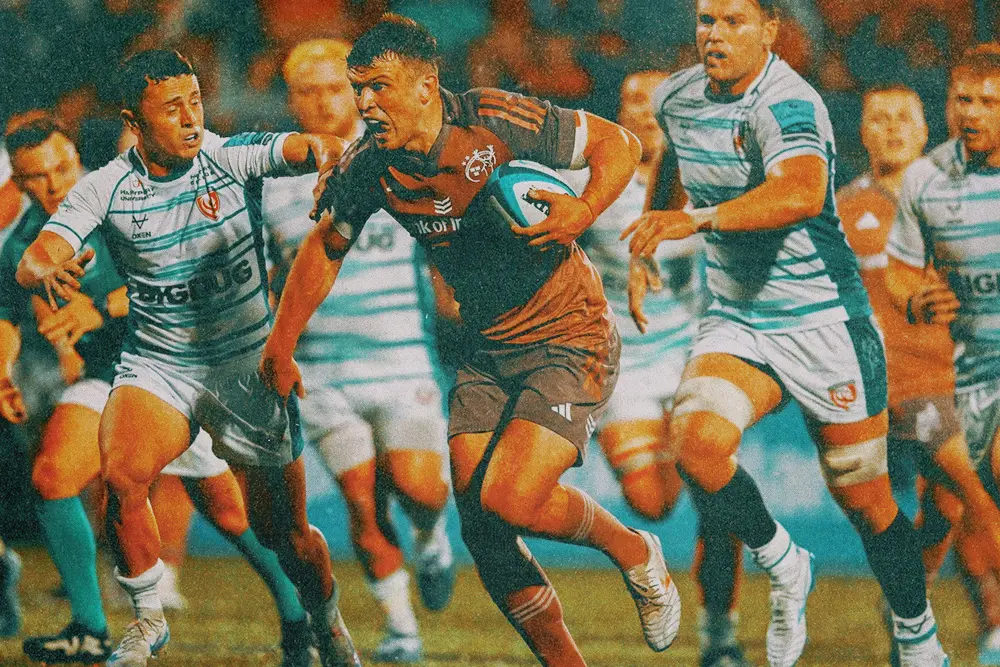
So when Munster lost both pre-season friendlies, looking as scatty as the first few weeks of Year One, something immediately seemed off, especially when I saw first-hand how angry Graham Rowntree was in the press room after the loss to Gloucester in Cork.
As I wrote in October’s All At Once;
Losing friendly matches is completely meaningless, but Rowntree was really frustrated, bordering on openly angry. “That out there isn’t what this is about,” he said, jabbing his finger at the Munster crest on his jacket. It stuck with me how annoyed he was. I’ve spoken to Rowntree after a good few games – bad losses, scruffy wins, great wins – and he’s generally been pretty level-headed. He was openly devastated after the loss to Glasgow last season, but you’d expect that. Yet here he was, beyond frustrated over a loss that nobody would remember once the season started.
I got the feeling afterwards – and this is viewed through the prism of the last few games, I’ll admit – that the performances in both friendlies, but the Gloucester one in particular, cut at him exactly because pre-season had gone so well to that point.
And that posed a question with no easy answer.
Essentially, if pre-season went as well as everyone thought it did, how come we’re looking like shit in these friendlies, especially against what is essentially a mid-table Gloucester side?
I would find out later that preseason hadn’t gone as rosy as I’d been told initially. There was a real worry amongst the wider coaching and playing group that standards had been slipping and focus had been wavering, and that comes back on the head coach.
This became visible on the field, too. Munster came from behind to beat Connacht on the opening day of the season. My thoughts at this point were bullish but… trepidatious.
This game felt like an early-season shakedown with all the errors and score-trading you’d expect, while also feeling like a do-or-die game in mid-December or later. It was an absolute rollercoaster ride, as a result, and assessing it purely through the lens of defensive errors that need to be fixed or a set piece that needs shaping up misses the grander point somewhat.
[…]
Living in the moment, just the moment, the roars of joy and relief that washed over me from the East Stand were what I imagined this game was meant to be about. Then I opened my phone and saw a video my fiancé sent of our little girl cheering in her high chair when Shane Daly scored the winning try, and I nearly floated out of my trainers.
Maybe this is what it’s all about. Winning this game, finding a way, moving on to the next.
[…]
In the cold light of day, you start to see the problems. I won’t overfocus on them, but I will acknowledge they existed in this game. The first thing that became apparent was that Connacht looked sharper than we did early on. Their combinations were tighter, and their set piece functioned better; they looked a game ahead of where we’re at.
A week later, the season was thrown into a wild fever and an immediate crisis with a first-ever loss to Zebre Parma.
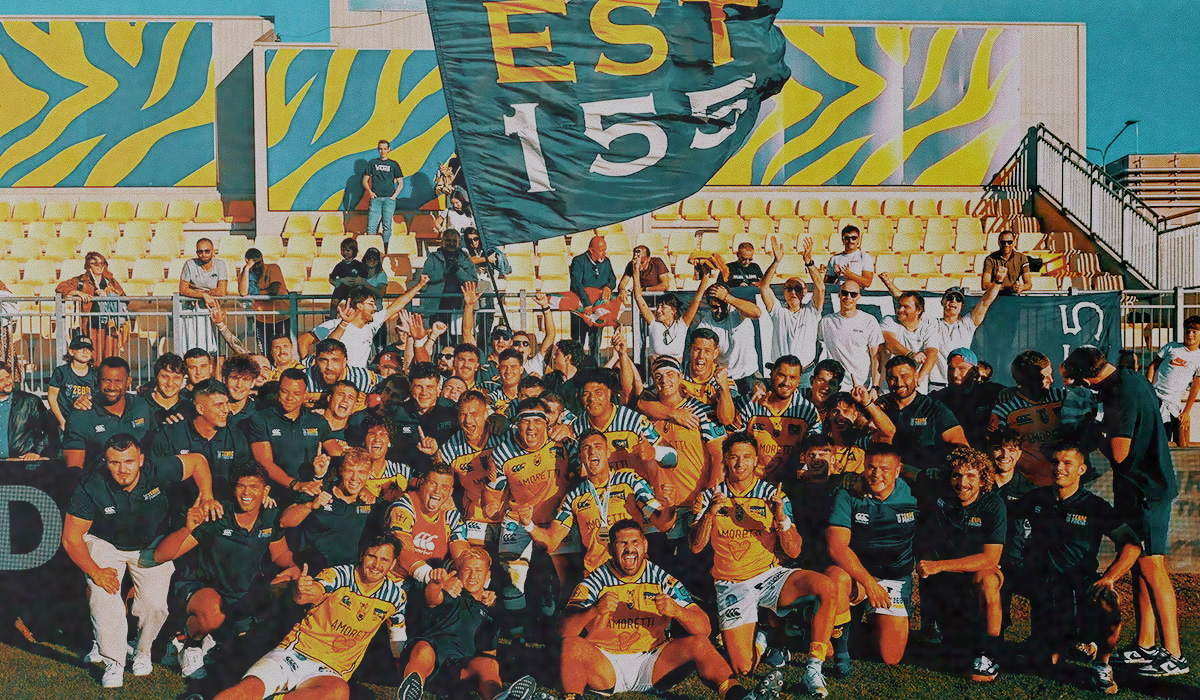
This is a humiliation, there’s no other word for it. We can talk about it being Week 2 until the cows come home, and we can talk about the guys who weren’t playing all we want, but the fact remains that we lost. To Zebre. That performance on Saturday was a humiliation for everyone associated with this club, and if your first reaction to that statement is “woah, steady on”, you need to wise up.
Losing to Zebre, regardless of whether it’s week two or week eighteen, is irrelevant; it shouldn’t happen for a club with this history, prestige and budget. This loss is the equivalent of losing three games in a row because it has heaped pressure on the next four games in a way that is unquantifiable because of what it says about this group.
It says “these guys are capable of losing in Parma”, and if that can be said, there’s no limit to how bad things could get.
Super Deluxe Wally Ratings:: Zebre 42 Munster 33 – September 2024, URC Round 2
Watching the game back, it’s scarcely believable how bad we were, and it was the first real, palpable sign that something was badly off behind the scenes. To this day, we still haven’t seen the Matchday Insider footage on Access Munster, and I doubt we ever will, just like the footage for losses to Leinster, Stormers and the Sharks. That, in and of itself, tells you an awful lot.
Talking to people later in the season about that particular week, and the weeks that followed, the sense I got was that things were lurching from one extreme to the other day to day and week to week. Things were… agitated. That’s to be expected given the loss to Zebre, obviously, but I got the impression from people around the camp that everything felt a little like walking into a Leaving Cert exam, only to find the one thing you didn’t study pop up on the first page of the first paper. It was like the thin veneer of “we’re flying it” was sandblasted away in an instant, leaving the club inflamed and exposed with four nightmare games on the way.
First up was a game in Cork against the Ospreys during a yellow weather alert for wind and rain. The Ospreys were a team we’d laboured against in the sunshine of Thomond Park a few months before in a URC quarter-final, and for whom we’ve had to adjust plans before. As opponents went after Zebre, they were sticky as it comes, but the weather helped to simplify the week. Defence, kicking smart, keeping the game narrow, playing the percentages. It was exactly what we needed after a Zebre game that felt like a preseason sling around.
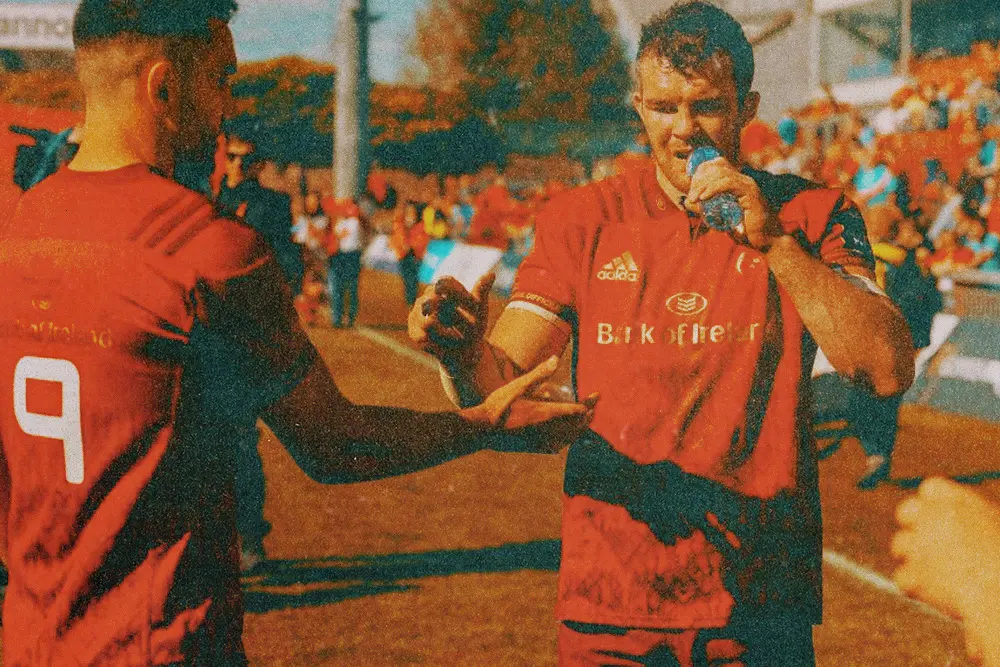
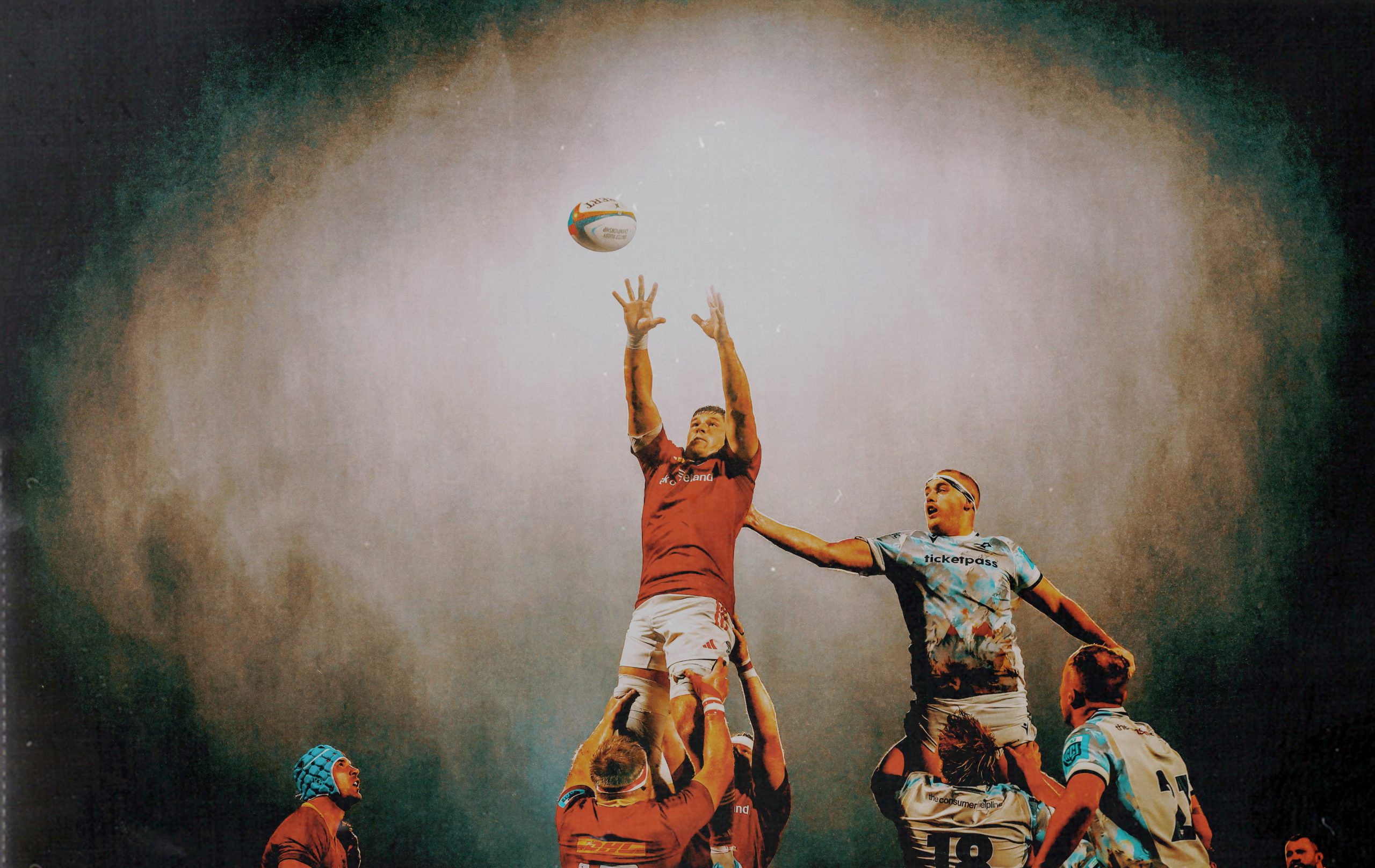 As an aside, this is probably my favourite photo of the season.
We won the game quite comfortably in the end after the best possible start when Shay McCarthy scored straight from the kickoff. That bonus point was badly needed at that point, but there was no catharsis. The loss to Zebre was too shocking and, quite simply, there wasn’t time for time to reflect.
The next three games were away to Leinster in Croke Park, and then the Stormers and Sharks in South Africa; three nightmare games back to back to back right when we were at our most vulnerable. With a growing injury list, we set out on what would be a doomed run on the road.
And everything unravelled from there.
♛ ♛ ♛

If you take each of those games on their own, there’s absolutely no shame at all in losing away to Leinster – something we’ve done almost every season for the last ten years anyway – or losing both your games on the South African tour. Even now, listing those games in a row has me thinking three or four matchpoints would be a decent result from that run. We ended up with one, as it happens, but that was beside the point at that stage.
We looked completely identity-less, as if we had no idea who we were as a team or what we were trying to do, all while being stymied by cosmic levels of bad luck.
One of the abiding memories I have of Graham Rowntree during the first half of his second season in charge was how frustrated-to-the-point-of-anger he was at the constant injuries. Whenever a new one hit, it was “mugs fucked at the wall” levels of irritation and his third year started in the same vein.
Jean Kleyn was back from injury but taking an age to get back up to speed. Billy Burns got injured in his first competitive game for the province which meant having to burn Jack Crowley’s minutes earlier than planned, especially with Crowley carrying a few niggles and knocks from the summer tour. Alex Nankivell was bitten by the injury bug early in the season and seemed to be catching up on his best form all year without ever really hitting even 80% fitness. Oli Jager suffered a neck injury against the Ospreys and missed a crucial block of games. Josh Wycheley picked up a neck injury earlier in the season and would miss four months.
Abrahams picked up a thigh injury against Zebre that kept him out for two months, joining Diarmuid Kilgallen, who got injured during preseason. Shane Daly injured his elbow in the same Zebre game. Peter O’Mahony had probably his most injury-prone season in years when he picked up a series of hamstring injuries.
I could go on and on.
It was like Rowntree walked under eight ladders and kicked forty black cats while he was at it. We just couldn’t get our best side, or anything close to it, on the field consistently.
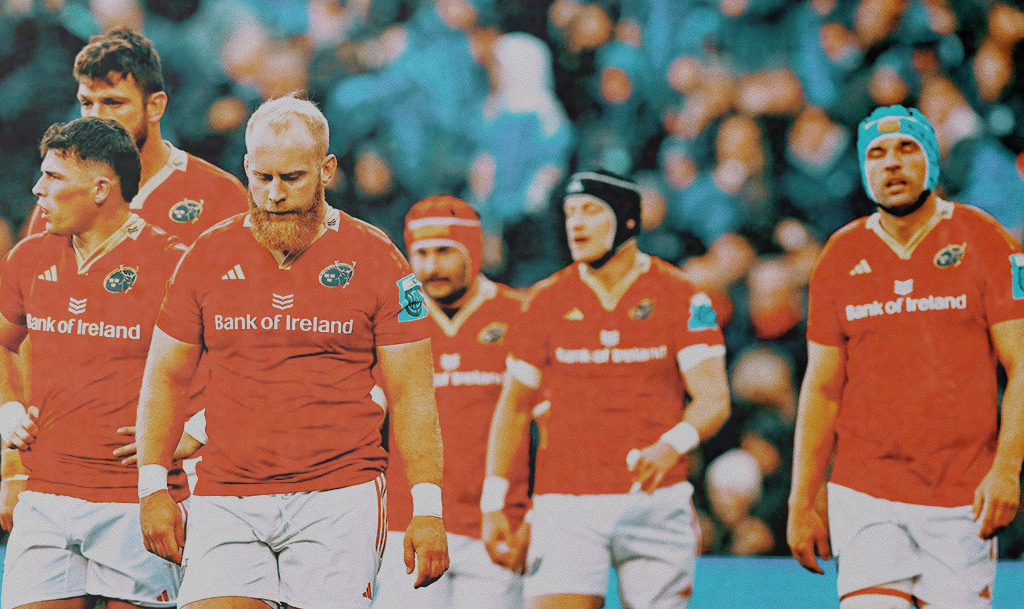
To compound that against Leinster, we lost two players to HIAs inside the first twenty minutes – including one replacement who came because of a HIA – before a blood injury to Loughman resulted in being incorrectly reduced to 14 players by the sideline officials who didn’t input the correct sequence of events into the app they have for managing replacements.
But it would be a mistake to blame the loss to Leinster on that officiating blunder. We weren’t anywhere near good enough.
Our lineout, which was always at least decent to good under Van Graan and which was mostly a non-factor in Rowntree Year One, became a complete liability at times during Year Two. That could mostly be put down to a catastrophic injury situation at hooker and in the second row, but we were well capable of dropping a sub 80% game when it counted, most notably against Glasgow and Northampton.
In 2021/22, we had a lineout that ranked in the top five in the league with an 88% success rate.
In 2022/23, that number was 85%.
Last season it was 83%.
For the first six games of this season, it ran at 80% completion, in part because of the game against the Ospreys, where neither side competed much in the air, and every ball was thrown to the front, so it ran at 100%. Take that game out, and our lineout average was just 76%. That wouldn’t fly in Division 2A of the AIL. At the level Munster aspire to, it was killing us stone dead.
Our lineout finished the season at just 80.6%.
It came to a nadir against the Stormers when we had a completion rate of just 56%. We barely looked like a professional side. Something was badly wrong. But there was more to come.
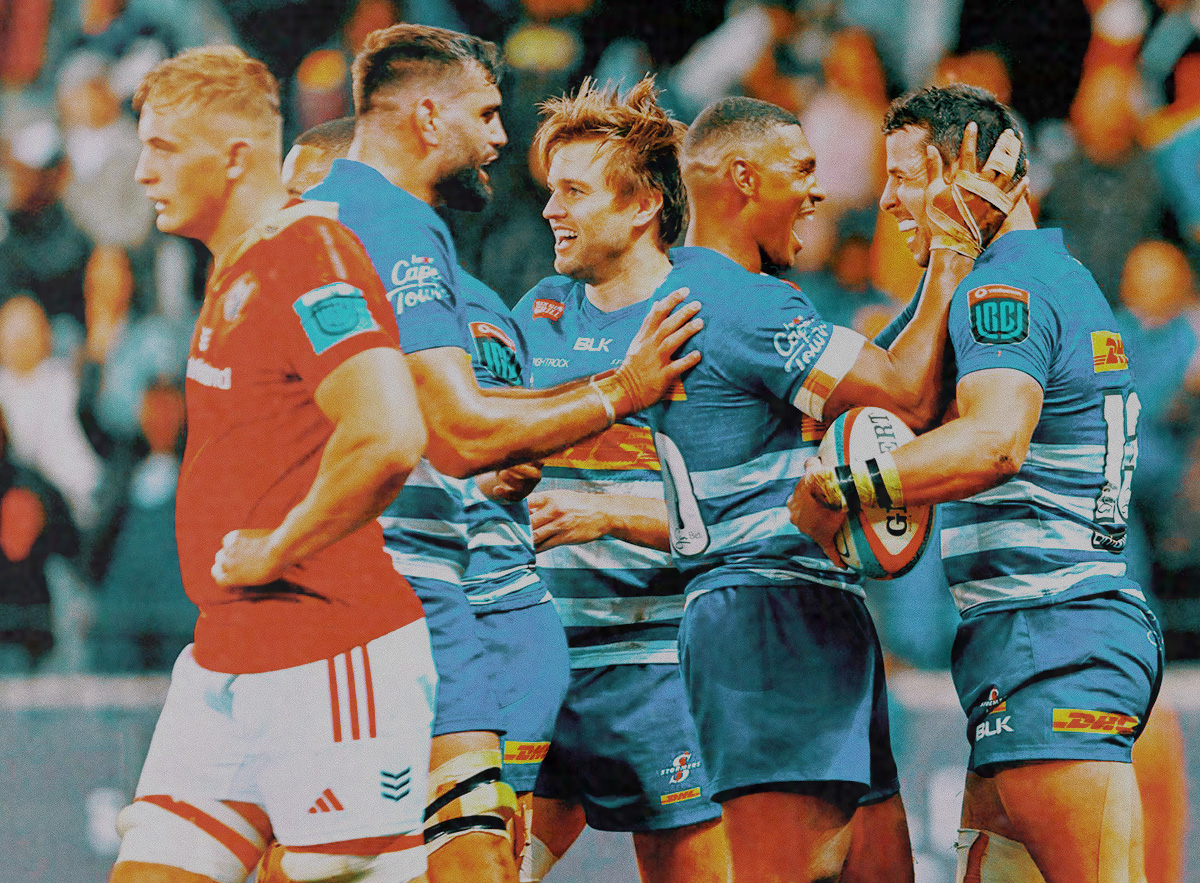
After a dour, spiritless loss to the Sharks, where the team ran out onto the field looking rattled and like they wanted to be anywhere else.
From the Wally Ratings on that loss;
Context is key, of course. We’ve only played two home games. That’s always a factor in points accumulation. But there’s no hiding from the fact that our away form has dramatically fallen away from last season’s standards. We’ve conceded 143 points in four road games. That kind of fall-off is damaging, regardless of the context around injuries, which has been an all too common issue at the club for three years in a row now.
We must see context, but also see reality for what it is.
Have we gone backwards or forwards since the 2022/23 season? The only honest answer is “backwards”.
We were going backwards. It was plain to see at that point, and the problems ran deep. The lineout was a mess, our phase play looked tired and predictable in between flashes of what we were capable of at our best. Worse again, we were leaking tries in the red zone as teams realised they could quite easily overpower our tight five in tight collisions.
The IRFU and the Munster board believed the problems ran too deep for Rowntree to fix and that many of them had sprouted up under his watch. Rowntree’s relationship with Costello, Prendergast and Leamy had become incredibly strained post-Zebre, which had dragged up some of the other disagreements that had flared during bad runs in the previous two seasons. These related directly to questions about Munster’s playing identity and what we wanted our core point of difference to be, but also on the idea of “standards”.
That can be quite a nebulous term, but it directly reflects on the overall prep and focus of the squad. A good head coach acts as a lens for the squad, a magnifying glass, making sure their collective energy is focused on the smallest possible space of what’s important. Rowntree’s ability to focus the energy of the squad was in real question mid-way through the South African tour. That isn’t to say that Rowntree was disliked or disrespected – far from it. Rowntree was considered a “player’s coach” in a lot of ways and a great presence on matchday in the dressing room.
Is it also true that many of those players played well below their level way, way too often? Absolutely.
People I spoke to around the camp also believed that Rowntree’s attention to detail and his standard setting as the head coach weren’t where they needed to be. If we take that as face value, we also have to look at the other side of that coin, where those same players fell below their own standards far too often, especially in the early going of this season. If Rowntree wasn’t meeting standards, then neither were they.
The situation was also complicated by the consistent underperformance of Munster’s forwards and lineout, specifically, under the remit of forward/lineout coach Andi Kyriacou, who was seen as a close ally of Rowntree’s.
Of the sources I spoke to on the playing side, a common theme emerged; there was no confidence in Andi Kyriacou’s ability to change the picture as the man leading the analysis and technical coaching of the lineout. Small things like poor lift details going unaddressed, the menu staying the same week after week, detail on the opposition’s lineout schemes seen as “lacking”, and players feeling that they had to take things into their own hands mid-game were all problems I heard throughout the last year.
Rowntree’s feeling on this was that it would turn around given time, as it had done in the previous two seasons. Our lineout wasn’t elite last season, but it finished around 83% after hovering in the 70s earlier in the year. That wasn’t elite, but it wasn’t under 80%. Better than nothing. Even then, go back to last season’s run-in and you’ll find our lineout costing us crucial momentum in big moments of big games.
When that wasn’t addressed by the third week of the new season, there was no confidence in the HPC that Kyriacou was the man to turn it around. And it was worse it got, to the point that I believe our lineout has cost players the opportunity to stake a claim for wider inclusion in the test camp this November.
Rowntree was a big supporter of Kyriacou and a driving force behind his two-year contract extension in October 2023. This was right when Rowntree signed his new deal, which, crucially, took them off the same expiry timing as Prendergast and Leamy.
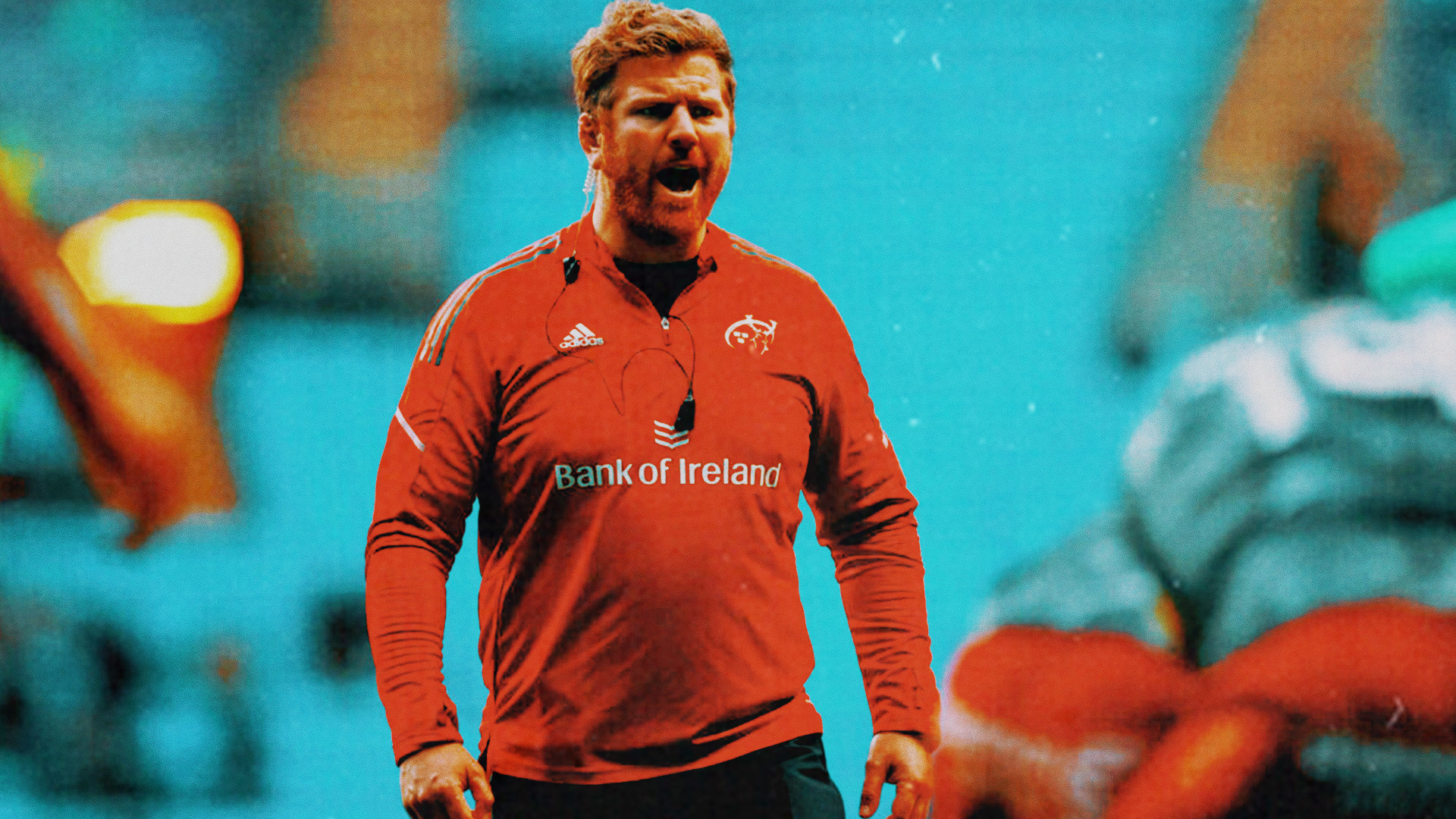
In late summer, early Autumn 2024, Munster and the IRFU were negotiating with Denis Leamy and Mike Prendergast about their contracts, which expired at the end of this season.
During October, when Munster’s season slipped out of control, everything I’ve heard since suggested that Leamy and Prendergast were, if not outright unhappy, definitely concerned with the direction the club was going in their roles within it going forward. With Rowntree and Kyriacou on board until July 2026 at least, there were real questions about whether or not they’d renew.
In the aftermath of a tense, bad-tempered Sharks post-match where Graham Rowntree looked as emotional and outright angry in a TV interview as I’ve ever seen him, machinations were already in place about the decisions that had to be made, especially by new IRFU Performance Director David Humphreys.
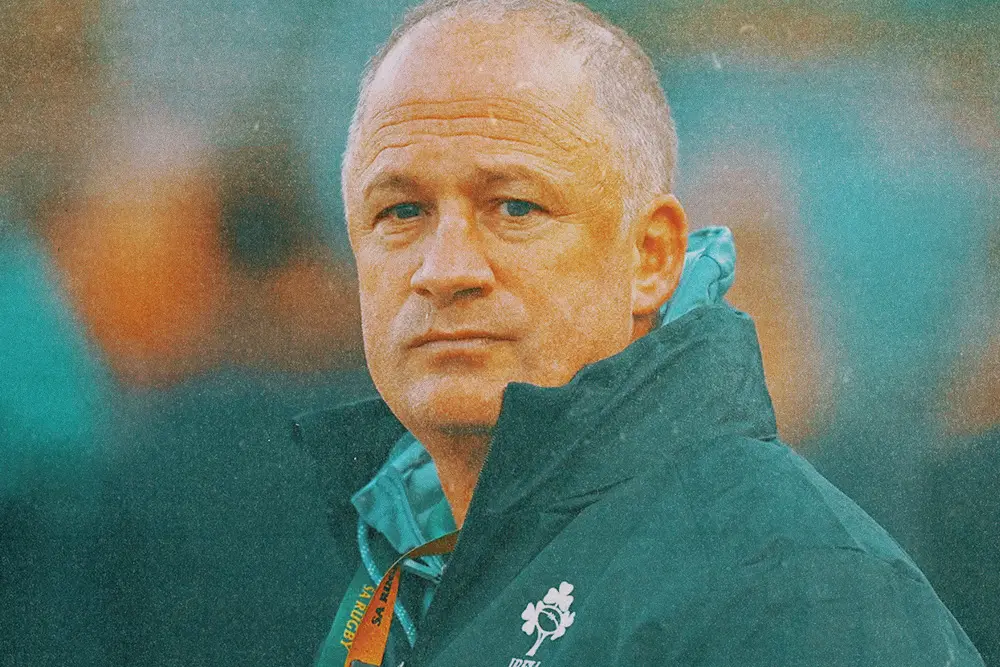
There were broader concerns about the coaching structure and systems at Munster on a national level before Humphreys’ arrival, but that, coupled with the nature of Munster’s early-season performances and the internal feeling within the Munster setup that things were beginning to spiral, a change had to be made. We’ve seen since that Humphreys isn’t going to shy away from big decisions when he feels they have to be made, and this was certainly one of them.
As Munster flew back up from South Africa, a decision was made that Rowntree’s time as head coach would come to an end. I was told of Rowntree’s departure late on the Bank Holiday Monday at the end of October 2024. The news broke the next morning when I was cutting faces into pumpkins, and the season was thrown into the blender.
♛ ♛ ♛
A month afterwards, the dust was starting to settle. The head coach search had begun in earnest, Ian Costello had stepped in as interim head coach, Alex Codling had stepped in as part-time forward coach, and Mike Prendergast and Denis Leamy committed to the club for the next two seasons, much to the relief of both Munster and the IRFU.
I won’t say that their contracts being signed had nothing at all to do with Rowntree and Kyriacou leaving, but it was clear that any concerns they had were allayed. Prendergast would go on to unsuccessfully interview for the now vacant head coach’s job – he lost out to Clayton McMillan – but from what I’ve heard since, it was always intended for him to play a more senior role than his current one; the only question was how much more senior.
From the beginning, the IRFU’s preference was to get an experienced head coach in the door because they planted a lot of the “blame” – an imprecise word here but it’s all I have – for Munster’s drift on guy stepping up to a pressure cooker job like Munster as a first time head coach, a mistake previously made with McGahan, Foley and Van Graan. The idea was to get an experienced head coach to oversee the new structure, with Chris Boyd’s input vitally important in determining what needed to change.
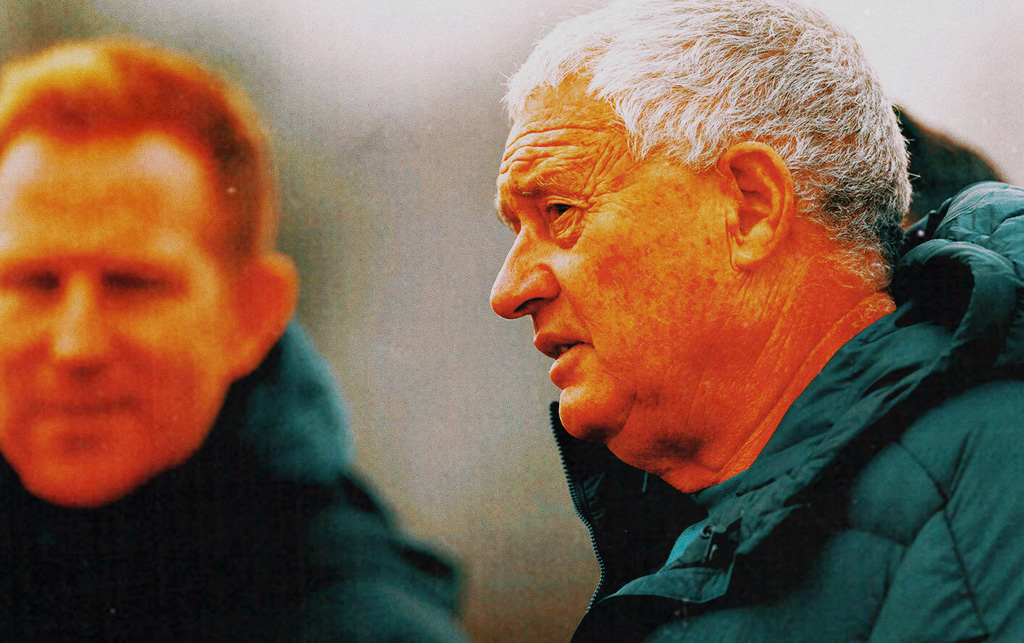
On the field, Munster had a glamour fixture with the All Blacks XV – ironically coached by Clayton McMillan – to enjoy, and it was genuinely seen inside the HPC as a chance to reset after a tumultuous October. Munster lost to a very strong All Blacks XV side that night, but it was an outstanding occasion that seemed to give everyone a boost. A nervy win over a tough Lions side at the end of November was the first step in righting the ship.
We followed that up with a cathartic and emphatic win over a violent Stade Francais side in Thomond Park in Europe, before losing narrowly away to Castres a week later, outlasting Ulster in Ravenhill and then losing to Leinster in a dour performance just after Christmas.
We haven’t turned into a bad team overnight. We just needed to hit every checkmark on the Beat Leinster List to have a chance here, and failed on the second one – don’t give up scrum penalties that give them 22 access. If you add in Edogbo, peak Jean Kleyn, the platonic ideal of Roman Salanoa, Barron, Nankivell, Murray, O’Mahony, Abrahams, Casey and Crowley to this team, it’s probably much closer than it finished on the night but we’re still two or three top players away from competing with Leinster like-for-like.
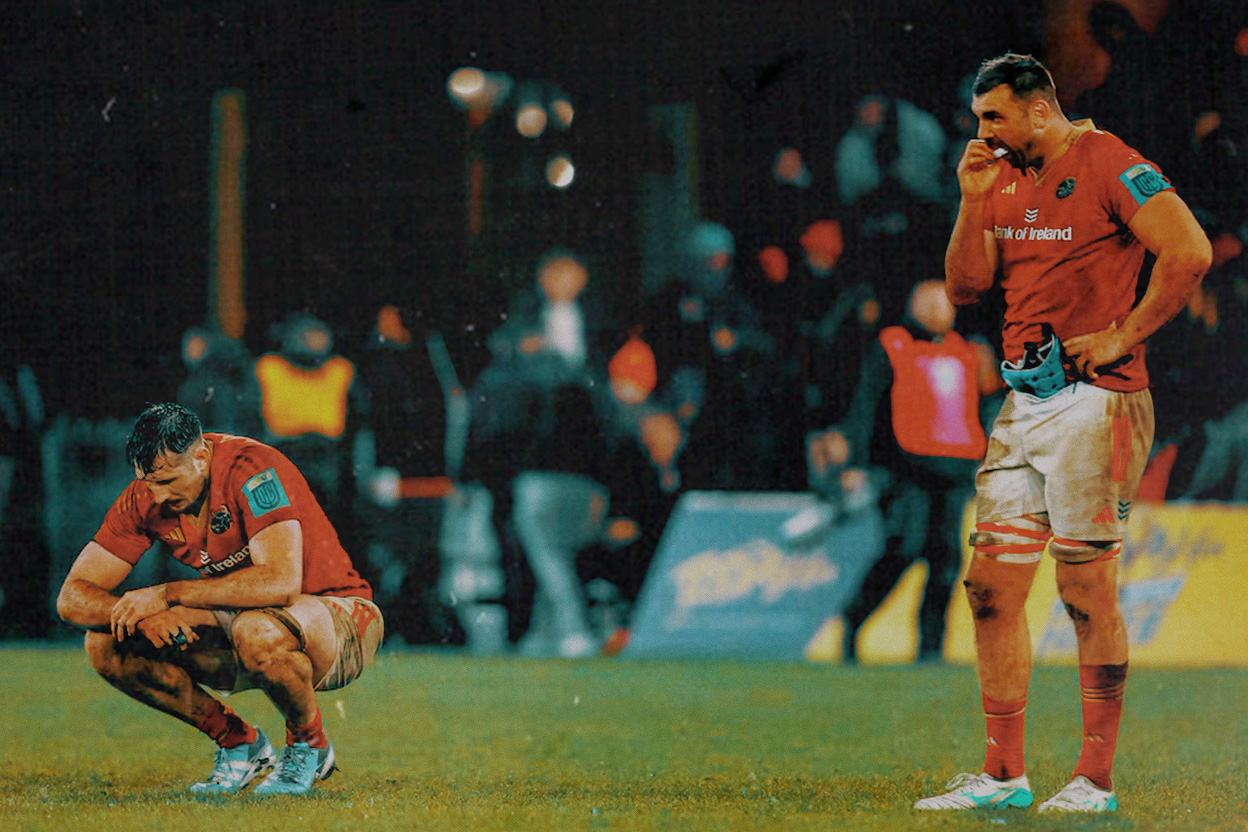
Watching this game back, you get a pretty good idea of the guys we probably need to move on from if budget/dispensation to sign better players to replace them allows or if we have a young player ready to step up ahead of them. Guys like Brian Gleeson, Evan O’Connell, Ben O’Connor and others are almost at a point where they’ll start getting back-to-back URC minutes to scale them up, but they need time, space and patience to become who they can be.
The lineout issues just weren’t going to go away easily. You don’t put away bad habits in a month or even six months, especially under concerted pressure, and our lack of power, combined with further injuries to key guys like Casey, Nankivell, O’Mahony and Kleyn, left us looking well short of quality against a Leinster team who smelled blood in the water.
We had a better January.
Our win over Saracens was probably the most competent European performance I’ve seen in years. We were tough, accurate and played with a proper hard edge against one of the best-coached sides in Europe.
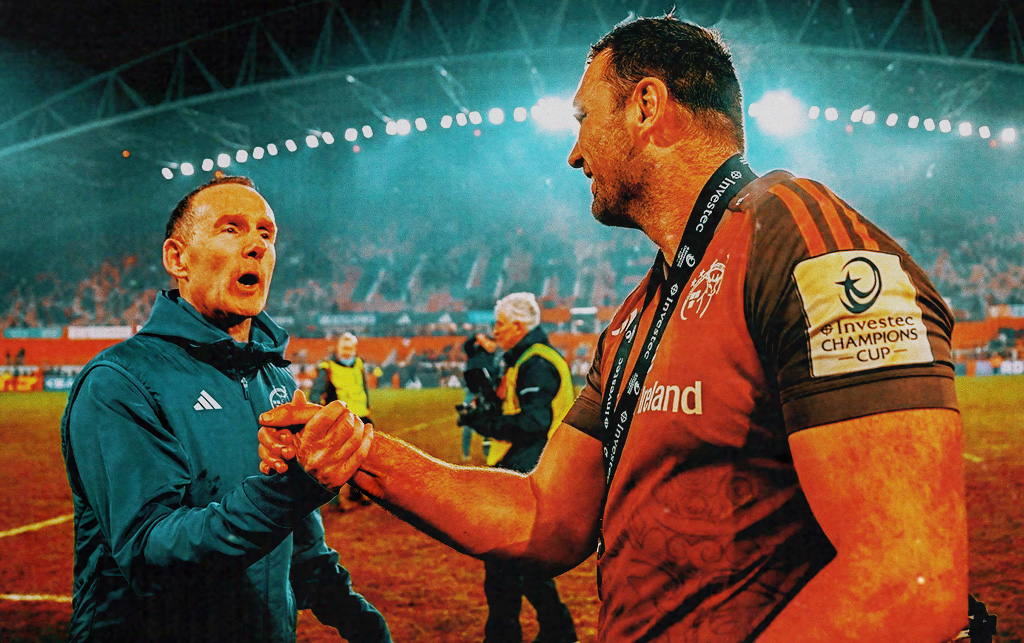
We lost by two points to eventual European Cup finalists Northampton in a back-and-forth contest in Franklin’s Gardens that featured Jack Crowley putting the team on his back to try and get us into a home Round of 16 game. In the end, a Henry Pollock breakdown penalty saved the tie for Northampton, but our overall display was hugely encouraging, even if I did drop an all-timer dud line to finish that game’s Wally Ratings.
The frustrating thing is that a win was 100% there for us here, and the manner of the loss will really stick in the throat, at least for a day or two. I know it still does with me on Monday. I suppose that this game – and this season so far has shown us – is that our first choice 23/25 can pretty much go toe-to-toe with anyone in Europe on our day, but we really can’t afford to ship our current injury list and look to compete like for like. […]
We’re close – very close – but we need more guys back to go closer again. These two points worked to create a Round of 16 game away to La Rochelle, and while that is a massive challenge, I genuinely don’t think there’s a team in Europe that Munster should be afraid of if we can get anything close to that first-choice squad selection on the field. Our destiny is in our hands, and in the treatment room.
Either way though, l’opportunité c’est fucking énorme.
Sure, we were going on the road in the Round of 16 – and to Ronan O’Gara’s La Rochelle, no less – but it seemed like we’d stabilised the season. This was our best European Cup performance in three years, and we missed out on a home knockout game because of an away loss to the eventual runners-up by two points and to Castres, who’ve lost once at home all season long, by the same margin.
But that also displayed something of a pattern, i.e. we led at key junctions of both those games, but still managed to lose late on. If you flash forward to our defeats against Glasgow, Cardiff and eventually the Sharks, you’ll see moments in the game where we were up by double digits, only to squander that lead. Even our wins over Connacht in Castlebar and La Rochelle featured big leads getting whittled down to the toss of a coin.
I don’t think it was an issue of general fitness – we’re quite a fit team when we have our guys available – but our lack of depth at halfback, midfield and the pack and the front five in particular was killing us.
We put away the Dragons with very little hassle right before the Six Nations and had another long anticipated break to build on the successes of the middle block and continue to try and flush out the “dirt in the fuel line” from earlier in the season, at the set piece and with the return of a bunch of injured players.
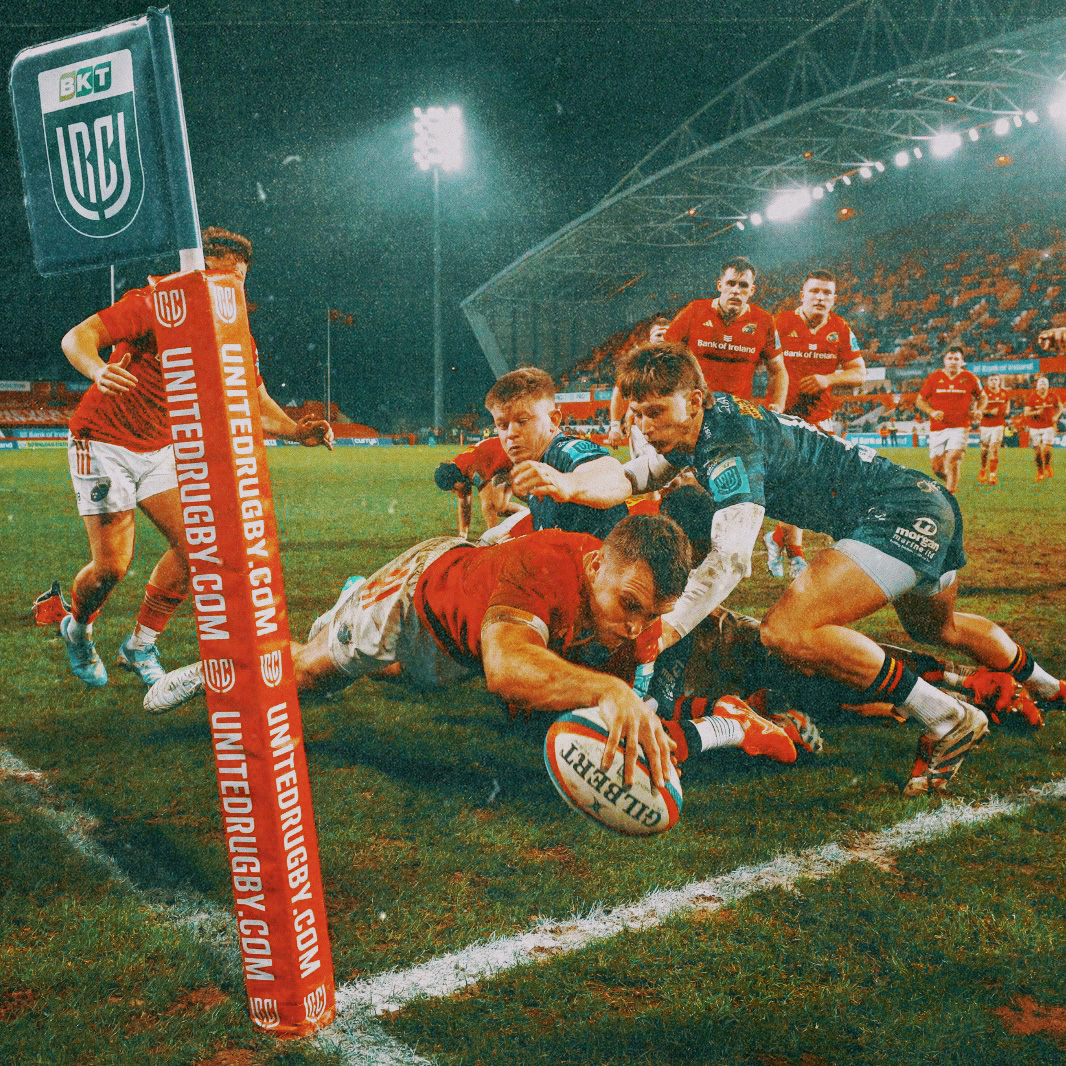
Munster seemed primed to go on a long, deep run in the second half of the season, ironically just as Rowntree would have predicted. We beat a decent Scarlets side incredibly comfortably in early February during the Six Nations and seemed in a great place with some winnable fixtures coming up against Scottish sides that would be heavily rotated.
It didn’t work out that way. We lost at home to Edinburgh in the next round, and it was every bit as damaging as the loss to Zebre in Round 2. It immediately killed the momentum we’d been riding since the win over Saracens, stone-dead.
I spoke beforehand about how Edinburgh were better than their last two losses suggested and that, if anything, they were underperforming what were quite solid statistical fundamentals overall, at least up to this point in the season. Even with that, they had picked a front five that was significantly bigger and heavier than ours, both starting and off the bench. We’ve seen already this season that, with our few power profile props and locks in the physio room for most of the season, the grafters, ageing veterans and young lads we’re left with can struggle against a side with good tackle execution and a big set piece, as Edinburgh certainly do.
With Craig Casey, Conor Murray and Jack Crowley, we have generational halfbacks who can play around these obstacles, but when those guys aren’t available, the drop-off is precipitous.
Let’s do the “Will This Be A Sticky Game For Munster” checklist.
-
- Losing collisions in the middle of the field. ✅
- The usual quality isn’t there at halfback. ✅
- The set piece goes wrong. ✅
You can see the issues straight away.
That loss bumped us right back into the mire of the URC mosh pit after two bonus point wins had lifted us into a place where challenging for a home playoff game was a possibility.
Worse again, it seemed like we’d taken our eye off the ball in the build-up as, according to Alex Nankivell in an interview with the Irish Examiner before the next game.
“We were just looking back on it for the review, and we were just off on that Friday night, and I think that’s a bit of a mental thing. I didn’t personally, but maybe there was a bit of a general theme of taking Edinburgh lightly after they lost to Zebre.”
Wait… didn’t… we lose to Zebre too? This season was so long that I could easily forgive the rest of the squad for thinking that defeat happened last season, but it showed how vulnerable and inconsistent we still were. The side that lost to Edinburgh was pretty callow and featured a lot of experienced veterans throwing in all-time stinker performances. That showcased the hollowing out of the squad since the Van Graan days, with successive budget cuts and decisions around test rugby selection costing key players, directly and indirectly.
A week later, we fronted up away to Glasgow – and should have won – but depth and composure were, once again, our undoing in the pack, but particularly at half-back. Our half-backs for that Glasgow game were Tony Butler and Paddy Patterson to start, Rory Scannell and Ethan Coughlan to finish.
Billy Burns – signed last season as a relatively low-cost and experienced cover guy at #10 post-Carbery – spent most of the season injured and but even when he was fit, he seemed crippled with the negative expectation that came from the fans. Essentially, they expected the Billy Burns that missed a big kick down the line for Ireland during COVID to show up, rather than the super solid #10 that drove Ulster to victories over Leinster and Toulouse.
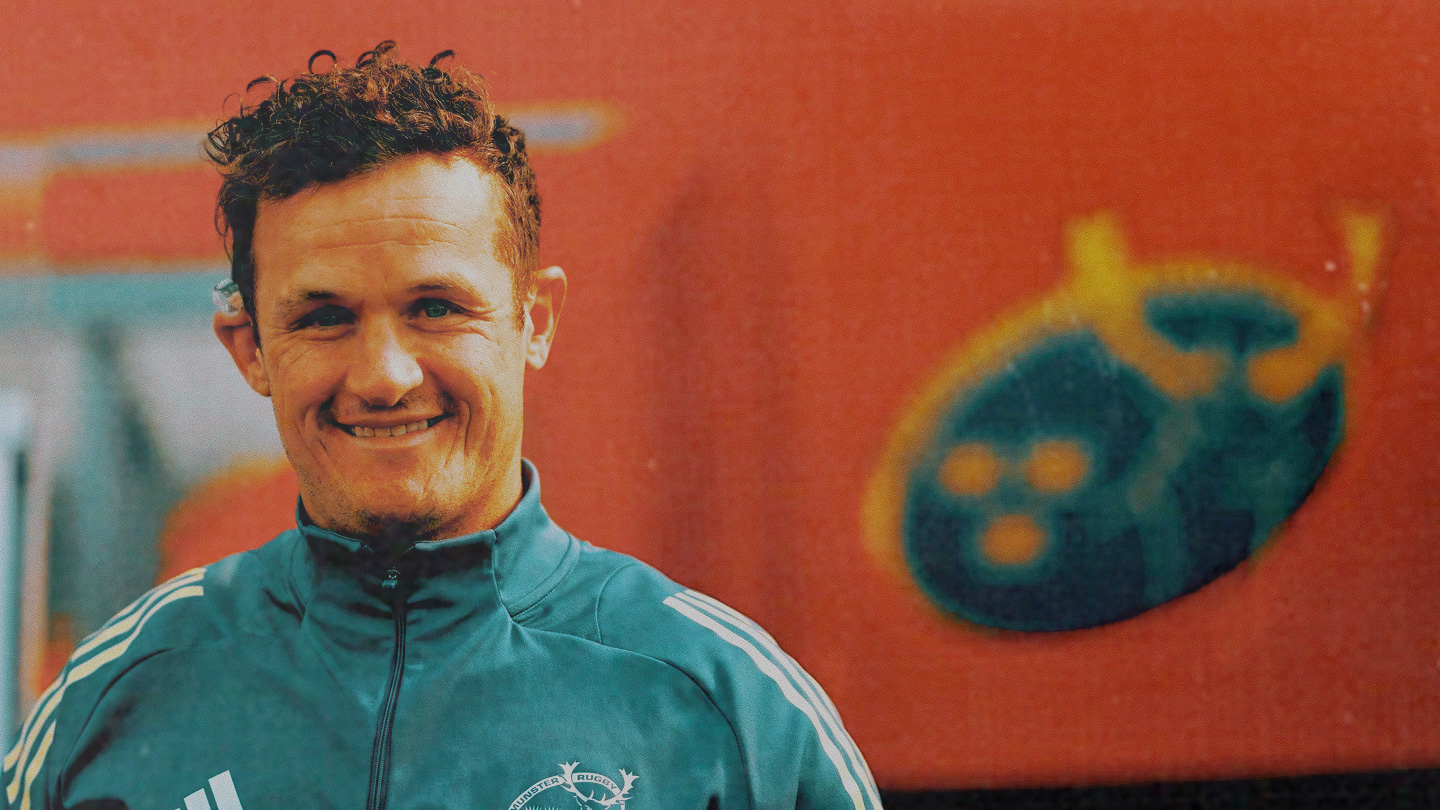
In Burns’ first competitive game against Connacht, he missed two kicks to touch in the first half and did the same against the All Blacks XV in a packed house at Thomond Park. That game against Connacht set the tone for his time here, unfortunately. He missed the next few games due to an injury he picked up against Connacht and made his comeback off the bench in the doomed South African tour. His best performance of the season was a start against the Lions in November, but he played a bit part role thereafter as Munster preferred a 6/2 split. Burns was a well-liked member of the squad, but the general feeling amongst the coaches was that we couldn’t or shouldn’t rely on him in any serious game.
He did OK in the Dragons and Scarlets win post-January, but was the definition of a passenger against Edinburgh before suffering a shoulder injury that would finish his season. This would have a bigger impact than we knew at the time because even though Burns didn’t work out as I or Munster hoped, he could at least give Munster some space to rest Jack Crowley on his return from the Six Nations.
Tony Butler, who started the games against Zebre and Glasgow, before making ten bench appearances (including one against Northampton in the European Cup), had a decent development season but also showcased that he’s more of a longer-term project. His goal kicking and playmaking against Connacht in the first round of the season were outstanding, for example, as were the core fundamentals of his passing, running and game IQ. That said, his defence was incredibly poor, and his focus, at times, tended to waver under pressure, leading to impulse overriding his generally good reading of the game.
All of this meant that when we reset again after that loss to Glasgow and faced into a nightmare run of games up on the log to save the season, it became clear that we would be leaning incredibly heavily on Jack Crowley. So much so that Burns’ season-ending shoulder injury wasn’t really discussed in those terms publicly.
One week later, Munster took on Connacht in a do-or-die game in Castlebar, where both sides knew that a loss would be disastrous ahead of the resumption of European rugby a week later.
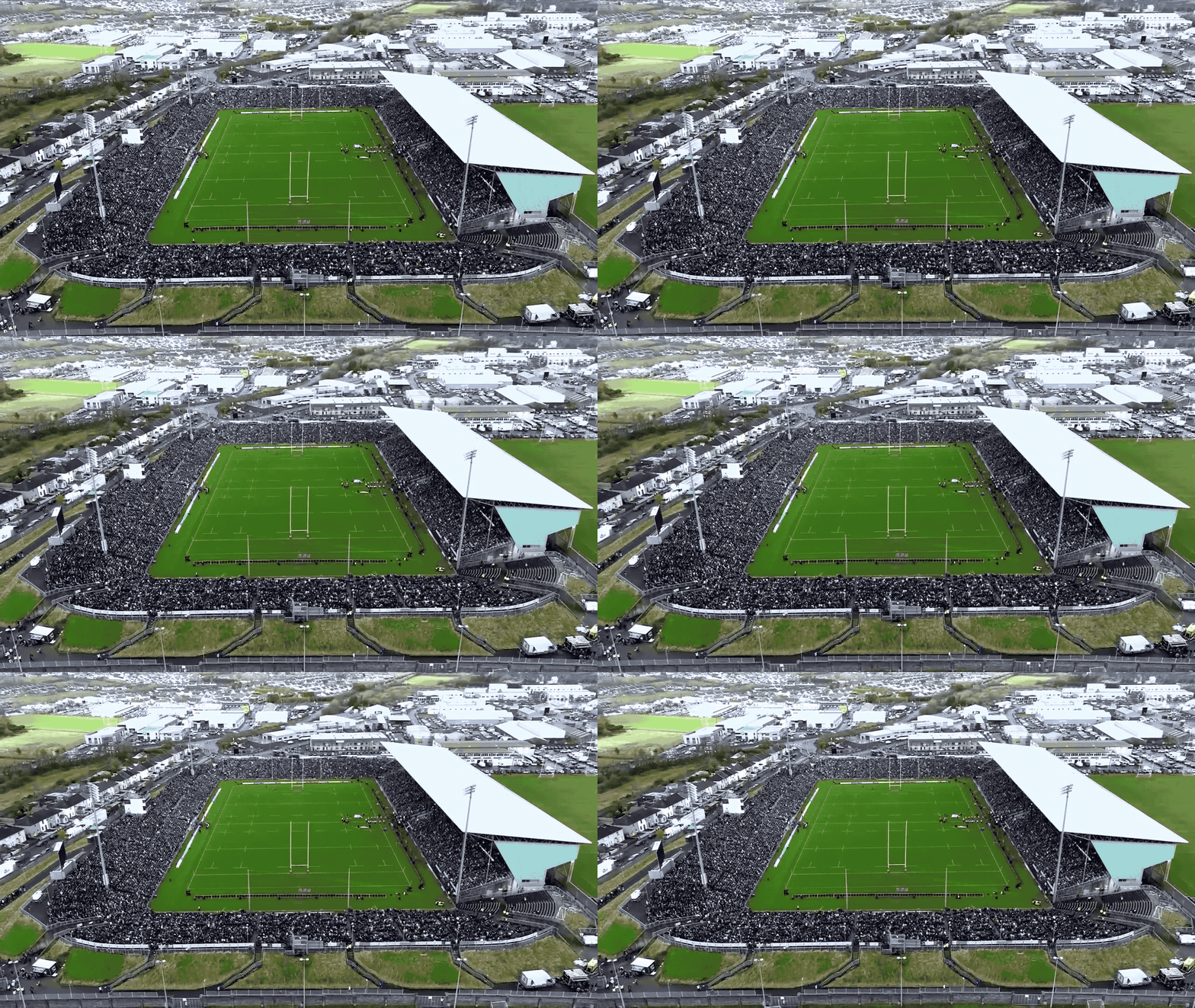
In the Red Eye for that game, I went through the maths;
In the last three seasons, the average points tally to make the top eight has been 49 points, but on two separate occasions, the cut has been exactly 50 points.
This season, I think the points cut will fall around 51 points. Get that or above it, and you’ll make the top eight. Get below it, and you’d better start learning Tbilisi, buddy.
So, for Munster, that means getting 17 points from the next five games, starting at the weekend. Now we’re lucky, in one way, that we have three home games in this run and a chance to deal directly with the surrounding teams in the URC mosh-pit – ideally helping our cause while hurting theirs, pulling the points cut back as we do it – but we’ve got to actually win games to do that.
The actual cut-off this year was 48 points, with Munster finishing on 51. So I was a bit off, in part due to some outlier results like Scarlets beating the Lions in South Africa and Sharks beating Ulster in Ravenhill, as well as Leinster laying waste to almost everyone during the regular season, but it showcased how dangerous that game in Castlebar was.
We just about got through it, albeit with 14 men when Nankivell was incorrectly red-carded, but we almost left another 11-point lead get away from us. A last-gasp try for Connacht was TMO’d out for a croc roll, before we almost lost the game again due to the sloppiest penalty concession you’ll ever see. Jean Kleyn, just back from his neck and quad injuries, saved our bacon off the bench, but the biggest factor for me was how influential Jack Crowley and Craig Casey were becoming for this team.
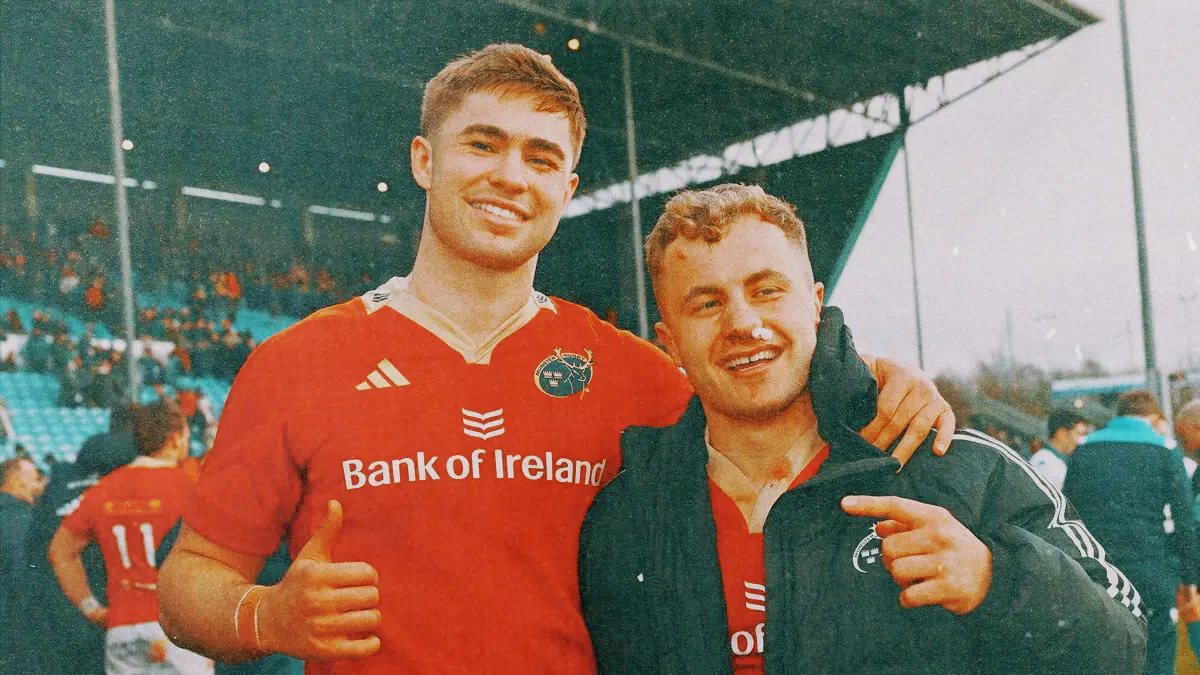
There was no time to dwell. Ronan O’Gara and La Rochelle were waiting in an away Round of 16 game that had a little bit more heat to it than people realised. It was far from the Munster love-in that it was framed as in the press, certainly not from the Munster side anyway.
What followed was Munster’s best European Cup result and performance since the loss on penalties to Toulouse in 2022.
♛ ♛ ♛
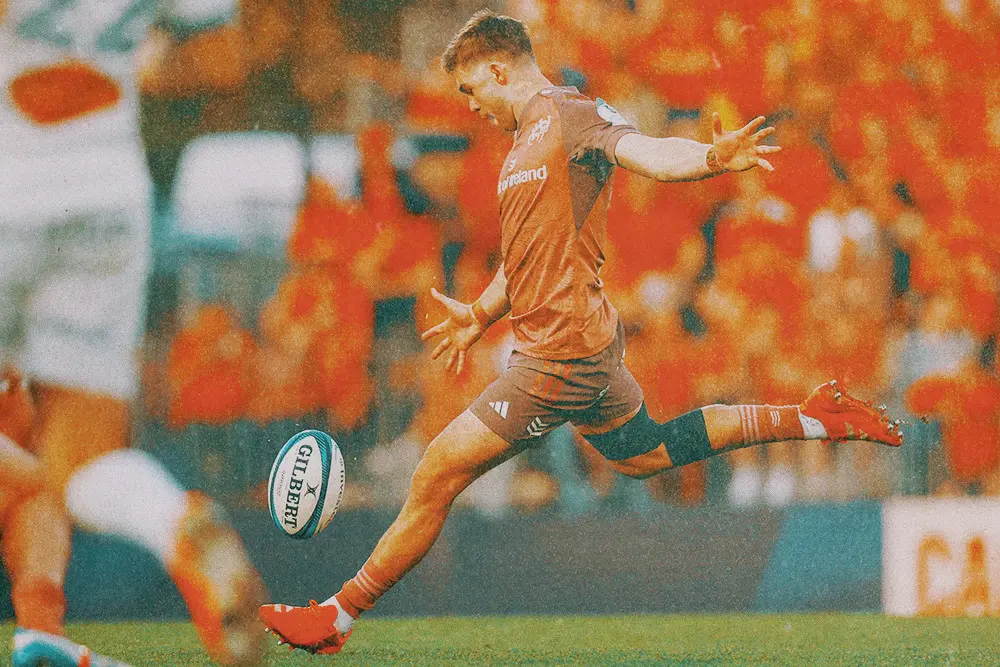
[…] Any journey that a team goes on from being one of the chasing pack to being the one they all chase is built on moments. Some of these moments are small, so imperceptible that nobody outside the playing group would even notice them. Some moments are private, and you only find out in someone’s autobiography, after the fact. Some happen for the world to see and start bringing people along with you because they see the significance of it.
Saturday night was one of those moments.
Not an end to itself. Not a special “just beat O’Gara” trophy.
But it’s something worth celebrating all the same. […]
Who knows where this season will go from here? We’re still not fully safe in the URC, and Bordeaux will be raging hot favourites this weekend coming. Nothing is certain.
Super Deluxe Wally Ratings – La Rochelle 24 Munster 25 – April 2025
That win over La Rochelle was the perfect encapsulation of this season; from the lows of Zebre and Edinburgh, to beating a team who won back-to-back European cups as recently as 2023 in their own backyard in a knockout game.
It was no fluke. Sure, La Rochelle were on a bad run, and it’s fair to say that they weren’t what they were at their peak, but neither were we. A week before, we’d almost lost to Connacht. But in beating La Rochelle, this squad showed that they had a higher level of rugby in them. It’s not a shock that it coincided with our best squad selection of the season, bar the wrongly suspended Alex Nankivell, Shane Daly and Diarmuid Kilgallen.
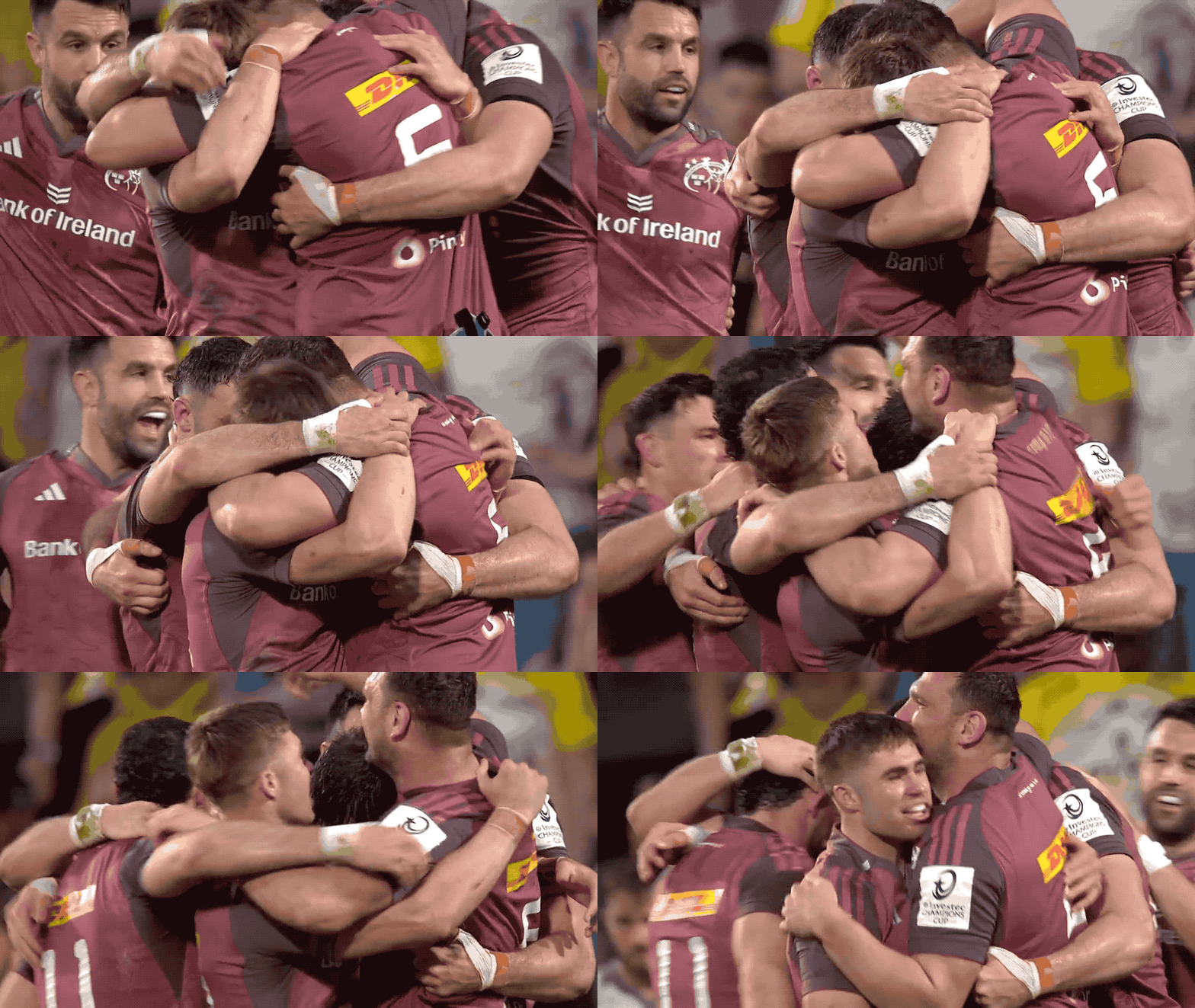
The scenes at the end of the match reflected something of a release after the emotional strain of the season, and to show gratitude to the insane commitment of the thousands of Munster fans who had made the trip. The fans believed, so Munster believed and that feedback loop drove the performance.
More than anything else, it was the kind of Classic Munster performance that showed everyone that, while we had gone backwards this season and lost focus over the last 18 months, the old monster was still there, deep in the woods.
But we still had to go again the next week, in Bordeaux this time. We fell short after a rotten start, a horror show lineout performance, and running out of gas in the end when the game was still in the balance.
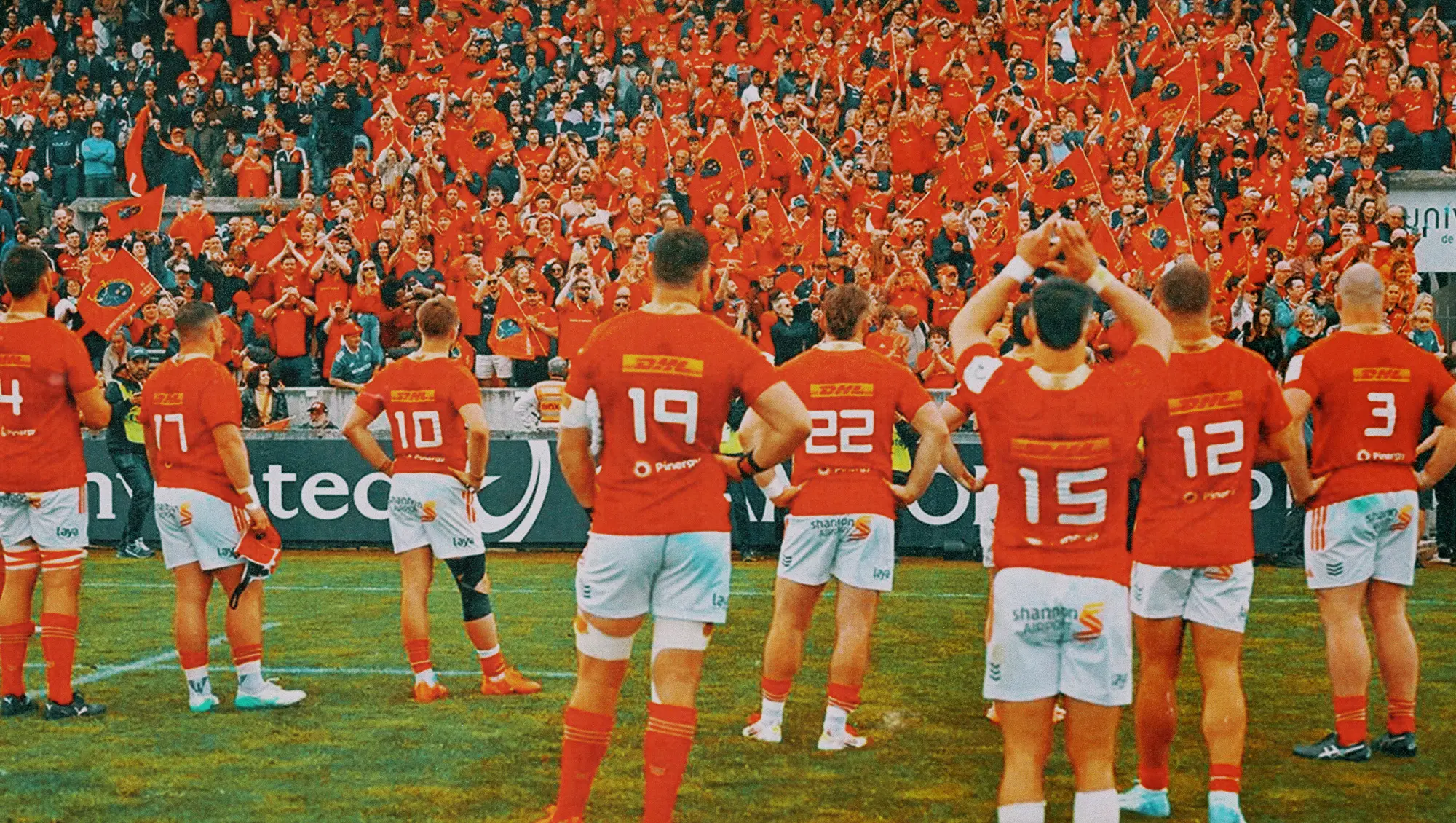
If it’s a case that Munster were broadly outclassed for 80 minutes, so be it, but that wasn’t the case. Of course, this Bordeaux team are going to score tries – how could they not? The key was how we were able to structure our possession to make this game as difficult as possible for them, and we didn’t manage it. That was, in part, down to their excellent tactical approach hurting us early and often, but we have to look at our response to those tactics, too.
Even with all that, this game was there to be won despite being 29-3 down at one stage. We fought back to be within 11 points and playing against a 14 and then 13-man UBB side that looked rattled to an atomic level.
That’s what will stick in the throat this week. As bad as we were for long patches, we still should have won.
Even with a 62% completion lineout, 19 turnovers and two yellow cards of our own.
It was there for us, and we couldn’t grasp it.
Super Deluxe Wally Ratings – Bordeaux 47 Munster 29 – April 2025
My take on the fallout from this game was that the quarter-final and the extra away game burned us out for the ensuing weeks. We lost to the Bulls at home, in part due to another scandalously bad officiating error on the sideline, which incorrectly reduced us to 14 players for the second time this season. We also can’t get away from the fact that we got outmuscled at key times and couldn’t play through their intense, off-ball structures similarly to how Leinster approached their win in Thomond Park a few months before.
The lineout, once again, was a disaster. That was becoming a problem. That loss put the season into another panic, with results elsewhere building pressure on the games to come.
Worse again, there was no scope to reduce the load on any of our key players.
Jack Crowley, Gavin Coombes and Tadhg Beirne essentially played 80 minutes a game every week from the Connacht game in Castlebar on. Craig Casey was doing 60+ minutes a game, but only because Conor Murray was available off the bench.
Injuries were still an ever-present part of the season, however. Jeremy Loughman’s injury against La Rochelle ruled him out for the season, and Diarmuid Barron’s shoulder injury meant the IRFU and Leinster gave dispensation for Michael Milne and Lee Barron to come down on loan ahead of their summer move.
An away game against Cardiff was our last chance to end the season on something other than high-pressure, do-or-die games, but a disastrous performance in the final third of the game cost us a valuable win. Once again, we left a two-score lead slip under pressure.
The vibes were… not good.
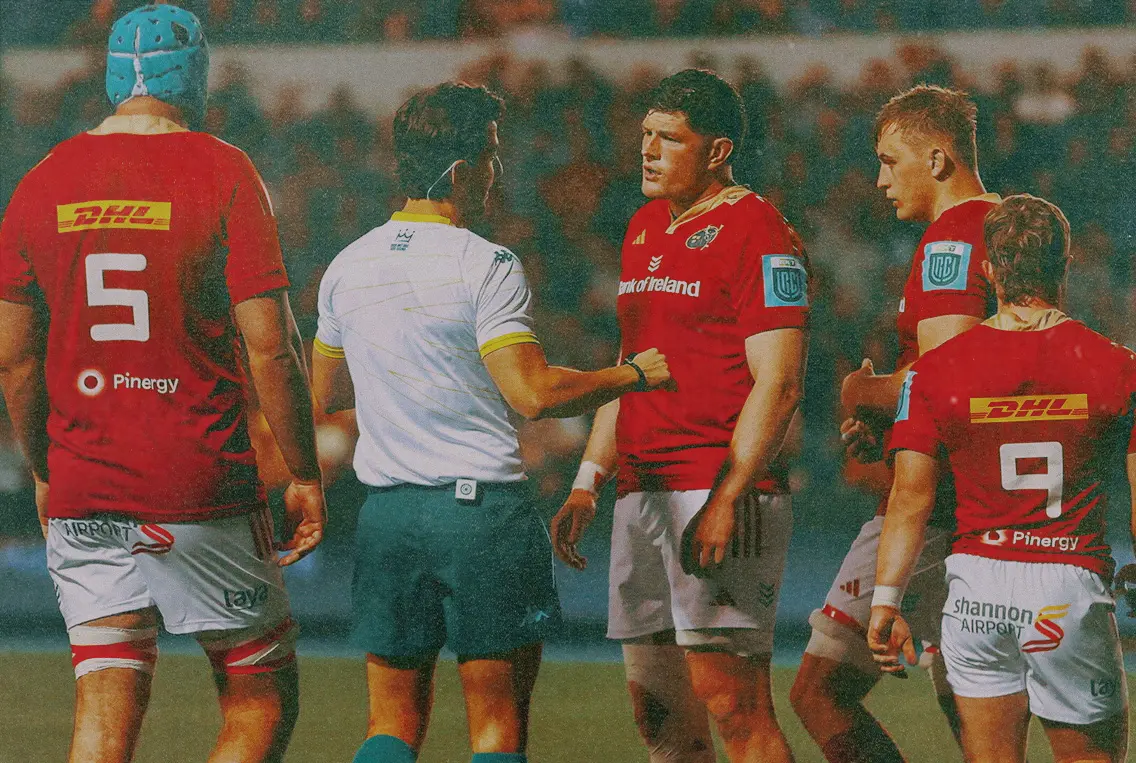
Throughout the year, the mood in the HPC had been incredibly positive, especially after Rowntree’s departure. That isn’t to say that people were relieved he was gone – far from it – but there was a collective decision that they weren’t going to let the atmosphere get as tense and sour as it had been at times in the previous few weeks.
There was no mass confusion at who the new head coach would be, there was no fillings out other than the normal shit that happens in every single club in the game.
With all that said, the week break between the Cardiff game and the Ulster game in Thomond Park was about as focused and tunnel-visioned as you can imagine. At that stage of the season, Munster finishing outside the top eight was a live possibility.
Something will have to give in Thomond Park this Friday night. One club will leave with the bare minimum expectation for the season all but confirmed, one will leave with a sense of existential panic.
I know what one I’d prefer.
Missing out on Champions Cup rugby would have plunged the club into financial catastrophe, something confirmed by Philip Quinn in a recent interview with the Irish Examiner.
“How much it would cost us to not qualify for the Champions Cup would have been probably €1m in direct revenue. And nobody can really put a number on what the balance is, because the indirect revenue is the things we don’t see. We’re saying that a million would be the two (home ) matches going from the Champions Cup to the Challenge Cup. But it would also be the impact on other gates and season tickets and everything, and then it’s the indirect revenue in terms of just the feeling towards the team, your sponsorship revenue over time, that won’t go straight away the following year, but it’ll go down over time […]
And it’s only after the match that you can literally say the next morning when you’re texting each other and kind of going, ‘yeah, there was this much on the line’.”
Yet we had been too inconsistent across the season to do anything BUT scrap for a playoff spot. The losses to Zebre and Edinburgh had holed our season below the waterline, and the loss at home to the Bulls only made that hole bigger. In the previous two seasons, we’d turned around a bad first half of the season with incredibly strong second half performances, but, like an ageing long-distance runner, when we went looking for that “kick” coming into the last lap, we just didn’t have it.
Too many of the squad guys we were relying on were a year too old, and the young talents we needed to step up were still just a little too raw or underdeveloped.
In the last few years, our need to get results in the last half of the season has meant stripping back on rotation because we didn’t have the squad depth to rotate players in and out and still get the wins required. Or, at the very least, the coaching staff believed that to be the case.
With millions of euros and, quite literally, jobs on the line, the coaching staff backed the senior squad to do the business back to back to back with a lot of the younger talent cycled out to AIL with a view to attacking next season with a new head coach and a clean slate.
With two home games to secure financial stability for the next two seasons, they bit down on the gumshield and went to work.
Two games, two opponents scrapping for the same thing we were, and two bonus point wins were required to do the business.
And do the business we did.
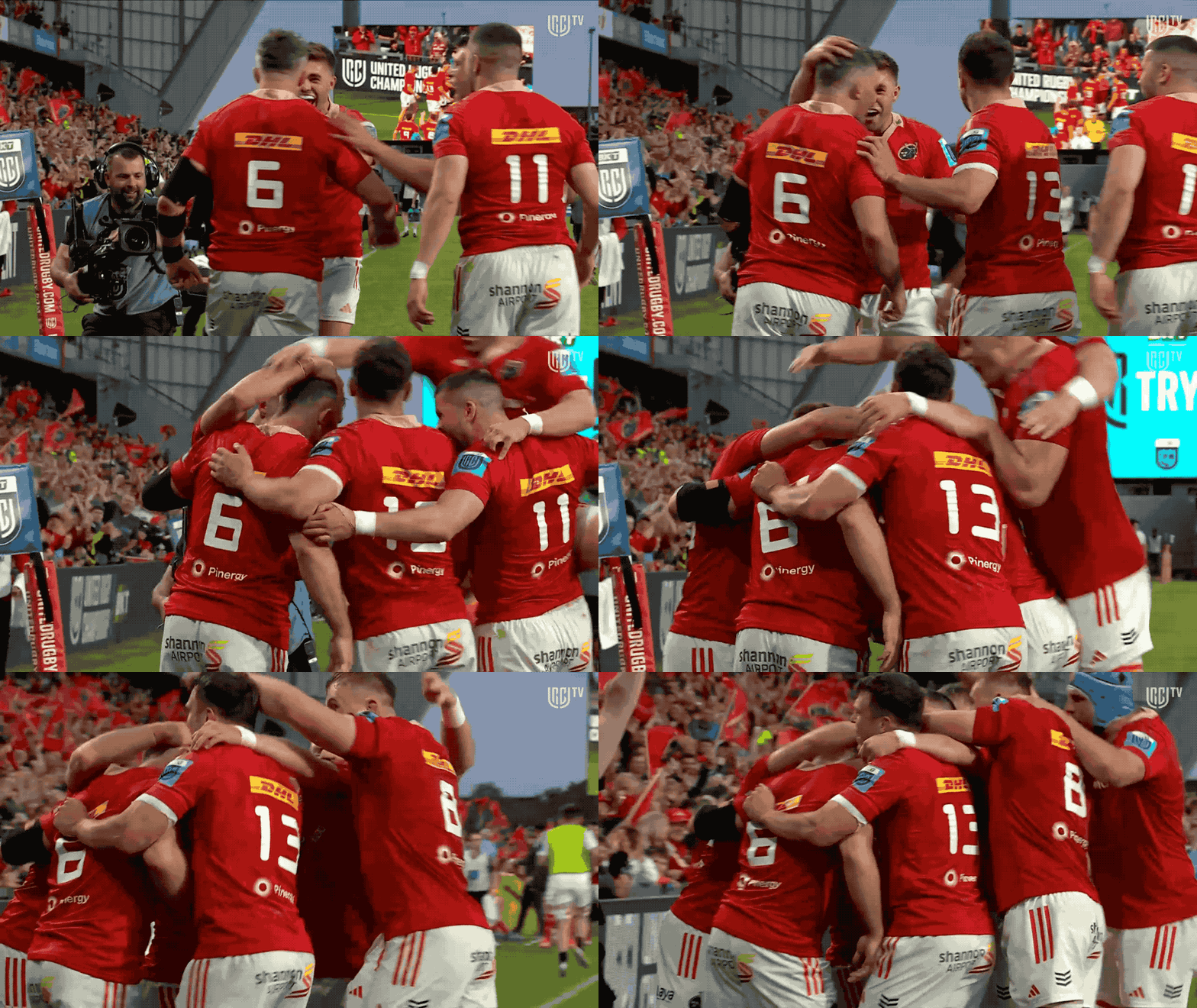
You’ll remember these games, or should do. They were just a few weeks ago at this stage, and while both games featured incredibly nervy moments, especially against Benetton, Munster more than deserved the wins in Limerick and Cork to finish the season on a positive. Playoff secured, Europe secured, finances secured.
We’d exit at the quarter-final stage away to the Sharks on penalties two weeks later, to finish the season on a slightly deflating note. For some reason, I feel like I’d prefer to lose to a last-minute penalty than to lose a penalty shootout, if you must lose, but it summed up the season in one way. Of course Munster would take the team who walloped us right before our former head coach left the province, a team filled with Springboks, to extra time. Of course we looked like world beaters for parts of that game, thousands of miles from home in a stadium where we’ve never won. Of course we then lost on penalties in the most bruising way possible.
That was 2024/25. Farcical. Invigorating. Heartbreaking. Nostalgic. Relieving. Maddening. That’s the deal we made with the devil when we brought this club into our hearts.
And it’s a deal we’d make again.
♛ ♛ ♛
This season was a failure, by both the criteria I set down for myself at the start of the season and by general consensus. I thought we were good enough to make a final if we could continue the run that had us finish top of the league last season. We didn’t manage that.
In the end, we did well to qualify for Europe at all, given where we were at the end of October. One thing is very clear: the URC is a league where it’s almost impossible to fail upwards these days. The teams are too good. As the season went on, it also became clear that teams had worked us out in two connected steps:
- Off-ball us with a long kicking game and smash us up on the first phase of transition.
- Get the ball off the field, attack our lineout and get after our tighthead side of the scrum
Our lineout has been a weakness for two seasons now, and our scrum declined throughout the season in tandem with how much we had to rely on Stephen Archer and John Ryan in between Jager’s neck injury and concussions. I also got the impression that teams had worked out our attacking concepts under Mike Prendergast as the season wore on. We looked flat, overly complex and narrow at times, where we almost seemed to need three high-pressure passes to work perfectly to create the linebreak we wanted. Without a lineout platform for most of the season, it was almost impossible for us to create tries with any kind of simplicity.
We finished the season with the sixth-worst lineout in club rugby worldwide. We have the fourth-fewest tries scored on the first phase in the world.
That makes life incredibly difficult.
And so life was incredibly difficult.
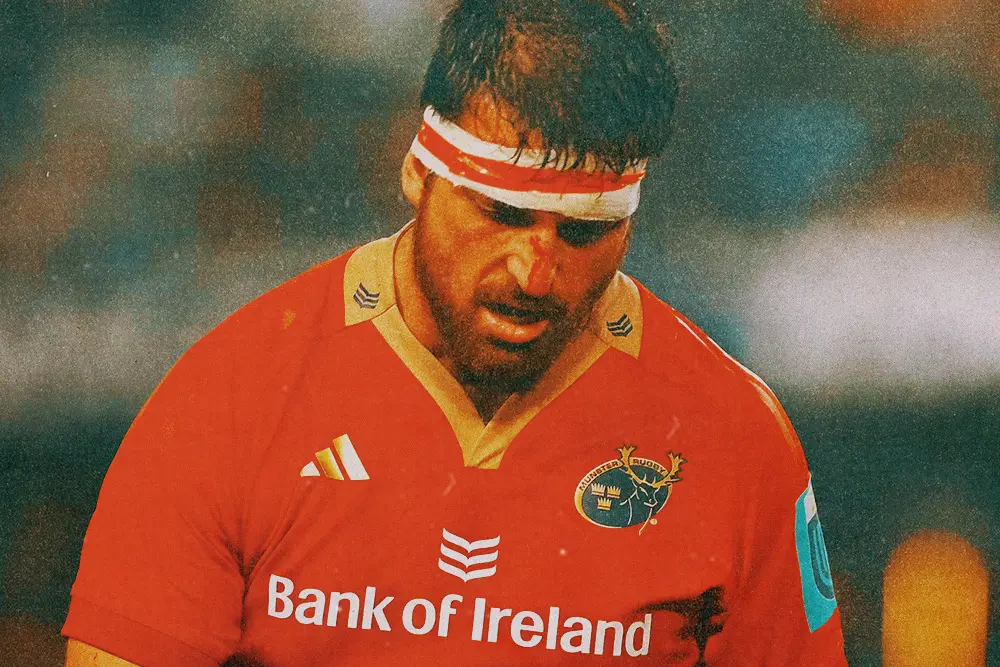
We had very few, relatively straightforward wins this season. Everything seemed… difficult. A lot of that comes back to the set piece and, I think, our general game state, as well as having some of the worst red zone defence in the world. Teams found it easier to score on us than at any point in recent history.
The last time we conceded more points in the league was back in 2003/04, to put context on it. That follows two years where we had the best defence in the URC. The 59 tries we conceded in the league this season are the worst league performance for Munster on record. Did Denis Leamy become a historically bad defence coach overnight after being one of the best defence coaches in the league for the last two seasons, or is it more complex than that?
I think it’s the latter. I’ll explore that in a piece coming next week.
For now, a disappointing, tumultuous, sometimes euphoric season is finally over, and an exciting new beginning awaits under Clayton McMillan. Sometimes that’s the most exciting thing. The unknown. Whatever happens next, it’ll be new.
And new is good.
