


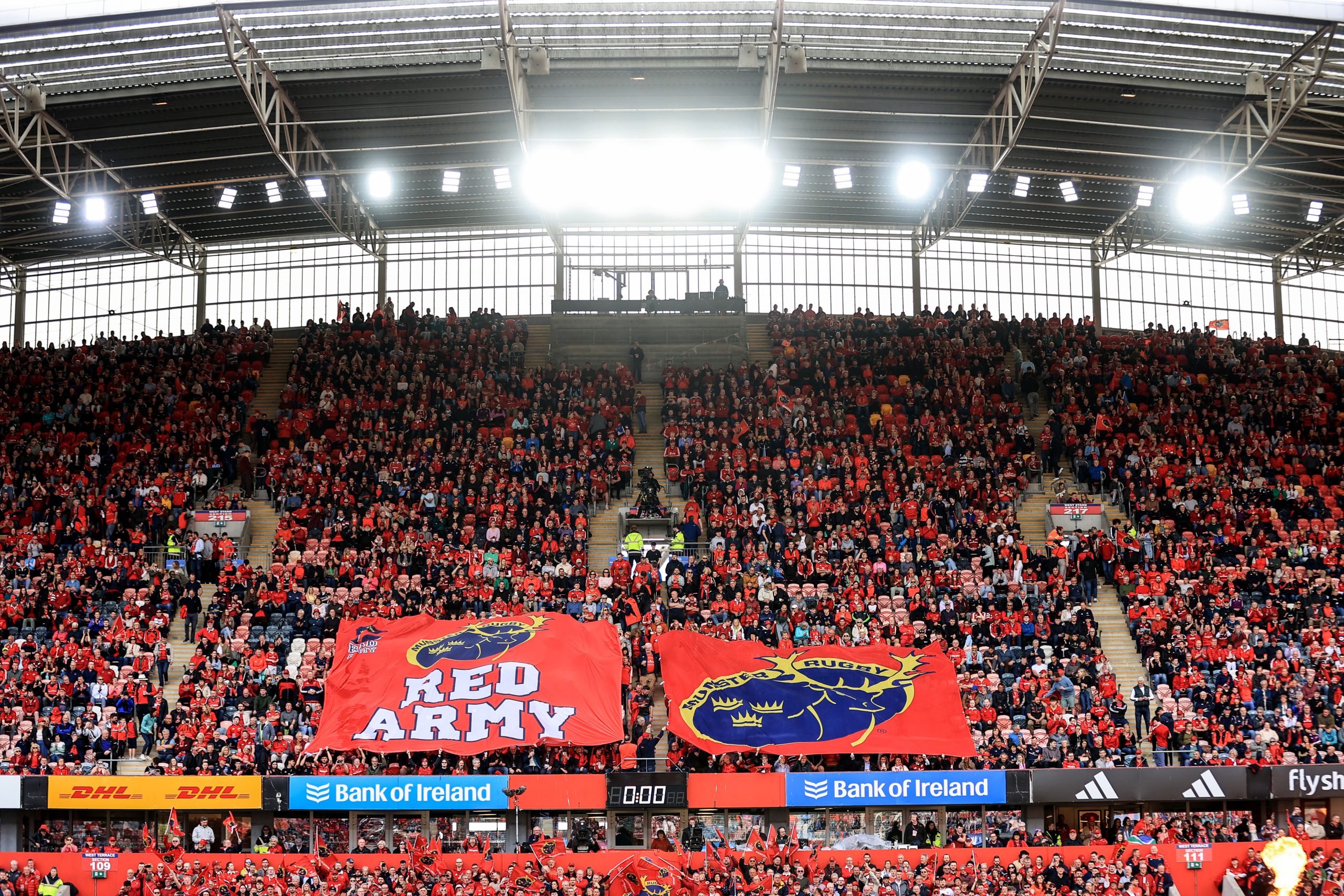
The equation was simple enough.
Win four home games to win the URC. Just because it was simple doesn’t mean it was easy and, as it transpired, it wasn’t. We were beaten by the eventual champions Glasgow Warriors on a deflating day in Thomond Park, ending a season a game early that had rolled with a seemingly unstoppable momentum in the last 10 games. In the end, that momentum took us off our feet and I think it’s fair to say that we didn’t do ourselves – or our momentum – justice.
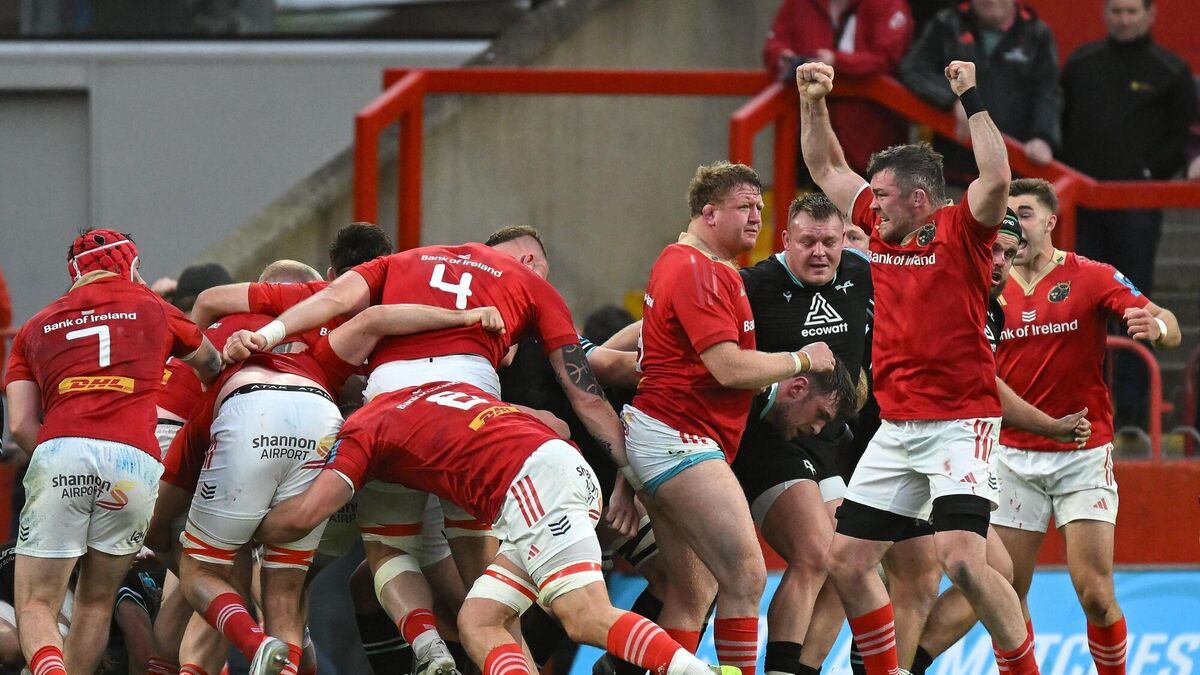
That is very disappointing but it’s a different flavour of disappointment than what we’re used to in these Anatomy articles, when it is a disappointment we’re tasting. This year’s flavour is a sour one though, all the same. It’s “we blew it”. Not “we’re not good enough to even think about that”, “we’ll never beat that Leinster team” or “we need a massive overhaul”.
We blew it.
That raises questions too – mainly about overdoing it in training the week of the semi-final as a means to explain how tired we looked – but they are better questions than we’ve had to ask in years gone by. Go back to 2019/20, after the last World Cup and in the middle of a COVID lockdown, and that season’s Anatomy is all about difficult questions.
This season was a greatest hits medley of our previous Big Defeats in knock-out games. Three games against Leinster. Two against Racing. Two against Saracens. One win. One draw. Five losses. We can talk about context – and I have – but at a certain point, you look at the results and think that something needs to happen. This upcoming season is both an opportunity for renewal and the last chance saloon for much of the team that broke out in the momentous 2016/17 season. If we’re still talking about being close but not close enough in July 2021, more radical change might be on the cards. If we’re talking about the same thing in 2022, there will be radical change.
That’s true for almost every year that I’ve done these articles. This year’s article has to start with two simple questions and two simple answers.
Did Munster retain their URC title or at least make the final?
No.
Did Munster improve on their last 16 finish in Europe to at least make a semi-final?
No.
Because of these two answers, the season must be described as a failure automatically. Those were the two aims and we failed to meet both of them. I will add context to those failures, and the context tells the whole story, but that is the headline. One of the best things that winning the URC in 2022/23 did for this group was lift away all the rhetorical cul-de-sacs that the club, the players, the coaches and the fans had developed in the barren years post-2011. The curse of the Maybe Next Years, the pox of “we’re in transition” with actually winning things booked for some future date that never comes. This year, we can at least embrace our failures, know the reasons for them, fix them and then, realistically, go further next season.
meant that
Put a little context under your pillow for the Context Man
I just know I’m going to look at this headline next year and be like “what the fuck is that about” but the reel is stuck in my head for the last two weeks. So here you go; some context for your pillow.
Munster’s 2022/23 was holed below the water line in the second quarter of the season by a bizarre and pretty much-unprecedented injury crisis that exceeds anything I can find in elite rugby going back ten years or more in the PRO14/URC, Gallagher Premiership and TOP14. When you consider this and how damaging it was, it’s easy to see why Graham Rowntree won URC Coach of the Season. Given where we were at the end of January, it’s not unfeasible or unreasonable to suggest that squeaking into eighth place would have been a result. Finishing top of the URC ahead of the Bulls and Leinster after going unbeaten in the league from New Year’s Day until the semi-final was a remarkable achievement that won’t produce a trophy but deserves immense credit.
Here are the players who played 10 games or fewer this season due to injury whose absence I felt hurt the most;
- Roman Salanoa – 0 games
- Andrew Conway – 1 game (1 start) *retired
- Jean Kleyn – 1 game (1 start)
- Dave Kilcoyne – 3 games (1 start/2 bench)
- Paddy Patterson – 6 games (6 bench)
- Edwin Edogbo – 7 games (7 starts)
- Fineen Wycherley – 9 games (6 starts/3 bench)
- Mike Haley – 9 games (7 starts/2 bench)
- Diarmuid Barron – 10 games (8 starting/2 bench)
- RG Snyman – 10 games (8 starting/2 bench)
These were augmented by the loss of players like Niall Scannell, Joey Carbery, Oli Jager, and Josh Wycherley, missing long stretches of the season, with Alex Nankivell and Thomas Ahern missing the run-in through injury. I know Nankivell made the semi-final but he didn’t look anything like the guy he would have had he not gotten injured against Edinburgh.
All of these injuries overlapped with each other to the point that, at times, Munster had 19 full-time pro players injured with the majority of those injuries concentrated in the tight five.
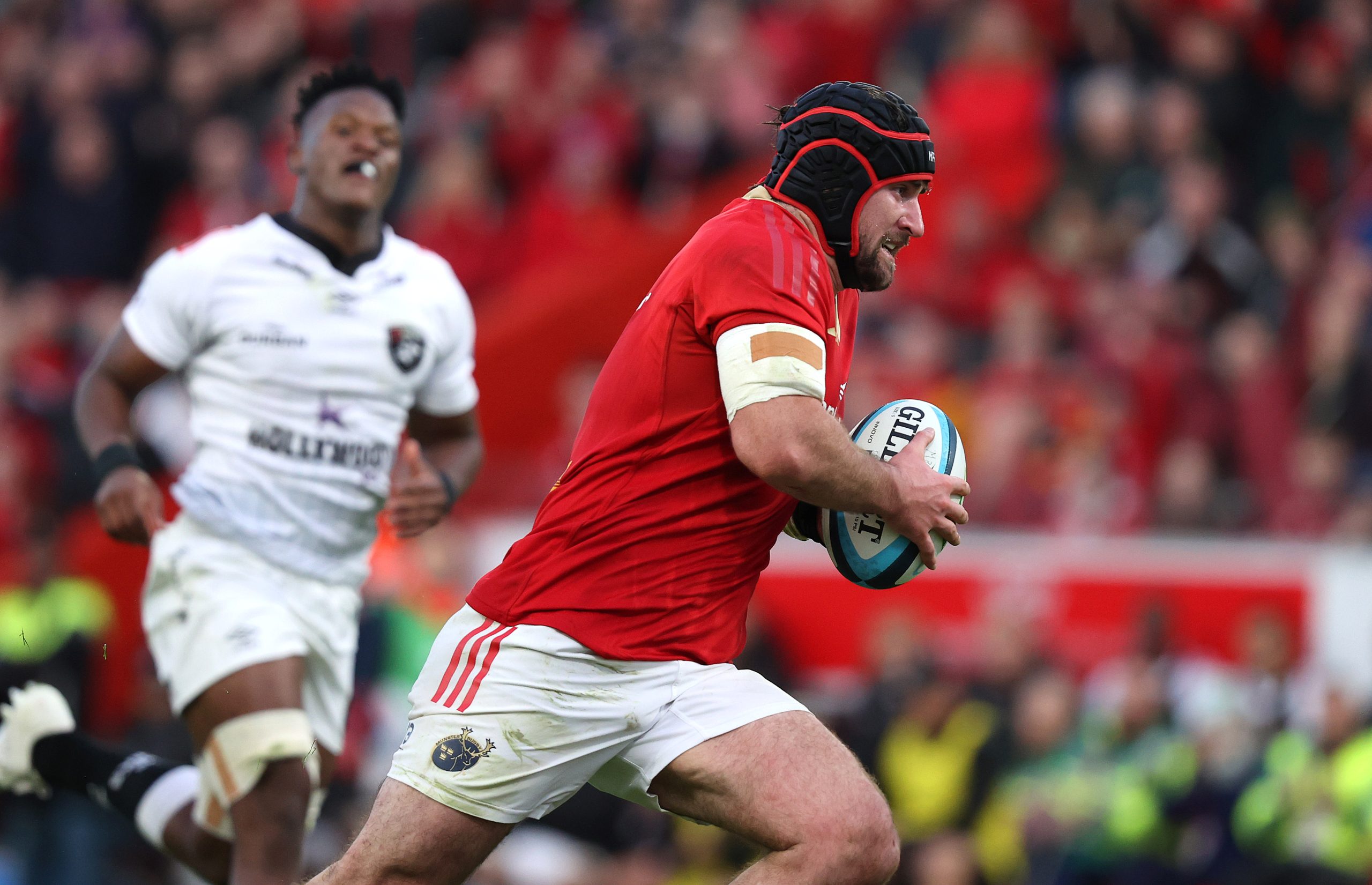
In a general sense, you want your top players playing between 15 and 23 games per season with a majority of those being starts depending on the role. If those players are involved at test level, that number will be closer to 15. Anything below that number for a player who might be described as a regular starter or bench component for bigger games is on a sliding scale of injury trouble. Anything between 12 and 14 games generally means a late starter (Oli Jager), significant injury disruption (Niall Scannell, Oli Jager, Joey Carbery, Simon Zebo) or test involvement (Peter O’Mahony, Oli Jager). In general, your non-test players should be hitting 18-22 games per season.
Anything below 11 games for a senior, established player is usually a sign of a significantly disrupted season due to injury. Of the 40 eligible pros, Munster had a less than 11-game killer injury rate of 25% of the players who were realistically in with a chance of starting big games. Guys like Cian Hurley, Paddy Campbell and Liam Coombes weren’t included in this metric despite missing most of the season due to injury.
By way of comparison, Leinster’s Killer Injury Rate was 8% (Garry Ringrose, James Ryan and Hugo Keenan were most affected) and Ulster’s was around 4.8% from what I could work out.
These Killer Injuries not only affected the quality we could field week to week in the URC and Europe, it also had the side effect of over-heating minutes on the guys that stayed fit.
Losing Kleyn and Snyman from the end of the World Cup until April, essentially, meant that Tadhg Beirne, for example, played 17 games for Munster after the World Cup and Six Nations. Only Dan Sheehan made more provincial appearances in the Irish system with a similar level of test involvement. To be honest, though, there was no alternative. With no Kleyn or Snyman, Munster had to lean heavily on Fineen Wycherley, Thomas Ahern and Edwin Edogbo early in the season. Wycherley picked up a series of knocks in that period that took him out while Edogbo was on course for involvement in the Six Nations before he picked up a season-ending Achilles tendon injury on his seventh start. Ahern played the most amount of rugby of his career to date which was vital. If not for Ahern’s newly found durability during the middle of the season, Gavin Coombes would have more than the three starts he had in the second row and the multiple sequences in the second half of games where he stepped up into the second row because we had no locks on the bench.
Did the condensed season after the World Cup cause this injury plague? Or is it something else?
I have often been asked this question about Munster’s S&C and while I don’t think that we’re doing anything radically different to any other team when it comes to our fitness and durability, just passing it all off as bad luck doesn’t quite fly either. One of the biggest signings we can make for next season is actually having a normal injury rate that keeps our best players on the field for most of the season and, by all accounts, this is something that we’re looking at both from a training approach and when it comes to our medical team.
If we ship a Killer Injury Rate of 25% next season when we have a smaller squad, there’s no guarantee things will play out like they did this season.
I think Munster’s peak team this season was a 6/2 split of;
15. Simon Zebo; 14. Calvin Nash, 13. Antoine Frisch, 12. Alex Nankivell, 11. Shane Daly; 10. Jack Crowley, 9. Craig Casey; 1. Jeremy Loughman, 2. Diarmuid Barron, 3. Oli Jager; 4. Jean Kleyn, 5. Tadhg Beirne (c); 6. Tom Ahern, 7. John Hodnett, 8. Gavin Coombes
16. Niall Scannell, 17. Dave Kilcoyne, 18. Roman Salanoa, 19. RG Snyman, 20. Edwin Edogbo, 21. Peter O’Mahony, 22. Conor Murray, 23. Joey Carbery.
We didn’t see it once. I think without those early long-term injuries to Kleyn and Snyman directly after the World Cup – Snyman in the final, Kleyn against Leinster in his first game back – we keep the majority of our preferred pack fresh for most of the season.
This had a direct impact on our ability to win important games. Between November and January, we were regularly beaten up by bigger packs.
That was most noticeable against Bayonne and Northampton in Thomond Park and Exeter in Sandy Park during the European Cup, with dog results against Leinster and Connacht in the URC. Watching those games back in the last week was genuinely wild. Every game, without fail, we would hit the wall ten minutes on either side of 60 minutes depending on when the opposition freshened up their tight five with actual tight forwards while we were often forced to utilise Gavin Coombes in an exhausting double role as a half-lock power forward.
Look at this sequence against Bayonne in Thomond Park. It had everything; rotten weather and greasy conditions so playing with pace and width was incredibly difficult combined with playing against a bigger pack, regardless of quality.
Bayonne finished 12th in the TOP14 and, 100%, Munster should have beaten them but when it came down to it, man for man, they drastically outsized us in Thomond Park that night and arguably should have won the game.
What we do know is that we’re a good team but we need much closer to our full Category A selection to make it work against a limited but physically massive opponent. Bayonne picked a four-lock pack and managed to earn a draw from it in exactly the way you’d expect – heavy close in defence, excellent lineout defence and heavy maul work.
Once that second-half bench transition hit – when the opposition made theirs or we badly needed ours – we hit the wall hard and lost games in the last 20 minutes consistently. This wasn’t a lack of fitness – it was the physics of the game exerting themselves as they almost always do when the conditions are right. An unsettling truth was that we probably could have won those games if our depth players were capable of running the lineout, in particular, to standard but it was a constant Achilles heel throughout the middle point of the season. It is not impossible to beat a bigger team, even if you’re running on empty, but it is if you’ve no lineout worth talking about.
When Northampton beat us in Thomond Park in January, we looked like a team running on empty and in need of something of a tactical reset. We weren’t kicking very often or very well, and that felt like it needed a change.
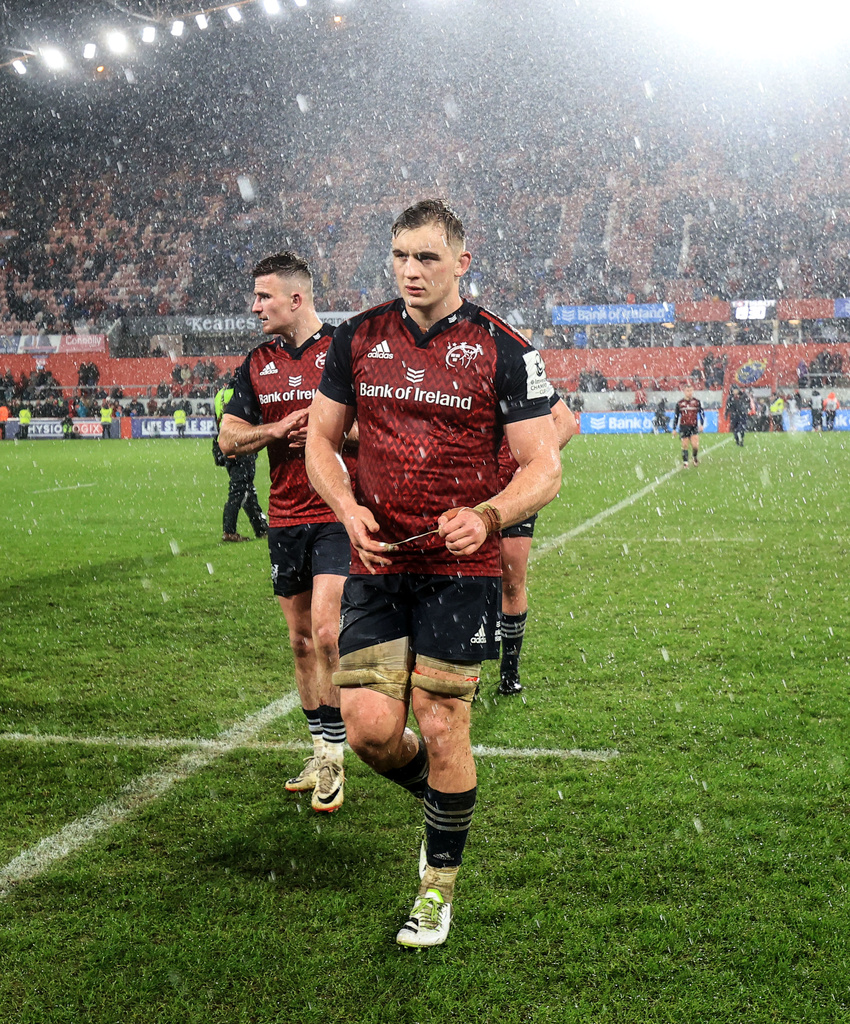
As I wrote in that game’s Wally Ratings;
Munster don’t kick very often or very far, on average. In the URC this season, for example, Munster are 14th in the league for kicks made and 15th for kick distance. Almost every other team kicks further and more often than we do. Munster’s kicks are usually either crossfield kicks into space or short/mid-range box kicks to advance the ball to a distance where we can contest in the air or get our jackal threats into the game on the phases right after the kick. We’re good at winning turnovers or forcing errors in these situations and that’s mostly why we kick in that way.
We’re a team who want to play with the ball so our kicking is designed to get it back immediately, but in a better position. Mostly, though, we decide to keep the ball in hand and when you see our other outside backs kicking, it’s either on one of the rare kicking exchanges that we don’t run back or it’s a stab down the field after a series of passes after a turnover.
We were an on-ball team playing in conditions that would make running that game state tricky even if we had the role sets to make it work – and we didn’t. Munster’s primary on-ball style is at its best when we have proper weight in the middle of the field – that means heavy props and heavier role set locks to retain the ball and compress defences so our outside backline and edge forwards could work with space. There were games where our heaviest specialist second row was Tadhg Beirne, like. As good as he is, our game can’t run anywhere near its best without heavier role set locks.
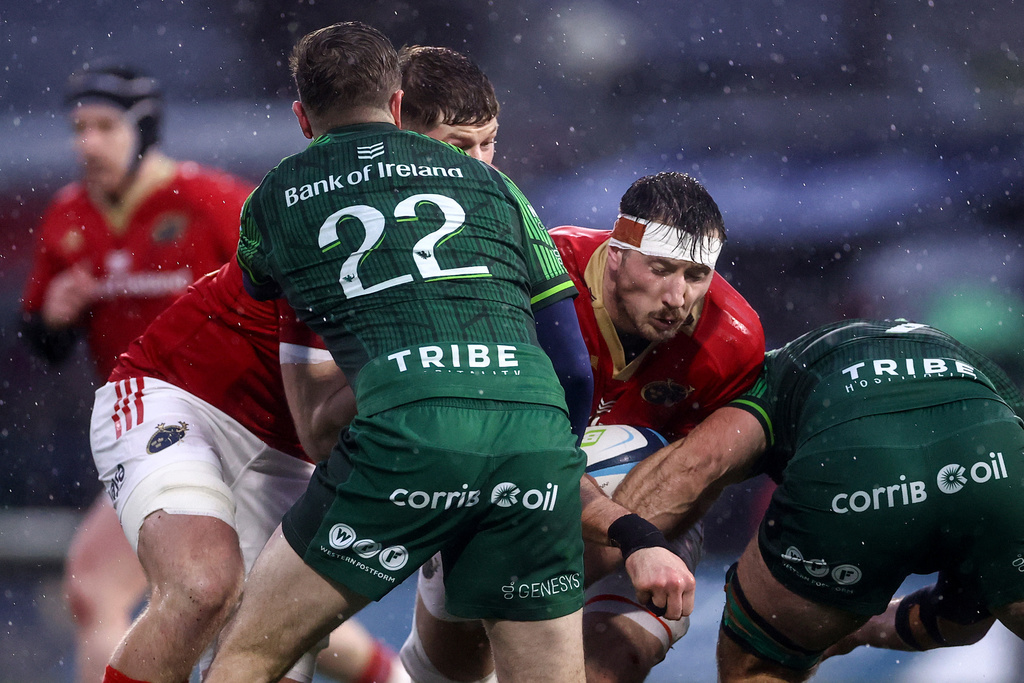
We needed to kick more and go away from what we knew worked exactly as it worked the previous season. The loss away to Connacht was the worst game of the season, for me. It was like a sizzle reel of the problems of the first half of the season. Injuries, a shocking lineout performance and guys playing off-role with no chance of changing things off the bench.
This game was a good example of what people mean by reducing the substitutes or precluding substitutes from being used unless there’s an injury. Connacht switched out five of their starting pack between the 52nd and 70th minute of this game. During that time they scored six points that turned a 6-9 deficit into a 12-9 lead. At that point – the 7oth minute – Munster hadn’t made one planned substitution in the forwards. Connacht stretched their lead to 15-9 shortly after.
As you might expect, most teams had worked out exactly how to beat us at this point in the season – a 6/2 split, a good defensive lineout and an aggressive defensive breakdown was our biggest weakness – and they did so regularly. Connacht played that game perfectly. They knew, as others did, that if they stayed patient regardless of what the score was, they’d have a chance in the last 25 minutes.
Toulon almost did the same thing but coughed up a try right when they were hit the 60-minute wall. Northampton, eventual semi-finalists and English champions wouldn’t make the same mistake. I mentioned them earlier as a sort of seasonal nadir tactically but they represent a bigger problem this season; we seem to struggle at home in a way we don’t on the road.
This has been brewing for a few seasons now. Sometimes I feel like it means too much to guys. What do I mean by that? I’ve been at multiple games in Thomond Park this season and it has felt during the close games against good opposition that we’re so appalled at the idea of letting the crowd down that we lose composure and go off-script. This is a good thing that, due to a lack of seasoning or frustration at how underpowered we’ve been at home almost consistently, has ended up being a bad thing. Think about Tadhg Beirne passing the ball into the crowd against Bayonne. When has he ever done that? Think of that collective underperformance against Glasgow, just like last season. Think of how laboured we were against a brittle Ulster side a week before they got walloped against Leinster.
Until that changes, we won’t reach our potential.
***
Post-January gave the squad some badly needed rest and it gave the coaching unit time and space to assess where our game was after an exhausting run of 13 games in 14 weeks.
Two weeks after the loss to Northampton, however, we would have a friendly that was bigger than it had any right to be. Maybe if we had our time back again we’d have left those weeks fallow but we saw in 2022/23 how bad we looked when we didn’t have a game to keep our on-ball sensibilities sharp so 40,885 people crammed into Pairc Ui Chaoimh to see Munster play the Crusaders.
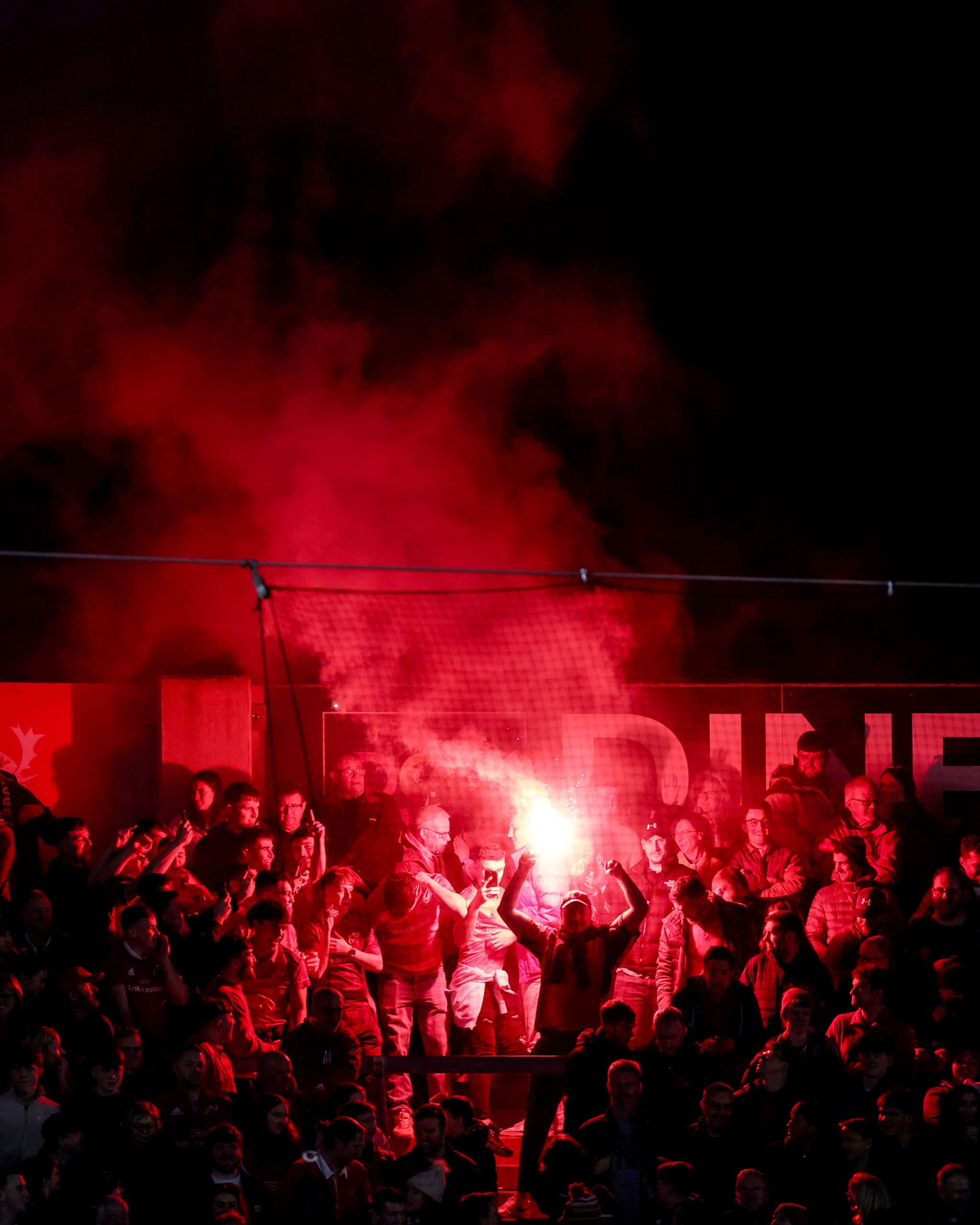
Like last season, Munster won this game against a storied opponent. That the game was snatched from the jaws of a draw is neither here nor there – it reminded us that we were a good team, actually, and that we could dog out games against other good teams. Two weeks later we beat the Scarlets out the gate in Llanelli playing some lovely rugby on the way.
But it also helped that we had access to a returning RG Snyman who could fill out a key role for us in the middle of the field. He didn’t even have to play well – and he didn’t, more often than not – his size alone allowed us to play with more freedom, as did Jager embedding himself into the team before a knee injury aggravated at Ireland camp took him out for some key games.
We beat Harlequins in the Stoop a week later in a friendly before beating Zebre handy enough in Musgrave Park a week after that. The next three weeks were quite formative because we knew we had a really important away game against the Ospreys and we also knew that they had two of the core ingredients that we had struggled with to that point. They had a good defensive lineout, generally, and the most amount of turnovers won in the league to that point. Would they run a 6/2? It depended on their own injury and test callup issues.
But we knew we were going to adjust from our usual plan, too. We were going to off-ball them and kick way, way more than we had done against any other opposition to date. The Ospreys were our first serious opponent since the end of January and we wanted to make sure that we didn’t suffer another destabilising loss.
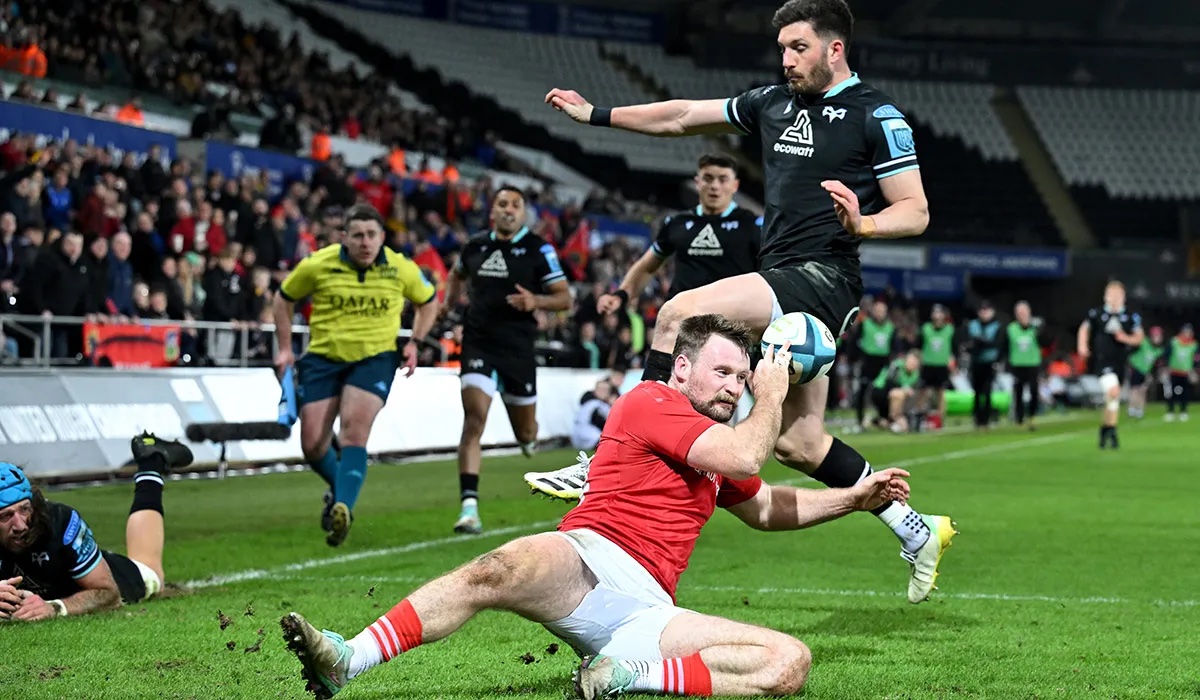
It worked! We earned a bonus point win with a fairly low attrition rate. I think it was something we banked for the South African tour because the next time out we were playing Cardiff in Thomond Park and we mostly stuck to our base gameplan of on-ball rugby. We still kicked the ball a lot but we balanced it out with a lot of passing and phase play. We could and should have lost that game too – that frailty at home against off-ball, defensive breakdown dominant teams showing up again – but for Jack Crowley putting the team on his back and flat-out refusing to lose.
There were already rumours of a virus spreading through the team at that point and it certainly looked it. The 22 turnovers we coughed up against Cardiff was the highest of the season and didn’t bode well for our European Cup Round of 16 game away to Northampton a week later.
There would be no poetic revenge for our loss in Thomond Park as RG Snyman missed out for the second week in a row due to sickness, while multiple members of the matchday squad were so sick they probably shouldn’t have played.
The story around this game is well told at this stage.
If there were an asterisk, it would tell you that this Munster side went out swinging with several players so sick that they were lucky to take the field, never mind to exert the effort they gave on top of a crippling injury list in the front five coming into the game that would have battered most test sides, never mind a side aspiring to get back to top four level in the European Cup.
Against a big, physical Saints side with a 6/2 split, we did well for about 50/55 minutes but when they started to dip into their bench, we hit a brick wall and lost our grip on the game.
They made their first changes in the forwards around 50 minutes and scored within 10 minutes. They made more changes after that try and scored the killer try in the next 10-minute block. We replaced a visibly ill Peter O’Mahony with Alex Kendellen on 51 minutes and made two changes in the front row on 69 minutes.
It’s a new twist on the story that had defined our season to that point. Hanging in there until the opposition made bench changes that we couldn’t and a loss ensued. It’s fair to say that Munster’s European campaign was holed below the waterline in the pools due to a ridiculous injury rate AND that Northampton were a very serious team that we would have been doing well to beat even if we were fully healthy, but the reality is that Europe ended for us at the last sixteen for the second season running. That’s what will be remembered and it’s something that badly needed rectifying next season.
Going out of Europe in April allowed us to fully focus on the league and we did just that. We brought our off-ball game on tour to South Africa and won two games back to back at altitude – an achievement in and of itself.
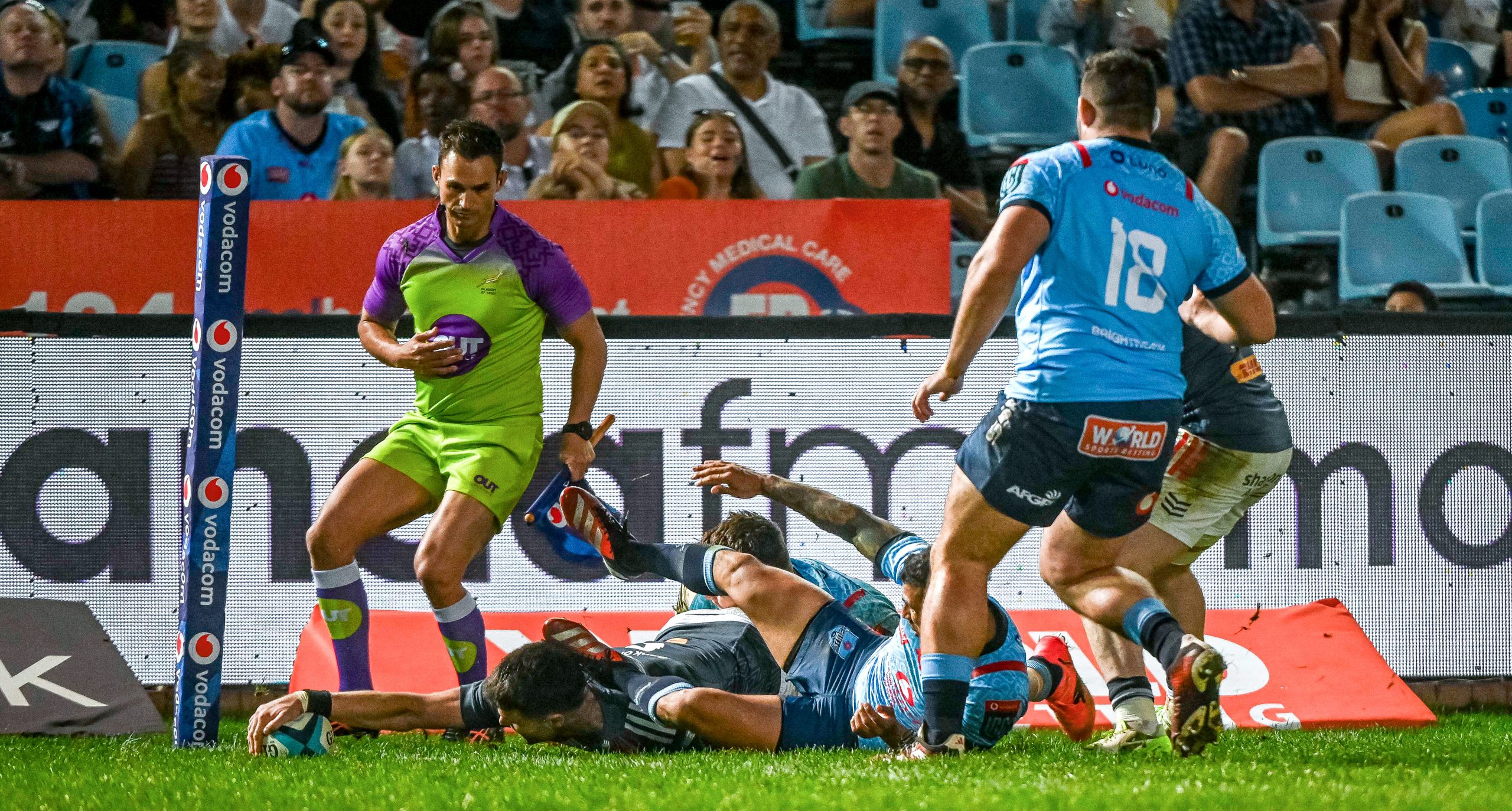
Those ten points allowed us an unlikely shot at the top two if results went our way, and they did. We held our end up by going into playoff mode, with all the boiled-down options that come with that from mid-April on. We had no choice, or so we felt.
Our squad shrunk to use just 26 players in different team constructions for the rest of the regular season with Thomas Ahern and Alex Nankivell dropping out late in the season due to injury to be replaced by a returning Diarmuid Barron.
Is it any wonder we looked tired by the time the playoffs rolled around? Our win over the Ospreys was a study in energy conservation but a week later against Glasgow we just ran out of gas against the team build that had become our nemesis; a 6/2 split on the bench, great lineout defence, great breakdown defence. We tried to buck that trend with a 6/2 split of our own but our bomb squad forgot to bring the C4 at the end of a long season.
75 minutes into that semi-final, we looked like we had lead in our boxers. The frustrating thing is, I believe we’d have beaten the Bulls in Thomond Park a week later but… that’s the frustrating thing. The second trophy of the Rowntree era was right there and it felt like we got our prep wrong. Sure, that was against the eventual champions with the ultimate away day referee in Andrea Piardi but it was a feeling we would have recognised from December and January.
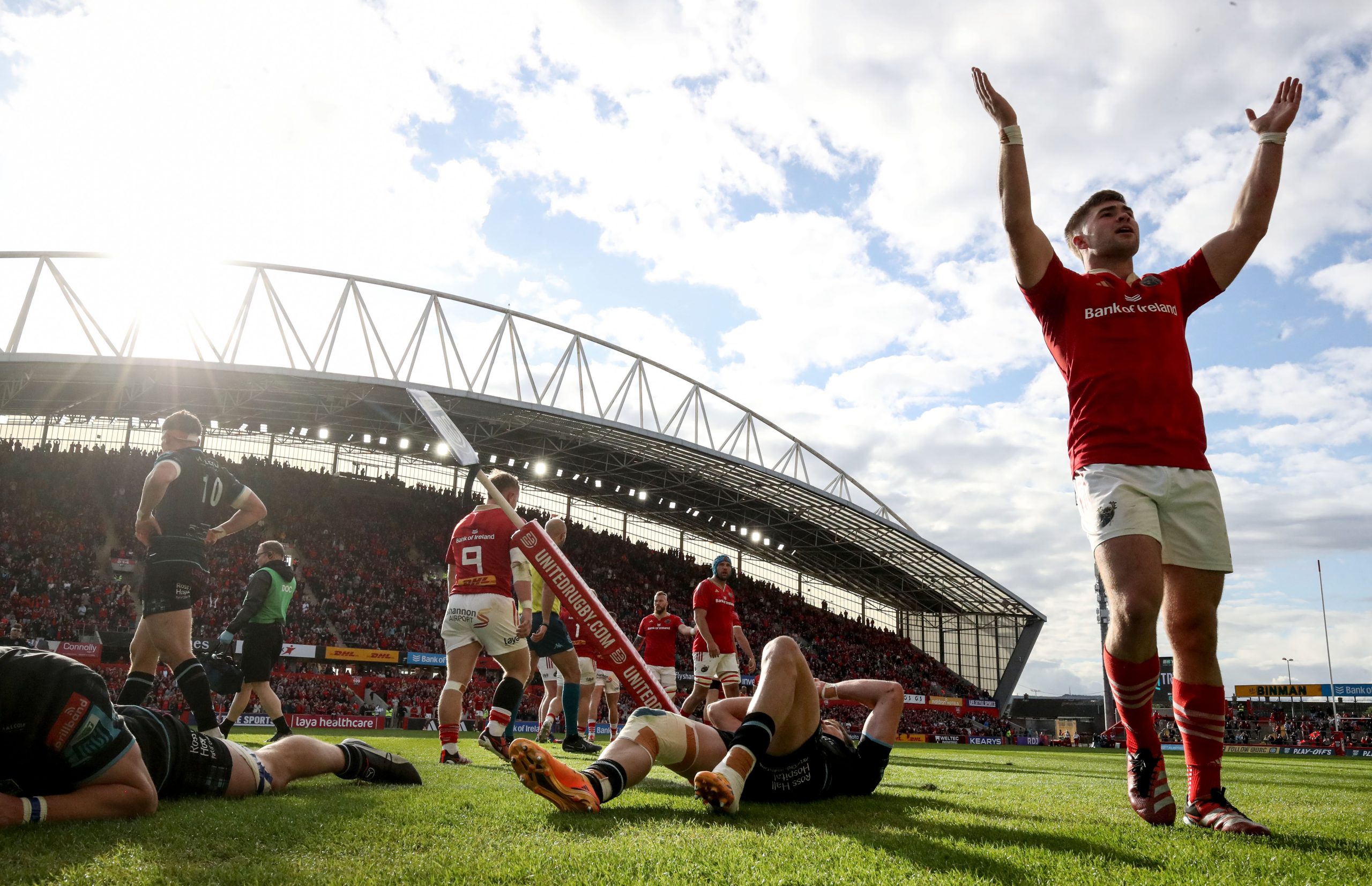
We didn’t learn from it but maybe it’s only possible to truly digest it on the beach once the smoke clears. The week-to-week grind of rugby at this level, especially with enhanced pressure and expectation of being champions… let’s put it this way, it can be hard to pull your nose off the grindstone.
Watching the season back, it felt like our own desire for work and intensity probably cost us the few percentage points that would have made the difference against Glasgow. If we’d been playing in Scotstoun, for example, we’d have spent most of the week chilling out. Instead, Calvin Nash picked up a knock in training the week of a massive game.
That’s the key thing for next season and the key learning from this season. We’re more than good enough to compete for the URC title every single season and we should be a semi-final-tier European Cup team but we won’t be either if we can’t get our best players on the field for most of the season. Injuries are part of rugby and there’s no escaping that but, for me, this team’s next evolution can only happen by keeping our best players healthy.
Without that, it’ll be more of the same. We’re a good team that should be a great one. We have a big preseason to come with big decisions to be made off-field when it comes to how we prep for this coming season. A bit of luck would help, but not having to rely on luck will be even more important.
