


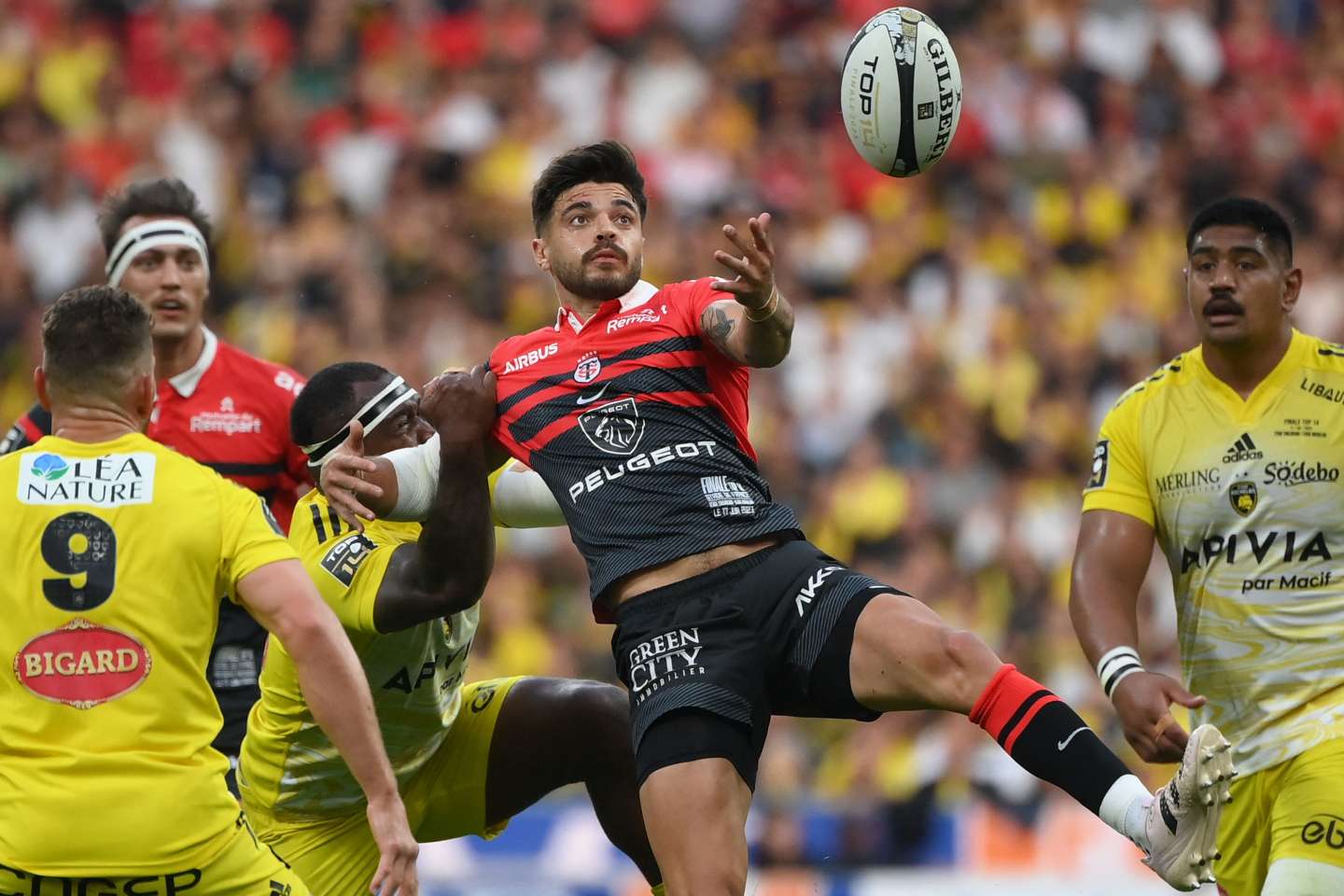
La Rochelle had – almost – done everything right.
It was far from perfect up until the 75th minute but none of that was important. What was important was this; La Rochelle were four points up and they were defending a Toulouse scrum 10m inside the Toulouse 22. Look, ideally, you’d be ten points to the good at that stage but this is a final against a very good team – one of the top three sides in Europe over the last World Cup cycle – and if you offered La Rochelle that position before the game, on the scoreboard, on the pitch and on the clock, they’d have taken it before you’d even finished the sentence.
So the manner of the loss will hurt that little bit more because of the context. No excuses can solve it – La Rochelle should have seen out that final from there and be Double Champions this season.
How did it all go wrong?
Well, like everything else in life, it went wrong gradually and then all at once.
Strangely, it started in an area of undeniable strength for La Rochelle throughout the game – the scrum. There wasn’t a scrum for something like the first 30 minutes of the game but, when there was, La Rochelle were powdering Toulouse consistently. It was a massive point of difference for them in a really close game where their on-ball phase pressure wasn’t really producing huge territorial gains or the kind of linebreaks that lead to tries.
Toulouse, when faced with an on-ball game of that volume, switch their primary style to Heavy Kick Pressure with some of the most effective close-in, breakdown and edge defence anywhere in the game. They defended La Rochelle to something of a stalemate with the only real break in the first half being a catastrophic error from Danty in possession that let Toulouse in for a cheap seven points.
What La Rochelle’s scrum did as a point of difference was break open that defensive line and allow for penalty advancement up the field.


A key point – look at how engaged the La Rochelle flankers are on their props. They are giving them everything, here.
In fact, La Rochelle took the four-point lead they would look to defend in the last few minutes off the back of a scrum penalty so why not double down? When La Rochelle forced a knock-on so deep in Toulouse’s territory it looked ominous. La Rochelle just had to cheese the clock, maybe buy a reset and force Toulouse to play from deep or, even better, kick on the back foot to a team who would never give it back to them.
But it didn’t play out that way and, in fact, it would be La Rochelle’s scrum that would give Toulouse the key to break out of their 22 and chase an unlikely winner.
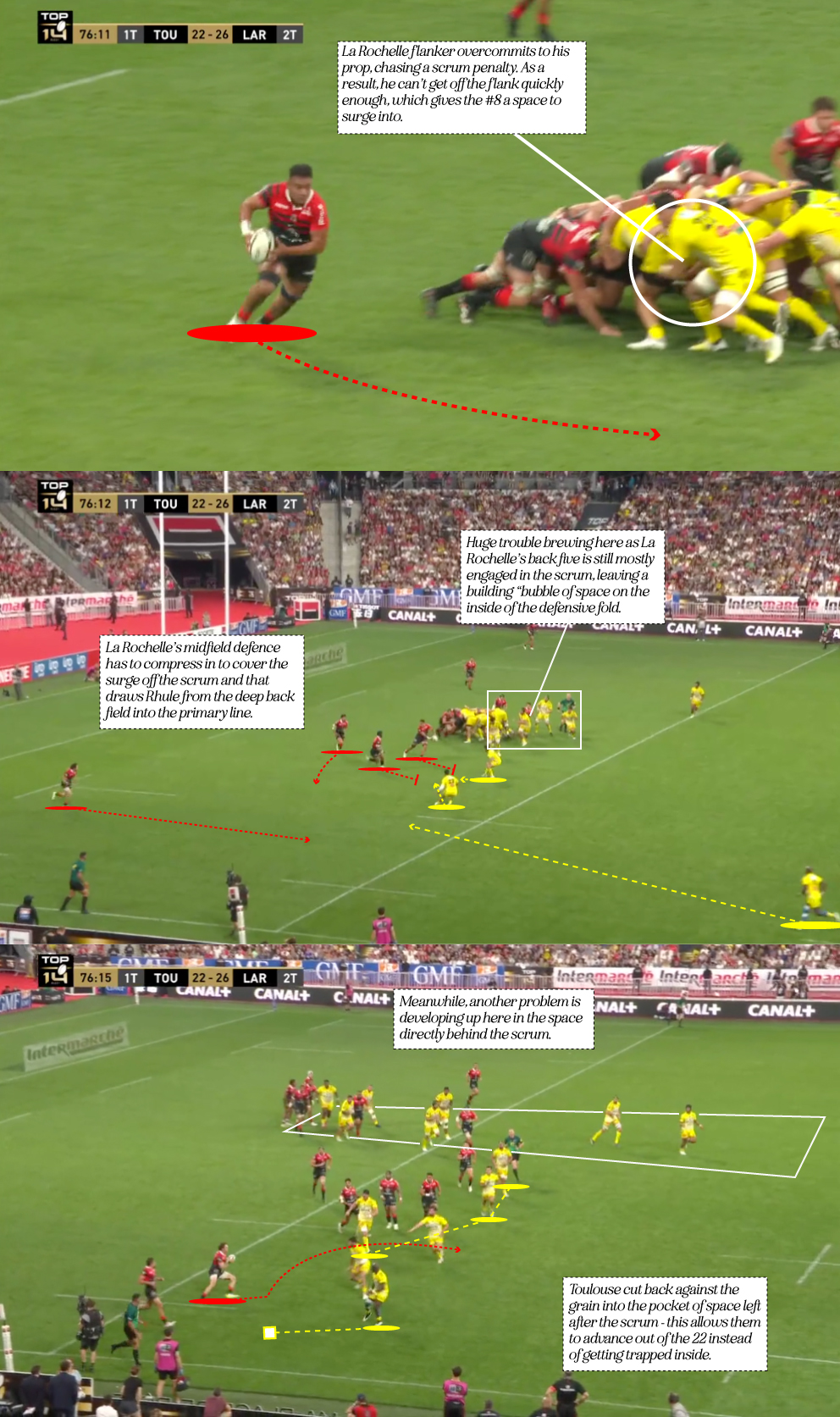
When you watch it in full motion, you can see the momentum shift towards Toulouse as La Rochelle become more and more unbalanced.

La Rochelle seemed to be chasing a killer scrum penalty – and perhaps prevent a counter-punch Toulouse shove – but they over-chased and gave Toulouse channel one ball that they would use to break out of the 22. What would I have liked here? Just lock it out. Don’t give them anything but don’t be so aggressive that you’re sinking deep into a scrum that you don’t need anything from – keep light and give your flankers the licence to prairie dog and jump at the break.
Botia being off the field at this stage – as well as La Rochelle not having a small forward on the bench – meant that they were super heavy going forward but they would not have much lateral coverage in this, and other, crucial situations.
When Toulouse broke out of the 22, it immediately created problems on the next phase. La Rochelle would have communicated before the scrum that, whatever happens, they needed to stay out of the rucks – make your tackles, stop them moving forward but stay active on the feet and don’t give the referee a reason to blow his whistle even if it meant they got quick ball. La Rochelle would think; give them quick ball, we’ll all be on our feet and they have to make something happen, not us.
That Toulouse breakout meant quick ball was now a massive problem for La Rochelle with 76 minutes still on the clock. Toulouse had momentum, La Rochelle were unbalanced – defined here as front-five forwards defending flow spaces or edge spaces – and they needed to get a slow down on the ball to reorganise.
Some of this was system process too. La Rochelle had moved to a four-lock pack, in essence, for the final 15 minutes. Remi Bordreaux and Ultan Dillane are all 6’5″+ and over 110kg. That gives you size in the lineout and maul along with scrum dominance but it also slows you down offensively and reduces your lateral range defensively.
You don’t want to be unbalanced defensively with a four-lock pack.
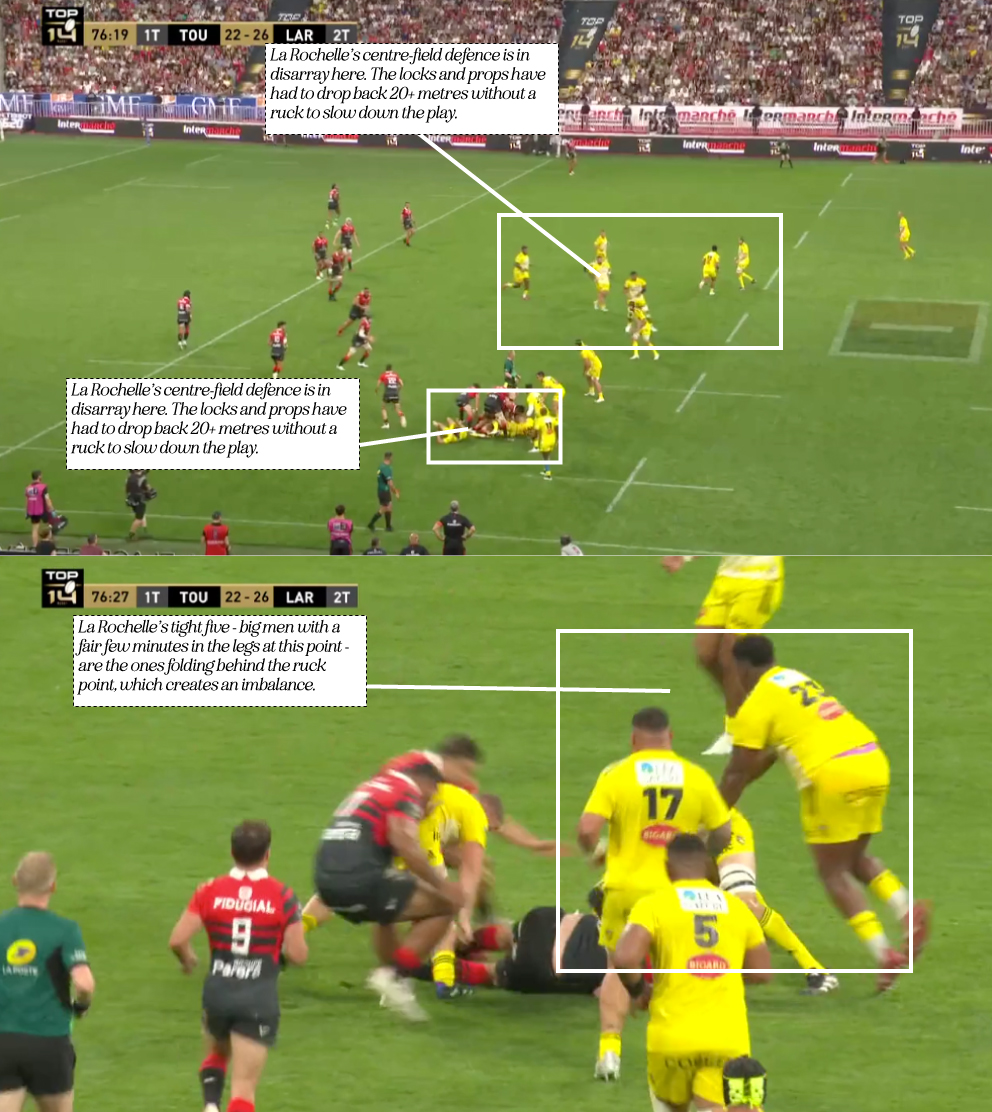
You can see just how hard La Rochelle have to work to keep that central defensive zone properly full of defenders in the full-motion clip.

You can already see the Toulouse backs looping around to the open side of the play in this GIF, which will be more relevant later.
At a basic level, you want to have your defenders roughly aligned with the attacking team on either side of the ruck. If Toulouse have four attackers at the left-hand side of the ruck, you should have at least three defenders with a fourth in easy range. If Toulouse have eight defenders on the right side of the ruck, you should have six defenders with two in easy range to cover across if needs be – and that’s just in the primary line. If you find yourself numbers down – or up – you have to make adjustments.
A big pack build limits your ability to make quick adjustments in this system and that seemed to happen with La Rochelle here. They did make a switch in the midfield to replace Danty with the more mobile Jules Favre – in an attempt to give more centrefield coverage to compensate for the four-lock pack and super heavyweight front row – but it had mixed results.
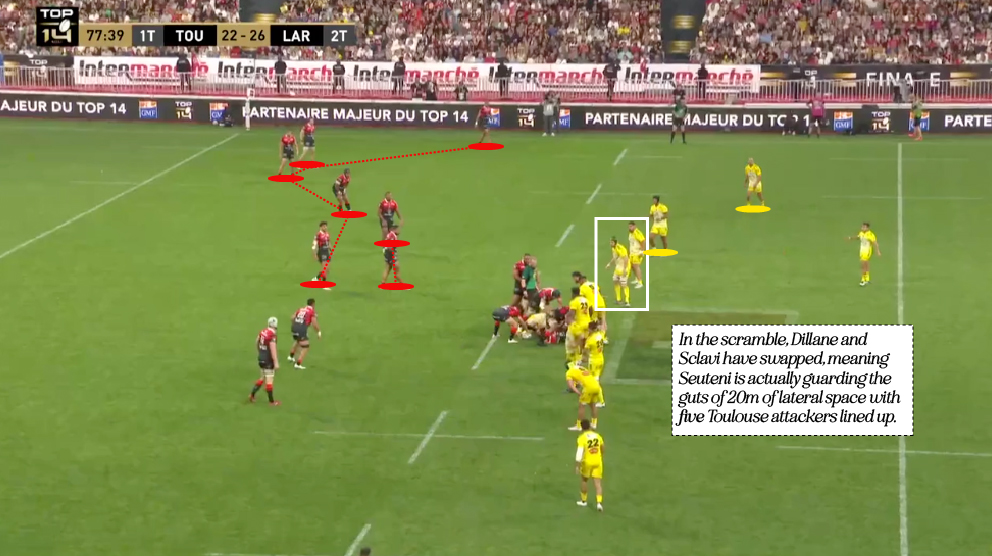
When you have a super heavy “middle” core of your defence, the last thing you want is sudden changes of direction that attack slow transits behind the ruck. After the above phases, Dupont attacked La Rochelle around that ruck transit twice in quick succession, with one being more successful than the other.


This showed La Rochelle that Toulouse understood where they could win this game – unbalancing an overly heavy pack – and that they had the tools to do it, especially as they moved into 50/22 range.
That brings us into the 77th minute and disaster for La Rochelle.
Toulouse have made their way to within a few metres of the halfway line and La Rochelle haven’t regained their balance.
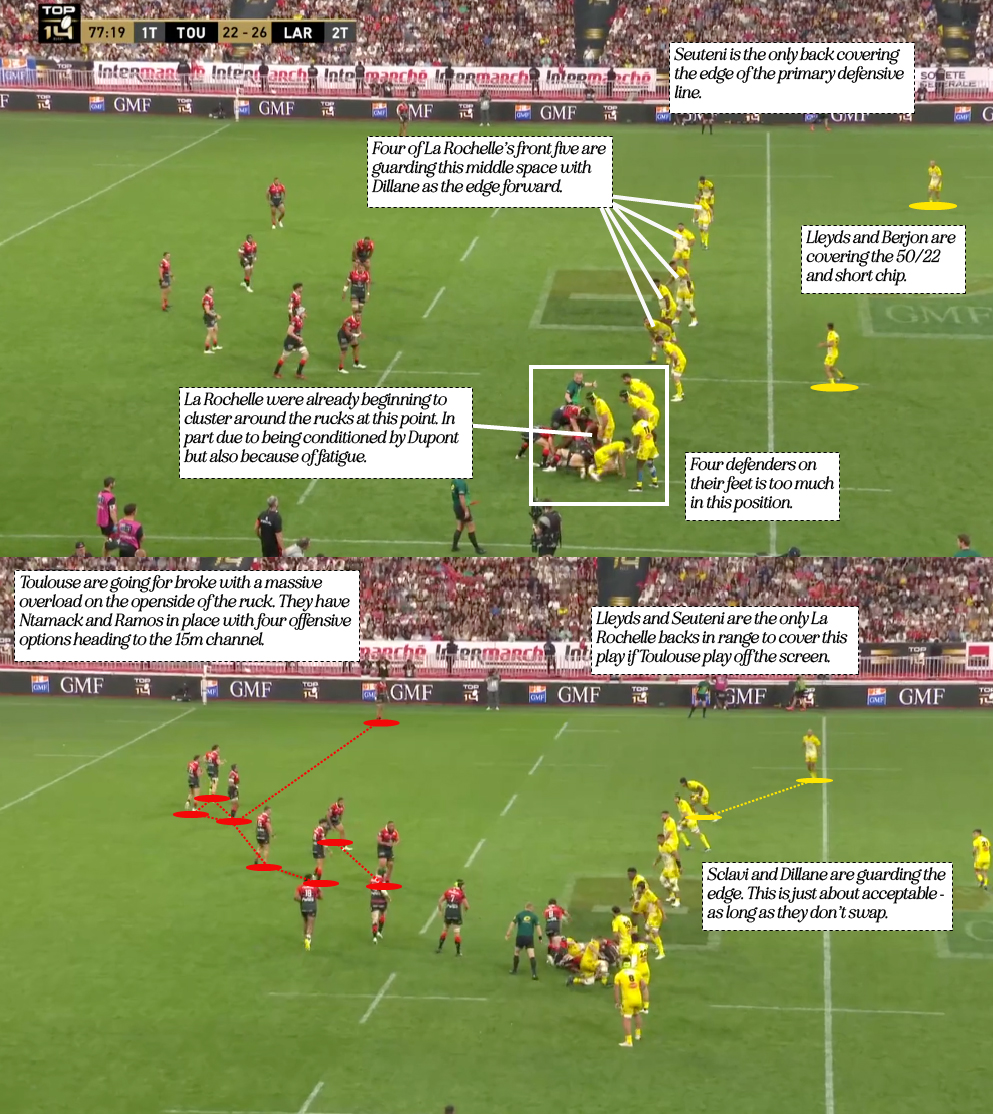
Toulouse goes to attack the space directly with a screen pass from Faumuina to Ramos but, as so often happens, a poor pass changes the picture completely. Keep an eye on Seuteni and Lleyds here and how they push out to try and cut off Ramos’ passing options before the scragged pass and scramble.

Crucially, La Rochelle’s edge defence has changed as they pushed up and in to double down on the poor pass. Now, if anything, they are in a far worse position than they were before the poor pass.
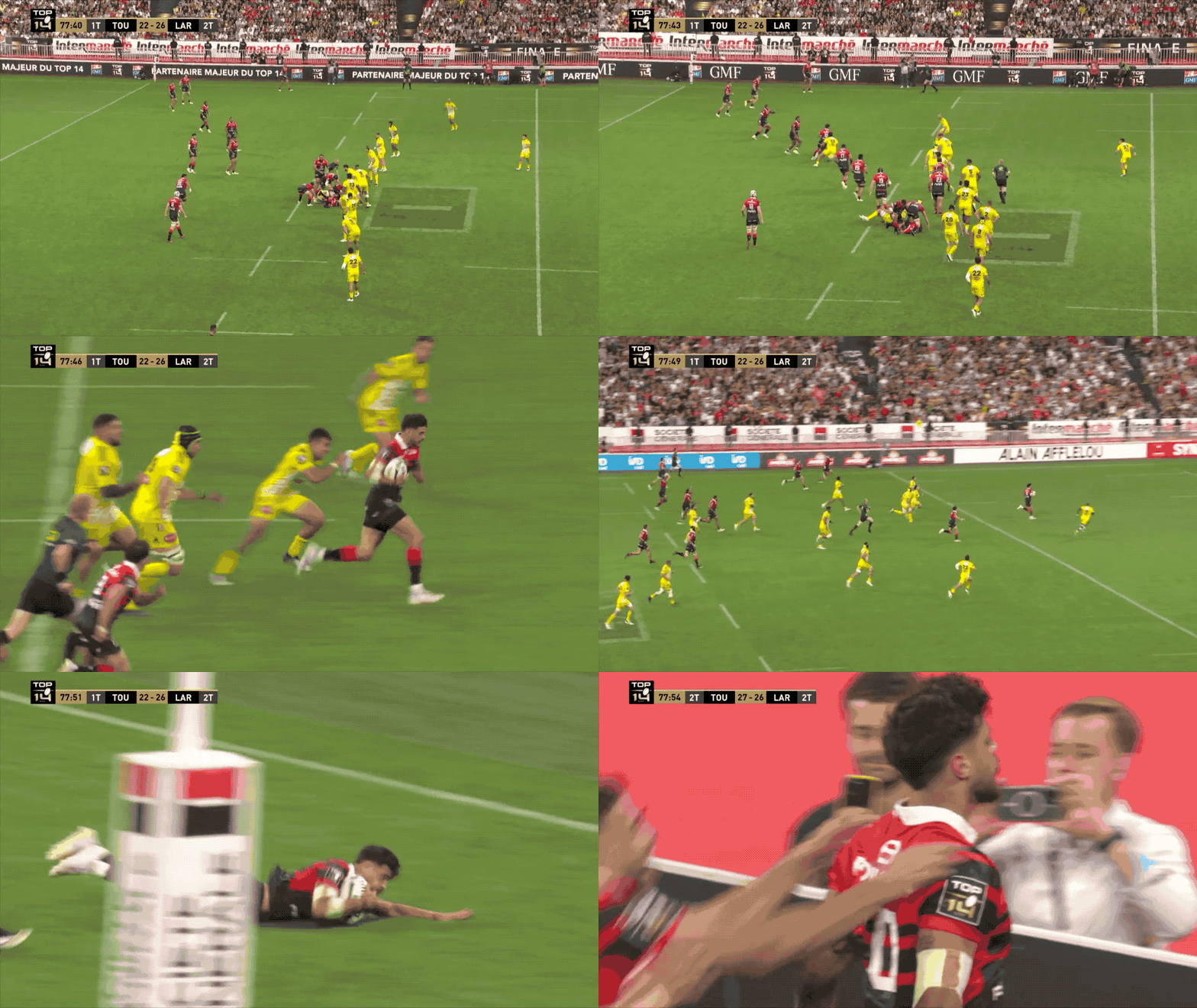
From here, two generational talents and three backs caught between a rock and a hard place combine to produce one of the best trophy-winning tries you’ll see anywhere.
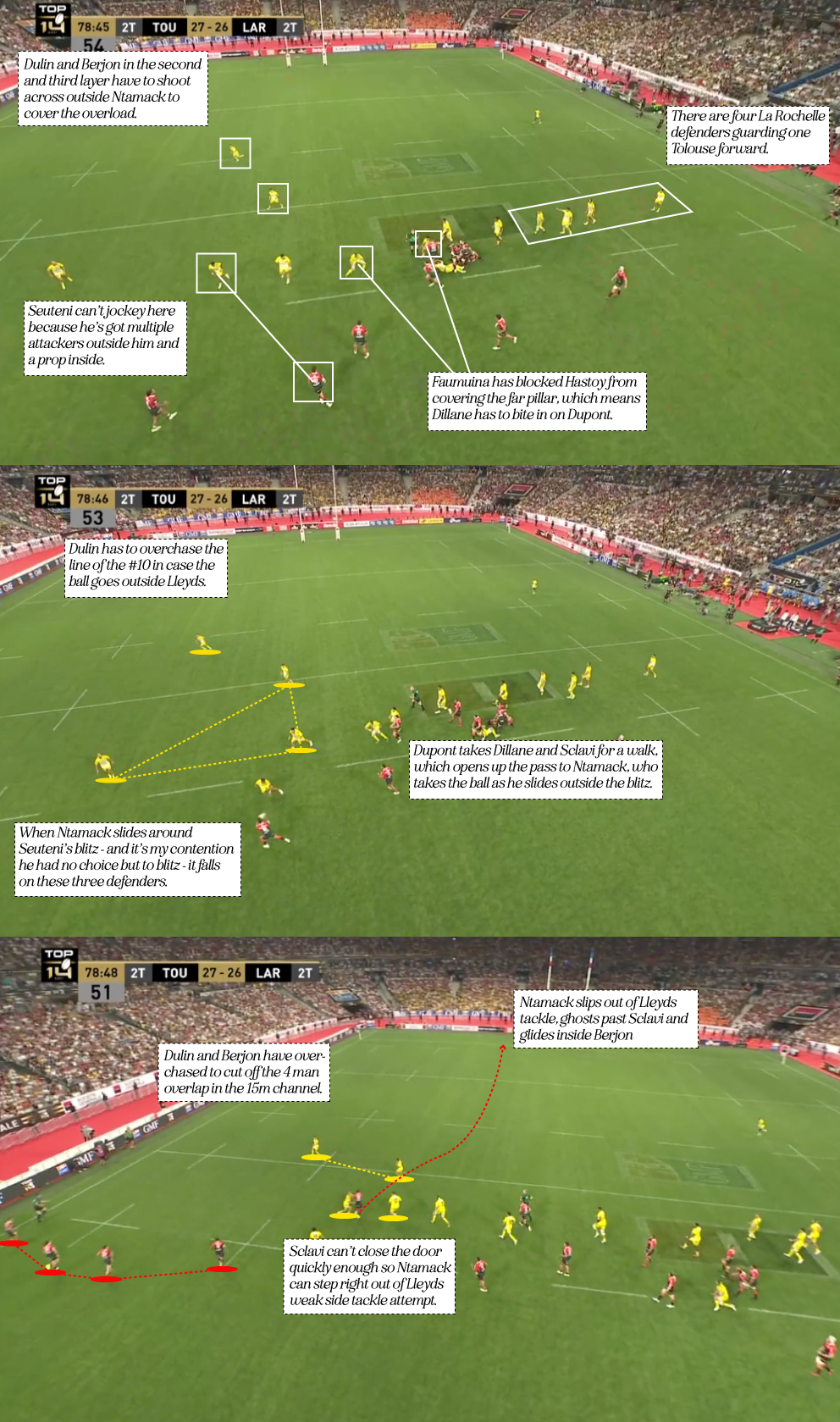
You have to watch it in full motion to get an appreciation for the chess match that was going on here.
A lot of the criticism has fallen on Seuteni for the blitz but, for me, the damage was done a number of phases before. Seuteni made a brave decision to take the moment onto himself to cut off Toulouse before Lleyds and Dulin got scorched on the outside but when Dupont found Ntamack with that pass – with Ntamack arcing outside the blitz – it was the exact thing to break open the game with no time for La Rochelle to respond.
Once Toulouse got out of their 22, a mix of what La Rochelle had to do in the moment – stay out of rucks, stay on feet – combined with the pack build they had on the field and two generational talents combining when the pressure was at its highest, you’ve got an explosive, all-timer of a try.
