

If you were old enough, you probably remember where you were when you found out that Anthony Foley had passed away. Maybe you don’t remember the geography exactly, but you will certainly remember how you felt.
Back in October 2016, I know what I felt — what I can only comparably describe it to is taking a pull of a cigarette that’s a little outside of your weight class. Lightheaded, out of your own body for a bit, desperate for the feeling to pass. After that, it was the very specific sadness you can only experience when someone who’s played a big part in your life, without you ever knowing them at all, dies unexpectedly.
Of course, this is nothing compared to the loss that his family, first and foremost, felt, along with his friends and other people who knew the man in real life. In rugby, or any pro sport, you become more than just a person — you embody things greater than any individual could feasibly ever hope to live up to. That’s the price of being known. People know you, but they don’t.
As a father myself now — I wasn’t at the time — when I think of Anthony Foley’s death, I can’t help but think of my own family. For the individual, death is an endpoint. The endpoint. For your family, your partner, your kids, your parents, brothers and sisters, it’s just the beginning of a new, infinitely worse world without you in it, which is bigger than any other kind of parasocial loss.
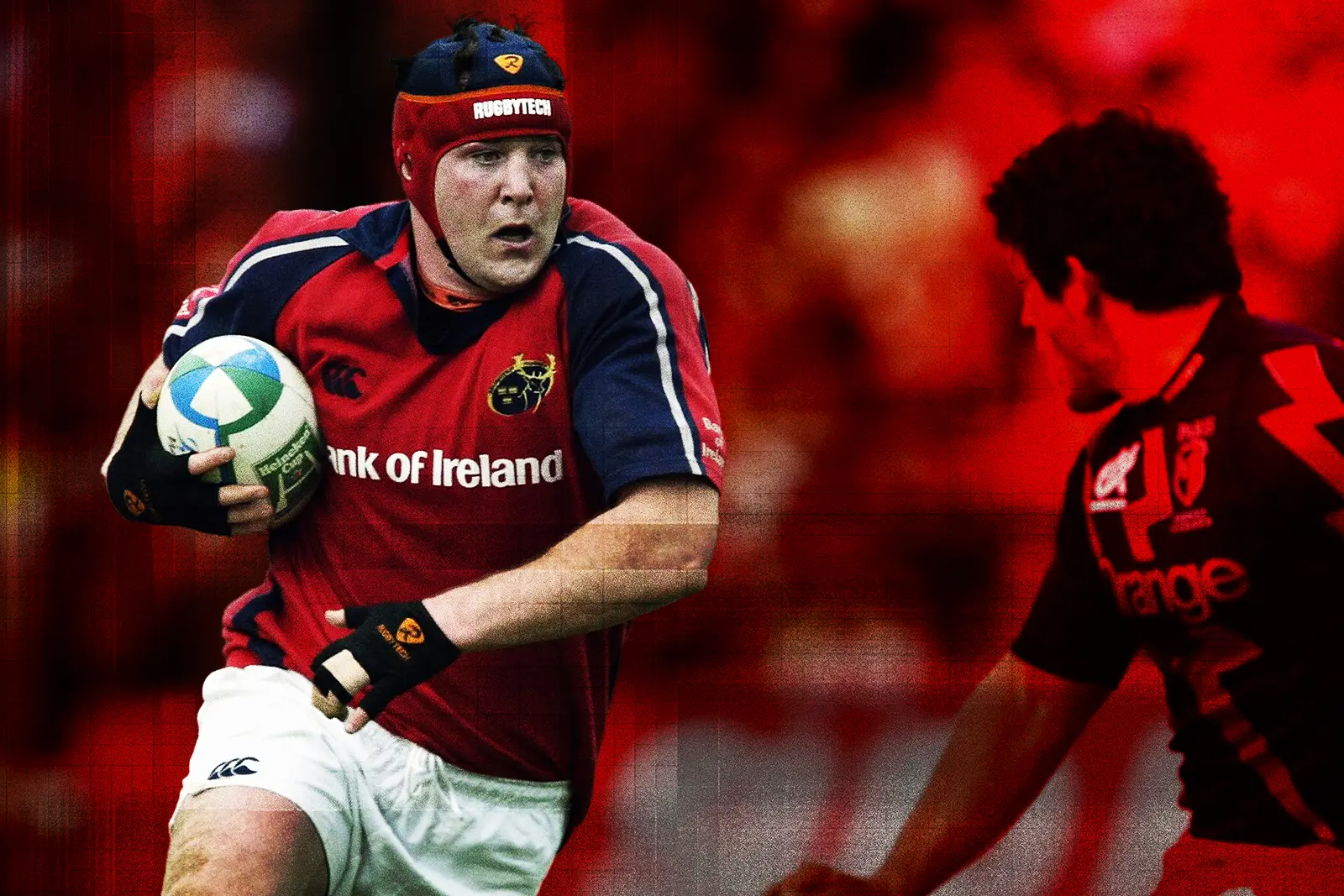
To most people, Anthony Foley was a legend of Munster Rugby. He lifted the Heineken Cup in 2006 at the end of the odyssey, an odyssey that he helped to start in the first place. Anthony Foley embodied what people thought of when they thought about Munster Rugby. Tough. Hard. Streetwise. Infinitely better than the stereotype you had in your head.
But when I write that, I think about all the small moments that his kids had with him, and all the small moments that they didn’t get to have after October 16th, 2016. They live with that loss every day, for the last decade. The big stuff can wait.
Ultimately, I can’t write about the loss in any other terms than the parasocial ones I have in front of me.
I didn’t know Anthony Foley.
To me, he was always the Anthony Foley. A legend. Axel.
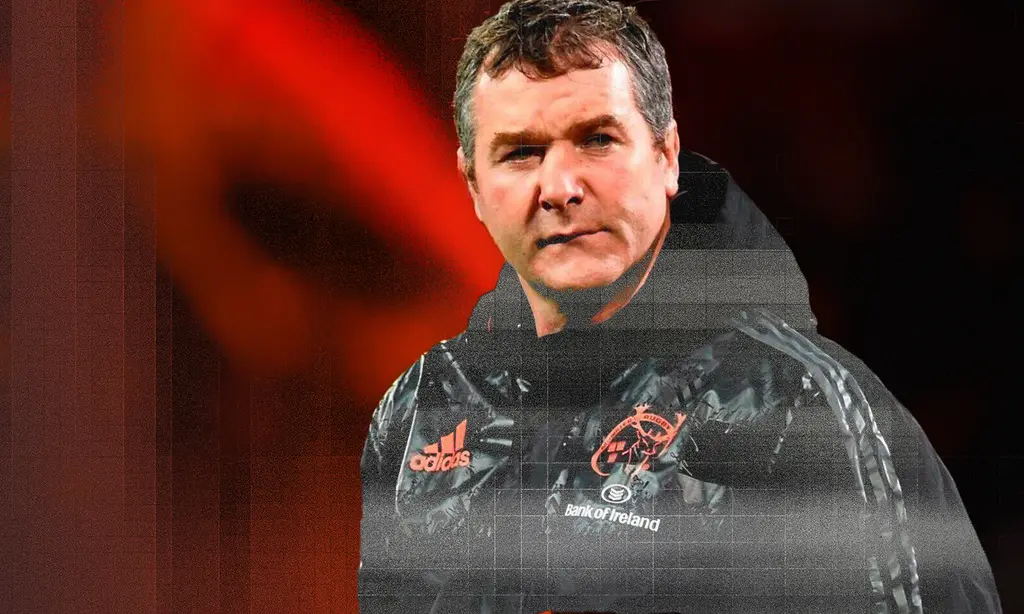
Yet, the Munster that Axel helped build was a strangely personal thing. Not because any of us knew him, but because the distance between the dressing room and the rest of us was a lot shorter than it is now. You saw the lads in Shannon colours on a Saturday in the AIL. You knew a fella who knew a fella who’d had a pint beside one of them. Your uncle swore blind he’d seen Paul O’Connell in Donkey Fordes, and you believed him, because why wouldn’t you? Before the advent of social media, these players became bigger than just regular guys, despite being regular guys.
The distance of the time did it. The players today are just regular guys too, waiting to be giants. We can make them that, but it’s harder now.
Information moved slowly back then, and that was half the magic. You read about the game in the paper the next morning. You heard the team on the radio. If you were away for a weekend, the result arrived by text from your brother — one line, maybe a score — and you’d fill in the rest yourself until you could get your hands on the highlights. The stories that did the rounds were half-true at best, and nobody cared, because they were our stories. They were told in kitchens, on the Cratloe Road, in pubs, on the terraces and on the bus home from Thomond Park, not served up to us in a feed.
That’s the Munster I’m talking about. A team you didn’t consume so much as belong to.
And the thing is, that Munster doesn’t really exist anymore — not in that form, anyway. Everything is available all the time now. Every press conference, every clip, every stat, every hot take within seconds of the final whistle (some of them mine, I’ll admit). Every moment is rotated a dozen times on a dozen different podcasts and a hundred different clips on social media. When that news is bad, by the end of the week it’s a crisis.
The Munster CEO resigned before the Bulls game a few weeks ago, and by the time you were finished consuming all the media about it, you could be forgiven for thinking it was an existential calamity. We live in a world that specialises in making anthills into the Himalayas.
So whose fault is that?
Blame professionalism. Blame the media. Blame content schedules. Blame “thanks for the stash [Brand].” Blame interviews that say nothing, because players have learned that saying anything else puts you in the crosshairs, whether it’s good or bad.
It’s a comfortable argument. There’s a sliver of truth in it.
But it’s not really Munster’s fault.
It’s ours.
How often have you heard the great Munster team of the 2000s — Axel’s team — used as a stick to beat this one? Or the team of the 2010s? All the stuff between the white lines, on the grass. But I ask myself this: are we what we once were? Not the club; the fans.
The club didn’t ask us to watch the game with one eye on our phones. It didn’t ask us to scroll through the reaction before the players were even back in the dressing room, or to swap the bus-home argument for a podcast segment made by people revelling in the negatives. We did that. We chose to let snide articles designed specifically to inflame us do just that.
We chose convenience over connection. In fairness, it was very convenient, but we lost something along the way.
What Axel’s Munster had was never just on the pitch. It was in the stands, the clubhouses, the pubs and the kitchens. It was built by people who turned up, talked to each other and passed the stories on. It was us against the world. We’ve let too many middlemen, who don’t love the club, tell you how you should love it. If you should love it at all. Rarely directly, but that’s what they’re saying when they talk about “connection”. They insert nebulous points in the future where your love, now supposedly conditional, can be re-earned.
That isn’t Munster.
Ten years on, maybe the best way to remember Axel isn’t another tribute post. Maybe it’s going to a game if you can, be it in Cork or Limerick — it’s all Munster — putting the phone in your pocket and actually talking to the person beside you.
Sure, everything is more expensive in 2026 than it was in 2016, or even 2006. It’s not just the ticket; it’s everything that comes with it. Fuel is up. Shopping is up. Bills are up. One night in a hotel in Cork or Limerick is €200, easily. If you’ve got home heating oil to buy, as I do, you might well think that a game of ball is something you can’t quite stretch to with winter coming. This is the real world, after all, and the real world means picking and choosing.
If you have to pick and choose, choose your family. But if you can make it to a Munster game, make it your business to go. That connection, that love, that feeling of being part of something bigger than yourself is still there, and it’s waiting for you.
Axel built his end of it.
Let’s build ours again.
