


I’m going to start this with a cardinal sin of writing, but indulge me.
Everyone Knows that having a world-class #10, flyhalf, first five, outhalf, whatever you want to call them, is important if you intend to win trophies in this sport. They are usually the best-paid players in any squad for that very reason.
Signing a #10 of this calibre is witheringly expensive, and developing one is a potluck in a way that few people outside of the pro-rugby bubble will ever fully understand. With the right physical profile, you can be pretty confident that you can “build” a pro player in almost every single position, with a bit of luck around injury and the player themselves picking up the basics quickly and adapting to a professional mindset.
If you stumble across a young fella who’s 6’7″ and 100kg, you can be pretty confident that, at the very least, you’ll get a functional pro player out of them. It won’t happen every single time, but the recipe is simple enough. Hot house the gym, nutrition, general S&C and then hope they have the mindset to endure and dish out a lot of pain. The basics are already there. It’s the same at prop.
When it comes to #10s, however — and scrumhalves — it’s not even close to the same thing. It’s an intelligence position, a deeply taxing skill position, a tactical position and, increasingly, a physical one.
You can’t just be a very intelligent and skilful player with a great understanding of tactical nuances if you can’t run, carry or defend at a level on par with, at the very least, a decent professional centre. At the same time, if you look and play like Damian De Allende, that won’t count for much at #10 if you can’t read the game, execute a game plan as the leader of that plan, or handle the skill tax when it comes to it. You’ll probably stay as a midfielder in those circumstances, or in the back three, and you’ll be good — just not a #10.
You can’t be one or the other. You have to be all of them, and that’s before you bring in the X-factor of goal-kicking or composure. It’s a position that can’t be hot-housed. You either have all or most of those facets in your game, almost from the jump, or you don’t, and you’re racing against time to add them before the club moves on to someone who does.
But you probably already know about this.
The real challenge is who covers #10 when the guy you’ve either developed to a high level or signed in isn’t there.
That’s when things get really complex.
With an unlimited budget, it would be easy. You have your world-class #10 as your main guy, and pay him accordingly. When he’s off playing test rugby, as they almost all do, you would just sign another world-class #10 — or someone just off that level — to be his backup.
Just throw good money after great and forget about it. If you’re lucky, that guy can also play fullback to a pretty high level, so you can make a saving there when both are available. Is he happy about being a “backup”? No. No good #10 worth signing ever is, but that’s what the money is for.
Nobody really has that money to spend legally or to spare, bar maybe Toulouse (but even then), so for almost every club, you’re picking your poison from a budget perspective.
If you’re spending big on a world-class or close to it #10, you then have to make a budgetary decision to make.
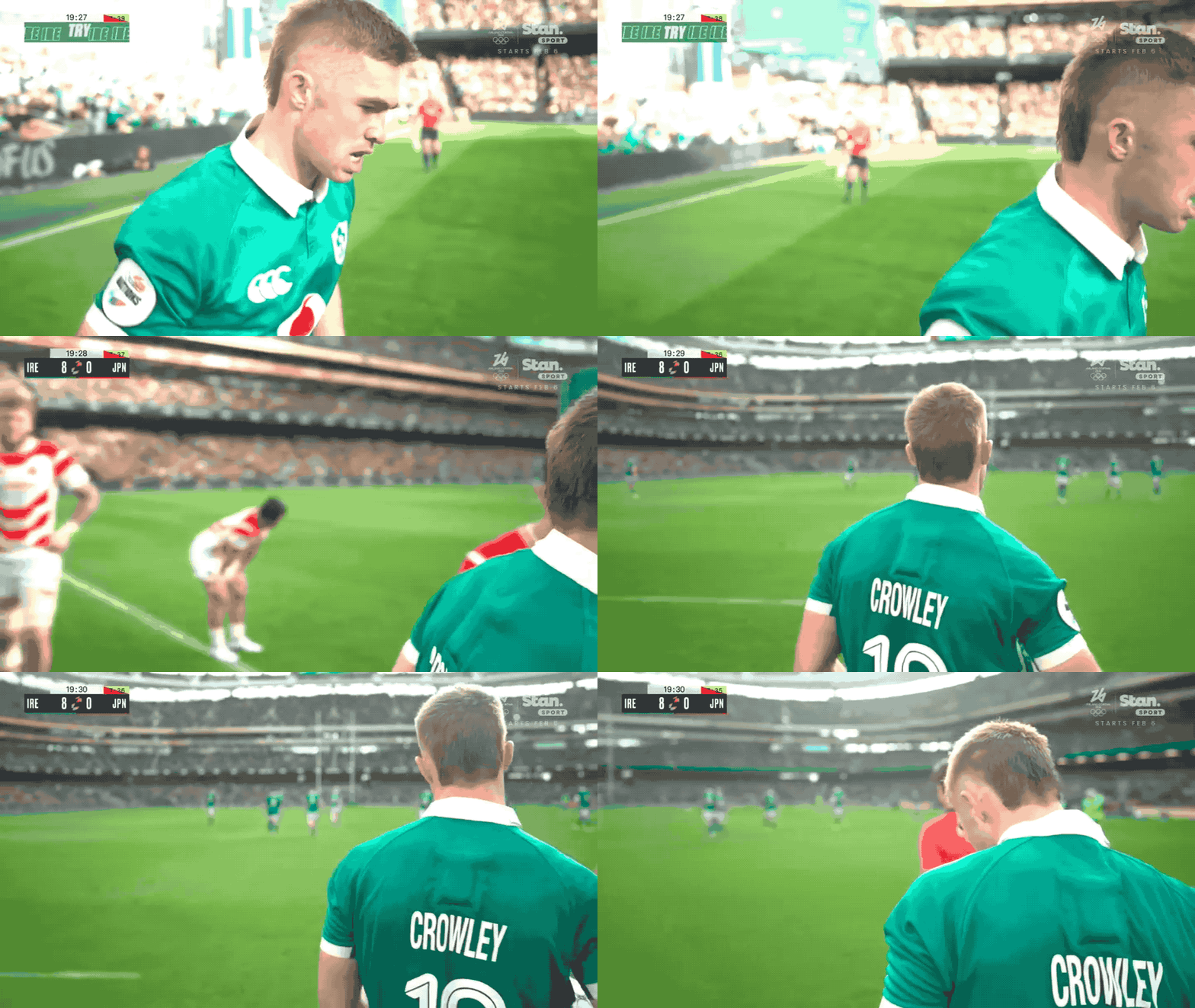
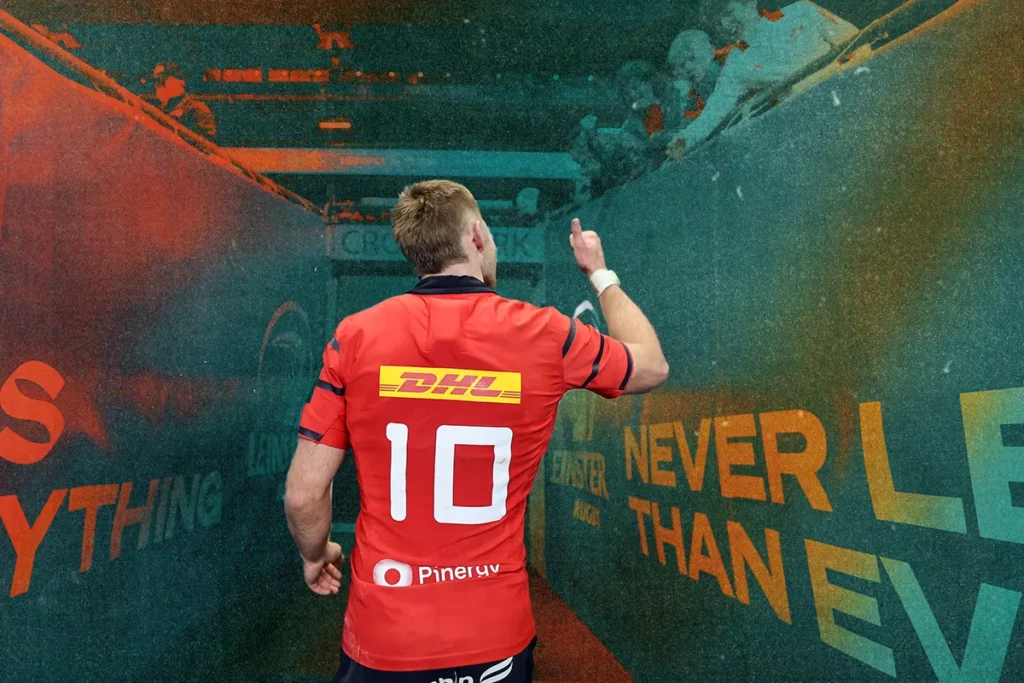
At Munster in the Jack Crowley era, it’s a question we’ve struggled with.
When Crowley initially broke out in 2022/23, things were already getting complex. We already had Joey Carbery — then an Irish international and one of the highest paid players in the country — as the nominal #10, albeit off the back of numerous injuries and pretty questionable form in the previous few seasons. Ben Healy, who had emerged from the Munster academy as a viable prospect two seasons earlier in Carbery’s absence, was on a one-year deal with the club as the SRU were actively trying to lure him to Scotland. Healy was keeping his option open. He was far from the finished product, but he was good, and given that Munster had the supposed long-term successor to Johnny Sexton recovering from injury in the background, Healy was rightly making sure he wouldn’t be left in the lurch, right when his value as a player was soaring.
A change in Munster’s style during the offseason between 2021/22 and 2022/23 put Crowley into the frame as someone Rowntree and Prendergast were keen to invest in. He had none of Healy’s issues as a running threat and was of growing interest to the Irish national team, who were scrambling around to find someone, anyone, who could fill in for the then-37-year-old Johnny Sexton ahead of the 2023 World Cup.
Crowley initially racked up a lot of minutes at #12 in the early going of 2022/23, in part because he could play the position to a pretty good level, on top of needing someone to cover the spot that should have been occupied by Malakai Fekitoa, who was going through some off-field and contractual issues at the club. Once that was ironed out, Crowley became the de facto #10, which had been the plan since that summer.
Carbery had, in the previous season, gone through something of a crisis in confidence after coming back from his long-term injuries. A lot of the agility and burst of acceleration that had informed his own meteoric rise since 2016/17 had been sapped by the serious ankle injury he suffered right before the 2019 World Cup, and he didn’t quite look like the same player, even though he was still being paid like he was.
When Carbery was somewhat unceremoniously dropped from the Irish Six Nations squad in 2023, it felt like the end for him. What confidence he had built since his return from injury was sapped away to nothing, and the guy we saw for the rest of that season looked like a quarter of the guy initially signed to much fanfare and controversy back in the summer of 2017.
That was particularly clear in a poor performance at home to Glasgow at the tail end of 2022/23. Carbery started at #10, with Crowley at #12.
Here’s a segment from that match review.
Then we lost the game for the third and final time with a baffling play from Joey Carbery off the restart.

This pass was always forward, and if Coombes didn’t dive to catch it, it’s likely Glasgow would have scored directly under the posts. They’d score off the resulting scrum platform right outside our 5m line a few minutes later, though, and this was another self-inflicted wound to go with all the others. Carbery was taken off soon after.
Crowley moved to #10 and was an immediate improvement when it came to actual effectiveness and directness.

But the game was gone by that point, and while we finished with a try bonus point, that means “all” we need on our tour to South Africa is three match points against the Sharks and the Stormers to ensure a playoff run and European Champions Cup rugby next season.
Carbery played 11 minutes of the rest of the season, being a travelling reserve all the way up to the eventual URC title win. Healy left that summer for Edinburgh, after signing for them during the season, and Munster’s decision was clear. We were in the Jack Crowley business from then on, and Carbery would only start four games at #10 the following season, in part due to a few injuries, but mostly because Crowley was the guy now, and Carbery was his backup.
Munster offered Joey Carbery a new contract during that season with that in mind. It was nothing close to what he’d been paid during the previous two seasons of his contract — it was closer to what Ben Healy would have been on the previous year, if not slightly more — so he chose to leave and go to UBB. He would be a backup there, too, but on bigger money and away from the pressure cooker he found himself in here. In January 2024, it was announced that Carbery would be leaving.
For Munster, that left a problem. Crowley was scaling up to test level — as he’d show in the 2024 Six Nations after being included in the 2023 World Cup squad — and that meant we’d need to sign a backup player for him. Without a ton of budget going around, and a relatively late decision from Carbery, we ended up signing Billy Burns on a one-year, let’s see where we are in 12 months contract that was broadly unpopular when it was announced, and would go on to be something of a disaster in 2024/25.
When it was clear that Burns had no future here, Munster were left with the same problem again. There wasn’t massive confidence that Tony Butler — signed on a two-year deal at the time — was capable of stepping in for Crowley in any serious game, so another backup had to be signed. We went with JJ Hanrahan, who we signed back from Connacht for a third time after leaving the club for a second time in 2021, right after Healy burst onto the scene. Tom Wood had a lot of potential at that point, but he would join the Munster academy in the summer of 2025 with his 20s year to follow.
Hanrahan has been OK this season. Decent, I would say, not much more. He hasn’t had the implosions that marked Burns time here, or that we’ve seen from Butler at times this season, and that’s a positive. Being fairly solid is actually a good thing to have in the chart, even though we’ve had to lean on him for big games like Bath, Ulster, Sharks and Connacht away to fairly poor results, even though none of the blame for the loss can be squarely placed on his shoulders alone.
A lot of the stylistic similarities that JJ has with Crowley haven’t really been all that relevant because he’s not anywhere near Crowley’s current level physically, or with the influence he has on those around him. He’s looked a little “leggy” when he has played for extended periods, and the lockdown goal-kicking that used to be his signature hasn’t really shown up so far this season. Hopefully, it will soon enough.
Tom Wood has shown promise — a lot of it — in his debut game away to Glasgow and during the 20s Six Nations, but even then, it would be asking a lot for a 20-year-old Year One academy player to do much more than what he has when he’s still finding his feet as a professional rugby player.

Next season, I think we’ll see Wood run a similar enough trajectory to Sam Prendergast’s first year after his 20s run. A lot of bench appearances, one or two carefully curated starts, and see how he handles it.
To go back to the budget, the numbers involved in running a world-class #10 are eye-watering even before you factor in a backup. Finn Russell is on a reported £1 million a year at Bath. Owen Farrell, after his move to Racing 92, is in the same bracket. These are the guys who don’t just play #10 — they define the identity of the team around them, and the clubs paying those wages know it. That’s what genuine top-shelf looks like at the position right now.
And yet even those clubs have to solve the same backup problem as everyone else. The difference is they can throw £300-400k at a second option and barely feel it relative to the overall squad budget. For a URC province operating under the IRFU’s centralised contract model, that kind of layering isn’t remotely feasible.
Crowley, for context, turned down a reported €750,000-a-year offer from Leicester to stay at Munster on what the Irish Times described as probably less than half that figure — and that’s with the IRFU top-up a central contract brings, plus whatever he makes on the side from sponsorship deals with the likes of Adidas and Pinergy. Leicester could simply offer him more money than Munster and the IRFU combined were structurally able to match, and he still chose to stay. That tells you a lot about both the man and the financial ceiling the province is working within.
Which is why positional versatility at #10 isn’t just a nice-to-have — it’s a genuine budgetary lever.
If your backup #10 can also play fullback to a reasonable professional standard, you’ve potentially solved two roster problems with one salary. You’re not carrying a specialist #10 who plays 15-20 minutes off the bench and watches the rest from the bench. You’re carrying a player who adds meaningful coverage across two of the most expensive positions on the park — and if your first-choice fullback goes down at the same time your main #10 is away on test duty, you’re not scrambling. Ideally, when your main #10 is back, your “backup” simply slots back into #15 with no positional flux at all.
The classic version of this was always the player who came through as a fullback and got pushed inside as their reading of the game developed — or vice versa. The position shares more DNA than most, particularly now. Both demand high-volume decision-making under pressure, both are heavily involved in the kicking game, and both require a decent enough carrying threat to keep defences honest. A #10 who can play fullback in a pinch isn’t unusual. A #10 who can play fullback to a genuinely high standard is considerably rarer and considerably more valuable in a tight-budget environment.
Joey Carbery, ironically, was a decent version of this before he left. He could cover #15 in a way that Burns and Hanrahan have never really offered, and in retrospect, that versatility was probably undervalued when Munster were weighing up his worth against what they’d have to pay to keep him. Whether the full picture of what he offered was genuinely costed into the decision at the time, I don’t know. The outcome suggests it probably wasn’t, before we factor in whether Carbery would have even gone for the idea of primarily being a fullback going forward. Maybe he would now, at this point in his career, but not then.
For Munster to fully solve this problem next season and beyond, the backup #10 they bring in — whether that’s Wood developing into the role over two or three years, or a signing — ideally has that 10/15 profile baked in. It’s not just a stylistic preference. It’s the most efficient use of a limited budget line in the most expensive positional corridor on the field.
