


We all have hot takes. I have a few of my own.
Here’s one that I don’t think is that hot at all.
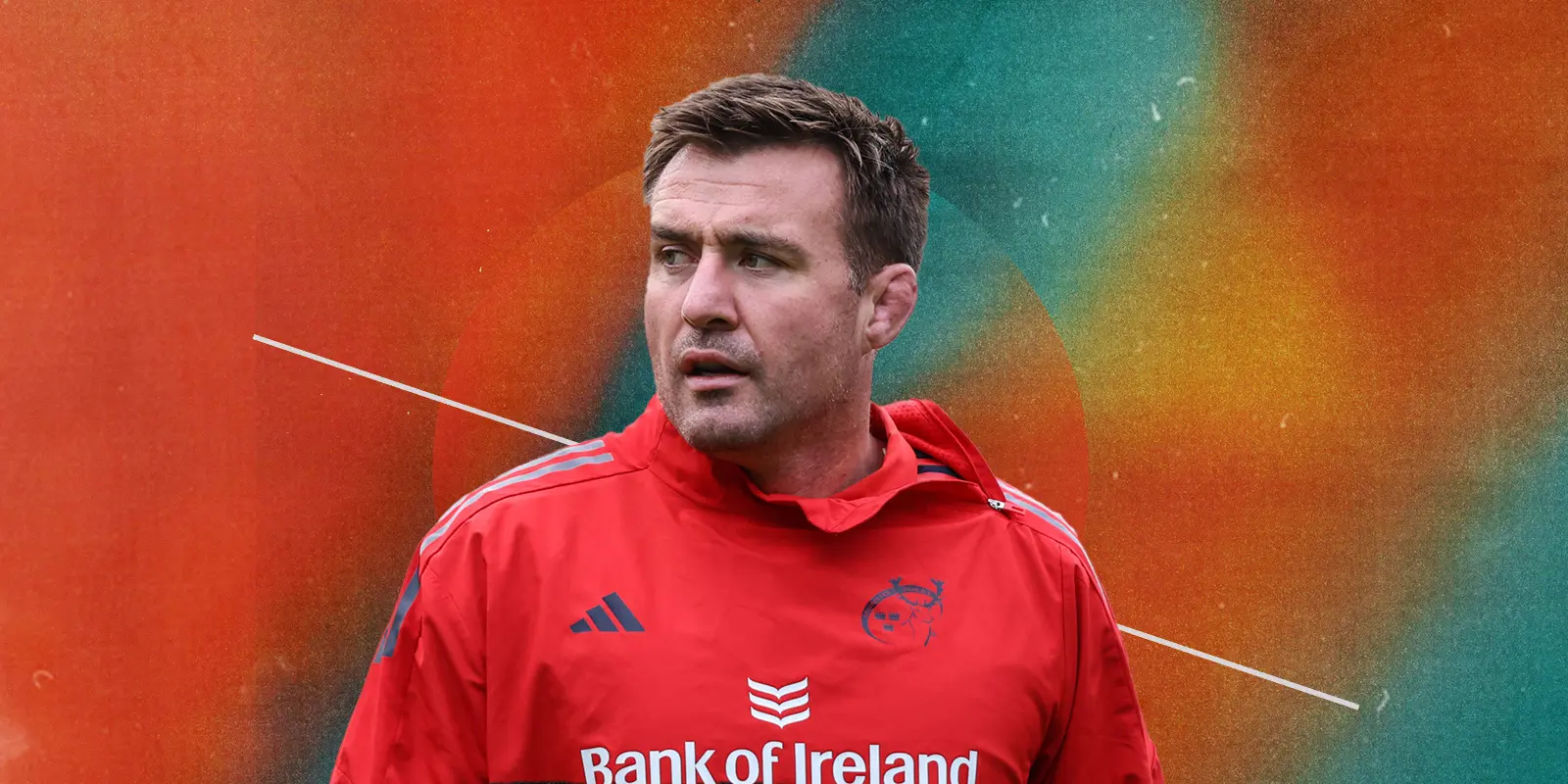
If Niall Scannell broke through in 2010, rather than in 2013, he probably has 40/50 Ireland caps, as opposed to the 20 that he richly deserved when he earned them.
At the end of this season, Niall Scannell will retire at the age of 34, having first made his debut for Munster in 2013. By the time it’s all said and done this year, he’ll have earned well over 200 caps, having become the 17th player to earn that accolade earlier this season. As it stands, he’s level on caps with Mick O’Driscoll. By the time he finishes up this summer, he’ll be close enough to John Hayes and Dave Kilcoyne.
***
Niall Scannell’s rugby career is a version of a rugby career that doesn’t get celebrated enough.
Not the one where a player arrives on the scene as a generational talent and jogs through games on easy mode. Not the one where raw athleticism carries a man through his opposition because he’s literally built different. The version I mean is the one where a player looks at what he is — honestly, clearly, without flinching — and decides that whatever that is, he’s going to make it everything it can be.
That’s Niall Scannell’s career, in short.
He was never going to be one of those rare, silky hookers — that are actually frustrated outside centres — because, well, he just wasn’t. He was never going to bamboozle defenders in the open field or fly past them like Sean Cronin or throw the kind of skip pass that gets dizzying praise written about how he’s redefining the role. He knew that, too.
And rather than spend a career trying to be something else, he spent it being the best version of what he actually was: a hooker who did the basics of the job, over and over again, to a standard that held up at the highest level, for a very long time.
That is harder than it sounds.
But, for a while, it looked like all his effort was going to go to waste. Niall Scannell captained the Ireland 20s in the 2012 IRB Junior World Championship, but it took him a while to fully get going at Munster.
He spent two years in the Munster sub-academy, then two years in the full academy before going on back-to-back development deals.
One turning point, oddly enough, came from the outside. When Rob Penney brought Eusebio Guiñazú in on a short-term loan in late 2014, Scannell was fourth choice. Fourth choice, and they still went and signed another man. It would have broken a lot of players or had the same impact as a bucket of cold sick down their back. Instead, Scannell did something smarter — he picked the Argentinian’s brain. Guiñazú’s message was simple, and it was probably exactly what Scannell needed to hear.
That’s not you.
At the time, Scannell was firmly behind Duncan Casey, Mike Sherry and Damian Varley, and he was on the dreaded ticking time bomb of one-year development deal extensions. Munster weren’t sure on him, something proven by the short-term signing of Guiñazú.
But what Guiñazú told Niall Scannell was vital to his career.
Stop trying to be Mike Sherry.
Stop trying to make breaks off the edge of the defensive line.
You’re a big scrummager, physical in the tight, and your breakdown work has to be unbelievable. Get better at what you’re good at.
“He really broke it down with me,” Scannell said years later. “And Eusebio really helped me. He still keeps in contact with me a lot.” That kind of clarity — knowing exactly what you are, and committing to it completely — is rarer than it sounds. A lot of careers never find it.
But he still needed some extra heat to make that breakthrough.
The heat, by his own admission, was lit by Anthony Foley. By the start of the 2015-16 season, Scannell had played just seven times for Munster, and only once as a starter. Foley gave Scannell his first senior contract anyway, but was straight with him in the way only Anthony Foley could be — he told him that Mike Sherry could do what he could do, Duncan Casey could do what he could do, Damien Varley could do what he could do.
What is your point of difference?
It was the right question, asked at the right time. Scannell decided to be the best set-piece hooker in the building, and then went and found the man to help him do it. He approached Jerry Flannery in the Munster gym — Flannery on the rowing machine, drenched in sweat, mid-rehab — tapped him on the shoulder and asked if they could do a throwing session sometime. Flannery said they’d do it now. What Scannell thought might be ten minutes turned into an hour.
He spent years working with Mick O’Driscoll, too, doing the unglamorous, repetitive, unspectacular work that nobody sees until the lineout goes to hand in the last ten minutes of a big game. That’s where careers like Scannell’s are actually built. Hard work. Resilience. Never settling for his spot. Outlasting everyone else.
He finally had his breakout season in 2015/16, but really put himself on the map with his performances in 2016/17 under Rassie Erasmus. He was everything Erasmus wanted in a hooker. Big, physical, a reliable thrower and a big scrummager.
After four years of uncertainty, he was finally the man in the Munster #2 jersey.
The Ireland caps that follow tell their own story. Winning test caps in any era is difficult, but doing it when Rory Best is the established number one and still making yourself useful, still being valued by Joe Schmidt — that says something real about the kind of player Niall Scannell was. He was and is the guy who understood what the environment needed and gave it.
There’s something almost old-fashioned about a career like this. Rugby now is obsessed with upside — with the player who might be something extraordinary, the raw material, the potential ceiling, the freak athletes.
Scannell never had that particular kind of ceiling. What he had instead was a floor he built himself, brick by brick by brick, and he rarely fell below it.
In the last few years, a few niggly injuries and the toll of being a big, scrummaging hooker for the guts of seven or eight years as a starter sapped his output, as did wider issues with Munster’s lineout coaching in the years under Kyriacou. At times, he’s looked a bit off the pace for the last few years, in part because the modern game demands hookers either be a heavy variant of an openside, or an #8 that scrummages and throws into the lineout. Niall Scannell’s type of hooker — the William Servat, the Rory Best, the Ken Owens — were out of date. But he never shirked anything. If he was going to get smashed in contact, let it happen — he was going to be there to be smashed if needs be. That’s the value of knowing what you are, and what you’re not. It allows you to give more of yourself to the team, and that’s what Niall Scannell always did, and will always do.
He leaves Munster with a URC medal, and he’ll hope to leave with a second one before he’s finished. While we’re at it, a Challenge Cup medal if it’s going, would be handy too. He leaves having represented his country. He leaves having given everything his body and his ability could give.
Some players flame out. Some never quite make it. Some make it further than anyone other than himself expected.
He gave everything he had. It was enough.
It was more than enough.
