



It is all but inevitable that, for the rest of this season, we will mostly play against teams who do what Zebre did to us here, and what Edinburgh/Cardiff/Castres/Leinster and any other team that does a cursory bit of video analysis against us do to us in Thomond Park or Virgin Media Park.
Kick everything, defend narrow and then pressure our flat “pass to pressure” attack, be it on transition, off the set piece or in settled phase play. I’ve said for a while that we are a team beset by catch-22s, and this game is a good example of that.
We need pace and creativity in our outside backline, but the players who have that pace — Kilgallen and Abrahams — have enough defensive issues against a team with pace and a transition threat of their own that we can’t really risk selecting them in a game like this, where we know the opposition will kick almost everything.
We are on fragile ground, and that fragility turns a game that should have been a bonus point win, where we had enough opportunities to wrap up that bonus point relatively early, into the disappointing slog we saw here.
It should have been a bonus point win. We had multiple opportunities to get it, but we didn’t. That’s the headline.
When teams kick to us like this, it comes down to conversion. You’re going to have more of the ball, you’re going to have more penalties to work with (usually), so the question becomes how well you can convert that strategic possession into workable opportunities.
We’re close enough to the worst team in the league at that particular strategic question, in part because our attacking system — complex by design to hothouse away some of our athletic and squad quality issues — is both a combination of being well scouted at this point, and existentially vulnerable to even decent application of the tactical counters produced by that scouting.
If you are playing Munster in Thomond Park and the weather is in any way challenging to tight handling, and it almost always is, you kick at volume, defend narrow in the forwards, flop the ruck to slow movement away, and then press outside in on Munster’s flat and narrow attacking line because you’ll almost always have the pace to scramble on the outside, even if we can get the ball through the pressure.
Our attacking structure and general concept in this game were the same as we’ve used for most of the last four seasons.
In a general sense, we want to start compressed to produce multiple possible pass targets for the opposition to track, and have multiple looping screens in a flat second layer.
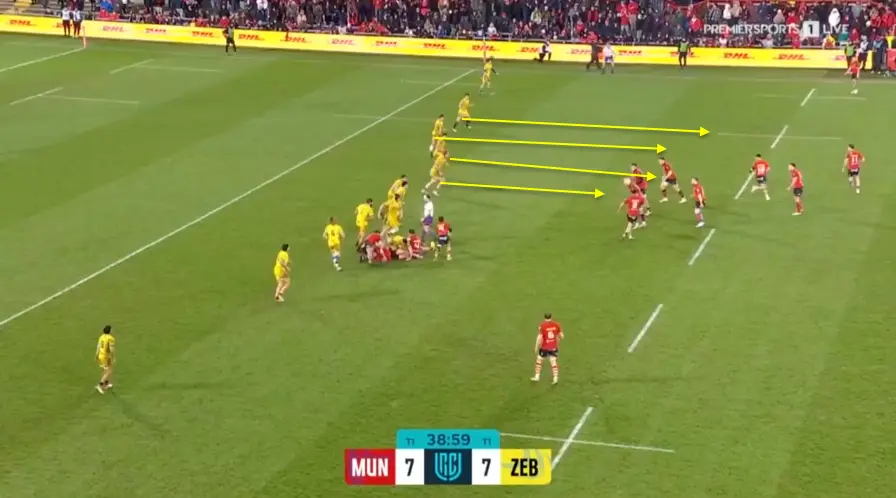
We then “pass on pressure” with short, snappy passes, ideally finding a runner inside 5 metres from the pressure the passer felt on the pass, with the idea being that if the defence blitzes too hard on any of the options, a natural “corner” will open up. That tight, layered runner — most often a looping winger, but sometimes a looped flanker — then, again ideally, find an open gap to run through with support all around him.
The trigger for the pass isn’t necessarily to find space; it’s on the pressure of the defender, which then implies space outside. You can see the concept of passing on pressure here as the ball progresses.
Pressure, short pass outside, pressure, short pass, pressure, short pass.
Coombes is the “forgotten punch” here because on the previous phases post-lineout, he was here.
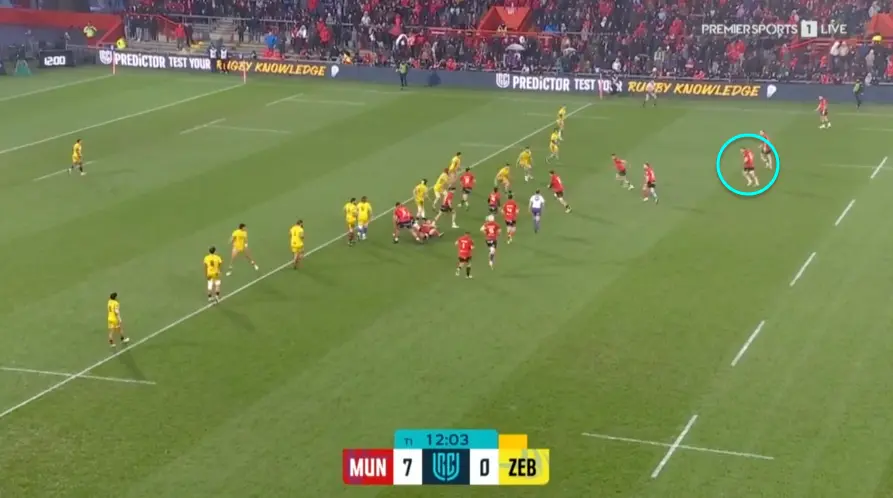
And then looped back across as a second or third handler on a progression in a spot that Zebre might not necessarily expect him to be.
McMillan has spoken about how our #6 role — the play action expected of the player who wears that jersey — is quite complex, and this is a good expression of that. You follow the play across, showing as an option on two phases on one side, before looping back against the grain for the designed play.
It produces the desired outcome in this instance, but the outcome is that our #13 Tom Farrell, who started his progression to that spot a few phases before.
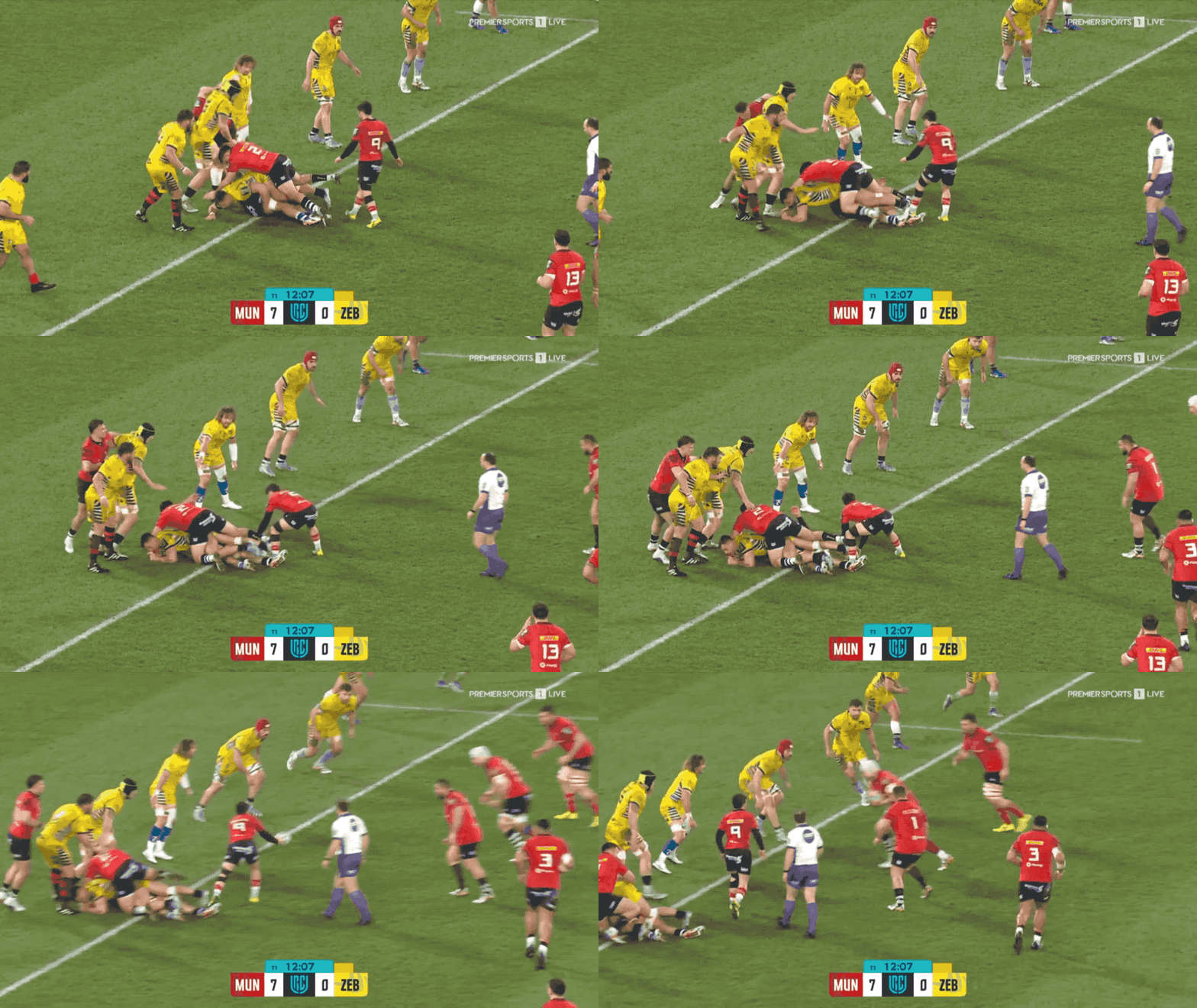
Farrell is many things, but he’s not going to finish an isolation like this on his own from just outside the 22, so he has to cut back inside.
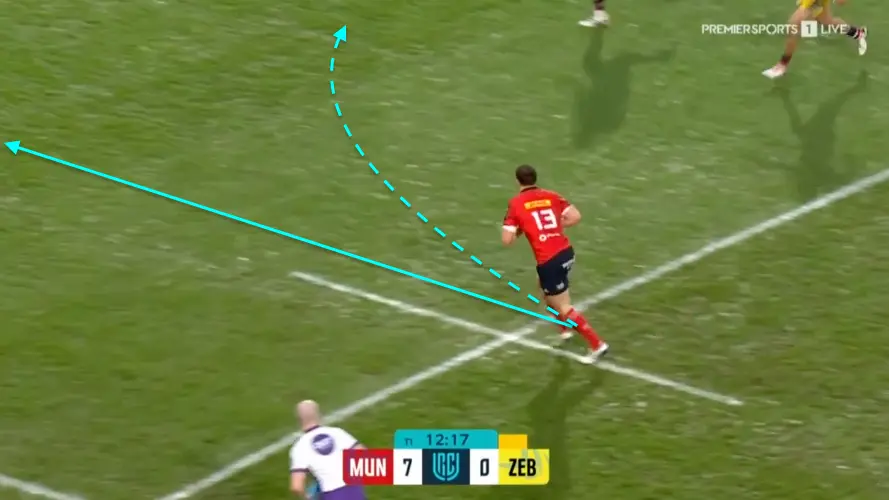
So, instead of stretching Zebre out with a carry that lands on the 5m tramline, the next ruck allows them to pack the pillars and make the next phase a more attritional one, come what may.
Ideally, you’d have someone who can at least hit a straight line here, but that’s not Farrell’s instinct in that moment. The system suggests that he should do, or at least time the cut back in after drawing two or three defenders out to him, but that cut starts two steps into the 22.
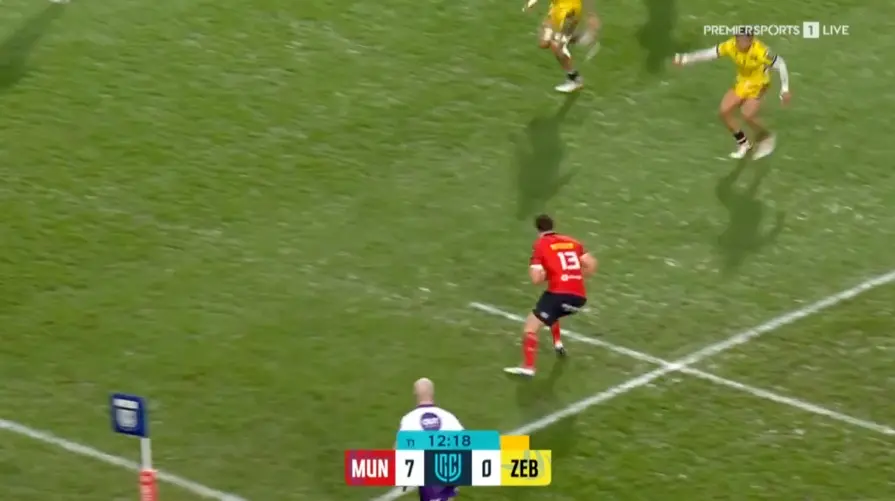
We get a try scoring opportunity from this, but it was a relatively low-quality one, scrambling after a bouncing ball on a soaking wet track.
You can see the phase after was into heavy traffic for a lost collision, and the kick through was speculative — the right call — but you get the impression of what we’re trying to produce, even if the components of the system aren’t best suited to take advantage of it.
You’d ideally want someone faster or more dominant in the carry in this role — it’s essentially the kind of spot you’d want a winger in — but that, in itself, is another catch-22.
The pitch — greasy and heavy — and the conditions don’t help anyone be particularly springy or agile, but this is far from an isolated incident, either in this game or over the last two seasons.
Every attacking system is trying to produce something repeatable. When we do this, and do it relatively well, it will produce this.
This is a good example of what we try to do in part because there are some nice bits, some average bits and some bad bits.
We start with a good carry and a great clean giving nice, quick possession, we then pass through the second three pod to get short passes to the open, looped runner. The issue here, on the second phase of the clip, is that our edge forward in this instance is Niall Scannell. He’s not a realistic release for anyone on this first progression.
You can see the corner that triggers Haley to cut and turn to carry, rather than feed the ball out, even if Scannell was a realistic option for Kelly, in turn, to carry to.
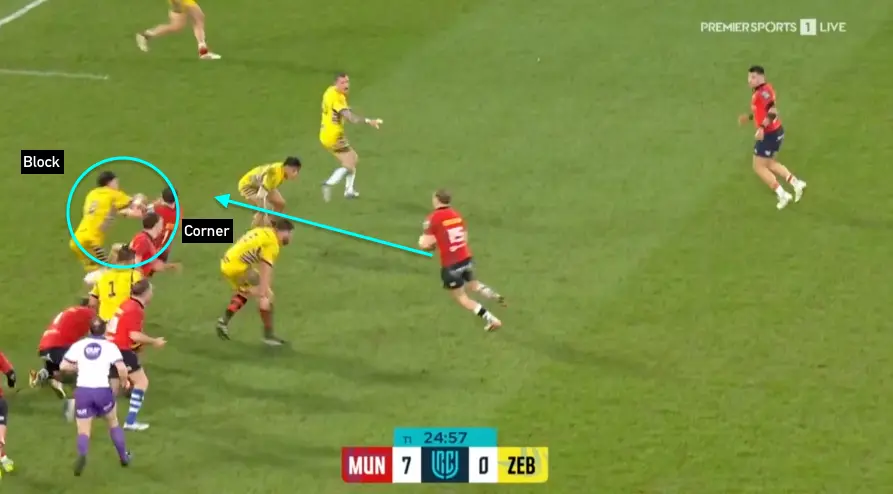
When we come back across, the passing gets less crisp — a problem when Casey and Crowley don’t play — and the momentum disappears. We slow down, the defence gets outside us again, and the chance is gone.
But look at the strike play in the build-up; that’s good, tight handling. I often get asked what we work on week-to-week, but it’s bits like this that build to a corner.
Nash actually gets that corner, and maybe on a more solid track, he gets around it clean.
But the margins are that small, more often than maybe they should.
When we don’t get that corner, we reset inside and try to go to flat hands and variety.
You can see here how we start in a narrow stack. The narrow stack loops infield as the ball passes through the layers, drawing up the defence and producing corners.
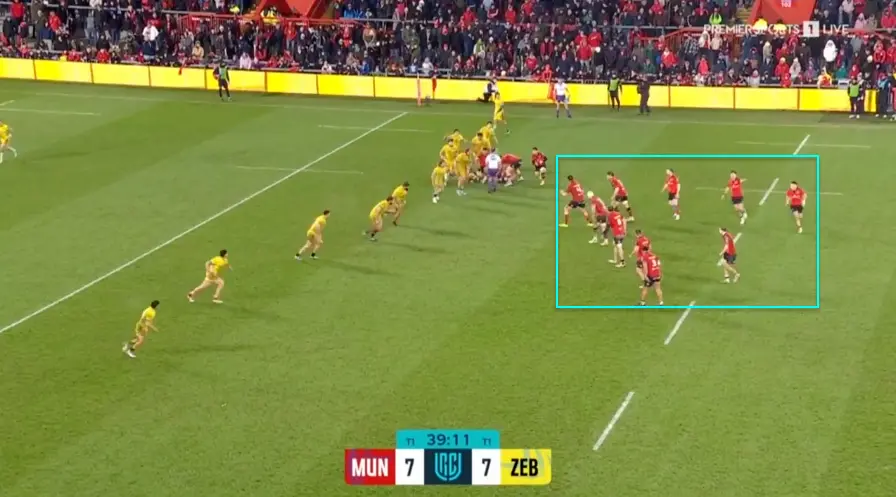
When we don’t get it, we need that second-to-last release — one of the back three — to be comfortable cutting inside and winning a collision, before the next phase flattens out into simple hands.
This is pretty good stuff. It’s not working perfectly, but it’s getting up the field with the ball in hand.
That sequence falls apart because of a bad pass from the ruck to a forward pod after that narrow, inside ball carry from Coombes, but it worked.
If we go back to that narrow stack, we see the loop lines pretty clearly.
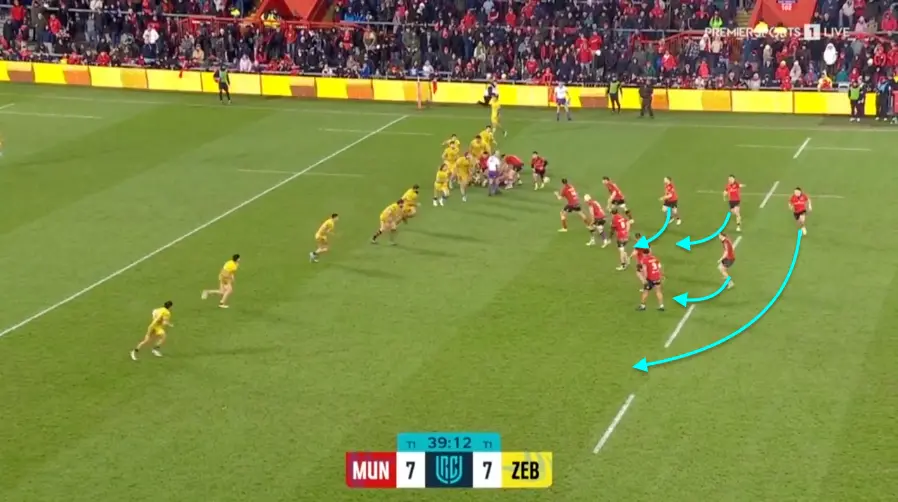
The concept is sound; our execution of it is, too often, not.
But we’re not a bad team — far from it, actually. We just lack the finished product much too often. We’re mostly better in transition. In the second half, we kicked way more and, as a result, had more second or third-kick transitions to work with.
We also showed how dangerous we can be without necessarily being the quickest team out there. This was almost an excellent try scored off a turnover in midfield.
A hair away from a try that would have changed the context of the game.
When we kicked, we stretched out Zebre, and when they kicked in return, they started to drop off on their defensive press. They bit in on Edogbo.
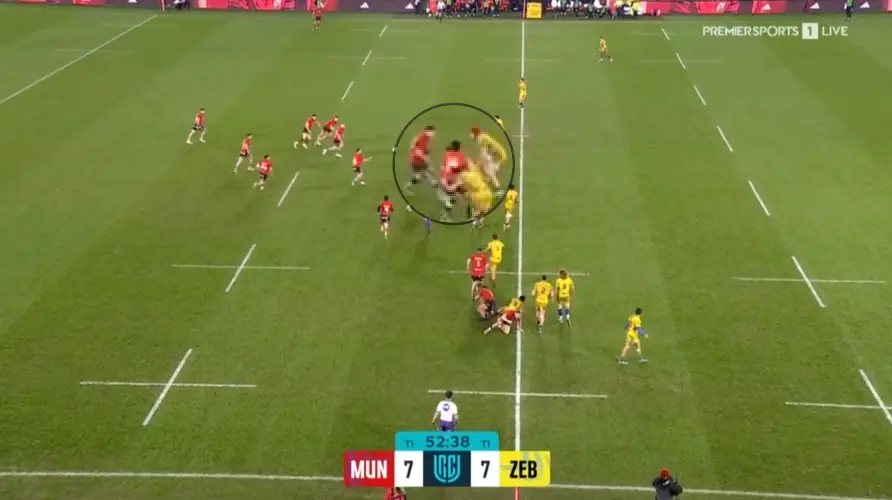
That gave us the kind of pod-to-screen runner space we have in our ideal structure.
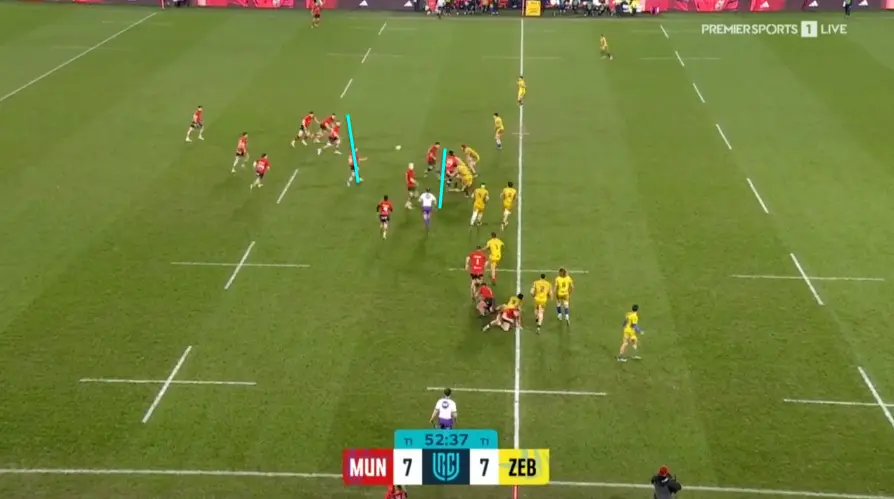
If we were a little quicker, we score on the next phase, but it’s slow for Patterson. He has to dig it out.
But look at Edogbo making sure Zebre’s fold before the inside ball is slow and disrupted.
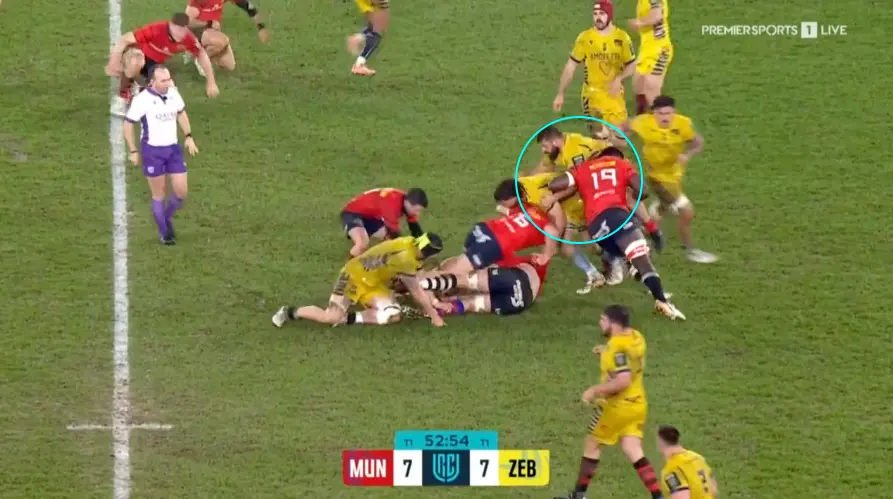
After the linebreak, we probably should have scored directly — a good tackle pins Nash — but we really had to score off the next phase. Farrell probably realises that he doesn’t have the gas or evasion to break here, so he tries to flick the ball onto Haley. A great opportunity spoiled by an incredibly low percentage pass.
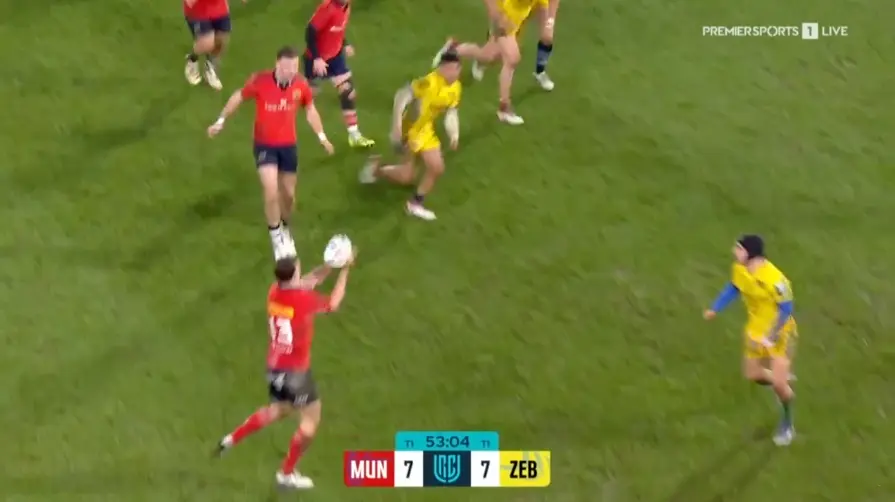
Another try left on the table.
There were a lot of these.
And that’s the problem.
We create good opportunities, very good opportunities at times, but the finishing touch is what eludes us. A lack of power. A lack of composure. We’ll execute a lot of these opportunities better with a decent track and with more kicking in response to unlock teams that want to stymie us when they’re fresh. Yes, much of what we do is sometimes overly complex. I think, at times, we get a little too in love with the half-breaks and half-corners our system often produces, but when we respond in kind to what we get, we are better than we look.
We just have to realise that mid-game. Realistically, we should have started kicking to pressure 15 minutes in, but we seemed to get dragged into the idea that we needed to get two scores up and that the best way to do this was by running the structure, ball-in-hand, until it produced. A few more rolls of what we hope is a loaded dice.
We still have problems in the scrum. Those haven’t gone away and provide a worrying hum of trouble ahead of the South African tour. A lot of our problems roll backwards from there — our worries about getting dominated, popped off our ball, and penalised on the opponents. Zebre almost got us into trouble, more than a few times, and that threat will be doubled, tripled in Durban and Pretoria.
There’s no easy fix to that, at this point, bar Jager getting a run of games as our lead tighthead.
But my main feeling after watching this game back three times was that (a) we can play good, effective rugby, (b) we have core weaknesses holding us back at a systemic and personnel level, and (c) we are our own worst enemy when it comes to our decision-making phase to phase way too often.
I also wonder about our rigidity in the general concept we attack with, which, to me at least, puts too much mental load on everyone. When you combine that with scatty mistakes and pass errors under pressure, we look infinitely worse than we actually are in reality.
Why is John Ryan calling for an offload out of a tip on 80 minutes in? We don’t need it, it’s difficult to execute, and what’s the next phase? It’s the same with some of the high-speed tip-ons we try under pressure. That Scannell tip to Kleyn was “on”, in that the space was there, but our execution in the moment is all over the place, both here and too often.
We are crying out for simplicity, especially when the weather does what it does in the northern hemisphere everywhere above Paris between December and March.
This missed bonus point is frustrating and a missed opportunity. Thankfully, the rest of the URC top eight decided unanimously to slit each other’s throats this weekend, so we finish round 12 in the top four, regardless, with a top-eight spot almost certainly secured.
We owe that to our good start, primarily, but there’s something to work with here. We’re not playing well, we look riddled with compromise, but there’s the guts of a good team that could make the Challenge Cup semi-finals at least, and that could make a decent run in the URC playoffs.
We just need to get out of our own way, and fast.
| Players | Rating |
|---|---|
| 1. Michael Milne | ★★★ |
| 2. Niall Scannell | ★★ |
| 3. Michael Ala’alatoa | ★★★ |
| 4. Jean Kleyn | ★★ |
| 5. Fineen Wycherley | ★★★ |
| 6. Gavin Coombes | ★★★★ |
| 7. Jack O’Donoghue | ★★ |
| 8. Brian Gleeson | ★★★ |
| 9. Paddy Patterson | ★★ |
| 10. JJ Hanrahan | ★★★ |
| 11. Shane Daly | ★★★ |
| 12. Dan Kelly | ★★★ |
| 13. Tom Farrell | ★★ |
| 14. Calvin Nash | ★★ |
| 15. Mike Haley | ★★ |
| 16. Lee Barron | ★★ |
| 17. Josh Wycherley | ★★ |
| 18. John Ryan | ★★ |
| 19. Edwin Edogbo | ★★★ |
| 20. Alex Kendellen | ★★★ |
| 21. Ethan Coughlan | ★★ |
| 22. Tom Wood | DNP |
| 23. Sean O’Brien | ★★★ |
