


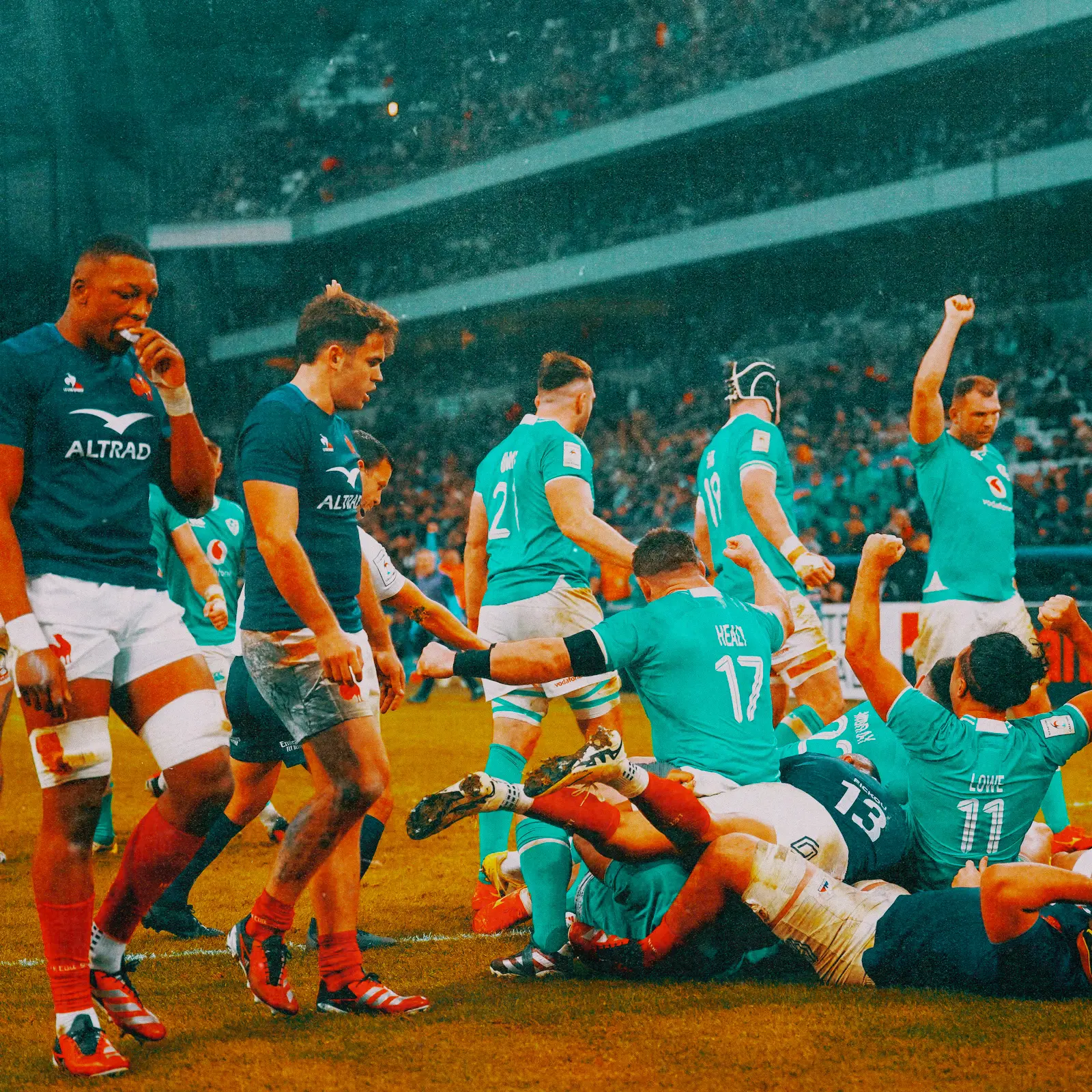

I want either glory or bust.
No inbetweens.
The Six Nations is a special time of the year. For many of us, it was our first introduction to the sport at the highest level on TV. Every spring, you’d tune into RTE and, if you’re me, watch Ireland lose and lose and lose. And, just when you thought they were done with the losing, they’d lose a little more and then keep you guessing with a draw, here and there. The odd time, as a treat, Ireland would win.
My interest in rugby really kicked in during the 1991 World Cup — specifically the 20th October 1991 — when it looked for a brief period that Ireland would beat Australia in Lansdowne Road to make the semi-finals. I didn’t know all that much about the game at the time, only what I’d seen of my uncle play for Clonakilty and the bits and pieces I’d done myself, throwing a ball around on the sidelines. I was nine years old.
When Gordon Hamilton ran this try over late in the game in that quarter-final, I believed.
Jumping around the living room.
When the conversion went over, I knew we would win.
I was wrong. With a few minutes to go, Campese scored in the corner to make it 19-18. We lost. Out of the World Cup at the quarter-final stage, something I would later get used to. But Ireland almost won! And when Australia became the eventual World Champions, I decided, by the use of rugby maths, that Ireland were actually pretty good. If you almost beat the World Champions, then you can’t be far off that. Right?
The next season, we watched the Five Nations, and while I don’t remember much of it, I remember Ireland lost every single game, including an absolute hockeying in Paris by France. I’d later see Munster beat those detested Australians in Musgrave Park in 1992, which confused me even further. Ireland couldn’t beat them… but Munster could??
I had a lot to learn.
But that magic never leaves you.
It’s the same ahead of every Five and then, later, Six Nations. It’s a kind of excitement that you should never let slip through your fingers. There were politics in the game, even back then, but I didn’t know about them. I was better off for it. These days, I think I know a little bit too much.
Is there a Leinster “bias” to the squad in 2026? Yes. For most of the last 50 years, bar the 2000s, that has been true, though and will likely always be true, rightly or wrongly. Dig a little deeper into the other teams, and you’ll find the same thing. Should that dampen your enthusiasm? I can’t tell you what to do, but I know that the next few weeks are much better when you have something to look forward to, rather than something to hope against.
That, in a way, is why I want Ireland to either win a Slam or the Six Nations or finish fourth. It is clear to me that this Irish side, this coaching staff, needs change or vindication. The stasis of third place leads to too much equivocation. If we win the Six Nations, we show that there’s life in this team yet. Anything else is a stall.
Since professionalism, good-to-great Irish teams have always crashed eventually. The team of the late 90s eventually gave way to the Triple Crown Assassins of the early 2000s, before crashing hard at the 2007 World Cup, and then the 2008 Six Nations. That team deserved a Slam or a title in that period, but kept finding ways to fall short. Eddie O’Sullivan’s Ireland finished second in 2004, losing to France on the opening night and finishing two points off the top.
In 2006, we finished second on points difference, again after a loss in the opening game in France. In 2007, we were the bounce of a ball in Croke Park away from what would have been a Grand Slam. Then it all fell apart at the 2007 World Cup. In 2008, we finished fourth in the Six Nations, and then head coach Eddie O’Sullivan was gone soon after.
Declan Kidney finally won the Grand Slam that Ireland had “deserved” as much as anyone can deserve anything in this tournament, a year later in 2009, before the side took a full-on downturn up until 2013 as retirements, injuries, new players bedding in and the miles caught up with the Irish team that everyone could name.
But Ireland rose again. Between 2014 and 2018, we looked like one of the best teams in the world under Schmidt, before that, too, fell asunder in 2019. We finished third in the Six Nations — a tournament we were favourites to win — and then blew the 2019 World Cup, a tournament we looked like winning in 2018.
That team crashed, Schmidt was gone, and it took Andy Farrell two seasons to regenerate the side again. Third in 2020. Third in 2021. Clear second in 2022 behind France, and then finally another slam in 2023, before again blowing the World Cup. We won another Six Nations title a season after — a Dupont-less France and England/Wales being deep in transition somewhat cheapened it — but the change never came.
If the squad of the 2000s had a systemic peak of, let’s say, seven years, if we include the 09 Slam as a late peak, followed by a three-year down swing, and the great squad of the mid-2010s had a six-year peak that ended in 2019, with another two-year building period, that would put us in the middle of a five year peak right now, all-things being equal with the attrition of the modern game.
Here’s the thing, though — I think we’re in an extended version of Declan Kidney’s first season as Irish head coach, muddled through the lens of the pandemic.
If we look at the 2023 season as a natural late peak for that 2019 squad, it still included Sexton, Ryan, Porter, Furlong, Van Der Flier, and Beirne, as well as a few players who have only recently retired or checked out of test rugby like Healy, Murray, Henderson and O’Mahony.
In the 2023 World Cup squad, 16 of the squad that lost to the All Blacks are still in situ now, or would be if not for injury or suspension.
In the three years since, that squad has stayed mostly the same. It’s felt, at times, like we’re collectively holding our breath to get through to some unknown point in the future where a new team will reveal itself, despite clear evidence that results and performances are taking a hit, on the back of declining impact from core players.
The attritional nature of the modern game is shortening cyclical peaks, and while Farrell has dithered and flip-flopped at #10 like he’s prime Marc Lièvremont in the 2010s, other areas of the squad have fallen into that very Irish pattern of familiar combinations and veterans needing “a big one” to stay in the team, but they keep getting chances over and over again to do so, while ageing and adding more miles to the clock all the while.
Let’s not forget that, in 2025, Ireland were still relying heavily on Murray, O’Mahony and Healy to round out Six Nations squads, on top of multiple other players in their mid-30s, because we were snagged on a catch-22 of younger players in the spots occupied by the senior players not being ready. After all, they were rarely backed to perform outside of down-cycle games, so they were never in a position to earn the trust they needed to become the senior players.
That is why you have a scenario this Thursday night where you have two 30-year-olds involved with 11 caps between them, and a 33-year-old starting at #12 with 23 caps. That’s before you get to guys like Cian Prendergast, who’s playing his first ever Six Nations game — ever — six years into his career, and that’s as Connacht’s current captain.
It doesn’t look like succession planning; it looks like plugging holes in the team you’re trying, desperately, to get to 2027, where it increasingly looks like what comes after will be someone else’s problem.
This Thursday night in Paris, I want to see proof that this hyper-experienced core can still go at this level, or I want to see clear proof that their time is done. Stasis won’t do. Third place will simply stall the inevitable end that history has shown us always comes.
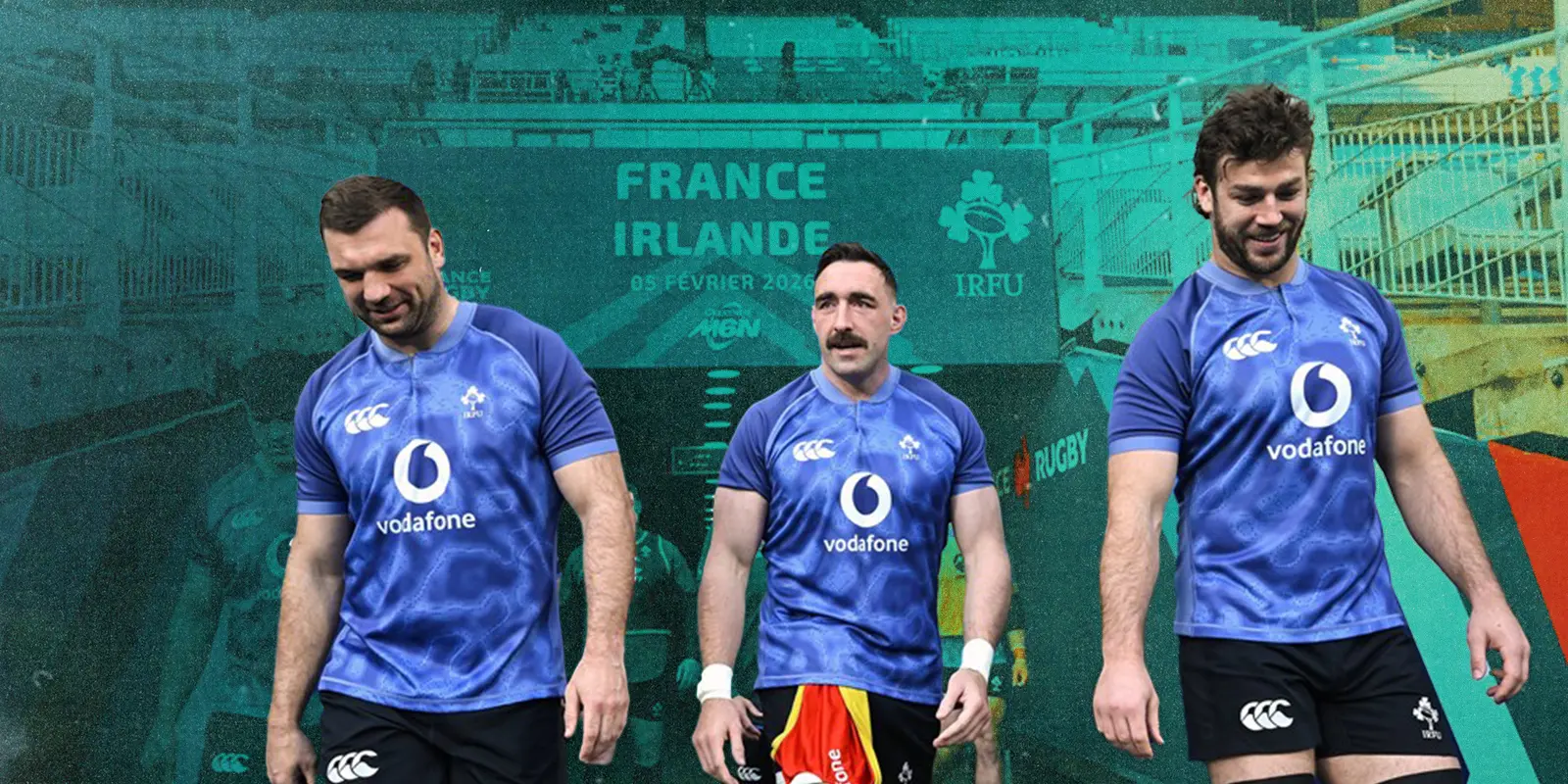
What can be broken, must be broken. Win, or reset.
Those are the stakes.
Ireland: 15. Jamie Osborne; 14. Tommy O’Brien, 13. Garry Ringrose, 12. Stuart McCloskey, 11. Jacob Stockdale; 10. Sam Prendergast, 9. Jamison Gibson-Park; 1. Jeremy Loughman, 2. Dan Sheehan, 3. Thomas Clarkson; 4. Joe McCarthy, 5. Tadhg Beirne; 6. Cian Prendergast, 7. Josh van der Flier, 8. Caelan Doris (c)
Replacements: 16. Rónan Kelleher, 17. Michael Milne, 18. Finlay Bealham, 19. James Ryan, 20. Jack Conan, 21. Nick Timoney, 22. Craig Casey, 23. Jack Crowley
France: 15. Thomas Ramos; 14. Théo Attissogbe, 13. Nicolas Depoortere, 12. Yoram Moefana, 11. Louis Bielle-Biarrey; 10. Matthieu Jalibert, 9. Antoine Dupont (c); 1. Jean-Baptiste Gros, 2. Julien Marchand, 3. Dorian Aldegheri; 4. Charles Ollivon, 5. Michael Guillard, 6. Francois Cros, 7. Oscar Jegou, 8. Anthony Jelonch.
Replacements: 16. Peato Mauvaka, 17. Rodrigue Neti, 18. Régis Montagne, 19. Hugo Auradou, 20. Emmanuel Meafou, 21. Lenni Nouchi, 22. Baptiste Serin, 23. Kalvin Gourgues.
Looking at Ireland’s 2025 Six Nations, there are core areas that need to be upscaled this season, even with the injuries that have blighted the squad since the Lions tour.
Ireland’s numbers paint a side that can win collisions and play plenty of rugby (high pass volume, lots of play beyond the first receiver), but that didn’t consistently turn that play into high-value outcomes: fewer tackle breaks, minimal effective offload creation, and a try profile heavily skewed towards set piece rather than transition or broken field.
We also defended with decent control in one key sense (few opposition 22 entries), but with a worrying signature: our missed tackles were the most likely in the tournament to become line breaks.
Attack: collision winners, not line-breakers
Collision dominance & gainline
Ireland in 2025 were clearly built to win the contact moment:
- Dominant carries: 35.7% (2nd)
- Gainline success: 59.6% (3rd)
- Carries committing 2+ tacklers: 55.1% (3rd)
That’s a really strong base. We were not getting bullied and were regularly forcing the defence to spend bodies at the point of contact.
But the “extra gear” wasn’t there
Where Ireland fell behind the top attacks was the ability to turn those collisions into defensive disorganisation:
- Tackle evasion: 18.2% (5th)
- Carries committing 3+ tacklers: 7.7% (5th)
So: lots of productive carries, fewer devastating ones. We could win the gainline, but we weren’t consistently creating the kind of broken tackles that collapse edges and force scramble rotations at this level.
Finishing from line breaks: good, not ruthless
- Line breaks leading to tries: 34.6% (4th)
England (50%) and France (53.3%) were converting breaks into tries at a radically higher rate. Ireland’s break-to-try number reads like a team that created opportunities, but too often ends up restarting rather than cashing in immediately — either due to support lines, final-pass accuracy, or the lack of an “evasion/offload” layer once the defence is cracked.
Offloads: not a weapon — almost no direct try creation
Ireland’s offload story is one of the clearest “style markers” in the whole 2025 dataset:
- Offload success: 70.0% (5th) (fine, but not elite)
- Successful offloads assisting breaks: 3.6% (6th)
- Successful offloads assisting tries: 0.0%
- Successful offloads assisting either a try or break: 3.6% (6th)
That’s a pretty big tell on Ireland’s ruck-heavy style. It suggests Ireland’s offloads were either:
- low-risk continuity (keeping the ball alive without breaking the line), or
- happening in low-leverage areas where they didn’t directly threaten.
Compare that to the teams who turn offloads into outcomes (Italy’s break assist rate is eye-watering; England/France are materially higher). Ireland, by these numbers, played a “complete the phase” offload game rather than a “puncture the defence” offload game. We gave teams too many chances to reset and pressure our next handling phase, which was almost always through Prendergast to the outer edges.
Team movement: lots of play beyond the first receiver, but not a pure wide-wide team
Ireland’s movement and passing stats show a side that did move the ball — but typically into the 3/4 space, rather than constantly living out on the touchline. And the problem was that we didn’t have any creative game breakers in that space.
Where we played
- Close: 36.1% (2nd)
- Mid: 41.2% (2nd)
- Wide movement: 11.0% (3rd)
We weren’t playing “tight” (11.8%, 5th), but our main habitat was close-to-mid channels — a very classic “launch, layer, and re-launch” profile.
Shape: a lot of second-layer involvement
This is one of Ireland’s strongest stylistic markers:
- Play wider than 1st receiver: 34.2% (2nd)
- Play wider than 2nd receiver: 18.5% (1st)
You know what that looks like:
- backdoor/wrap options,
- second-wave quasi-playmakers,
- layered screens and pullbacks.
Volume: we played plenty
- Pass attempts: 187.2 (3rd)
- Long pass share: 4.9% (1st)
So Ireland were willing to shift defences structurally. The issue is that, without strong evasion/offload outcomes, that width can become “ball movement without damage” — plenty of shape, but not enough moments where the defence is actually broken and forced into panic decisions. Too often, that was Prendergast or Jamison Gibson Park looking for 15m+ passes to the edge spaces, chasing immediate space that we weren’t able to compress through the middle.
Set piece: Ireland scored like a set-piece team, but didn’t have a dominant scrum
Lineout: stable, but front-loaded
- Lineout success: 91.5% (4th) — not great in a five-game tournament.
- To the front: 54.9% (1st) — directly correlated to the success rate.
Ireland went to the front more than anyone. That can be tactical (fast ball for strike plays, reduced contest risk, maul launch), but it can also signal a lineout that’s prioritising security and speed over variety and dangerous launch points. Again, we used Jamison Gibson Park and Prendergast to give us the length on the lineout that our forwards didn’t want to risk.
Scrum: functional, not a platform
- Scrum success: 88.9% (6th)
- Penalties won via scrum: 7.4% (5th)
- Penalties lost via scrum: 7.4% (5th)
That’s not just “not a weapon” — it’s borderline a pressure point. If you’re not winning scrum pens and you’re occasionally conceding them, you lose:
- cheap territory,
- cheap entry opportunities,
- momentum builders.
Without Porter and Furlong for this game, we risk an even bigger implosion with inexperienced looseheads at this level in what is likely to be heavy kick pressure by France in the early going.
Maul: not prolific, but used to finish
- Maul metres/game: 6.6 (5th)
- Tries per game from maul: 0.4 (tied top)
Ireland weren’t racking up maul metres like France/Wales, but we were clearly selective and efficient with maul opportunity — more “close-range conversion tool” than “territory engine.” Our ability to convert close-range set-piece opportunities is the key lever in this team doing well or falling drastically behind the opposition.
Defence: controlled territory… but the most break-prone misses in the tournament
Tackle efficiency and dominance
- Tackle success: 84.1% (6th)
- Dominant tackles: 7.8 (6th)
That’s the blunt part: Ireland were the least accurate tackling side in this set and the least dominant in terms of stopping carriers behind the gainline. That led to a lot of sets where we soaked up a lot of pressure, but struggled to repel teams when they got momentum. Not something we want to replicate in Paris this Thursday night.
The real red flag: misses becoming breaks
- Missed tackles leading to breaks: 21.5% (worst/6th)
That’s a very specific weakness. It suggests Ireland’s misses weren’t “harmless slips” — they were structural breaks: missed edges, beaten shoulders, late tracking, or system disconnects where the miss exposes space immediately. Against this version of France, with more pace and evasion than they know what to do with, the potential for danger is clear.
But: excellent scramble/goal-line resilience
- Missed tackles leading to tries: 9.6% (best/1st)
So Ireland could scramble. We expect that. This is an incredibly hard-working team that’s almost built to scramble in the backline and backrow. We could often prevent the break from becoming seven points, but we were giving opponents too many “break chances” in the first place.
22 entries & try scoring: Ireland limited entries against, but didn’t punish entries for
This is the other core story in Ireland’s 2025 that has to change this time around.
Entries for: decent volume, mediocre conversion
- 22 entries for: 9.8 (3rd)
- % leading to try: 34.7% (4th)
We were getting into the 22 often enough, but converting those visits into tries at a significantly lower rate than England/France.
Entries against: strong prevention, but high danger when breached
- 22 entries against: 7.2 (2nd fewest)
- % leading to try against: 38.9% (3rd best, but still high in absolute terms)
We kept teams out, but when teams got in, Ireland weren’t “locking the door” at an elite rate and certainly not at the rate of 2023 and 2024.
Try origins: an extreme set-piece skew
- Set piece: 88.2% (2nd highest)
- Turnovers: 0.0% (6th)
- Kick returns: 5.9% (4th)
This is arguably the defining Ireland stat in the whole pack: no turnover tries.
That implies (at least in the 2025 tournament sample):
- Ireland weren’t generating many “short-field” opportunities through defensive disruption, and/or
- We weren’t converting those moments into tries when they did arrive.
It also means our scoring was heavily from structured launch. The best attacks mix set piece + transition + kick return scoring; Ireland were overwhelmingly in one bucket, and even then, that was with a set piece that was far from elite. In short, if our lineout and scrum are not elite, but 88.2% of our tries come from set-piece launch points, the problem is obvious.
What it all says about Ireland’s 2025 tournament
Ireland looked like a side with a strong base (collisions, entries, structure, exit success), but without the chaos layer that separates the best teams. They played plenty, they reached second receiver more than anyone, and they weren’t loose in their own 22 exits. Yet:
- We didn’t beat enough defenders (low evasion).
- We didn’t create enough directly from continuity (offload impact bottom).
- We didn’t score enough from their 22 pressure (entry conversion 4th).
- We didn’t produce transition points (0% turnover tries).
- We could scramble — but our misses were the most linebreak-prone (21.5%).
We were a powerful, multi-phase, shape-heavy side in 2025 — but not an explosive one. We won collisions and played through layers, yet lacked the one-on-one and transition threat that turns good attacks into ruthless attacks. Defensively, they limited access to their 22, but when the system cracked, it cracked into breaks.
In 2026, that tracks as a team that could well finish fourth.
The fix is straightforward on paper, but difficult to achieve without altering the cohesion balance so favoured by the head coach.
We need more punch in the carry.
The attack base is fine: dominant carries (2nd) and gainline (3rd). The missing piece is what happens after we win contact.
Why: Ireland were 5th for tackle evasion and 5th for 3+ tacklers committed. That reads like “we win collisions, but we don’t consistently break them.”
What has to change
- Prioritise at least two carriers in the XV who reliably create:
a) first-defender beaten, or b) 3-man compression, or c) offload threat through contact. - Tactically: create more 1v1s for our best evaders (wider spacing, fewer “same-lane” carries), rather than endlessly asking good carriers to truck it up into loaded pictures. That means creating viable separation for Stockdale, Van Der Flier, O’Brien and Sheehan, while also creating more space for them to play in those wider spaces without losing our loop threat or ball security in the middle of the field.
The outcome we’re chasing: lift evasion and/or force 3-man tackles so our layered shape actually creates space rather than just moving the ball to space soon to be swallowed up by defenders.
***
Against France this Thursday, it’s hard for me to see where Ireland pull a win from; outside a French implosion, which, to be fair, is not completely out of the question.
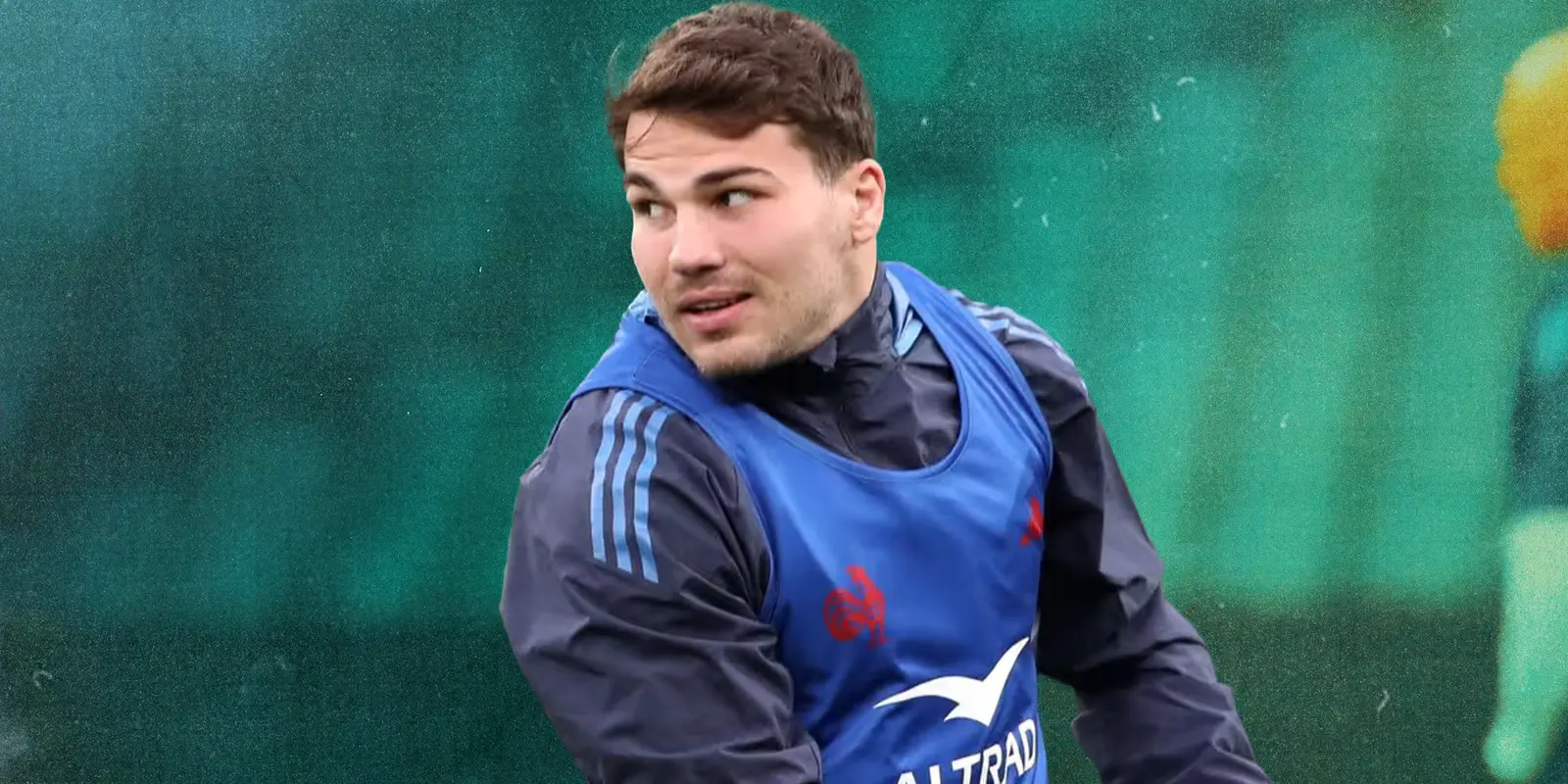
The team that France have selected is very deliberate in its structure; punch up the middle, blistering pace and zero ruck killshot ability in the wider spaces, with a huge focus on kick and turnover transition, never mind the best player on the planet back in situ against the team that “took him out” of the game with a serious knee injury.
This Irish team looks built to kick to France at volume, and contest through O’Brien, Stockdale, Van Der Flier and Doris, in the hope that France can be staggered back and frustrated.
It can work. England have done the same to France in the last year, as have South Africa. The difference in both those games was a dominant scrum that could hold out France on the natural outcome of low kick-to-pass ratios. Even then, it was late pushes in both games, combined with French profligacy, that is far from a guarantee here.
If our chase isn’t perfect, we’ll spend the night on the back foot with one of the fastest, most penetrative back lines in the test game, led by two of the most creative transition halfbacks in the game right now. If our scrum can’t at least get parity, we’ll spend the night on the back foot defending lineouts where our maul will come under pressure, before France send pace runners at our #10 channel, which in turn will pull McCloskey towards Prendergast and leave too much scope for Jalibert to pick off the 3/4 space that will define this game.
For me, this game breaks down on our ability to hold France in place, and that means kicking at high volume, almost always contestably, and winning almost every drop-transition and post-transition space. From there, every 22 entry has to count. Every shot at goal that can feasibly be made must be made.
That’s the key to beating this French team. Get ahead early, frustrate them, and stall their momentum at every turn.
