


Not Great. Not Good.
Decent Expectations will do.
In the last few months, the butcher’s bill for Ireland’s usage of core players since 2020 — aided by an attritional Lions tour — came due.
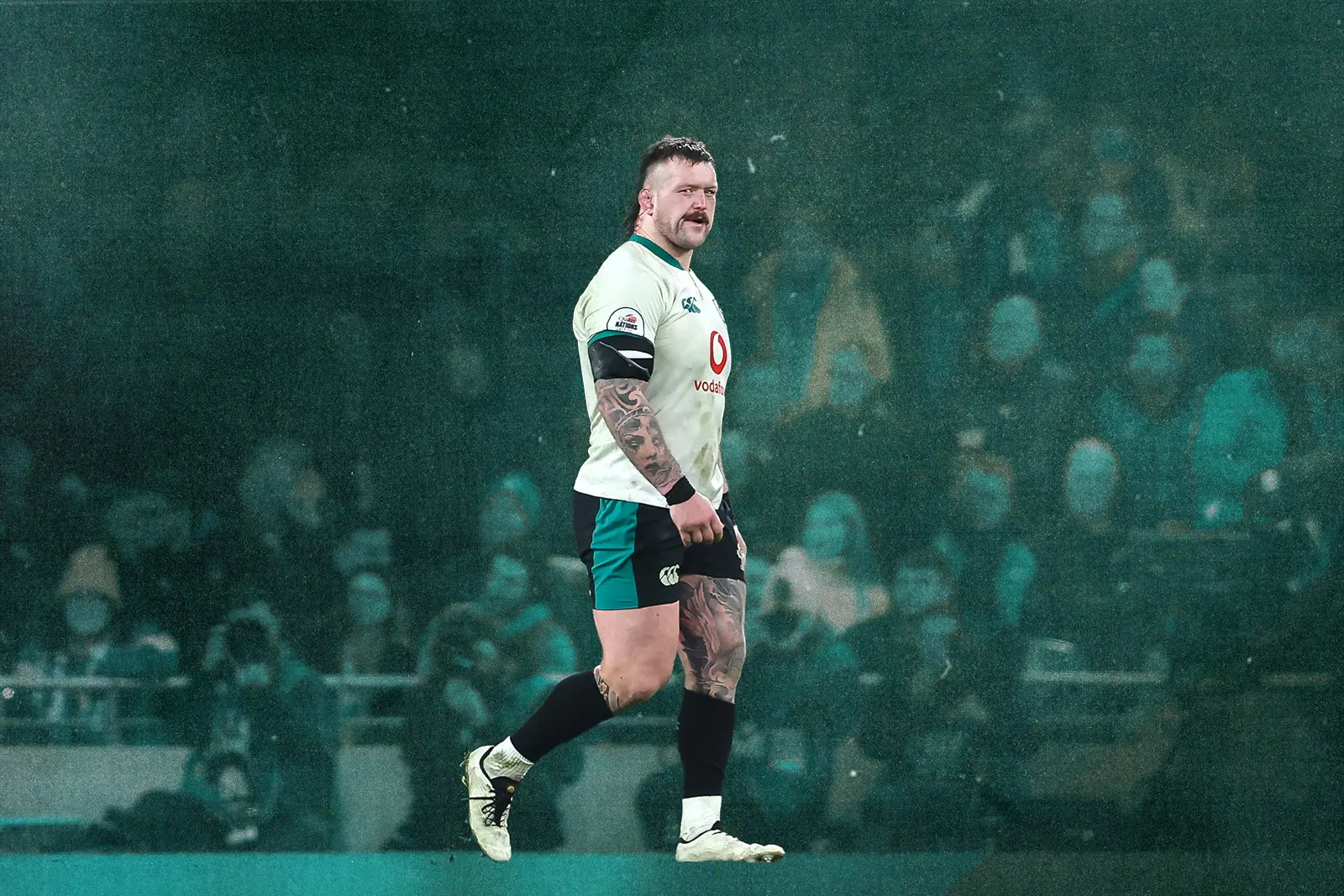
Porter. Furlong. Hansen. Keenan. All injured, or trying to play through them. Almost everyone else that has been part of Andy Farrell’s core Ireland side since it emerged in November 2021 has traipsed through the season with all the energy of a hungover fresher trying to avoid making eye contact with their lecturer at an 8 am class.
I’m trying to think of someone in Farrell’s anointed group of 20 players that has been performing consistently well this season, and I can only come back with Conor Murray bagging the opportunity to sit in the dimly lit 720p environs of the Virgin Media studio with Joe Molloy doing his best impression of Des Lynam if he presented Bank Holiday Monday Ireland AMs. An honourable mention to Peter O’Mahony, who once again proved that, yes, Peaky Blinders flat caps can look flattering as long as you’re a jacked former world-class athlete with a one-of-a-kind vibe that straddles Vanity Fair and the Farmers Journal.
The rest of the anointed twenty have looked like what they are: good players running on the vague gesture in the direction of fumes. You can smell the fumes, but you can’t see the wavy air. The fuel itself is a distant memory.
Tadhg Beirne has had one outstanding performance against Leinster and has struggled to impact games at the level you’d expect of a man who, on his day, is a match-altering presence at any level you like. Tired Tadhg Beirne is a force of nature. Existentially Exhausted Tadhg Beirne looks like this as he trudges up to a 75th-minute lineout, which Munster go on to lose.
Caelan Doris has caught the eye as part of a long-running dialogue with various referees, most of whom treat him like a door-to-door magazine salesman with his foot jammed in the door, unless they’re a gobsmacked AIL referee, in which case they ask for an autograph after signing up for a yearly subscription to Yoga Crystal Monthly. Unfortunately, those referees can’t referee Doris this Spring, where he has to deal with a variety of English, French and Antipodean referees who treat him like he’s just asked for a Guinness with blackcurrant in it at the Auld Triangle.
Tadhg Furlong has picked up the worrying habit of nursing alternating calf injuries, which is the universal check-engine light two weeks from payday for world-class front rowers in their mid-30s.
When you throw in injuries to Paddy McCarthy — the lone bright spot in Ireland’s November Series campaign, despite being scrummaged into a fine paste by the Springboks — combined with a diabolical Achilles injury to the next most recently trusted loosehead, Jack Boyle, and you have a real feeling of jeopardy around the Ireland selection that normally isn’t there.
It’s something I’ve longed for, but getting A New Ireland through a raft of injuries feels like being unhappy with your line manager until HR call you in for a 9 am meeting on a Monday when you saw the owner arrested for money laundering on the previous Friday.
That is to say, the future looks new and uncertain for the first time, and I kind of hate it.
***
Why? Because the Six Nations is our bread and butter in Ireland. In the last decade, we’ve gotten used to that really nice bread you get in Dunnes if you’re in early enough with €10 arthouse butter, derived straight from cows who listen to Christy Moore all day and eat better than I do.
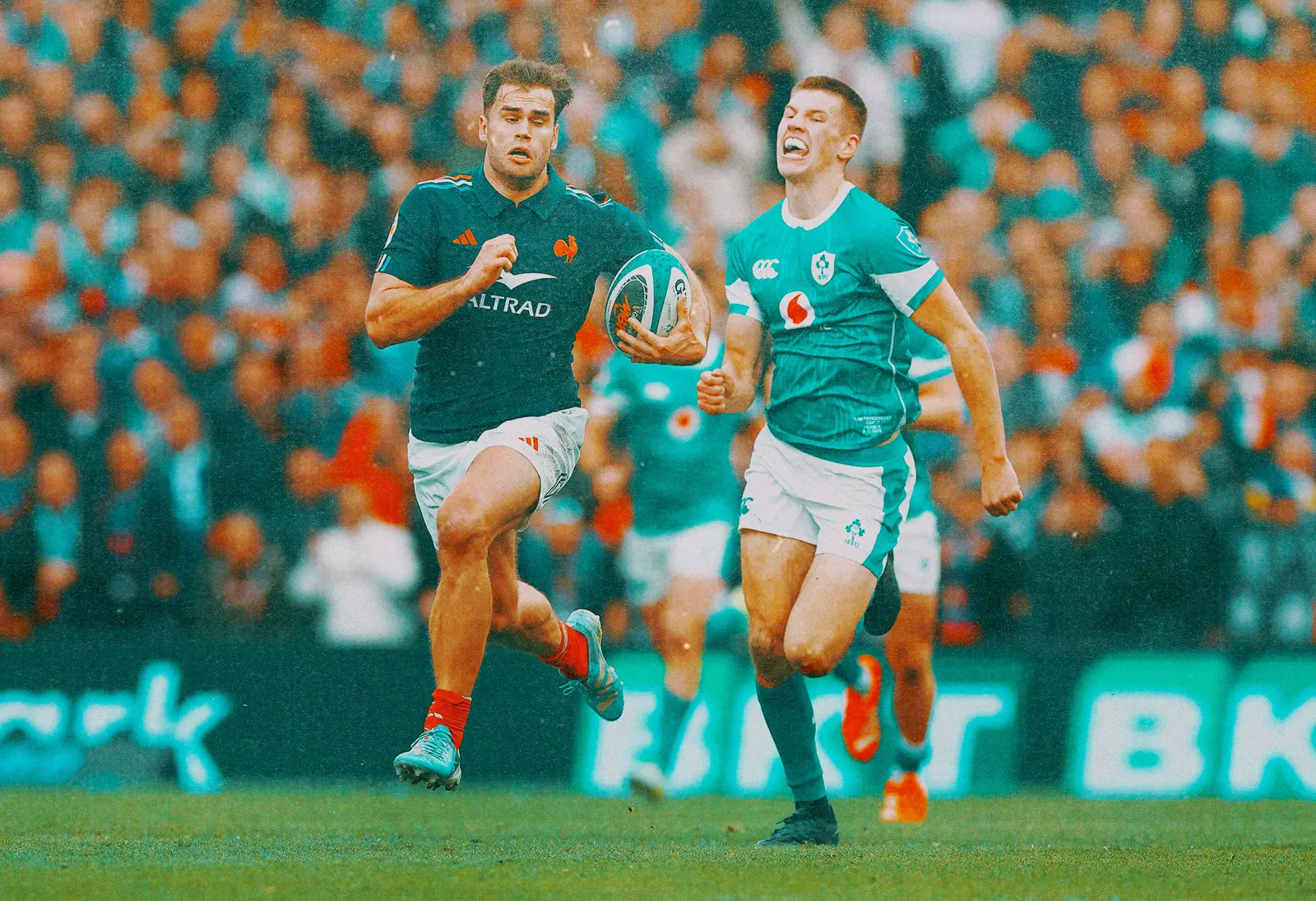
We’ve finished no lower than third since 2014, after finishing fifth in 2013. We’ve won it five times since then, and were one game away from winning three titles in a row last season before getting dismissed as light work by France in Dublin, a game everyone seems to have memory-holed. Not me, though. The noticer-in-chief. That’s who we’re playing this Thursday night, a thing I have also noticed.
Nothing escapes my gaze.
We’re heading into that game off the back of a humbling defeat to South Africa, which, after several rewatches, feels like a 30-point loss the Springboks left behind them because they got too focused on spelling out “No Scrum No Win” on the penalty map. If the trends shown in November continue this spring, we’re looking at third place — assuming everything goes moderately to plan.
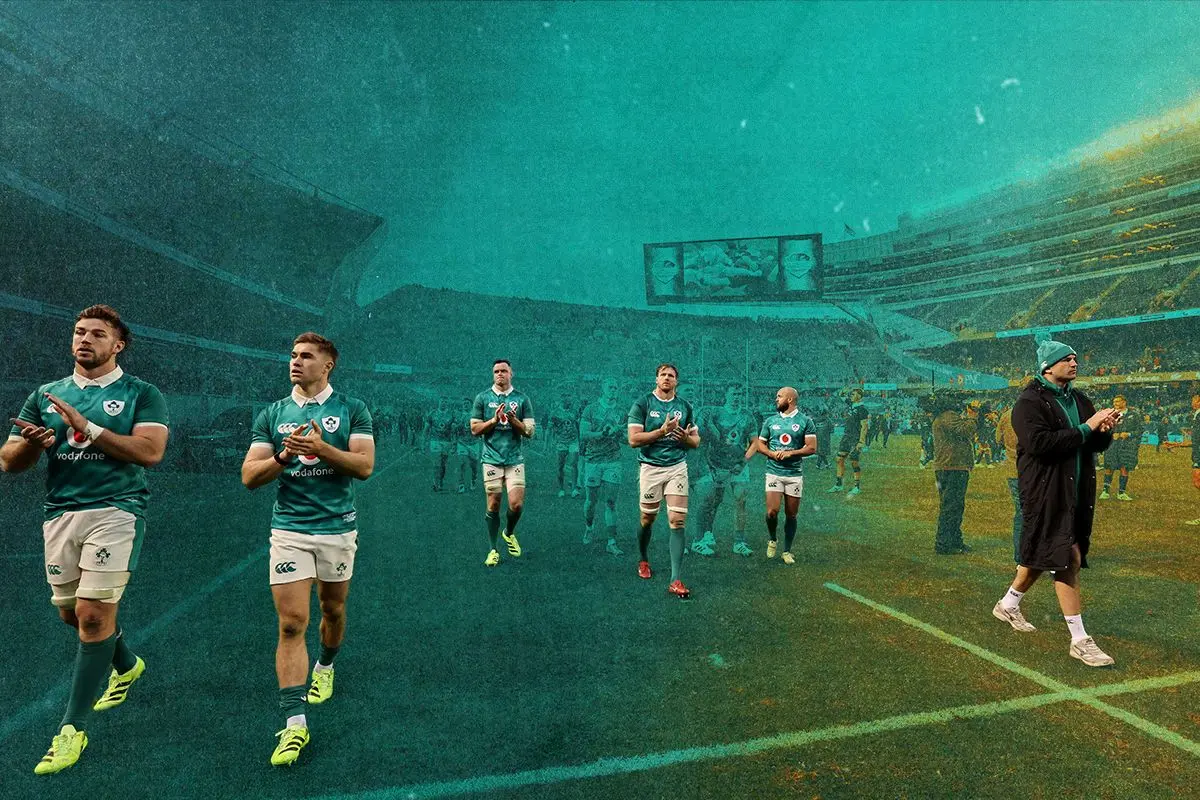
There is no fear factor around this Ireland squad anymore, and the team selected for Thursday night doesn’t look like one built to attack the next two years; it looks like a side with gauze stuffed into the wounds of the last two years to get us through the tournament.
Finishing below third is unthinkable. Getting walloped by France this Thursday — a live possibility — does not create the impetus for change, in the same way that running out of money a week before payday doesn’t drive you to find new and exciting ways to make dinners. It means doubling down. It means packet soup and whatever you have in the press.
The Irish rugby system does not lend itself to grand experimentation, because it seems the wolf is always at the door. Andy Farrell consistently wants to be judged on the next game, because it’s all we talk about. That works in a squad context, but the general public sees this too and judges accordingly. There’s always a reason not to look to the future as others have done.
If it were obvious that Ireland were building for the World Cup, or towards something that isn’t this Six Nations, there would be wiggle room for a bad tournament here and there, but we don’t do that. We live in the endless now, and in that now, Ireland are still seen internally and externally as a team that should be winning this tournament, or at least competing on a like-for-like basis with the other favourites, despite the very real feeling that we’re a team on the slide.
That the best days are behind us, and the future is packet soup.
It’s not just a feeling. Last year, we lost twice at home in a calendar year for the first time since 2013. You’ll remember that year thanks to the chekovs gun I left earlier in the article.
We made Wales look like a competent test side in Cardiff for the only time this year, and all anyone could talk about afterwards was Sam Prendergast kicking a 50/22 that “ripped the grass”. But we were living in the “now” then, too, and the “now” demanded that a win was a win. Good teams know how to win when playing badly. Good teams find a way. Good teams lose by 15 points to a France team that stopped playing in the last 10 minutes, giving Ireland 14 points in the last five minutes. Wait.
The now of… now, says that Ireland have a few injuries, but it’s always exciting with the Six Nations, and we’ve a tough game up first, and that class is permanent and [insert platitudes here], but I can’t help but look at where Ireland will be this summer, this November, next year at the World Cup. France and England have taken their lumps in the last few years and have real options. A plan. A roadmap. England are a great example of this. Borthwick was a bum 12 months ago, and today he’s got England on course to be a nightmare in the next two Six Nations and have a real crack at the World Cup.
The roadmap we seem to have right now leads to the same boom and bust that have defined Irish teams since the 2000s.
A crash in 2007. A crash in 2013. A crash in 2019. 2027 will be a sliding door for Ireland, one way or another. It’s quite likely that, in November 2027, we’ll have seen the last of Beirne, Furlong, Gibson Park, Henshaw, Aki, Lowe, Bealham, Conan and Van Der Flier in green, and the best of some of the rest who embody the phrase “it’s not the age, it’s the miles”.
The only result that will be acceptable based on the rhetoric of the Irish coaching staff is another Six Nations title.
The realistic appraisal is that coming away with two bonus points from Paris and Twickenham, combined with three home wins and a third-place finish, would be doing pretty well, all things considered.
Anything other than that — a walloping in Paris or Twickenham, or a loss to Scotland at home, say — could lead to unpredictable outcomes. We have less time than we think, both in this Six Nations and with the generational talents that have defined the last ten years.
Where will we be when the music stops?
That’s what we will learn soon enough.
