


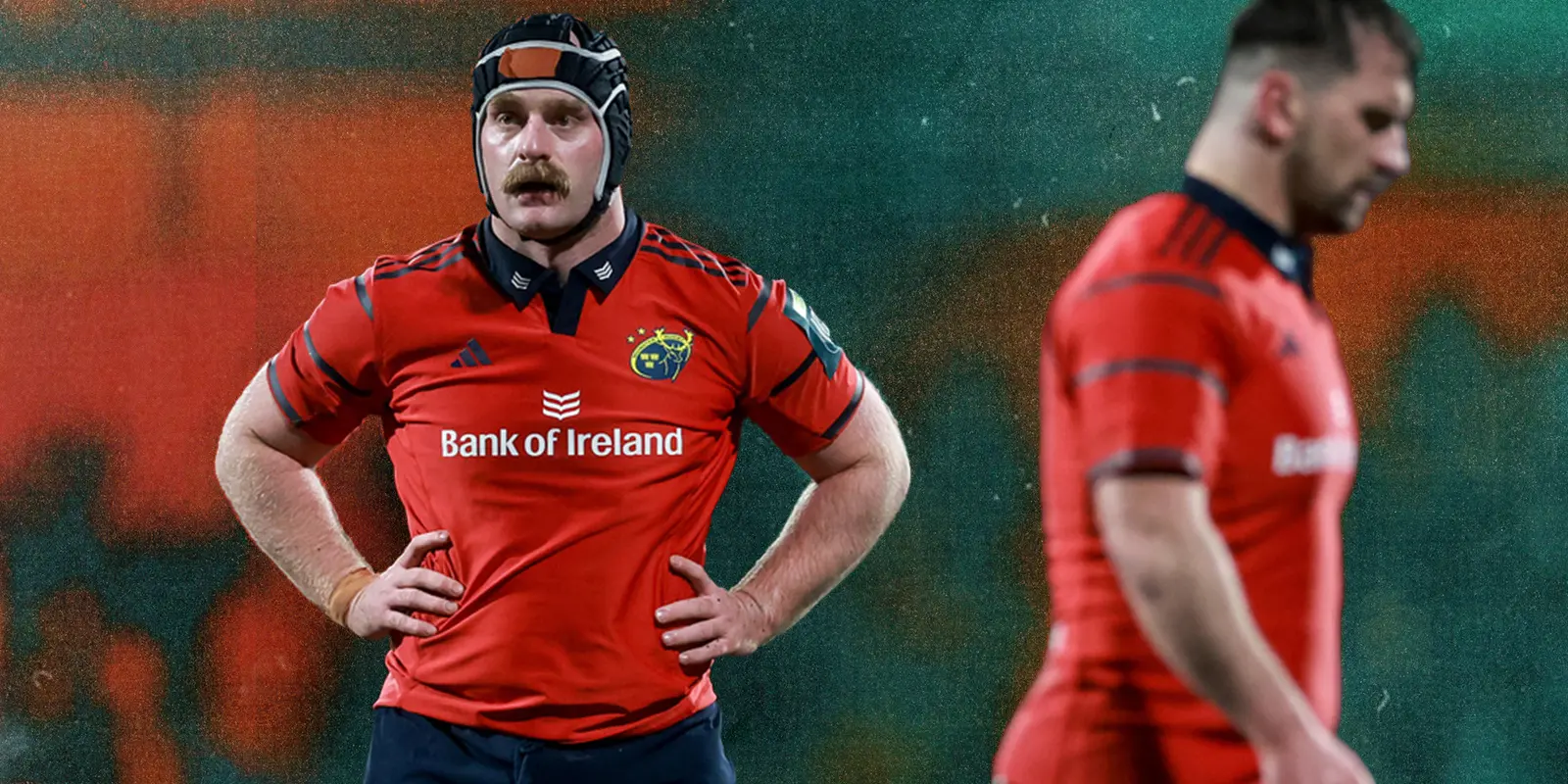

We can, and should, target a win here.
Winning in Scotstoun is not easy. It is actually very, very difficult — most of the time.
But this isn’t any game, and there’s a real opportunity for Munster have a right crack off a Warriors side that has been riddled with Scottish call-ups and some untimely injuries as we all hurtle into the Six Nations test window.
That doesn’t mean it’s a gimme, or that Munster are favourites, but it’s a chance. And a chance is all we need.
***
In the last two months, there really has been no comparison between how Glasgow have gone and how Munster have gone. By every metric — results, performances, vibes — they are absolutely flying it. Top of the URC after ten rounds, joint first in the European Champions Cup seedings with Bordeaux (second on the log, with a home semi-final on offer if they can make it) and playing some of the best rugby in the game right now, with a rock-solid set piece on both sides of the ball, an outstanding kicking and transition game, and Scottish internationals everywhere you look.
At home, in the last two seasons, they’ve beaten Toulouse, Saracens, Stormers, Racing, Sharks and only lost twice to Leicester and the Bulls in 2024/25. If last season was something of a down year after the high of winning the URC title in 2023/24 — they really struggled in Europe, in part due to injuries — this season has been Franco Smith settling into a core side capable of doing the double in a very real, tangible way. At their best, there is no team in Europe that they should have any fear of. Now, I will say that their lack of squad depth might come back to haunt them post-Six Nations (thanks, Dave), but at their best, they are the best example of a well-built, near-perfectly developed squad that has taken five or six years to reach the peak we’ve seen this season so far.
As challenges go, it’s as stiff as it gets in Europe.
But.
This game, falling as it does on the eve of the Six Nations, has taken out all of their current Scottish internationals. Namely, Gregor Brown, Scott Cummings, Jack Dempsey, Rory Darge, Jamie Dobie, Matt Fagerson, Zander Fagerson, Adam Hastings, Gregor Hiddleston, George Horne, Huw Jones, Kyle Steyn, Rory Sutherland, Sione Tuipulotu, and Max Williamson. Almost all of whom would start for Glasgow in a game like this otherwise, plus injuries to core guys like Johnny Matthews, Alex Samuel, Charlie Savala, Patrick Schickerling and Tavi Tuipulotu.
That has lifted almost all of their core squad, bar guys like McDowall, McKay, Vailanu (who has torn us up in the past), Kyle Rowe and a few other squad guys, out of the team for this game.
We, too, are feeling the burn with test call-ups and some untimely injuries to Kleyn, Nankivell and Hanrahan from last week’s starting team, but nowhere near the same level.
That turns a game from being one of the most difficult we’ll have played all season into something more… manageable. That doesn’t mean it’s going to be easy, far from it, but with their test disruption — breaking up a cohesive squad on the go for the last two months — there’s an opportunity to turn something that might be a +1 on a good day, into a +4 or even a +5 if all goes well.
But it will have to go well.
Munster Rugby: 15. Mike Haley; 14. Thaakir Abrahams, 13. Shane Daly, 12. Dan Kelly, 11. Diarmuid Kilgallen; 10. Tony Butler, 9. Ethan Coughlan; 1. Josh Wycherley, 2. Diarmuid Barron (c), 3. Oli Jager; 4. Evan O’Connell, 5. Fineen Wycherley; 6. Seán Edogbo, 7. Ruadhán Quinn, 8. Brian Gleeson.
Replacements: 16. Lee Barron, 17. Mark Donnelly, 18. John Ryan, 19. Gavin Coombes, 20. Jack O’Donoghue, 21. Paddy Patterson, 22. Tom Wood, 23. Seán O’Brien.
Glasgow Warriors: 15. Josh McKay; 14. Kyle Rowe, 13. Stafford McDowall (c), 12. Kerr Yule, 11. Ollie Smith; 10. Dan Lancaster, 9. Ben Afshar; 1. Jamie Bhatti, 2. Seb Stephen, 3. Murphy Walker; 4. Alex Craig, 5. Jare Oguntibeju; 6. Euan Ferrie, 7. Angus Fraser, 8. Ally Miller
Replacements: 16. Grant Stewart, 17. Nathan McBeth, 18. Sam Talakai, 19. Dylan Cockburn, 20. Sione Vailanu, 21. Macenzzie Duncan, 22. Jack Oliver, 23. Matthew Urwin
Glasgow’s identity this season
They’re a low-error, high-collision attack
- Dominant carries: 37.0% (Munster 27.9%)
- Carries vs 2+ tacklers: 55.4% (Munster 47.7%)
- Ball security (touches per error): 40.7 (Munster 30.1) — this is elite cleanliness.
What it means: they’re happy to run into density, take contact, and still keep the ball. You don’t get many cheap transitions off them.
They play wider and longer than most URC sides
- Wider than 1st receiver: 30.2% (Munster 26.1%)
- 20m+ movement: 11.3% (Munster 8.0%)
- Possessions going 5+ phases: 22.7% (Munster 15.1%)
- Possessions ended by kick: 35.5% (Munster 40.2%)
What it means: Glasgow are structurally comfortable in multi-phase. They’ll go through you rather than around you, and they don’t need to kick as often to relieve pressure. They are comfortable running through multi-phase possession — deeply comfortable —, and they are excellent at forcing penalty errors out of teams who give them too much scope to play at pace.
Their set piece is a primary try engine
- Lineout own win: 90.5% (Munster 89.0%)
- Lineout disruption: 13.3% (Munster 10.4%)
- Maul metres per maul: 2.5 (Munster 1.8)
- Maul “per try”: 7.2 (Munster 47.0) — i.e. Glasgow’s maul is producing tries directly; Munster’s is not, on this metric.
Now marry that to try Origins:
- Tries from set piece: 75.7% (Munster 61.5%)
- 10m set piece → try: 46.3% (Munster 37.5%)
- Tries on 1st phase: 40.5% (Munster 34.6%)
What it means: Glasgow are brutally efficient at turning good field position + set piece into points. Deny them a lineout and scrum platform to play into, and you take out 75% of their try origins. They are a team that thrives on strike plays and pulling you out of shape on launch, either off a springy — but not dominant — scrum, and a top-class maul that you have to commit to, feint or not.
Defence: solid tackling + excellent exits, but not a big jackal team
- Tackle success: 90.2% (Munster 90.5%) basically level
- 22 exit success: 94.6% (Munster 87.5%) — major gap
- Rucks per jackal: 55.6 (Munster 28.3) — Munster jackal ~2x as often
What it means: Glasgow are hard to trap, because they exit well. But they’re not built to slow the ball and win turnovers at volume. They stay alive behind and around the ruck and look to clog passing lanes with linespeed and aggressive inside-out pressing, but expect a lot of good reads from their #13 and wings, as well as elite backrow coverage, which they won’t have here.
Fagerson, Darge and Dempsey give Glasgow real punch in the carry, but also carry a lot of water for them at the defensive ruck. Euan Ferrie is a heavier half-lock style player, Angus Fraser is a punchy heavy wing forward who recently converted from hooker, and Ally Miller is a heavier, slightly slower version of Jack Dempsey.
They won’t have the unified pace and coverage in the back row that much of what they do well is built on.
Where Munster stack up well (and should lean in)
Here are the cleanest “Munster edges” across the data this season:
| Area | Glasgow | Munster | Why it matters Friday |
|---|---|---|---|
| Defensive gainline denial | 29.7 | 32.3 | Munster can win the contact-line defensively and force Glasgow into slower, wider exits. |
| Turnover/jackal rate (rucks per jackal) | 55.6 | 28.3 | If Munster make this a ruck-stress game, Glasgow don’t naturally match that profile. |
| Contestable kicking rate | 12.7% | 14.3% | A way to disrupt Glasgow’s exit comfort and force aerial or broken-field contests. |
| Try variety | 10.8% own-half / 2.7% kick-return | 26.9% / 11.5% | Munster are more dangerous when play breaks; Glasgow are more set-piece dependent. |
Glasgow’s kicking profile
Raw outputs
- Kicks from hand: 221
- Kicks retained: 39
- Tries from kicks: 2
- Kicking metres: 5,665
What that says
They’re not a volume-kicking side (by URC standards).
The league range here is roughly 193–307 kicks from hand. Glasgow at 221 sits in the lower half of the volume range. They kick enough to manage games, but they’re not Cardiff-style “kick-first”. I would expect them to kick slightly more often here, though, given most of their phase play is built off a highly cohesive starting unit.
Their kick retention is basically league-average — but it’s real.
39 retained off 221 = 17.6% retention. That’s around the league midpoint, which suggests they’re getting some value back from contestables/pressure kicks (or at least recovering broken plays) rather than just handing possession away.
Their metres-per-kick is fairly healthy.
5,665 / 221 = 25.6m per kick. That’s a solid territory average — not Connacht-long, but it’s not dink-and-chase either. They’ll vary their kicks when they do so; some off #9, some off #10/back three, and not loaded onto one player in particular.
What this means for Friday night
Backfield + edge defence has to be disciplined
Glasgow’s variety in their kicking is the warning light: they’re converting attacking kicks into outcomes more efficiently than we are. That usually comes from:
- chips/grubbers into the backfield when the line is flat, and/or
- crossfield/diagonal kicks when the edge is over-committed.

So: keep a live sweeper, don’t over-chase, and protect the space behind the first line. In reality, this means a lot of decision-making for Shane Daly, as well as Abrahams and Haley managing their starting positions to guard against Glasgow’s threats. We know they’ll be very, very dangerous with the ball in hand once they settle into the game, so we have to be comfortable with the change-up; don’t overcommit to swarming their 3/4 space, because they’ll almost certainly look to kick in behind that.
We can win the kick-exchange, but only if we’re decisive
There should be chances to punish loose outcomes (poorly connected chase, overhit touch-finders, isolations after regathers). That’s a cue for:
- fast return kicks when their backfield is unbalanced, or
- immediate counter-ruck/jackal threats when they’re scrambling after a messy receipt (fits our profile).
Our territory management should be more purposeful than “more”
We kick more than Glasgow already. The margin isn’t in raw volume, it’s in how often our kicks create advantage (pressure, regather, try chance) versus just moving the ball for the sake of it.
I’m torn, in a way, because I feel that we can hurt them with our phase play in a way that might not seem overtly obvious on the face of it. They don’t have the same defensive coverage they normally rely on in central spaces through Darge, Dempsey and Fagerson and Tuipulotu, Jones and Steyn wider out. Ferrie is a high-volume, dominant defender, but he’s not the best coverage-wise; none of their backrow here are really.
If we can bring them through the phases, there will be gaps we don’t normally see.
That said, the obvious route would be to kick to them at volume in-field, chase, harry and hem them into their own half, and attack the cohesion they can’t really have for this game.
Glasgow’s main weapon for going up their field is their high-pass attack, which milks penalties out of scrambling defences at the next ruck, or through their lineout maul, which is one of the best units in Europe.
Size-wise, Glasgow are not overtly huge in the way we might understand UBB, the Bulls or the Stormers to be, but they do have deceptively large and heavy front five forwards most of the time. More importantly, they are incredibly well-drilled at the lineout from delivery to build to execution.
It’s hard to point at just one man in the delivery of this. Glasgow had Alisdair Dickinson as a scrum/forwards coach in the initial part of Smith’s tenure, only to replace him as a general forwards coach with former Ulster coach Roddy Grant in the offseason. Ulster’s maul was a real weapon during Grant’s time at Ulster, and I think it’s fair to say that he’s refined it to a new level.
Only Clermont and Cardiff have scored more maul tries than Glasgow so far this season, and they stack up on metres gained per maul with teams that far outweigh them on paper.
Sure, they’ll be down most of the men who empower that here, but the excellent drill will remain, especially on the 4G Scotstoun pitch, where they regularly overpower defences that they give up massive size to on paper.
If you watch their maul, the first thing you notice is how quickly they adjust the angle on the drop. If most teams look to drive and then shear, Glasgow are the opposite in that they shear and then drive.
Look at their immediate direction shift on the drop of jumper;
That gives them an immediate edge around the corner of the maul with full power in the drive to that side, rather than a straight push and then a shear.
If they get that going anywhere near your 22, a penalty for a side entry or a collapse is immediately on the menu.
You can only stop it with directional pressure from the infield and touchline side simultaneously, where you almost “swallow” the maul up the middle, with the still-bound flanks surrounding their central drive as it goes through the middle.
What this points to tactically
The Glasgow “red zone” we must avoid
Because Glasgow are 46.3% 10m set piece → try and 75.7% set-piece-origin, the big picture is very simple:
Don’t hand them lineouts/scrums in our 22 via cheap penalties, exit mistakes, or restart sloppiness.
How Munster can win it
Ruck pressure is our best lever
We’ve got the clear profile edge (28.3 vs 55.6 rucks/jackal). If we can win 2–3 key turnovers or force slower ball, we can break their phase rhythm without needing them to make errors, because they usually don’t. So kick to pressure short, drag their wings and midfield into short contests and then really go after the next ruck with jackal or counter-ruck pressure.
They tend to play quite short and direct through the forwards, but they rely a lot on the Fagersons and Dempsey to
Attack their missed-tackle consequence rate
Glasgow’s % missed leading to try/break is 31.4 vs Munster 27.6. That suggests that when they do miss, it can be costly due to the height and aggression of their blitz. Our offload-to-break edge fits perfectly here: win one shoulder, keep the ball alive, and you can get payoff quickly, especially as Glasgow love to go for a choke tackle in that 3/4 space when they’re under pressure.
Turn the exit battle into a contestable battle
They exit at 94.6% — so don’t expect to “trap” them easily. But our higher contested-kick tendency (14.3) is a way to contest rather than contain: force aerial collisions, force messy receptions, force second phases from bad pictures. Look for an edge with Jager on Bhatti and then, for a time, with McBeth before bringing Ryan on. Expect a lot of heat on their hooker on their put-in.
So Glasgow’s clearest route is: territory → pressure exits → set piece inside 22 → maul/1st-phase score.
Deny them that, and we’ll be most of the way there if we can take our chances.
