



When it comes to regular-season league play, this is the kind of invaluable, low-gear, low-drama road win that you can build a solid top-four finish on.
Brigend is not an easy place to go. It’s an old school stadium, with everything that entails. There’s a heavy pitch. The stadium itself is exposed to the elements. There are no mod cons. Sometimes, when you’re on the road in a place like that, it can unsettle you. You can find yourself playing within yourself without really knowing why, especially playing against a committed opponent with an existential point to prove, namely that they have the right to exist.
If you’re off for a game like that, you’ll find yourself scrapping in the mud looking for a knife before too long.
That Munster avoided that almost completely is a really positive sign, regardless of anything else. This wasn’t a game that demanded long-range strikes or anything too fancy — it was about battering the opponent into submission, getting your bonus point and then seeing the game out in as drama-free a manner as you can manage. Hit the showers, go home, job done.
There’s a real value in that.
***
This was a game — probably the first all season — where we’ve made our set piece the defining feature of the win. Our scrum, lineout and maul, in particular, were key elements of the win, and were all backed up with this season’s defining quality so far; rock-solid defence.
All of our best mauls during this win were based on the key principle of using Kleyn as a flank driver. We used him at the front of the lineout as a cut-out option to feint at the front, with the idea being that he would hit the touchline or the infield side alongside Ala’alatoa, primarily.
This meant our two heaviest tight forwards were driving at either side of our 3-3-1-1 build. Three forwards at the front — with Wycherley as a key back lifter — Kendellen as the “rip” in the middle of the next three with Kleyn and Ala’alatoa/Coombes hitting the lifters on the drop and powering through.
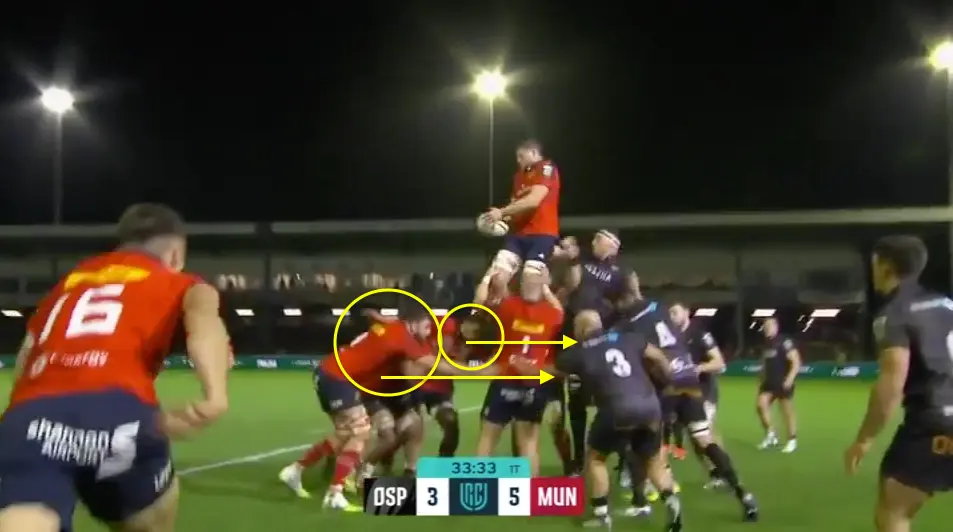
That pressure from a World Cup-winning lock — who was brought back into the Springbok reckoning in 2023 because of this very thing — allows Loughman to maul “down” on Rhys Henry, while the maul moves forward.
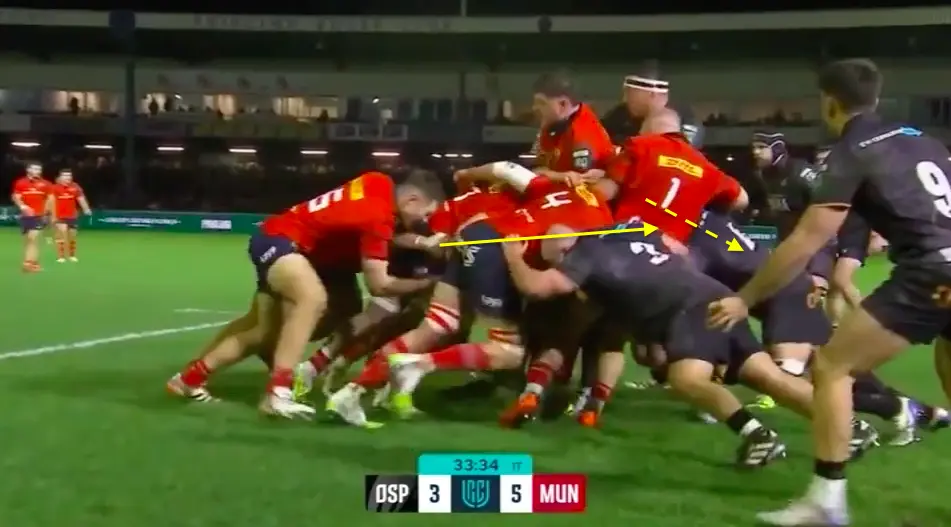
That crushes the counter-push and allows Munster to make huge gains. The right players in the right roles. With Kleyn in this position, he can dominate through defenders and bring all his size and power through onto defenders who have no answer for him.
This is a great example; just watch Red #4 on this GIF.
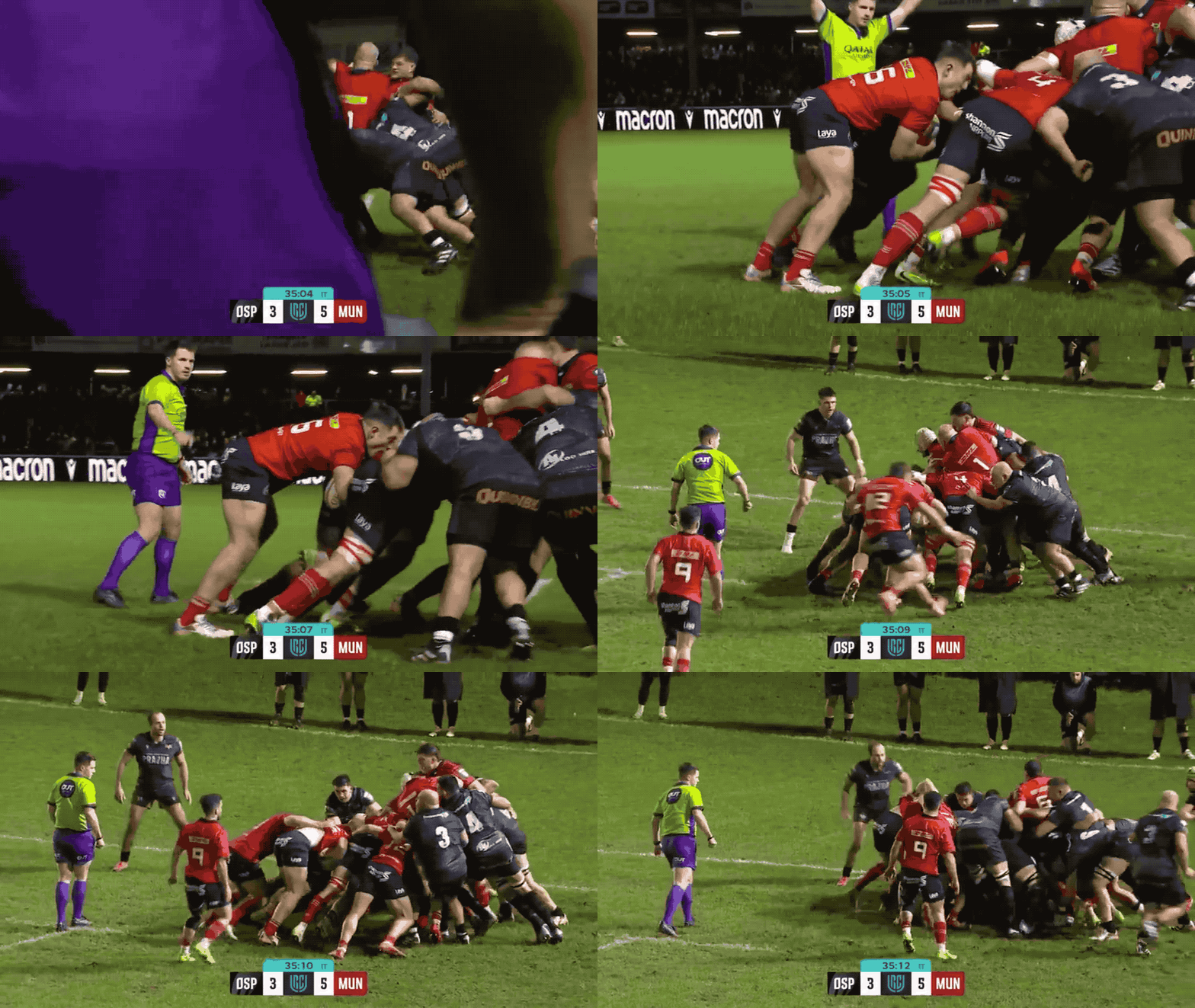
And all of a sudden, the maul was working. At one point, we were making 10+ metres on back-to-back shoves, and that had the added effect of keeping the Ospreys on the floor — they couldn’t risk the aerial contest when our maul was making this much ground.
That’s the kind of thing that has an impact long after this game.
***
In many ways, this was a classic “win without the ball” performance: we only had 42% possession, yet won by +16 because the efficiency and pressure points all tilted one way.
Game control: Munster led almost the entire night
- Minutes in lead: Munster 66 (81% of the match), Ospreys 6 (7%).
- Even with 71% of possession in the last 10 minutes, Ospreys scored 0. That is a closing-out signal: we were comfortable defending the endgame once the margin was built, but that was true since the bonus point was secured early in the second half.
The game was decided in the 22: same access, wildly different outcomes
- 22m entries: Ospreys 6 at 1.6 points/entry; Munster 8 at 3.2 points/entry (26 points from 8 entries = 3.25).
- Both teams spent 18% of possession in the opposition’s 22, but we turned that time into 4 tries, while Ospreys came away with one try + one penalty.
- Munster’s entry-to-try rate: 50% (4 tries from 8 entries). Ospreys: 16.7% (1 from 6). That’s the match right there.
Ruck economy and linebreak creation: Munster found punch, Ospreys got stuck in volume
- Rucks won: Ospreys 117, Munster 73.
- Linebreaks: Ospreys 2, Munster 5.
- Our LBR readout:
- Munster: 5 / 73 = 0.0685 LBR (6.85 per 100 rucks) → one linebreak every 14.6 rucks
- Ospreys: 2 / 117 = 0.0171 LBR (1.71 per 100 rucks) → one linebreak every 58.5 rucks
That’s the cleanest “tempo vs treadmill” split you can get: Ospreys worked hard for very little separation; we created breaks at a far higher rate on far fewer rucks.
Breakdown/defensive pressure: Munster turned defence into ladders
- Turnovers won: Munster 9, Ospreys 3 (a +6 swing).
- We also converted defensive work into outcomes more efficiently:
- Tackles per turnover won: Munster ~21.7, Ospreys 33.0.
With Ospreys holding the ball more, that turnover margin is the mechanism that stopped their volume from becoming points, or even workable pressure.
Set-piece was a silent killer (and it matters versus this Ospreys profile)
- Lineout: Munster 13/13 (100%); Ospreys 9/12 (75%).
- Scrum: Munster 100% (6 scrums), Ospreys 89% (11 scrums).
Given the Ospreys’ wider season profile is set-piece-led, stripping them of clean lineout ball (and giving them extra stoppages) blunts their preferred way to score. Without a functional lineout and a scrum under pressure, they had no reliable way of moving up the field.
Munster’s ruck speed and kick shape fit the scoreboard
- Ruck speed (0–3s): Munster 59%, Ospreys 46%.
- Kicks: Munster 26 vs Ospreys 20.
- Kick-to-pass: Munster 1:6.1 vs Ospreys 1:9.3.
We kicked more (and earlier), which aligns with the overall pattern: less possession, more pressure, better field position moments, and higher strike-rate when we got those entries.
Defensive engine: huge workload, high accuracy
- Tackles made: Munster 195 (93% completion), Ospreys 99 (90%).
- Munster absorbed the possession deficit without leaking multiple scores — and still found four tries.
Two “keep an eye on it” notes (even in a comfortable win)
Restarts received win %: Munster 80% (Ospreys 100%). That is a small number, but it is a cheap way to hand momentum back.
Turnovers lost: Munster 14 (Ospreys 13). The win margin hides that both sides were loose enough with the ball; against a sharper opponent, those 1–2 extra mistakes can become 7–10 points. Our attack seemed to waver from being too flat and “skill taxed” to being too deep and, at times, isolated.
What is sometimes identified as Crowley not “organising” the backline is your classic misinterpretation of how the modern game is played. Munster don’t run a hugely scripted attacking system when we go into multi-phase. All of our midfielders and looped back-three players are there to play each shape as it comes, depending on their read of the defence and their own position in the system as it loops across.
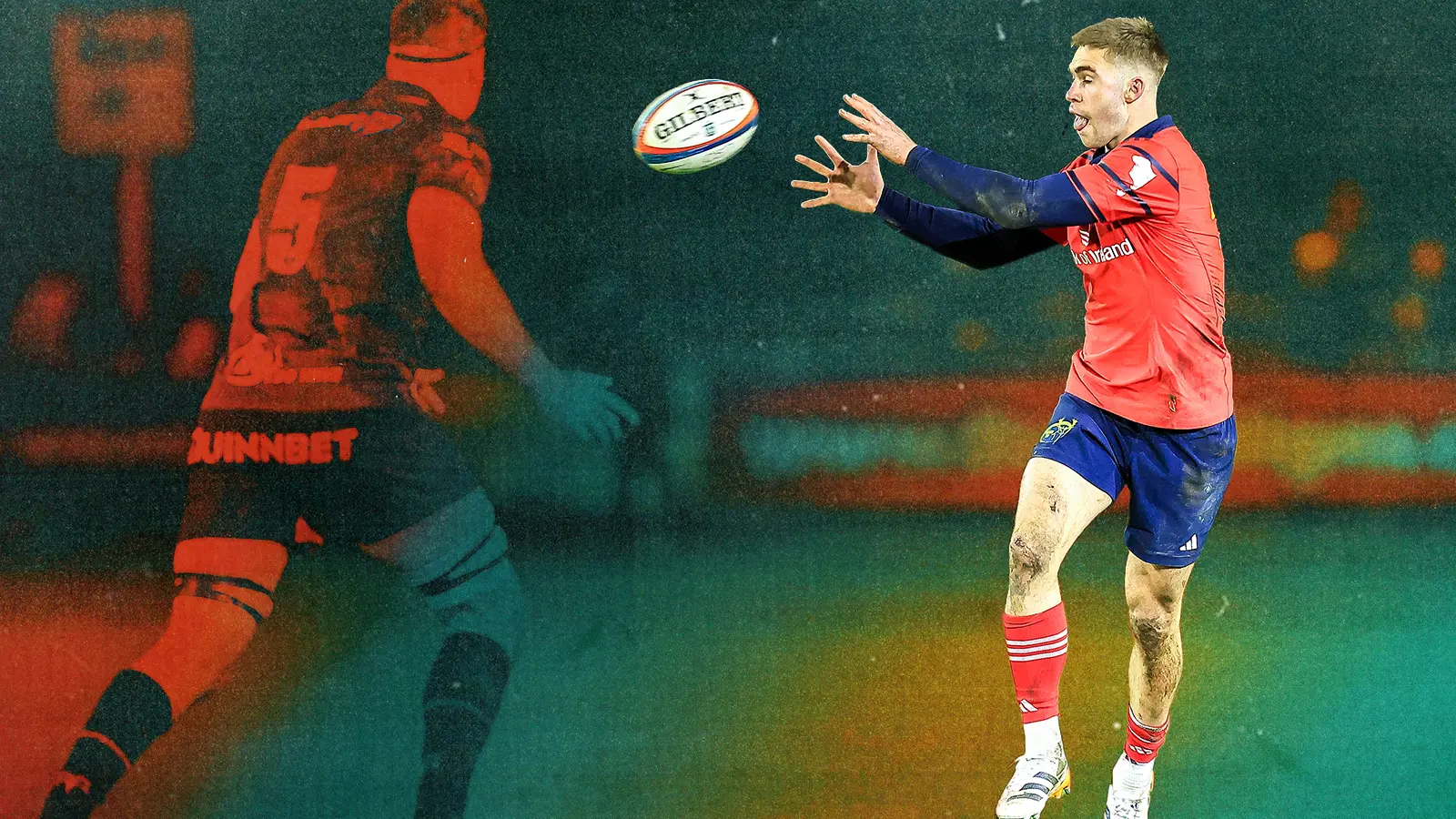
This sometimes translates into runners playing a little flat or relying on a screen pass being exactly what it needs to be.
Our biggest issue seems to be managing depth when we move outside of our central forward “envelope”. This is a really good example of the +1 on the 3+1 pod shape — Jack O’Donoghue — being a little too shallow relative to Alex Nankivell’s position as the ball moves through Crowley, and then the screen and then to Nankivell.
O’Donoghue is in a position here where he’s so flat to the third layer that he makes the catch almost impossible for himself, if he wants to take the ball moving.
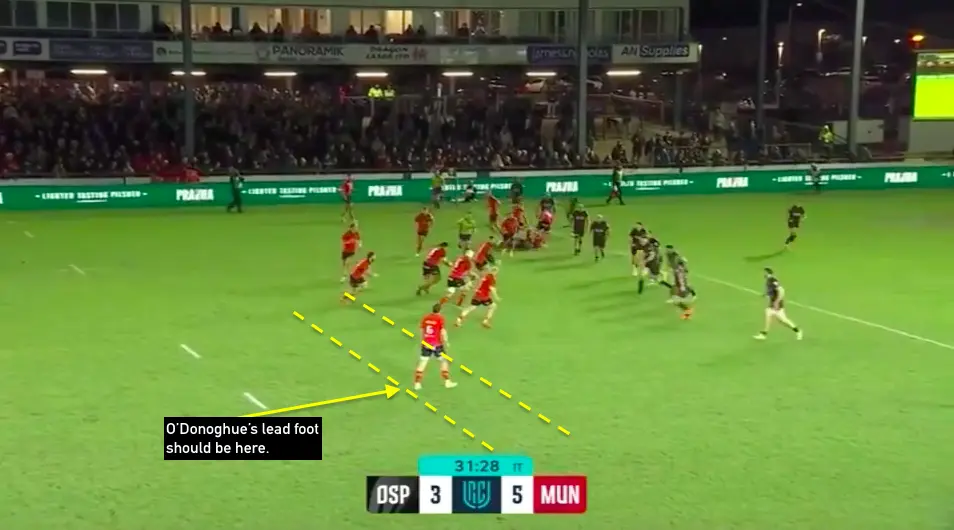
It’s a small thing, but it makes it easier for him to knock on and harder to take the pass and hit the space.
We also suffer quite a bit from a chain of bad passes, because we’re trying to move at pace. Have a look at this sequence.
The first screen ball from Nankivell is slightly ahead of Crowley, who has to break stride to take it, putting him off balance. That means his own carry threat on this play is gone.
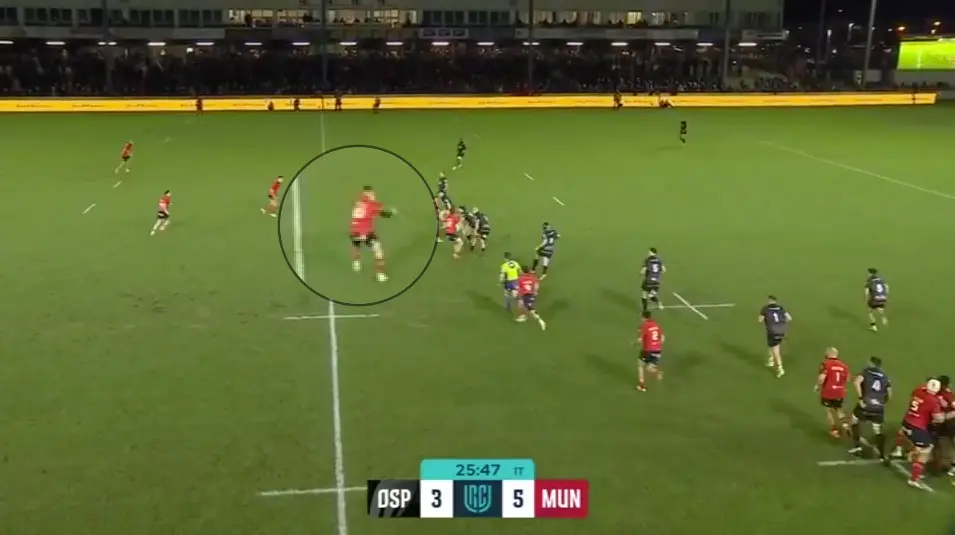
That means his next option in stride is either a pass to Farrell — two men on him — or Nash on the loop. The outside defender makes a good read, and jets onto Nash.
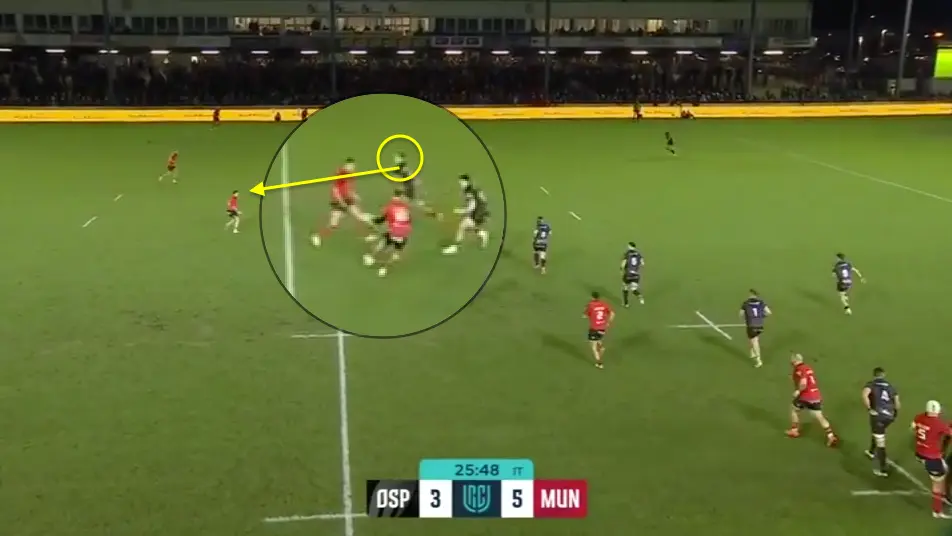
Crowley’s pass to Nash is a little too high, which means Nash can’t get the ball across his body before the tackle hits him.
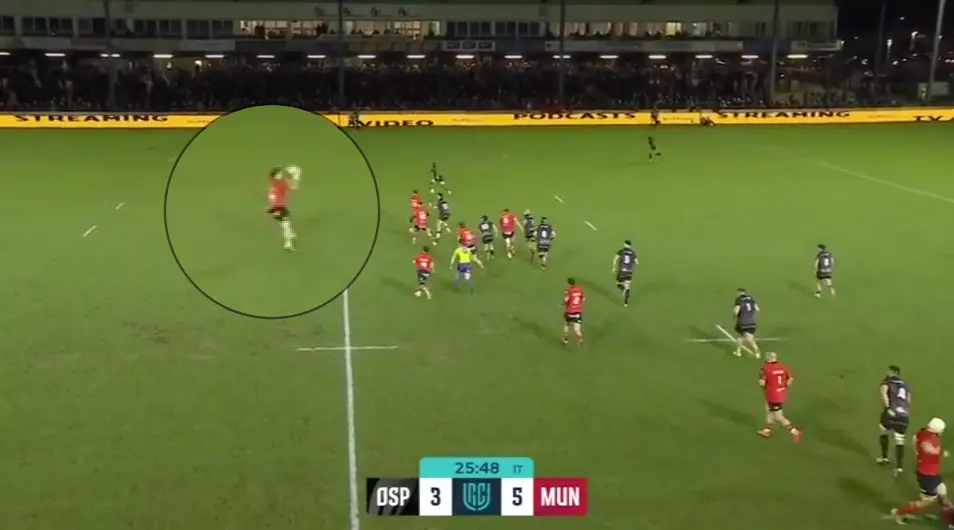
We were almost turned over here — Farrell got the ball away — but it’s a good example of why our turnover count was so high. Everything is done at speed and on the move, so it’s never going to be perfect, but we’re just a little off on some of our passing calibrations. We’re trying to play incredibly quickly, and we expect a lot of movement once we reach the centre of the field. At this point, we haven’t quite managed to fully sync up our running lines yet, so it’s not really a skills issue at the moment, more a positional one, at least in my view.
When we get it right, we look incredibly dangerous. This 49-second sequence is worth watching all the way through. If not for a knock-on in the ruck, this is arguably a try of the year contender.
The close-range handling. The depth of running. The improvisation when a play breaks down. This is excellent stuff. We know it’s in us, and when we get a bit more fluency in the team as we taper towards the end of the season, you have a feeling that those turnovers might start to dry up and then… then you might be seeing something.
For now, bank the set piece dominance, the bonus point and a job well done.
| Players | Rating |
|---|---|
| 1. Jeremy Loughman | ★★★★ |
| 2. Niall Scannell | ★★★ |
| 3. Michael Ala'alatoa | ★★★★★ |
| 4. Jean Kleyn | ★★★★★ |
| 5. Fineen Wycherley | ★★★★★ |
| 6. Jack O'Donoghue | ★★★★ |
| 7. Alex Kendellen | ★★★★ |
| 8. Gavin Coombes | ★★★ |
| 9. Paddy Patterson | ★★★ |
| 10. Jack Crowley | ★★★★ |
| 11. Shane Daly | ★★★★ |
| 12. Alex Nankivell | ★★★★★ |
| 13. Tom Farrell | ★★★ |
| 14. Calvin Nash | ★★★ |
| 15. Mike Haley | ★★★ |
| 16. Lee Barron | ★★★★ |
| 17. Michael Milne | ★★★ |
| 18. Conor Bartley | ★★★ |
| 19. Edwin Edogbo | ★★★★ |
| 20. Tom Ahern | ★★★ |
| 21. Ethan Coughlan | ★★★ |
| 22. JJ Hanrahan | ★★★ |
| 23. John Hodnett | ★★★ |
I thought Nankivell, Wycherley, Kleyn and Ala’alatoa really stood out here, on top of really tight performances from a few others like Barron, Daly, Kendellen and Edogbo off the bench.
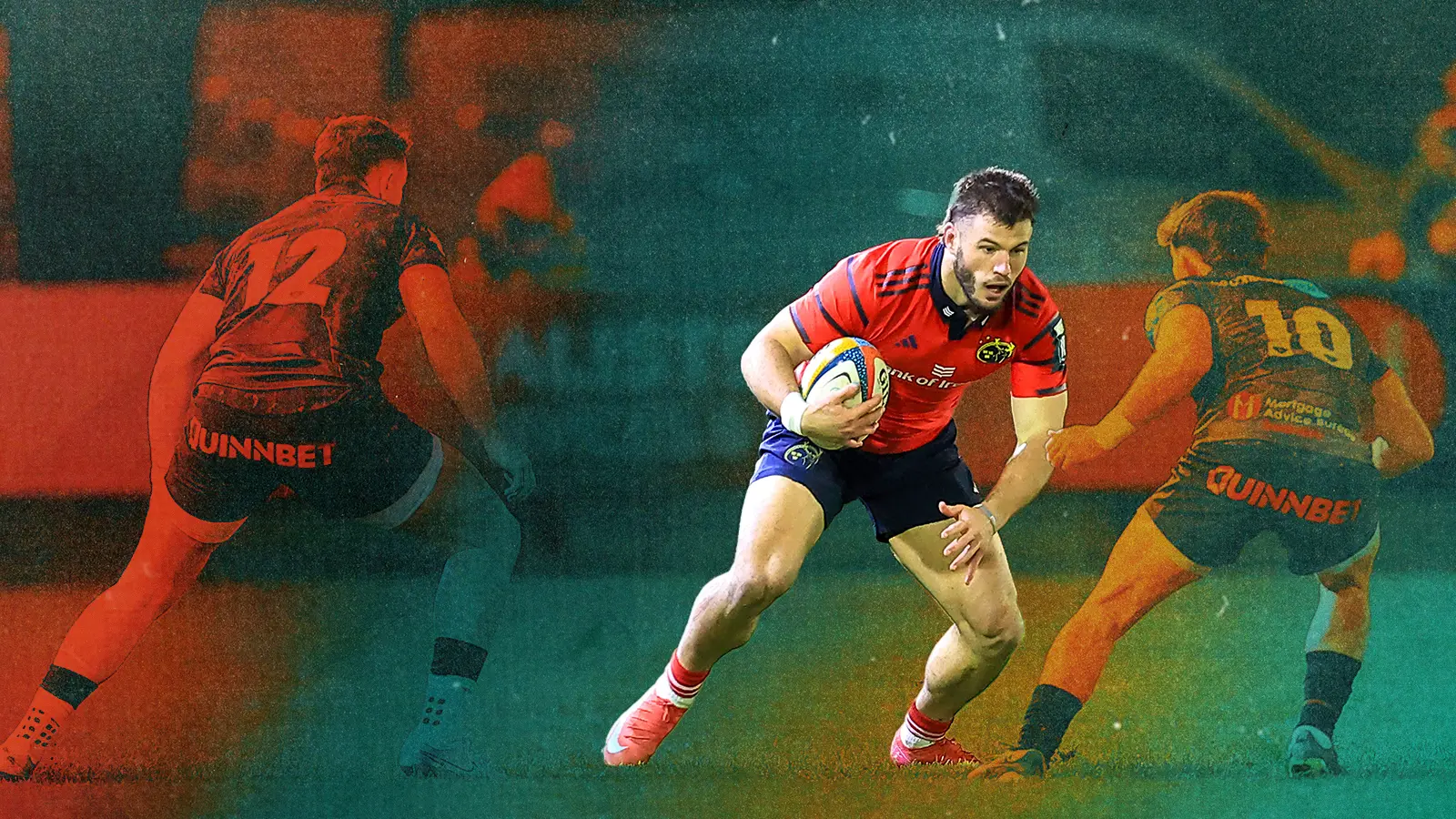
Alex Nankivell had another superb game to back up what we saw against Gloucester in Cork. His defensive work — tackle and breakdown — along with punchy carrying and proper violence at the breakdown is almost the perfect Nankivell performance. His passing work has definitely improved from last season, and he’s being used more in that role. He still has a bit to go to get to the next level as a passer, but he’s getting there.
Jean Kleyn and Fineen Wycherley were hugely imposing in different ways. Kleyn looked every inch a Springbok heavy hitter when it came to his defence and set piece. His mauling, in particular, was a key difference maker, and he looked really strong around the contact area; latching and ruck hitting were excellent.
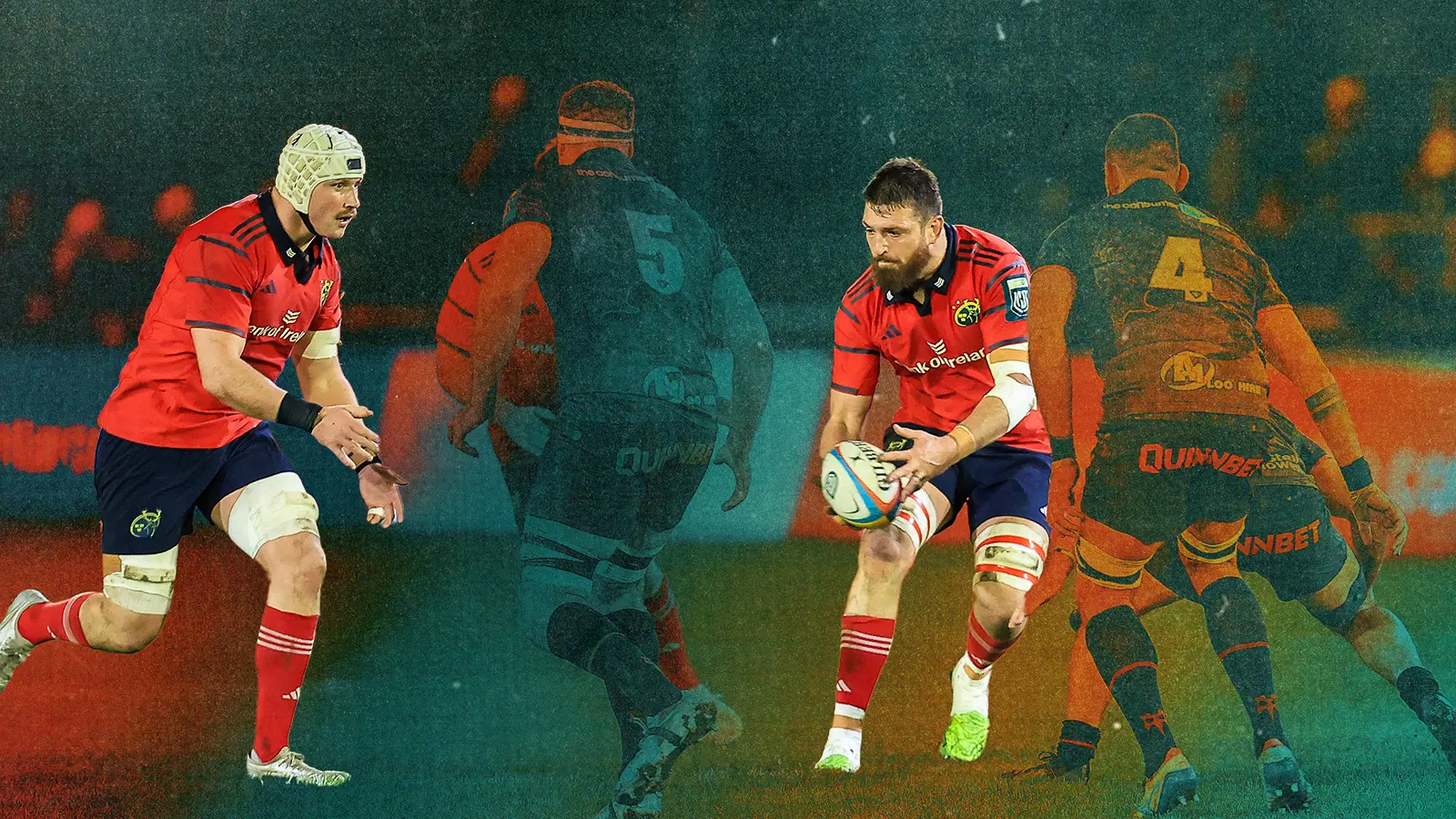
Wycherley called a flawless lineout and played with a real edge throughout, with his usual excellent workload at the ruck. Another very strong performance in a season where he seems to have really stepped up a level.
Michael Ala’alatoa had the kind of game he was signed to produce. Heavy defence — 20 completed tackles — rock solid scrummaging, and the kind of clubbing impact at the ruck and counter-ruck that makes you sit up and take notice.
Look at his power here, and then the impact when he bangs the next ruck.
He’s exactly what you’d want in a game like this. 135kg of heavyweight, proper body shifting impact at the ruck and set piece power. Outstanding.
