



This game is a banana peel.
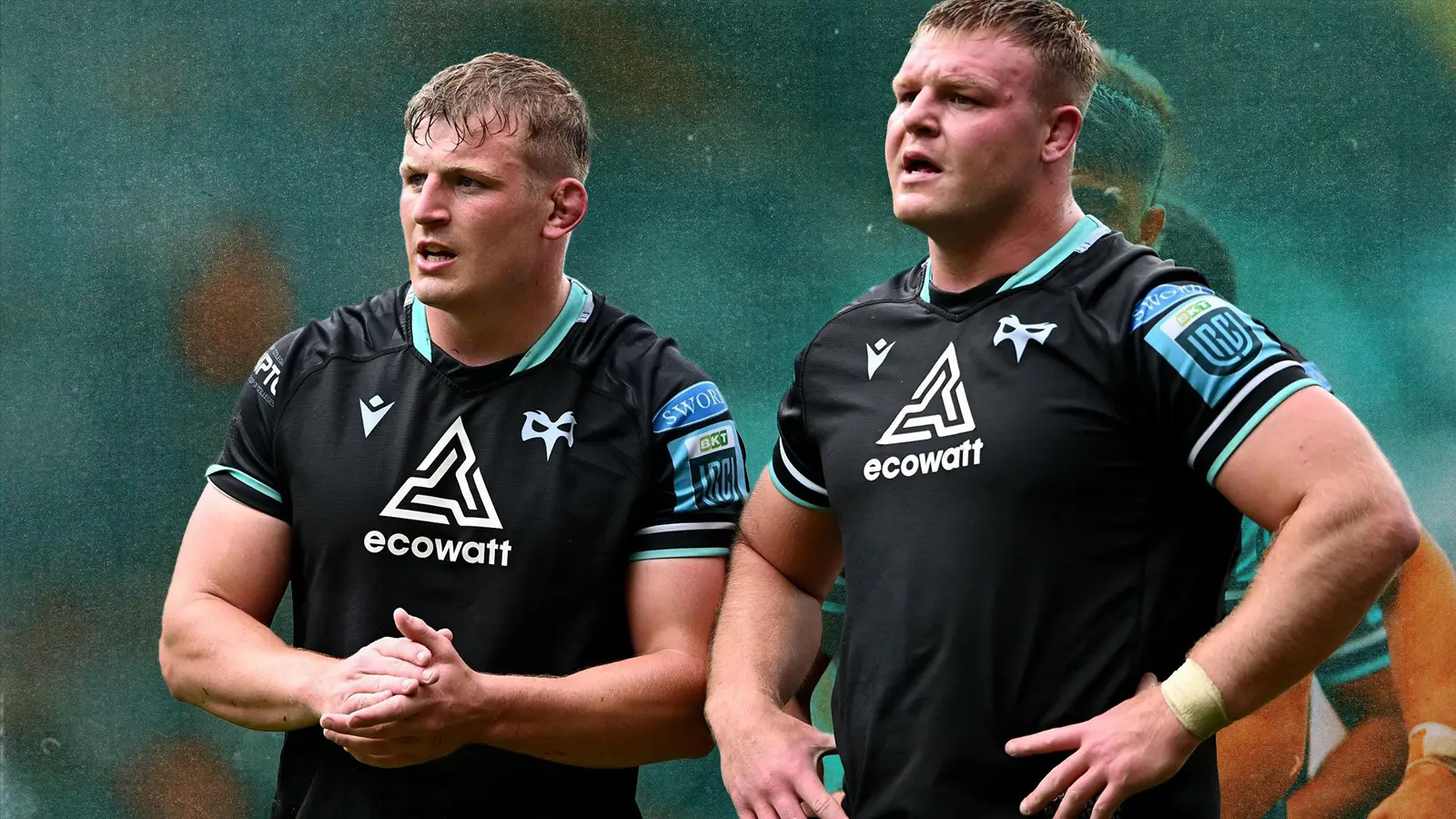
All the noise around Welsh Rugby — and the Ospreys in particular — has been awful in the last few months. Just this week, it was announced that core leaders in this Ospreys team, Jac Morgan and Dewi Lake, would be leaving for the Gallagher PREM, and it seems like all the signs are that the Ospreys are going to be cut as a franchise in the URC by the end of the season. It’s an incredibly destructive, short-termist, desperate move by the WRU, and it will ultimately leave the game in Wales weaker. That could sometimes fool you into thinking that the Ospreys are a busted flush. Demoralised. In reality, it’s anything but. Every player we’re likely to face this weekend in Bridgend is playing for their professional future as a rugby player, and if we’re not ready to meet that desperation head-on, we’ll lose.
Head coaches often want to get their players believing in the idea of playing for something more than a badge or a jersey. The Ospreys don’t even have to try all that hard to get that message across right now. They are playing for their jobs next season — food on the table, clothes for the kids, mortgage payments, car payments.
They know it.
We know it.
And we have to be willing to match that energy if we want to break them down.
For Munster, the jeopardy isn’t nearly as existential. Any win here will keep us firmly in the top four equation and away from the infamous URC moshpit. Our loss to the Stormers last time out stung, but it was far from fatal in our chase for easier progression to the knockout stages later this season. Back-to-back losses always hurt you in this league, though, and nobody is under any illusions that our model demands four points from this game at a bare minimum. In the middle of a ten-game block, with the need for minute management piling up, that can be a challenging ask.
Munster Rugby: 15. Mike Haley; 14. Calvin Nash, 13. Tom Farrell, 12. Alex Nankivell, 11. Shane Daly; 10. Jack Crowley, 9. Paddy Patterson; 1. Jeremy Loughman, 2. Niall Scannell, 3. Michael Ala’alatoa; 4. Jean Kleyn, 5. Fineen Wycherley; 6. Jack O’Donoghue (c), 7. Alex Kendellen, 8. Gavin Coombes.
Replacements: 16. Lee Barron, 17. Michael Milne, 18. Conor Bartley, 19. Edwin Edogbo, 20. Tom Ahern, 21. Ethan Coughlan, 22. JJ Hanrahan, 23. John Hodnett.
Ospreys: 15. Max Nagy, 14. Dan Kasende, 13. Evardi Boshoff, 12. Owen Watkin, 11. Keelan Giles; 10. Dan Edwards, 9. Reuben Morgan-Williams, 1. Steffan Thomas, 2. Dewi Lake (c), 3. Rhys Henry; 4. Rhys Davies, 5. Ryan Smith, 6. James Ratti, 7. Harri Deaves, 8. Morgan Morris
Replacements: 16. Sam Parry, 17. Cam Jones, 18. Tom Botha, 19. Huw Sutton, 20. Morgan Morse, 21. Kieran Hardy, 22. Keiran Williams, 23. Jack Walsh
From this season’s dataset, the Ospreys profile as a set-piece-driven, strike-efficient side that leans on collision dominance + aerial pressure, rather than long, high-tempo phase play.
What the numbers say about the Ospreys’ identity
They win contact, and they finish when they get a crack
- Dominant contact: 44.8% DOM (very high) with 59.0% gainline.
- Evasion: 21.3% (above Munster’s 19.4) — they’re not just trucking it up; they’ve got footwork and late movement.
- Break conversion: 50.0% breaks-to-try and 21.7% “leading to try/break” — when they break you, they tend to cash it in quickly.
Munster implication: this isn’t a “bend-don’t-break” opponent. If our edge spacing or fold is sloppy, they will punish us so we’ve got to bring the defensive solidity we’ve shown so far at a bare minimum.
Their attack is built on platforms, not chaos
- Try origins: 73.7% from set piece (Munster 52.4%).
- Turnover tries: 0.0% — they’re not living off broken-field turnover ball.
- First-phase share: 26.3% (Munster 38.1%) and 10m set-piece-to-try 26.7% (Munster 43.8%).
Read: they score from set piece, but often not instantly on strike-1. It’s more: platform → a couple of phases → stress point → break/finish.
Munster implication: discipline and exit quality matter, because cheap pens + kick-to-corner is basically feeding the Ospreys their favourite way of scoring this season.
They’re a kick-pressure team with contestables baked in
- Contested kicks: 20.8% (Munster 13.5%) — that’s a meaningful stylistic tell.
- Possessions ended by kick: 42.4% (same as Munster).
- 5+ phase possessions: only 11.5% (Munster 15.1%).
Read: they don’t want to play 10–12 phase “earn it” rugby. They want shorter cycles: carry/carry/kick, and compete in the air or reload off the next set piece. This is their entire game, and it’s their primary ladder for moving up the field.
They will ask questions at the breakdown
- Rucks per jackal: 24.2 (Munster 35.3) — they go after the ball more often.
- Defensive line is reasonably solid: 88.7% tackle success, 30.6% gainline denial.
Munster implication: if our first cleanout is late or ineffective, they’ll slow us, win pens, and funnel the game back into the set-piece launch zones that define their game
5) The pressure point: accuracy + tempo
- Touches per error: 27.6 (Munster 32.1) — they cough the ball up more frequently, but they know this. They play fewer long sequences outside of the 22 than most sides, and will kick early to get their chase and jackal-heavy core over the ball around our 10m line.
- <3s ruck ball: 46.0% (Munster 60.9) — Ospreys speed-of-ball is notably slower across the season so far, so we’ve got a decision to make. Stick with a breakdown approach that will hurt them, or stand off, make our tackles and then try to win the aerial battle we know is going to be coming with the weather combined withthe Ospreys approach so far this season.
Munster implication: if we can keep ruck speed high and force them to defend longer sets, we’re pushing them away from their preferred rhythm and into an error/penalty profile.
What matters most for Munster this weekend
- Win the “platform denial” battle: scrum/lineout pressure + discipline (don’t hand them easy corners).
- Treat the aerial game as a primary battleground: they contest more; plan exits and backfield coverage accordingly.
- Go after them with tempo: our numbers suggest Munster can play faster than Ospreys can handle — make that a weapon.
- Be ruthless on linebreak defence: their break-to-try is strong; first miss often becomes points.
For the first time this season, since the Scarlets, we’re going to be coming up against a team that has a functionally weaker scrum than we do.
I say functionally here — Ospreys have the best defensive scrum in the URC, but they have the worst offensive scrum. That tells me that they have a very aggressive loosehead side that is either all duck or no dinner.
Given the weather we’re expecting and the kick volume that has defined the Ospreys so far this season, that can be an area of strategic advantage for us if we can get an edge there. As much as the Ospreys want to kick to compete, we can and should approach this game with a similar mindset.
Our own kicking and contesting can be incredibly powerful here if we can bring the same set-piece pressure to the Ospreys that has so hampered us this season. At the scrum, they are very prone to getting squashed and pressurised for elbow down on the loosehead side against any kind of heavy scrummaging, especially when under pressure on their tighthead side.
With Loughman at loosehead and Ala’alatoa starting at tighthead, we can absolutely pressure them in the same way on either side of the ball, so we should be looking to kick freely and attack contestables constantly — we should have scrum dominance, which should then allow us to kick freely and pin them back.
The Ospreys will then react with their usual contestable game — they’re top four in the URC for competing in the air — but they aren’t retaining those kicks at a high enough level. That brings it back to the scrum; whoever wins that engagement, or can use it as a platform to attack more reliably, will win.
