



Last year was not a vintage one for Irish rugby, when it came to the men’s side of the game.
The 20s had a down year — to put it mildly — and the men’s senior team were bang average at best, worringly poor at worst.
If anything, I think the discourse around the Irish #10 jersey was quite beneficial for some, as it consumed so much energy that there wasn’t much left to discuss regarding just how underwhelming last year’s November Series and Six Nations actually were.
Ireland suffered their worst loss to France in 15 years last season. Our worst loss at home to France since 1997. I know how the reaction would have been every other year, but last year was different. There were enough asterisks to count as a red warning for an incoming blizzard.
The game itself was treated as somewhat of a blip, but if anything, I think that loss to France was the natural outcome of a year that had been trending downwards since the summer of 2024.
But all that is in the past. There is only the now. For Andy Farrell, that’s where he wants to live. This week, this game, no further ahead than that. Farrell wants to live and die by results, but the only issue is that you have to live and die by results. And results can be blunt instruments.
I’d go as far as to say that Ireland are a loss this weekend, plus one more during November, away from a full-on existential crisis. It’s a commonly held belief that Andy Farrell is the most bulletproof head coach in the test game right now, but if you ask me, I think this 2025/26 test season is going to be his biggest challenge and, if it goes wrong, one he might not be around to rectify.
When you are very particular about doing things your way or the highway, don’t be surprised if that binary goes against you the longer you roll the dice.
***
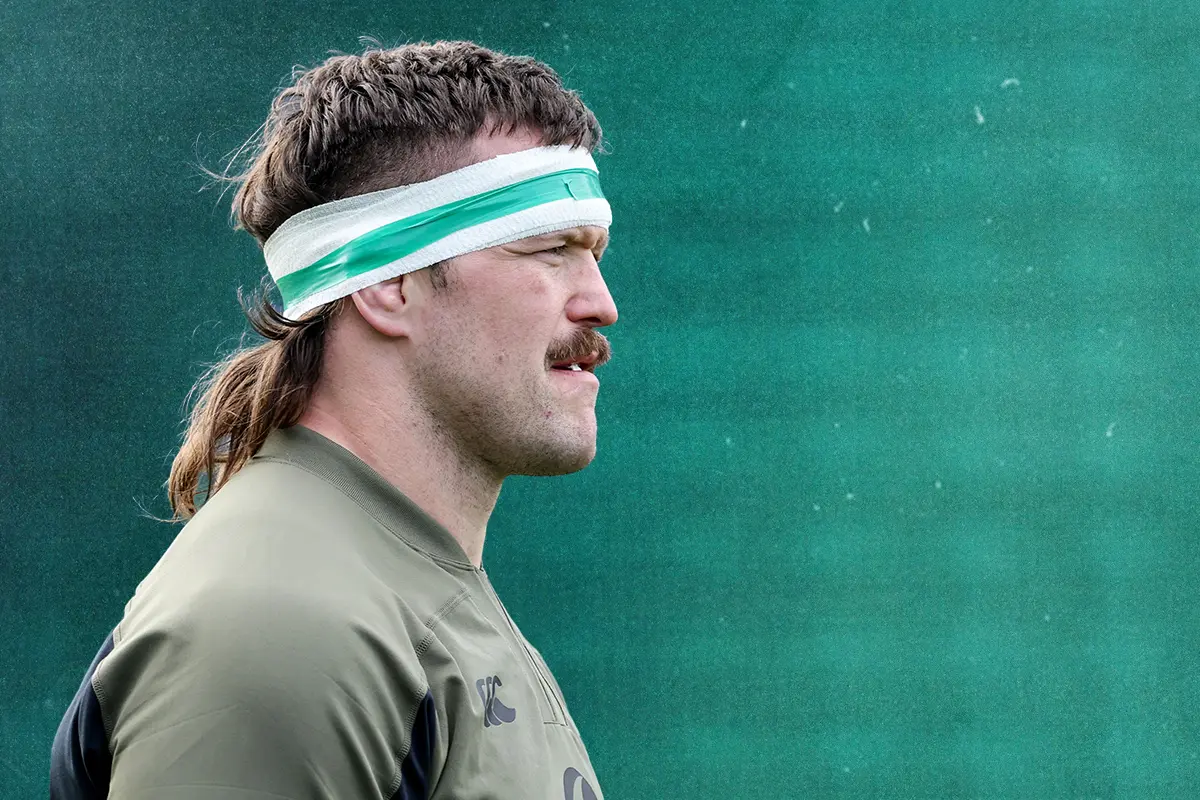
The All Blacks have a way of sharpening the focus.
We are defined by them, still.
When we finally beat them in Chicago back in 2016, it felt like the real winners’ medal we took that day was their hatred. Earning the All Blacks’ hatred — as opposed to the scorn and fake pity they give anyone who hasn’t earned it for free — puts you in rarified air, but there’s a cost with every breath.
And you have to be willing to pay it every time you play them, but you’d pay it.
We’ve seen what their scorn looks like.
I’ll take their hatred all day, every day.

Beating the All Blacks in 2016 gave us a pass to the big time in the modern test game, something we would solidify two years later in 2018. Even the loss to them in the 2019 World Cup couldn’t put us back into the little old Ireland box they kept trying to make for us. When we beat them in a series in New Zealand during the summer of 2022, that box was gone forever.
Regardless of what happens in the next ten years, the last ten have ensured that the days of New Zealand treating Ireland like a dog that learned to stand up on its hind legs, a curiosity that holds the interest for a second before being instantly forgotten, are long gone.
And long may they stay gone.
***
We intersect with the All Blacks at a weird time in their cycle. Ask people in New Zealand about this particular group and you’ll get a lot of different answers, ranging from enthusiastic to outright dread. The loss at home to the Springboks back in the Rugby Championship caused a lot of psychic damage that they haven’t recovered from, plainly. For me, only a clean sweep this November will lift some of the pressure that’s been steadily building on Scott Robertson in the last 18 months.
From the outside looking in, even with their injury crisis in the second row, they look in a pretty good place, albeit with some worries about what kind of team they want to be. When they play pragmatic, sledgehammer rugby, they look like they can beat everyone. When they try to throw it around, they look beatable by pretty much everyone. But I get the feeling they’re trying to make the latter work when the former is proven to be successful.
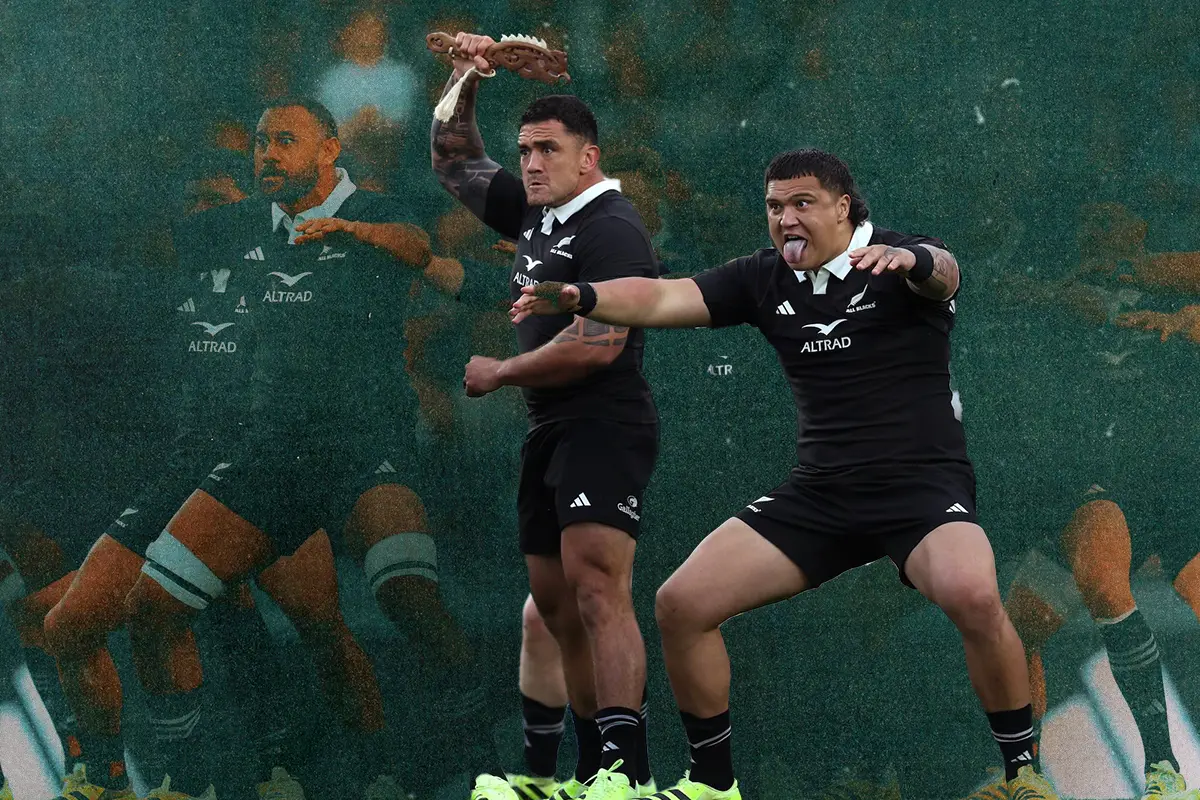
I think a collective form of oppositional defiant disorder is holding the All Blacks back. In the last ten years, they’ve watched the Springboks take their title as the undisputed world’s best through the medium of a strong kicking game, tight offensive phase play, intense, suffocating defensive effort and a big set piece. I know that, deep down, many in the All Blacks bubble want to unseat the Springboks by being their stylistic opposite. In New Zealand, the concept of “if you can’t beat them, join them” doesn’t exist. As far as they’re concerned, the natural order of things should be that you can’t beat them, so you join them.
We’ll see what approach Robertson brings this weekend, but I’ve a feeling that losses to Argentina and South Africa already this season will have sold him and his team on pragmatism.
Ireland: 15. Jamie Osborne; 14. Tommy O’Brien, 13. Garry Ringrose, 12. Stuart McCloskey, 11. James Lowe; 10. Jack Crowley, 9. Jamison Gibson-Park; 1. Andrew Porter, 2. Dan Sheehan (c), 3. Tadhg Furlong; 4. James Ryan, 5. Tadhg Beirne; 6. Ryan Baird, 7. Josh van der Flier, 8. Jack Conan.
Replacements: 16. Rónan Kelleher, 17. Paddy McCarthy, 18. Finlay Bealham, 19. Iain Henderson, 20. Caelan Doris, 21. Craig Casey, 22. Sam Prendergast, 23. Bundee Aki
New Zealand: 15. Will Jordan; 14. Leroy Carter, 13. Quinn Tupaea, 12. Jordie Barrett, 11. Caleb Clarke; 10. Beauden Barrett, 9. Cam Roigard; 1. Ethan De Groot, 2. Codie Taylor, 3. Fletcher Newell; 4. Scott Barrett, 5. Fabian Holland; 6. Simon Parker, 7. Ardie Savea, 8. Peter Lakai.
Replacements: 16. Samisoni Taukei’aho, 17. Tamaiti Williams, 18. Pasilio Tosi, 19. Josh Lord, 20. Wallace Sititi, 21. Cortez Ratima, 22. Leicester Fainga’anuku, 23. Damian McKenzie.
I’ve been trying to put my finger on what Ireland’s issues have been over the last year and a half, and I’ve struggled to really settle on one silver bullet.
Yes, Ireland, like Leinster, are vulnerable to teams who kick at a high volume, both contestably and on transition starters. Don’t be surprised to see New Zealand do the same here either, and they wouldn’t even have had to ask Jordi Barrett about that one.
That secret is well out there at this point.
But that’s not it, either.
So I went back and did a full Net Efficiency (NE) and Linebreak per Ruck (LBR) run on Ireland since the summer tour to South Africa in 2024.
And one thing really stood out
We’re not creating linebreaks at the same volume per possession that we were post 2023 World Cup, and we’re conceding them at a worryingly consistent rate.
Here’s a data readout I put together of all those games. Keep an eye on the LBR Δ (Delta, or differential) between the normalised linebreaks per 100 rucks that we score in games versus the opposition. Anything with a minus score is a game where the oppositions LBR per 100 rucks was larger than ours on a game to game basis.
| No. | Opponent | Result | Δ Entries | Δ PPE | LBR Δ (IRE−OPP) |
|---|---|---|---|---|---|
| 1 | South Africa | L | 1 | -1.2 | -3.2 |
| 2 | South Africa | W | -2 | 1.6 | 4.68 |
| 3 | New Zealand | L | 1 | -0.4 | -14.43 |
| 4 | Argentina | W | 1 | 0.7 | -1.83 |
| 5 | Fiji | W | 12 | 0.2 | 7.42 |
| 6 | Australia | W | 9 | -2.8 | -1.37 |
| 7 | England | W | 4 | -1.0 | 1.0 |
| 8 | Scotland | W | 3 | 0.1 | 5.35 |
| 9 | Wales | W | 0 | 0.0 | -3.19 |
| 10 | France | L | 1 | -1.5 | -6.94 |
| 11 | Italy | W | 5 | -0.6 | -4.81 |
When you sort by LBRΔ — just click on that column — you get a visual representation of the games Ireland either lost, or were very close to losing. On the one hand, that’s a positive; we dug out wins in those games regardless, but at some point in the test game you need to find a rythem that returns you to positive LBR because that correlates with efficient, winning rugby regardless of other style factors like kick volume, big set piece, etc.
At a basic level game to game, we’re not creating linebreaks regularly, and our opponents are; leading to that feeling of “grind and scramble” that has crept into Ireland’s game in the last 18 months. Everything seems harder to come by, regardless of who’s playing #10.
I think it’s this issue that has bothered Farrell more than anything, and forced his almost frantic chopping and changing at #10 post Sexton. Maybe he doesn’t look at the stats like this, but I think this is what he’s feeling.
That is particularly true this weekend when we play a New Zealand side that, regardless of what else is going on, generate huge LBR numbers while also being way more efficient in the 22.
The Core Matchup
NZ win on efficiency; Ireland win on access.
From the samples I ran with (Ireland 2024/25, NZ 2025 Summer Tour and Rugby Championship): NZ run equal entries but a +0.58 PPE edge while holding opponents to ~4.9 LBR/100. Ireland usually create +3 entries but need non-negative LBR Δ to convert that into predictable wins.
Target Conditions — Ireland’s “green lights”
-
Entries cushion: ≥ +3 by 60′ (near-automatic win state in Ireland’s last 18 months).
-
LBR differential (IRE − NZ): ≥ 0 by 50′; ideal is ≥ +2.
-
Ireland PPE: lift from ~2.1 baseline to ≥ 2.5 (vs elite).
-
NZ LBR/100 allowed: ≤ 5.0 (that’s where NZ opponents get blunted).
-
K:P (Ireland): ~1:6 to 1:7 — enough contestables/territory to grow entries without over-phasing.
Red flags (Keep an eye on these during the game)
-
IRE LBR Δ ≤ −6 at any checkpoint → we’re in the loss zone from Ireland’s profile in the last 18 months.
-
NZ PPE ≥ 3.5 on ≤ 8 entries → classic All Blacks win script (they don’t need volume to score).
-
Ireland ≥ 95 rucks with LBR/100 < 5 → possession heavy, incision light (NZ/FRA template that killed us last season).
How Ireland manufacture the win state
Access first, then conversion:
-
Territory & air: kick more purposefully (contestables + sideline), live around 1:6–1:7 K:P. Our aim is +3 entries, not a lineout festival.
-
Strike earlier: avoid 10+ phase stalls. Build 2–3 phase strike packages (tight-to-tip-on → pullback to 10/12; short-side reload after a midfield carry; kick-return switches to force unstructured edges).
-
Red-zone PPE bump: lean on maul/scrum to get two “cheap” entries; mix one pre-called short-side jab to break NZ’s fold.
-
Break creation: front-row tip shapes + 12’s gainline and gravity to lift LBR/100 to ≥ 7 against elite linespeed. That’s our ceiling unlock here.
Defensively:
-
Starve first-phase kills: contest in the air, keep exits clean, set early line, and slow ruck post-break (first two seconds after a tackle are everything vs the All Blacks).
-
Contain their clinicism: if NZ’s LBR is modest but PPE is high, they’re scoring off set-piece/strike — answer with field position rather than more phase play. Stop any bleeding with long kick resets — need O’Brien and Lowe to smother Carter and Jordan.
NZ’s likely approach (and our counters)
-
NZ comfort with equal entries: they’ll trust PPE > 3.0 to carry — expect them to accept a 50–50 territory split.
Counter: push them off script with a contestable-heavy aerial game; accumulate red-zone visits while keeping their LBR ≤ 5/100. -
If NZ trail on entries: they won’t chase rucks; they’ll look for clean first-phase or turnover strike.
Counter: protect your own kick receipts (chase spacing) and kill their first ruck after a turnover (no quick ball).
Stat Check for Clarity
-
30′ check: If Δ Entries ≤ 0, nudge K:P down (more kicks), aim for touchline wins and restarts.
-
50′ check: If LBR Δ < 0, route more possessions through set-piece/maul to manufacture PPE while your strike tweaks bed in.
-
60′ check: Bank +3 entries or pivot harder to three-point accumulation + territory squeeze.
Keep an eye out for those during the game because they’ll tell you almost everything you need to know about how this game will break down. For me, this comes back to Ireland’s ability to defend the edges against New Zealand’s speed and power on transition, and how we balance the kicking game with that transition linebreak threat.
Whatever happens, it’s going to be compelling.
