


I love the concept of “vrayno“. At a base level, it just means “lie” or “white lie” in Russian, but it’s much more than that, too. I think it sums up the modern era of politics, social media and sometimes even life itself. How many times have I taken a meeting with a potential sponsor only to realise pretty early on that he has no intention of actually sponsoring the site at all, and that he obviously spots that I’ve seen that, but we both just sit there for 40 minutes wasting each other’s time? Twice.
He lies about his money, I lie that I haven’t realised he’s lying, and we both get to pretend to live in a shared reality where he isn’t wasting my time, and that he actually is as successful as he’d like to be. Vrayno.
Keep it in your back pocket. I promise you’ll see it all the time.
***
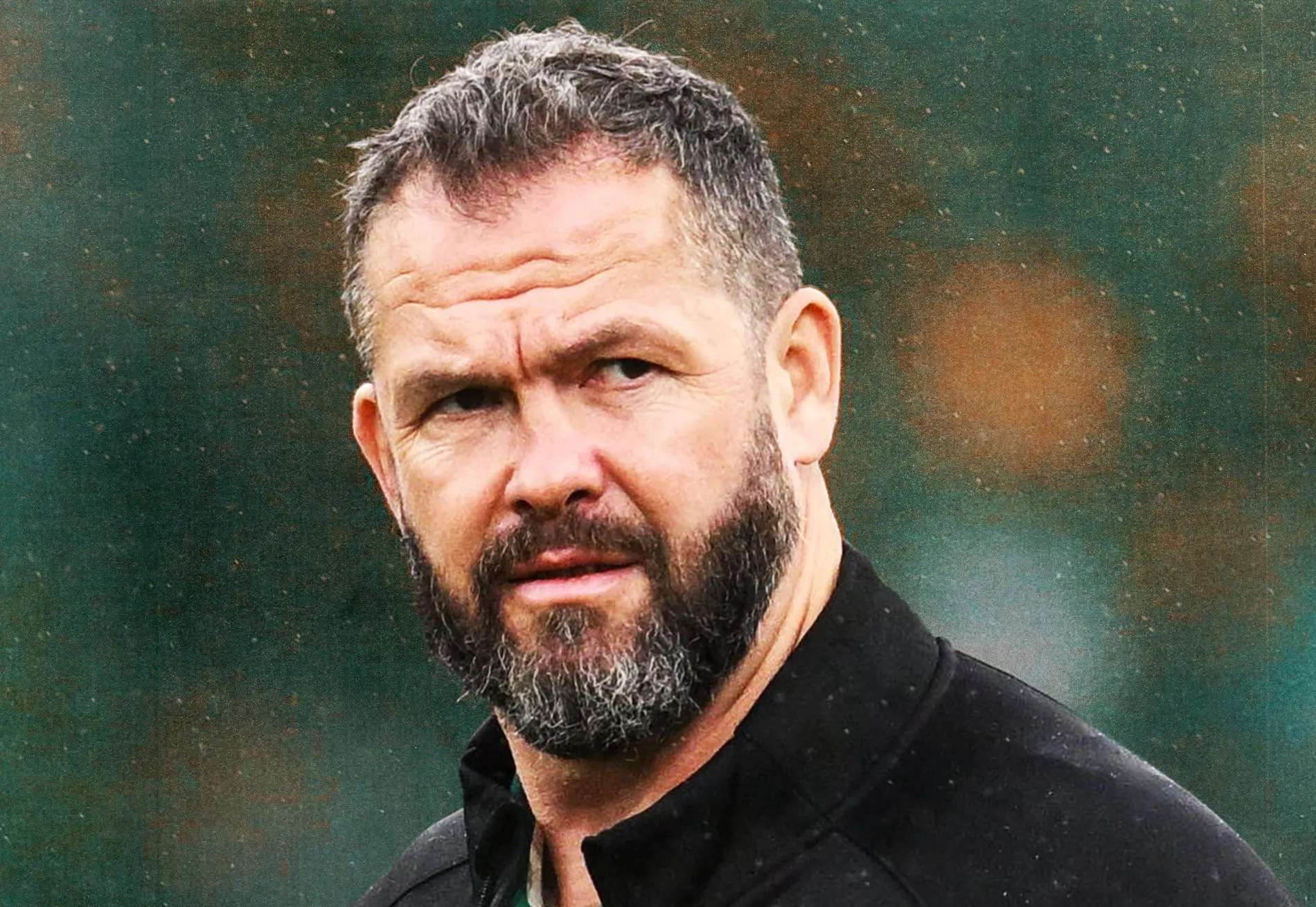
Andy Farrell doesn’t really do media. If he does, it’s only ever on his terms. It’s a privilege that only Andy Farrell has managed to earn amongst head coaches in this sport. Rassie Erasmus has won back-to-back World Cups, and he replies to people on Twitter who wonder why he hasn’t selected one player or why he picked one guy over another.
Andy Farrell does things differently.
Just two weeks ago, he named his squad for this November series, before Munster played Leinster in Croke Park, but the Irish head coach didn’t present himself to the media to explain his selections, or why he named the squad before that weekend’s heavily anticipated interpro game in Croke Park. Now, to be fair, he did do a fair whip around all the podcasts and light-entertainment shows around the same time to promote his newly released autobiography, so maybe he was just sick of the sight of Røde lapel mics.
Not to go too inside baseball here, but Andy Farrell doesn’t like talking to the media. Very few coaches or players do. But it’s the dance we play where they get to be professional rugby guys, and the only catch is that they have to field questions that are 90% bullshit a few times a week.
Clayton McMillan has taken a very proactive step in speaking to the media every single Thursday after his Munster team has been named.
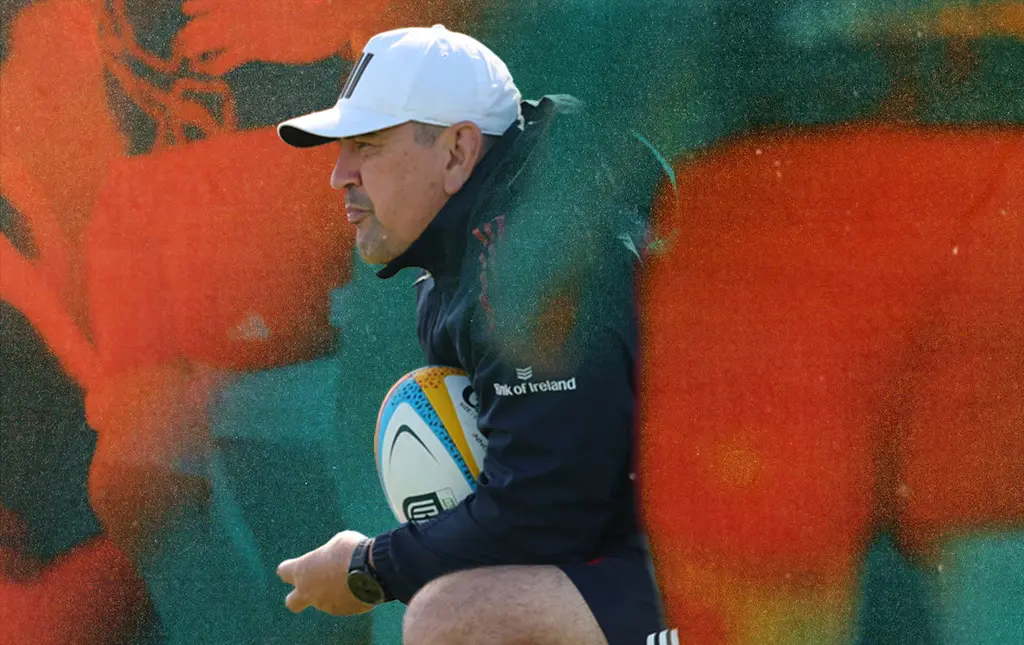
It’s a small thing, but it exudes self-confidence. He’s controlling the narrative, putting himself out there as Munster’s main voice. It says, “I make the decisions here, and I live and die by them”.
Andy Farrell only does the media that he and the IRFU are contractually bound to provide, which is usually pre- and post-game media literally on the day. Whenever it comes to general media in the build-up to a game, one of O’Connell, Fogarty, Goodman or Easterby is usually put up for the press.
For whatever reason, Farrell seems to have a distrustful relationship with the media, which I’ve always found odd because most of these guys talk about him the same way a five-year-old would talk about Spiderman.
He can do no wrong.
When Farrell and his media team (check out this podcast around 14 minutes in) led the way on the ultra-divisive Prendergast vs Crowley debacle last year, there was no focus at all on what a mess Farrell had made of the situation. By pushing Prendergast too soon, he risked putting a talented young player under the blowtorch, something you could say happened by the end of the Six Nations, and definitely by the time the European Cup semi-final rolled around, and he achieved that by icing out the flyhalf who had helped him win only his second ever Six Nations the season before, all while bringing in his comfort blanket #10 Johnny Sexton as a kicking coach/guru/consultant with zero coaching credentials.
Any improvement Jack Crowley made was credited to Farrell’s “tough love”. What most people don’t know is that Farrell’s incompetence in managing this situation almost saw Crowley depart for Leicester Tigers.
When Sam Prendergast floundered against England, Wales and France, and it was just… ignored. Too much had been invested in making Farrell’s dithering at #10 — just ask Ross Byrne, Harry Byrne, Ciaran Frawley, and Joey Carbery — into hard-nosed pragmatism. Prendergast was red raw, with massive holes in his game, but that had to be ignored to make Farrell’s decision make sense to a public that was faulting along provincial lines.
Start from the position that Andy Farrell must be right, and work backwards from there.
When Farrell brought neither of the two Irish flyhalves on the Lions tour — the only thing close to an admission you’ll ever get from Farrell that he made a mistake — that was later rolled into the reverse logic pathway.
Needs must.
He needed to be defended against the insinuations from the rotters in the English press that he had brought too many Irish players from a squad that was haunted to finish third in that year’s Six Nations.
They had credit in the bank.
Farrell can see through form*.
* A real quote from a real Irish rugby journalist.
When Farrell later snuck Sexton onto the coaching ticket — conveniently after the general squad announcement when the rest of the coaches were listed and when he might have been questioned about it — that was also completely ignored.
Why should Andy Farrell distrust anyone in the Irish rugby media?
They reconstruct every decision he makes into a win regardless.
***
Every time Andy Farrell names an Ireland squad, he tells us through the medium of his selections that this Irish squad doesn’t need to be refreshed and renewed, something he himself knows can’t be true.
And every year, vast swathes of the Irish rugby media pretend to believe him.
Vrayno.
What’s the alternative? To think that we’re walking into a wood chipper with the core of his squad — his most trusted players — all either well north of 30 or with enough rugby in their bones that they might as well be? That’s an unpalatable thought.
We know that the other nations with designs on winning the World Cup in 2027 have already commenced the process of embedding new options in core areas and widening their squad base. Losses come with that, as everyone knows, but it feels like Andy Farrell thinks he can’t afford those losses.
Andy Farrell is still bringing injured players along with his squad — just as he did during the 2023 World Cup — so he doesn’t have to think about giving a player he couldn’t sketch with his eyes closed an opportunity. He has good, steady training hands like Cian Prendergast and Nick Timoney, who help keep the flow of training going, but are never in a position to actually challenge the incumbents. In the squad, but not the squad. And they are far from the only ones
Just like Eddie O’Sullivan in 2006, you can name Farrell’s Irish squads with everyone fit bar one or two spots on the bench in your sleep. We know how that ended. How it always tends to end.
Then, as now, we risk a collapse in the short to medium term when the linear passage of time — undefeated in professional sport — takes the course it always does.
What happens if Porter picks up a serious injury this November, something that’s arguably overdue given the superhuman levels of availability he’s had in the most abrasive position in the sport in the last four years? What happens if Beirne, Gibson Park, Lowe, Henshaw, Aki, Van Der Flier, or Conan all start to age out within six months of each other?
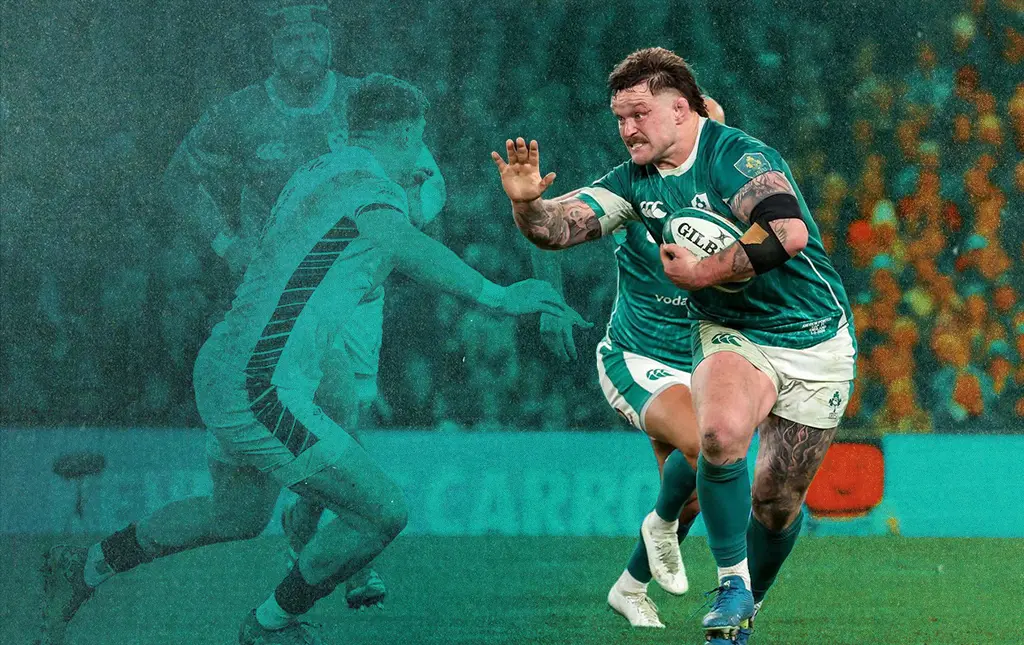
What if Caelan Doris is being rushed back from a serious shoulder injury because we don’t know what our back five looks like if he’s not there?
Who steps in for all of those guys right now that wouldn’t be a punt in the dark? Casey steps in for Gibson Park, sure, but then who steps into that depth chart beneath him? Does Osbourne jump in for Lowe? Does McCloskey — already 33 — step in for Aki? Is Henshaw — arguably already showing signs of regression — already in need of being replaced? Is that even possible with the new two-year central contract he signed last season?
What happens if Furlong and Bealham, both in their mid-30s with tonnes of rugby on their clock, drop off in the next year? You might say, throw in Tom Clarkson, but if Farrell doesn’t trust him in big games, what hope is there that he’ll be ready if the worst happens?
The answer is, we don’t know.
This November, Farrell has to start finding some answers to these questions, or someone else will find them out for him. Ireland’s position at the top end of World Rugby over the last decade is far from a permanent fixture. Everything we’ve earned since Kidney took the lumps that came with bringing in a ton of inexperienced players post-2009, and that Joe Schmidt kicked into life in Chicago in 2016, can be washed away inside a year. Bang. Back to tangling with Scotland for third place in the Six Nations and getting clowned on by the Southern Hemisphere’s Big Three. Everything we know today can all disappear.
All it takes is two injuries we didn’t plan for, four of those core players over 32 dipping a few percentage points off their best, and two retirements we weren’t expecting to kick us right back to square one.
That renewal can’t start against Japan, either, or with Ireland XV. It has to be against New Zealand, South Africa, Australia and then France and England in the Spring. You can struggle against these teams if people can see new names in green learning their way. If it’s the same team everyone can name off by heart, don’t be surprised if patience at the IRFU wears thin faster than anyone imagined.
I believe Andy Farrell is a smart man. I believe that he knows that he can’t go game-to-game forever. I hope that he has the bravery to make real change, and not just chopping and changing at #10. Let’s get the same energy we saw for Crowley and Prendergast last November in the other spots crying out for renewal and competition.
I hope we see guys like Tom Ahern, Paddy McCarthy, Craig Casey, and Tommy O’Brien all start this weekend against New Zealand. Why not? South Africa would do it. So would France. New Zealand have already done it.
The pressure is on.
And the future is now.
