


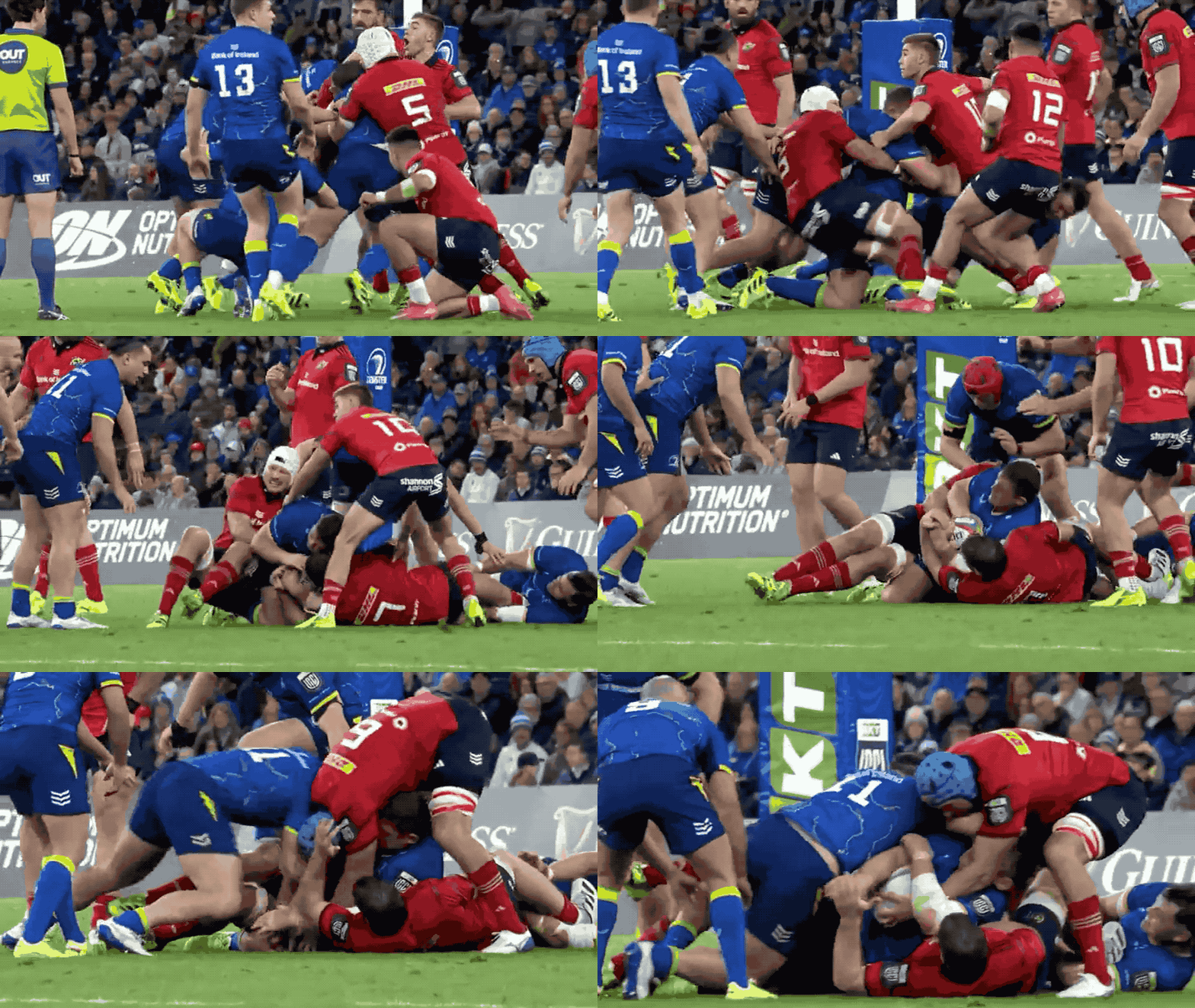
Everyone has a plan until they get punched in the mouth.
The real power comes from taking that punch, spitting out a tooth, and going again with a smile on your face.
Munster successfully off-balled Leinster in Croke Park on Saturday, but whatever your tactics are against a team as good as Leinster, there comes a time when you’re going to be under the blowtorch. What matters then is that you have 15 players ready to bite down on the gumshield, both literally and metaphorically. You’re never going to have it all your own way against Leinster, and when they come back at you, as they always will, how you react physically, mentally and spiritually to that duress will define your game. Do it well enough, and it could define your season.
***
Nine minutes into the second half, Leinster won a penalty outside the Munster 22. A few minutes before, Jack Crowley nailed an excellent penalty from the 10m line to stretch Munster’s lead to 24-7. That 17-point advantage, as we know, is a dangerous lead. On the face of it, you’re more than two converted tries to the good, so that’s obviously a positive, but it can play havoc with you too. If you’re not careful, it can lead to a kind of complacency that can result in a sloppy try concession, because, sure, don’t we have a two-score cushion?
Before you know it, it’s a very nervy 10-point game, which is nothing in the modern game.
So the key is to block out the next 5/10 minutes after you take that lead to ensure the opposition doesn’t snap back up the field, crack you in the jaw and, before you even realise it, all the momentum is with them.
Momentum is a hard thing to quantify, but we’ve seen its power so often that it can’t be ignored. Last season, we took an 11-point lead into the last 14 minutes away to Glasgow and conceded almost immediately after scoring; away from home, with the home crowd energised, killer penalties are easy to concede. They’re even easier for the referee to award, and you can end up defending your own 5m line with the game on the line with the clock in the red before you’ve caught your breath.
So when Munster conceded a not-rolling-away penalty in the 49th minute, you knew the stakes immediately. Leinster could have kicked for goal off that penalty, but it would have been a tactical let-off for Munster because, even at 24-10, we get the ball back to kick deep into Leinster’s half off the restart with guys like Furlong, Porter and Ryan beginning to red-line physically.
As you’d expect, Leinster kicked into our 22, and the ten minutes of hell that defined the game followed soon after.
***
Leinster were just outside Munster’s 5m line; an incredibly dangerous position. More than any other quality, their ability to get inside your 5m line on the first two or three phases, before converting close in, is probably their biggest strength as a team. Their system is designed around generating this very platform.
As expected, they made it inside the 5m line in two phases.
This is a very tightly designed two-phase strike, with genuine weapons arrayed throughout.
Henshaw carries well off the maul feint, albeit with an excellent stop by Crowley and Kelly, preventing him from bending our defensive line too critically.
From there, they run two blockers to get the short side. Furlong slides in at the ruck to block off Barron’s fold, and Porter runs a block line to halt Beirne’s blitz on Gibson-Park’s pass. Beirne is looking to intercept that flat pass from the base of the ruck — something Munster had threatened all game — and Porter makes sure he can’t make that run.
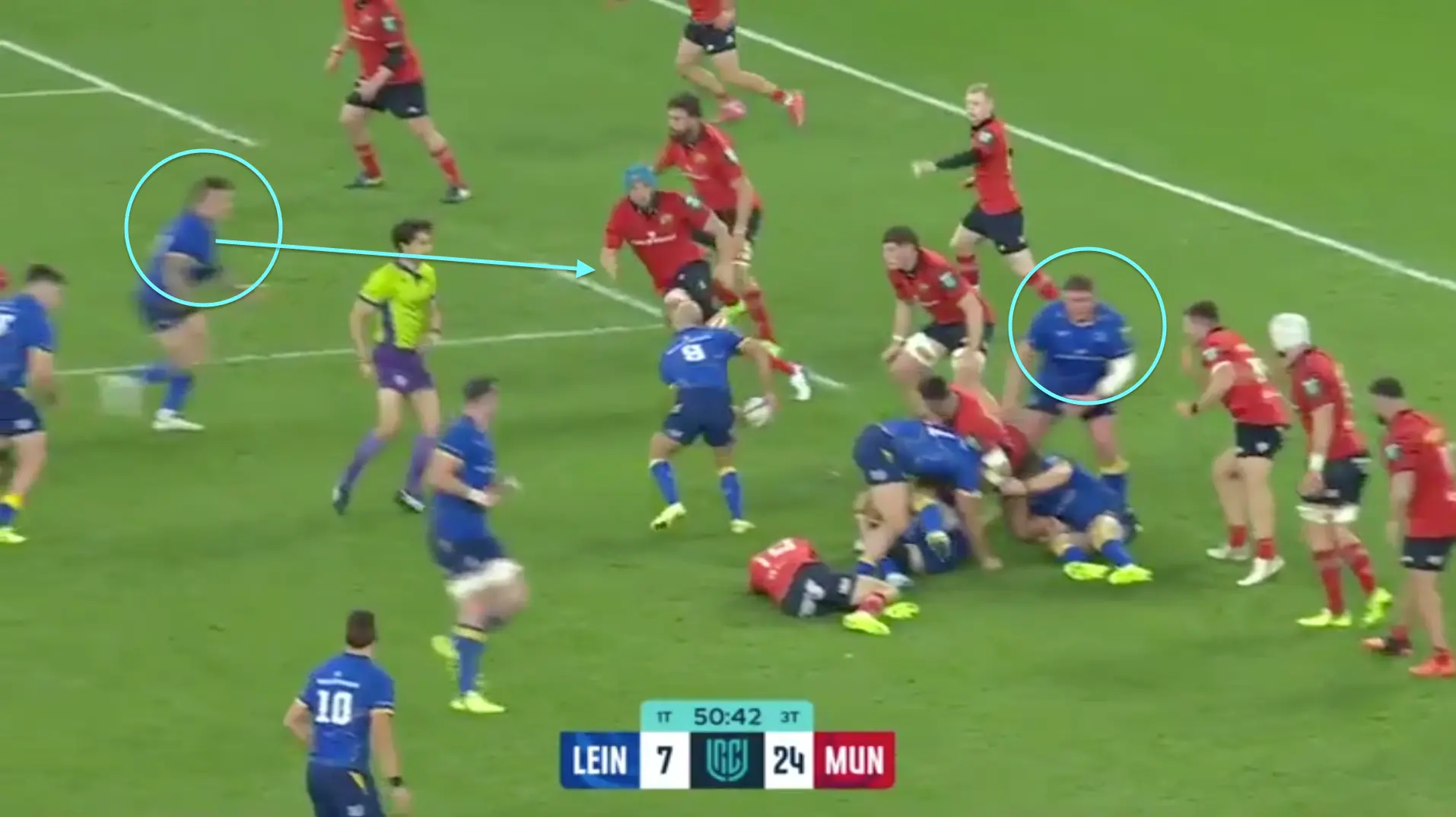
That gives Deegan a gap to surge into with Deeny and Soroka outside him, with Sheehan and Van Der Flier running a tight pinch line to hold the Munster pillar defenders. Coughlan makes an excellent first stop on the Leinster #8 to halt Leinster’s momentum here, but, almost more importantly, he makes sure to communicate to the outside defenders that he has that tackle on his own first.
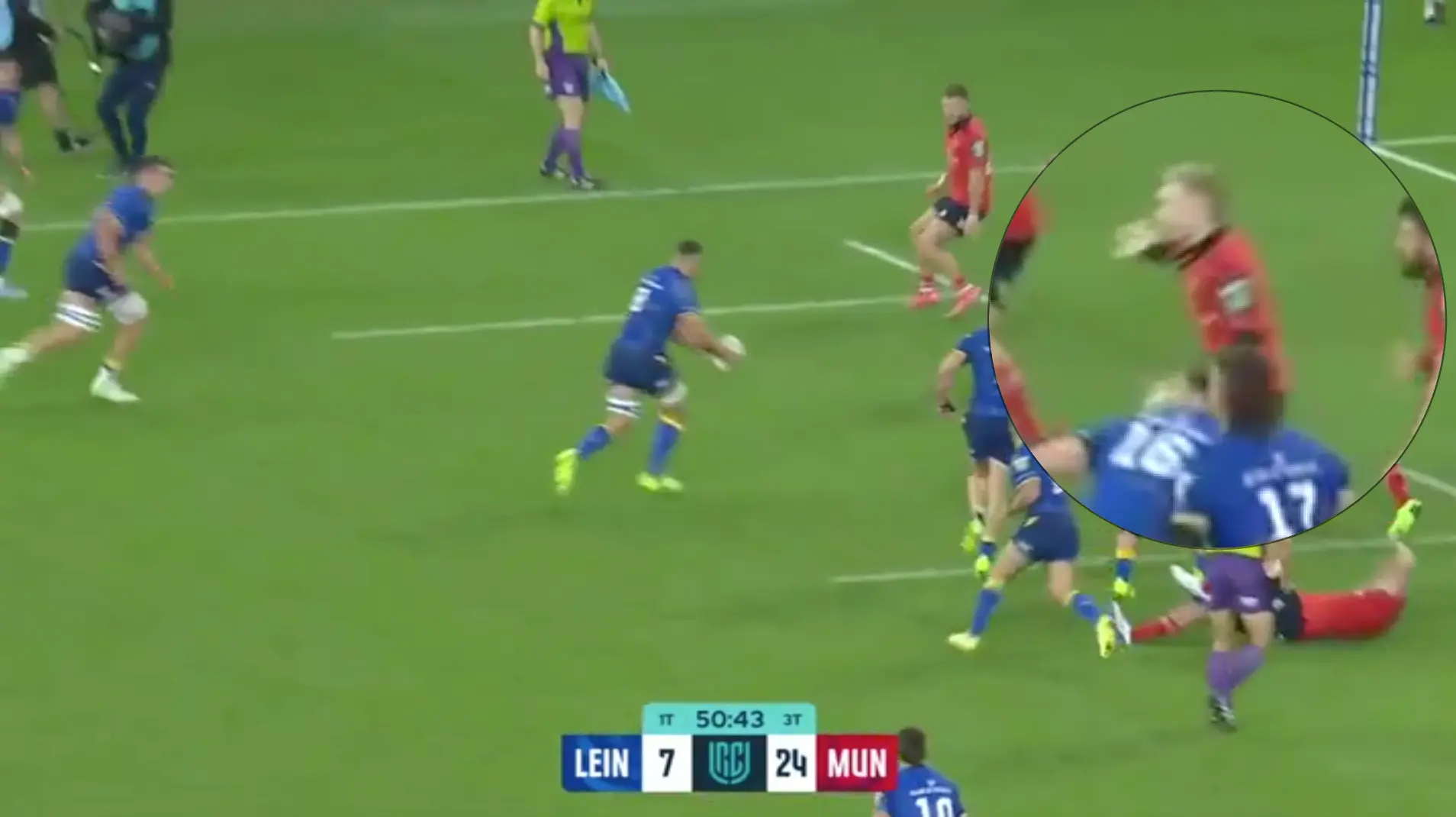
Now he’s got to make the tackle, but he does so with enough impact to do the job. Deeny shunts Ryan off the pillar, but Lee Barron makes an excellent decision as he recovers across to get after that open ruck.
If he doesn’t make this decision here, Leinster score on the next two phases, in my opinion.
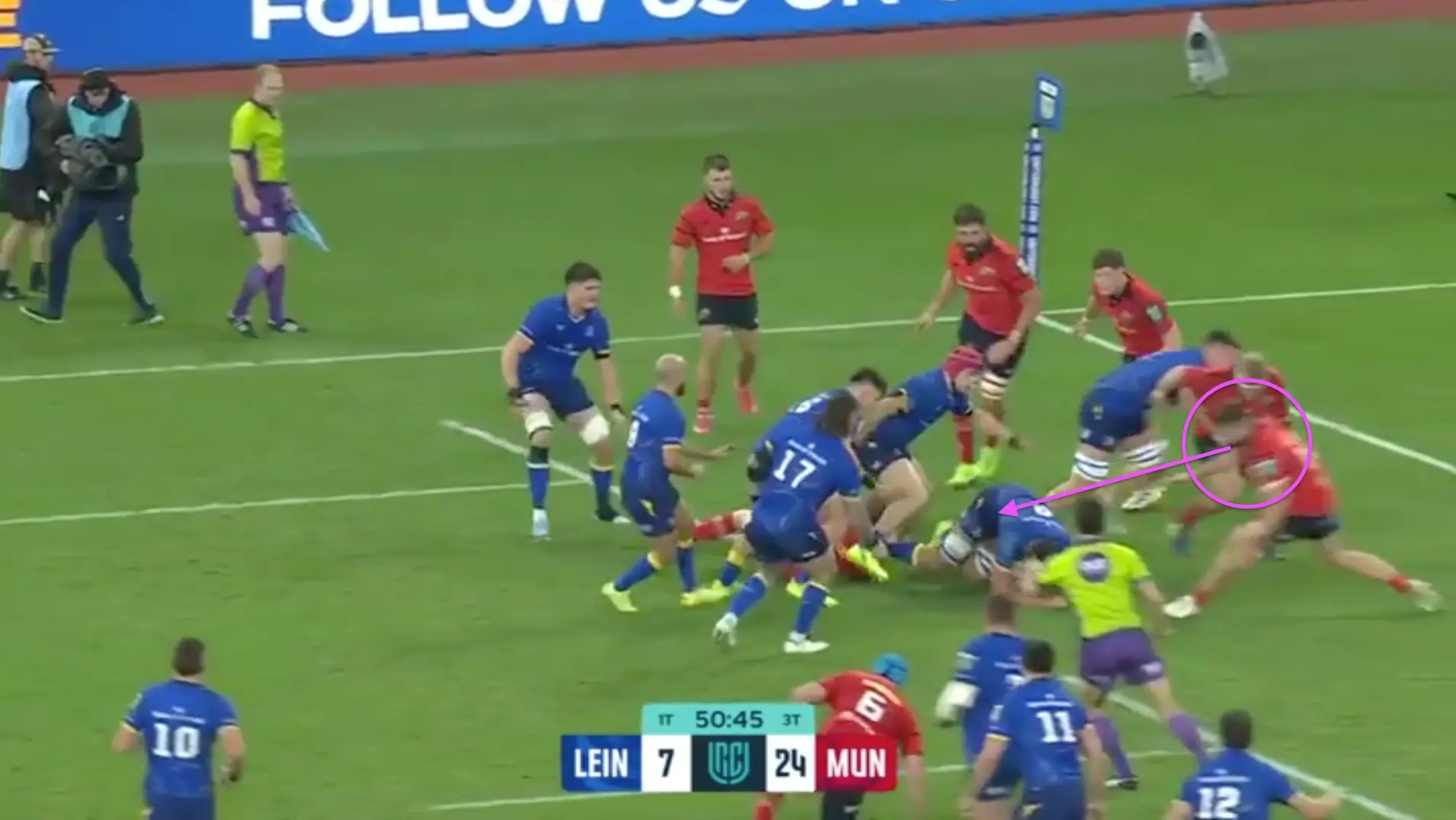
Leinster look to reset with a short inside punch to James Lowe, as Gibson Park spots Beirne is late getting back into the line after Porter’s block.
But we’re wise to it.
Milne shoots in on the tight runner, which stands Lowe up and gives Wycherley the cue to shoot up himself and try to choke up the upright runner.
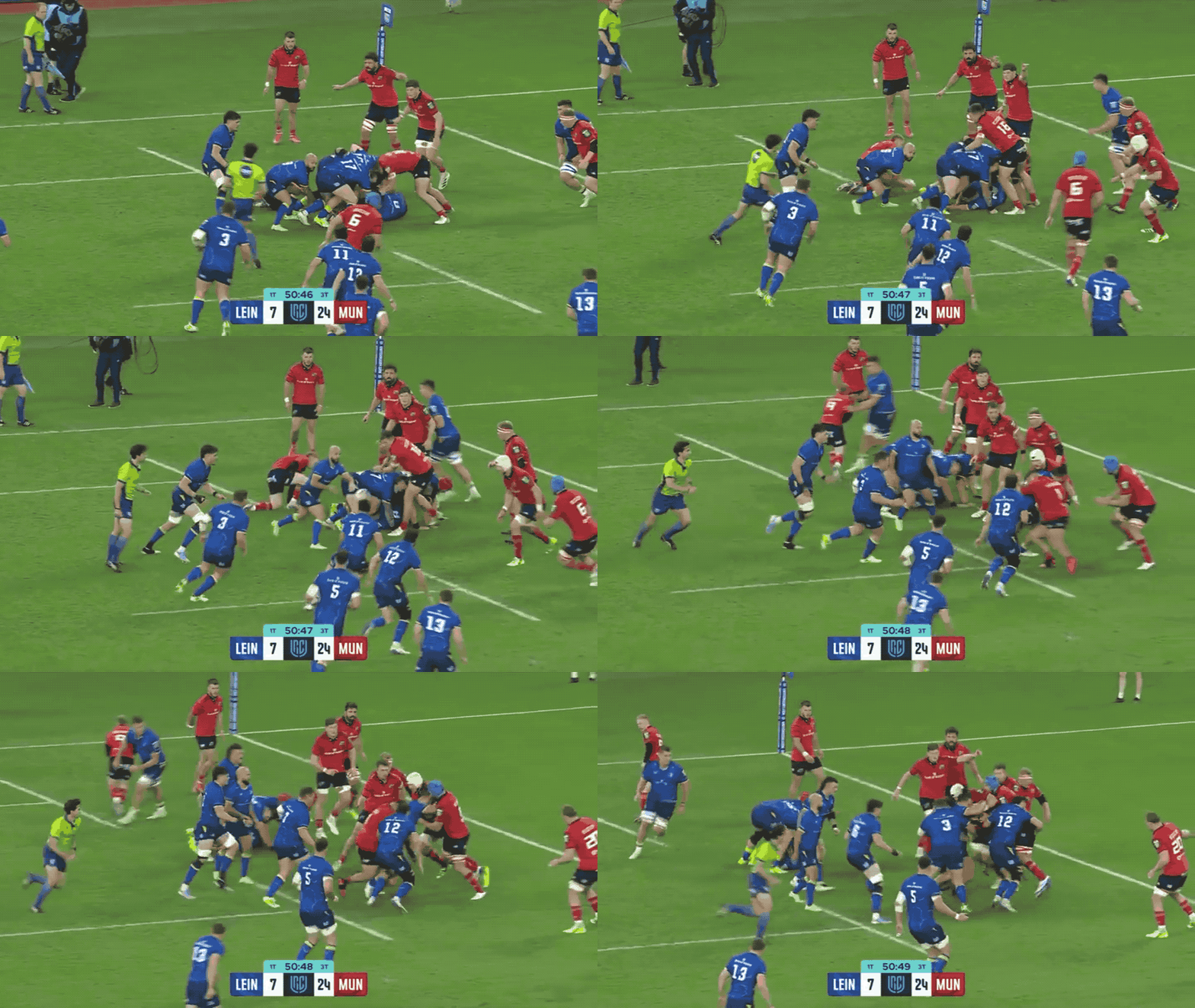
That slows Leinster’s ruck recycle rate without risking a rolling away penalty, and that buys Munster time to reset behind the ruck and match up with Leinster’s narrow punch formation. Munster keep that contact point upright for four seconds, which burns five Leinster attackers trying to resource it; Beirne forces a turnover (his first on this sequence), but the ball spills back on the blue side. Leinster tend to carry really high in these circumstances, so part of this is good prep, but it’s mostly players making big, instinctive, physical reads in the moment.
Gibson-Park senses the number mismatch and so he rushes another short punch to Van Der Flier, as he thinks that Munster’s choke tackle has left the inside flank a little light.
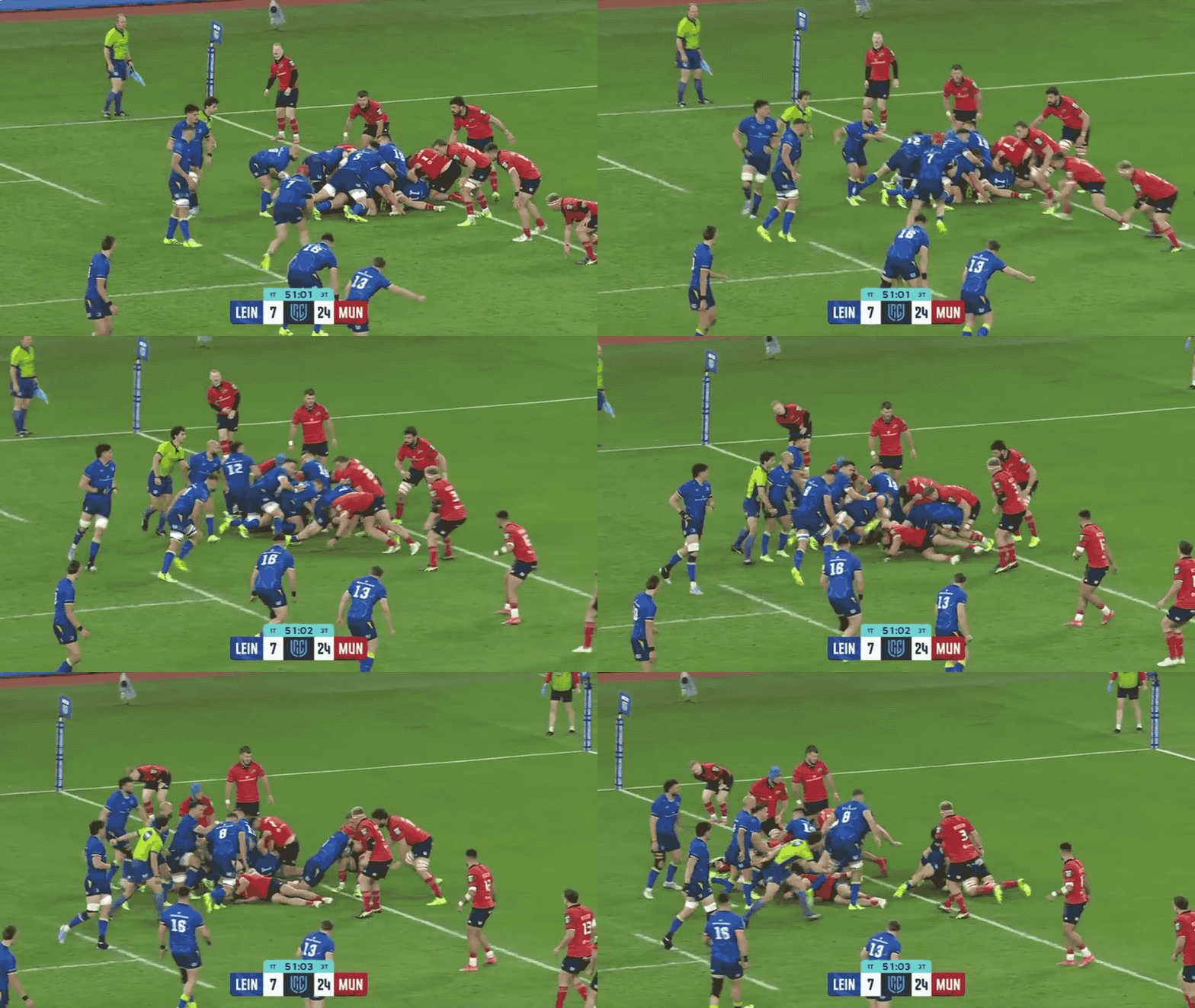
Barron does enough to slow Van Der Flier’s sharp, inward run, and that buys time for Gavin Coombes to swallow up the carry, get underneath and turn the ball over.
Round 1: Munster.
***
Goal-line dropouts are another set piece these days, and Leinster are really good at them. At the same time, we know they like to carry high, so we went after another choke tackle on Van Der Flier as he tried to punch it up on their second phase.
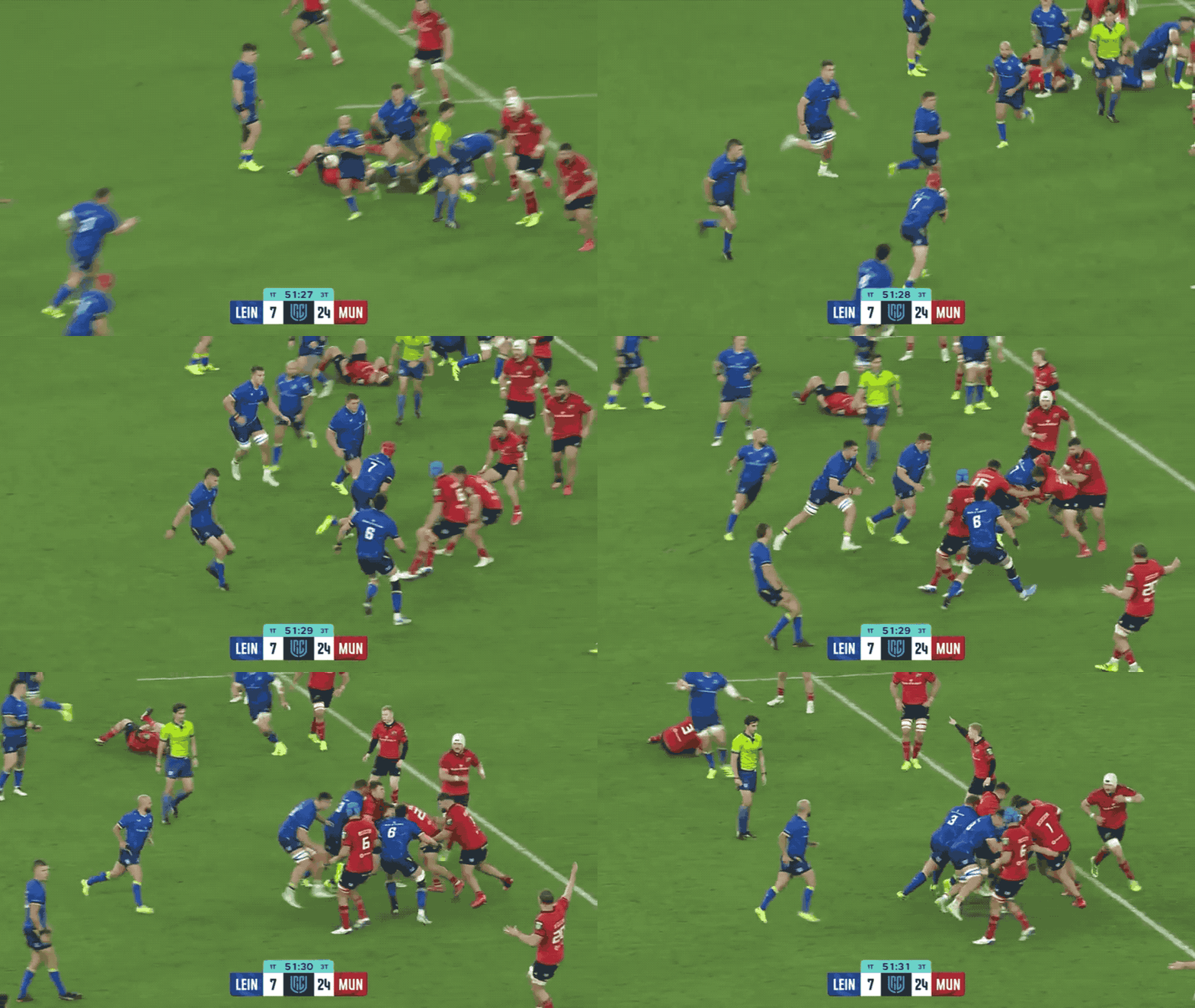
Leinster hit up off the next phase before Munster look to intercept that flat Gibson-Park edge-finder again. Abrahams is a hair off, and that gives Prendergast a half-break.
He looks a little caught in two minds here, as there is no blitz he can exploit, especially with Osbourne so close to him. Daly shoots in to shut it down and Osbourne almost acts as a shield here; technically ahead of Prendergast, but the penalty goes for an off-the-ball tackle.
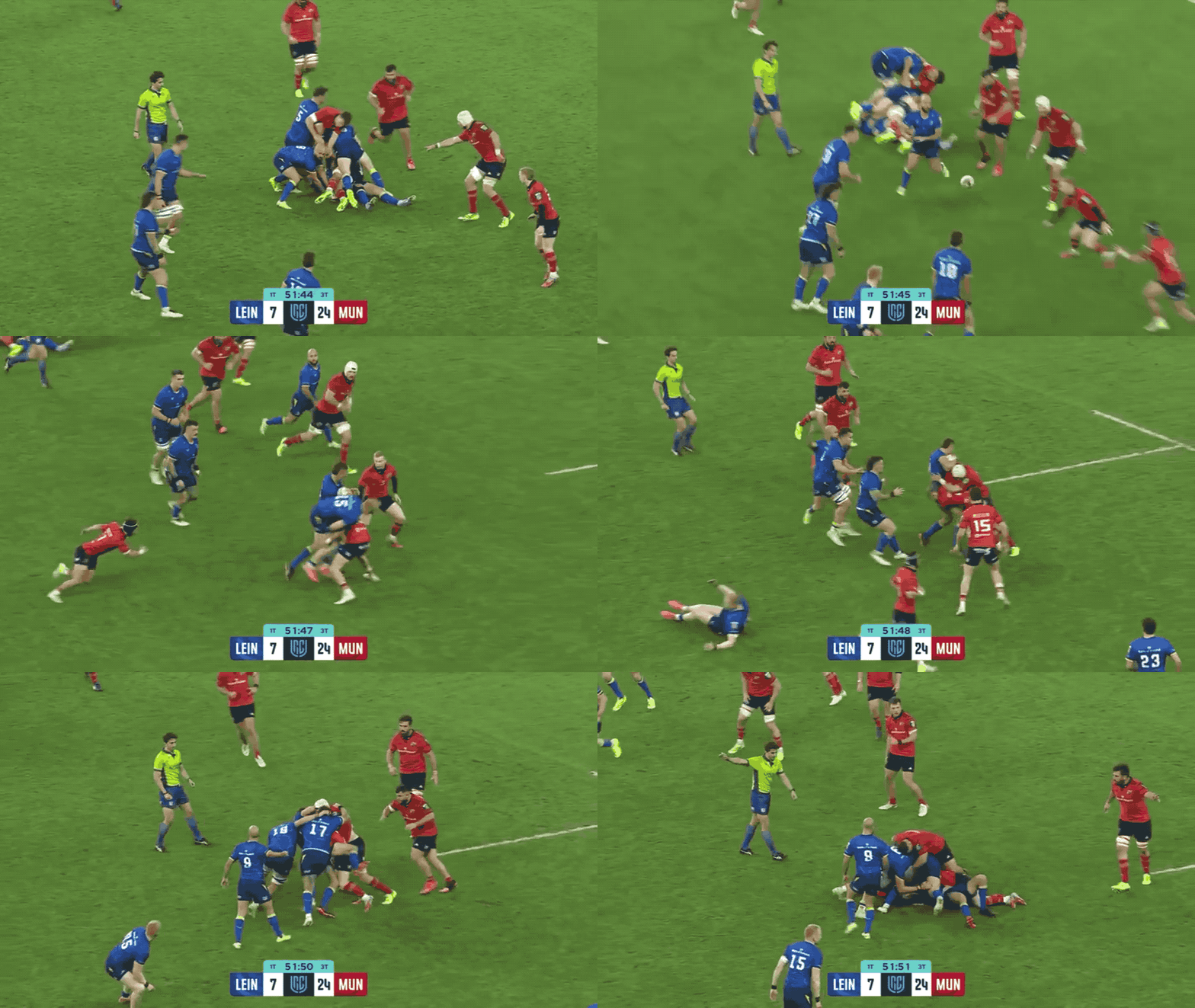
Leinster would have another 5m set piece, but before that they’d get to play on advantage. They worked their way up to the 5m line again but they kept looking for that short-punch off the ruck by their back three on an inside line.
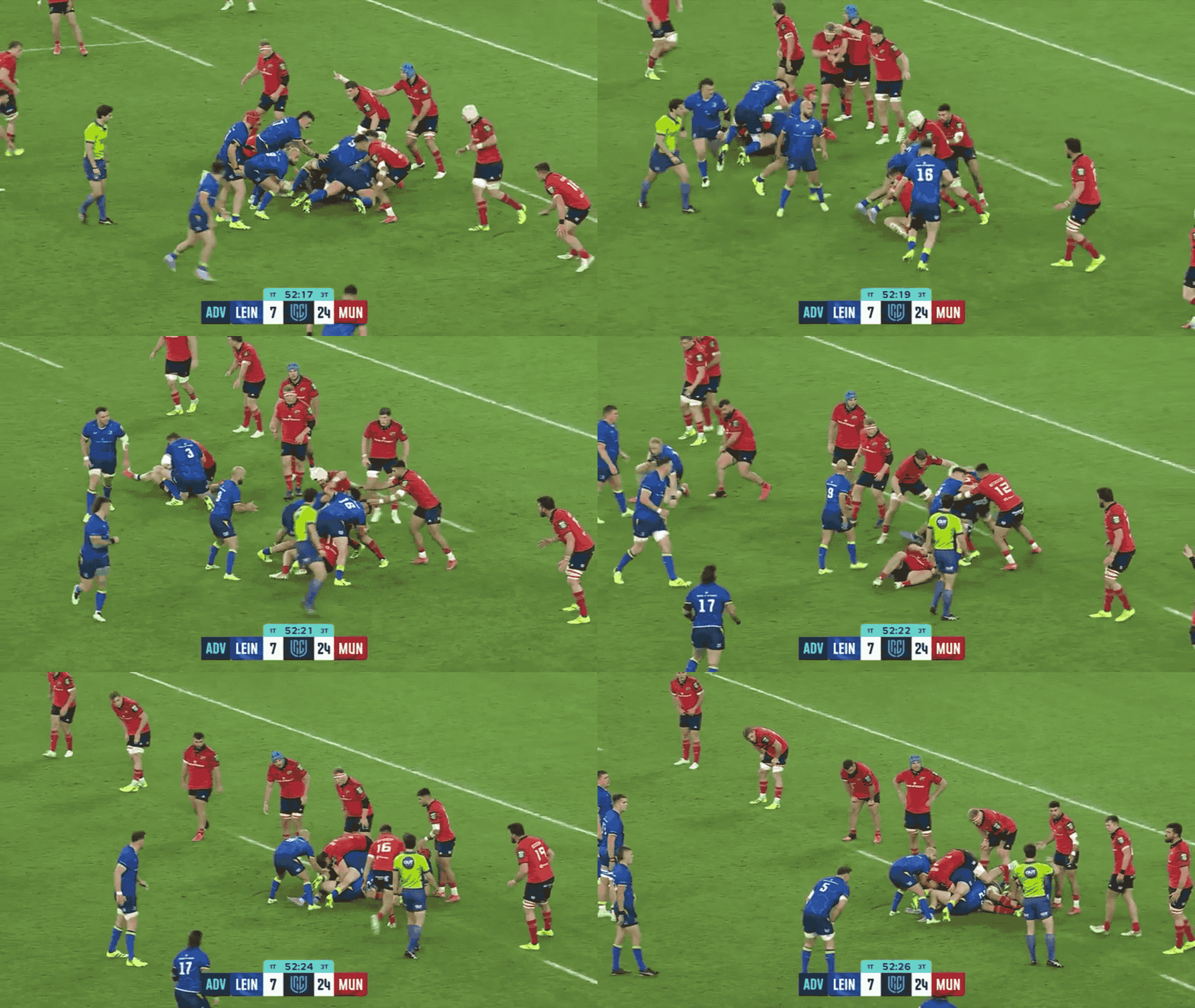
Once again, Munster choked up the carry, and O’Donoghue killed the advantage by rightly going over the top to win the turnover as Leinster went off their feet to win the choked-up half-maul. No players on their feet, no ruck.
Time for some maul defence.
***
Leinster went to the 5m line and hit Ryan in the middle. Munster chose not to compete on the throw to prioritise bodies on the ground for the counter-shove.
Jean Kleyn — on the field since halftime — is in his wheelhouse here. Maul defence is one of his immense strengths and he powers through Porter and Deeny here, alongside Beirne, to stmyie Leinster’s initial forward movement.
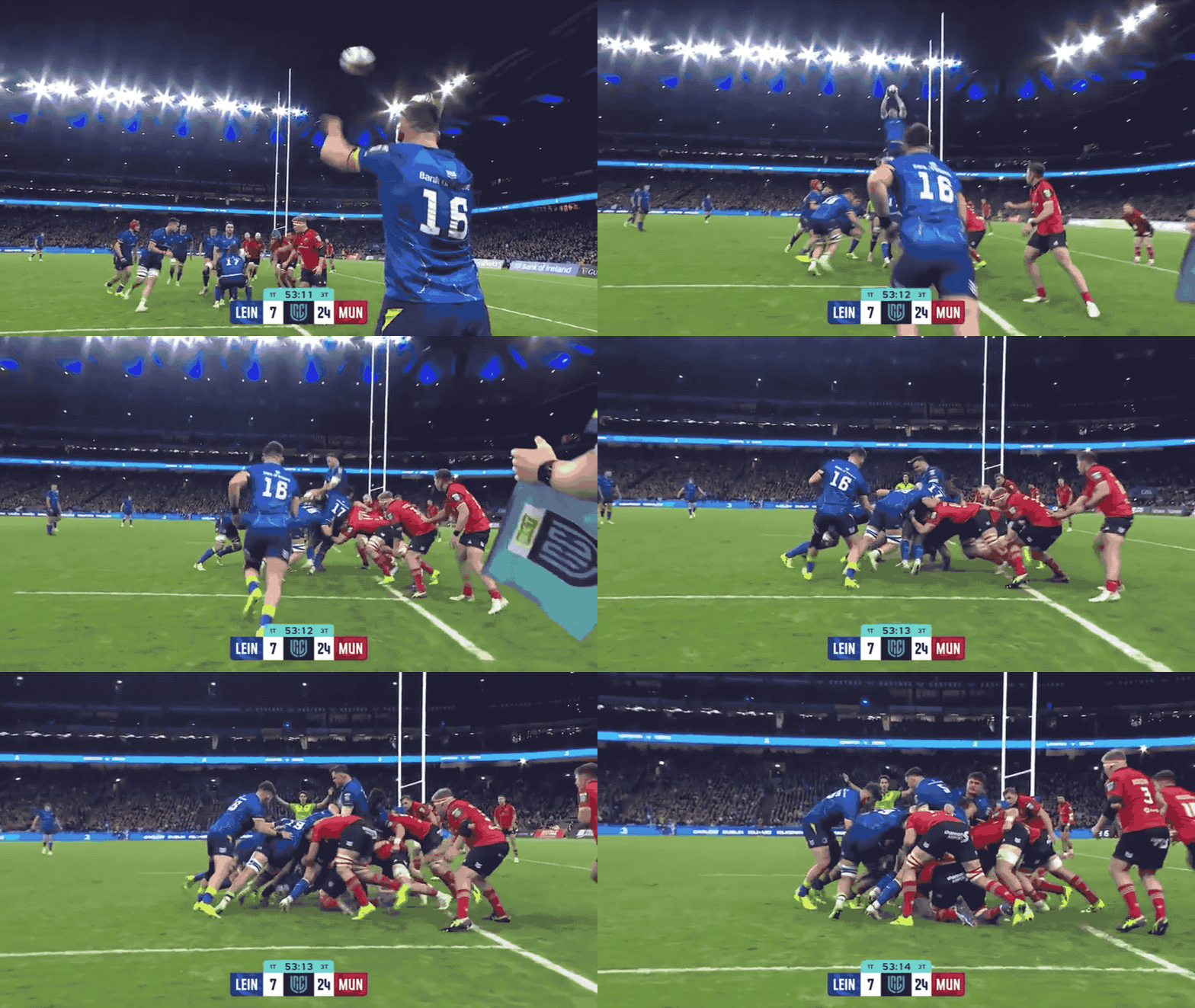
Right from the start here, we’ve got great basics to build on.
Kleyn has a stiff arm bind on the touchline side, Wycherley has the same on the infield side and that gives them a straight line to power through above the hips of the lifters. That gives you a real edge if you can time the hit right as you feel the lifters sink down with the jumper.
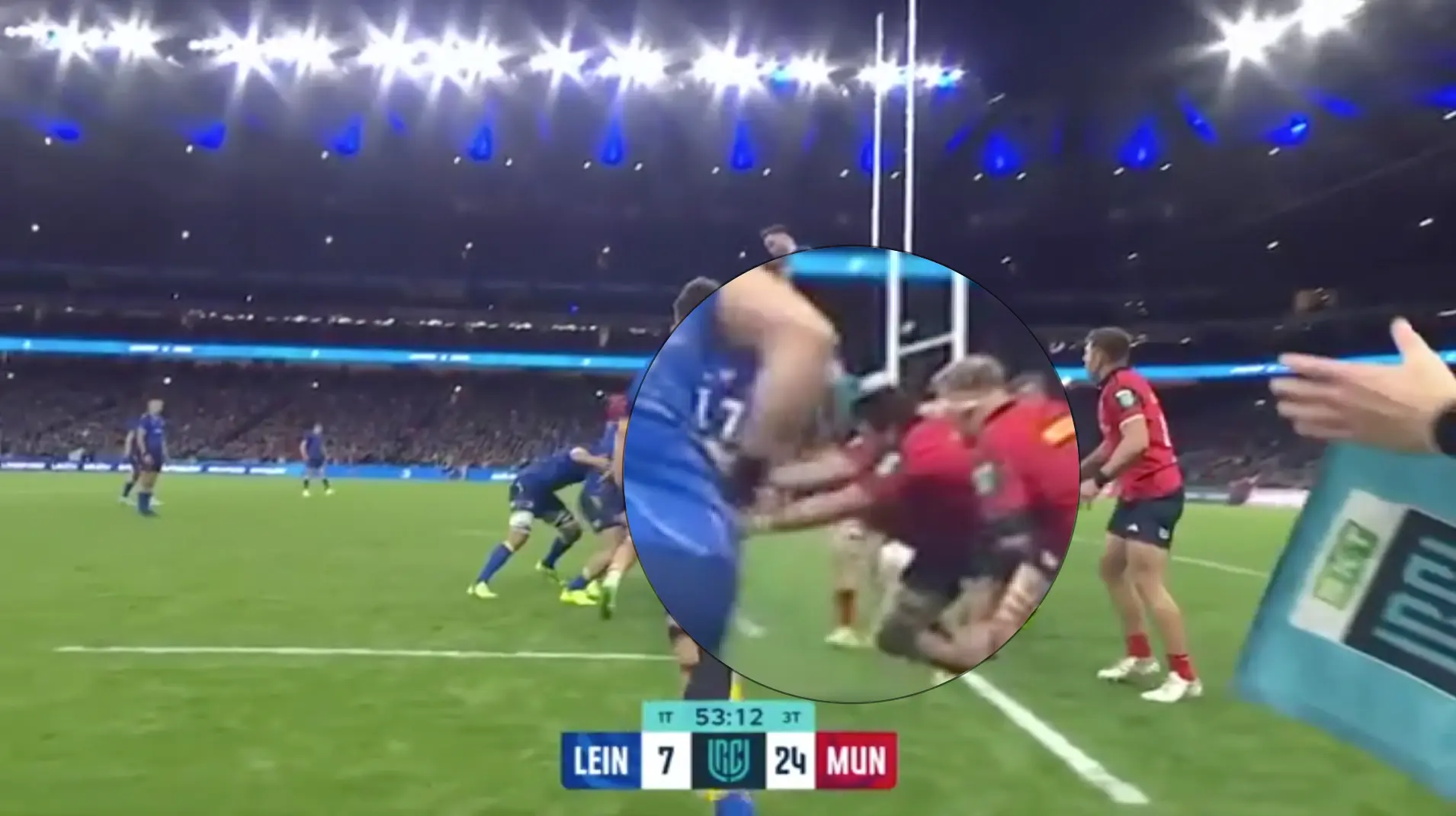
It forces Leinster infield and across for a first stop, helped again by Wycherley pressurising the Leinster infield side into a drop. Beirne comes loose from his initial push and floats around the back.
Leinster, with the maul on the ground, tries to go again. Ryan slides ahead of the ball carrier, but that warps the maul inwards and only opens up the play for Beirne to get those long arms of his around and force another turnover — his second in this sequence.
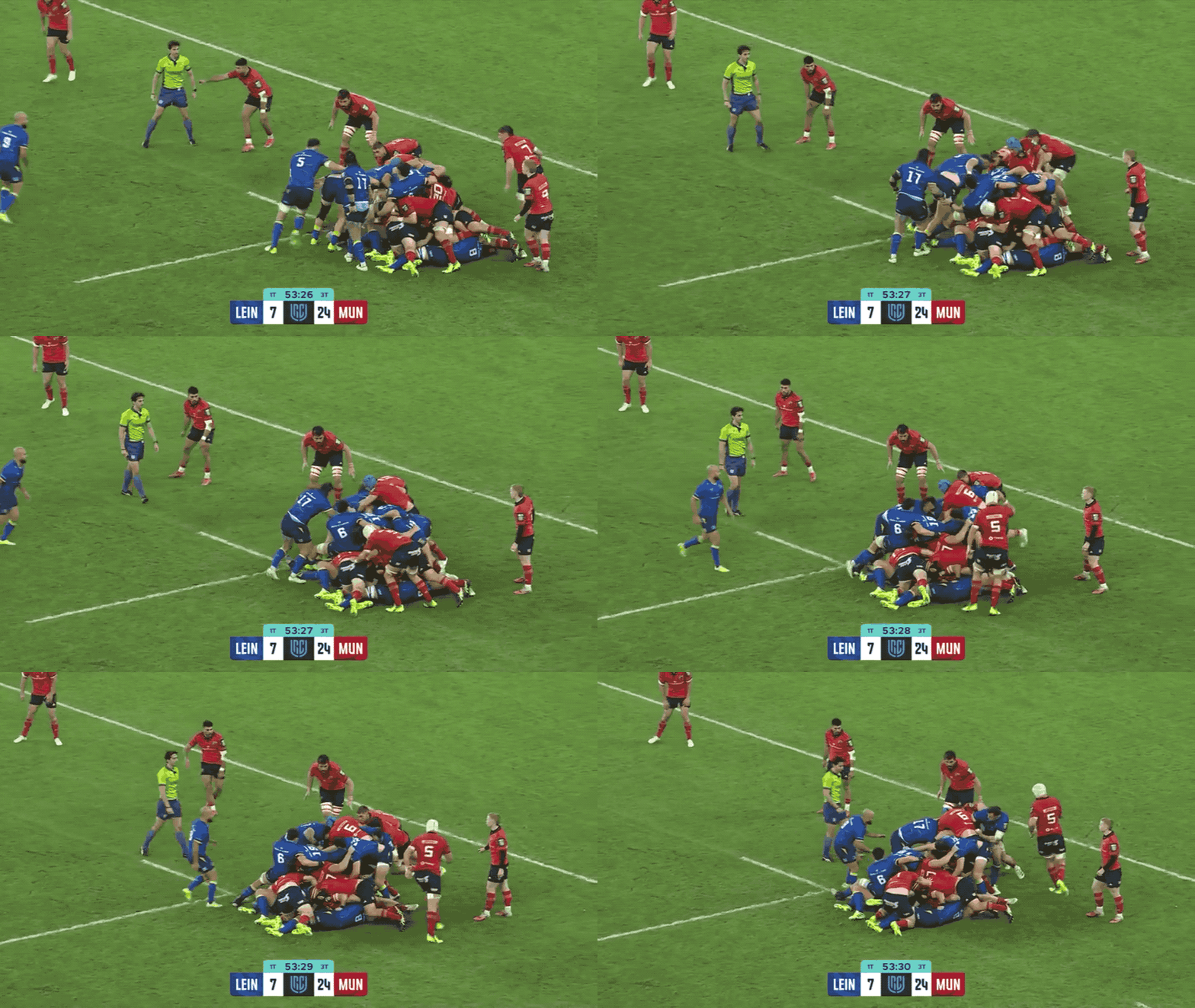
This should have been a big pressure reliever, but we folded under pressure from Porter on the resulting scrum to put the pressure right back on.
This time, Leinster would go to the tap and go — another one of their Big Rock plays that they have an excellent record converting off of.
***
Defending these plays is all about your physical intensity and awareness. The obvious play is shooting as hard as you can off the tryline, almost like you’re sprinting out of the blocks, but you’ve also got to be wary of the trick plays and second-phase shapes that teams like Leinster specialise in.
We do a great job of holding out on their first two phases.
Why do teams run tap plays like this? At a basic level, it takes the first match-up here — mass against mass — and then tries to move the attacking mass to a wider angle.
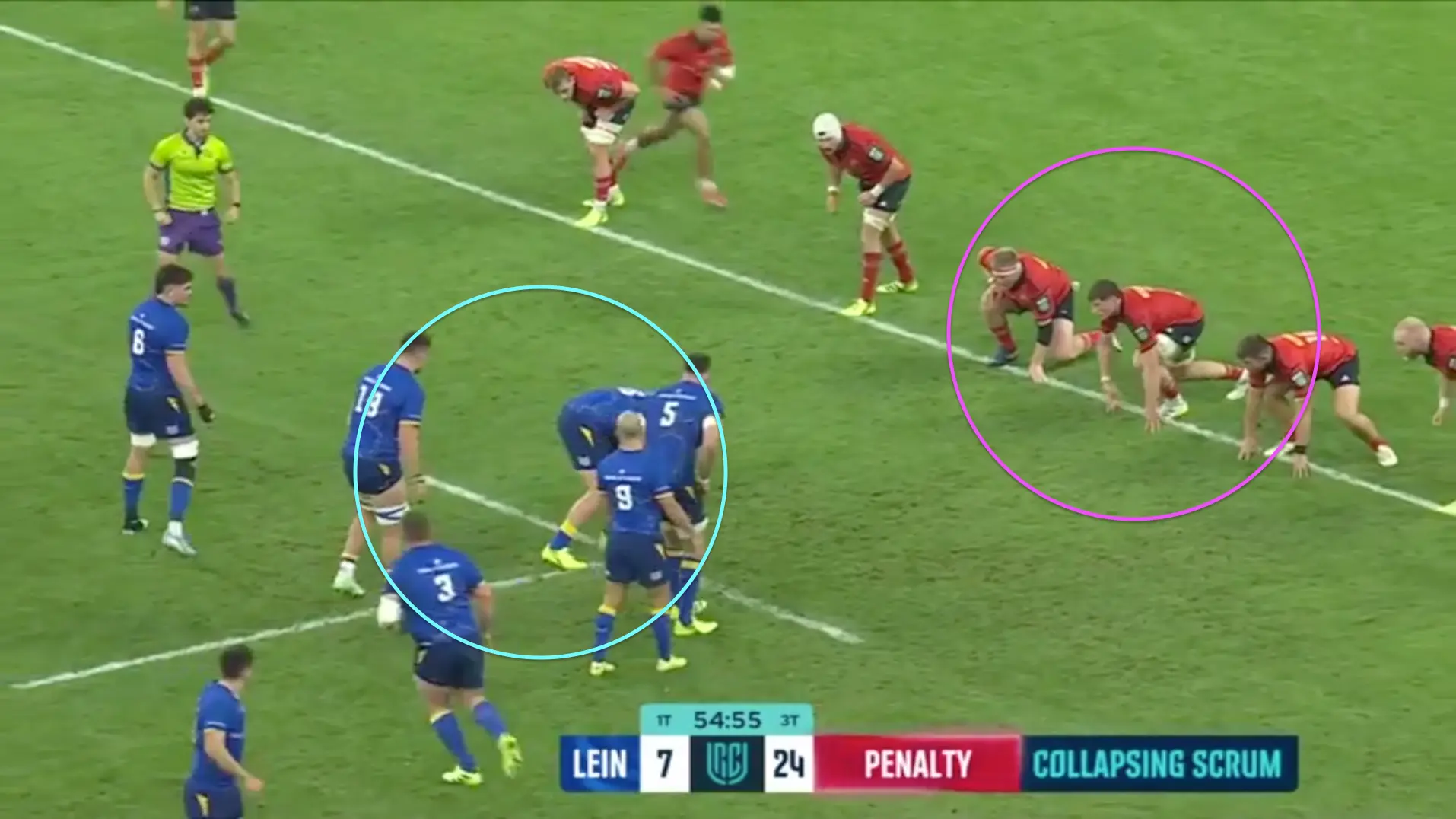
So when that pod shifts, they’re up against a wider defensive alignment, and the initial defensive mass can’t shuffle across to match them faster than the ball.
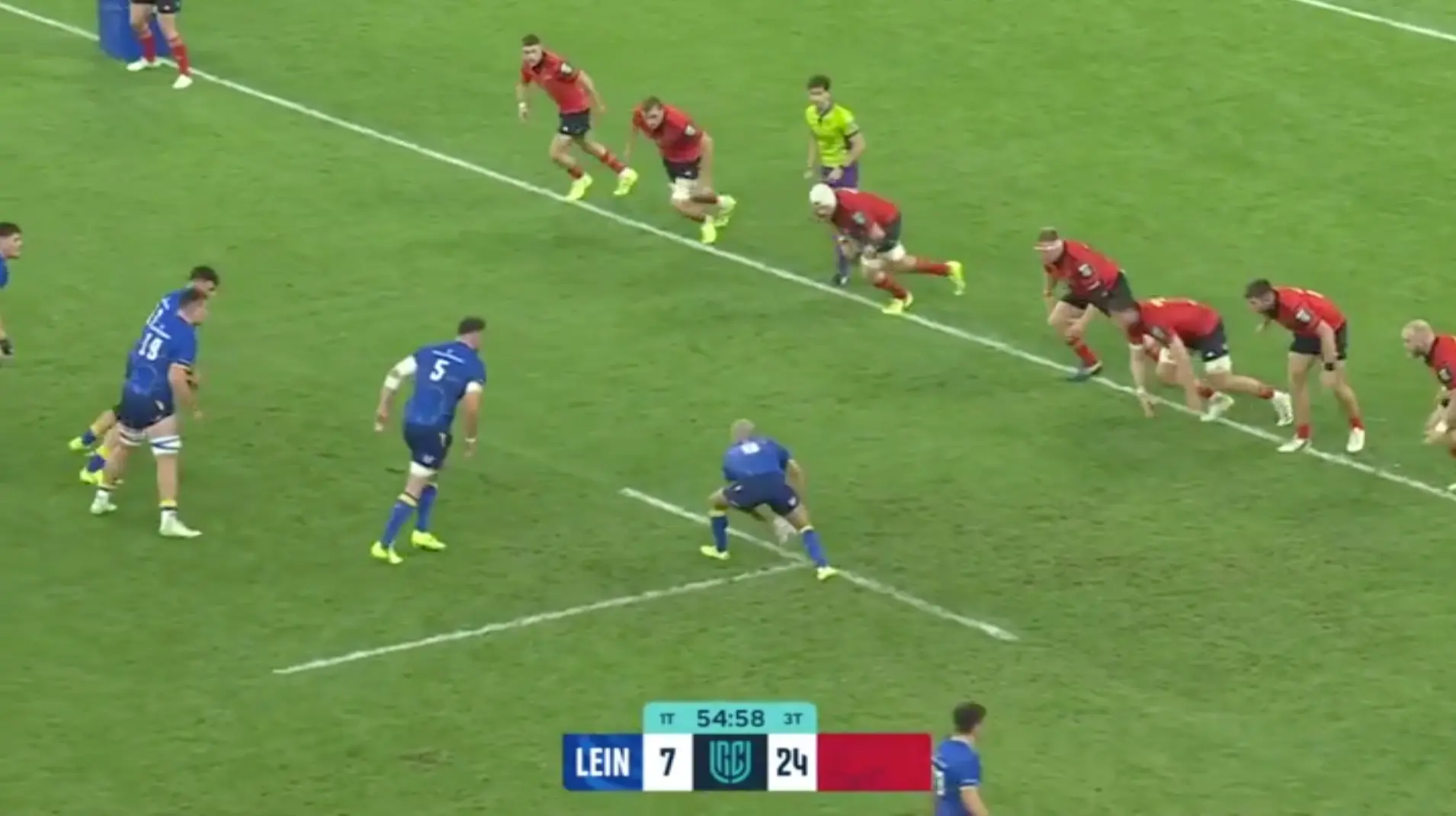
We did a good job scrambling on this, though, and did a good job of getting Sheehan to the deck early. We almost made a mistake on this fold, though, with Loughman shoving Ryan back into the pillar spot mid-fold to prevent Gibson Park from sniping through an obvious gap that Deeny was trying to engineer.
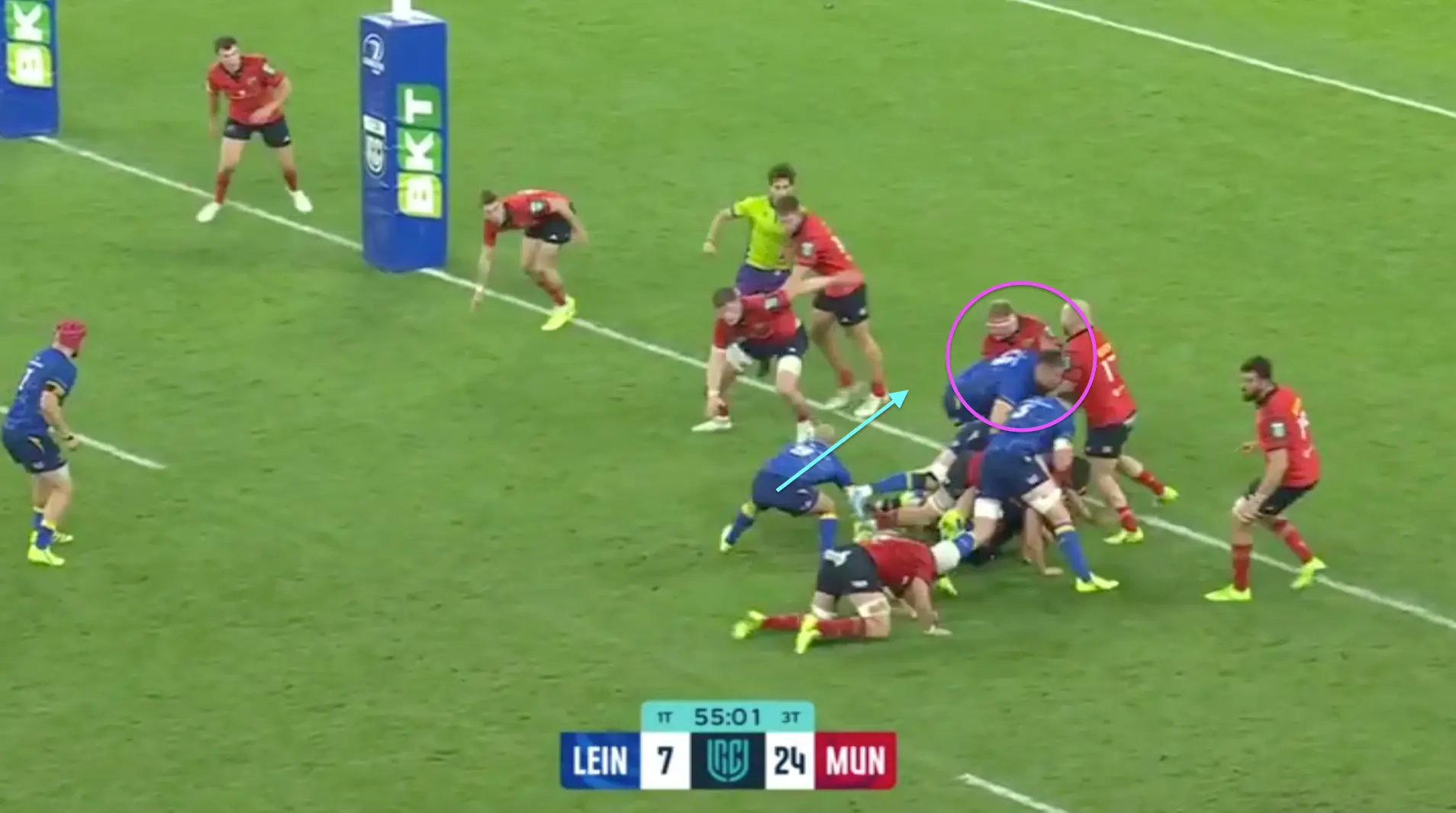
We close the door just in time.
Leinster surged to the tryline on the next phase, and another massive play by Lee Barron bought us time. Leinster fly off their feet at the ruck — everyone knows this — and we consistently challenged the referee on the key law that if you’re off your feet, there is no ruck, so any jackal attempt is legal.
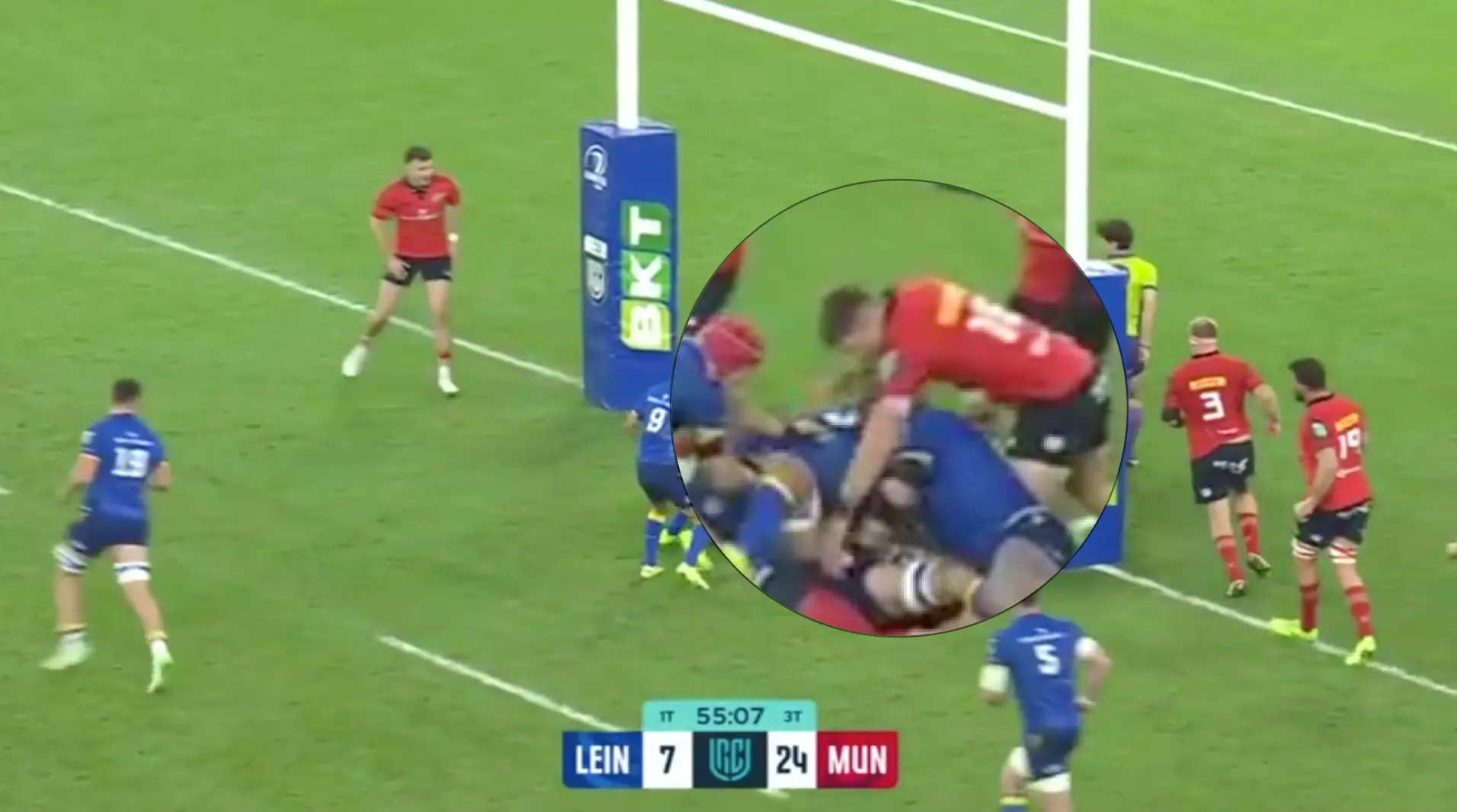
That made for a slow recycle for Leinster, so the obvious space left of the posts, as Leinster would have seen it, couldn’t be exploited.
Barron did it again on the next tackle — pushing the laws to come in from the side, for me — but it denied Leinster again. To the referee, all he’s seeing is Leinster players off their feet, so Barron is legal as far as he can see.
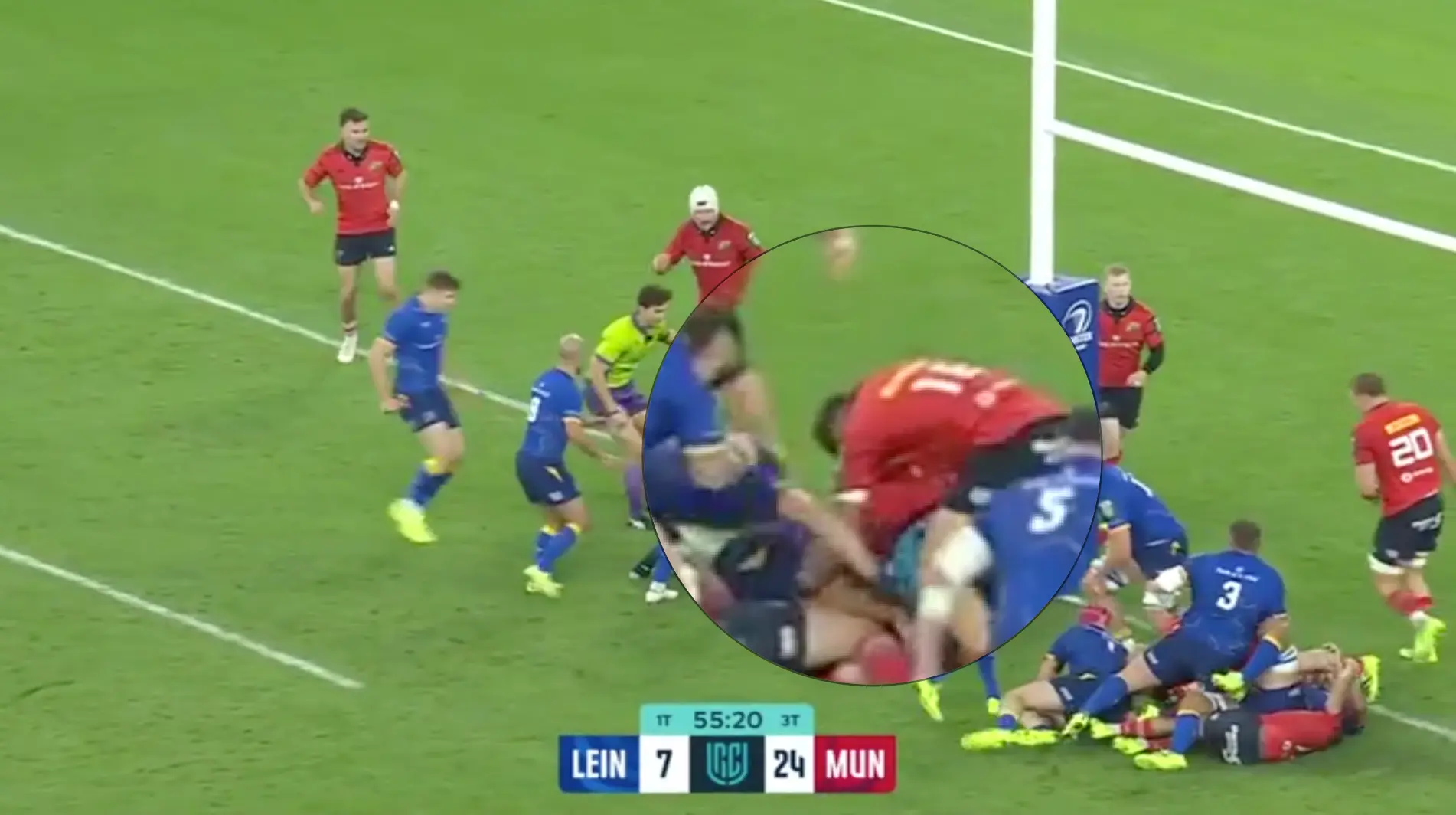
That gives Kleyn the few heartbeats he needs to power through for an outstanding counter-ruck that killed Leinster’s momentum. I’m including both actions here.
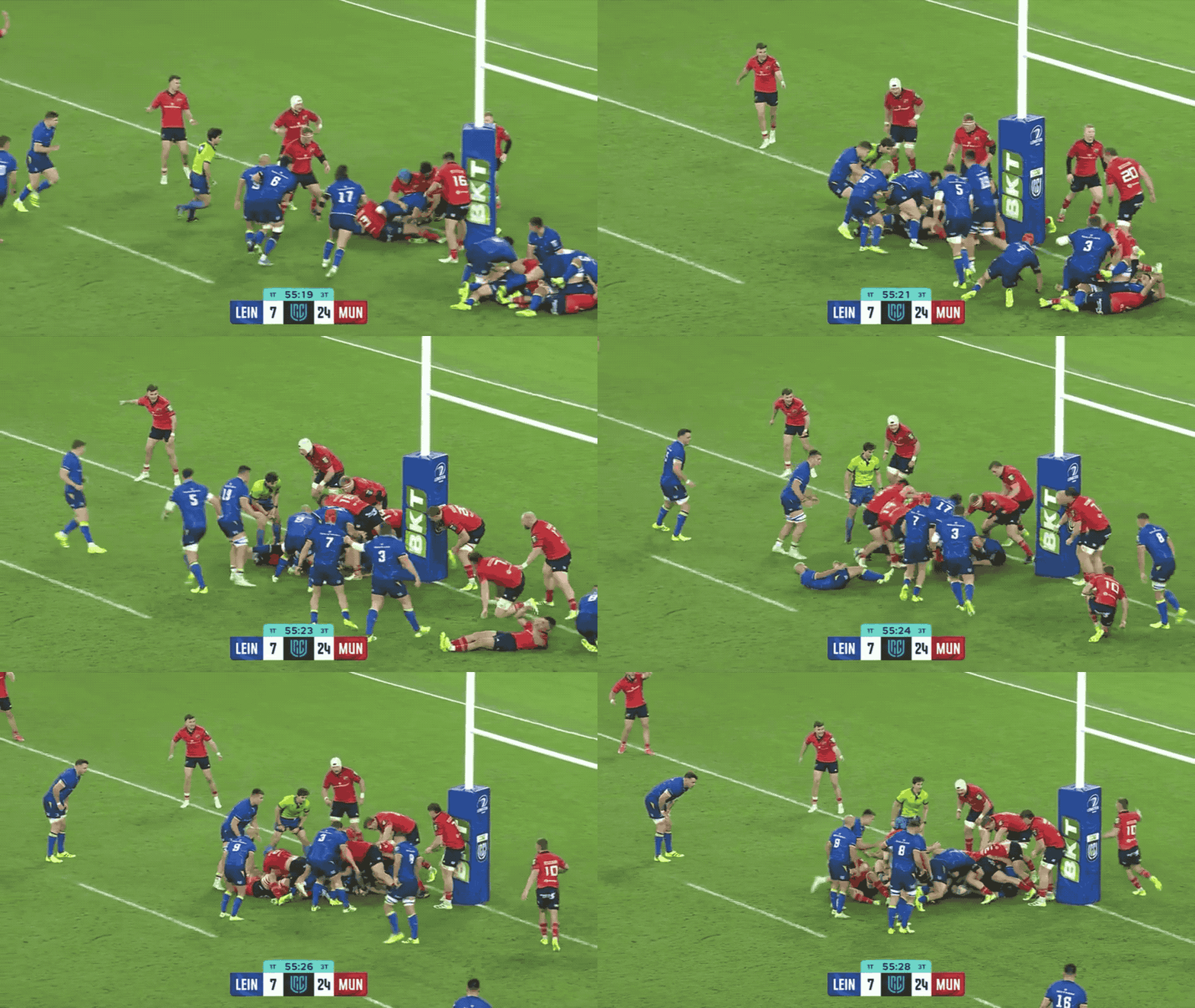
Gibson Park is knocked to his ass, and that buys more time for Munster to get players into the line. Knowing what we do about Leinster here, what’s the next play?
A Gibson-Park edge finder into that C gap to a big runner — but we’re ready for it, and Coughlan almost picks off another one.
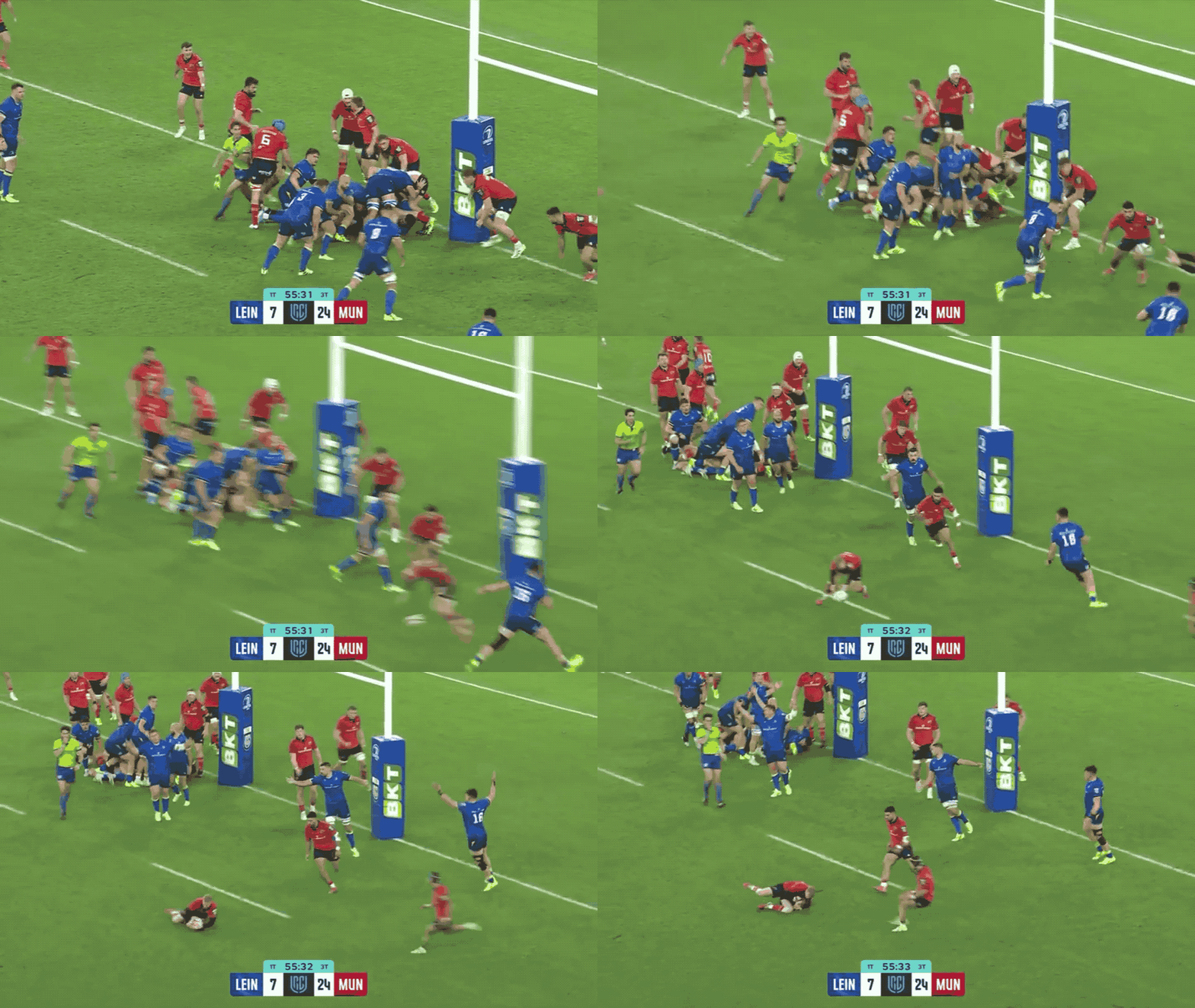
That gives Leinster another scrum.
This was Loughman’s second scrum since coming on. On the previous scrum, that ended in a Leinster penalty on our tighthead side, Loughman got a good angled drive on Furlong. This time, without the need for Barron to strike, we could really go after Furlong.
Now Leinster have to strike, which creates a window of pressure for Munster to get after Sheehan in the first instance — he has to sit a bit higher to get his leg in position — and that opens up Furlong for Loughman, Wycherley and Beirne to get after him on the inside if Barron can keep Sheehan up for half a heartbeat.
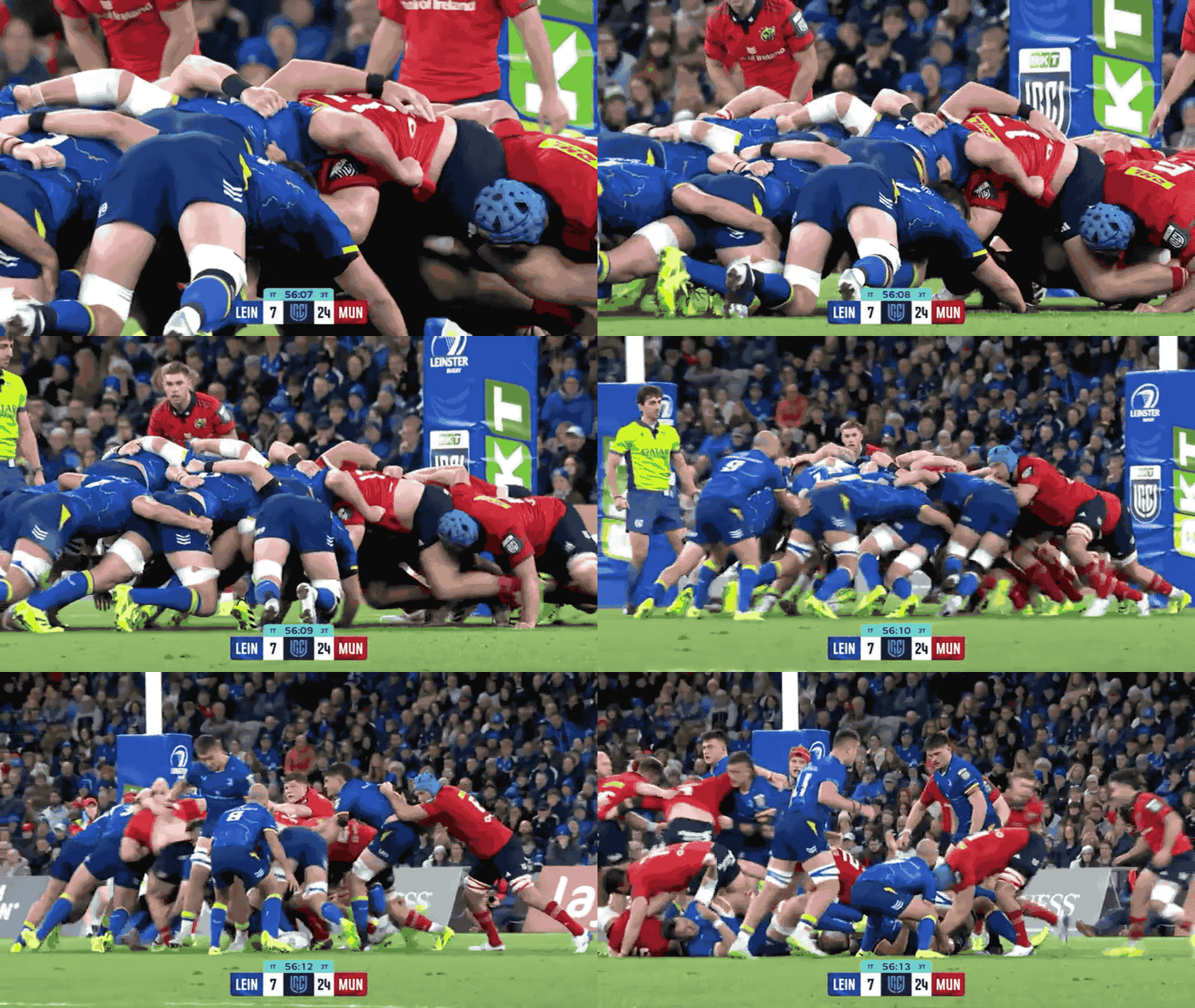
That opens up the ball for Beirne’s third turnover on this sequence, but it all comes back to the Munster scrum. Leinster love to use that angled walk around Porter to generate forward movement, and, at this point in the sequence, I think they were chasing a penalty try.
Porter holds Ryan, Leinster’s back five — lead by Sheehan and triggered by Furlong shooting in on the Munster hooker — use that momentum to walk around Porter for huge forward movement, and that’s exactly what they were doing here. They did it really well in the first half, but the addition of Sheehan to the mix opened a window for Loughman to use Furlong’s angle against him.
You can see it in Brian Deeny popping up on that Leinster loosehead side. They can’t generate directional pressure here.
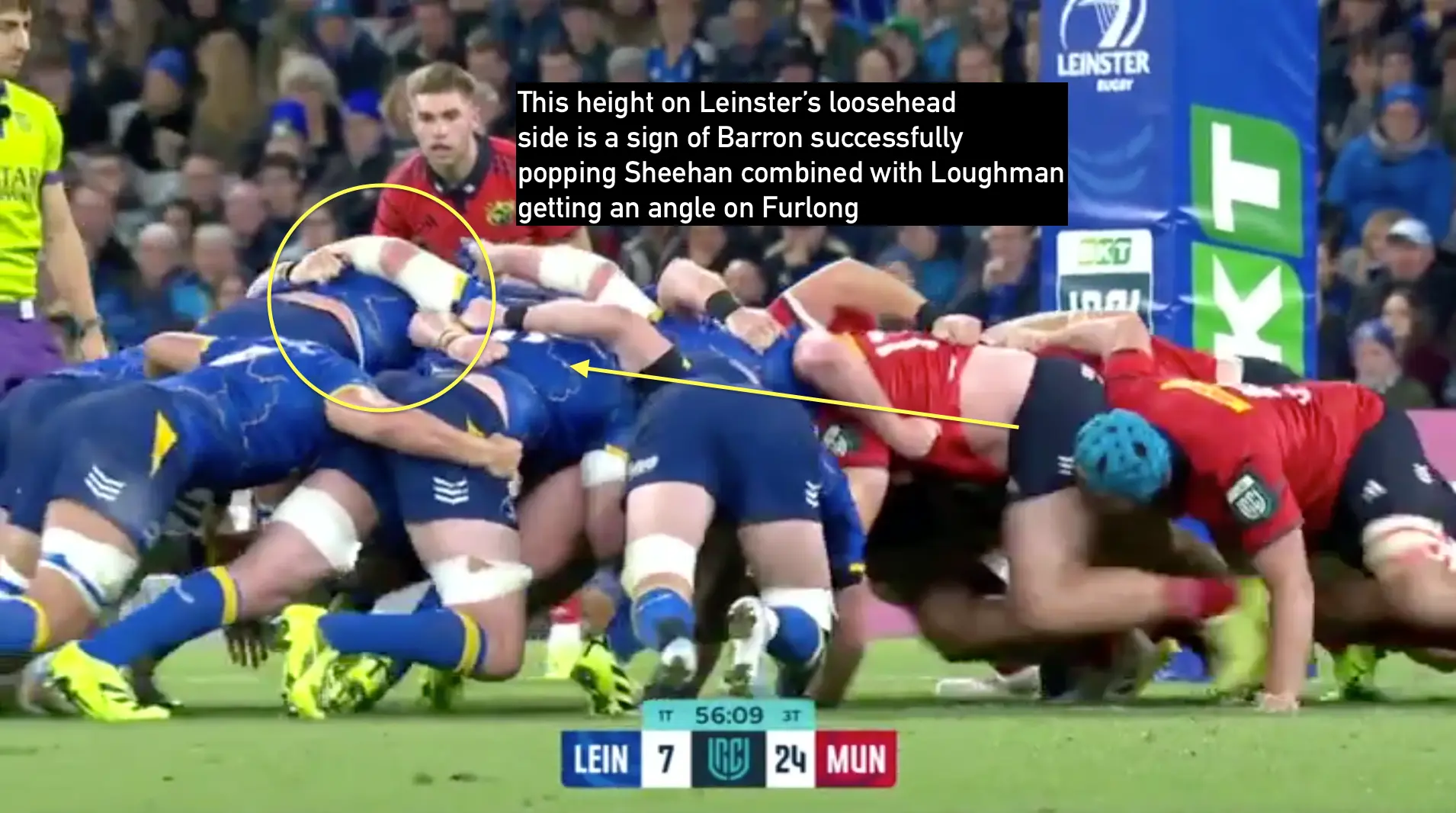
And the scrum rotates around but without forward movement, opening up Tadhg Beirne to do what he does. We managed to get the ball back, exit and bring the play back up to the line of the 22.
Round 2: Munster
***
At this point, Leinster are going to be feeling the pressure. Getting rejected like this on multiple occasions simply doesn’t happen to this team, and certainly not against Munster.
But they keep going; a maul feint, a launch into midfield and Munster were defending them quite comfortably until the referee adjudged Coombes to be rolling into the cleaners here, which prevented Beirne winning his fourth turnover in the sequence.
Coombes does a good job of bracing, but Leinster trap him in enough to sell the penalty on a sequence that was going nowhere — it absolutely was a penalty though.
Another 5m lineout to defend.
Both sides, at this point, are going to be absolutely exhausted. Attacking is more draining than defending, but when it’s been this intense, you’re really only splitting the difference.
Once again, we stuff the Leinster lineout drive and deny them forward momentum; Kleyn, again, denies them any kind of touchline momentum while Wycherley and Loughman hold their peel around the lift pod.
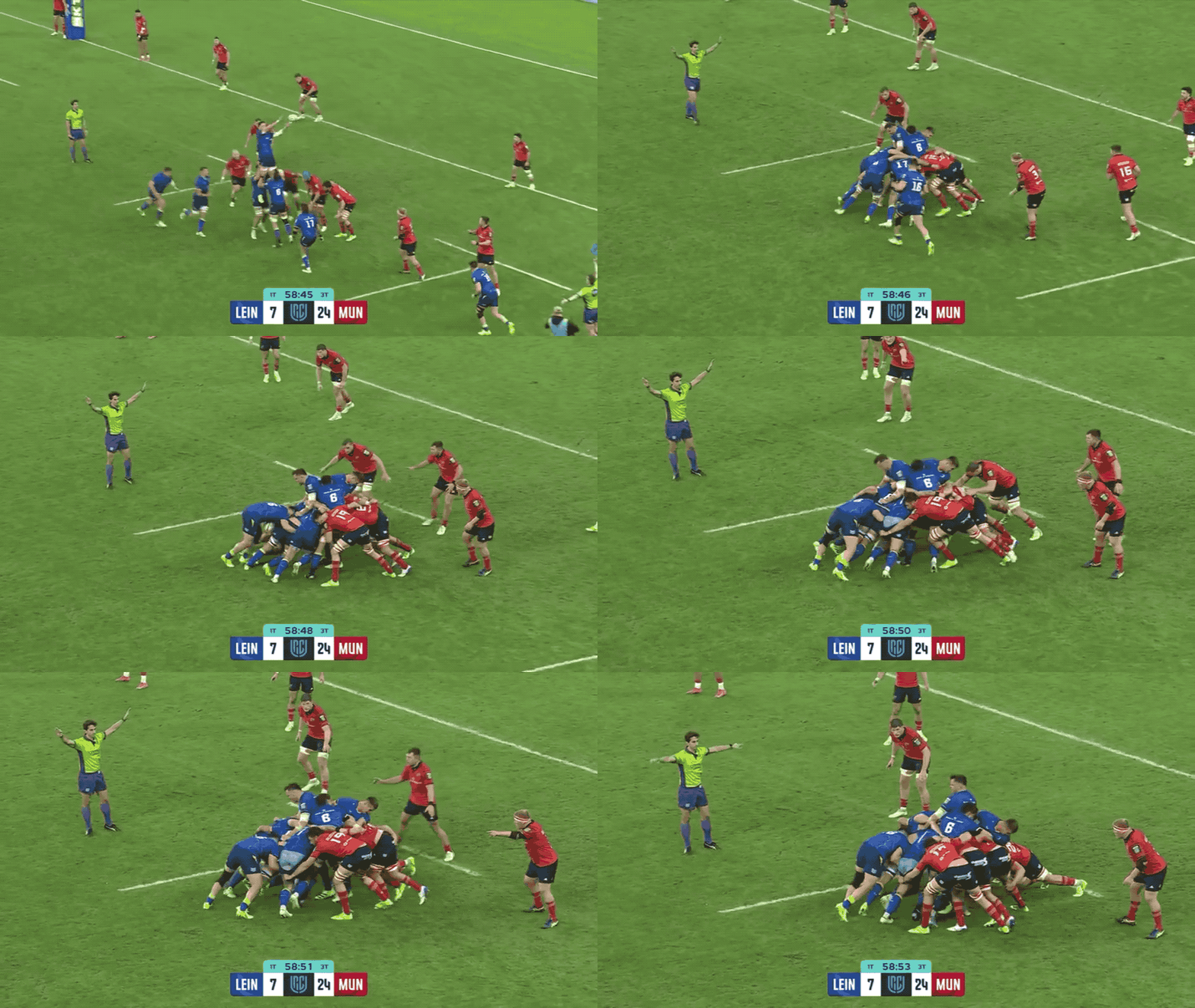
Kleyn reset after stuffing the touchline side and beat up Leinster’s second shove in the same manner — pushing them infield.
Leinster pushed around the corner again, but because Munster had dragged the maul infield, there were plenty of tight defenders waiting to push off and meet their carries head on. Leinster were looking to get the ball ahead of the defensive push to work defenders on either shoulder, but they couldn’t get separation.
As ever, when they see that picture, they’ll look to Gibson Park to start flashing wide passes out and that’s exactly what they did. Enter Shane Daly.
All throughout this sequence, Daly had been patrolling the edges of the field with real pace and aggression — he wasn’t happy to just fill a side, he was bouncing from posts left to posts right in line with every Leinster progression. The obvious threat is the Prendergast crossfield kick, but when Leinster get anywhere near the 15m tramline, that edge-finder pass is always a threat.
Daly was wise to it.
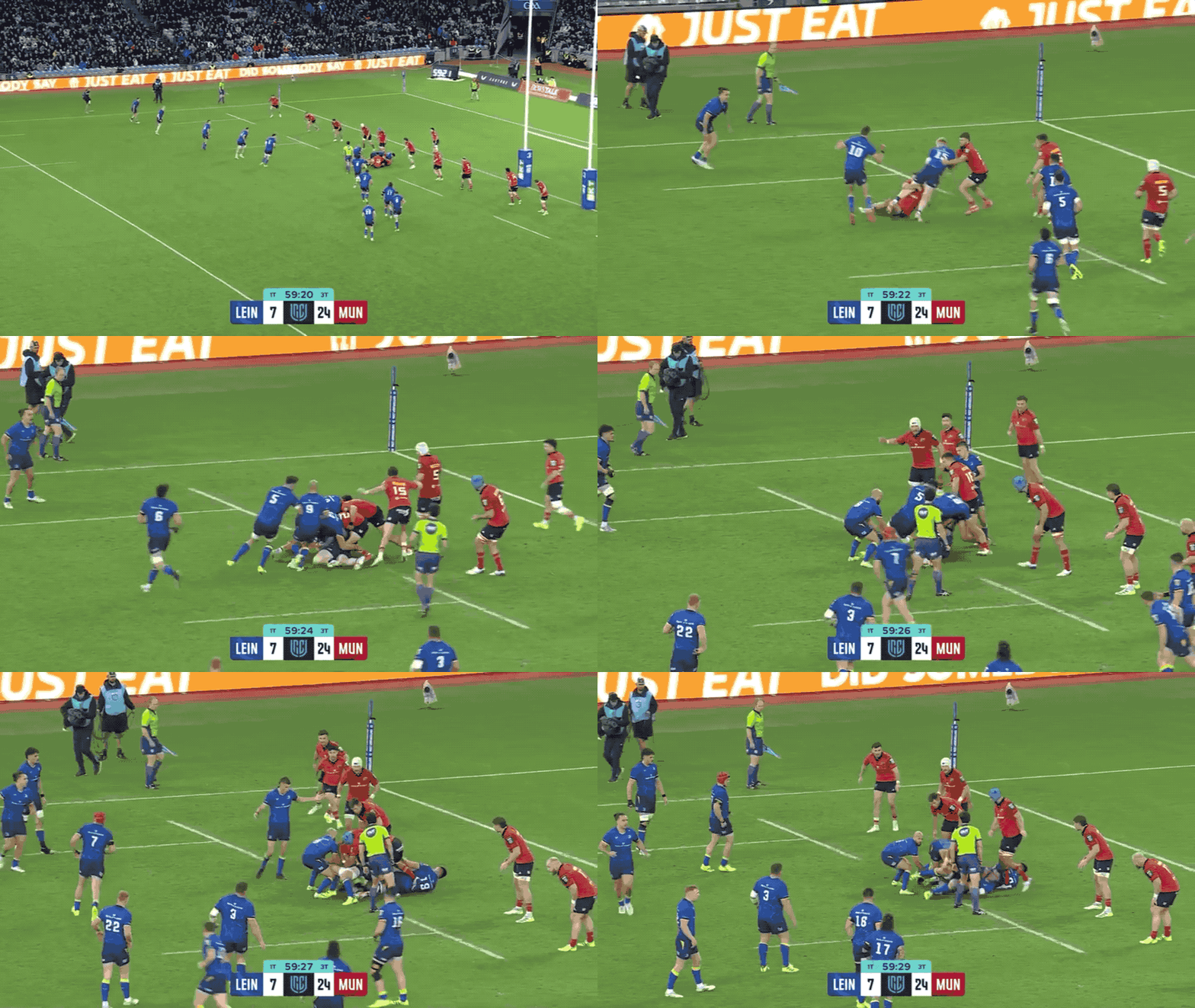
This is some tackle, and it opens up two poaching options that we were a little unlucky not to get the penalty for. Daly sweeps all the way through the tackle, so there’s no chance of getting pinged for a penalty that would have certainly been a yellow card, too.
Leinster came back across the field, pushing width on every pass off #9 to try and find a carry that would allow them to get ahead of the fold, but the constant tackle discipline and Munster’s constant awareness of when they were gone off their feet at the ruck slowed them at every turn.
They got under the posts and looked to get the ball to the far edge. Time and again, Munster shut the door with witheringly physical tackles that began to drive Leinster behind the gainline. No seperation, no quarter.
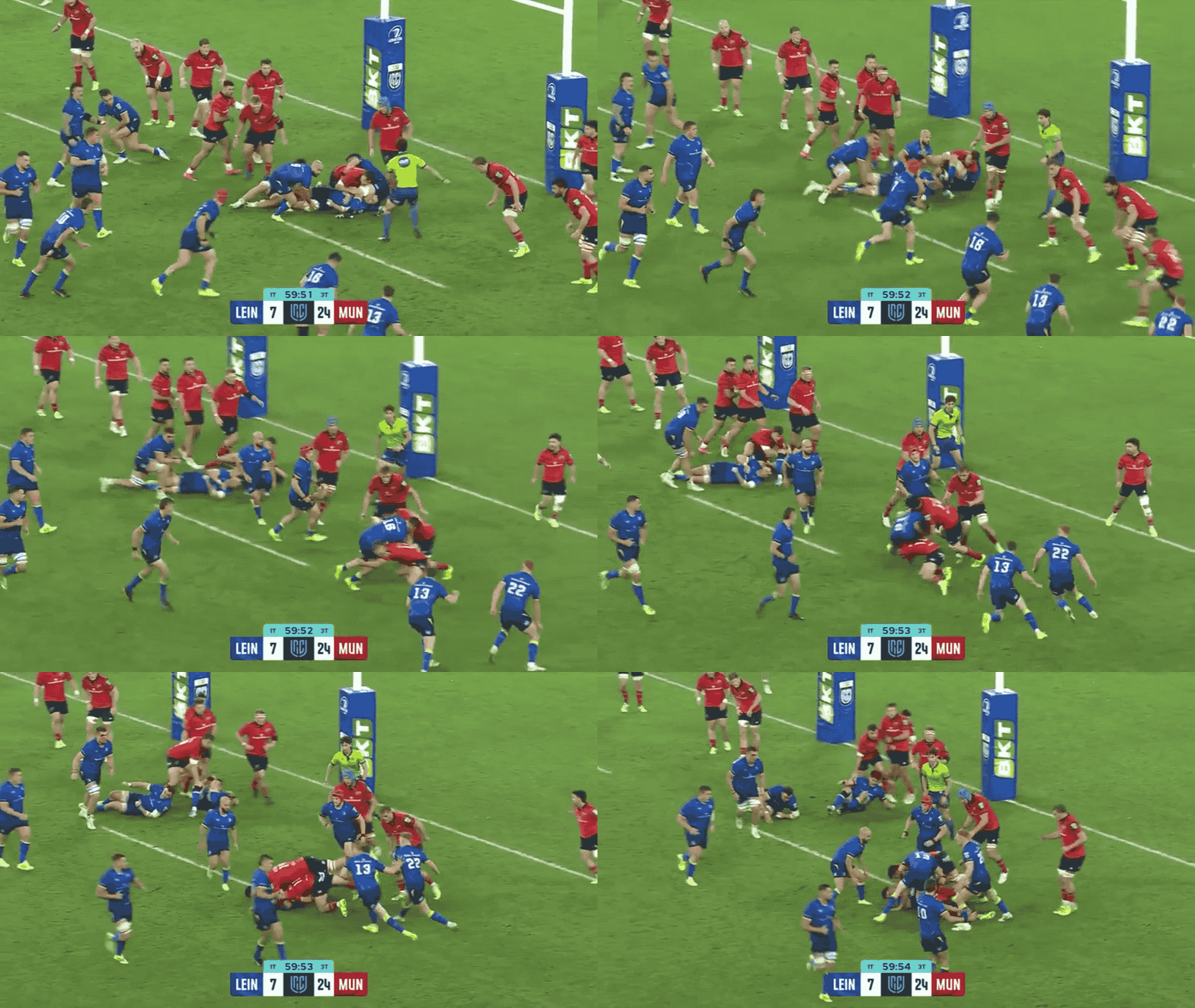
Gibson Park felt the space out wide from that compression, so he went wide to Prendergast, who fizzed a pass across to O’Brien in space. Patterson got the stop, but look at Kelly, Abrahams and Daly — manic coverage this deep into the sequence.
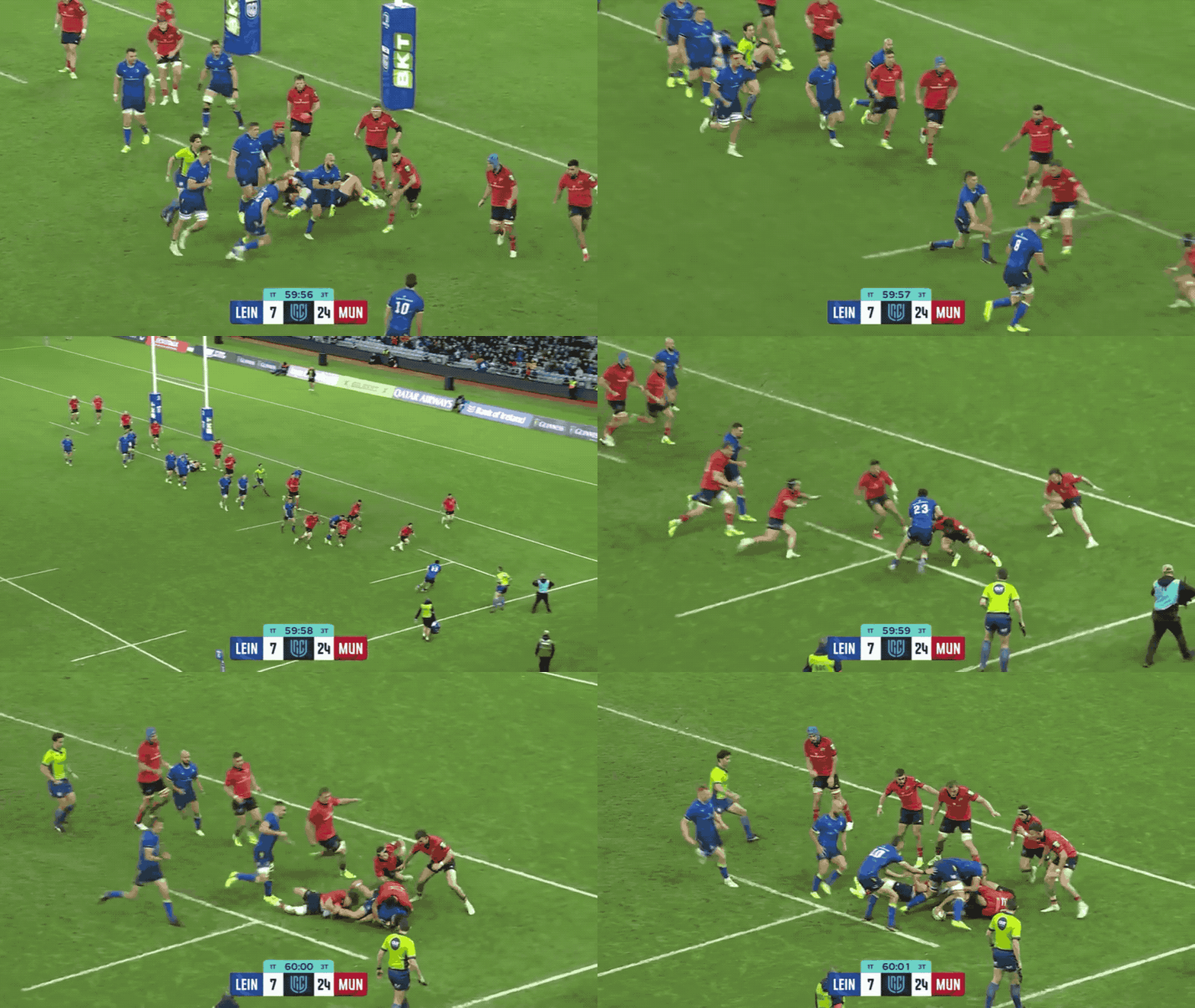
Leinster got the ball back and tried to push the other edge, sensing the space was going to develop there, but Munster were able for that too.
When Gibson Park looked to release to Prendergast, the question came down to this: did we know how to defend Sam Prendergast in the 22 with space on the outside? Were we going to make the killer mistake that teams make when he takes a ball in this kind of space?
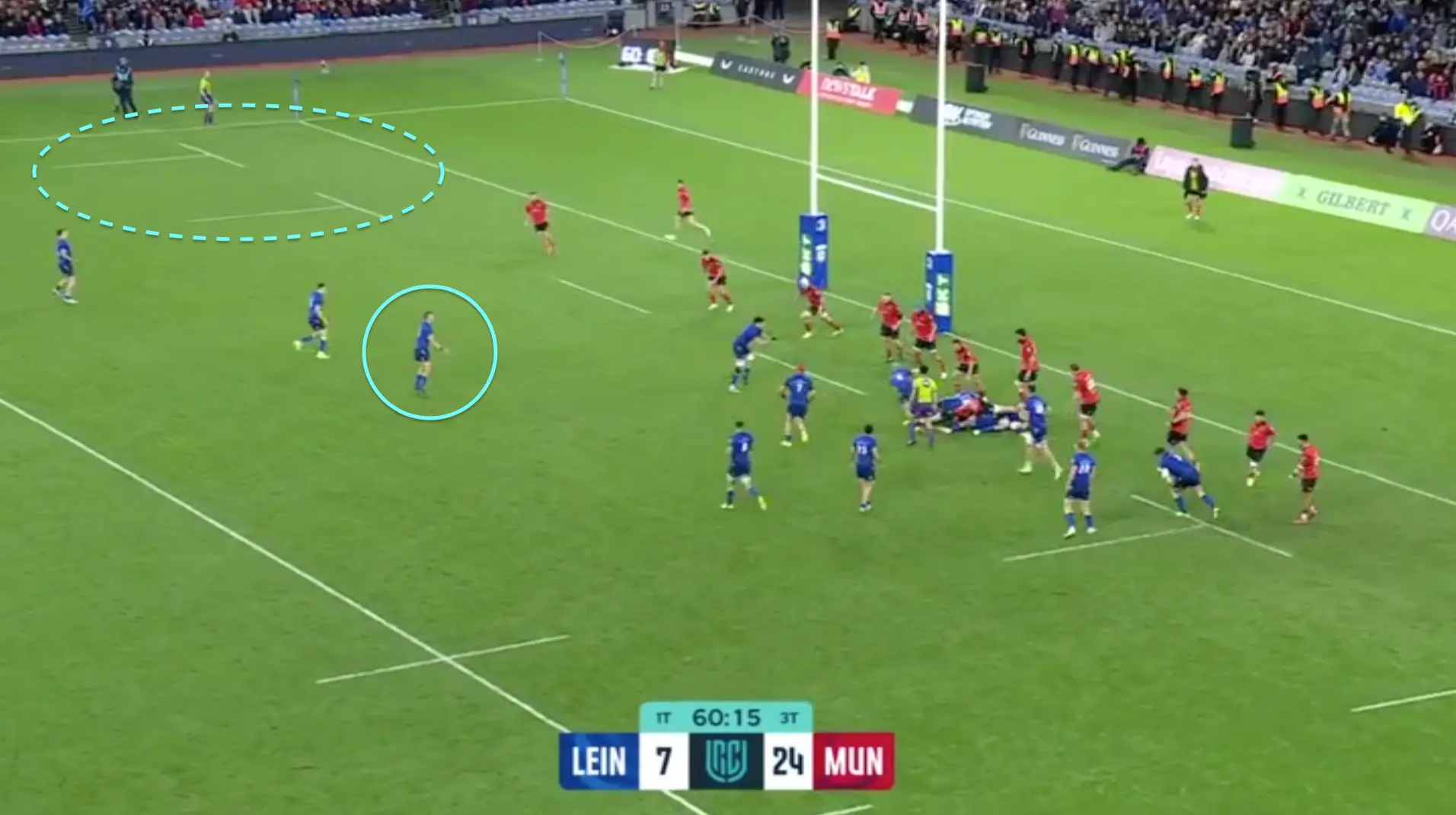
No.
Daly shot around to cover the kick option, Nankivell lined up on Lowe — the next most obvious pass option — so then it came down to Tom Farrell and Fineen Wycherley to make the right call.
They managed it perfectly.
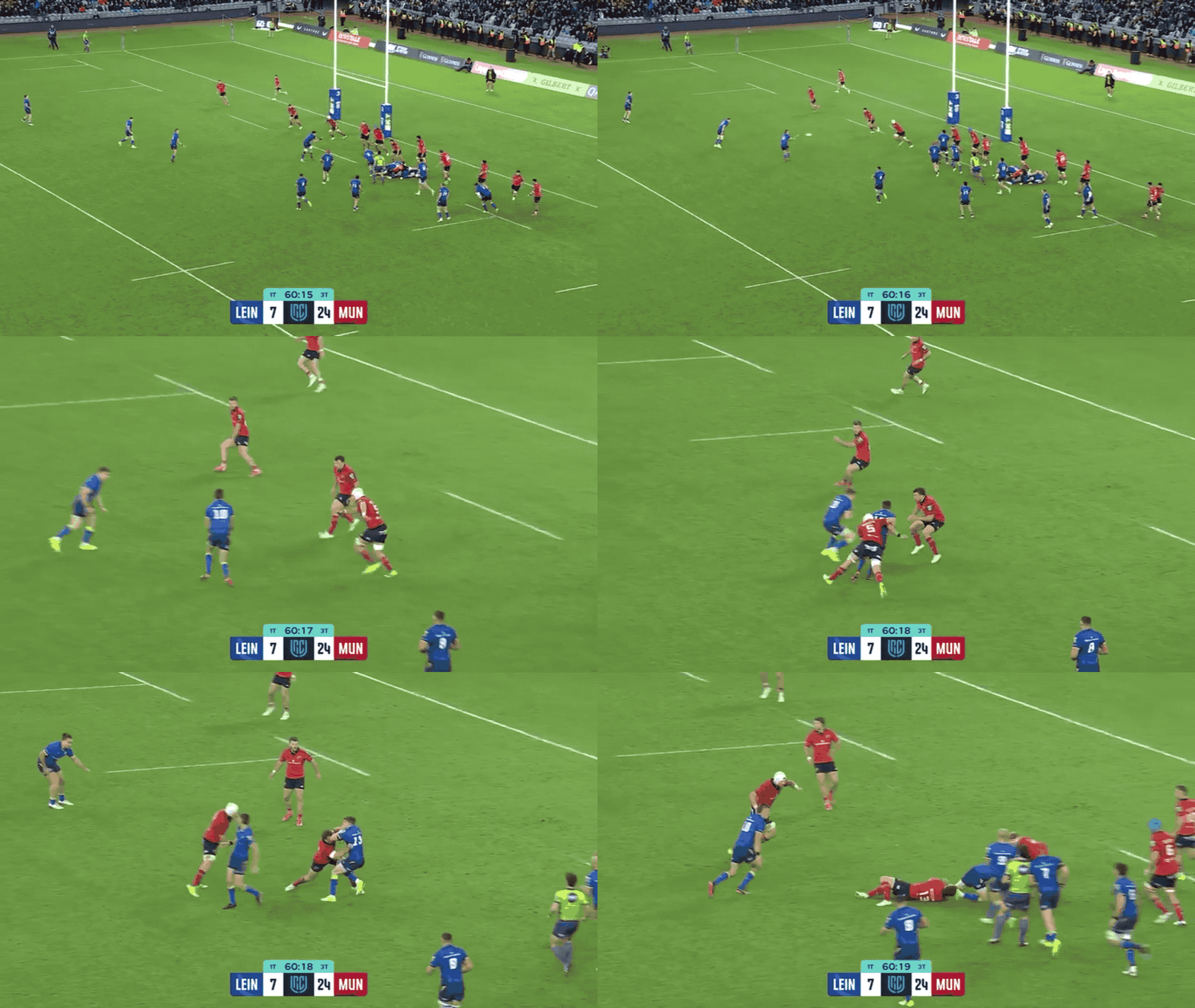
If Farrell decides to step in here and blitz Prendergast, he pops to Ringrose for a try under the posts. By holding his line on Ringrose, Prendergast is now faced with carrying himself, but Fineen Wycherley is pressuring him from his inside shoulder.
Munster showed Prendergast the only option he didn’t want to take — a carry into contact with a physical mismatch. Prendergast duly obliged with a nothing pass to Ringrose that shouldn’t have been given.
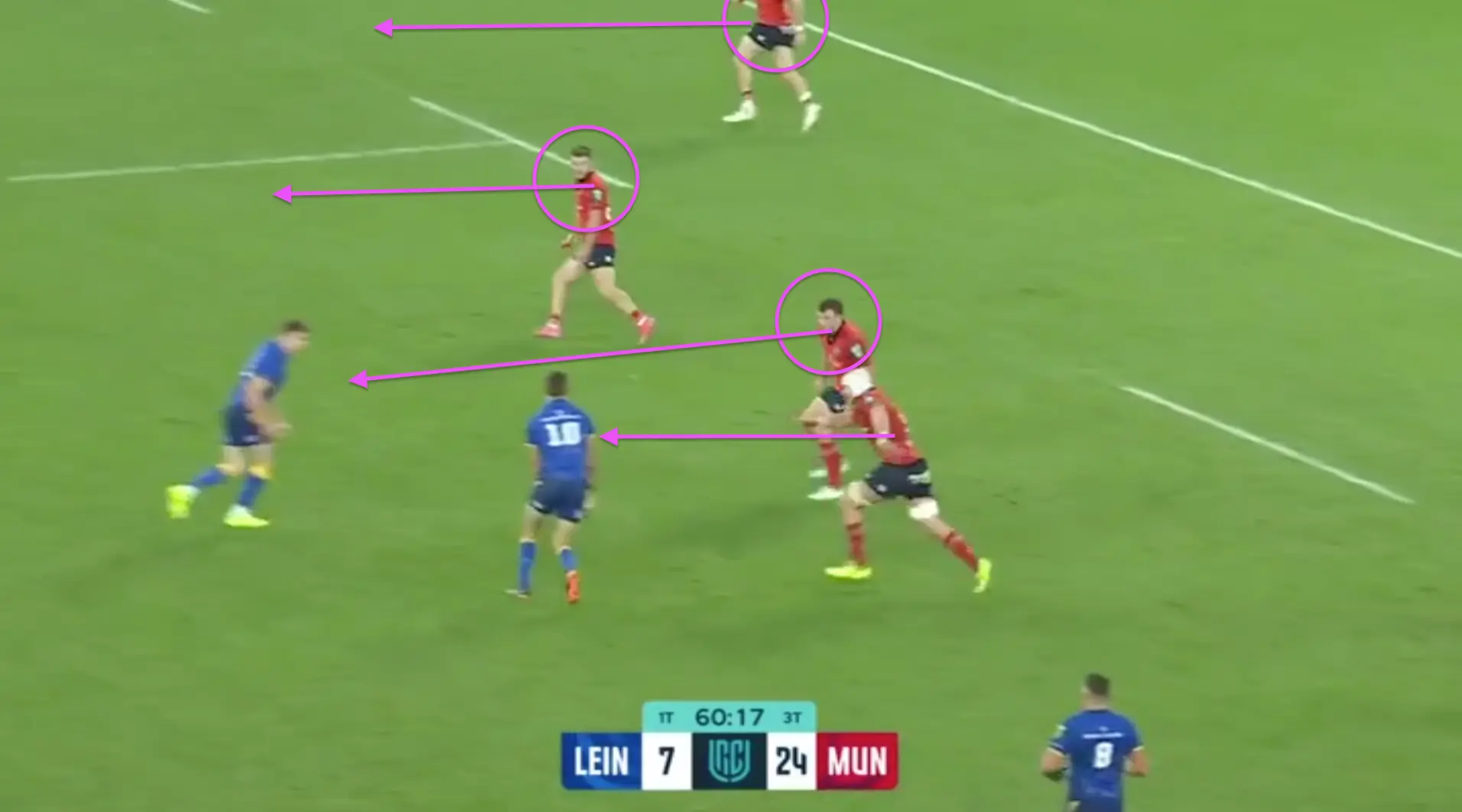
We almost won the turnover, but Leinster retained and tried to find the other side of the field; they wanted outside shoulder momentum, but couldn’t find it.
They went through five more tight phases, direct carries, Lowe on the tight pinch line, nothing worked, but right at the end of the sequence, outside shoulder space appeared, and they went right for it.
For me, Sam is too deep here. He needs to be flatter to stop Munster pushing up and out to flood his passing lanes. Kelly is already shooting on Lowe to shut that pass down with Patterson as the obvious height target for a bridge pass to the edge.
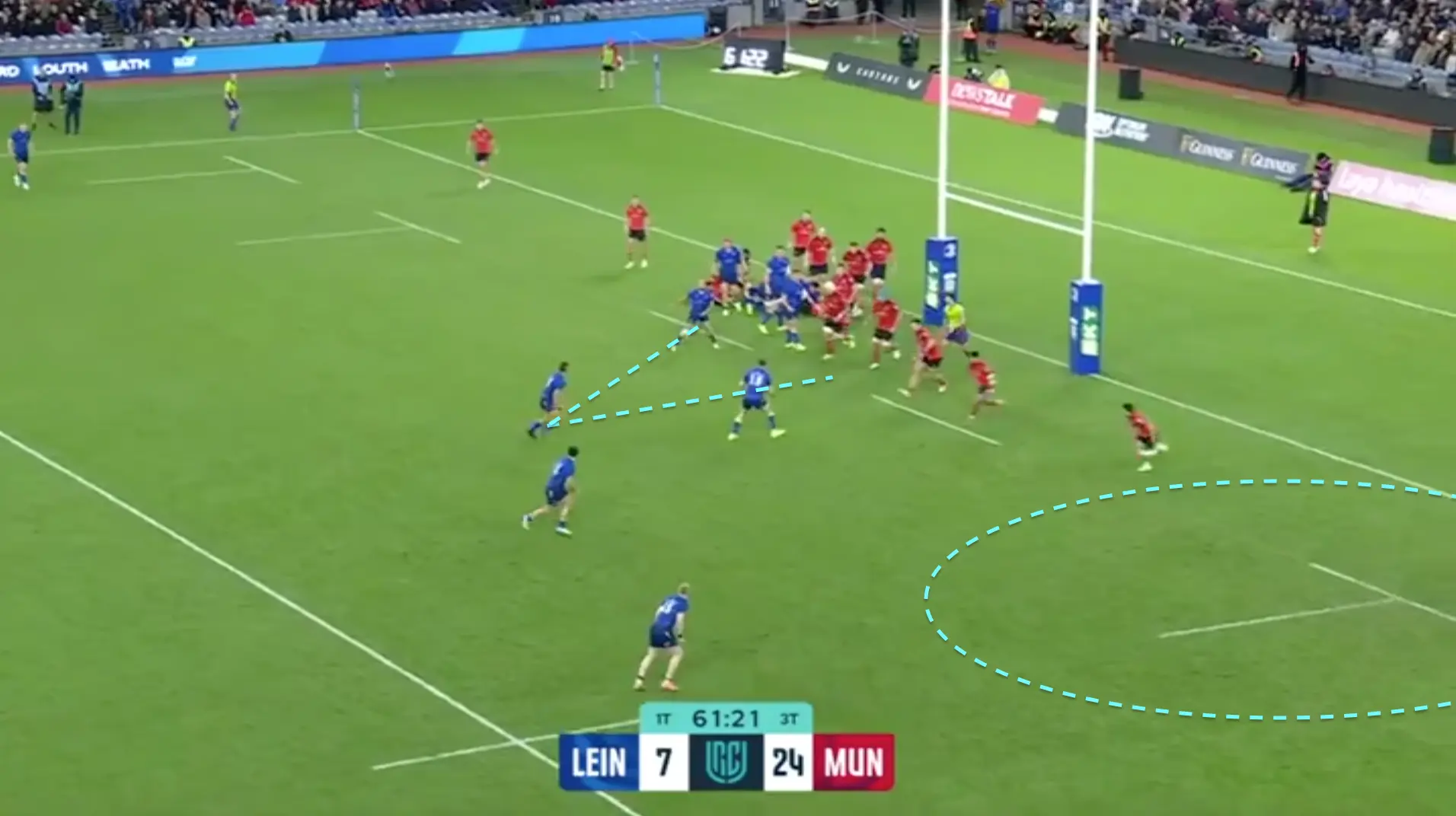
But he turns an easy pass for Gibson Park into a more challenging one because Prendergast isn’t attacking the ball. It spills, and Munster are all over the loose ball.
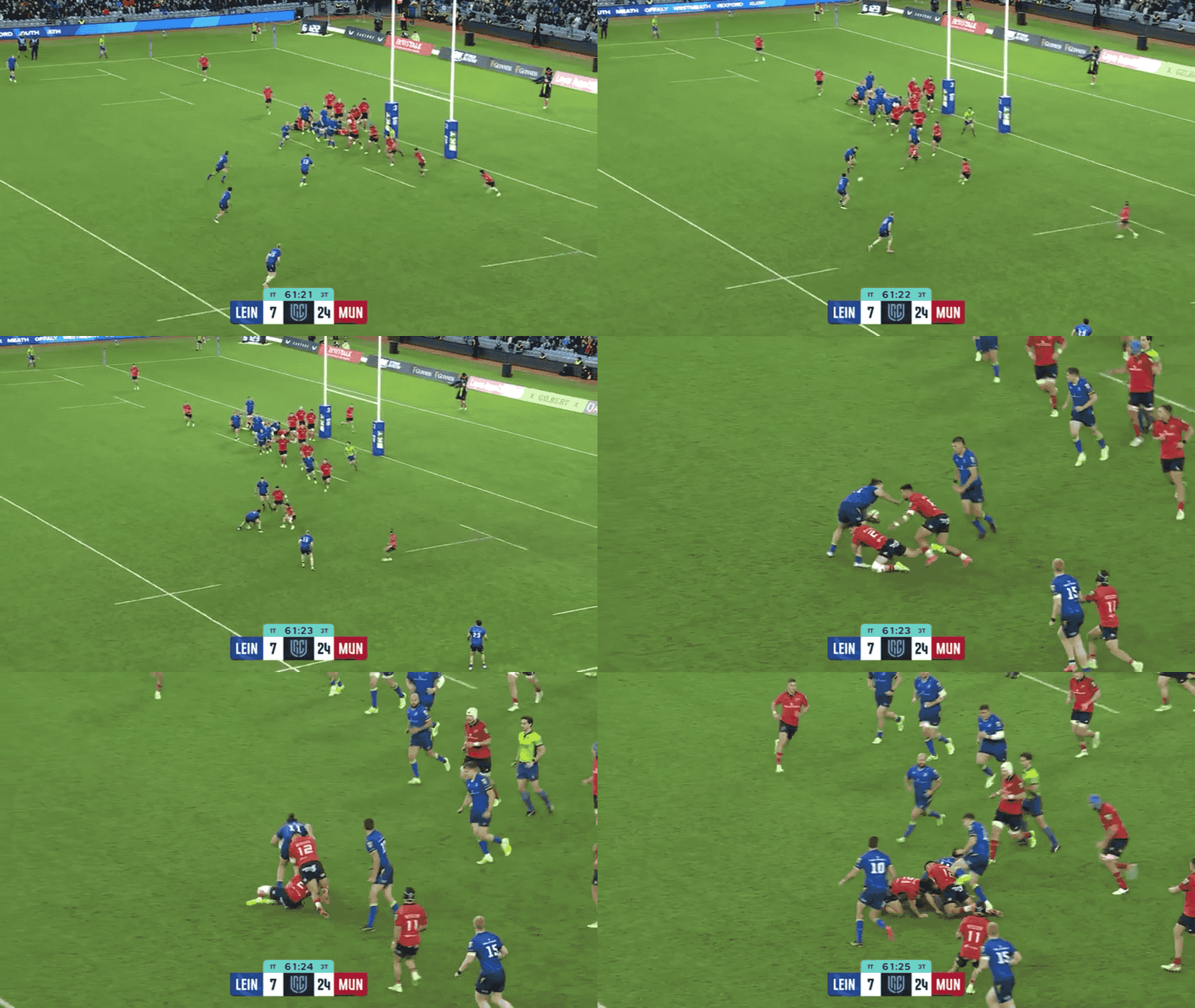
Beirne almost wins another turnover here, but Leinster are scrambling in possession. They go to an isolated and wrecked Tadhg Furlong who gets held up again by Jack O’Donoghue and Fineen Wycherley.
When Leinster go off their feet to prevent the choke tackle, Tadhg Beirne does what he almost always does.
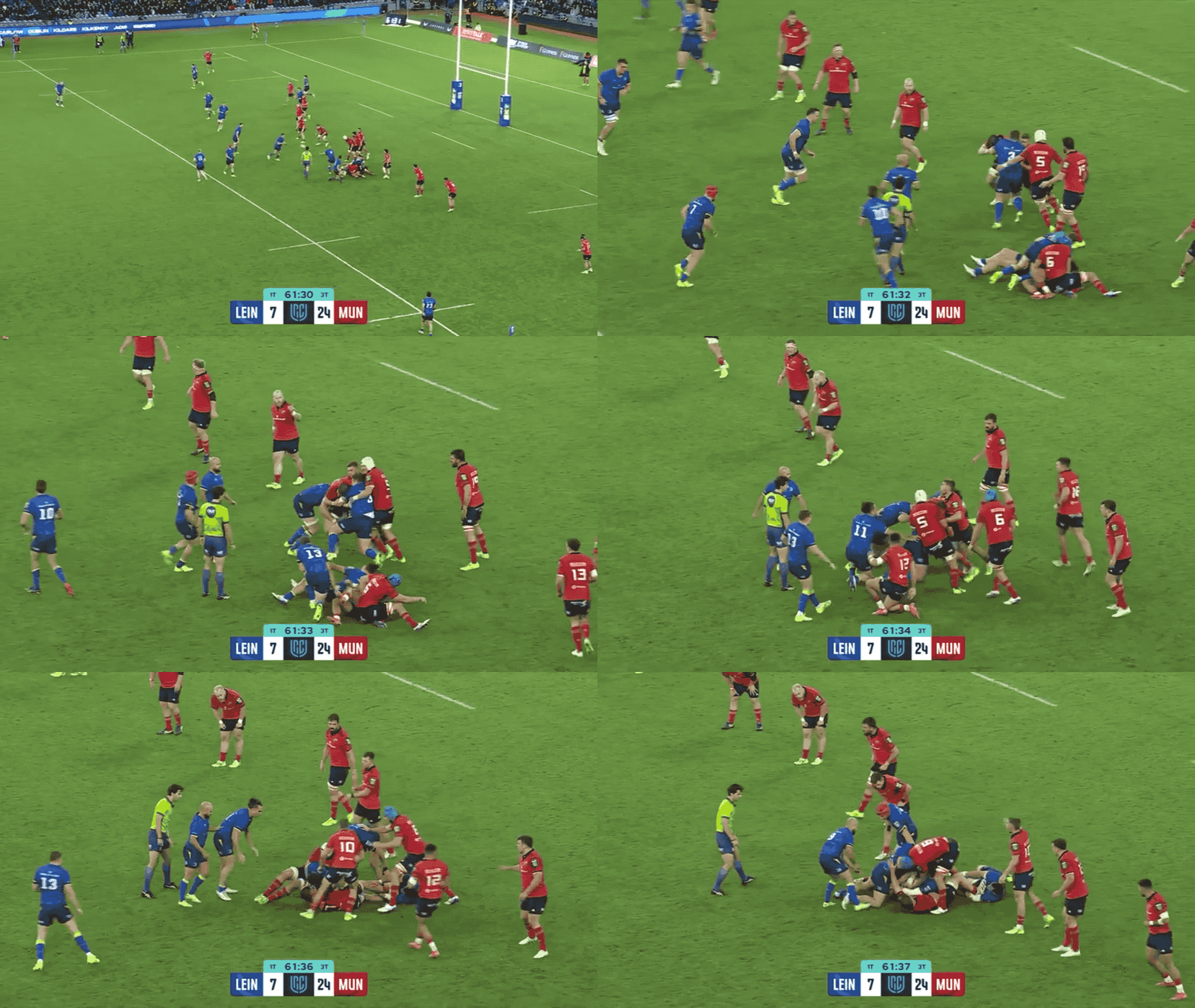
He wins the turnover and lifts the siege for good.
Ten minutes of hell. But it wasn’t Munster who were going there; they were waiting in hell for whoever wanted to go there.
