


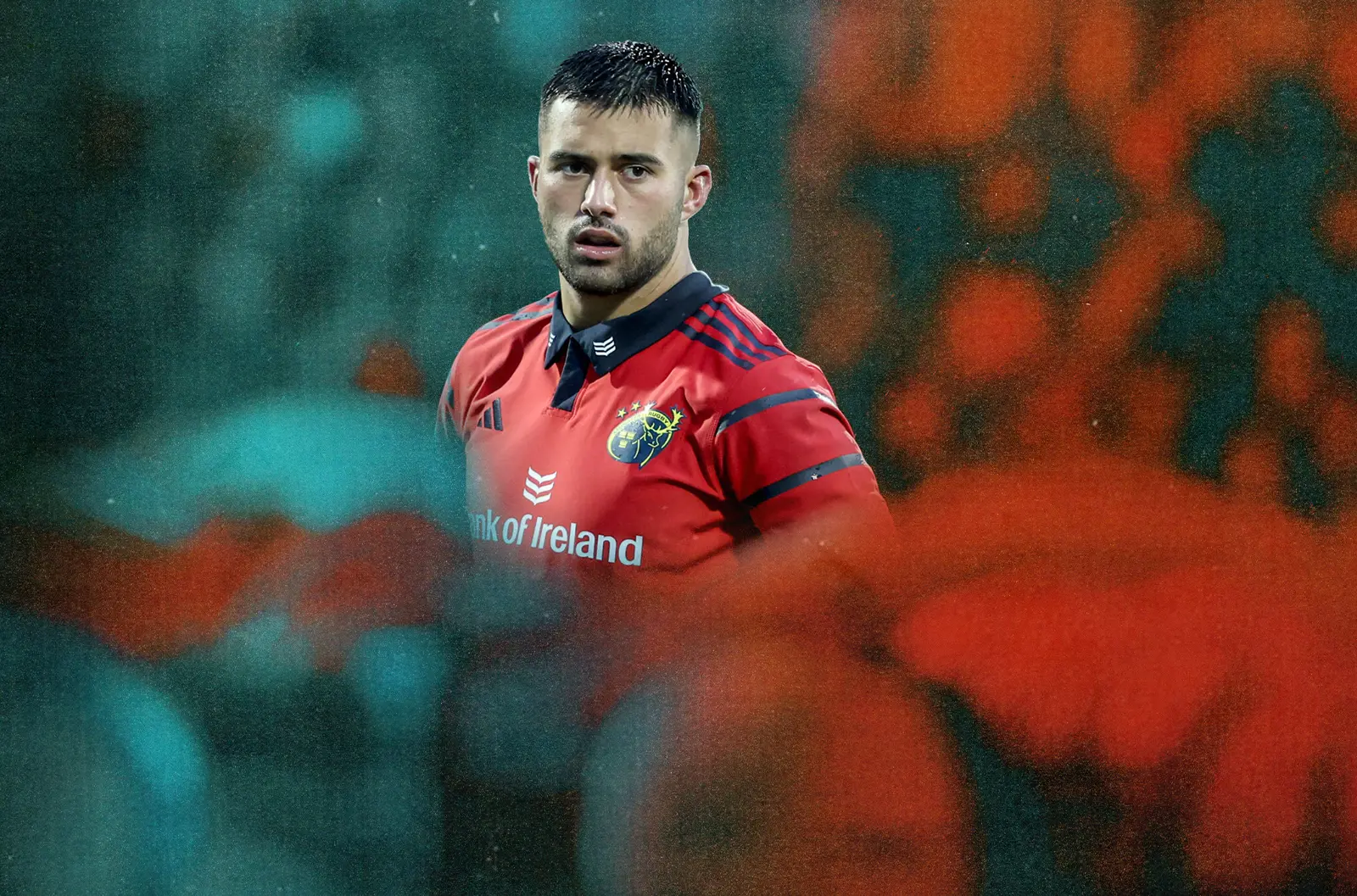
It’s that time again.
The cold is biting in the morning.
The windshield has needed the dial at 4 and full red for five minutes before heading off to drop our little girl at Junior Montessori. The horses in the bumpy field next to Tadhg O’Connor’s get steamier every morning.
Munster are back.
And it’s the start of a new era, all over again.

A lot has been made of Munster’s changes at head coach over the last 15 years, certainly in light of the comments that bubbled up from Conor Murray’s recent autobiography but, as per usual, most of the takes I’ve seen in the Legacy Media have either been flat out wrong, at worst, or so cheerily naive at best that they’re in danger of wandering off on their own at Supervalu.
Don’t worry, your Daddy is here to get you.
The only coach that Munster have voluntarily moved on from in the last twenty years has been Graham Rowntree in November of last season, six games into the season. Even then, that could not happen without the consent of the IRFU Performance Director David Humphreys, who, as you know — or maybe you don’t — is the ultimate contractor of all the provinces’ head coaches.
In that time, Munster have lost Tony McGahan to the Wallabies, Rob Penney to a big-money (and closer to home) opportunity in Japan, Rassie Erasmus to the Springboks just 12 months into a three-year deal, Johann Van Graan to the six-month notice in his contract after signing a two-year extension that February, and that’s before we remember of the sad passing of Anthony Foley.
Seven appointments since 2008, one where a more experienced Director of Rugby was moved upstairs, and one instance last season where, by the end of October, everyone seemed to be pretty certain that moving on was the only sensible step to take. All the rest chose to leave for a variety of reasons — test rugby, more money, closer to home. The usual.
The longest tenure in that period, by the way, belonged to Johann Van Graan, who was head coach of the club for five seasons and 125 games. By the end of that period, I think everyone was glad of a new start, even with Rowntree adding an element of continuity.
What’s the point of this tangent? That continuity is great… but only when it’s working. When it’s not, you need to change course. Every step you take in the wrong direction makes the journey to get back on course all the longer.
Munster and the IRFU believe that Clayton McMillan is the man to plot that journey.
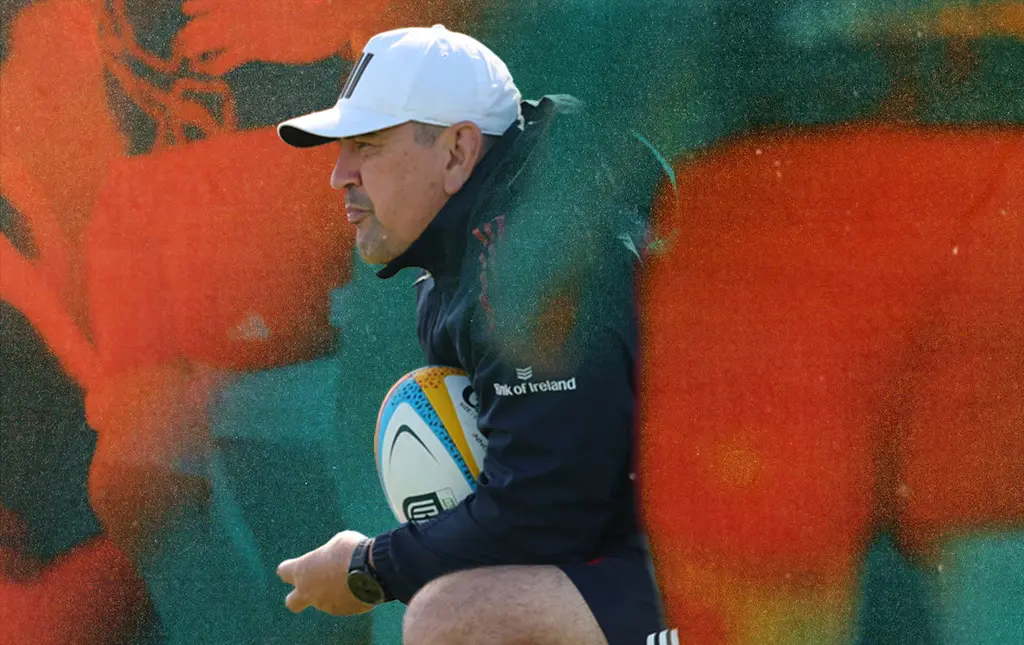
Let’s be clear, if Clayton McMillan does what he’s capable of here in the next two or three seasons, it won’t be long until a test rugby job comes calling for him, and I’d fully expect him to take it when that time comes. Munster knew that about Erasmus back in the day, but expected that call to come after two seasons, not six months in. That’s the thing with truly special coaches coming into their coaching prime — the minute they walk in the door, you know you’ve got one, maybe two contracts with them until they move onto the test game.
That was true with Joe Schmidt at Leinster, it was true of Rassie Erasmus here, and when Ronan O’Gara’s second contract as the main man at La Rochelle expires in 2027, I’d expect him to make the move up too. That’s the way it works in rugby. M
For Munster in the next three seasons, it’s about scaling up with McMillan, and everything I’ve heard so far about him has been positive. Meeting him in person myself proved all the things I’ve heard were true. He doesn’t take any shit, he’s got a very clear vision of what Munster should look like and how he’s going to get us there.
You will either fit in with that vision, or you will fuck off.
It’s that simple.
***
Munster are expected to compete at the top end of the URC and Europe every single season, whether they are in the frame to do so or not.
That’s the secret sauce you only get to taste when you become the head coach or talk to one. Johann Van Graan told me himself in Cork a year or two ago when he popped over for a visit — Bath is a wonderful city, and a brilliant club, with fantastic people working for it, but the difference in expectation compared to Munster is night and day. The expectation comes down to history, primarily, but only because the belief that the club can get back to those heights has only waivered slightly since those days in the 2000s.
So it is foolish to believe that Clayton McMillan will get much leeway when it comes to the start of his tenure, and the man himself seems well aware of that. Ultimately, there is no bedding-in period that will adequately soak up multiple losses. The need for results is instant, especially after last season, and our start to the season is tricky, but far from impossible. Three home games should really mean 14/15 points as part of 34 points before the end of the year, with two wins in Europe.
See? It’s easy when all you have to do is write it down.

If we have 32-34 points by the end of December, Munster will probably make the top four in the URC. From there, Munster making the URC final would be considered a good domestic season for McMillan, with scope to improve the side again next July.
In Europe this season, I think the aim has to be a home Round of 16 game at least, which we can obtain with a good showing in what is a pretty well-balanced pool. Bath are an excellent side, Toulon are very good, Gloucester and Castres are something of an unknown quantity, but it feels like a pool that could see one, maybe two losses each. Win in Cork, go hard at Bath in the first round, and, with a bit of luck, we’ll be facing a disinterested Toulon side in early January with a home game to finish against a hopefully disinterested Castres side.
None of that is impossible, but as Rowntree found out, not winning your home European games puts your season on hard mode, regardless of what happens in the URC.
***
A lot has been made, again, of the experience Munster have lost this season, and that’s certainly true in a factual sense. Over a thousand caps’ worth of experience moved on from the club in the summer. Of those caps, losing Peter O’Mahony to retirement is the most unquantifiable. Munster will be different without him, but will we be worse? On the face of it, you’d say “yes” but only because of O’Mahony’s influence. Phase for phase, last season, I didn’t really see anything irreplaceable from O’Mahony, certainly from an athletic standpoint, but that was only ever half of his game. The sensible answer here is: we just don’t know, but we’ll inevitably miss him at some point. Most likely during a game we narrowly lose — and would have lost with him starting regardless — but the perception will be that it’s because of that unquantifiable Schrodinger’s Crafty Veteran.
All of the rest of the retiring players were varying forms of backup, with Conor Murray being the most deluxe version of that at the tail end of his career. When it comes down to it, there was Conor Murray at his peak — completely untouchable and unquestioned best in the world — and then there was the Conor Murray we saw at Munster for the last two, maybe even three, seasons of his career, who ranged from composed, test-quality veteran “jeez he never lost it” tier to scatty, erratic, slow-motion ponderman and everything in between.
Murray had nine starts for Munster in the last two seasons, and the last truly great performance from him was probably away at the Bulls in 2023/24. I don’t think his natural game suited what we wanted to do under Prendergast’s attacking system, and his usage reflected that in the end.
His best quality — albeit at a very inflated price, even on a PONI deal — was as a high-quality 1B to Craig Casey’s 1A. We’ll miss Murray this season when, inevitably, one of the backup scrumhalves has a nightmare, but we also have to remember that, for a few too many games in the last few seasons, it was Conor Murray who was having that nightmare.
But, again, it’s unquantifiable.
When legends of Irish sport — as Murray and O’Mahony certainly are — retire, what happens next can be unpredictable, but what is predictable is that they become old news fast.
For Munster, a potential strength lies in that unpredictability. A lot of veterans and senior players have moved on. That leaves a gap that others will, inevitably, fill. Old legends fade away, new legends rise; it’s how it always works, and will work again.
***
So what is achievable? What is realistic?
They are two different things.
It depends on who’s available, ultimately. If we have decent squad availability across the season, even allowing for inevitable periods where we’ve got a few knocks, I think finishing in the top four of the URC and making a semi-final, at least, combined with winning both home pool games in Europe and getting a home knock-out game in Europe, is realistic.
Getting to a final and a home QF in Europe would be a very good season. Add in a regular season win over Leinster, and it’s a great season, as long as the game we lose in the knockouts isn’t to Leinster and isn’t in Thomond Park.
Winning the URC would be an excellent season, and if that’s combined with a semi-final in Europe, it’ll be seen as a roaring success.
You can move the sliders on that as you see fit.
All I know for sure is this: I’m ready to get hurt all over again.
Are you?
