


In last week’s instalment, I went over some of the data and concepts that I think will inform the contractual decisions around Munster’s tighthead depth chart.
Long story short, I think it’s all but set in stone that Roman Salanoa will be offered a new two-year deal in the next few months, and it’s the pragmatic, sensible option to take.
Now we switch over to the other front five positions, and there are a few key decisions to be made here. Let’s remind ourselves of the players.
Senior Contracts Expiring in 2026 Group
- Front Row:
John Ryan, Roman Salanoa,Jeremy Loughman, Mark Donnelly, Diarmuid Barron, Niall Scannell. - Second Row: Edwin Edogbo, Jean Kleyn, Conor Ryan.
I think it’s prudent to start with loosehead, as it’s the closest relative to our tighthead discussion. Two senior contracts are expiring this season, with George Hadden in the third year of the academy, and a decision is about to be made on whether or not he progresses to the senior squad.
Up first, Jeremy Loughman.
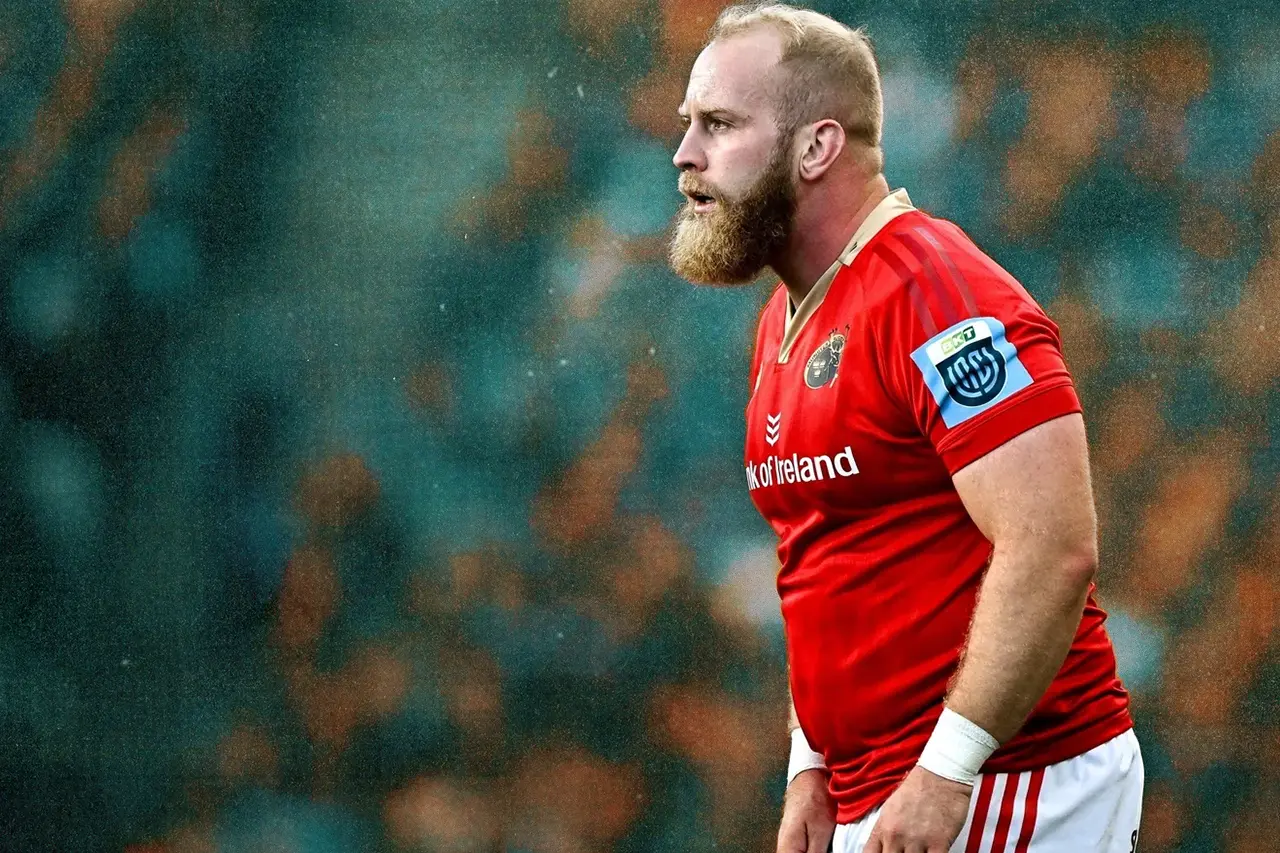
Loughman has been at Munster since 2017/18, when he moved to the province on an initial loan from Leinster. Since then, he’s been a cornerstone of the front five and turned into a very solid prop, earning five Irish caps along the way. His development at Munster has been consistently good. He went from what was a fairly ropey-looking scrummager during his first season, albeit with some good work around the field, into probably the most secure scrummaging loosehead on the island, with very solid work around the field.
His last season was heavily disrupted by injury, but that’s been an aberration in Loughman’s career with Munster. He’s been defined by his durability as much as anything, bar a few knocks that have kept him out for 6/8 weeks every few years, which is broadly in line with what you’d expect from a prop anyway.
I think it’s fair to say that Loughman is Munster’s #1A loosehead as it currently stands, even with the signing of Michael Milne, but he comes into this contract season with a fair bit to prove.
To get an idea of where Loughman is, I rolled his data from the last two seasons (to be fair, given he played so few games last season) into a per-80 average and compared him to some of his peer looseheads in the URC & Europe.
Attacking Essentials Comparison
| Player | Carries | Dom % | Gainline % | A.Rucks | |
|---|---|---|---|---|---|
| Jeremy Loughman | 8.5 | ~23% | ~42% | 22 | |
| Ellis Genge | 12–14 | 40–50% | 50%+ | 12–14 | |
| Ox Nché | 9–10 | 30–35% | 45–50% | 14–16 | |
| Andrew Porter | 8 | 25–30% | 40–45% | 18–20 | |
| Pierre Schoeman | 11–12 | 30–35% | 45–55% | 15–17 |
Defensive Essentials Comparison
| Player | T.Success % | T. Made | Dom % | Turnovers |
|---|---|---|---|---|
| Jeremy Loughman | 86% | 12.6 | ~4% | 0.2 |
| Ellis Genge | ~88% | 9–11 | 10–12% | 0.5 |
| Ox Nché | ~90% | 11–13 | 8–10% | 0.3 |
| Andrew Porter | 85–87% | 15–16 | 6–8% | 0.3–0.4 |
| Pierre Schoeman | ~88% | 13–15 | 7–8% | 0.3 |
Jeremy Loughman vs Elite Looseheads
1. Carrying & Gainline
- Loughman: ~8.5 carries per 80, ~42% gainline, ~23% dominant.
- He absorbs tacklers (72% of his carries tie in 2+ defenders) but doesn’t bend defences.
- Genge: 12–14 carries per 80, 40–50% dominant, 50%+ gainline.
- Explosive carrier, a “weapon” LH.
- Nché: 9–10 carries per 80, ~30–35% dominant, 45–50% gainline.
- Compact but effective; punches above weight.
- Porter: ~8 carries per 80, 25–30% dominant, 40–45% gainline.
- Similar volume to Loughman, but more efficient defensively.
- Schoeman: 11–12 carries per 80, 30–35% dominant, 45–55% gainline.
- Heavy involvement and reliable go-forward.
Verdict:
Loughman is clearly below Genge, Nché, and Schoeman in terms of carrying threat. He’s closest to Porter — but even Porter tends to get more post-contact metres per carry. Loughman’s main carry value is in committing tacklers, not in line-breaking.
2. Tackling
- Loughman: 12–13 made per 80, 86% success, ~4% dominant.
- More of a “wrap and hold” tackler, low bite.
- Genge: 9–11 per 80, ~88% success, 10–12% dominant.
- Brings big hits, game-shifting dominance.
- Nché: 11–13 per 80, ~90% success, 8–10% dominant.
- Very reliable defender, rarely misses.
- Porter: 15–16 per 80, 85–87% success, 6–8% dominant.
- Heavy defensive workload, reliable enforcer.
- Schoeman: 13–15 per 80, ~88% success, 7–8% dominant.
- Consistent workload and more dominance than Loughman.
Verdict:
Loughman has good volume but lacks bite. He’s reliable enough, but his dominance is low compared to all four of the others. Porter matches his volume but adds defensive edge, while Schoeman is both high-volume and more physical.
3. Ruck Involvement
- Loughman: 22 attacking rucks per 80 (highest of all), ~90% effectiveness.
- Outstanding reliability in clearing and securing ball.
- Genge: 12–14, focuses more on carrying.
- Nché: 14–16, balanced.
- Porter: 18–20, mixes heavy ruck involvement with strong defence.
- Schoeman: 15–17, middle ground.
Verdict:
This is Loughman’s stand-out strength. He hits more attacking rucks per game than anyone in this group, often acting as a stabiliser in Munster’s phase play. Where others bring collision dominance, he brings phase security.
4. Disruption Threat
- Loughman: ~0.2 per 80 — negligible.
- Genge: ~0.5, occasional steals.
- Nché: ~0.3, not prolific but capable.
- Porter: ~0.3–0.4, can jackal at defensive breakdowns.
- Schoeman: ~0.3, adds occasional steals.
Verdict:
Loughman contributes little to nothing to the defensive breakdown. All the others, even if not specialists, offer more threat here.
Summary
Where Loughman lags:
- Carry dominance (well below Genge, Nché, Schoeman).
Tackle dominance and breakdown impact (low compared to peers).
Where he matches:
- Defensive volume (similar to Schoeman/Porter).
Carry volume (~8.5 per 80) is comparable to Porter.
Where he excels:
- Ruck work rate — unmatched in this group, providing stability and reliability.
Overall profile:
Jeremy Loughman is not an “elite weapon” loosehead like Genge or Nché. He fits better in the workhorse/stabiliser category, closer to Porter — though even Porter has more defensive bite. His value is in his phase reliability, allowing others to attack while he keeps the structure intact.
Phase Play Breakdown
When you line Jeremy Loughman up against the very best looseheads in his sphere — Ellis Genge, Ox Nché, Andrew Porter, and Pierre Schoeman — you get a clear sense of what he is, and what he isn’t.
Loughman is not the kind of loosehead who terrorises defensive lines the way Genge or Nché can. His carrying profile is much closer to Andrew Porter’s: steady in volume, useful for tying in tacklers, but not a consistent source of go-forward on his own. Across the last two seasons, he has averaged just over eight carries per 80 minutes, with around 42% gainline success and ~23% dominant carries. That places him well below Genge, who lives in the 40–50% dominance range, and behind Schoeman, too, who consistently forces gainline wins. Loughman’s value in contact is less about breaking the line and more about absorbing tacklers and keeping phases moving.
Defensively, it’s a similar story. His tackle volume is solid — typically 12–13 per 80 — but his impact there is limited. At 86% success and with only around 4% dominance, he sits firmly in the “wrap and hold” category rather than as a defensive enforcer. Porter, as an Irish comparison, makes more tackles and lands them with more physical edge, while Schoeman and Nché both offer higher success rates and greater dominance. Where Genge changes games with the occasional bone-shaker, Loughman is a reliable body in the line, but not a player who scares carriers. This is OK, though. Not everyone has to be this kind of impact defender, because it does come at a physical cost.
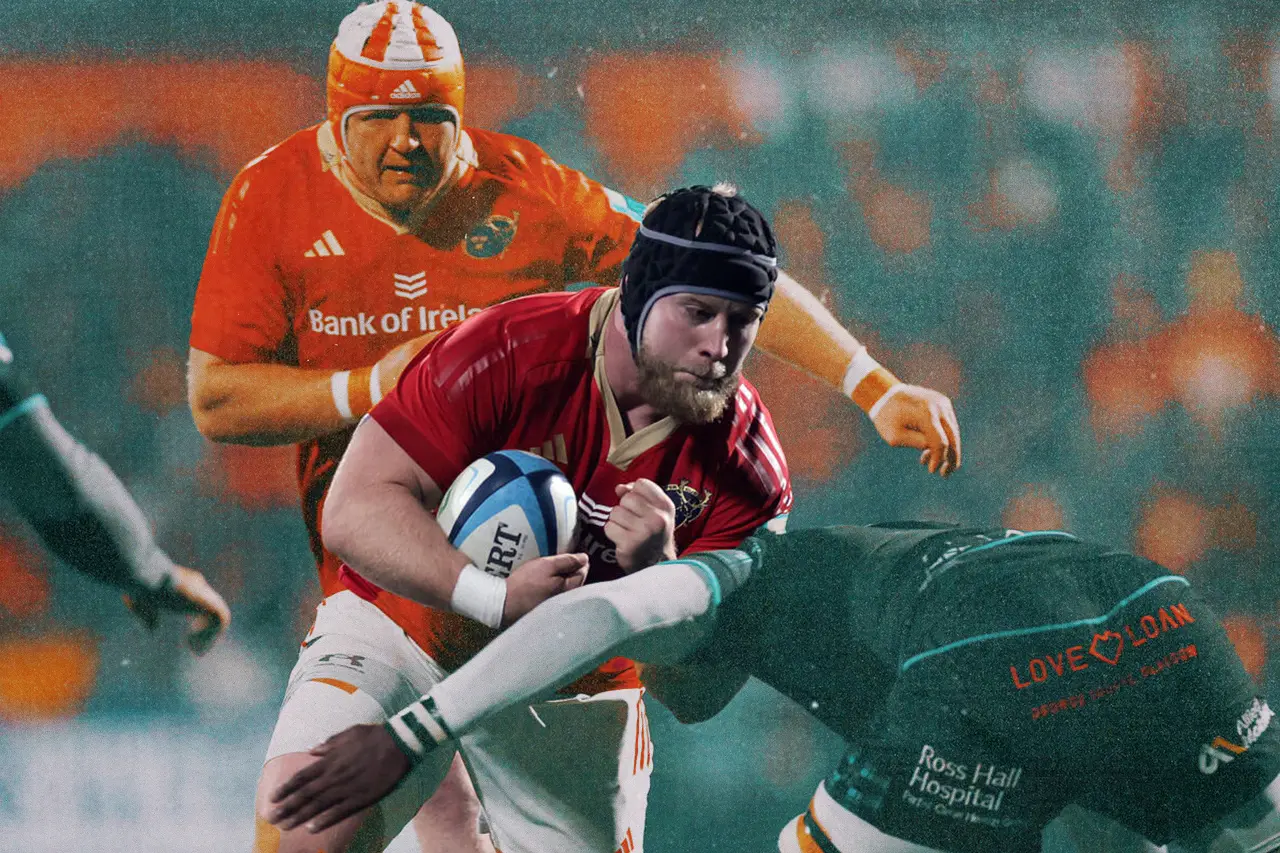
Where Loughman does stand out is in his ruck work. He hits more attacking rucks per game than any of the others — around 22 per 80 — and does so with really good efficiency, clearing with close to 90% effectiveness. This is where his true value for Munster lies. While Genge and Schoeman are known for their carrying impact, and Nché for his defensive reliability, Loughman’s role is that of a stabiliser. He ensures Munster’s phase play runs smoothly, securing the ball and setting the platform for others to shine. It’s not glamorous, it’s not sexy, it won’t be pushing him ahead of Porter (or many others at test level anytime soon), but it’s important all the same. He adds little at the defensive breakdown in terms of turnovers or disruption, averaging less than 0.2 steals per 80, while all of the others contribute more here. He is also not an intimidator in defence. But in a Munster context, where forwards like Beirne, Coombes, and Kleyn can handle the heavy-lifting in collisions, Loughman’s steady hands at the base of the ruck and his ability to keep the attacking shape intact make him a very useful cog.
In short:
- He isn’t Genge, Schoeman, or Nché — he won’t typically bring consistent big moments in contact.
- He isn’t Porter either, who combines a high work rate with real physical bite.
- But he is a phase security specialist — a prop who clears rucks relentlessly, offers solid defensive numbers, and keeps Munster’s attack functioning.
From a system perspective, Loughman is a really strong fit
Loughman’s big point of difference has to be his scrummaging, where he’s turned into a very reliable, effective operator generally, and a proper threat when he’s playing at his best. That’s going to be the challenge for Loughman this season: become a big scrummaging threat against most opponents.
Last season, a succession of leg injuries took some of the sting out of this side of his game, but two successful surgeries and a good preseason should have him raring for road. If he can add that extra something to his scrummaging, he becomes an easy re-sign on a two-year deal to take him to 32 years of age.
Even if he doesn’t, I think he’s a very solid guy to keep in the rotation at the right price. I think Loughman’s value is in that supporting role and as a guy who should be available for most of the season. I don’t think he’s at the stage where you can consider him a crafty veteran — he just turned 30 after all — but I feel that, as more test rugby has likely passed him by at this point, there’s real value in leaning into that and making him a core part of most matchday 23s.
I’d be shocked if he doesn’t get a mid-range provincial contract offer for two seasons.
Mark Donnelly could be under a bit of pressure this season, in my opinion. Just on the face of it, forgetting about anything else, Donnelly will be 25 this coming season and hasn’t really kicked beyond the five or fewer appearances track that he’s been on since 2021/22. Donnelly earned a two-year contract at the end of 2023/24 and has always stood out when I’ve seen him playing in the AIL with Cork Con, but he’s been unlucky with injuries at bad times. He went on an Emerging Ireland tour in 2024 as an injury replacement for Jack Boyle, as an example, and then picked up an ankle injury that kept him out until January 2025.
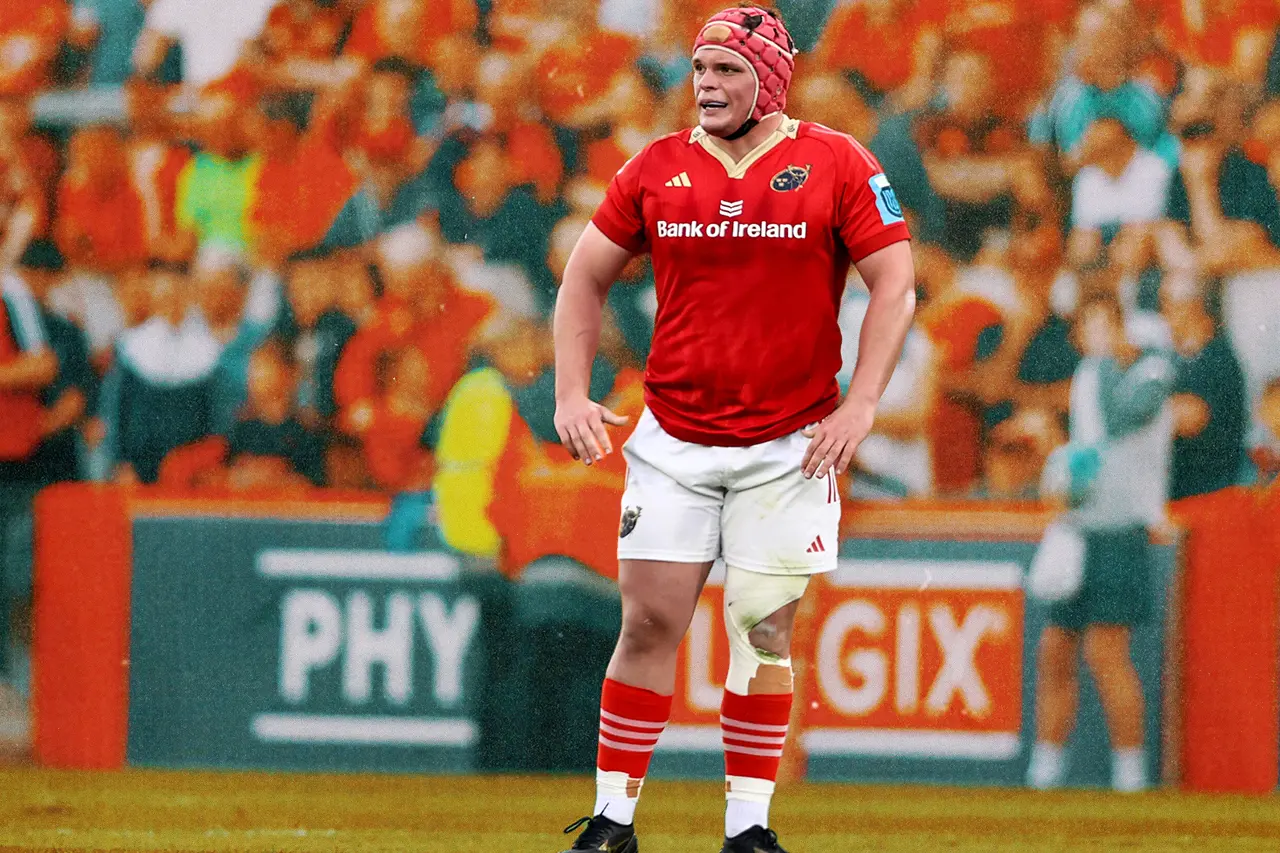
He played four times for Munster once he recovered, and even made the bench in a Champions Cup quarter-final after a succession of injuries to Kilcoyne and Loughman opened up bigger minutes at the tail end of the season.
Even then, Munster got Michael Milne on loan for the end of the season, in part because they needed someone who could impact games of importance. Donnelly has yet to show that and, to be fair, has yet to be given a steady opportunity to do so.
That said, everyone has a clean slate under McMillan, so if he can make a big run in preseason and then take that into the URC, who’s to say what might happen? As it stands, I think he’s under pressure because he’s on a senior deal at a time when Munster now have three senior looseheads in their prime. Of course, there’ll be injuries, but because there are three more experienced players ahead of him, I don’t see many opportunities unless two of them are injured, or one or more of Milne/Wycherley/Loughman get a run for Ireland.
Profile-wise, I think Donnelly is similar to Loughman and Wycherley, which can be a good or a bad thing. Good, in that it’s an easier role to fill in; bad, in that it’s harder to stand out as a change-up. We’ll see how preseason progresses.
For George Hadden, I think this season is purely about finding a way to earn URC minutes and impressing as much as possible. As a “smaller” loosehead, he has to lean on his scrummaging, which was a core part of his game at U20 level, but I would also suggest that, physically, he might be usurped by anyone who can bring dynamism in the mould of Michael Milne.
To sum it up, I think Loughman will sign a two-year deal, Donnelly will be a one-year extension, max, and if he gets that extension, it might be tough for Hadden to progress to the senior squad.
I don’t see a signing in this part of the squad, unless Munster decide to make a pretty radical move by releasing Loughman, which, again, I don’t think is likely.
Up next: Hooker.
