



If there’s one area of the squad where we should expect tactical or conceptual variance from what worked at the Chiefs, it’s probably the back three.
More so than any other position — bar maybe midfield, on which there’s a lot of overlap — the back three have seen the most amount of role variance in the last number of years. A bit like the tail of a whip; when the meta of the game moves, it’s the effectiveness of the outside backline that can move the fastest. In what other position can one or two law tweaks render certain players obsolete, almost overnight?
I have a recent example that started with the closing of the Dupont Law, but had wider-ranging effects.
What Changed?
World Rugby rewrote Law 10 (offside in open play) in July 2024 to emphatically state that players in front of the kicker now must actively retreat and may not loiter. The old clauses that put offside players onside when the catcher ran 5m or passed — the Dupont loophole — were removed, so, in short, if you’re ahead of the kick, you can’t hang around and then benefit when the receiver moves. This directly kills most traditional “escort” behaviour.
As a follow-up to this — if not directly, then certainly conceptually — ahead of the Autumn Nations Series, referees were instructed to penalise “escorts”; namely, retreating defenders who impede a chaser’s access to compete in the air. Officials were calling “allow the access,” and players were told they can support a catcher but not protect them by screening off access to the chasing player. This led directly to more one-on-one aerial contests, with penalties for slowing down, stepping across, or walling off a chaser.
World Rugby issued clarifications later in the season, reinforcing that players ahead of a kick must retreat and not interfere with play until they’re onside; the ball being made dead or specific onside actions were needed before they can engage. This kept the post-2024 interpretation tight and nailed down the laws, but the primary focus was on the back three. They were most often the ones doing the catching and chasing, quite likely to also be the escorting player and were increasingly doing the kicking, too.
As with most law applications, they start hot, penalise a bunch of players to set the tone and then fall back a little. That was certainly true here, but it has to be said that most teams adapted to this law application really quickly, because of how damaging these penalties, if awarded, were. All penalties are damaging, but if you were caught blocking off a chaser in the zone where chasing is most often done, i.e. as part of an exit, then it was either a three-point concession or an automatic 22 entry conceded.
Lazy runners now cost 22 entries, at the very least.
They had to go. Most teams did just that and moved away from the “glove” system that had been the backbone of escorting kicks for at least 3/4 years.
Straight away, that meant that players in the backfield had to have a strong aerial focus. This doesn’t automatically preclude players on the shorter end of the spectrum, or imply that you could get away with not being good in the air before these law tweaks, because that isn’t true, but it did tax your aerial work that bit harder. Before these tweaks, you could get away with being decent in the air because you were mostly catching uncontested. Now, with the aerial contest dramatically increased, you had to be more physically durable to win these contests, regardless of whether you were chasing or catching.
I think this law tweak has hurt the viability and usage of smaller — sub 5’10” — wingers unless they are particularly effective in the air. You will see these players being used at fullback more often, where possible, because wingers and rotated halfbacks are the players most likely to engage in these aerial contests, purely based on where the ball is kicked to in these scenarios.
So one small law tweak had a fairly wide-ranging impact on what is desirable in a back three build. And that’s my point; what works in the back three in one specific system might not automatically translate across to another, even if most of the other system components remain the same.
***
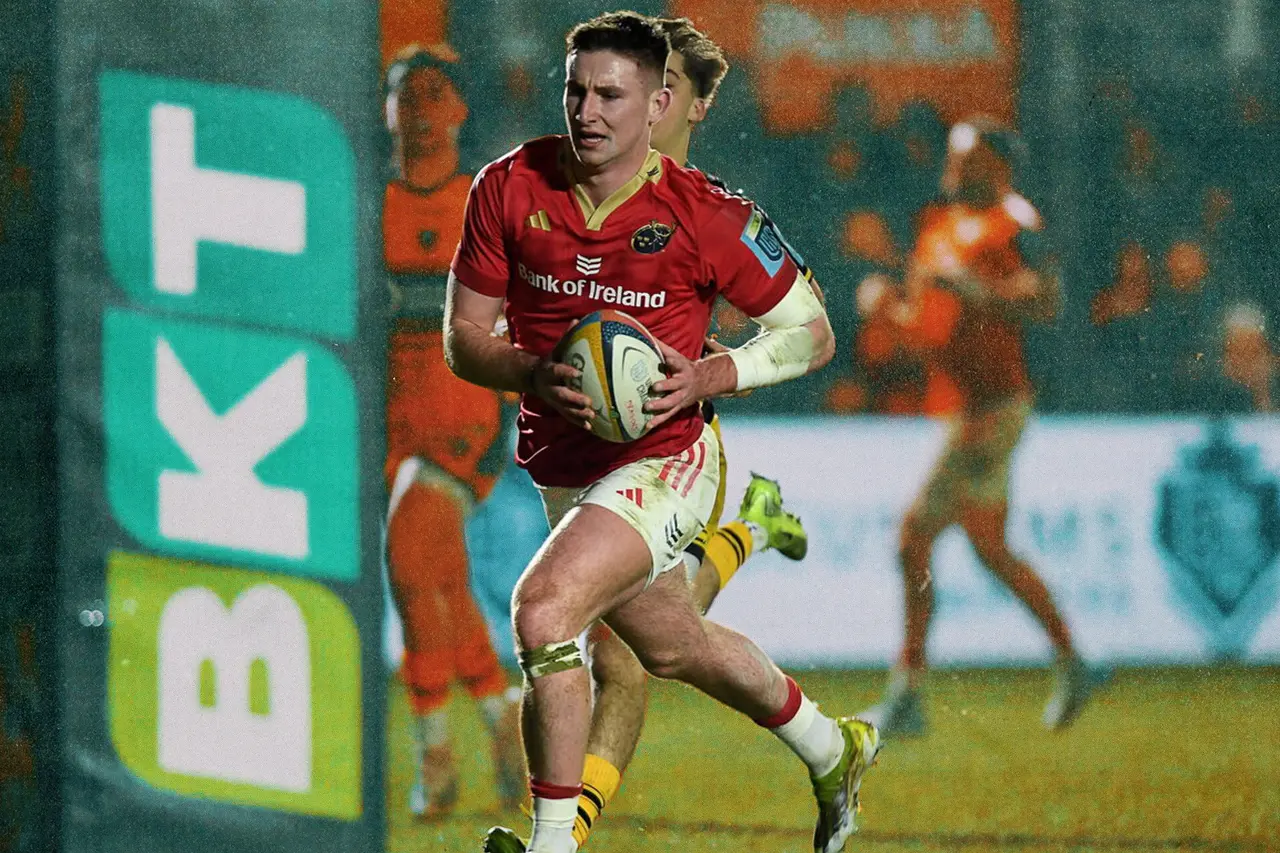
When I looked at the Chiefs’ primary back three in Super Rugby 2025, I detected three specific jobs. Not roles, specifically, but jobs that certain role players filled.
This is where the variance will come in, but more on that later.
What is a job in this context? A job is something that the system demands of a player in a certain jersey number. The job required varies wildly, system-to-system, club-to-club, and even league-to-league.
For the Chiefs this past season, I identified three specific jobs in their back three.
1) The Mule (Short-side Anchor): Leroy Carter
- Purpose: win kick chases, take the ugly carries on edges, draw multiple tacklers, and be the first cleaner so the ball stays fast. Carter’s pace and punch in contact made him perfect for this job.
- Carry Profile: 7.73 carries/80, 81.1% of carries go into contact, 46.7% dominant, 53.2% draw 2+ tacklers.
- Ruck Work: 8.56 attack rucks/80 (eff. 71.5%) — the unit’s engine; 4.32 defensive rucks/80.
- Finishing & Defence: 0.91 try-involvements/80, 7.73 tackles/80 at 82.0% success, 0.49 turnovers/80.
2) Finisher/Gainline Threat (Contact-Throughput): Emoni Narawa
- Purpose: be the strike runner off quick ball, smash through first contact, and win kick-return metres without breaking structure.
- Carry Profile: 9.17 carries/80, 85.6% into contact, 73.7% gainline, 46.6% draw 2+; evasion 23.8%.
- Ruck Work: 8.01 attack rucks/80 (eff. 77.7%); 3.34 defensive rucks/80.
- Finishing & Defence: 0.62 try-involvements/80, elite 91.8% tackle success (5.68 tackles/80), 0.62 turnovers/80.
3) Link 15: Shaun Stevenson
- Purpose: connect edges (second distributor), arrive as the smart cleaner after line breaks, and still post up a lot of strike running touches.
- Carry Profile: 9.26 carries/80, lighter contact share (69.6% into contact), 35.9% dominant, 68.8% gainline; evasion 31.3%.
- Ruck Work: 4.55 attack rucks/80 (eff. 87.3%) — Stevenon cleaned what mattered rather than hitting everything; 1.98 defensive rucks/80.
- Finishing & Defence: unit-high 0.91 try-involvements/80, 2.81 tackles/80 at 79.4%, 0.50 turnovers/80.
How the pieces fit: Carter’s collisions and first-clean keep tempo honest on the short side; Narawa cashes front-foot ball and wins returns; Stevenson links it all — arrives early to clean, or turns the next touch into a strike.
When we compare this to our Role Glossary, we can see the jobs don’t quite match up to the exact role, but they still fit to make a cohesive unit.
Leroy Carter → Power Hitter
- Why it fits: Carter is the Chiefs’ short-side anchor and first cleaner. He doesn’t fit the usual physical profile for this role, but he hits a lot harder than it seems on the outside. By way of explanation, he’s played in the midfield for Bay of Plenty a few weeks ago.
- Numbers: 8.56 attack rucks/80 (engine of the unit), 81% into contact, 46.7% dominant, 53.2% drawing 2+ tacklers, 82% tackle success, 0.49 turnovers/80.
Emoni Narawa → Strike Runner
- Why it fits: Narawa’s job is to cash front-foot ball and win kick-return metres without breaking shape.
- Numbers: 9.17 carries/80, 85.6% into contact, 73.7% gainline, 46.6% drawing 2+, 91.8% tackle success, 0.62 turnovers/80.
Shaun Stevenson → Strike Playmaker
- Why it fits: Stevenson connects edges, arrives as the smart cleaner, and still posts strike touches. He doesn’t fit the kicking volume of this role, but everything else fits.
- Numbers: 9.26 carries/80 with a lighter contact share (~70% into contact), 68.8% gainline, 0.91 try-involvements/80, 4.55 attack rucks/80 at 87% eff.
Notes & Edge Cases
- My description of a Power Winger is a 6’2″+, 100kg+ wrecking-ball role. Physically, Stevenson matches that size, but the Chiefs deploy him as a Strike Playmaker at 15, not as the edge battering-ram.
- My description of Slashing Outside Winger (pure speed/evasion) seems to fit Leroy Carter, both physically and at an eye-test level. But Carter’s work profile (rucks/80, 2+ tacklers, edge D) is much closer to Power Hitter than to a slashing finisher, even though he can finish with speed too.
So I think this does a good job of explaining the difference between a job that a system needs, and then the role type of the player that you might use to fit the job. Sometimes that will be a perfect fit, sometimes it’ll be close enough that it doesn’t matter, but the system will always reveal the bad fits, and usually pretty quickly.
One of the x-factors in comparing the Chiefs’ back three and what might work at Munster is the difference in kicking volume between Super Rugby and the URC, never mind Europe.
URC vs Super Rugby: Kicks in Play
- URC (2024/25) → 52.35 kicks per match (both teams), i.e. ~26.17 opposition kicks your back three faces per game.
- Super Rugby Pacific (2025) official SANZAAR note → 41.0 kicks per match, i.e. ~20.5 opposition kicks faced.
Delta (URC − SR): +11.35 kicks per match combined ⇒ +5.67 more opposition kicks per game that your back three must deal with in the URC.
So, even at a base level, the increased amount of kicking that happens in the URC per game requires your back three to be more kick-focused in their “job spec”. So, at a base level, what worked for the Chiefs in their back three in Super Rugby has to be adapted quite heavily to fit Munster.
When we try to break this down to an involvement level, we see the following.
And just for clarity here, back-three “intersections” = share of opposition kicks that reach/target the backfield (catches, contests, cover picks, etc.).
Using three sensible involvement bands:
If 40% of opposition kicks involve the back three:
- Unit: +2.27 extra actions in URC vs SR
- Per player (even split): +0.76
- Typical split (FB ≈45%, each wing ≈27.5%): FB +1.02, wing +0.62
If 55% involvement (central case):
- Unit: +3.12 extra
- Per player (even): +1.04
- FB/wing split: FB +1.40, wing +0.86
If 70% involvement (kick-heavy games):
- Unit: +3.97 extra
- Per player (even): +1.32
- FB/wing split: FB +1.79, wing +1.09
McMillan has to plan on roughly +3 extra back-three involvements per game in the URC vs Super Rugby (~+1.4 for the fullback, ~+0.9 per wing in a typical split), driven simply by the higher kick volume in URC. In European Rugby, it’s even higher again.
So even in a low-kicking game plan, you are still likely to be facing more kicks from an opponent, and that means you need all three of your back three to be comfortable kicking the ball; otherwise, they become a weak link that can be targeted by heavy counter transition or off-ball teams.
How do we re-adjust?
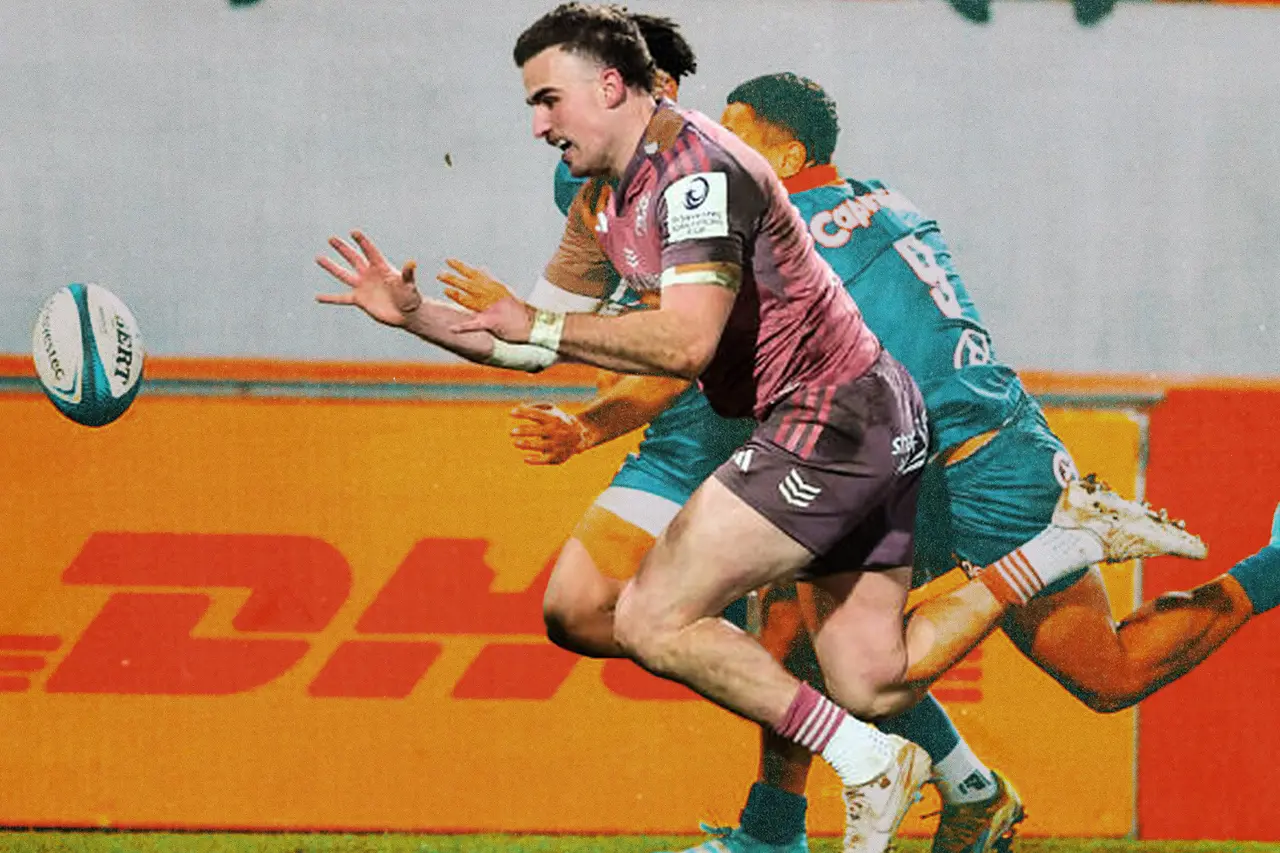
The URC data shows higher back-three kicking involvements than we see in Super Rugby, so we can (and should) tune the base template away from the Chiefs’ carry-first model. The Chiefs’ back three win mostly through collisions, quick recycle, and linking — none of the three are notable kickers — so McMillan’s Munster set up should add a two-sided kicking spine without surrendering our collision edge.
We have to remember that, if the narrower carrying focus of the forwards and the likely ball retention we’ve spoken about in previous instalments holds, and how that, when mapped onto the Chiefs, produced the data we saw above, we have to assume that the balance of involvement in the back three will fall on kicking lines.
That means, more chasing, more contesting in the air as a catcher, more positional play, more tactical kicking and more IQ on transition, while also keeping the collision winning qualities that make the entire thing run.
So What Changes?
- From 1-sided to 2-sided kick threats. Build kicking decisions on 15 + one wing (not just 9/10). That makes your backfield unreadable and lets you kick from width on phase 2–4 when pictures are slow.
- Kick–chase as an attacking set-piece. Recast the “mule” wing’s job: from first cleaner after carries → primary chaser + first arrival after contestables. You still get his ruck value—just 20–30 m further downfield.
- Default to contestable over low-value carries in the middle third. In URC conditions, 3.6–4.2 s hang-time contestables with organised chase yield more repeatables than one-out edge carries into set lines.
- Backfield is a pendulum with two genuine boots. Not just depth and positioning: the threat of a second boot forces the defence to keep three in the backfield more often, easing your front-line pressure.
Roles with a Kicking Overlay
Taking into account that kicking and positioning are expected to be primary parts of the system when adapting to opposition pressure, I think the Chiefs’ jobs morph into the following at Munster this season;
Lockdown/Link 15 (primary field general, main backfield boot):
- Mike Haley (and Shane Daly in kick-heavy games). Their strengths — positioning, aerials, decision-making — translate directly.
- Baseline jobs: command the pendulum, own exits, pick the best of long kick / kick-to-compete / early counter, and connect to phase when the kick isn’t on.
Wing Kicker (edge boot + chase captain):
- Ben O’Connor is made for this: big territorial boot, size to dominate chase collisions, and he already works like a ruck mule.
- Baseline jobs: call the contestable, kick from width, lead the chase wedge, be first cleaner at the landing zone.
Power/Finisher Wing (aerial target + return runner):
- Diarmuid Kilgallen (height, gainline) or Calvin Nash (power-link), depending on plan.
- Baseline jobs: be the primary aerial target on cross-field/contestables, win gainline on kick returns, and provide the second touch after O’Connor’s kick pressure.
- Abrahams becomes your speed return option in chaos games (attach a pre-assigned cleaner); Shay remains collision/ruck punch off the bench while his kicking and D mature.
Selection Templates (with kicking baked in)
- Kicking-led base XV: 15 Haley – 14 O’Connor – 11 Kilgallen
(Two boots + tall aerial target; O’Connor captains chase, Haley commands backfield.)
Swap Daly for Haley in wind/rain or kick-pressure matches. - Link-speed variant (counter threat): 15 Daly – 14 Nash – 11 Kilgallen (+ Abrahams bench)
(One edge boot, one power-link, one tall finisher; bring Abrahams to tilt tempo.)
The jobs are broadly the same, but adjusted to give the kind of coverage you need in the URC compared to Super Rugby. It’s a balancing act; keeping the collision and edge recycling work you need in this system, while also making sure you have the basics covered against teams who will kick at us quite a bit.
We know this is going to happen because the one tried way to get after an on-ball team is to off-ball them at distance. Of course, the other x-factor in all of this is how the Chiefs used Damian McKenzie, whose analogue in the Munster system is Jack Crowley.
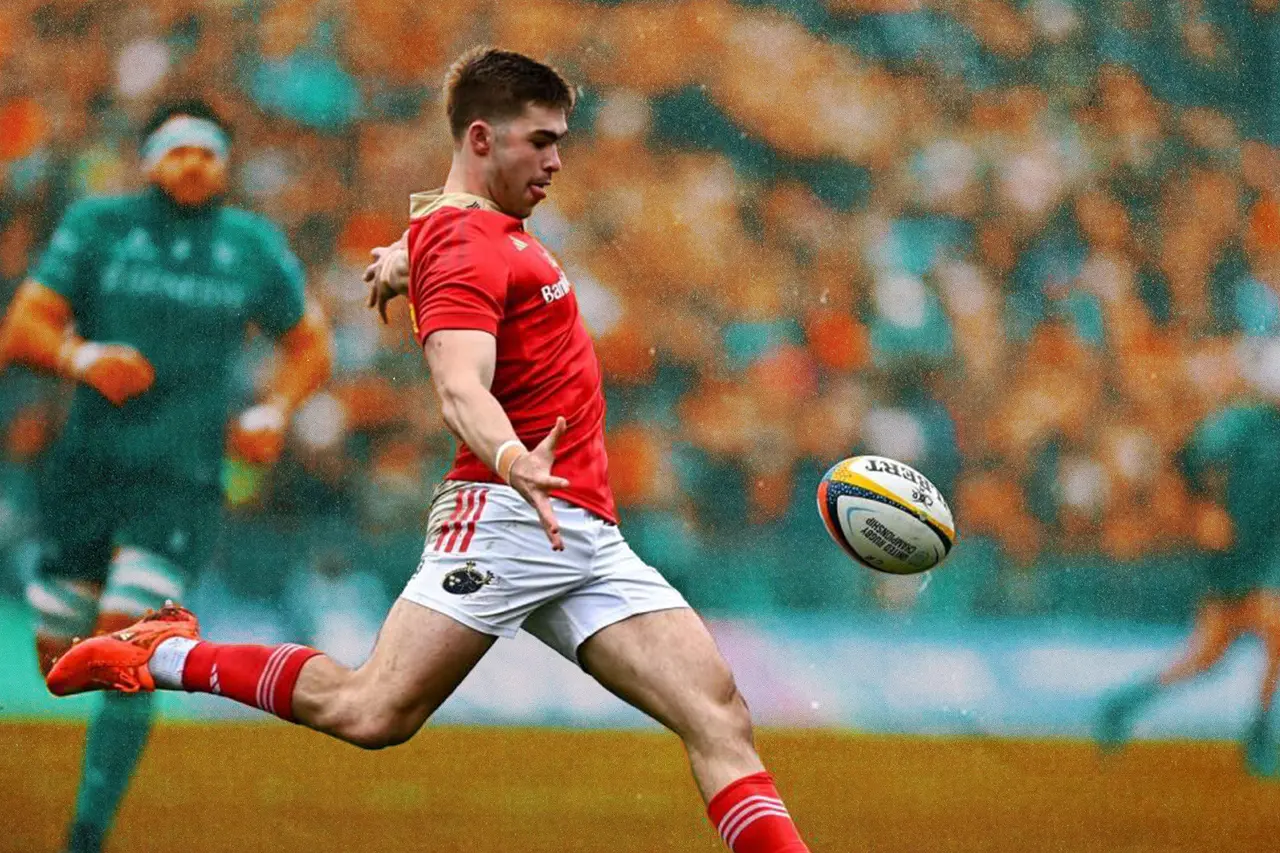
McKenzie does an awful lot of backfield coverage for the Chiefs as he’s probably the most natural transition playmaker in their squad when it comes to the variety of his skill set. He’s an excellent runner, sure, but he’s also a really talented kicker from hand and passer at pace, which makes him uniquely valuable to the Chiefs as a result.
Jack Crowley is as valuable to Munster for similar reasons, in that he arguably gives you midfield-esque coverage as well, regularly dipping into the backfield, both as part of a pendulum system and literally as a fullback midgame.
Crowley has the athleticism — the pace, power, aerial work and IQ — to make that work, and he’ll provide similar coverage for Munster this season at #10.
And I’ll get into the weeds on that next week with the halfback instalment of the Big Reset.
A podcast companion to this article will follow on the €10 tier.
