


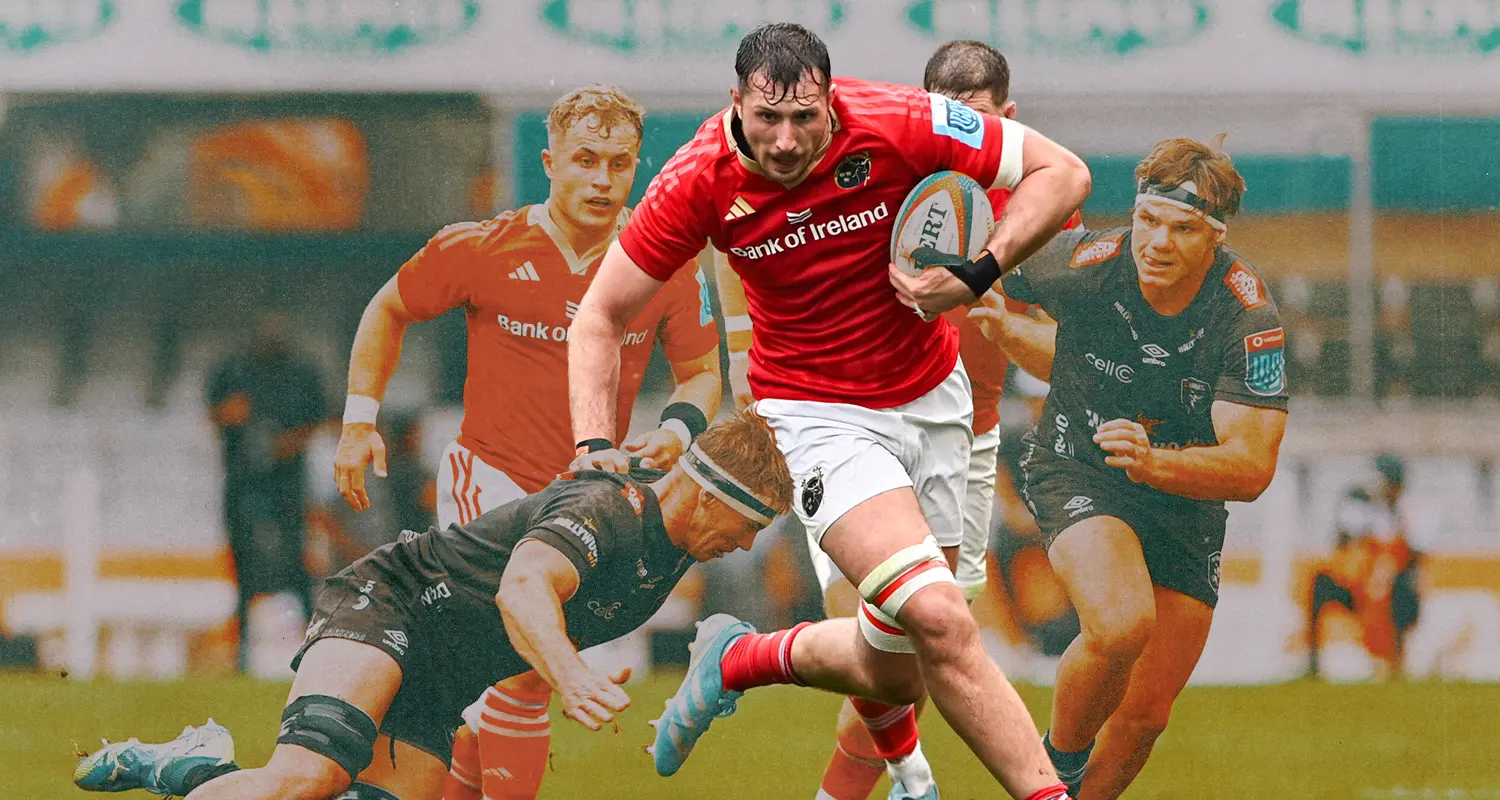
The back five is usually where the most recognisable players in any given team play, outside of halfback.
If the halfbacks are the face of a team — think Stringer and O’Gara, Murray and Sexton — then the back five is the body, the arms, the legs, the presence. Just purely from a Munster perspective, I can’t think of any good to great Munster side that wasn’t stacked with power, talent and presence in this area of the field.
O’Connell, O’Callaghan, Leamy, Wallace, Foley. Jim Williams. Alan Quinlan. Mick O’Driscoll. CJ Stander. Tommy O’Donnell. Peter O’Mahony. All names that you hear and put a time and place onto them, or a jersey, or a moment.
That’s no coincidence. The back five of your pack are usually where your best, most explosive, most aggressive and impactful players live, and it’s also the place where role sets exert the most gravity.

In this series, I’ve been examining what Clayton McMillan did with his Chiefs side over the past few years and how he might apply what worked in Hamilton to his new team.
In the past two episodes, I’ve covered how McMillan’s style points to certain desired qualities in the front row and midfield, but there’s no place on the pitch that impacts the game in such a profound way as the back five blend. So what worked in Super Rugby over the last few years might not automatically translate to the URC and Champions Cup. The back five is where small changes have big effects.
To start, we should identify what the Chiefs’ role blend was in the back five, and see how Munster’s back five fits into the role sets. We can work forward from there.
Role Archetypes & Munster Equivalents
1. Heavy Swing Lock – Tupou Vaa’i
Chiefs Profile:
Primary lineout jumper, offers gainline threat, mobile in phase play, some turnover ability, solid attacking ruck output.
Munster Equivalents:
-
Primary: Thomas Ahern – Primary jumper, mobile, strong dominant carry %, high gainline success, and strong attacking ruck contribution.
-
Secondary: Edwin Edogbo – Heavier than Vaa’i but still a lineout option; brings more raw power at the expense of mobility. Fineen Wycherley also fits into this role type quite comfortably.
-
Secondary: Fineen Wycherley – Secondary jumper, strong maul presence, and reliable defensive workrate; offers solid phase-play mobility with a high ruck output, though without the same dominant gainline threat as Ahern.
-
Alternative: Jean Kleyn – Tertiary jumper; physical collision-based game, limited mobility compared to archetype.
2. Swing Lock/Half-Lock – Naitoa Ah Kuoi Role
Chiefs Profile:
Primary lineout jumper, mobile, high tackle accuracy, some breakdown steals, low dominant carry %, ~115kg playing weight.
Munster Equivalents:
-
Primary: Tadhg Beirne – Primary jumper, elite breakdown and turnover threat, high defensive ruck involvement. Brings more disruptive flair than Ah Kuoi’s “glue” style.
-
Secondary: Thomas Ahern – Primary jumper, rangy, more attacking threat than Ah Kuoi, but can fill defensive organiser role when required.
- Development: Evan O’Connell — I don’t have any metrics for O’Connell last season, but he projects as being an exact fit for this role.
3. Defensive Combo Flanker – Luke Jacobsen Role
Chiefs Profile:
Non-jumper, high defensive work rate, strong dominant carries, high tackle count and turnover threat, leads the defensive line.
Munster Equivalents:
-
Primary: John Hodnett – Non-jumper, matches defensive energy and turnover output; strong dominant carry %.
-
Secondary: Tadhg Beirne – Brings similar breakdown disruption from lock, though naturally a lineout option.
-
Alternate: Alex Kendellen – A tertiary jumper, high work rate, less turnover impact than archetype.
4. Offensive Half Lock – Samipeni Finau Role
Chiefs Profile:
Secondary jumper, high gainline %, high commitment rate in carries, minimal jackal involvement, heavy carrying workload.
Munster Equivalents:
-
Primary: Gavin Coombes – Secondary jumper, massive carrying volume, high commitment %, low defensive breakdown output similar to Finau
-
Secondary: Brian Gleeson — Secondary jumper, projects as having a big carrying volume, high commitment %, with a low defensive breakdown output similar to Finau
- Development: Sean Edogbo & Brian Gleeson – Non-jumper, explosive carry profile, currently small sample size.
-
Alternate: Alex Kendellen – tertiary-jumper, not a half-lock build player, similar gainline and carry dominance, but more active defensively.
5. Heavy Small Forward – Wallace Sititi Role
Chiefs Profile:
Non-jumper, short-burst impact player, good gainline and evasion, some turnover threat, low defensive ruck involvement.
Munster Equivalents:
-
Primary: Ruadhan Quinn – Non-jumper, closest stylistic match; punchy carries, high commit %, low defensive ruck work.
-
Secondary: John Hodnett – Non-jumper, similar gainline/dominant carry blend but higher defensive workload.
-
Alternate: Alex Kendellen – Non-jumper, more balanced role, but can deliver Sititi-like short bursts.
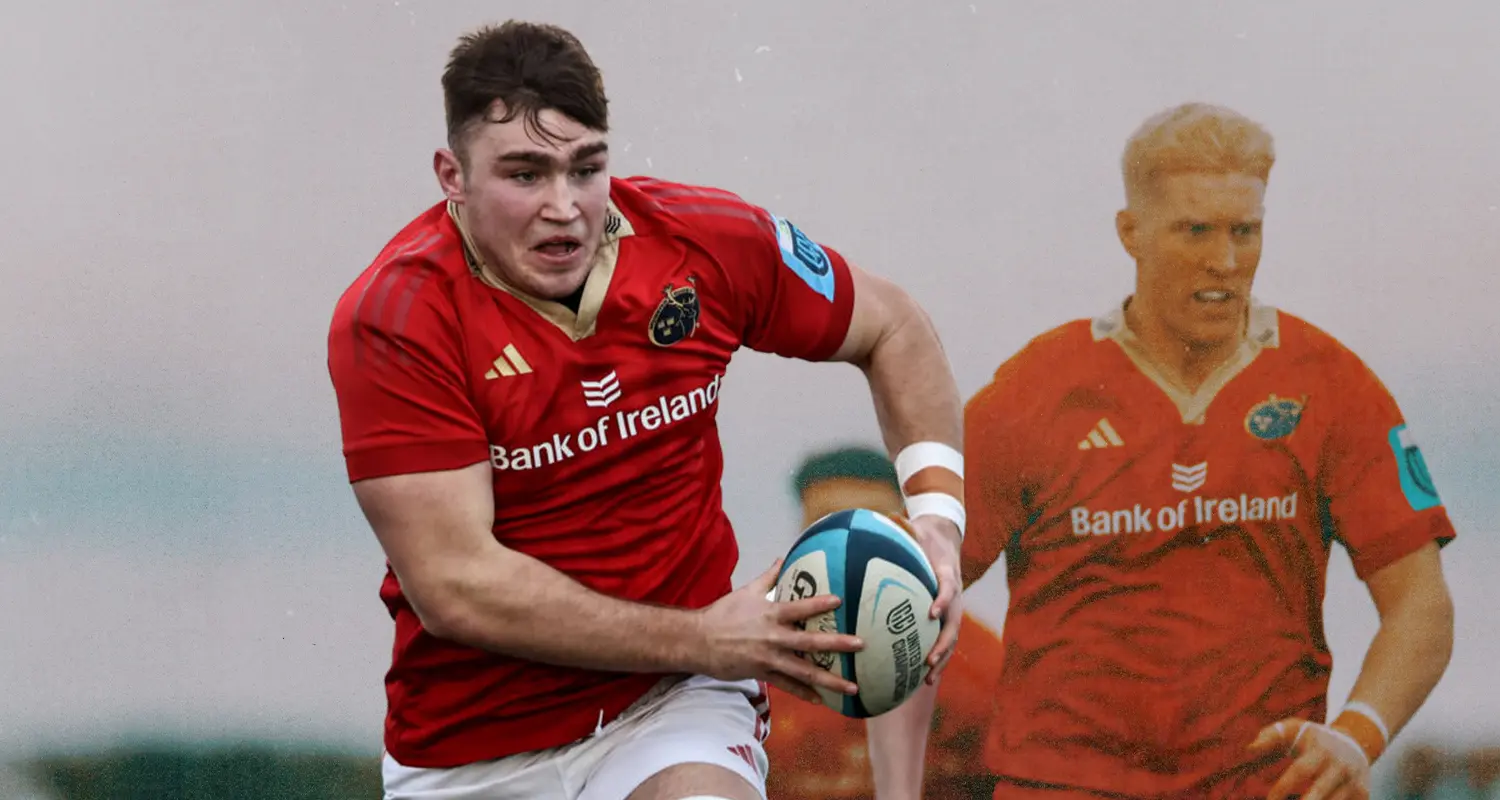
Quinn is a huge standout here in that he’s on his first senior contract this season and has been very carefully managed by Munster in the last two seasons. He had four appearances in 2023/24 and that jumped to eleven in 2024/25 with a focus on building his frame for the rigours of pro-rugby. Quinn is primed for a breakout season, especially when you consider how closely he tracks McMillan’s usage of Wallace Sititi at the same age in Super Rugby.
Depth Chart – Munster Back Five in Chiefs Roles
| Chiefs Role | Primary Fit | Secondary Option | Alternate Option |
|---|---|---|---|
| Heavy Swing Lock (Tupou Vaa’i) | Thomas Ahern | Edwin Edogbo | Jean Kleyn |
| Swing Lock (Naitoa Ah Kuoi) | Tadhg Beirne | Thomas Ahern | Fineen Wycherley |
| Defensive Combo Flanker (Luke Jacobsen) | John Hodnett | Tadhg Beirne | Alex Kendellen |
| Offensive Half Lock (Samipeni Finau) | Gavin Coombes | Alex Kendellen | Ruadhan Quinn |
| Heavy Small Forward (Wallace Sititi) | Ruadhan Quinn | John Hodnett | Alex Kendellen |
Key Chiefs & Munster Role Overlap
-
Complete coverage: Munster have at least one viable option for each Chiefs role, often with multiple cover options.
-
Lock balance: Our locks skew heavier than Chiefs’, meaning Ah Kuoi’s mobile-defensive archetype is harder to replicate without Beirne.
-
Role overlap: Players like Beirne, Ahern, and Kendellen appear in multiple roles, giving flexibility but risking a diluted power profile if injuries hit.
-
Jacobsen gap: Jacobsen’s combination of huge defensive workload and high carry volume is split across Hodnett (defence) and Coombes/Kendellen (carrying).
-
Development focus: Quinn is the most direct Sititi match but needs more minutes; Edogbo could become a hybrid of Vaa’i’s lineout role and Kleyn’s physicality.
- No natural roles for Kendellen, Kleyn: Mapping the Chiefs’ game onto Munster produces two key problems — there’s no natural fit for what Kleyn and Kendellen produced last season, bar a jump into a more “Jacobsen-like” role.
This is where we start to see areas of stylistic divergence between Super Rugby and the URC. The Chiefs don’t use a tighthead lock profile player in their back five. Tupou Vaa’i is the closest player to that role set, and he regularly plays in the back row for the All Blacks. Against the heavier pack of the Northern Hemisphere, something will need to change.
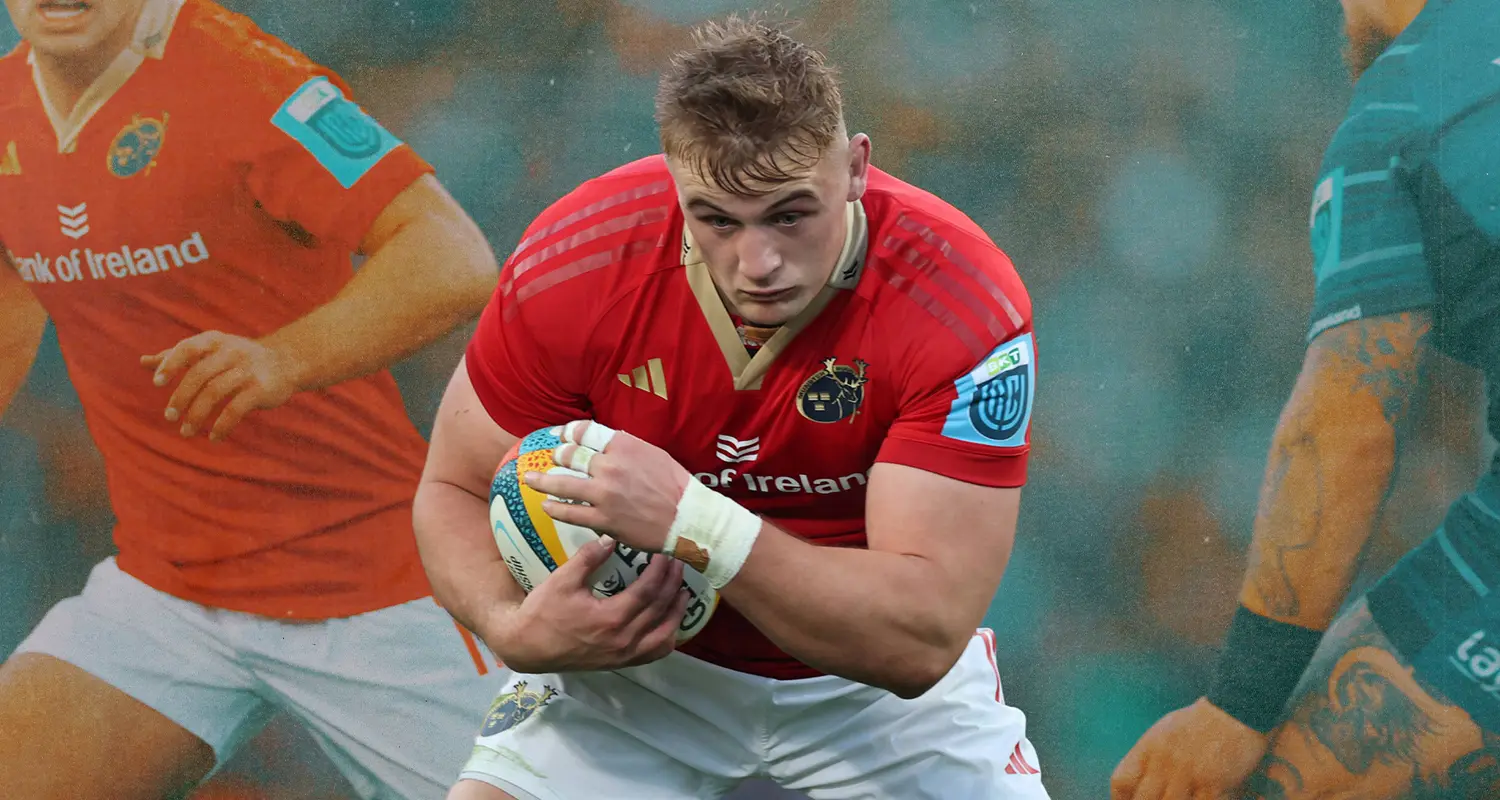
To get a look at what those changes are, we need to map out the jobs that every pack must do, and then see how the Chiefs filled those jobs with players of different rolesets.
Core Jobs Every Pack Must Cover – Chiefs
1. Set-Piece – Scrum
Provide stability, win penalties, create a platform.
- Ollie Norris (LH) – Mobile loosehead, solid scrummager, heavy ruck contributor.
- Samisoni Taukei’aho (H) – Power scrummager, middle anchor, big in contact.
- George Dyer (TH) – Scrum cornerstone, main tighthead platform.
- Tupou Vaa’i (lock) – Balances scrum.
- Naitoa Ah Kuoi (lock) – Adds mobility without sacrificing tight-five stability.
- Luke Jacobson, Samipeni Finau, Wallace Sititi – Back-row stability and binding.
2. Set-Piece – Lineout
Secure own ball and contest opposition.
- Naitoa Ah Kuoi – Primary jumper, key organiser.
- Samipeni Finau – Secondary jumper, valuable back-row lineout option.
- Tupou Vaa’i – Additional secondary jumper, gives flexibility across zones.
- Luke Jacobson – Tertiary jumper option.
- Lifting support from Norris, Dyer.
3. Primary Carry Threats
Bend the line, create quick ball, draw defenders.
- Samisoni Taukei’aho – Core tight-channel carrier.
- Samipeni Finau – Edge and midfield carrier.
- Luke Jacobson – Consistent gainline option in phase play.
- Tupou Vaa’i – Secondary lock carries in pods.
- Wallace Sititi – Impact and tempo change from bench or rotation.
4. Breakdown Security
Protect attacking ball, keep ruck speed high.
- George Dyer – High attacking ruck volume, reliable cleaner.
- Ollie Norris – Big ruck contribution and high efficiency.
- Taukei’aho – Early-phase clearouts.
- Jacobson, Finau, Sititi – Hit attacking breakdowns to maintain tempo.
- Vaa’i, Ah Kuoi – Tight cleanouts after set-piece.
5. Breakdown Disruption / Jackal Threat
Win turnovers, slow opposition ball.
- Luke Jacobson – Primary jackal.
- Ollie Norris – Opportunistic steals in tight.
- Samipeni Finau – Contest in wider channels.
- Wallace Sititi – Adds short-burst turnover threat.
6. Defensive Workrate & Tackling
High-volume, high-accuracy tackling to maintain line integrity.
- Jacobson – Defensive leader, covers multiple channels.
- Ah Kuoi – Reliable defender in the middle third.
- Finau – Brings dominant tackle threat.
- Vaa’i – Solid middle-third defender.
- Sititi – Energy and physicality when rotated in.
- Front row – Steady contributors in tight phases.
7. Link Play / Handling
Connect pods and keep attack flowing.
- Jacobson – Primary link forward.
- Vaa’i – Tight-to-wide passing option.
- Ah Kuoi – Short passing and support link.
- Finau – Can link in wider channels off lineout or phase play.
- Norris, Taukei’aho – Support ball movement in tight.
8. Physical Enforcers
Set the tone in collisions and contact.
- Taukei’aho – Dominant tight collisions.
- Finau – Heavy contact in defence and attack.
- Vaa’i – Physical presence at set-piece and breakdown.
- Sititi – Aggression and punch in shorter bursts.
The Chiefs build their pack jobs with specialist extremes — one huge carrying hooker, one scrum-first prop, one highly mobile prop, two lineout-target locks with different physical profiles, and an all-action backrow who links, defends, and jackals.
It’s a role-complementary system; another’s strengths balance each player’s limitations.

But, straight away, you can see core differences between what the Chiefs use to fill these jobs and how Munster does it. It also doesn’t take into account how difficult these jobs are across different tournaments. The scrum volume of the URC alone demands heavier players in the back five, which throws off the Chiefs’ template almost immediately.
If there’s no room for a player like Kleyn in the Chiefs set-up — the closest physical fit would be Vaa’i at 6’6″/118kg, even allowing for the fact they play very different roles — then we have to adjust the pack blend for Munster almost immediately.
Here’s our must-haves;
- NH scrums are heavier → a heavier player behind the TH is crucial.
- Munster’s tighthead lock role limits our lineout jumping from that slot (Kleyn is more lifter/power than aerial).
- Ahern and Beirne have to carry a greater share of the lineout/jumping load.
- Kleyn takes more of the “heavy collisions + maul anchor” share.
Core Jobs Every Pack Must Cover – Chiefs vs Munster
| Job | Chiefs | Munster | |
|---|---|---|---|
| Scrum | Norris (LH), Taukei’aho (H), Dyer (TH) anchor the scrum; Vaa’i and Ah Kuoi balance lock weight; back row locks in tight. | Milne/Loughman (LH), Barron/Scannell (H), Jager (TH) anchor; Kleyn binds behind TH for scrum/mall power; Ahern behind LH. | |
| Lineout | Ah Kuoi primary jumper, Finau & Vaa’i secondary, Jacobson tertiary. | Ahern primary, Beirne secondary, Jack O’Donoghue/Fineen Wycherley/Coombes secondary/tertiary; Kleyn mainly lifting, occasional front-pod jump. | |
| Primary Carry | Taukei’aho (tight), Finau (edge/midfield), Jacobson (phase carries), Vaa’i (pods), Sititi (impact). | Coombes (midfield), Milne (tight), Barron (hooker bursts), Ahern (wide/mid pods), Kendellen/Hodnett (phase carries). | |
| Breakdown (A) | Dyer & Norris big ruck volume, Taukei’aho supports; Jacobson/Finau hit attacking rucks; locks clean tight. | Loughman & Jager top cleaners, Scannell defensive/attacking support, Milne hybrid carry/clean; Hodnett/Kendellen add pace at ruck. | |
| Breakdown (D) | Jacobson primary jackal; Norris opportunistic; Finau contests wide; Sititi offers bursts. | Beirne elite primary jackal; Hodnett secondary; Kendellen support; Barron opportunistic. | |
| Defensive Workrate | Jacobson defensive leader, Ah Kuoi reliable, Finau big hits, Vaa’i solid; front row steady. | Beirne & Hodnett top volume, Kleyn heavy collisions in tight, Kendellen high energy, Ahern space cover; front row steady. | |
| Link Play / Handling | Jacobson primary link, Vaa’i & Ah Kuoi tight-to-wide, Finau in wider channels; front row supports short passing. | Beirne primary link, Kendellen quick links; Milne & Barron in tight. | |
| Physical Enforcers | Taukei’aho, Finau, Vaa’i, and Sititi bring tone in contact. | Kleyn as primary enforcer (scrum/maul), Coombes midfield power, Milne tight contact, Hodnett defensive shots. |
Key Differences
- Munster are heavier at scrum time, especially on the tighthead side, whereas the Chiefs are more balanced and mobile.
- Munster have fewer consistent lineout jumpers (two main aerial threats) compared to the Chiefs’ three in the back five.
- Munster’s carrying load is concentrated in Coombes and Milne, while the Chiefs spread it more evenly across the pack, with hooker, #6 and locks taking up most of the load.
- Munster’s ruck security is more prop and hooker driven, with a tighter focus, while the Chiefs’ cleanouts are balanced between front row and back row.
- Munster have a higher ceiling in breakdown disruption due to Beirne/Hodnett, whereas the Chiefs spread turnover work but lack an elite jackal.
- Munster’s defence is split between one collision player (Kleyn) with a lot of mobile tacklers; the Chiefs’ work rate is spread more evenly across the pack.
- Munster’s link play is concentrated in Ahern and Beirne, while the Chiefs have three or more regular connectors in tight-to-wide play.
- Munster’s enforcer role is centred on Kleyn, whereas the Chiefs share contact dominance between multiple forwards.
Tighthead Lock Impact
With Kleyn fixed into the squad as a tighthead lock — a necessity I don’t believe can be schemed around directly — Munster’s main differential comes here:
- Scrum becomes heavier and more NH-adapted than the Chiefs model.
- Lineout loses one jumping threat compared to the Chiefs.
- Carrying shifts around to other slots in the pack.
- Maul power significantly increases — Kleyn is more of a platform builder than a phase player.
The Chiefs’ system hinged on the freakish output of Tupou Vaa’i, who is something of an athletic unicorn. He gives you elements of tighthead lock power in the tight exchanges while also being athletic enough to cover the kind of range normally reserved for lighter swing locks.
Munster doesn’t have a player like this. Well, that isn’t strictly true. Fineen Wycherley provides some of the same output, albeit to a lower level. He’s someone who I think could see time wearing 4/5/6 this season.
In general, though, I think we will have to go with a build that rotates around a tighthead lock or, at the very least, a heavy swing lock. We have two, maybe three players who fit this billing: Jean Kleyn, Edwin Edogbo and possibly Evan O’Connell. The reason I have a question mark over O’Connell is that I don’t think he’s a natural tighthead lock — I think he’s a heavy swing lock, and I don’t want to lose his lineout game by getting him up to 120kg — but he projects at 6’7″/115kg, so you could certainly put together a build that works with him at the core of it.
I’d much prefer to build around Kleyn in the short term, but primarily, with the medium to long term in mind, Edwin Edogbo. I think he has all the tools to be a Tighthead Lock Power Forward.
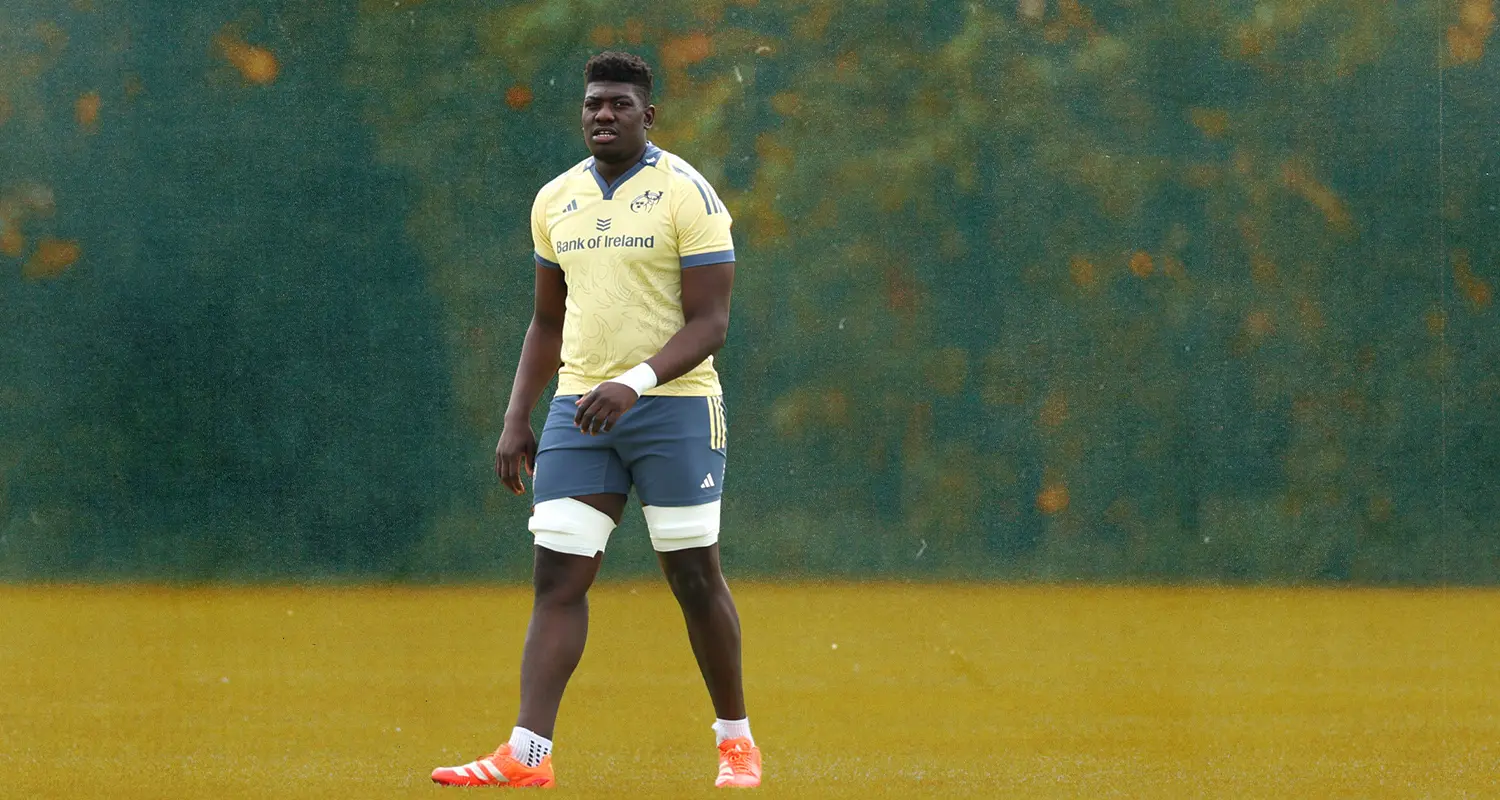
That would allow McMillan’s Chiefs template to open up more specialist roles in the Munster back five, in particular, and take some of the heat off our front row in the short term.
Rotating Kleyn and Edogbo as this pack role anchor is the ideal scenario for me, but it still leaves a lot of question marks; most notably, where we’re going to get our defensive output from.
The Beirne Dilemma
Tadhg Beirne is one of the best players in the world. Arguably, and this might be controversial, he’s the most well-rounded lock build player on the planet.
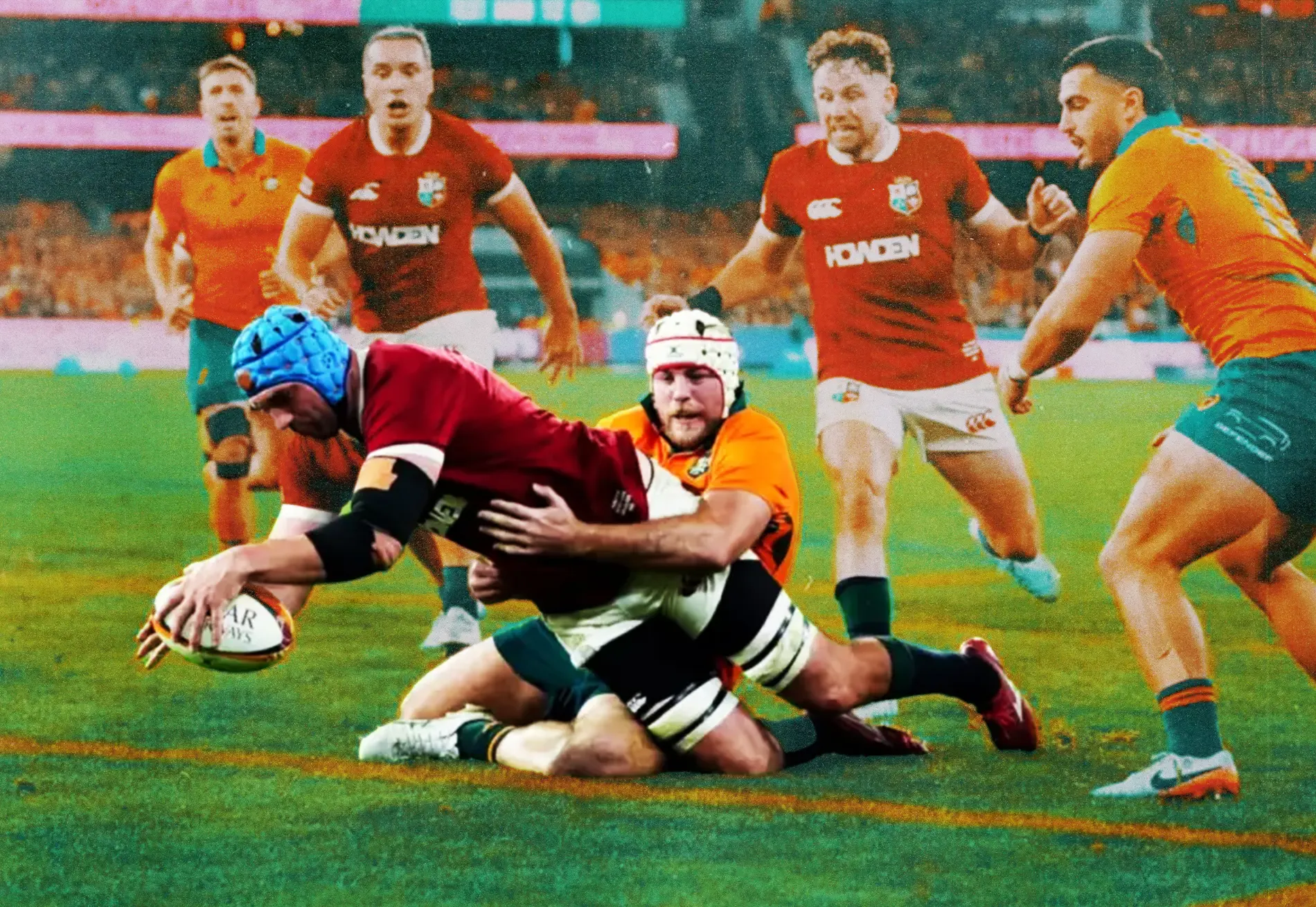
But in a Munster side that has been crying out for more size and power in the last two years, I think he’s become something of a luxury player for us, which I understand is a profoundly stupid thing to say, but stay with me.
In the last two seasons, our injury issues have exposed our lack of tight power, and that’s most often been seen in a somewhat nerfed Tadhg Beirne losing a lot of offensive collisions. Go back to the end of last season and you’ll see it plain as day. His defensive output is still elite, but at 33/34, do we really need to have him in a positionally central role this season?
I keep going back to the Jacobsen role in the Chiefs system and how Beirne is absolutely perfect for it. He showed on the Lions — and habitually for Ireland — that he’s got the range and versatility to play a slightly wider role in a narrow forward system. I’m not suggesting that Beirne play a wide edge-forward role, because (a) I don’t think that suits him and (b) I don’t think Munster will use two edge forwards this season.
I’m suggesting that he takes up the Jacobsen role in the back row, primarily. He’ll still be Tadhg Beirne, but playing in a lighter position where we can get the most out of his unicorn skillset, as well as beefing up our lineout.
Is this, essentially, a straight swap positionally between Ahern and Beirne? Well, I think we’ll be using a slightly different playing structure this season, regardless, but I think that’s a fair way to put it.
For me, it makes more sense for Tom Ahern to focus purely on lock rolesets, instead of pushing for the offensive half-lock role he played for much of last season. At 6’9″/118kg, I think there’s a Brodie Retallick-style heavy swing lock in there. That means playing slightly heavier, slightly more centrally in general, but doubling down on his lineout work and pace in transition.
I think this enhances his Ireland prospects hugely by involving him way more often than his edge forward positioning did last season, while highlighting everything he’s good at. At a Munster level, I think it allows us to build a very good rotation in the back five while also utilising key parts of the Chiefs’ overall game model.
So, with that, how does Munster’s pack build and replacements look?
Initial Munster Pack Build – Adjusted Chiefs Model
Starting Eight
1. Loosehead Prop – Michael Milne
Scrum stability, heavy short carries, reliable defensive collisions.
Alternate: Jeremy Loughman – Bigger scrum focus, good collision work.
Alternate: Josh Wycherley – balanced all-rounder.
2. Hooker – Diarmuid Barron
Primary set-piece hooker, strong post-lineout carries.
Alternate: Lee Barron – Explosive edge carrier and maul breaker.
3. Tighthead Prop – Oli Jager
Scrum anchor, close-quarter ruck and maul presence.
Alternate: Roman Salanoa – Impact tighthead with more explosiveness in tight carries.
4. Loosehead Lock – Thomas Ahern
Primary lineout jumper, link play in phase attack, aerial organiser.
Alternate: Fineen Wycherley – Secondary jumper, high ruck output, less dominant aerially but more physical in tight.
5. Tighthead Lock – Jean Kleyn / Edwin Edogbo
Maul anchor, scrum ballast, dominant collisions; minimal jumping.
Alternate: Whichever of Kleyn/Edogbo is not starting — rotation keeps the tighthead lock role consistent.
6. Blindside Flanker – Tadhg Beirne
Secondary lineout jumper, elite jackal, defensive leader.
Alternate: Brian Gleeson – Bigger collision option, closer to a Sititi-style carrier.
7. Openside Flanker – John Hodnett
High defensive tempo, secondary jackal threat, support running wider out.
Alternate: Alex Kendellen – Faster ruck arrival, more breakdown focus.
8. Number 8 – Gavin Coombes
Primary midfield carrier, maul finisher, tertiary lineout jumper.
Alternate: Ruadhán Quinn – Adds dynamism and athleticism, allows Coombes to shift to 6 if Beirne moves to lock.
Likely Bench Make-up (5–3 split)
- LH Prop: Loughman (scrum stability + mobility)
- Hooker: Lee Barron or Niall Scannell (lineout/maul insurance)
- TH Prop: Salanoa (impact carrier)
- Lock: Wycherley (covers 4/5, gives extra lineout option)
- Back Row: Gleeson, Quinn or Kendellen, depending on opposition style — Quinn/Gleeson for size/carrying, Kendellen for tempo/jackal.
Why This Works
- Scrum/Maul: Always has a heavy tighthead lock behind Jager, giving set-piece ballast.
- Lineout: Three consistent jumpers (Ahern, Beirne, Coombes) with Wycherley or Quinn/Gleeson adding depth when needed.
- Carrying: Coombes + Milne as main collision winners, with Quinn ready to inject pace/power late.
- Breakdown: Beirne and Hodnett/Kendellen cover disruption, with Kleyn/Edogbo + props clearing rucks.
- Adaptability: Able to swap to a heavier collision pack (Quinn starting, Coombes to 6, Beirne to lock) or a higher-tempo game (Kendellen starting, Quinn off bench).
I think initial squad inertia will see the first few full-deck games, looking a lot like the above, with Hodnett being the sole edge forward in a narrower pack build, following the Sititi role.
In the longer term, I see the pack looking more like the following;
Medium-Term Munster Pack Projection (Chiefs template adapted to NH)
Starting XV — 2026
1. Loosehead Prop – Michael Milne
Still first-choice for power scrummaging.
Alternate: Jeremy Loughman for mobility-heavy matches.
2. Hooker – Diarmuid Barron
Set-piece leader, maul driver; remains consistent.
3. Tighthead Prop – Oli Jager
Cornerstone tighthead; role unchanged.
4. Loosehead Lock – Thomas Ahern
Primary lineout jumper, still the aerial general.
Alternate: Evan O’Connell in rotation.
5. Tighthead Lock – Jean Kleyn / Edwin Edogbo
Still the maul anchor/tighthead lock role for NH scrummaging.
Long-term: Edwin Edogbo full-time starter, Kleyn rotating in, likely moving on in summer 2026.
6. Blindside Flanker – Seán Edogbo
Finau-type profile: secondary jumper, destructive in collisions, athletic enough to operate on edges. Brings more raw power than Beirne, but with improved lineout craft.
7. Openside Flanker – John Hodnett
High-tempo defensive leader, primary jackal threat.
8. Number 8 – Brian Gleeson
Sititi-style: strong edge-carry game, heavy midfield collisions, lineout option, improving link play. Can switch with Seán Edogbo depending on tactical needs.
Bench Impact
- Ruadhán Quinn: Now more of a rotational power option rather than a developmental project, covering 6/8.
- Beirne: Potentially used as a hybrid lock/back row in certain games, or purely as a lock if Ahern is unavailable.
- Kendellen: Maintains high-tempo openside coverage.
Key Changes from Current
Back row size jumps massively — with Gleeson and Seán Edogbo in the side together, Munster would have two big, athletic, collision-winning options alongside Hodnett, without losing lineout flexibility.
Beirne likely shifts role — might be used more as a lock in rotation or for big European knockout games, rather than being the permanent guy at #6.
More dynamic carrying from the back row — right now Coombes is the sole big midfield carrying threat; in this future build, Munster could field three consistent collision winners at once (Gleeson, Seán Edogbo, Coombes if selected).
Bench power spikes — you could finish games with fresh 6/8s who are both over 115kg and have pace, which matches the modern knockout rugby arms race.
