


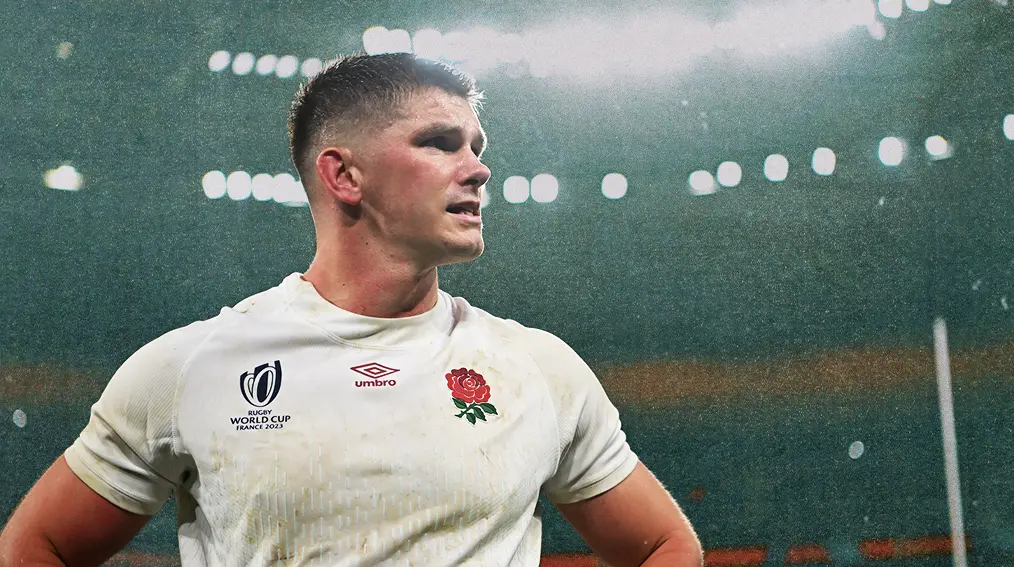
I’m going to get this out of the way at the start, just to avoid any accusations that I’m just being a hatin’ ass pothole. I’m a big fan of Owen Farrell. I think he’s the best, most rounded, most consistent #10 England have had since professionalism, including Johnny Wilkinson, and that when he’s all finished up as a player, very few people will come anywhere close to his career achievements at Saracens or England.
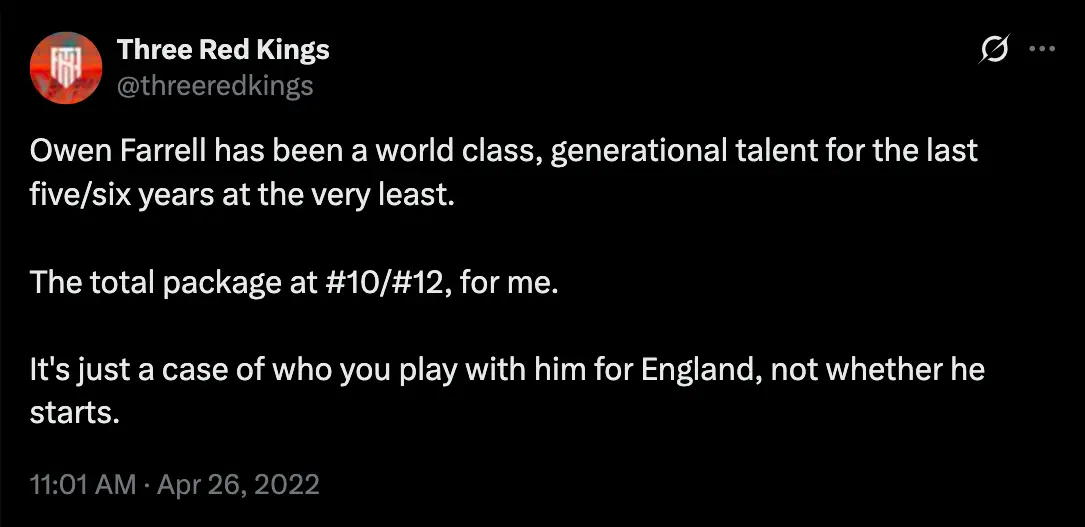
Look, here’s me blowing smoke about him in 2022.
But time moves on, and three years is a long time in top-level rugby. Hell, six months is a long time in this racket. Look at Johnny Sexton, for example. He was at the peak of his powers in the Spring of 2023 and looked like his knees and feet were made out of concrete in his last game against the All Blacks in the 2023 World Cup.
Owen Farrell will be 34 this September and is coming off a poor season in Racing 92, where he joined on a big contract last season to play under Stuart Lancaster for two seasons. It’s fair to say that it was a bad fit, especially since Farrell has since left Racing to return to Saracens on a player/coach deal. Owen Farrell made the move to Racing, in part, because it became increasingly clear that his England career was over. Not necessarily because Steve Borthwick wanted shot of him, but because the noise around him at the time was increasingly toxic.
[Owen] Farrell was jeered in stadiums when he appeared on screen or his name was read out throughout the World Cup, in which he became England’s record points scorer. Telegraph Sport understands that was one of several factors that influenced his decision on Wednesday, having also struggled to cope with the fallout from his controversial red card in a warm-up match in August.
All of this is fully understandable. A move to France made sense at the time, even if it didn’t work out. It happens. Some people are better suited to working in an environment that was built by them, for them.
Again, just ask Johnny Sexton.
I watched Farrell a fair bit this season for Racing in the TOP14 and Challenge, and he looked like a decent player in a misfiring team but that was about the limit of it. He certainly didn’t look like a player worth buying out of his Saracens contract for half a million pounds, though, and being paid north of £600k a year on top of that. It was a bit like watching Siya Kolisi at Racing in that he wasn’t playing poorly, but he wasn’t looking anywhere near good enough to justify the cost of bringing him to the club.
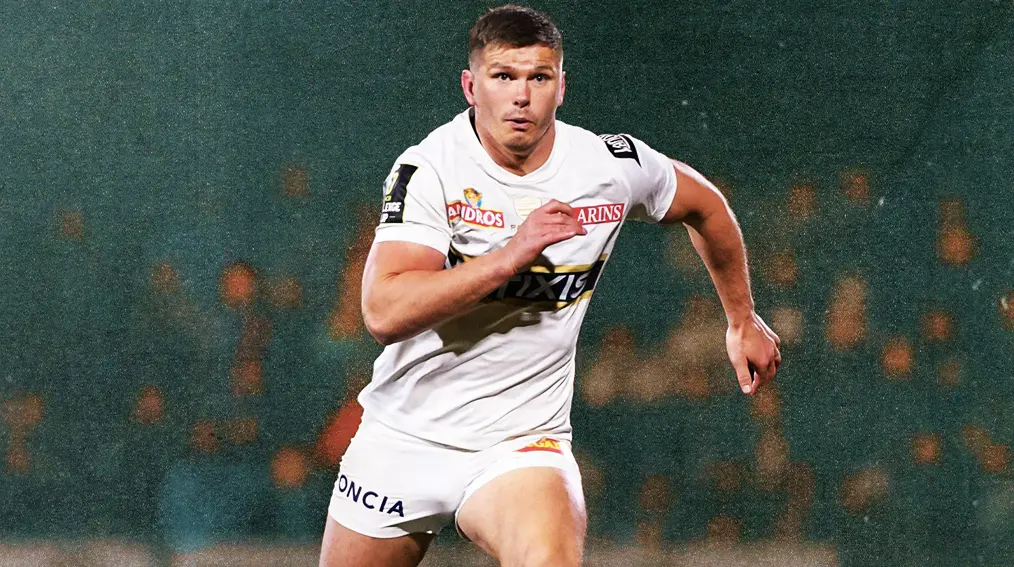
Saracens eventually negotiated an exit for him, and that’s where we stand coming up to the end of the season, where he was announced as a flagship pundit for Sky Sports coverage of the Lions tour. He didn’t appear on any subsequent broadcasts, and it was later claimed that he was never going to travel to Australia with Sky at all.
After Andy Farrell named his initial squad, he told journalists;
“[Owen] was in the conversation obviously, an experienced player like that, going for his fourth Tour. There’s 38 picked, which leaves a couple of slots open for us down the track if and when needed. Owen, like a few other guys, would be in that bracket.”
As a fairly experienced Andy Farrell watcher at this point, I think we can infer from this that it was always Andy Farrell’s intent to bring Owen Farrell on this tour. Elliot Daly’s unfortunate injury gave him the window to do it and it didn’t matter that Farrell doesn’t cover the same positions.
Just to get this out of the way, Owen Farrell falls well behind the other three Lions fly-halves when it comes to the offensive side of the ball, at least in the things that can be directly measured.
Summary
| Player | Try Inv | Dominant Carry % | Gainline % | 2+ Tacklers % | Tackle Evasion % |
|---|---|---|---|---|---|
| Finn Russell | 18 | 25.9% | 58.8% | 25.5% | 54.8% |
| Marcus Smith | 8 | 36.4% | 62.8% | 38.4% | 54.1% |
| Fin Smith | 5 | 30.0% | 63.5% | 32.4% | 34.0% |
| Owen Farrell | 3 | 33.3% | 38.6% | 20.5% | 21.1% |
Key Takeaways
1. Playmaking Output (Try Involvements)
-
Finn Russell stands out massively with 18 try involvements – more than double Marcus Smith, and 6x Farrell’s total.
-
Marcus Smith and Fin Smith follow in descending order of impact.
-
Farrell, despite his immense experience, is significantly underperforming in direct attacking involvements.
2. Carrying Threat
-
Marcus Smith and Fin Smith are more dominant in contact and gainline success:
-
Marcus: Top in dominant carries (36.4%)
-
Fin: Top in gainline % (63.5%)
-
-
Russell lags slightly behind in physical metrics (dominant carry and gainline), but this is offset by elite try involvement numbers and tackle evasion.
-
Farrell has the lowest gainline success (38.6%), indicating a clear loss of edge as a carrying threat.
3. Tackle-Breaking & Defensive Disruption
-
Russell and Marcus Smith both display elite tackle evasion (~54%), suggesting they create chaos even without breaking tackles outright.
-
Fin Smith is solid but not elite here (34%).
-
Farrell, again, trails badly (21.1%), reinforcing a growing sense of reduced attacking upside.
4. Committing Multiple Defenders
-
Marcus Smith leads here (38.4%), which shows how often his movement and footwork force defensive compressions – a key trait in opening space.
-
Fin Smith is also strong in this metric (32.4%).
-
Russell’s number is lower here (25.5%), likely because he often distributes before contact.
-
Farrell’s low rate (20.5%) underscores his decreased ability to manipulate defenders in front of him, even if it is increased from his last season at Saracens.
Strategic Takeaways
-
Russell is the clear creative talisman; his playmaking and evasion skills are unmatched, despite being less of a physical threat with the ball.
-
Marcus Smith is the most well-rounded attacking threat: he combines physical gain, evasion, and defender commitment at a high level. If he improves control/game management, he’s the most complete modern flyhalf on this list.
-
Fin Smith offers balance – solid metrics across the board with better structure than Marcus, but less flair than Russell. Arguably the safest “two-way threat” option.
-
Farrell’s data paints a picture of decline: reduced gainline presence, evasion, and creative output. Of course, he’s still useful for game control and leadership, but he’s the least effective attacker here by a wide margin.
If we were talking about just his metrics, Owen Farrell should be holding a mic this summer and talking into a camera. It’s not as simple as that, however.
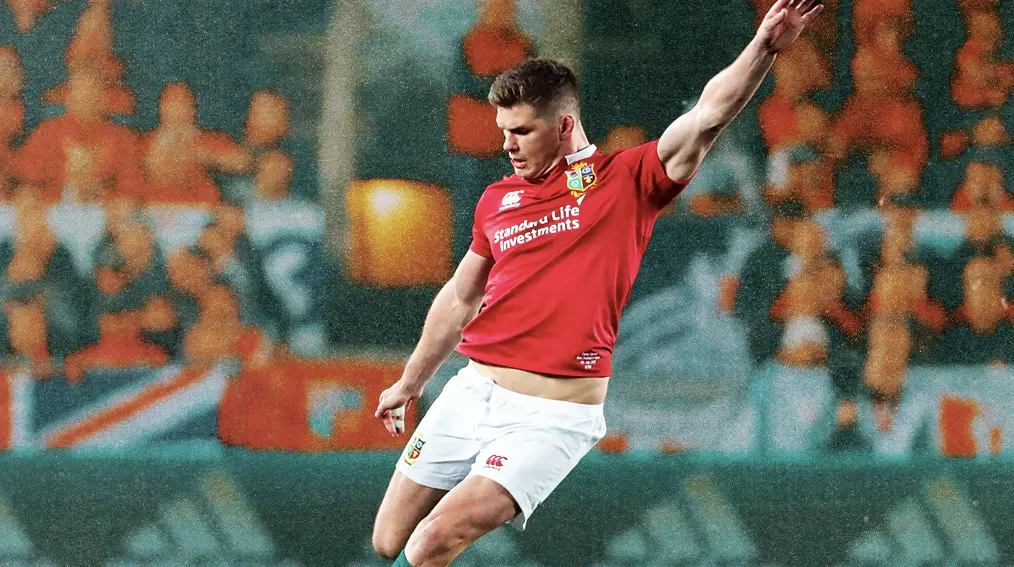
Owen Farrell is the type of personality at #10 that Andy Farrell associates with the position, in much the same way as he did with Johnny Sexton. Sexton and Owen Farrell are incredibly similar when we compare their mental traits, and Fin Smith, Marcus Smith and Finn Russell are all notably different personalities.
As we’ve seen with Ireland, if Andy Farrell doesn’t feel that mental familiarity at #10, he’s liable to do anything to feel secure about how the team is being driven. He doesn’t want quiet leadership; he wants someone like his son. That’s why Sexton is on this tour despite having less coaching experience than your average CCRO, and that’s why Owen has been called up to the playing group.
It is an extraordinary risk for Andy Farrell. I think he knows this too because, just like he did with Sexton’s role, he’s left the call-up late enough where he might have felt the inevitable noise would soon be drowned out by the thrum of upcoming games. It’ll work, as long as the Lions keep winning.
The danger for Farrell is that his current best option at #10, Finn Russell, sees this for what it is: Andy Farrell hedging his bets on the leadership of the team and undermining all the #10s in the environment. Andy Farrell would, no doubt, say this wasn’t the case, but this looks like he’s had three games with the #10s he initially named in the squad, and he doesn’t feel like he has two he can trust. If you’re Marcus and Fin Smith, who drove England to their best Six Nations finish in a few years just a few months ago, how do you see this move? How do their non-Saracens teammates see it? You could also argue that this directly undermines Finn Russell, too, but if Andy Farrell doesn’t sync up with your personality as a #10, there is no disrespect too callous for him to throw at you while he moves on mentally.
Trust is a big thing for Andy Farrell, because trust is a key part of the cohesion that always falls back on as a head coach. Yet, he has shown again and again that trusting him as a #10 he isn’t related to or best friends with is a mistake. Ask Joey Carbery, Ross Byrne, Harry Byrne, Ciaran Frawley and Sam Prendergast. Ask Sam again after this November.
At best, this is bringing a highly experienced leader who can cover 10/12 and/or allow you to play a heavier 6/2 off the bench with the right outside backline. Owen Farrell as a bench option allows Andy Farrell to name this team.
Starting XV: Blair Kinghorn, Mack Hansen, Garry Ringrose, Bundee Aki, James Lowe, Finn Russell, Jamison Gibson Park; Andrew Porter, Dan Sheehan, Will Stuart, Maro Itoje (c), Joe McCarthy, Tadhg Beirne, Josh Van Der Flier, Jack Conan
Replacements: Ronan Kelleher, Ellis Genge, Tadhg Furlong, Ollie Chessum, James Ryan, Henry Pollock, Alex Mitchell, Owen Farrell
Fourteen Irish players in the Lions test side is an incredibly risky ploy for Andy Farrell, and he well knows it, but would having Owen Farrell there, along with Maro Itoje as captain, be enough to keep the rest of the English contingent happy once they realise in training who’s starting and who’s doing opposition?
I guess we’ll see. If it goes wrong, there’s the possibility of this tour reaching 2005 levels of toxicity, which is already a spectre in the woods. When I’ve seen how irritable and stressed Andy Farrell has looked when questioned by the media this week – something he has the pull to avoid at the IRFU – I see a man who knows what he has to do to win, but can’t bear the idea of the potential fallout if it doesn’t work.
