


We’re into the teeth of it now.
The Lions are officially on tour in hostile territory, and believe me when I tell you that things are only going to get nastier and more attritional from here. Maybe that won’t present itself in this game in Perth on Saturday morning, Ireland time, but it will be a factor over the next few weeks.
This is hostile territory, and these aren’t “warm-up” games as you might understand them. Sure, the Lions have a lot of reps to get through to get up to speed if this isn’t going to be an Irish Lions featuring some British tour, but there’s a lot more at stake. Momentum? Sure. Cohesion? Definitely.
But the Australian Super Rugby teams or the invitational sides they’ll play directly before and after the first test against the Wallabies aren’t here to have a gentlemanly rattle off the Lions for the sake of wins or losses. This is blood sport, and make no mistake, every single team they’re going to play is trying to leave something extra on every single collision. I’m not speculating here either, Nic White has said this directly.
“If we can bash a couple of their blokes on the way in and bruise them and make them a bit sore by the time they get to the Wallabies, then job done as far as the Super Rugby sides are concerned.”
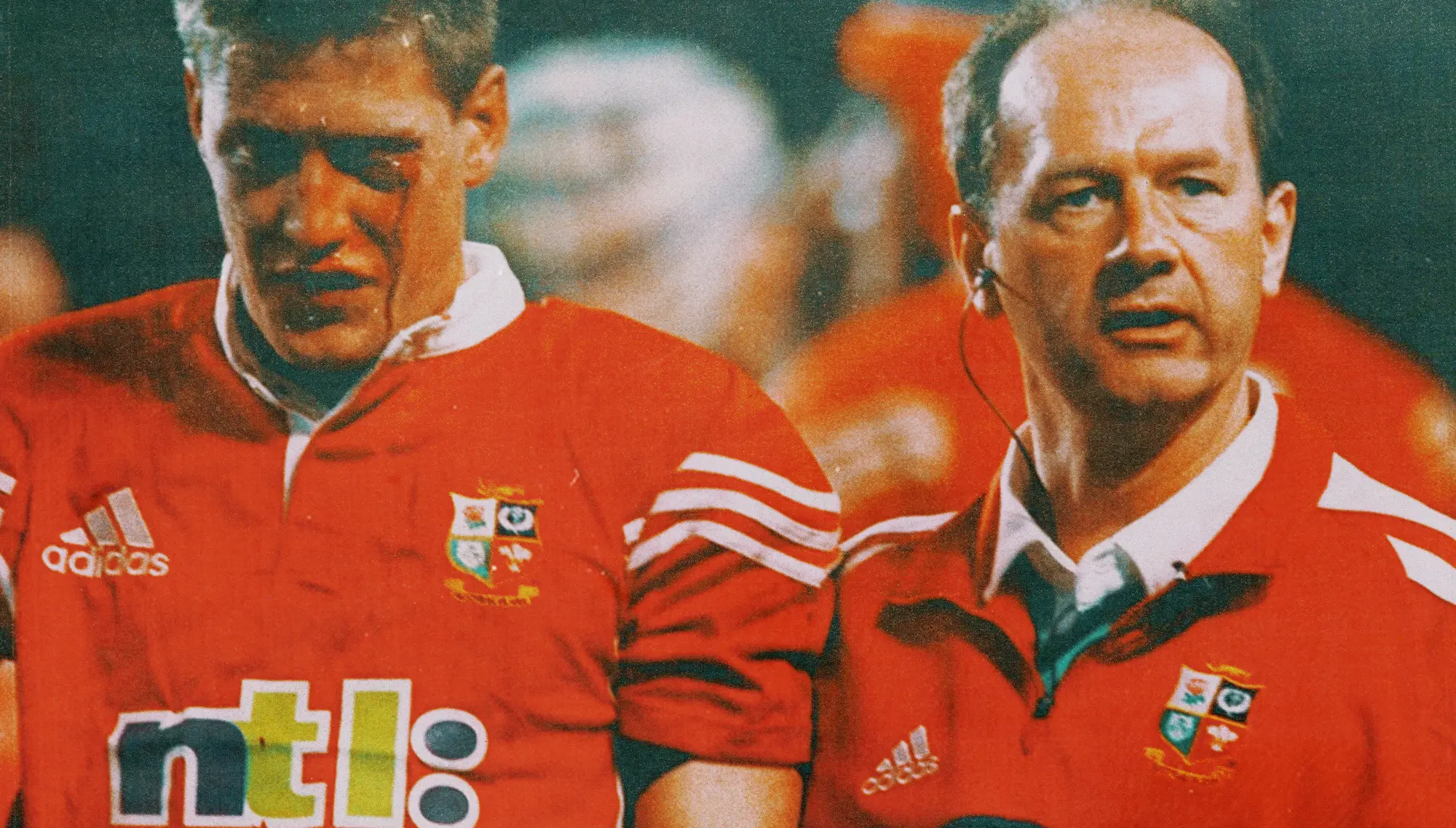
It’s not necessarily about winning, although they’ll be trying to win the game, make no mistake; it’s about sending a message. And that message is that there are no free lunches on this tour, everything is going to be hostile, and even routine midweek wins may come at a cost too great to bear.
That risk is particularly acute for Farrell’s Lions, who have an intricate, highly involved and detailed system of play that isn’t easily picked up, especially compared to the kick pressure game used by Warren Gatland’s Lions between 2013 and 2021.
But this is a Lions tour. It’s par for the course and the risk every Lions squad has to take. You need these games to prepare for the tests, but in that preparation, the risk is that you lose one or more of your “can’t lose” players to a dodgy tackle or ruck entry. A bit like spiders the size of €5 notes, there’ll be plenty of those around every corner in the next few weeks.
British & Irish Lions: 15. Elliot Daly, 14. Mack Hansen, 13. Garry Ringrose, 12. Sione Tuipulotu, 11. James Lowe, 10. Finn Russell, 9. Tomos Williams, 1. Pierre Schoeman, 2. Dan Sheehan, 3. Tadhg Furlong, 4. Scott Cummings, 5. Joe McCarthy, 6. Tadhg Beirne, 7. Josh van der Flier, 8. Henry Pollock
Replacements: 16. Ronan Kelleher, 17. Andrew Porter, 18. Will Stuart, 19. Ollie Chessum, 20. Jack Conan, 21. Alex Mitchell, 22. Huw Jones, 23. Marcus Smith
Western Force: 15. Ben Donaldson, 14. Mac Grealy, 13. Matt Proctor, 12. Hamish Stewart, 11. Dylan Pietsch, 10. Alex Harford, 9. Nic White (c), 1. Tom Robertson, 2. Brandon Paenga-Amosa, 3. Ollie Hoskins, 4. Sam Carter, 5. Darcy Swain, 6. Will Harris, 7. Nick Champion de Crespigny, 8. Vaiolini Ekuasi
Replacements: 16. Nic Dolly, 17. Marley Pearce, 18. Tiaan Tauakipulu, 19. Lopeti Faifua, 20. Reed Prinsep, 21. Henry Robertson, 22. Max Burey, 23. Bayley Kuenzle
The way I speak about Andy Farrell’s attacking system, at times, you’d be forgiven for thinking that it’s an inscrutable, unknowable system for all but the most experienced Ireland players.
That isn’t true. Not fully, anyway.
What is true is that Farrell’s system demands a lot of trust. The players have to trust each other to run a layered attacking system where the pass option is often running diagonally in their blind spot. The passer has to trust the runner to be in the right spot, and the runner has to trust the passer to be accurate. Every team runs variants of this screen balls these days, but the Irish national team does it more than most, which means the Lions will also do it. Above all, Farrell has to trust his players to execute their roles in this system, and each role has specific jobs that must be done a certain way.
This is, in part, why players outside of Leinster have found it difficult to break into Farrell’s Ireland team unless they provide something that either directly matches what someone already in the team does or gives Farrell another wrinkle in his system. A great example of this is Mack Hansen.
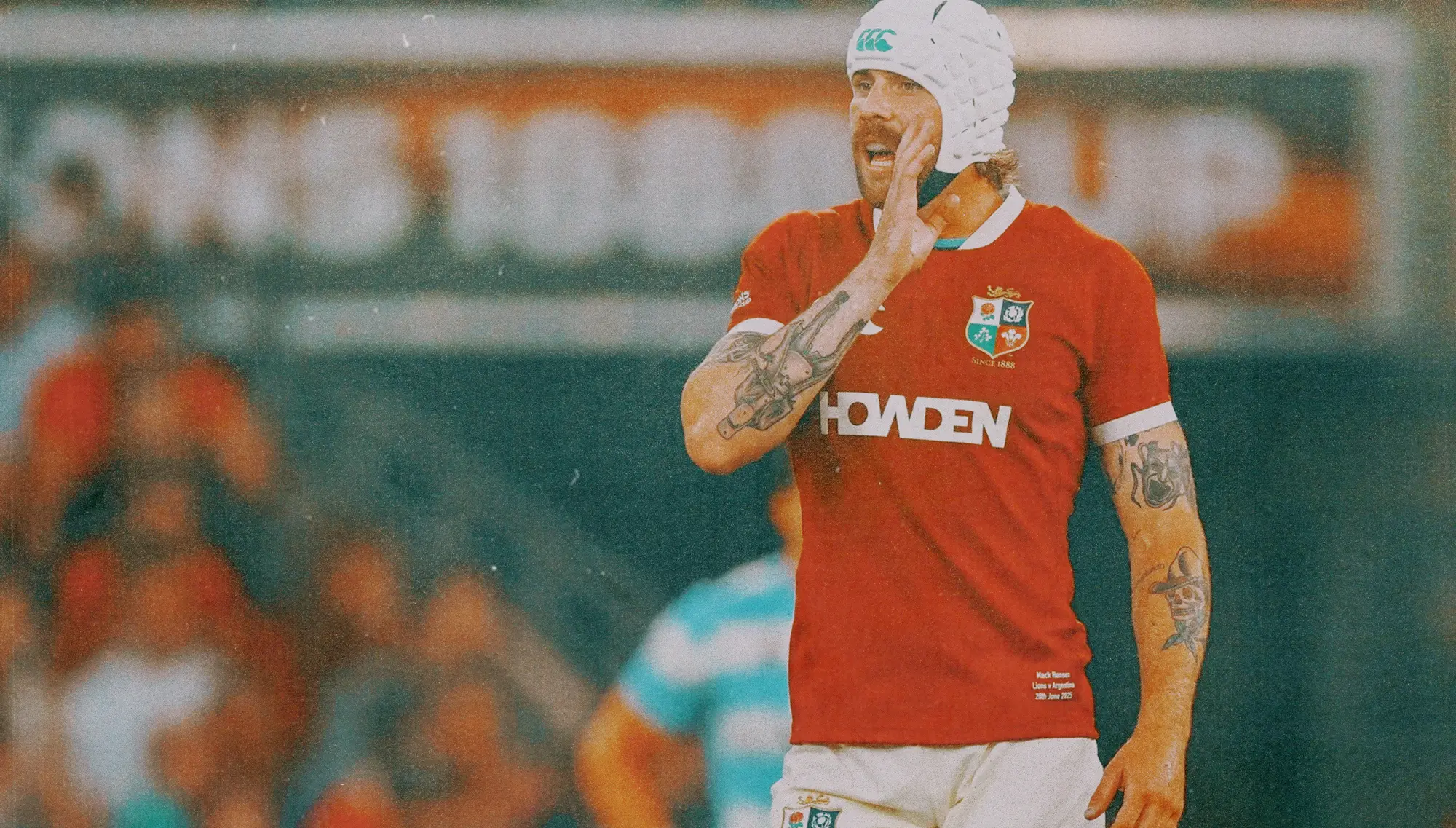
Hansen is a right-sided version of James Lowe in that most of what he’s best at isn’t necessarily what you’d automatically associate with a traditional winger. Neither Lowe nor Hansen are particularly fast and, while both are good finishers, I wouldn’t have either in the same conversation as, say, wingers like Damian Penaud, Louis Bielle-Biarrey, Cheslin Kolbe, Will Jordan or even Tommy Freeman.
With that said, both Lowe and Hansen are, in the right system, core drivers of Ireland’s system when it’s functioning at its best. Lowe’s tactical kicking, for example, is superb. His ability to almost always get the ball running on a frozen rope up the 5m tramline is genuinely remarkable, on top of his close-range power and offloading ability.
Part of the reason why Hansen, in particular, was able to break into this system from outside the Leinster template is his ability to act as a secondary playmaker, as well as having the engine to loop across the field, the instincts to find the right spot for himself and that all backed up by a very solid kicking and aerial game.
Hansen’s work looping behind Ireland’s 3-2-X shape in phase play is a large part of why he ended up at a central contract level this season, even without playing all that well in a year where both Connacht and Ireland struggled offensively.
You’ll most often see Hansen in this position in Ireland’s third layer of attack.
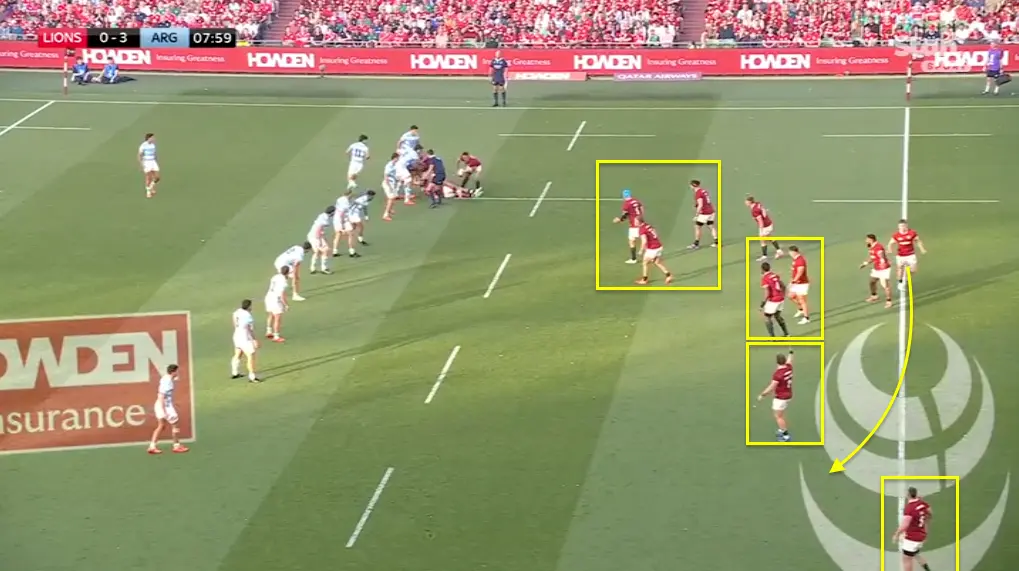
Freeman is running this line here, and while he did a decent job, his playmaking and decision-making in the 3/4 space aren’t as good as Hansen’s. I think you get the best out of Hansen behind a #10 that regularly challenges the gainline directly because it allows him to slide into the 3/4 space with a compression to work with.
There are two compressions here that allow Hansen to excel on this play. The first one is with Tuipulotu and Daly running a hard pinch line with a pop back to Fin Smith.
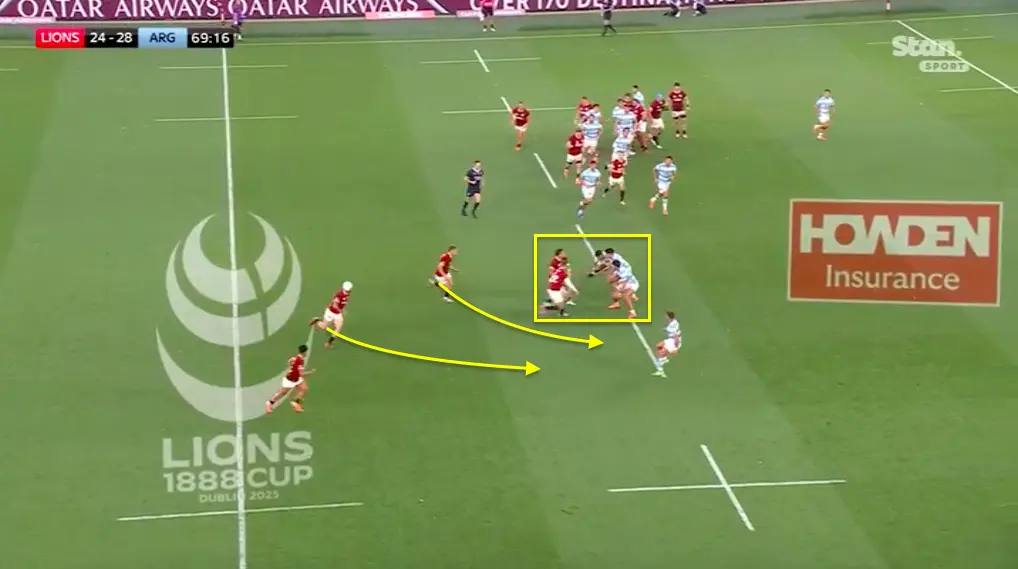
Smith then has the pace and established running threat to hold the edge defender long enough to release Hansen into the 3/4 space with space to run into.
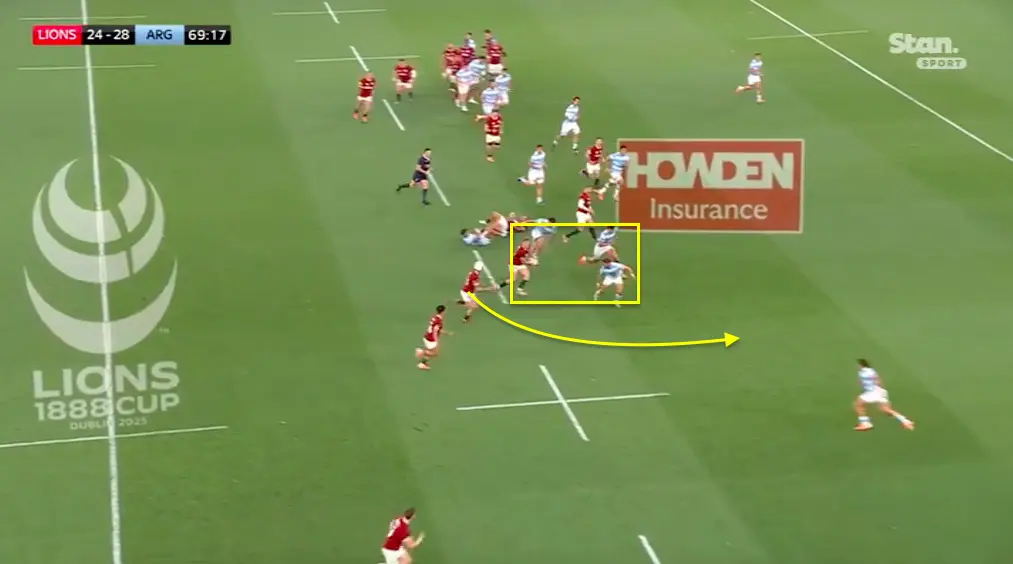
On phase play, you’ll see him swinging from sideline to sideline in those deeper layers, waiting for the ball to filter through the layers to where he can hit that 3/4 space at pace.
This is a really good example of the importance of cohesion to this system. Daly is drifting into Earl’s line and Earl is drifting infield, which allows the Argentinian edge defender to slip off Earl’s running line and onto Hansen. Earl is so tight to Daly that the pass is that much harder to execute as a result.
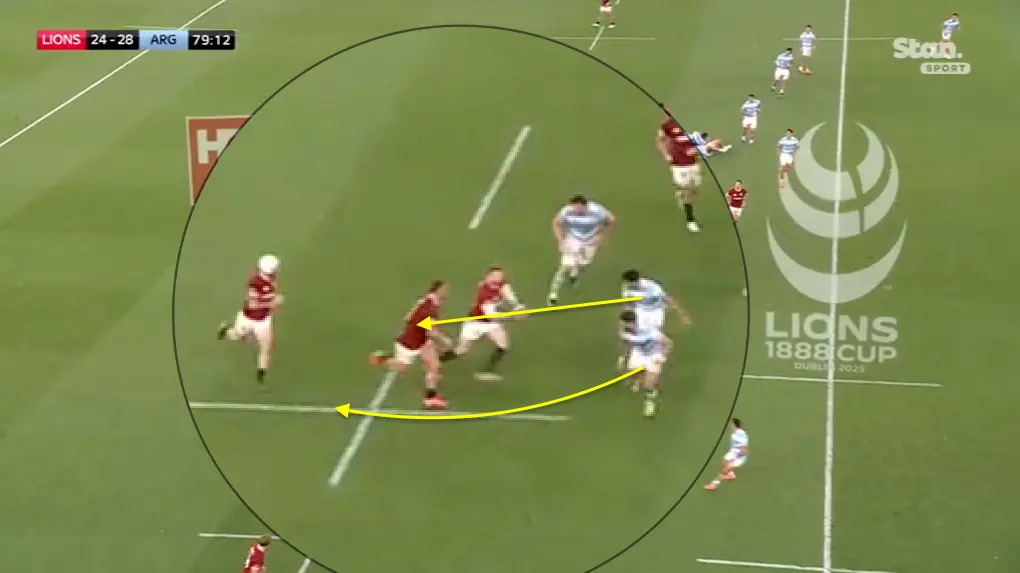
This means that a 3 on 1 was left slide because the running and blocking lines weren’t quite right. It’s moments like this, especially in defeat, that will make Farrell think…
- Jack Conan would have been better than Earl there
- Ringrose gives that pass tighter
And two more opportunities fall away from non-Irish players as a result.
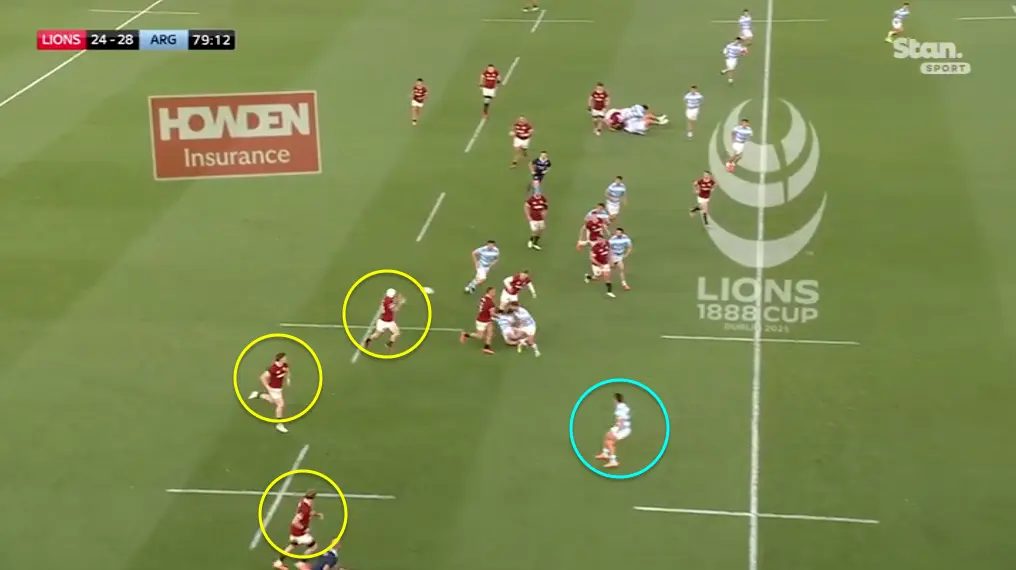
This is why seeing Hansen and Lowe starting on the wing for this game is so meaningful. When he broke into the team, Hansen solved a problem for Andy Farrell in that he added a playmaking option to unlock the potential of his backline without sacrificing the defensive solidity Ireland loves with their settled combos in midfield and fullback. Hansen’s ability to be a creative looping winger meant Farrell had another way to extend Sexton’s influence. This season, a non-carrying #10 for Ireland hampered Hansen’s game because he had no space to slot into. Prendergast’s passing volume ate up all the space for Hansen, as well as most of his passing windows.
For the Lions, seeing Hansen with Russell at #10 shows me that Farrell is looking very seriously at Russell, Lowe, Hansen and probably Blair Kinghorn as his main transition unit with Tuipulotu/Aki and Ringrose operating as quasi-flanker/wingers. Keep an eye out for how many passing reps Hansen gets in this game; if it’s more than 15 passes, you’ll have a good look at what the Lions’ starting #10 and outside backline (minus Kinghorn) looks like.
For Farrell, system fit is everything, and the only players like Lowe and Hansen in this squad are… Lowe and Hansen. That tells you that most of the choices on this tour were made last November.
That’s the homework for this game – look for the system fits.
