


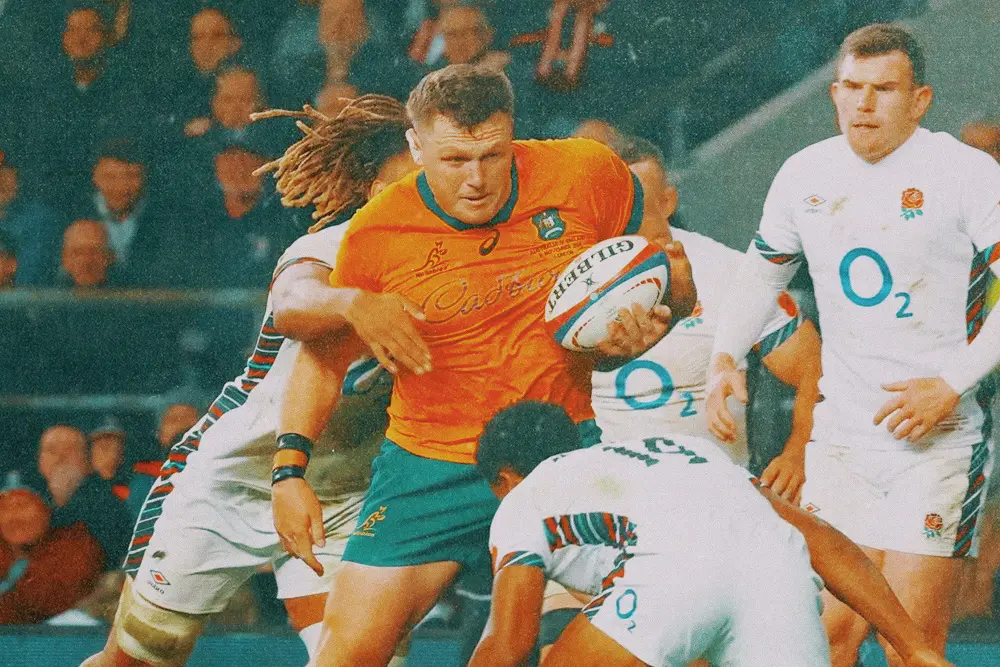
This season has been pretty chastening for Irish Rugby.
Sure, one of Munster or Leinster could still win the United Rugby Championship in June; in fact, Leinster should win it, realistically, but that doesn’t take away from the feeling of decay that has crept into elite rugby on this island. I suppose even when I talk about a “feeling of decay”, that’s subjective enough, but there are objective markers to go with it.
Ireland lost to the All Blacks in Dublin and just about beat Australia and Argentina in the same November series.
There’s no shame in losing to the All Blacks, of course, but the poor performance in that game was followed up against the other Rugby Championship sides, despite wins being secured late on in those fixtures.

Ireland finished third in the Six Nations despite being favourites.
We’ve already pored over this one quite a bit, but Ireland’s Six Nations campaign was the definition of flattering to deceive. A pulled out of the fire win at home against England, a facile win over a Scottish side intent on uppercutting themselves, almost losing to the worst Welsh side in a generation in Cardiff, before getting humbled in Dublin against France.
Most of the Irish starting team from the Six Nations, plus Jordi Barrett and RG Snyman, lost to Northampton at home in a European Cup semi-final.
That sounds like I’m being churlish, but people I spoke to who work for the IRFU used the same nomenclature the day after that loss. Combined with the disappointing Six Nations campaign, it seems the tactical secret is out when dealing with this version of the Irish national team, even when supercharged by elite NIQ talent. Leinster had an outstanding season to that point, but they didn’t become one of the best-funded teams in the history of the European Cup in the last two seasons to lose a home semi-final to a Saints side who will finish outside the playoff spots in the Gallagher Premiership this season.
Connacht and Ulster missed out on the Champions Cup, and Munster only managed it on the last day of the season.
The Other Three Provinces have had fairly torrid seasons, all in all. Munster have had the best of the bunch when you factor in the win away to La Rochelle, but that’s been despite massive off-field disruption with the head coach and forward coach leaving early in the season. Connacht and Ulster have been trending downwards all season, Ulster in particular. Connacht came into this season with a small enough senior squad, with some of their best players getting to the point where they are nearly more effective for Ireland than for Connacht. Their season ended with the loss at home to Racing 92 in the Challenge Cup knockouts, while Ulster suffered huge losses in Europe and wild inconsistency in the URC.
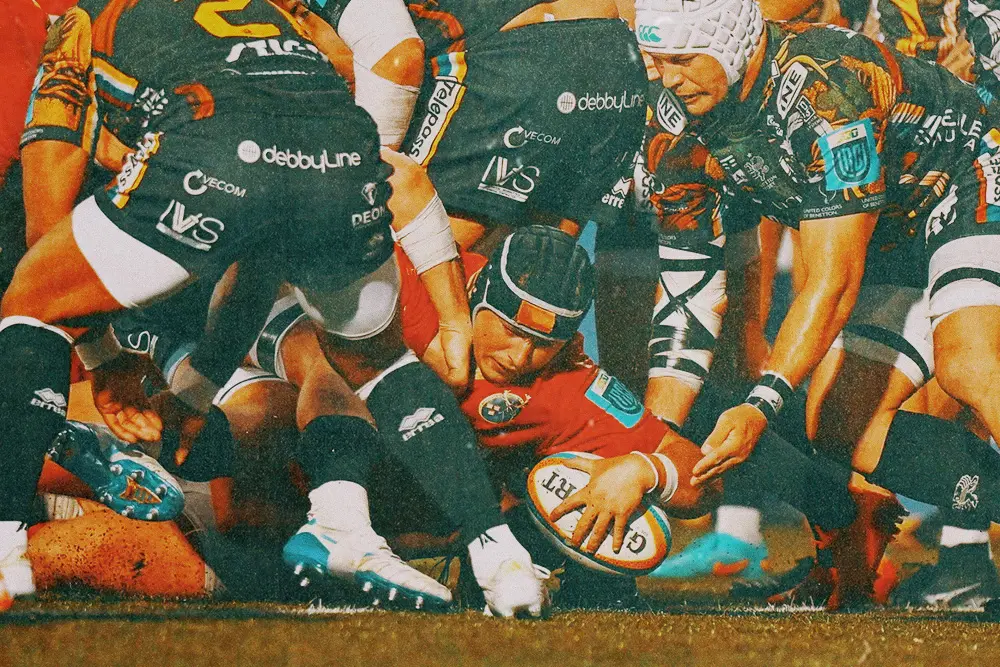
All of this was predictable, though, as all of The Other Three Provinces™ have been nickel-and-dimed since the summer of 2022, when their budgets were cut by approximately €500k a year for the next three seasons. To be clear, Leinster’s base funding was cut by the same amount, but that was offset by a massive increase in central contracts at the same time, all while central contracts elsewhere on the island dwindled to players in their mid-to-late 30s before ageing out altogether.
This season was very much a case of the IRFU getting exactly what they paid for when it came to Ulster, Connacht and Munster, and getting shortchanged, whatever happens, by Leinster and the Irish national team.
Having 15 Irish Lions this summer is undoubtedly a positive, both from a perception perspective and financially for the IRFU, but it also comes at the very plausible risk that the core of the Irish national team could be irredeemably damaged by it. Lions tours are rarely kind to their bulk supplier. Deep elements of your game get dispersed amongst your rivals, especially if the Lions coaching group is from the same nation, but worse again is the physical attrition that the tour takes on the body.
Ireland are already one of the most heavily tenured and oldest squads in the test game. The Irish touring contingent on this tour has an average age of 31 next season, and some key guys like Beirne, Lowe, Gibson-Park, Aki, Conan, Van Der Flier and Furlong will all be 33 or older, right on the verge of being PRIORITY 1 replacement level at test and club level, essentially.
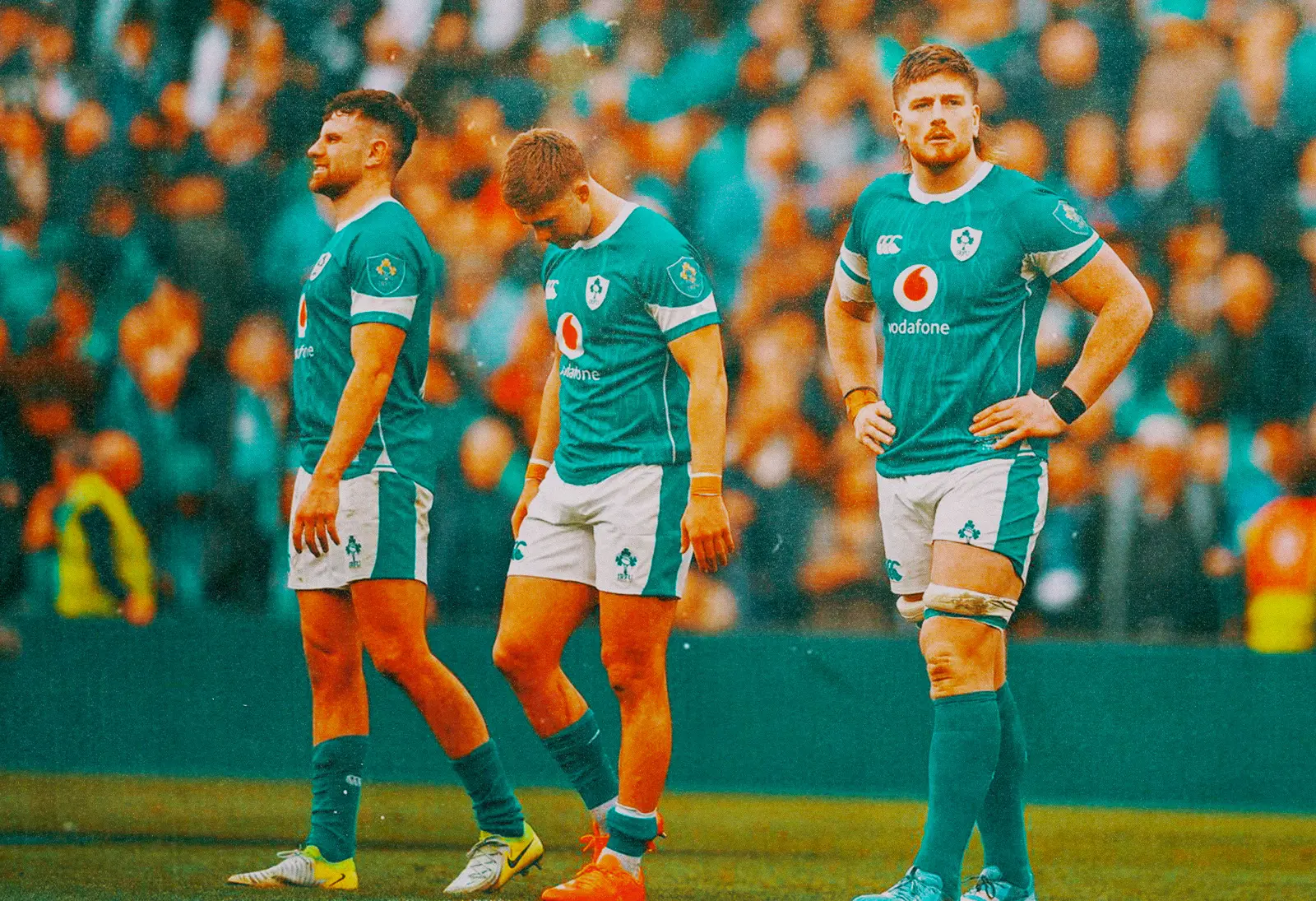
What we’ve seen over the last few seasons in Irish Rugby – the final three seasons of David Nucifora’s tenure – has been the implementation of a plan that, however well-meaning in its devising, has seen the Other Three Provinces essentially subjected to the same hollowing out effect that happened to the Welsh Regions accidentally over the last ten years. Is it any surprise that two of the four provinces had Welsh Region-like seasons, and Munster right along with them?
Ask any Welsh fan what the issues at their regions are on a grand scale, and they’ll probably say something like year on year budget cuts, being told to “focus on developing youth”, and being unable to get in high-quality foreign players to raise their standards day to day and, crucially, help them win matches week to week.
That’s more or less the same thing that’s happened here – deliberately. Sure, the Irish provinces had a higher budgetary starting point, but the trajectory is the same.
It was well-meaning, in a sense. Developing young players is a core part of any club, but especially for the Irish provinces, and some people still feel that NIQ players prevent players from developing because they take minutes away from those young players. This has always been nonsense, but it’s the kind of thinking you could convince yourself made sense if you had a vested interest in doing so, like telling your kids that the McDonalds’ Drive Thru is closed so you don’t have to pay for a Happy Meal.
In the latter half of the 2010s and early 2020s, this thinking manifested itself in the bootstrapper logic that you could only sign a player in an area of need if you had (a) absolutely nobody coming through or (b) had already developed an international so that the NIQ could “cover” for them while they were with Ireland.
Of course, this led to the bizarre situation where, if you had a guy who could, conceivably, play for Ireland, they were then considered an “option” and, as a result, no NIQ could be signed as they would be seen as “blocking” that player by the then Performance Director.
Ulster were prevented from re-signing Ruan Pienaar as a result of this logic and ended up getting Irish “option” John Cooney, who went on to get a whopping 11 caps in eight years. Munster wanted to sign a tighthead prop in 2018/19 but were prevented from doing so as it was seen to be blocking the minutes of Stephen Archer and John Ryan.
Stephen Archer was last capped in 2014, and John Ryan earned 12 caps between 2018 and 2021, mostly off the bench if one of Porter or Furlong was injured, or in Cat B internationals. Of course, NIQs were signed by the provinces during this time, and some of them were incredibly well-known and on massive money.
They almost all fit the description of being in a spot where you either had nothing at all – nobody who was a realistic contender for Ireland caps – or where you already had an Irish test player. This was later changed to allow one NIQ per unit across the island. In practice, this meant that if Munster had an NIQ second row, Leinster couldn’t sign one.
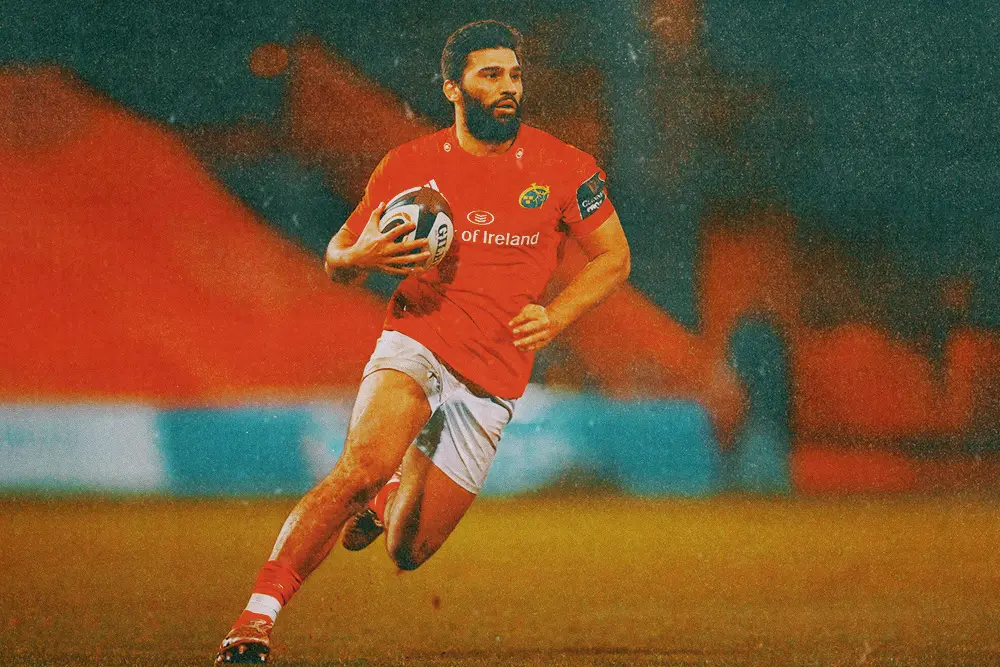
It was this, in combination with the need to cover for Furlong and the Porter Switch, that allowed Leinster to get clearance to sign the first big-name NIQ prop into the Irish system since John Afoa in the early 2010s, when they signed Michael Ala’alatoa in 2021.
Ulster followed suit with an ill-fated, £800k per year deal for Stephen Kitshoff after the 2023 World Cup, but it was still snatching at deals through a byzantine, opaque system of favours, hidden trip wires and catch-22s.
Munster even found this around the time when we signed RG Snyman. We wanted a tighthead prop and had two big names lined up in successive seasons – Vincent Koch and later Frans Malherbe – but were prevented from signing both, only to be “compensated” with permission to sign RG Snyman. We couldn’t say that we’d been hurt by that decision, at least not when it was announced anyway, but it was a familiar pattern of needing a hammer and being given a wrench.
Where The Power Lies
Of course, the easy answer to this is “just develop world-class front rowers”. Why didn’t Munster think of that, eh? It wasn’t for the want of trying, whether from within or without. The simple and perhaps unsettling answer is that producing elite front rowers is as much about luck and raw numbers as it is about coaching talent.
If you don’t have huge player numbers to “roll” the right physical and mental traits to produce the athletes you need, you need the luck for these players to emerge and then not get injured during the 5/6 year lead in period where they develop the physical robustness to survive in the modern game. In this regard, Munster haven’t really had the horses, at least not any that were blindly obvious right out of the gate.
Any guys that found their way to the academy from local systems were usually good nuts and bolts players, like Diarmuid Barron or Josh Wycherley. Power freaks – to give them a technical term – were hard to come by. They are hard to come by in any player development setting, really, and it’s as much about who shows up through the gate one day in their early teens or slightly later as it is anything else.
No potential Andrew Porters are hanging around for the want of someone to spot them. Nobody misses a generational talent like that coming through their system.
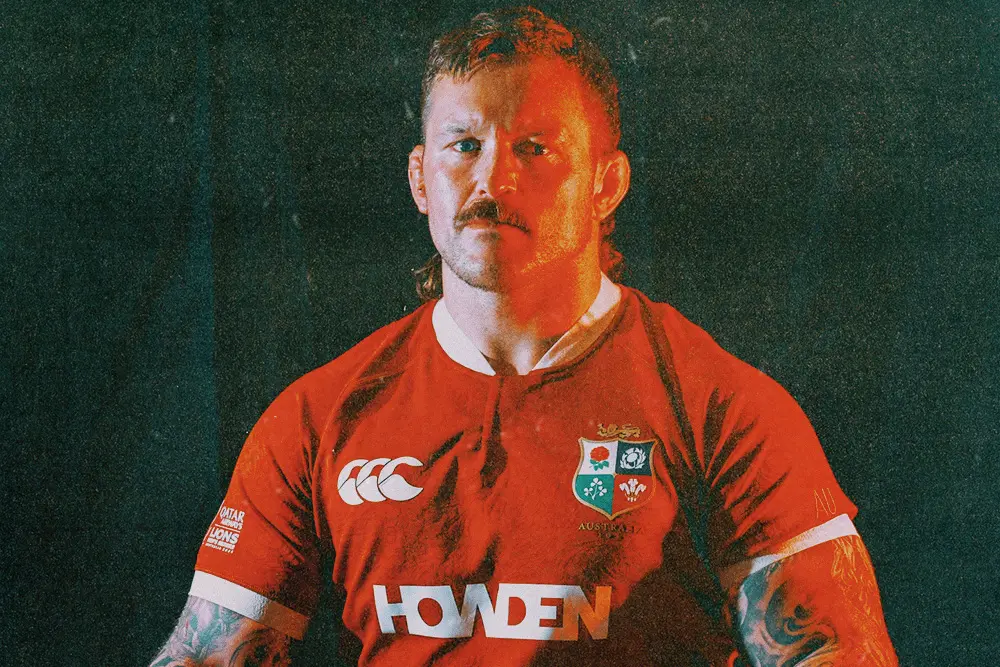
They are either there, or they aren’t and if they aren’t you’ve got to put the time into find them. In the interim, though, you’ve still got a high performance program that needs wins to function and no forwards have as big an impact on wins and losses in the modern game as front rowers do.
No scrum, no win. No lineout, no win. No forward dominance, no win. Props and hookers are deeply involved in all of these no win scenarios.
When David Humphreys finally took over from Nucifora, who’s currently off on a jolly with the Lions when he’s not consulting on player development systems in Brockway, Ogdenville and North Haverbeook, he initially said that he would not sanction NIQ front row players for the provinces.
“Since forever, since the game’s been professional, there’s been questions over how we’re going to replace John Hayes. The way the Irish system is set up, players come through because we know we can block any foreigners coming into the game.
“I do believe we’ve got to… it’s not about putting pressure on the provinces, but they also need to develop those props. They need to find ways to bring props through their system to ensure that they are competitive, both now and as they need to replace some of the more senior players coming through.
“So, there’s every likelihood because of the challenge we do have in some of the front-row positions that from next year onwards, there won’t be front-row forwards coming into the game who are non-Irish qualified.
“We’ve got to find ways of protecting, because Andy can’t go out and sign foreign players, so we have got to find ways to make sure that, yes we have a national responsibility but that starts with the provinces and the pressure will be on them: ‘You have got to deliver those players to allow you to be competitive’.
All of this sounds well-meaning, but it’s a version of “why don’t have you have €20?” which I always use when I see arguments like this. When I was broke-broke, I was €20 short of my weekly rent in the hostel I was staying in back in 2015. The hostel manager asked me, “Why don’t you have €20?”.
I didn’t know what to say. I was short €20 because I didn’t have it. If I had it, I’d have it, then he’d have it. Wanting it didn’t make it appear. It’s either there or it isn’t.
I think David Humphreys realised this pretty quickly once he got his feet under the table properly. It doesn’t really matter how many minutes you sink into a young prop to “develop” them. If they aren’t ready now, any minutes you put into them are in the knowledge that they might be ready in two or three seasons’ time. At a push. Not only that, but too many minutes too early risks injuring them and flattening out their physical development, which means they never become the player you wanted them to be, all for the want of rushing them.
And in the meantime, and this is the case for all three provinces outside of Leinster, you’re still losing games as you rely on guys who either aren’t at the level required, or were but aren’t any longer.
I think that’s why Humphreys green-lit the Blueler loan, Slimani’s one-year extension, and Ulster signing loosehead Angus Bell on a one-year deal ahead of next season. Signing players in this area of the field directly correlates with more wins. Angus Bell takes pressure off Ulster’s loosehead chart and either allows them to fully focus on building around O’Toole and Wilson as their future tighthead rotation, or invest in McGuire behind Wilson and pair O’Toole with Bell on the loosehead side as part of his tentative switch to the #1 shirt. Both options make sense from a developmental perspective, all while adding a big power ball carrier into a front five that badly needs that quality.
Signing these guys in gives you space, it develops young props week to week in training and it helps you win big games.
I think that’s why Humphreys has also green-lit Munster going after a tighthead prop this month ahead of next season.
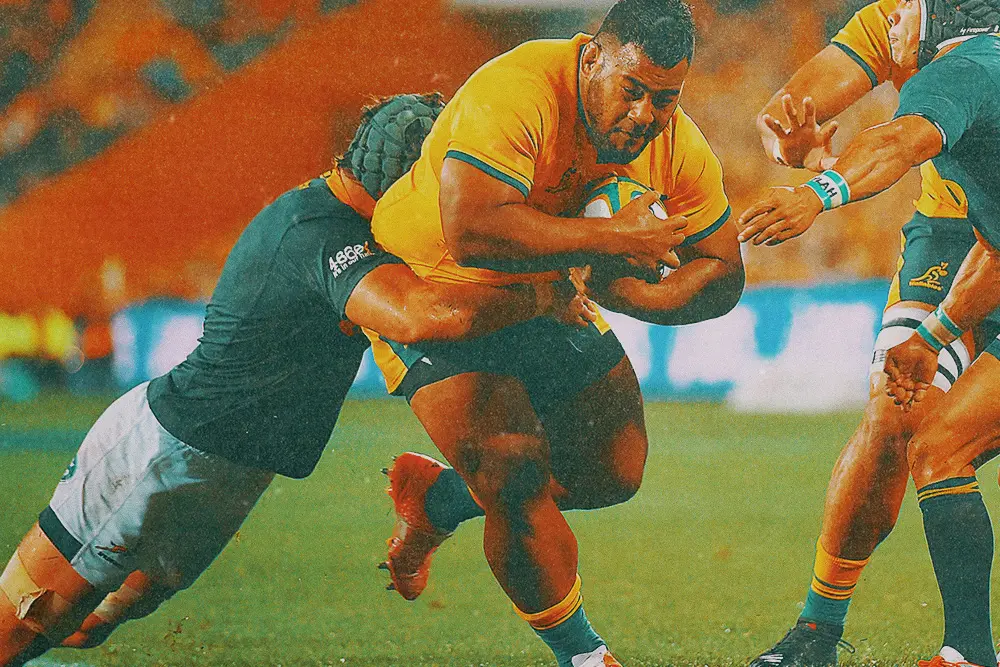
In an earlier article, I mentioned Taniela Tupou as a potential signing if the money and dispensation were there. Turns out the money and dispensation are there, it’s just about making sure the deal can be done and if it should be done. The signing of Clayton McMillan as the head coach for next season is a key part of this dispensation because if you were to pick one area of the team where a signing would have a big impact on Munster’s success, it would be the front row.
Our loosehead chart looks good, frankly, with Wycherley, Milne and Loughman. Hooker is… OK, with Lee Barron and Diarmuid Barron the standout options for next season, but with guys like Sheahan and Clein ready to make a run.
Tighthead has Oli Jager – who’s been class for us but bedevilled with knocks in between – a 37 year old John Ryan, Roman Salanoa on a 12 month extension at least and then younger lads like McSweeney and Foxe.
One four-week knock to Jager at the start of December 2025 means… trouble. And a ton of question marks.
There’s obvious space for a tighthead signing, and McMillan is rumoured to have identified it as a key area where we should strengthen. We’ve also been linked with the Chiefs George Dyer and the Bulls’ Mornay Smith among a few others who might be available but it’s clear that the IRFU have seen that wanting players to be ready does not mean they will be.
Sometimes you need NIQ quality in the spot you actually need it to help the future and the now.
