


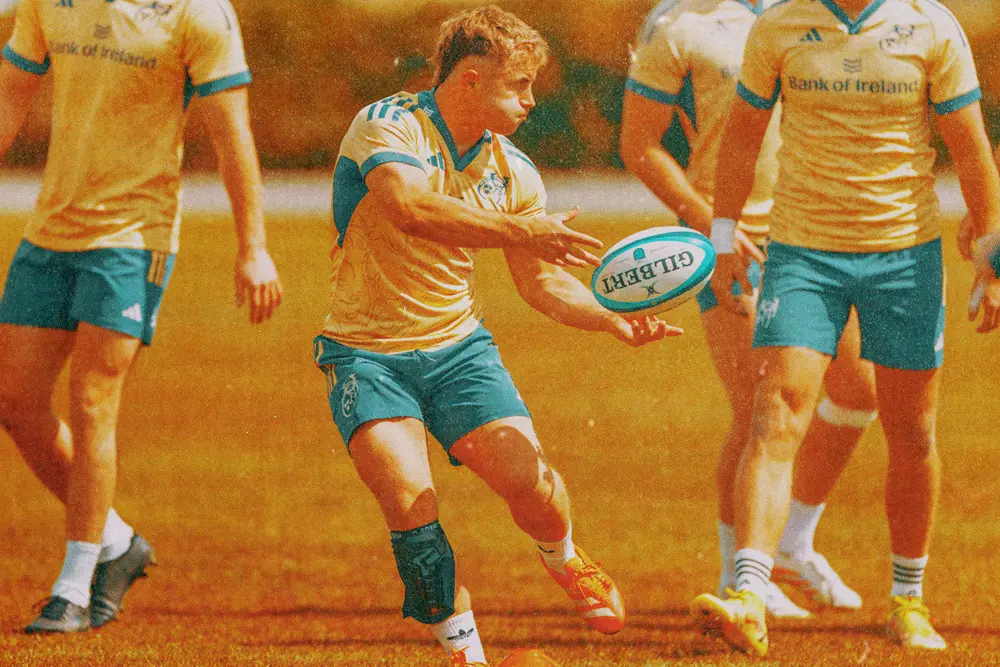
Pressure? What pressure?
Oh, right, yeah.
That pressure.
There’s no escaping it. No talking around it. No equivocating it.
If Munster lose this, they will, in all likelihood, finish outside the top 8 and play in the Challenge Cup next season. A disaster. If Ulster lose, it’s the same disaster for them. This is the worst kind of knockout game – as Leinster found out at the weekend – where a win isn’t something to celebrate; it’s par. I’ve been trying to think why Leinster looked so flat for that loss to Northampton at the weekend, and I think I have a theory. Almost everyone expected Leinster to waltz to a European Cup final this season – me included – so that last step before getting to the actual jeopardy can catch you cold.
When losing is unthinkable, and winning is what everyone expects of you as a matter of course, it is a mental minefield. Munster and Ulster will have to navigate that minefield this week ahead of a high-stakes, high-pressure interpro that neither side dares not lose.
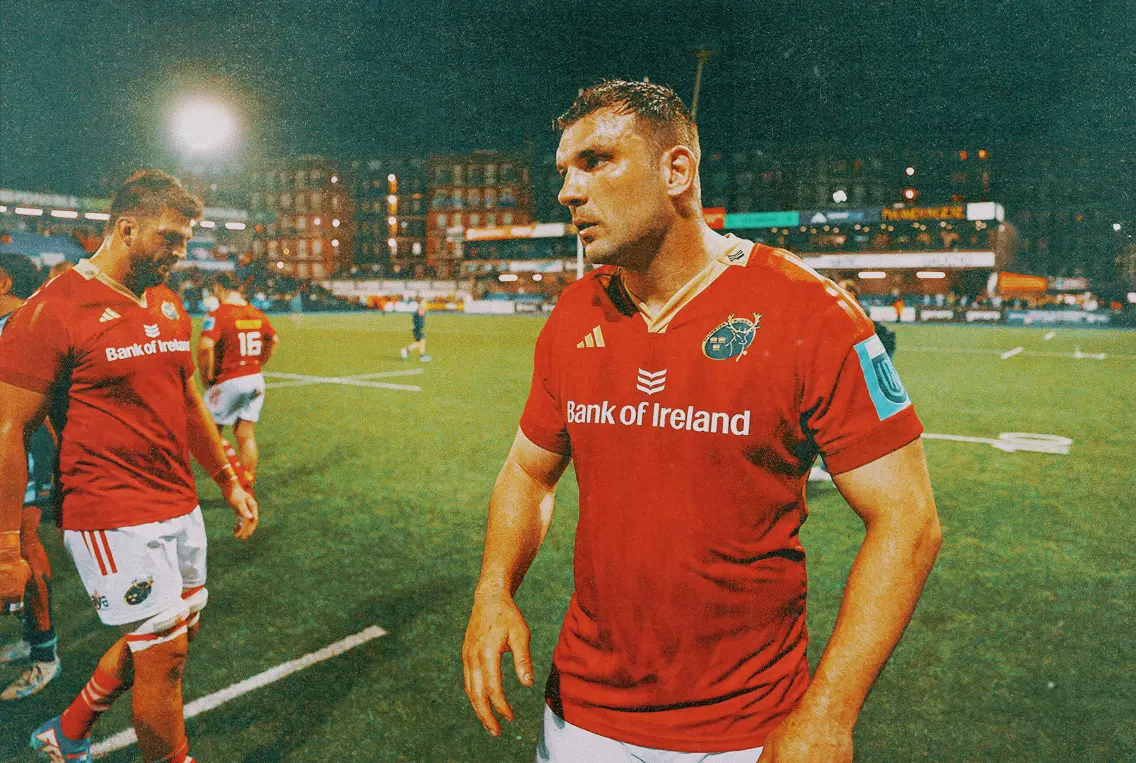
That is not an easy environment to work in. In a way, you’re almost better off not thinking about it too much and what it means, because it’s a no-win scenario, but with a win and a loss very much attached to it.
For Munster, the last two weeks will have been spent getting away from rugby after a draining run of away games with only a shockingly attritional match against the Bulls in a wet and slippy Thomond Park to try and pull out of the nose dive. I mentioned it before the Cardiff game, but it bears repeating: Munster played six games in six weeks, with five of those being away from home against teams scratching and clawing for their lives.
For context, I think the easiest game in that run was away to Glasgow.
So, by the time Cardiff rolled around, that Munster side looked wrecked. And they duly lost in the way a wrecked and withered team would, with sloppy handling errors, brutal set-piece failures, and an attack that looked like it hadn’t been on the go for five weeks in a row before that.
Ulster, on the other hand, looked a lot fresher in their weird loss to the Sharks, which looked like a bonus point win for around 60 minutes before somehow finding a way to lose. Their lack of depth struck right when the Durbanites turned up the heat in the pack.
That’s been a story of Ulster’s season, Munster’s season and Connacht’s season, now that I think about it.
Something will have to give in Thomond Park this Friday night. One club will leave with the bare minimum expectation for the season all but confirmed, one will leave with a sense of existential panic.
I know what one I’d prefer.
Munster: 15. Thaakir Abrahams; 14. Calvin Nash, 13. Tom Farrell, 12. Alex Nankivell, 11. Diarmuid Kilgallen; 10. Jack Crowley, 9. Craig Casey; 1. Michael Milne, 2. Niall Scannell, 3. Stephen Archer; 4. Jean Kleyn, 5. Tadhg Beirne (c); 6. Peter O’Mahony, 7. John Hodnett, 8. Gavin Coombes.
Replacements: 16. Lee Barron, 17. Josh Wycherley, 18. John Ryan, 19. Fineen Wycherley, 20. Tom Ahern, 21. Conor Murray, 22. Seán O’Brien, 23. Alex Kendellen.
Ulster: 15. Michael Lowry; 14. Rob Balocoune, 13. Jude Postelthwaithe, 12. Stuart McCloskey, 11. Jacob Stockdale; 10. Jack Murphy, 9. Nathan Doak; 1. Andrew Warwick, 2. Rob Herring, 3. Scott Wilson; 4. Iain Henderson (c), 5. Cormac Izuchukwu; 6. Matty Rea, 7. Nick Timoney, 8. James McNabney
Replacements: 16. Tom Stewart, 17. Callum Reid, 18. Tom O’Toole, 19. Alan O’Connor, 20. David McCann, 21. Dave Shanahan, 22. Stewart Moore, 23. Werner Kok
Looking at Ulster, you see a few trends this season when it comes to their wins and losses.
As you’d expect from a Richie Murphy side, they sit firmly in the counter-transition playstyle bracket and have looked really effective this season when they’ve been able to get Jacob Stockdale away on kick-returns, in particular. There is a general trend of losing games against teams who outkick them by volume, and even their narrow wins over Stormers and Dragons have this feature. However, not all kicks are created equally. In their loss to the Sharks last time out, Ulster kicked more frequently and had a lower kick to pass ratio, but I noticed a pretty clear relationship between the Sharks’ kicking short and contestable in the first half, and losing, before going to a longer kicking game in the second half; hauling in a 19-5 deficit in the process.
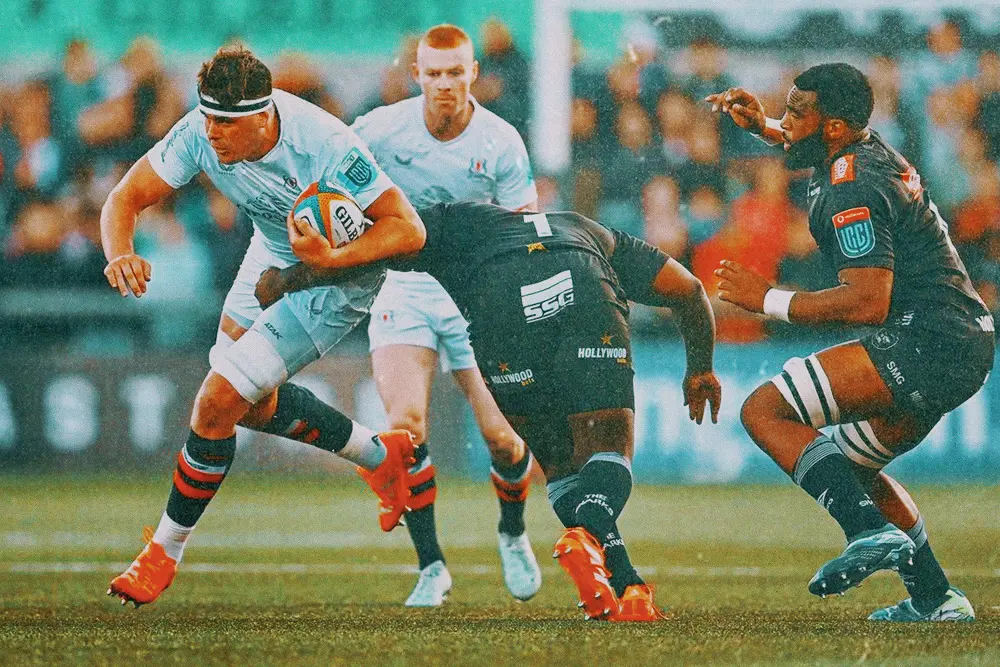
Ulster’s lead in that game came from executing transitions against a sloppy Sharks side, who gave them too much to work with with their initial shorter kicking. I think kicking contestably against Ulster to unlock maybe a few extra scrums against what has been a wobbly part of their game this season is tempting, but I think it’s a losing strategy or, at the very least, one that includes a lot more potential anxiety than we’d like to risk.
This example is a very deliberate one because it’s a poor box kick and a poor chase, but look at how Stockdale takes this and uses that size and initial acceleration of his to burst through the first line of transition cover.
That can, and will, happen to us if we give him or Balocoune that type of ball to run onto. It doesn’t mean “instant loss” if you choose to kick short, it’s just that I feel it opens up an area where Ulster are immediately very, very good.
When you approach Ulster with a longer kicking game you, of course, run the risk of their back three getting a decent run up against transition defenders, but if you get hands on them, Ulster’s attack immediately degrades in phase play;
Ward does well initially, makes ground up the tramlines, but once that ruck settles down, Ulster look predictable and wobbly, as if their pass quality from halfback, in particular, holds them back. That said, guys like McNabney, Wilson and Timoney are punchy ball carriers in the middle space so we’ll need to make sure we nail those contacts.
Longer kicking, especially to Lowry and Baloucoune, could lead to some incremental lineout gains. I know, I know – the lineout. I haven’t mentioned it until now because it’s been such a wipeout in the previous three games that very little about it can be taken as a given.
Can we nail the basics? We have to allow for the fact that Ulster, like everyone else, will have seen the last three games and decided that they can do what UBB, the Bulls and Cardiff did. We will have to live with that pressure because if we can, we can get at Ulster on multi-phase post-lineout (and scrum).
When you get to phase three or four of the post-set piece possession, multiple tight carries in alternating directions opens up consistent gaps in Ulster’s pillar and push defence.
The transit of their front five across the face of the ruck is rife for Casey to exploit with either a direct snipe himself or a late arriving runner close to the ruck. Ulster have a tendency to overchase big dominant hits and leave too much space in behind that defensive push relative to the previous ruck. If Munster can exploit that, as well as Ulster’s issues around defensive maul – again, we need to actually retain lineouts to do this – there will be scores there all day for us.
