


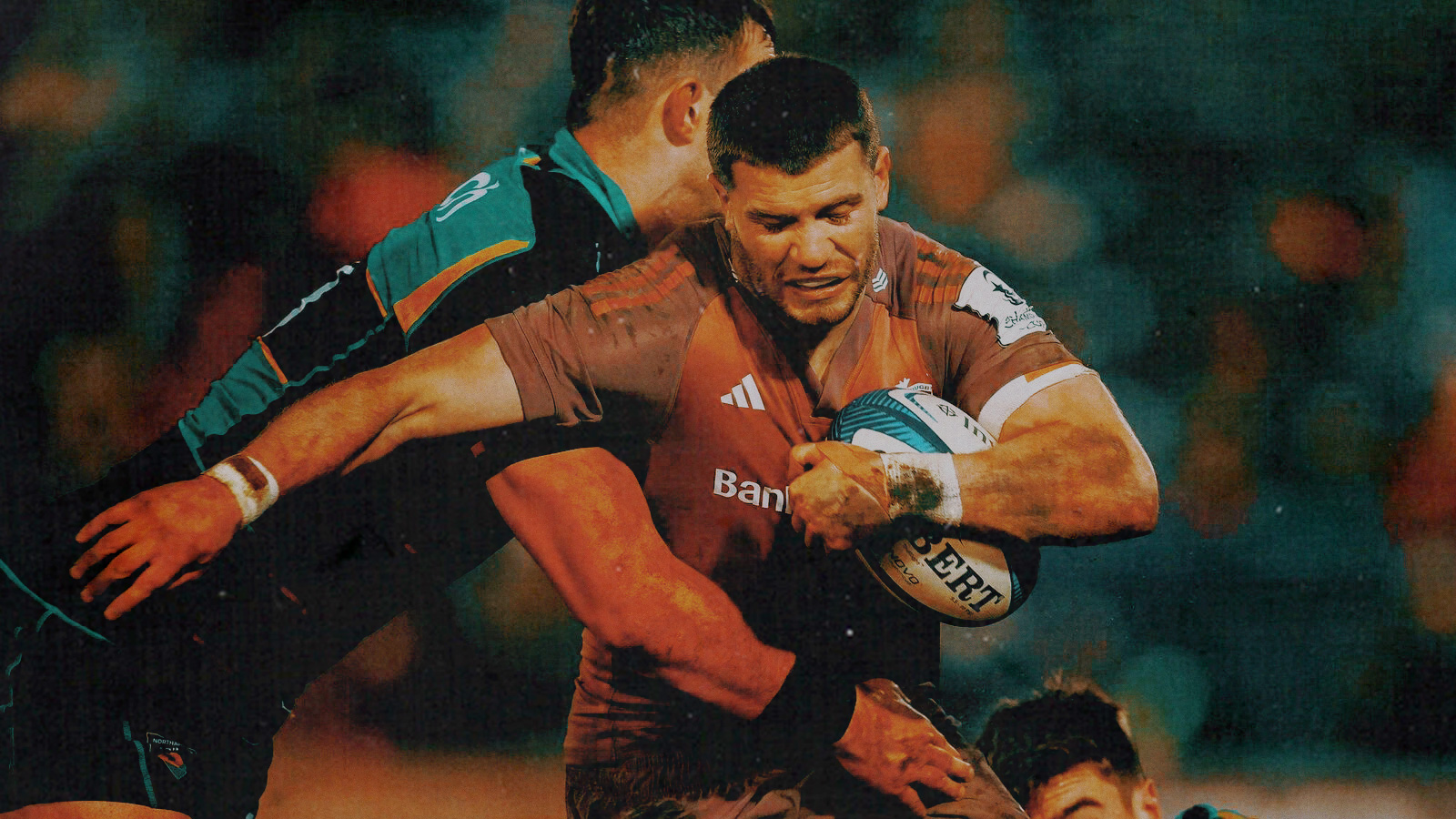
There’s an argument to be made that this week’s game in Newport away to the Dragons is more important than last weekend’s game away to Northampton.
I won’t be making that argument but I’m acknowledging that an argument could be made. Quite simply, Munster must start getting wins on the board and not just any old wins – five-pointers. At the moment, we’re currently 11th but really, we’re actually 12th as the Lions have two games in hand and are two points behind us. As I went into in an article earlier this month, part of our current positioning is down to a challenging schedule in the first half of the season with a tour versus two fully loaded South African teams in South Africa (including the Sharkboks), played Leinster twice, Ulster away and Connacht on the first day of the season all during an injury crisis that oscillated between catastrophic and slightly less catastrophic as the weeks and rounds progressed.
But it’s not just all schedule and injuries; we haven’t been playing well consistently. You might say that playing well consistently means having most of the team you drew up as being your best one in July being able to play most of your tentpole games – and you’d be right – but the facts are the facts. We’ve conceded the second most points of any team in the URC this season so far. The #1 side on that list? The Dragons, who we play this Saturday.
They have only one win in the URC all season and are at the bottom of the log. We must start the second half of our season with a win here, or making the top eight will become incredibly difficult.
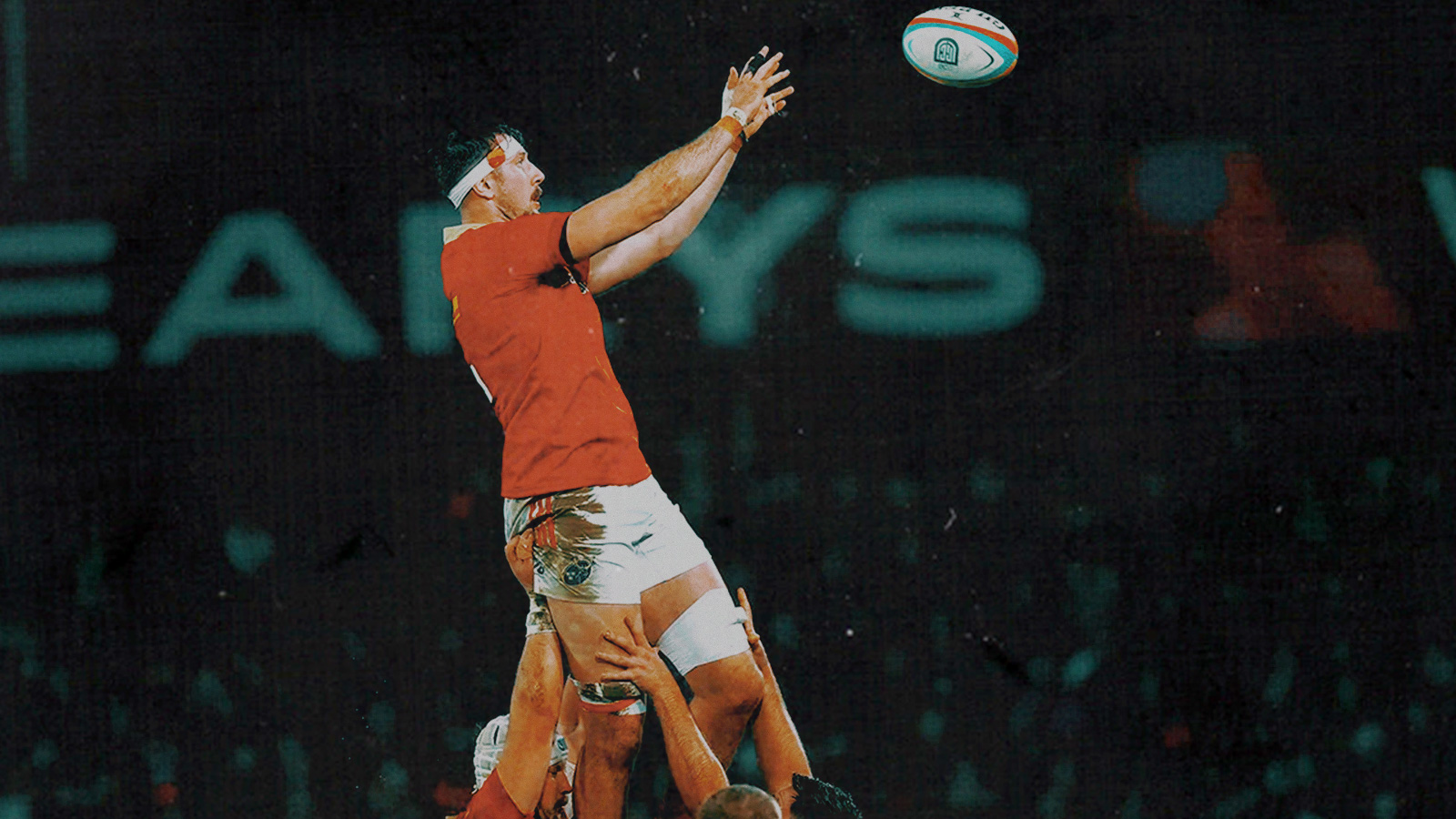
That brings us back to the slow poison seeping into our URC campaign so far—the loss to Zebre. Nothing embodies the woes of the first half of the season like that game in Parma. Almost everything negative about this season started from that dire performance. If we’d snuck a win in that game, we’d be fifth even if every other game played out exactly the same. We came into that game disrupted by injuries – and got stung by two more early in the contest – but the parallels are there for this week if we’re not careful.
After this game, we have three weeks off followed by two home league games in the entirety of February against two sides sure to be disrupted by test call-ups. One of the few upsides to Munster’s lack of representation in the current Irish squad is that we have many of our top guys available for the next five games against opponents who will not.
Twenty-five points are on offer during a period when results will be unpredictable; we know what is required.
And it starts here.
Munster: 15. Ben O’Connor; 14. Diarmuid Kilgallen, 13. Tom Farrell, 12. Rory Scannell, 11. Shane Daly; 10. Billy Burns, 9. Ethan Coughlan; 1. Dian Bleuler, 2. Diarmuid Barron, 3. Oli Jager; 4. Fineen Wycherley, 5. Tom Ahern; 6. Jack O’Donoghue (c), 7. Alex Kendellen, 8. Gavin Coombes.
Replacements: 16. Danny Sheahan, 17. Kieran Ryan, 18. John Ryan, 19. Evan O’Connell, 20. Brian Gleeson, 21. Paddy Patterson, 22. Tony Butler, 23. John Hodnett.
Dragons RFC: 15. Huw Anderson, 14. Rio Dyer, 13. Aneurin Owen (c), 12. Harri Ackerman, 11. Jared Rosser, 10. Lloyd Evans, 9. Morgan Lloyd; 1. Rodrigo Martinez, 2. Brodie Coghlan, 3. Chris Coleman, 4. Joe Davies, 5. Ryan Woodman, 6. Shane Lewis-Hughes, 7. Dan Lydiate, 8. Taine Basham
Replacements: 16. James Benjamin, 17. Dylan Kelleher-Griffiths, 18. Paula Latu, 19. Barny Langton-Cryer, 20. George Young, 21. Dane Blacker, 22. Will Reed, 23. Harry Wilson
Why are the Dragons where they are?
Same reason as us; they can’t stop conceding from entries into the 22. Not only that, they struggle to gain entries to the opposition’s 22 and really struggle to convert once they are there. The Dragons are ranked in the bottom ten Europe-wide for 22 entries gained and conversion. To put it simply, they are conceding too many tries and scoring too little in return. Can I shock you? When you do that across a season you won’t win many games.
Munster’s issue this season has been our defensive work without question. It’s hard to point a finger on why it is directly. As defence coach, Denis Leamy has had a few pointed at him but I’m not sure that fully scans. Munster had one of the best defences in Europe last season and the year before. So what’s changed?
Statistically, we’re actually doing better this season in some metrics like tackle success rate and, in particular, the number of missed tackles that lead to a line break. Last season, 20.1% of our missed tackles lead to a linebreak. This season, it’s 14%. Last season we were the best team in Europe for denying the opposition team’s 22 entries. This year, we’re still in the top four in Europe.
But this is where the problems begin. In 2023/24, we conceded the fewest 22 entries per game on average in Europe. Not only that, but we only conceded a try on 30.4% of those, which was the fifth-best in Europe. Put simply, we barely conceded any 22 entries at all, and when we did, we usually didn’t concede a try.
This season, we’re conceding 50.1% of the time, which is the worst in Europe. Fifth best to rock bottom – that’s the killer problem.
Our offensive work is better. We’re gaining more metres, offloading more and scoring more tries per game.
We scored an average of 3.35 tries per game last season in the URC and this season it’s 3.4 tries per game with only four games played at home. Why is that important? Teams score the majority of their points in home games so, on average, we’re outperforming last season on the offensive side of the ball.
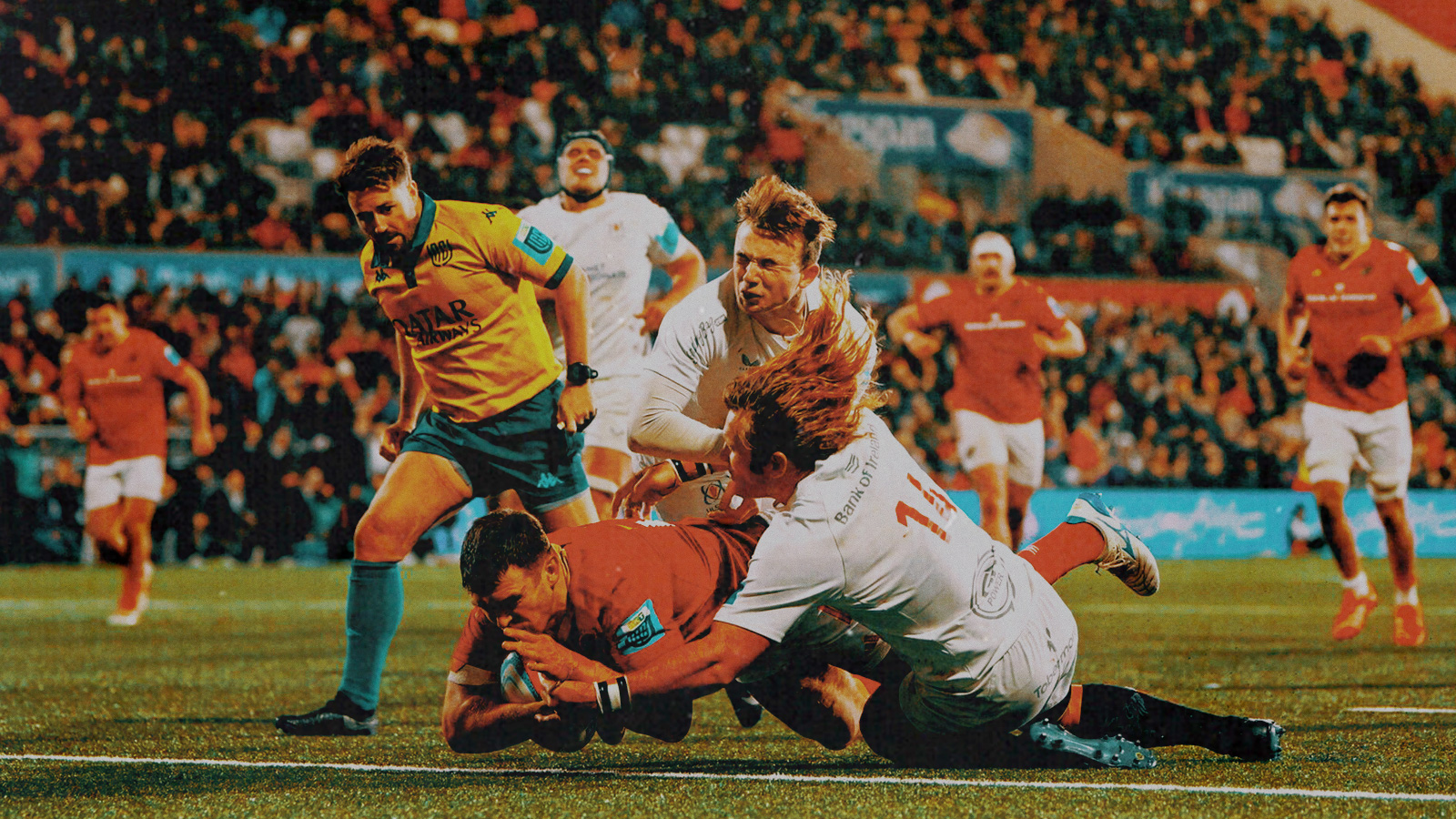
The only problem is the defensive side of the ball, particularly inside the 22. What’s the reason there? I think it’s as simple as this; for most of the season, we haven’t been making dominant defensive stops in this area of the field primarily because most of the squad defending those tight zones are maybe two or three years past their physical prime. If we keep teams out of the 22, we usually win. If they get more than seven entries, we normally lose.
So what can we expect from the Dragons? Kicking, and lots of it.
They kick the most by volume and distance in the URC. In concept, they are attempting to do the same thing that the Ospreys did under Toby Booth a few years ago. Strip their game back, focus on gaining territory using kicking, harass opposition kick receipt and transition with your wings, midfield and small forward build back row, hunt for turnovers and then focus on attack off the set piece as the primary point-scoring vehicle.
You will often see them start a transition sequence like this, with this kind of kicking distance as standard;
The aim isn’t to contest directly under the high ball – although they will try this off contestables from #10 – but to move the ball high up the pitch and shut down the opposition’s transition game through the chasing action of their backline. All their outside backs follow that profile of being around 5’10”, 90kg and quick. When it works well, the two small forwards they will always stack in their back row can make tackles at speed and force turnovers but this week, they don’t have that double-small forward build. That is an opportunity.
From any kind of range, the Dragons will always try to kick and they’ll usually use their scrumhalf to ping long-range skid kicks into the backfield hunting for 50/22s.
Of course, that matches up incredibly well with Munster’s attacking game this season. Munster are top four in Europe for tries scored on kick return this season, and provide a uniquely dangerous threat to the way Dragons play this season.
When Dragons kick long – as they almost certainly will – Munster have the weapons in the tramlines to hurt them directly and on phase two or three. Look for a crossfield kick to find Ahern or Kilgallen directly, as well as Munster offloading beyond the Dragons’ pressing line. They are without key parts of their usual back five mainstays so there are opportunities to catch them directly off the pass inside from the wing. Look for Kilgallen or O’Connor to target Lydiate and Lewis-Hughes on those transition run backs.
