


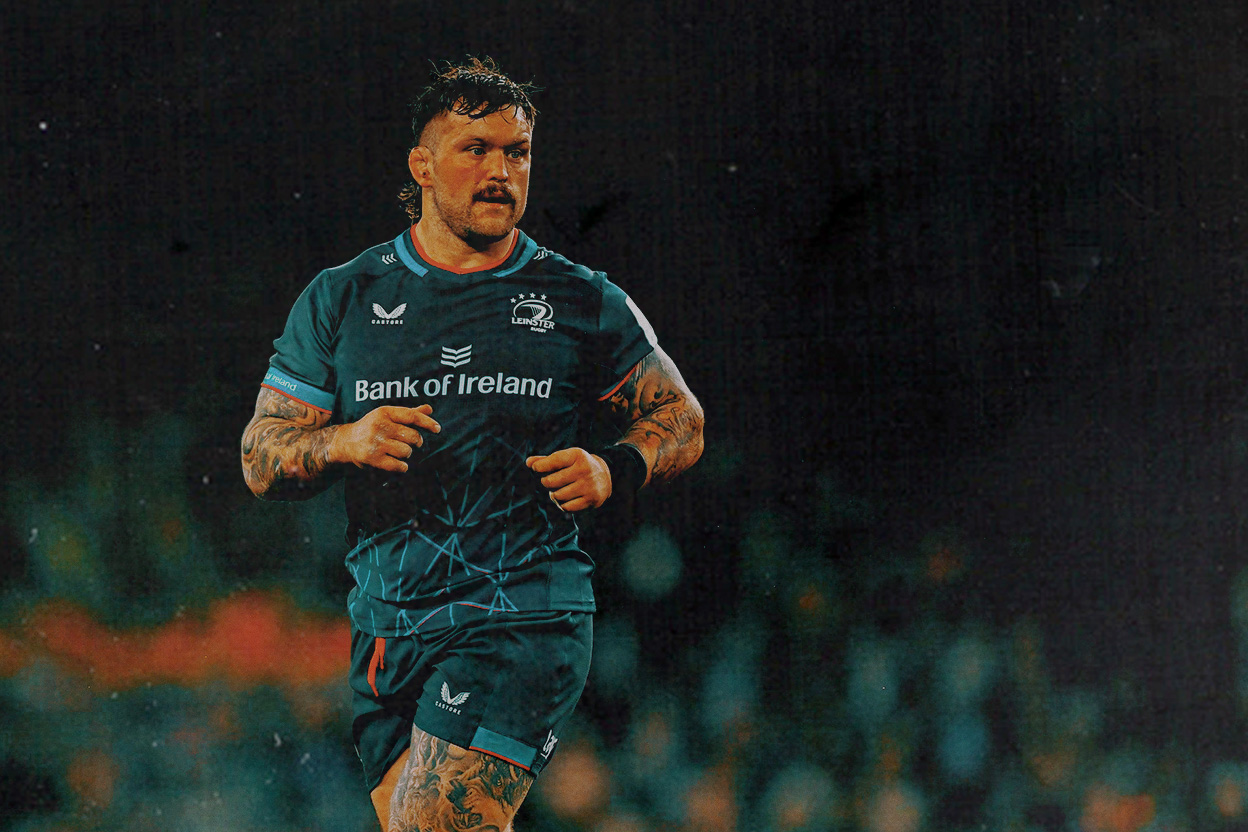
“We are offensive linemen, part of the O-line. Five guys working as a unit within the football team to establish the tempo and demeanor of the game. Our job description doesn’t sound fun, interesting, or flashy, nor should it. Those who know football know the game is won or lost in the trenches, along the line. We start the play and if we are good we finish it. We are the O-Line, we set the examples, we lead from the front.”
—Grey Ruegamer (Offensive lineman for the New York Giants)
You’ll win absolutely nothing without a good tight five in 2025.
The same thing was true in 2005. The same thing was probably true in 1925. When you talk about the tight five, though, many people’s thoughts go straight to the scrum which, while important, is almost too interpretation-dependent to focus on as a true point of difference these days. I watched two Leinster props pull down the scrum on the loosehead side for 80 minutes in Thomond Park a few weeks ago and almost every penalty went the other way so the only logical thing to assume is that every referee is different so you can only control your own focus in training.
I have said in the past and it’s still true that a bad scrum can be mitigated by a relatively decent defensive lineout and maul in the modern game.
What cannot be mitigated is a tight five that doesn’t repel the opposition in the tight exchanges or knock them backwards when in possession at the level you aspire to play at. It doesn’t matter if it’s J2, AIL 2C, AIL 1A, URC or test level; you won’t win much of anything if you don’t have a tight five that can lever the opposition where you want them to.
Back in 2022/23, Munster won a URC by playing the heaviest front five we had available for most of the final. Peter O’Mahony’s injury in the first half an hour meant that we played the following pack for the majority of the game;
Loughman/Barron/Archer
Snyman/Kleyn
Beirne/Coombes/Hodnett
Wycherley/Scannell/Salanoa
Kendellen
That’s probably the most fit-for-purpose pack and tight five we’ve been able to field in a serious game in the last five years. It had appropriate size, weight, and power—never mind other more nebulous mental attributes, for the full 80 minutes.
From a build perspective, Snyman and Kleyn playing in the second row together for the majority of this game acted as level-raisers for the rest of the pack and it’s not a surprise to me that we’ve not been able to produce anything close to the same level of performance consistently without them as Kleyn has been injured pretty much since late 2023 and Snyman has been sipping coffees in Sandymount since the summer.
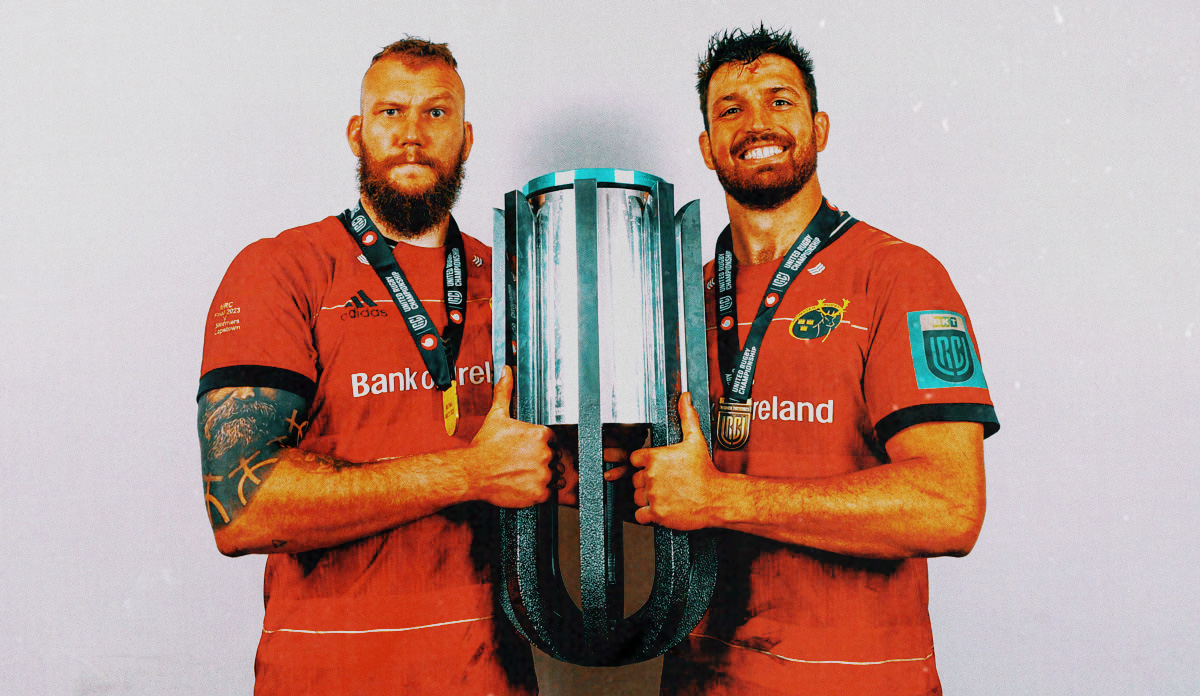
The pack we’ve been looking at for most of the last 18 months has been playing without these two structural level raisers in the tight five in a way that’s been hard to quantify fully. Munster’s loss of Snyman to Leinster – entirely down to Nucifora’s insistence on picking between the two, as both Munster and Snyman wanted another contract – was extra painful because of his loss to the team in the aggregate.
As we saw late last season, Snyman on his own was not a level-raiser for this Munster side; it was his partnership with Kleyn and our potential ability to deploy the two together. That is what Van Graan intended when he signed Snyman initially and when we managed to play them both together – one year after Van Graan left – we looked like an entirely more formidable opponent for any side in Europe.
Compensating
Without them, we have had to make do with undersized packs, almost by default. Against Leinster in December, we fielded a front five with only one player weighing over 120kg – Oli Jager, who is himself working back to full fitness after a neck injury that kept him out for two months earlier in the season.
Everyone else, both starting and on the bench, weighed well below that benchmark. Part of this is due to injury, of course. Kleyn, Salanoa and Edogbo would all have been involved in this game if fit but it reflects where a lot of our issues have lain in the last 18 months.
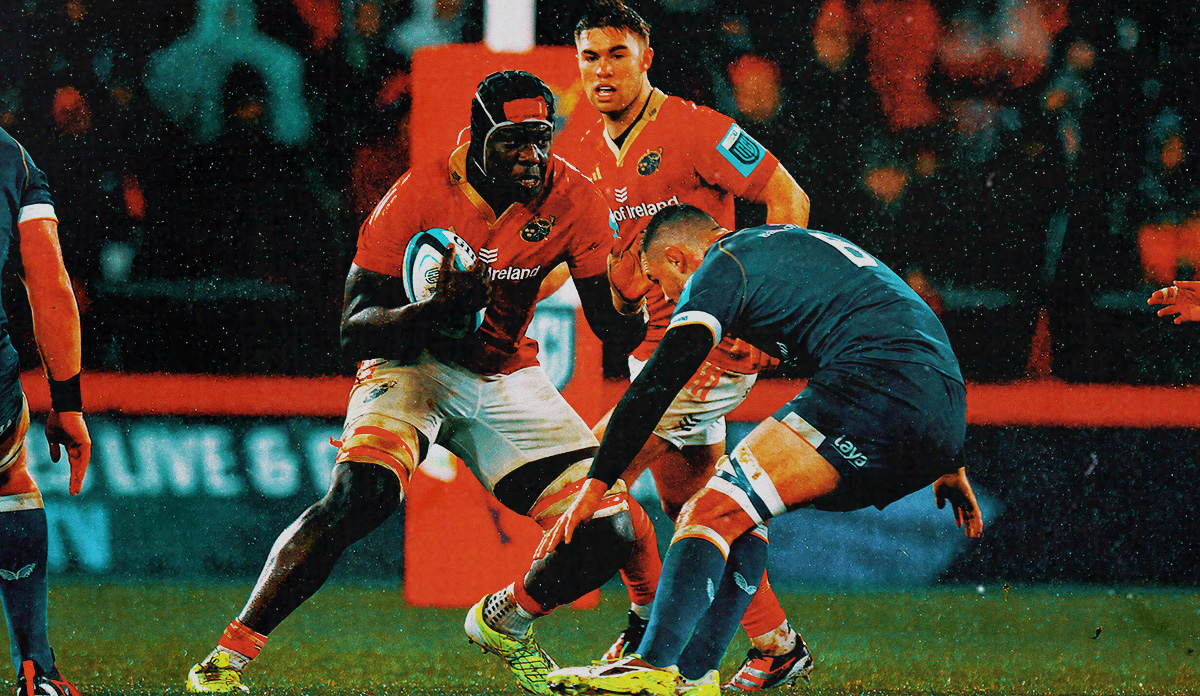
Weight here is really a catch-all word for “power”. In a very simple way of speaking, the more guys you have playing as close to 120kg and above as possible while still retaining an ability to move around the pitch with any kind of speed, the better your team will be at this sport and the better your playing platform.
With the loss of Snyman last summer, the obvious place for Munster to recruit was in the front five either with a role-for-role replacement of Snyman himself or by signing other players with a similar power profile at either prop or hooker. This was not possible under David Nucifora’s system, so we did what we’ve been doing for a while; trying to compensate for a lack of power in the centre with pace at the edges.
What does this mean?
Well, if you don’t have the power to play with simplicity in the tight spaces closest to the ruck, it’s possible to compensate by using a layered, high Pass-Per-Carry system to get the ball to the edges of the field where, if you have enough pace, you can get soft metre gains.
This season Munster have always used a high Pass Per Carry game to attempt to get around the outside of a bigger opponent, with mixed results. Every time you pass the ball, you complicate the game and bring turnovers into play but that is the risk that Munster have had to take to compete. When you don’t have the size and power you need, you have to take these risks.
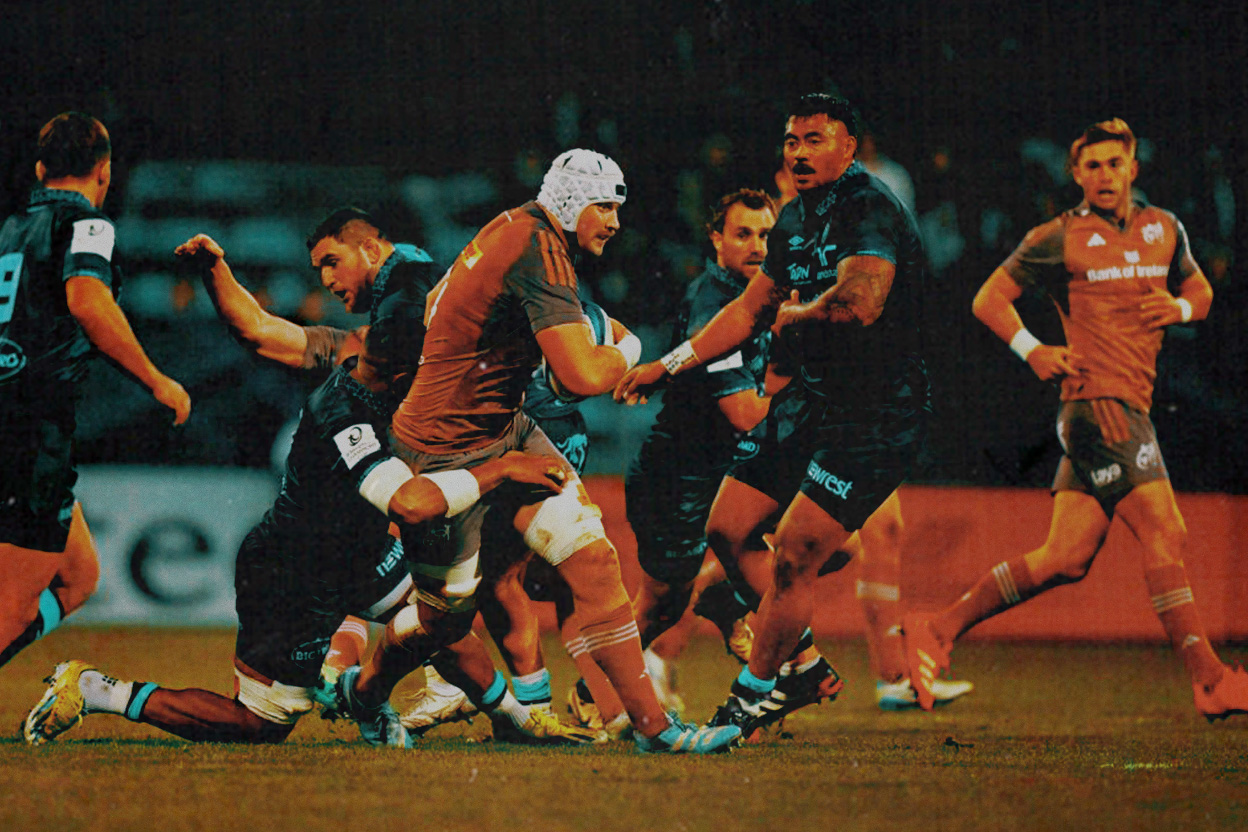
Fineen Wycherley is a good example of what I’m talking about. He’s listed at 6’4″ and 110kg, which would put him closer to a back row in the modern game from a size perspective than lock but injuries have been an issue in the second row at Munster for years so he’s had to fill in there.
He’s a good player, who has improved stuff like his passing and even added on some badly needed size in the last two years, but found himself overmatched physically by most of Leinster’s back five, never mind his direct opposition in the second row. You could say the same for Tadhg Beirne, to be honest.
This is a good example; look at the fundamentals here. Beirne is stopped at pace by Ronan Kelleher and primarily Robbie Henshaw, with Munster losing two further players to the ensuing ruck and only just making the gainline from the previous ruck.
In Beirne’s defence, Rory Scannell is running outside him in this pod and is not really anything for the Leinster defence to worry about from either a power or pace perspective, so that allows Leinster to load up a little heavier on the tackle. Even so, this is our problem in microcosm in that we lost momentum on this carry so the release passes to the edge were always slightly behind and inside Leinster’s blitz.
One of our locks getting primarily stopped and slowed by a Leinster midfielder here – yes, both Scannells clear this out badly but stay with me here – like this;
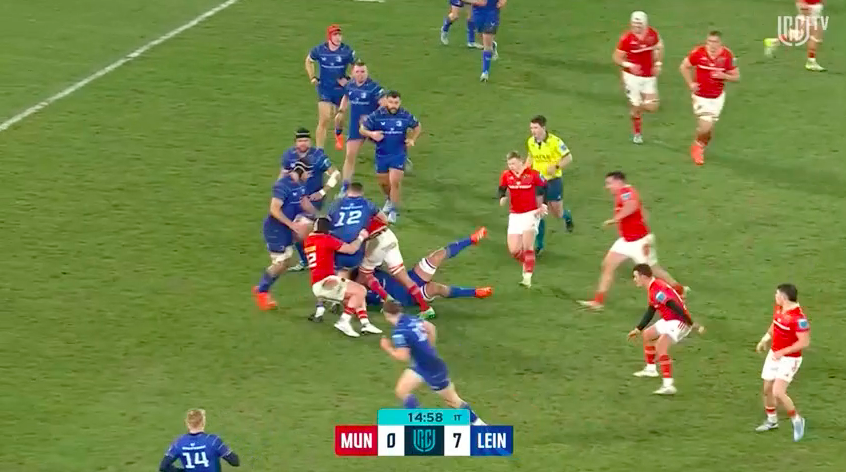
Directly relates to this pass from Farrell being slightly hurried, slightly flat and completely covered by Tommy O’Brien to the point that even if Haley is slightly quicker, he’s still probably tackled.
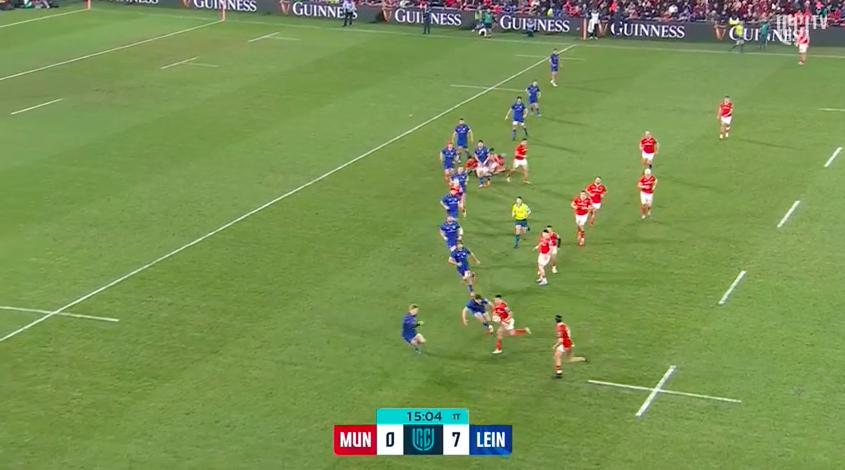
When you are trying to play a primarily on-ball style of rugby as Munster are, you can’t play light in the front five. I think you have to play heavier than an off-ball team like Leinster do, in reality, to consistently beat them. When you play lighter than them, you are always hurt more by turnovers and more prone to them.
Leinster’s pack build and front five in particular is focused on defence and converting from close range. Compare the power and drive in both attack and defence on this five-metre tap-and-go sequence…
… to this one.
There is no comparison, in reality, because this is the sequence Leinster are currently conditioned to execute. Yes, Munster’s work latching and driving could be better, absolutely, but at a fundamental level, you’re dealing with different calibre athletes in almost every phase of these two drives.
Tortured NFL Analogy
The easy comparison from the NFL to rugby would be the #10/quarterback comparison. I’ve always thought that the quarterback is more of an amalgamation of rugby’s halfbacks, to be honest, than just a straight swap for the #10 but that’s how you end up comparing these cousin sports when it gets down to it.
In the same way, I think your tight five is an amalgamation of an offensive and defensive line. You could make an argument that, after quarterback, there’s no area of an NFL team that’s more important than your offensive and defensive lines. Without a good offensive line, your quarterback has no platform to play. Without a good defensive line, the opposition moves you around at will.
How far does your tight five oscillate on that offensive/defensive line spectrum? It depends on your chosen game state.
Leinster are primarily an off-ball team these days and their pack build fully reflects that so they lean more on defensive stopping power rather than offensive fireworks. Until Munster can get more power in the front five, we’ll struggle to impact a team with Leinster’s build.
That means getting Edogbo, Kleyn AND Salanoa back this season, but also recruiting well this season for next year if we’re sticking with this style.
The clock is ticking.
