


“You fabulous thing. You crawled out of a pitiless grave, deeper than Hell. Only one thing that is going to do that for you. Not hope. Hate. No shame in hate. It’s one of the greatest forces of nature.”
— Dementus, Furiosa: A Mad Max Saga
We always know where we stand with Castres.
They hate us, we hate them. It’s simple. There’s a purity to it where neither club has to bullshit the other with #respect or corny social media posts. This hate runs deep – back to 2002 – and we’ve both had plenty of opportunities to air that hatred since in what has become the most-played European fixture.
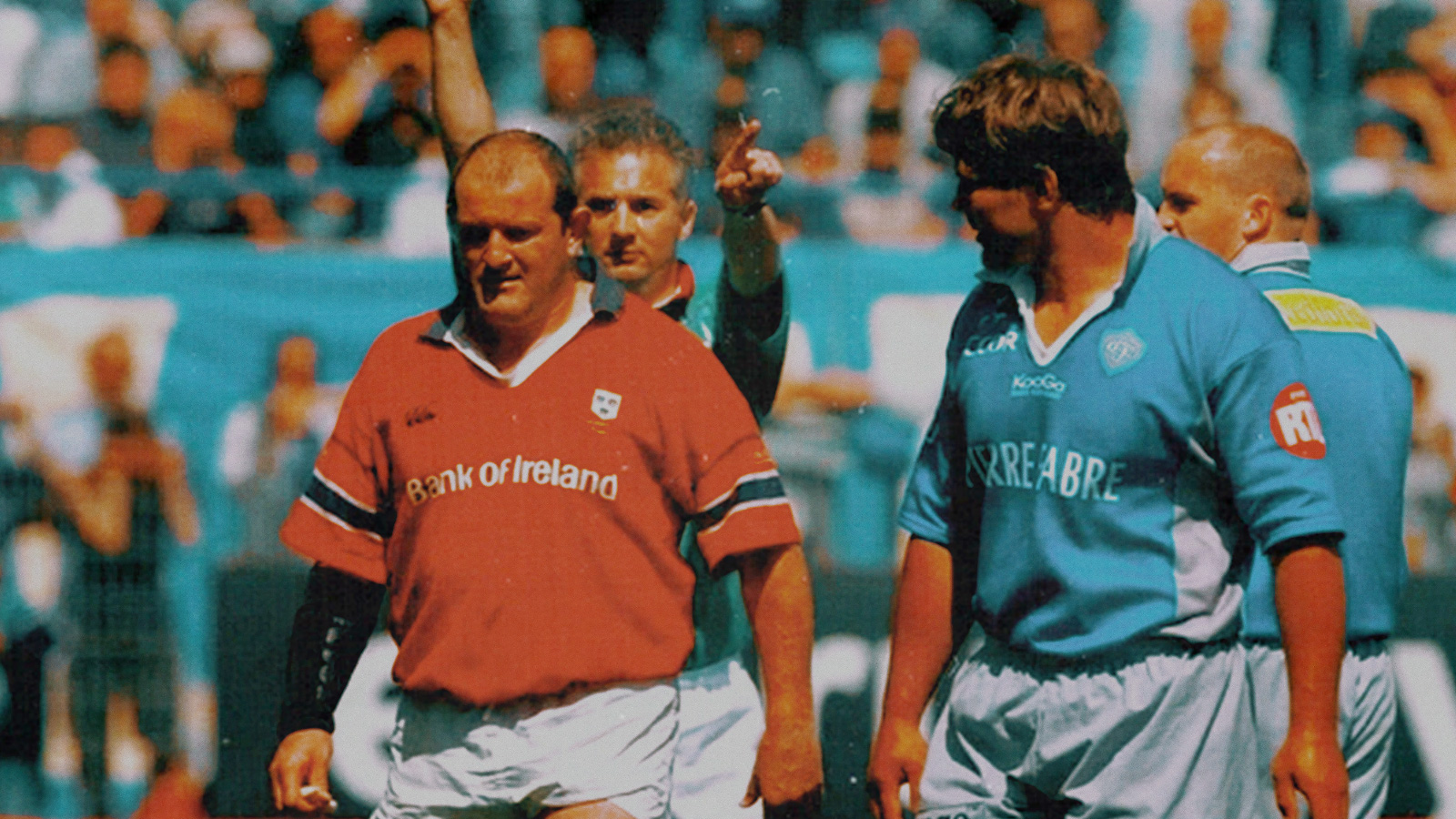
The last time we played them in Europe, we won, all the way back during the height of the pandemic. This isn’t that long ago, but it feels long enough to give this rivalry a bit of freshness. We haven’t had to hate Castres directly in so long that picking it up again this December feels like finding an old Irish £5 note in an old wallet; of no real use, but still somewhat valuable if you want to go to the bother of doing something with it.
It reminds you of times gone by. The Claw getting bitten. Claw and Brent Moyle boxing the heads off each other a few months later in a knockout game, pun half intended. O’Gara’s drop goal at the death in 2011. Peter O’Mahony telling Rory Kockott to “fuck off” in Thomond Park.

Chris Cloete getting gouged and O’Mahony getting tip-tackled a week later. Sam Arnold getting punched (twice) in the same game. And then in 2022, a niggly penalty fest in Thomond Park was followed up a week later by Jack Crowley starting his first game in Europe and Gavin Coombes scoring a winner at the death, which he followed up by glaring into the crowd with the kind of fuck you intensity worthy of this type of game against this kind of opponent.
Castres have come under a fair bit of scrutiny in the last two weeks after back-to-back hefty losses on the road to Clermont and Northampton but this misunderstands what Castres are trying to do. This is a team that focuses all of their regular season energy on every single one of their home games and on the away games they would reasonably be expected to win.
So yeah, they’ll send a rotated team to Clermont. Yes, they’ll half-ass an away game against Northampton.
But that isn’t the team Munster will be playing on Friday night.
Castres are the perfect embodiment of being either 3rd in the TOP14 or 7th in the TOP14 depending on where in their cycle they are. Think of a team that’s 7th in the TOP14. Picture them in your head. Are you seeing Castres? You should because they’re in the 7th in the TOP14 right now with everything you’d expect in that position.
Six home wins out of six, five away losses out of five. But that doesn’t tell the whole story either; all of those home games have an average winning margin of just over 8 points. Barely over a score. So we know what we’re going to get from them – fully loaded, their heaviest forward build, their best game and all of their hatred.
We’ve earned it. For Munster, the equations are quite simple. A win of any colour here would make a home knockout run a distinct possibility. Every single year in the recent European Cup format, 15 points has been enough for a home R16 game. That’s what we have to be chasing.
We already have five points in the bag and a win here would put us right where we want to be. Even a losing bonus point or two would be useful but, long story short, we have to leave here with something.
Munster: 15. Mike Haley; 14. Calvin Nash, 13. Tom Farrell, 12. Alex Nankivell, 11. Thaakir Abrahams; 10. Jack Crowley, 9. Craig Casey; 1. Dian Bleuler, 2. Niall Scannell, 3. Stephen Archer; 4. Fineen Wycherley, 5. Tadhg Beirne (c); 6. Peter O’Mahony, 7. John Hodnett, 8. Brian Gleeson
Replacements: 16. Diarmuid Barron, 17. Dave Kilcoyne, 18. Oli Jager, 19. Tom Ahern, 20. Alex Kendellen, 21. Paddy Patterson, 22. Rory Scannell, 23. Jack O’Donoghue.
Castres Olympique: 15. Julien Dumora; 14. Geoffrey Palis, 13. Jack Goodhue, 12. Andrea Cocagi, 11. Rémy Baget; 10. Louis le Brun, 9. Jeremy Fernandez; 1. Quentin Walcker, 2. Gaetan Barlot, 3. Will Collier; 4. Gauthier Maravat, 5. Leone Nakarawa; 6. Mathieu Babillot (c), 7. Tyler Ardron, 8. Abraham Papalii
Replacements: 16. Loris Zarantonello, 17. Wayan de Benedittis, 18. Nicolas Corato, 19. Paul Jedrasiak, 20. Feibyan Tukino, 21. Santiago Arata, 22. Theo Chabouni, 23. Adrien Seguret
Everything about Castres is tight, narrow and heavy.
In a way, they’re the classic expression of Castres Olympique. They reflect the traditional values of the club down to a tee. A big heavy pack, a long kicking game, slick, pacey half-backs and an outside backline that is all about competence, hard work, hard tackling and efficiency.
They have an average Kick to Pass ratio at home against higher-status opponents of one kick for every 4.1 passes on average. I would class them as an off-ball team as a result and their attacking work on the Pass Per Carry scale rarely rises above 1.1 and most often hovers around 1.0. As you might expect, they look to jazz up this narrow attack with a heavy offloading game. Castres are top five in Europe for offloads that assisted a try/linebreak so look for that as a core part of their attacking work but are solidly middle of the pack for offload success.
What does this tell us? They throw a lot of offloads, more than 25% of them don’t work but they are very good at turning the ones that do into linebreaks.
They really do play extraordinarily narrow, though. They are in the top two in the whole of Europe for tight phases and in the bottom ten in Europe for plays that went wider than the first and second receivers. What does this tell us? Castres keep it very narrow in every phase of play other than the phases after a lineout or scrum.
This type of layered handling typically only happens after a heavy Papalii hit up off the lineout.
Getting our matchup on Papalii correct will be vital – do we use a chop tackler like Hodnett or an impact smash engine like Brian Gleeson? We’ll see.
Offensively, Castres give up a massive amount of 22 entries on average; they are fifth in Europe with 9.9 entries conceded on average but they’re in the top half of the European leagues for the percentage of these entries that they manage to avoid conceding tries on.
Leinster and Montpellier are the best in Europe for denying tries on 22 entries. Leinster, for example, only concede a try on 23.9% of the 22 Entries they concede which is freakishly good and, when matched with how efficient they are on the other end of the field – scoring a try 49.3% of the time when they get a 22 entry – you can see how they’ve started the season so well.
Castres have a similar defensive philosophy to Leinster in that they have a blitz focus but it’s not as narrow or as dual pronged as Neinaber’s system. They concede entries off the back of that philosophy but in different way to Leinster – as I’ll go over. Once they get any kind of stop on the ball inside the 22, they have the size and heft to make scoring difficult.
On defensive sequences in the centre of the field, however, they are prone to conceding middle line slips, especially when the scrumhalf can pass around 7.5/8m per pass with regularity. Look at how Hastoy creates this clean linebreak against the heavy middle-line defence of Castres.
Their two props guarding edge space with Papalii as the second last edge defender? Run Brian Gleeson at that space.
Their pack build in the back five is, essentially, four locks and a power forward with a heavyweight, scrum-first set of props with their hooker, essentially, acting as their small forward. They give up gaps in the middle space as they oscillate across the pitch and their selection of Andrea Cocagi limits the ability of their midfield to cover lateral space.
Look at what the width off #9 opens up here;
That carry off #10 puts a lot of strain on Nakawara and Babillot to fold across the face of the ruck; La Rochelle are not even moving that fast here and still get clear separation at the edge.
The other area where I think they’re vulnerable is on kick transition, specifically against Thaakir Abrahams. When they don’t kick high on him, they will kick long on the opposite side of the field. It’s vital that we spread the ball across the face of that heavy Castres defence and get Abrahams into the game from deep. If we can, he’ll score or cause a critical linebreak from which we can later score. It’s a big weakness in this Castres side and they give up moments like this constantly.
If we can stop their offloading game and keep our discipline, we can keep them hemmed in for long periods but they will kick to us quite a bit. Width, edge forwards and attacking that middle line of the defence could see us pick up a big win if we’re accurate.
