


Offensive Ruck Work scoring and Collective Offensive Ruck Work scoring shouldn’t be viewed as high number good, low number bad.
The annoying answer to the question of what makes up good scoring for a team or a player is that it depends. A high CORW number – all of the individual ORW scoring combined – is good for teams who want to play on-ball rugby. For a team that wants to play off-ball rugby, a high CORW score might indicate a game plan that isn’t working.
If I were the coach of an off-ball team, I think a CORW score of around 250-280 points per game would be optimal. It would show that my game plan is producing the right outcomes. For Munster at our best, I think as a baseline we need to be hitting 400+ and when we fall below 380, that is often linked directly to poor performances.
Our CORW score against Connacht was 367, against Zebre it was 275, against Leinster it was 354, against the Stormers it was 368. There’s a common trend here. Against the Sharks – a weird game by any stretch of the imagination – we were back in the 450s. But, as I hypothesized in the last Work Rate article, this is due to our rucking numbers being decent but that they were essentially resourcing poorer quality collisions.
So what’s changed in the post-Rowntree era? Quite a bit, as it happens. Let’s get into it.
Lions ORW Scoring – URC Round 7
| Dominant Clean | Guard Action | Attendance | Ineffective | Ruck Work Score | |
|---|---|---|---|---|---|
| 1. Bleuler | 2 | 19 | 1 | 42 | |
| 2. Barron | 2 | 18 | 2 | 44 | |
| 3. J. Ryan | 3 | 16 | 4 | 45 | |
| 4. O'Connell | 3 | 22 | 2 | 55 | |
| 5. Wycherley | 2 | 11 | 3 | 31 | |
| 6. O'Donoghue | 1 | 11 | 2 | 27 | |
| 7. Kendellen | 4 | 13 | 4 | 42 | |
| 8. Coombes | 2 | 10 | 1 | 27 | |
| 9. Coughlan | 1 | 1 | 5 | ||
| 10. Burns | 3 | 2 | 2 | ||
| 11. Abrahams | 2 | 8 | 1 | 23 | |
| 12. Nankivell | 2 | 14 | 34 | ||
| 13. Farrell | 10 | 2 | 1 | 20 | |
| 14. McCarthy | 2 | 4 | 14 | ||
| 15. Haley | 7 | 1 | 12 | ||
| 16. Scannell | 1 | 1 | 5 | ||
| 17. K. Ryan | 1 | 1 | 1 | 1 | |
| 18. Archer | 2 | 2 | 6 | ||
| 19. Quinn | 1 | 2 | |||
| 20. Hodnett | 1 | 3 | 1 | 10 | |
| 21. Patterson | 0 | ||||
| 22. Butler | 1 | -2 | |||
| 23. Daly | 2 | 4 |
Top Five ORW Scorers
- Evan O’Connell – 55 points
- John Ryan – 45 points
- Diarmuid Barron – 44 points
- Alex Kendellen/Dian Bleuler – 42 points
- Alex Nankivell – 34 points
Evan O’Connell’s competitive debut was the kind of stuff that genuinely I had to watch ruck-for-ruck. He was everywhere. He made 27 ruck entries in total, with zero ineffective entries. Every action was measured and accurate or helped to secure possession.
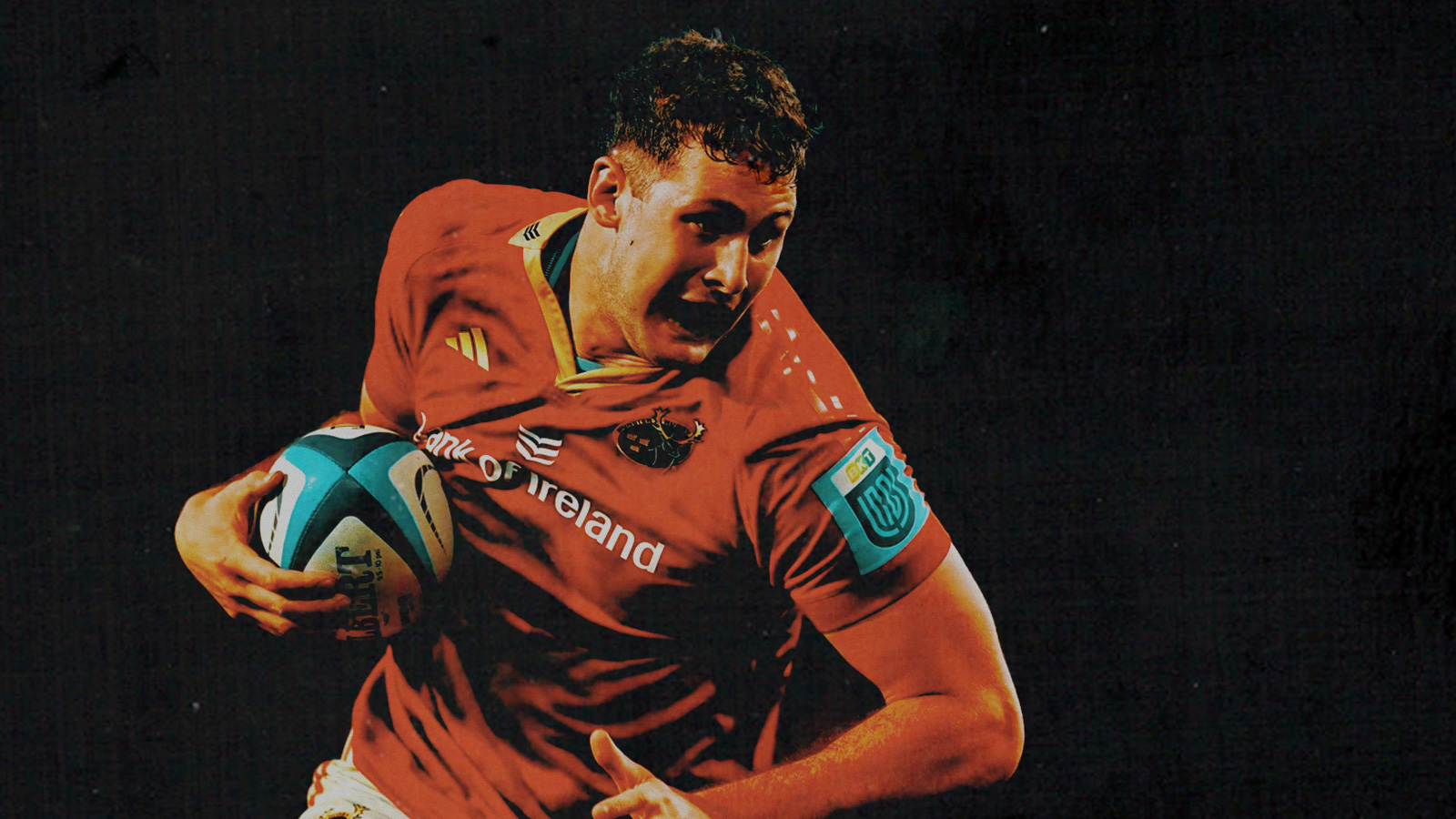
This kind of accuracy racks up and believe me, it’s not something that all young locks possess. They either don’t have the fitness to cover that much ground or they don’t have the game sense to be in the right place at the right time to secure possession. I had no idea how much better it would get but that’s for later in the article. John Ryan continued his excellent work from the previous round in South Africa against the Sharks, while Alex Kendellen showcased how vicious he could be in a slightly modified role that seems tailored to him, rather than filling in as a Hodnett-style strike wing forward on the edge. But again, more of that later.
Europe awaited, with a team of a similar size and defensive profile as the Lions.
Stade Français ORW Scoring – ECC Round 1
| Dominant Clean | Guard Action | Attendance | Ineffective | Ruck Work Score | |
|---|---|---|---|---|---|
| 1. Bleuler | 1 | 17 | 6 | 43 | |
| 2. Barron | 1 | 12 | 1 | 28 | |
| 3. J. Ryan | 1 | 23 | 4 | 53 | |
| 4. O'Connell | 2 | 26 | 1 | 56 | |
| 5. Wycherley | 2 | 25 | 4 | 1 | 58 |
| 6. O'Mahony | 2 | 16 | 38 | ||
| 7. Kendellen | 3 | 22 | 2 | 55 | |
| 8. Coombes | 15 | 1 | 31 | ||
| 9. Casey | 2 | 4 | |||
| 10. Crowley | 4 | 8 | |||
| 11. Abrahams | 3 | 6 | |||
| 12. Nankivell | 4 | 8 | |||
| 13. Farrell | 7 | 14 | |||
| 14. Nash | 6 | 12 | |||
| 15. Daly | 11 | 22 | |||
| 16. Scannell | 1 | 3 | 2 | 5 | |
| 17. K. Ryan | 0 | ||||
| 18. Archer | 3 | 2 | 1 | 6 | |
| 19. Beirne | 2 | 3 | 12 | ||
| 20. Hodnett | 4 | 8 | |||
| 21. Patterson | 0 | ||||
| 22. Burns | 1 | 2 | |||
| 23. O'Donoghue | 2 | 1 | 2 |
Top Five ORW Scorers
- Fineen Wycherley – 58 points
- Evan O’Connell – 56 points
- Alex Kendellen – 55 points
- John Ryan – 53 points
- Dian Bleuler – 43 points
Fineen Wycherley brought the pain with a brutalising performance at the breakdown but he, along with everyone else, was overshadowed by the 56 points earned by Evan O’Connell in just 51 minutes. He was earning around 1.75 points per entry in this game, which is elite-level ruck work at any standard.
That shouldn’t take from Wycherley’s performance, which was the best and most complete I’ve seen from him in his career to date and should be the kind of work that gets him into Irish contention if such a thing was possible.
He was joined by an outstanding performance by Alex Kendellen, who brutalised Stade in the close exchanges as he grew into the slightly narrower, tighter role that he has had post-November.
When we break down the ORW points per ruck entry, we see two of our most efficient performances of the season so far.
- Stade Français – 1.88 ORW points per ruck entry
- Lions – 1.89 ORW points per ruck entry
- Sharks – 1.82 ORW points per ruck entry
- Stormers – 1.87 ORW points per ruck entry
- Leinster – 1.83 ORW points per ruck entry
- Ospreys – 1.88 ORW points per ruck entry
- Zebre – 1.54 ORW points per ruck entry
- Connacht – 1.63 ORW points per ruck entry
On the Ruck Entries per Ruck metric, we showcased our best collision work of the season so far by having the lowest average number of ruck entries per collision point but, crucially, against teams who heavily contest at the breakdown.
- Stade Français – 2.2 Ruck Entries per Ruck
- Lions – 2.2 Ruck Entries per Ruck
- Sharks – 2.3 Ruck Entries per Ruck
- Stormers – 2.45 Ruck Entries per Ruck
- Leinster – 2.2 Ruck Entries per Ruck
- Ospreys – 2.64 ORW points per ruck entry
- Zebre – 2.3 Ruck Entries per Ruck
- Connacht – 2.61 Ruck Entries per Ruck
What does this mean? That we are winning collisions and, as a result, can resource rucks with fewer players which leaves more attacking options in the line. This is crucial for an on-ball team that want to take teams into the deep water with a high ball in play time, something that Ian Costello referenced directly in a Press Preview ahead of the Stade Français game last week.
Two weeks ago, our dominant ball-carrying was the second lowest in Europe at 26.4%. Now, two weeks later, that percentage has grown to 28.2%. A near 2% jump in two games relative to everyone else is massive and it’s almost completely down to two things;
Dian Bleuler’s work as a tight carrying option and the players that carrying volume has freed up as middle-line carriers as a result of it.
We have sacrificed a 2% percentage drop in gainline success with a 2% increase in carry dominance and, all of a sudden, we are pinning more defenders to the floor, creating linebreaks and squeezing teams with the ball in play.
It’s a metric to watch as December progresses.
