

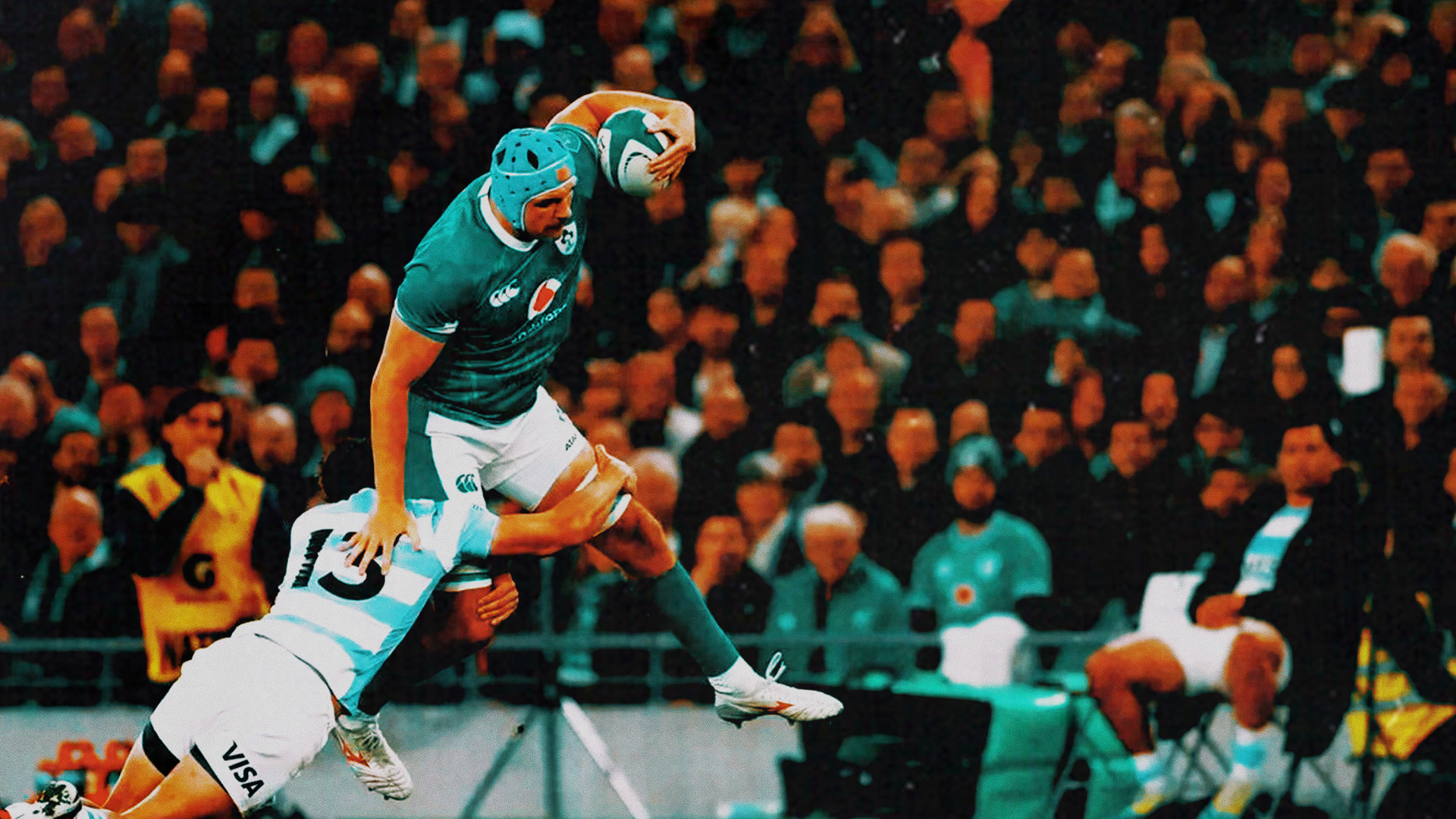
There seems to be more on the line here than just an Autumn Nations Series win at home.
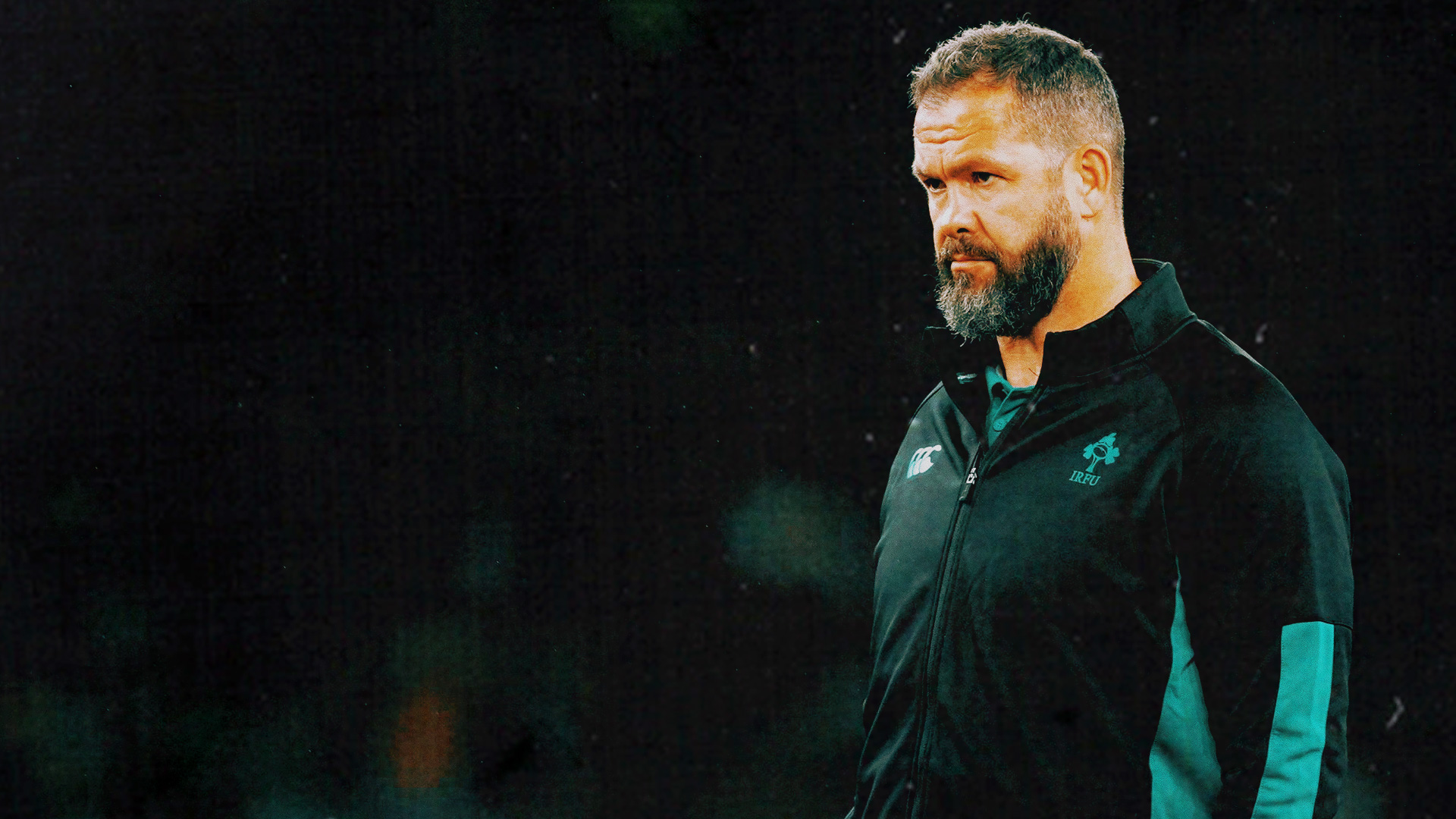
I know right? What could be more important than that? This has got to be some important stuff. <checks notes> Oh it’s the British (and Irish) Lions. OK. Well, I’ve already started the intro like this so I might as well continue it. This game means more because our resident 2x Man of Steel Andy Farrell will depart for the British (and Irish) Lions after this game to prepare for a series against 0x Man of Steel Joe Schmidt’s Wallabies next summer.
In 2013, Andy Farrell delivered his famous “hurt arena” speech ahead of the Lions’ final test against the Wallabies.
“Because our mentality is going to be a different mentality to what the British (and Irish) Lions teams have had over the last 16 years. Right, a different mentality. Because the last 16 years, it’s been about failure. You shock yourself by taking yourself to another level. [Gestures with hands to indicate another level]. Because that’s what being a Lion’s about. It isn’t about anything other than that. It isn’t about taking part, it isn’t about being here, it’s about winning.”
That tells you all about Andy Farrell’s philosophy as a head coach. It’s about winning. And he’s dead right. Andy Farrell has coached the same number of games as Declan Kidney as of today. 53 games each.
Farrell’s win record is 79.25%. Kidney’s win record is 52.83%. When it comes to their stewardship of Irish Rugby, you probably couldn’t get two men who are perceived so differently.
Why is that? It comes down to how much disruption they had to deal with, both willingly and unwillingly. In Declan Kidney’s last Six Nations squad in 2013, twenty-one of the 39-man squad he ended up using had 20 caps or fewer. In 2024, the number of sub-20 cappers ended up being 13.
This generally tracks across both their 53 games in charge.
Eddie O’Sullivan – 41 new caps that went on to earn 1,285 caps. 31 caps each on average. 6 new caps a year over seven seasons.
Declan Kidney – 41 new caps that went on to earn 1,367 caps. 33 caps each on average. 8 new caps a year over five seasons.
Joe Schmidt – 63 new caps that went on to earn 1,269 caps. 20 caps on average. 10 new caps a year over six seasons.
Andy Farrell – 39 new caps that earned 799 caps to date, an average of 20 caps per player. 7 new caps a year in his five seasons to date.
Of Farrell’s 39 new caps, eight players have gotten more than 20 caps under Farrell and almost all of them were capped inside his first two (pandemic-disrupted) Six Nations. Since the summer of 2021, for example, Andy Farrell has capped 26 players and they have amassed an average of just 6 caps in that time.
Coaching the Lions will not be a challenge to Andy Farrell because he’s been coaching Ireland like the Lions since he figured out what his team was in mid-to-late 2021. That’s the thing with the Lions – the real job is finding your team early, using as much pre-built cohesion as you can, and then build, build, build with that core while trying to keep the bin juice happy or at least non-disruptive.
Do it well, and you’ll win (or draw!) your Lions series. And Andy Farrell has done just that with his “Irish Lions”. Win. His win record as Irish head coach is the best of all time and cohesion has been the watchword for Farrell as he’s won that success. Building it, weaponising it and maintaining it.
As Eddie Jones said of Farrell’s Ireland in 2022;
“They are literally, and I say it without any hesitation, the most cohesive side in the world.
The bulk of their team trains together for the bulk of the year, they’re very well coordinated in their attack, they’re very structured, they’ve very sequenced set-plays and they’re tough around the breakdown.”
Throw on another two years of cohesion to that to get an idea of what Eddie Jones might think today. It has always been Andy Farrell’s secret sauce. When he feels threatened, when he feels his team isn’t playing well, his default is to add in more pre-built cohesion wherever possible. The onion soup isn’t oniony enough – better add more onions. Don’t like onion soup? You’re in the wrong restaurant, buddy.
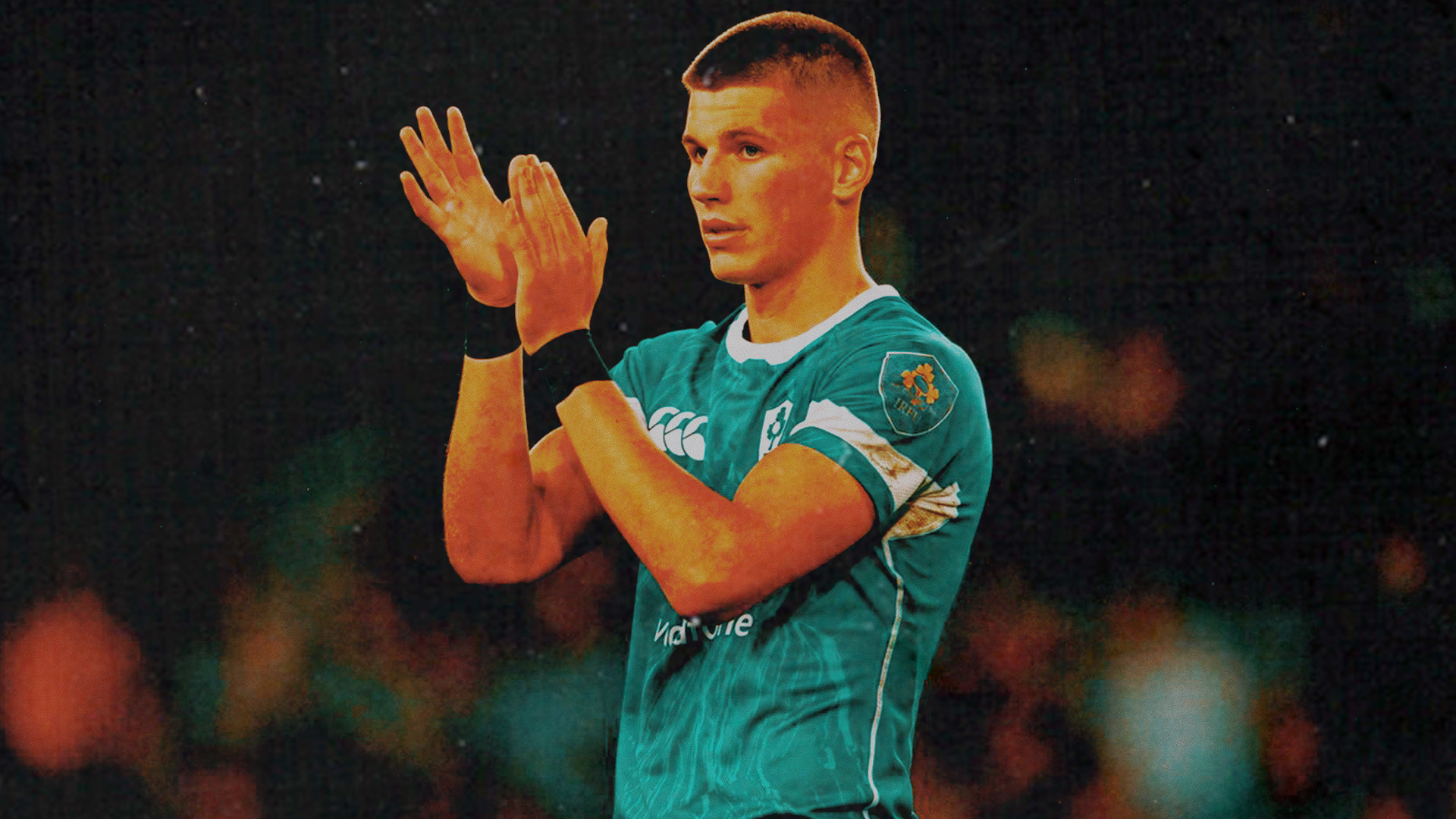
So with all that in mind, very little should shock you about Farrell’s selection policies at this point. Cohesion wins these games and when Andy Farrell needs a win – and he needs a win this weekend – he will go for as much cohesion as he possibly can. The Sam Prendergast Experiment isn’t really an experiment in that light. Prendergast has three seasons’ worth of training reps with Jamison Gibson Park at this point so eight starts at #10 for Leinster doesn’t matter. He will be where Jamison Gibson Park – Ireland’s chief playmaker – wants him to be, and that is a small % point on the scale in favour of Prendergast.
Andy Farrell’s focus is almost always as simple as “what wins this game?”. It’s not “what will help us win games in 2027”. It’s not even “what will help us win games in the 2025 Six Nations”.
It’s this week, this opponent and that’s that. It’s why he doesn’t build “depth” like other test coaches have done this year. Trying out new players and new combinations lowers cohesion during the week in training, which means you don’t train as well as you could be. It means you don’t play well and that can mean losses. We don’t like losses. No one does, of course, but this Irish coaching ticket treats them like spiders under the duvet. And well they might; just look at how Declan Kidney is viewed with all the players he capped, took the lumps for and developed into regular test starters throughout his tenure. Joe Schmidt gets the credit for turning them into winners.
Andy Farrell will not put himself in the same position.
People often look at Rassie Erasmus and how many different players and starters he tries out during a calendar year but his focus and working environment are different. He can look to the mid-term while winning now. He doesn’t just have money in the bank- he has solid gold. Andy Farrell has credit in the bank.
It’s different and he knows it. It’s why he was never going to experiment right before going on a Lions tour with his last game against the team he’ll be playing next summer coached by his former boss.
Farrell won his first actual trophy with Ireland last year. The Six Nations title earlier this year didn’t really hit the same, for whatever reason. Maybe it was the loss to England along the way? Regardless, Farrell only has one more Six Nations title than Kidney, win-rate or not, and with vastly more resources. They both left a World Cup at the quarter-final stage despite having sights set higher. Andy Farrell doesn’t care about Kidney, he doesn’t think about him, and rightly so. But he knows that credit has interest, and that needs to be paid if you’re to keep going.
As the man said himself in 2013;
“They kept pounding away and pounding away and it was a gallant effort boys. That’s what I would say to you if I was your club coach or your international coach, but I’m not. We’re your Lions coaches. And a good defence, or good spirit isn’t enough at this level. On D, we cannot allow our emotional energy to dip whatsoever. Do you know why? Because there is no tomorrow. There is no tomorrow.”
There is no tomorrow for Andy Farrell. There is only the endless now.
Ireland: 15. Hugo Keenan; 14. Mack Hansen, 13. Robbie Henshaw, 12. Bundee Aki, 11. James Lowe; 10. Sam Prendergast, 9. Jamison Gibson Park; 1. Andrew Porter, 2. Ronan Kelleher, 3. Finlay Bealham, 4. Joe McCarthy, 5. James Ryan, 6. Tadhg Beirne, 7. Josh Van Der Flier, 8. Caelan Doris (c)
Replacements: 16. Gus McCarthy, 17. Cian Healy, 18. Tom O’Toole, 19. Iain Henderson, 20. Peter O’Mahony, 21. Craig Casey, 22. Jack Crowley, 23. Garry Ringose
Australia: 15. Tom Wright; 14. Andrew Kellaway, 13. Joseph-Aukuso Sua’ali’i, 12. Len Ikitau, 11. Max Jorgensen; 10. Noah Lolesio, 9. Jake Gordon; 1. James Slipper, 2. Brandon Paenga-Amosa, 3. Taniela Tupou, 4. Nick Frost, 5. Jeremy Williams, 6. Rob Valetini, 7. Fraser McReight, 8. Harry Wilson (c)
Replacements: 16. Billy Pollard, 17. Angus Bell, 18. Allan Alaalatoa, 19. Lukhan Salakaia-Loto, 20. Langi Gleeson, 21. Tate McDermott, 22. Tane Edmed, 23. Harry Potter
You know what’s weird?
Ireland have scored the third-fewest tries of all the top 12 sides in the world this year. Only Italy and Wales have scored fewer tries in 2024. That doesn’t seem right… right? But it’s a fact. Ireland have scored just 34 tries this calendar year. England have 49. France have 48. South Africa have 63.
Some of those tries have been buffed by turkey shoots against Tier 2 opposition but, that said, before last week’s eight-try battering of Fiji, Ireland were sitting on 26 tries for the calendar year.
It doesn’t track with Ireland’s reputation under Farrell as an attack coach but it’s there in black and white.
Part of this comes back to raw metrics; Ireland aren’t getting into the opposition’s 22 at the same frequency as we once did. Before last week, Ireland were fourth from bottom for both entries and points per entry; only England, Italy and Wales were below us. After Ireland’s and England’s respective turkey shoots last weekend, we have both flown up the table for entries – England is now fourth for 22 entries and Ireland is fifth – but both stay in the bottom four when it comes to points scored on average.
On the other hand, Ireland is the best team in the world when it comes to preventing opposition entries and preventing scores inside the 22.
Ireland only concedes 6.6 entries on average per game and only 1.8 points per entry. Want to know why Argentina and New Zealand kicked so much off the tee against Ireland? That’s why. We are scoring at a lower rate than previously so that means taking three points against Ireland off the tee is a more effective strategy than ever before.
Why are we scoring less often? In part because teams have worked out core elements of our attacking concepts after three full test seasons of mostly the same thing. What was game-breaking from November 2021, into 2022 and 2023, isn’t quite as effective in late 2024. Not in this game. Everyone works out your secrets sooner rather than later and Ireland’s is out; give us quick ball, don’t overcommit at the ruck while preventing Gibson Park from running onto loose pillars, kick short and contestable.
When you do this effectively, you force Ireland’s playmakers to play flatter to the gainline – which we don’t like. When you overcommit defensive numbers while trying to win breakdown turnovers or slow the ball, you allow Ireland to drop deep and then pass around you. But, lately, all that does is give Ireland penalty access to the 22, which is our most effective method of scoring this November.
New Zealand only committed five penalties against Ireland. Argentina only conceded six. As a result, Ireland only made 66 metres off penalties against New Zealand and 81m against Argentina. Against Fiji, we made 266m off 14 penalties kicked to touch.
If Ireland are scoring fewer tries than normal, and 67.5% of our tries scored this year came from the lineout, what does that tell you about how you can stop Ireland? The key is penalty access. Australia have the second-highest number of penalties conceded so far this year so Joe Schmidt will be well aware of where his Wallabies side stacks up poorly. Most of their penalties have been conceded at the ruck so just by following what they will surely know is Ireland’s weakness – a full defensive line, that doesn’t blitz, with no obvious corners to pass around – you would imagine that the fix is straightforward.
Ireland have a weakness on the gainline, so Australia have to use their size advantage to exploit that; that means keeping defenders on their feet.
Joe Schmidt will understand what makes Ireland tick and what they don’t want to be doing in this game; exposing Sam Prendergast to flat gainline ball. Prendergast does his best work in wide overloads and tucked behind screens. If, as Argentina and New Zealand were able to expose, he has to play flatter in central areas, he runs a real risk of getting nuked in contact by the likes of McReight, Valeteni and Sua’ali’i. If Ireland can keep their depth, they should be able to stress the Wallabies enough to boss their time sequences and squeeze Australia out of this game one block of five minutes at a time.
Ireland’s forward structure has also reverted to the narrow shape that has seen Beirne look isolated in Ireland’s #6 role, that is until he eventually gets to return to a more central position. This is to accommodate Joe McCarthy in Ireland’s front five alongside James Ryan, without losing Beirne’s ruck contributions and lineout jumping in a back row featuring a non-jumping small forward in Van Der Flier and a tertiary jumper in Doris.
My concern here is that it opens up our wider rucks for active counter-rucking from Australia or outright poaching, as these setup rucks are the “easiest” to target as Ireland progresses around the field. Ireland’s best performances have, for me, come with Peter O’Mahony at his best in that #6 role and I find Beirne to be an imperfect compromise as it stands.
This game hinges on Australia’s ability to nullify our attacking game and keep their discipline while exposing the heavyweight advantage they might have in the scrum with a short/mid-range contestable game where they have the size and explosivity to hurt us in the air off shorter chipped kicks.
If they do, this could be sticky. If they don’t, it’ll be a 15-point Irish win.
