


It feels like Ireland are under pressure in a way that we haven’t felt since the early 2020s.
Maybe it just feels that way, though. Reality could be different. I think we’ve seen this a few times where external noise doesn’t really reflect what things are like in the camp. It would make sense. Losing to the All Blacks isn’t a scandal by any means but the toothless nature of the defeat seems to have stirred something in the Irish rugby bubble. You know when animals seem to detect earthquakes long before the first tremor hits? It’s like that but with shareholder value.
The shareholder value is looking… antsy. It’s gnawing at the fences.
I think it’s just that Andy Farrell’s Ireland side is really not accustomed to losing games. Certainly not back-to-back, so the natural pressure this week is on avoiding something that has only happened once before under this coaching staff back in February 2021, when Ireland lost to Wales and then France in the Six Nations.
These were, very much, The Bad Times.
Farrell’s Ireland would rob a win from the jaws of defeat away to Scotland a few weeks later, which did very little to sweeten the vibes which had been sour ever since Ireland’s defeat to New Zealand in the World Cup quarter-final 18 months prior.
A big win over England in a mostly empty Aviva Stadium a few weeks later – who Ireland had lost four in a row to before that game – essentially saved Farrell’s job after a bumpy first two seasons in charge. Another loss there and it wouldn’t have been out of the question that Farrell might have been one more loss away from a P45.
But that win turned the whole thing around. A few months later, Ireland beat the All Blacks in Dublin and the world we’ve come to know since came into being. 2021 isn’t that long ago at all really, but it might as well be a lifetime ago. That’s how long ago it’s been since Ireland had to suck up a defeat two weeks on the spin and, latterly, how long ago since we became the official and unofficial #1 team in the world.
We know from history that a lot of vibes rest on the result of this game – the return of the good, or the return of the bad.
Ireland: 15. Hugo Keenan; 14. Mack Hansen, 13. Garry Ringrose, 12. Robbie Henshaw, 11. James Lowe; 10. Jack Crowley, 9. Jamison Gibson-Park; 1. Andrew Porter, 2. Rónan Kelleher, 3. Finlay Bealham; 4. Joe McCarthy, 5. James Ryan; 6. Tadhg Beirne, 7. Josh van der Flier, 8. Caelan Doris (c).
Replacements: 16. Rob Herring, 17. Cian Healy, 18. Thomas Clarkson, 19. Ryan Baird, 20. Peter O’Mahony, 21. Craig Casey, 22. Sam Prendergast, 23. Jamie Osborne.
Argentina: 15. Juan Cruz Mallia; 14. Rodrigo Isgro, 13. Lucio Cinti, 12. Matias Moroni, 11. Bautista Delguy; 10. Tomas Albornoz, 9. Gonzalo Bertranou; 1. Thomas Gallo, 2. Julian Montoya (c), 3. Joel Sclavi; 4. Guido Petti, 5. Pedro Rubiolo; 6. Pablo Matera, 7. Juan Martin Gonzalez, 8. Joaquin Oviedo.
Replacements: 16. Ignacio Ruiz, 17. Ignacio Calles, 18. Francisco Gomez Kodela, 19. Franco Molina, 20. Santiago Grondona, 21. Gonzalo Garcia, 22. Santiago Carreras, 23. Justo Picardo.
What does a good performance look like in this game?
There are a few undeniable things that must improve; scrum has to be above 90% completion, lineout has to be close to 90% completion, turnovers have to be below 12, and penalty count must be less than 10.
All of these are obvious areas where Ireland must improve on last week’s performance.
In a lot of ways, all of these happening means we are likely to push up to 10+ point winners, without anything else changing but that is a little too dismissive of a dangerous Los Pumas side who have beaten Australia, New Zealand and South Africa already this year and are coming off a withering dismissal of Italy last weekend.
This is probably the worst matchup Ireland could have scheduled after that loss to the All Blacks because, if they hit the performance levels we’ve seen at their best this season, this game is going to be an absolute firefight. Then again, if they bring what they’ve shown at their worst, it’ll be a quiet night at the office – and not just because it’s in the Aviva.
Ireland’s worst in the last few years is probably still good enough to beat most teams in the world, even when they’re having a good day. That consistency is a latent effect of Ireland’s squad cohesion. Oddly enough, the margins between a good performance and a bad performance for this Ireland team are also pretty small; change two sequences from last week’s loss to the All Blacks, for example, and we probably win. That’s all it takes.
So, purely from a consistency basis, Ireland don’t need to change too much this week – we just need to get the obvious stuff right.
Argentina, as I’ve said, are a dangerous opponent who don’t really have a one-size-fits-all approach. When they are at home, or against a weaker opponent, they will play a high Pass Per Carry game played out over a lot of space. When they are playing a tough opponent away from home, they are also comfortable playing essentially off-ball rugby and a super narrow Pass Per Carry game that barely has one or two passes per phase before kicking it long.
Last week, that kicking looked very contestable – they used eight box kicks and six high-bomb contestables – and I’d expect broadly the same approach here. Ireland were criticised quite a bit for their relative lack of kicking last week but it comes back to what type of kicking we’re talking about.
Eleven of our 23 kicks were “clearance” kicks, which are those long raking kicks you see from the likes of Keenan and Lowe, in particular. We only had five box kicks and three high-bomb contestables. New Zealand, by way of comparison in their last two games, have used 14 box kicks and 12 high bomb contestables. Their kicking approach is short and mid-range, ours is still long and on.
That is an expression of style. Last week, we probably could have kicked a few more contestables – purely to cut down on our turnover rate – but I’m not sure if that’s the game this team wants to play. Even then, is that the game we want to play against Argentina?
No team in the world this year has scored more tries on the counter-attack on kick transition or on turnover ball. This calendar year, for example, Ireland have scored three tries on counter-attack via kick return, or on a turnover. Argentina have scored 29 tries in the same categories; 9 on counter-attack, which is the same as France and New Zealand and 20 after a turnover, which is the best in the world by some distance*.
* I should also point out that the biggest origin of tries for Ireland is the lineout, which highlights the issues when ours doesn’t work.
Argentina also top the world this year when it comes to compiling 22 entries and it’s off the back of their work on transition, both of the kick, breakdown and error forced variety.
So, essentially, do we even want to kick at these guys if that’s what we mean by “good game management”?
What kind of kicking is safe? For me, Ireland have to continue with their long kicking work off Keenan and Lowe, meet Argentina on defensive transition and try to advance up the field via attacking through the ball in hand. Kicking short at them might generate a cheap escorting penalty, but the risk of Juan Cruz Mallia, Delguy, Albernoz or Isgro winning a shorter contestable with no cover in the backfield – like on those angled high bomb contestables or shorter box kicks – is too much of a risk with the wingers we have, especially on Lowe’s side.
We’ll need to kick to exit inside our own 10m line for the most part, yes, but I think we need to be brave with the ball in hand, up our ruck count from last week and punish Los Pumas’ tendency to give up ruck penalties, as well as attacking the compressions that come with those ruck attacks by being really aggressive off #10.
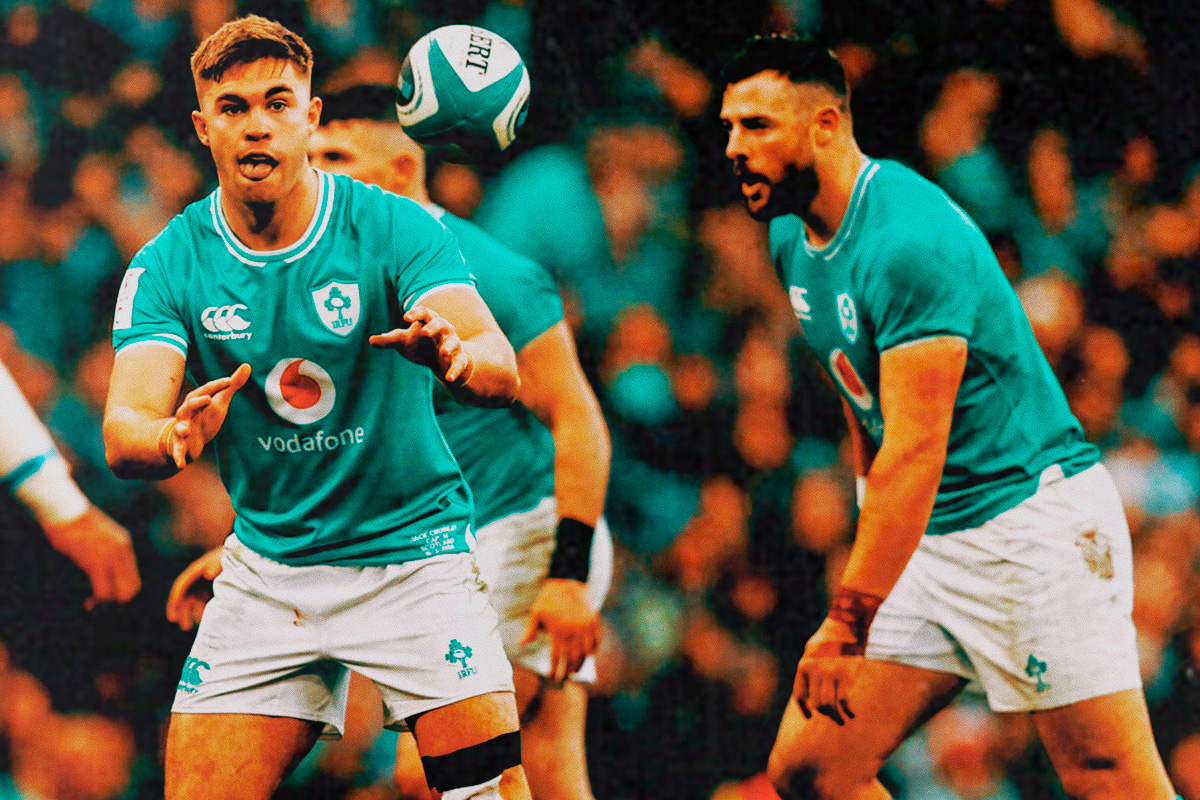
Jack Crowley had a stand-offish game against New Zealand but he needs to be almost like another midfielder here – attack their defensive structure on phase play. That means cutting in against the grain on a few screens and taking the lumps that come from it, and it means getting double plays back to back on sequences where he doesn’t carry the ball into contact. That kind of usage will get the best out of Henshaw and Ringrose, but he has to get that service from Gibson-Park.
This Ireland team gets over the gainline less often than the international average and goes backwards more often than the international average. That’s particularly exaggerated in the opposition’s half of the field. We have more ineffective collisions than the international average and fewer dominant collisions than the international average. Our point of difference is our ruck speed and high volume passing into moving, overlapping layers of backline runners behind a narrow forward line built for ruck recycling; that can only work when we are getting the ball into the playmaker’s hands more regularly.
Do that, with a high PPC volume, and we’ll win.
