


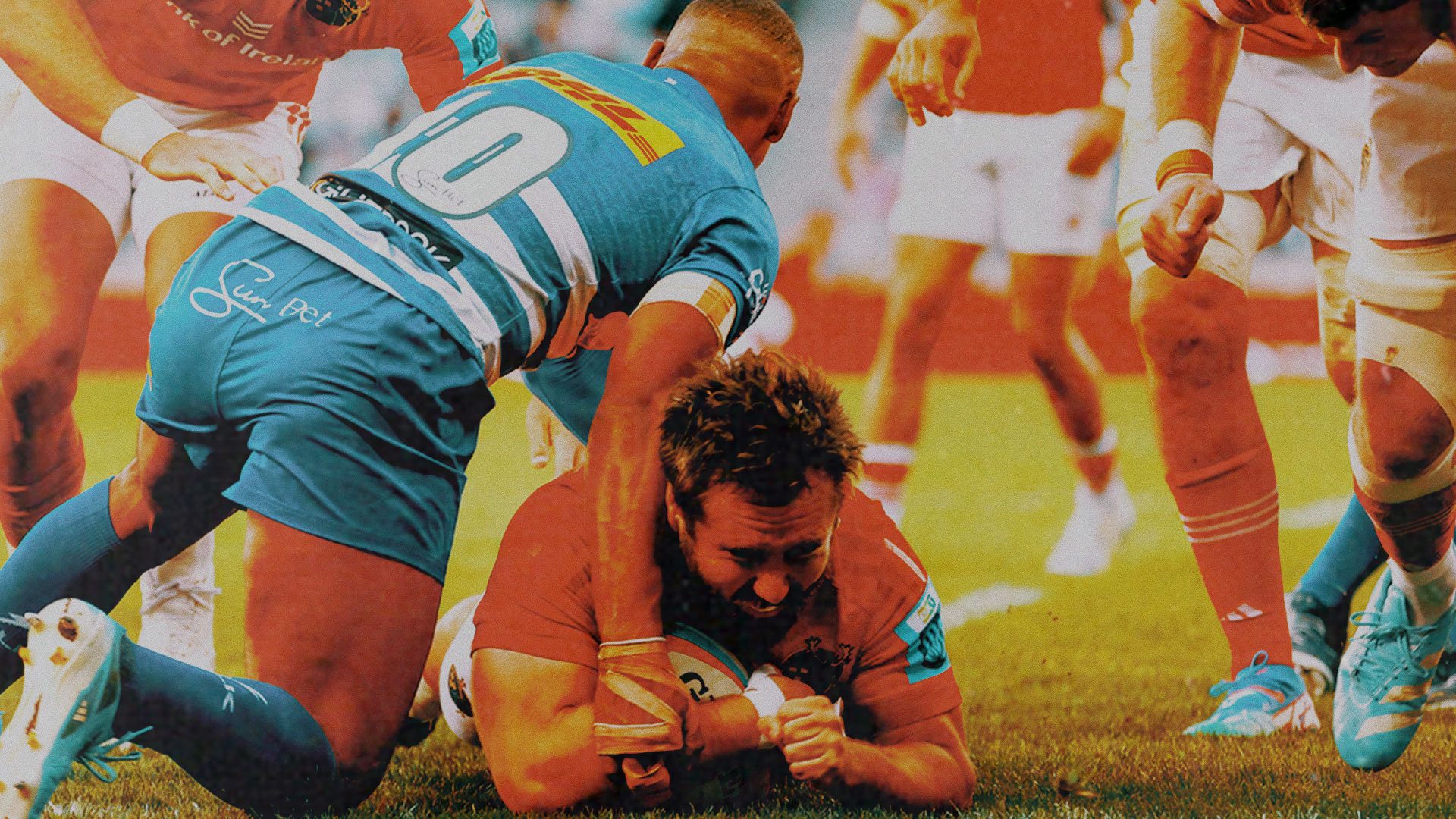
It’s easy to be consumed by woe after Munster’s last calendar month.
In the last 30 days, we’ve lost to Zebre, Leinster and the Stormers with the Sharkboks to come in Durban all while dealing with a flurry of knocks, players looking stiff after coming back from long-term injuries and a few sickener injuries in the areas we really couldn’t afford them.
We’ve looked low on accuracy, power, and confidence, all while plummeting down the URC table to 11th right before the break for the test window. Then the Irish squad gets named for the November tests and we’ve only got six players in the full panel.
My vibes, please, they need medicine.
When I was an obnoxious college student in CIT in the early 2000s, I was about as painfully New Liberal as you can possibly imagine. I had to design a magazine for one project on whatever I liked. Like many college students at the time, my big focus was on US politics, George W. Bush, getting hammered on Thursdays, Fridays and Saturdays and the war in Iraq; I went on marches against that war and, of course, that’s what my magazine was about. In short, revolutionary politics – or so I thought at the time.
During a presentation on our completed magazine designs, we had to take questions from the class who would try to poke holes in your concept. One particular enemy classmate took issue with an article I’d written in the magazine about then US Secretary of Defence Donald Rumsfeld being an idiot for saying this;
Reports that say that something hasn’t happened are always interesting to me, because as we know, there are known knowns; there are things we know we know. We also know there are known unknowns; that is to say, we know there are some things we do not know. But there are also unknown unknowns—the ones we don’t know we don’t know. And if one looks throughout the history of our country and other free countries, it is the latter category that tends to be the difficult ones.
I raged against the criticism, saying that it was nonsense and that he was Big Dumb. While I said this by the way, just to set the scene for you, my hair was just under shoulder length and bleached white.
When you get older, you often think about embarrassing things from your past. That hair, for example. But also that particular class where I was calling Donald Rumsfeld Big Dumb because I, a 20-year-old media student, didn’t understand what he was saying. He was, of course, completely correct. I think about that moment – and many other moments – a lot right before the lights go out in my big bald head every night.
Known knowns. Known Unknowns. Unknown unknowns.
It would be quite dangerous for Munster’s coaching staff right now if our underwhelming start to the season was an unknown unknown. I suppose one of the positives from losing three out of four in the last 30 days is that the reasons for them all are Known Knowns.
- Lineout isn’t working at the level required.
- A lack of power in the front five – and the front row in particular – makes everything that bit harder and more complex.
The Munster coaching group are well aware of these facts and fixing them is a matter of timescales.
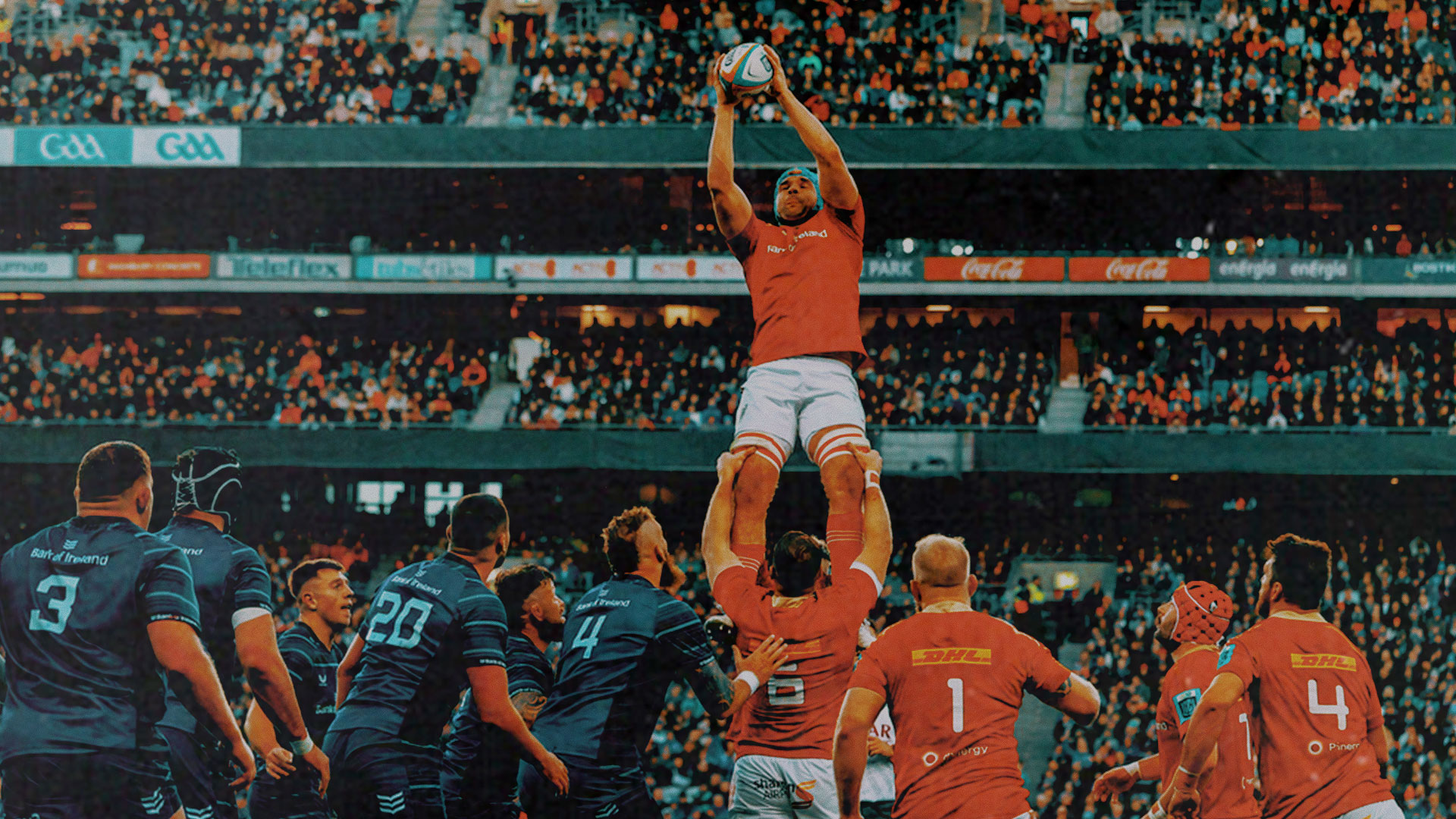
The lineout, quite simply, must start functioning again, especially with a game coming up against what could be the best set-piece in the URC, at least on paper.
But in the medium term, what will continuously hold this team back is running front rows like we’ve seen in the last two games. Namely ones with Oli Jager. I’d go so far as to say that the issue is so pronounced at this stage that it makes running front-five builds with Beirne in the second row an indulgence, which is an insane thing to say with a player as good as he is but I believe the problems in our front row are that profound.
In the modern game, your front five are analogous to a combined offensive and defensive line in American Football. So while it’s possible to get away with a top-end technician like Beirne and acknowledging that Jean Kleyn would make most teams in Europe under that criteria, the front row we started and finished with against the Stormers and Leinster is not anywhere close to elite level when it comes to physicality.
At their best, that front row is a solid scrummaging team that can pressurise most sides and, crucially, they can also resist all but the biggest and most focused scrummaging teams. A good example of this would be last year against the Bulls and the Lions, albeit with Jager in the team.
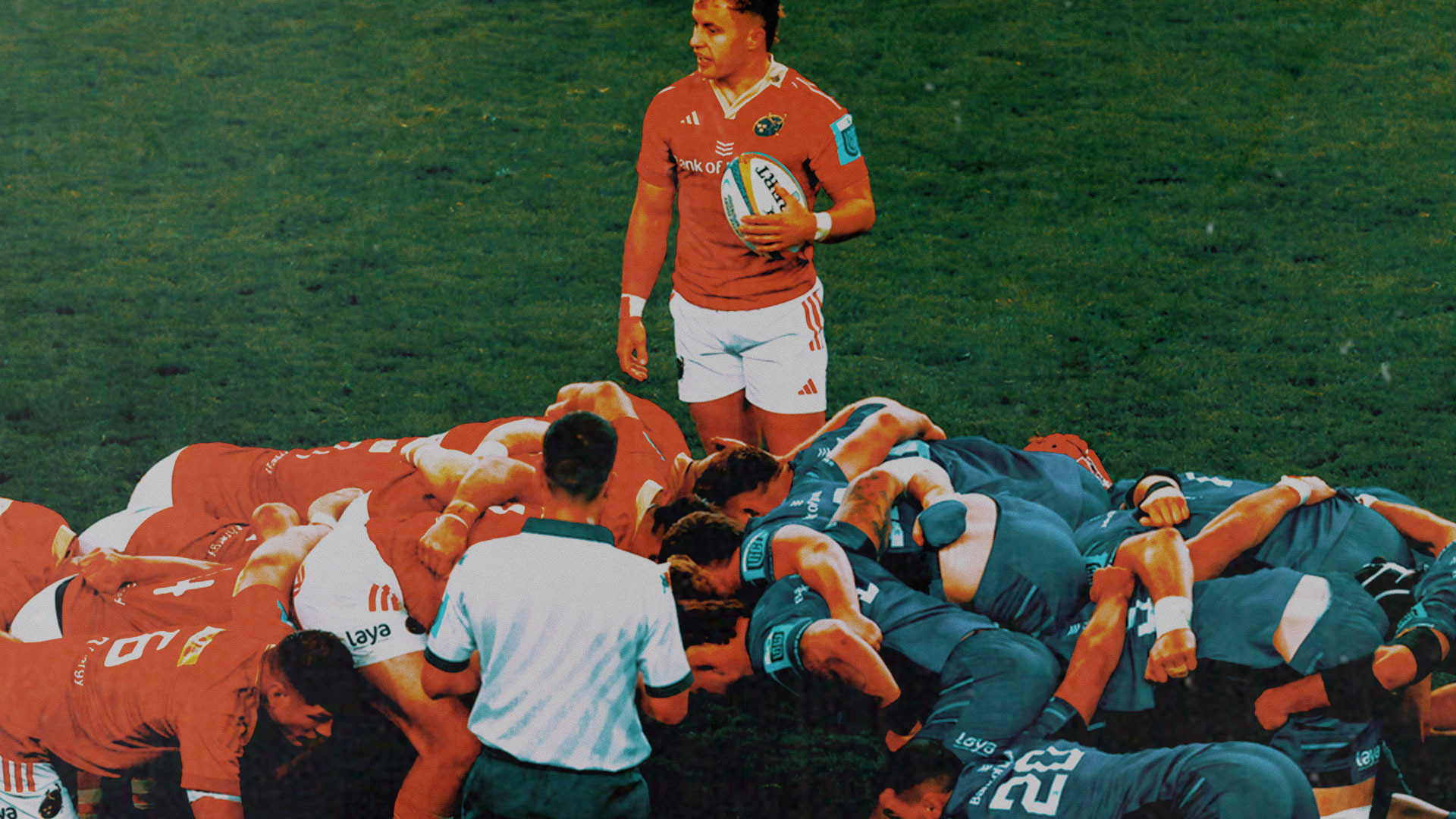
But the scrum is decreasing in importance every single season and of far more importance is your front row’s ability to impact around the field – and in the middle of the field relative to the last ruck position – during phase play on both sides of the ball. That isn’t to say that there aren’t lighter, wider roles for hookers, mainly, but you’ve got to put that tight power somewhere, or everything becomes more complex.
Now it should be pointed out that in the last four seasons, Munster intended to invert that heavy power by using technicians in the front row and stacking the back five with Snyman, Kleyn, Coombes, O’Mahony, Beirne and then augmenting that with Ahern and then latterly Edwin Edogbo. We signed Jason Jenkins specifically to use him as a heavy flanker alongside Snyman and Kleyn but injury to both Jenkins and Snyman prevented that from happening.
Prime Exeter are a very good example of this build. They mainly had technicians in the front row – albeit heavier and more impactful technicians than we currently do – but played with a four-lock pack. This negated the power issue by stacking it behind the props, who could then focus on the more esoteric parts of the front-row game like being hyper-aggressive scrummagers.
It powered them to a pandemic European Cup.
To visualise what I’m talking about here, it’s best to separate yourself from the typical scrum formation that we use when listing forwards. I try to list them internally like this, with last week’s team against the Stormers as my example;
1. Jeremy Loughman, 2. Niall Scannell, 3. John Ryan; 4. Jean Kleyn, 5. Tadhg Beirne (c); 6. Tom Ahern, 7. Alex Kendellen, 8. Jack O’Donoghue.
16. Eoghan Clarke, 17. Kieran Ryan, 18. Stephen Archer, 19. Fineen Wycherley, 20. Ruadhán Quinn, 23. Gavin Coombes.
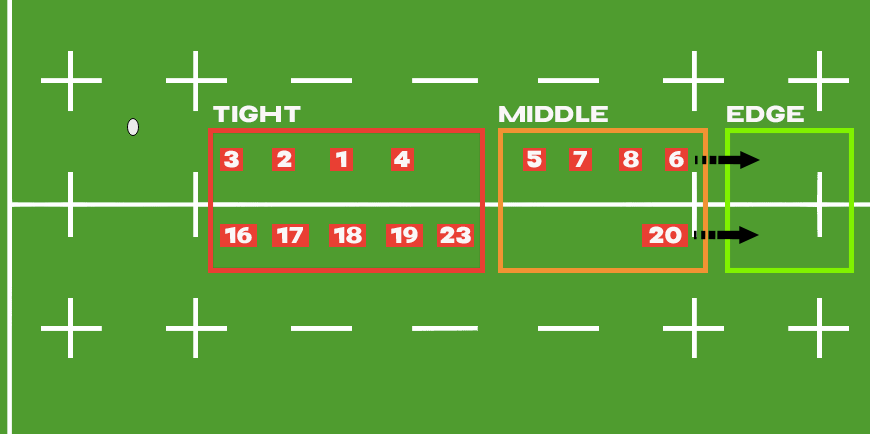
Now, let me highlight in grey who I think isn’t quite at the level required at the top end of the game at the moment or who might be in a year or two against a team with the Stormers’ size on both sides of the ball.
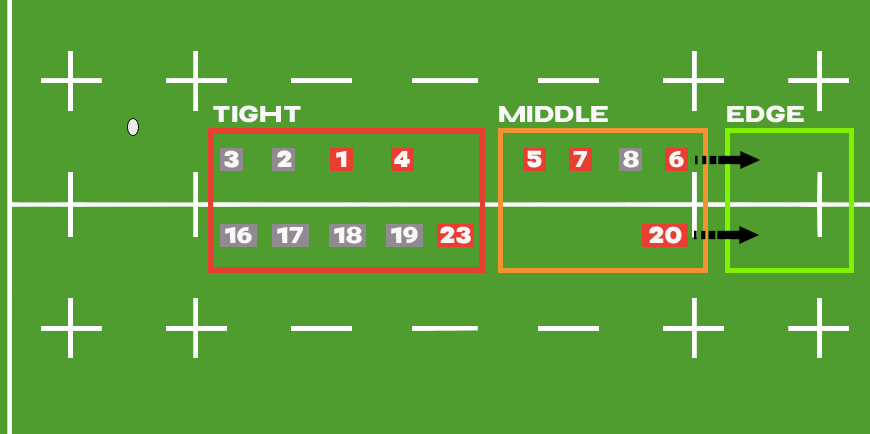
The problem illustrates itself there. Even then, I think we were forced into using some of our middle-line forwards as tight-line forwards for large stretches of the most recent loss. As covered at length in the Chart for the front row slots – hooker, loosehead and tighthead – our front row probably needs to be rehabbed with three or more players at this stage.
The need is most acute at prop with only Oli Jager proven to have the elite power needed to allow us to play with a little more simplicity. I think I might go further and say that bar Jager, we need two 1A players at loosehead and hooker to solidify our chart.
| Loosehead | Hooker | Tighthead |
|---|---|---|
| ??? | ??? | Jager |
| Loughman | Barron | ??? |
The problems at lock are, I believe, short-term and injury-related. I can still see Munster signing a back-five half-lock in the next window but to get this team to the elite level, I think it’s clear that the Known Known is that the front row has to be upscaled. I think the coaching group know it too.
Knowing it is one thing, doing it is another, especially with the most expedient method of upscaling – making one of those spots a NIQ – seems to be cut off by David Humphreys’ stance on NIQ props for the time being.
“After next year, there will be no front row forwards coming into the Irish system until we have got the strength in depth we know is needed to support the provinces and Ireland in the medium- to long-term.”
That limits the scope of what can be done quite dramatically. In an ideal world, Munster would use a NIQ loosehead and hooker on two-year “bridging” contracts to get identified young talent to the level where they can replace them. This would allow the rest of the team to thrive with the current front-row issues revolved, while building in-house replacements behind them with space, less pressure and mentorship.
Internally, I think Ronan Foxe can solve some problems for us on the tighthead side in the next 12 months but might be needed to do that sooner if Roman Salanoa can’t make his way back from injury. It’s also certainly possible that Donnelly or Hadden can make a run in the next 12-24 months, but I would argue that both players are at least that away from being productive at the level we need them to be. Time is not on our side in this matter.
Some moves can be made in the domestic Irish market and are worth exploring;
- Testing Leinster’s plate-spinning abilities behind Porter next season by targeting Jack Boyle and Paddy McCarthy, essentially using Humphreys’ no NIQ stance as a lever to pry away one of them, using the other as a fulcrum.
- Use the same principle to attack Ronan Kelleher, Gus McCarthy or Stephen Smyth from Leinster. The idea here would be to make the core of our hooker chart quite young and anchor it, for a time, with Diarmuid Barron. If we focus on getting Danny Sheahan as the third hooker next season, I think it’s possible to make a run at Kelleher to be our undisputed 1A and pay him accordingly. If Kelleher doesn’t move, I think Gus McCarthy’s Ireland involvement could be used to sell him on a move up the chart at Munster as he’ll still be behind Sheehan and Kelleher for the foreseeable future.
The best value, however, might be in looking at the IQ market abroad to see if there are any players we can unearth or persuade to redeclare for Ireland so they can be IQ again down the line. This market is notoriously murky, as bar guys like Leicester’s Joe Heyes or Toulon’s Daniel Brennan, it’s hard to see who might be out there.
In the short term, Munster are looking for a loosehead joker to cover Jeremy Loughman’s recent knee injury and it’s hard to see who might be available if Humphreys’ badly judged, short-sighted blanket ban isn’t lifted.
There are no obvious provincial loans, bar maybe Michael Milne from Leinster so we will have to see what’s possible. What is vital, however, is that Munster use the nine front-row contracts that expire this year as the financial base to upscale our power in the front row or, if that’s possible, a radical shift in pack construction and overall game plan might well be required.
