


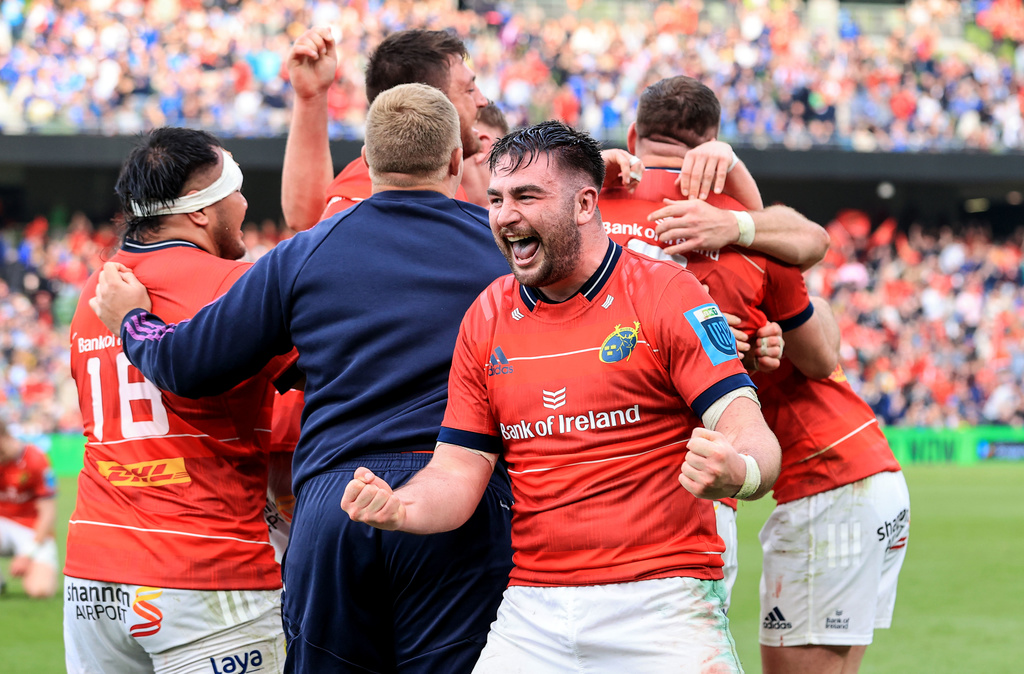
“I don’t know, man. I thought the fight was going well. I don’t even know what happened,” Cormier said. “I guess I got kicked in the head. Ah man, I’m so disappointed.”
Asked about the rivalry, Cormier effectively conceded to his opponent.
“I don’t know, man, I guess if he wins both fights there is no rivalry.”
I was trying to remember the last time Munster vs Leinster was a proper “you win, we win” rivalry.
Throughout the recent history of these two provinces, it always seems to be one or the other holding the whip hand. In the 90s, Munster won nine of the twelve interpro fixtures between the two sides. It was far from the gigantic fixture it would later become at this point around the formation of professionalism. The Irish national side was in the doldrums at the time – to put it mildly – and the real main event was the AIL. Munster vs Leinster was something of an anachronism at the time until the IRFU decided to build its professional foundations around the provincial structure, rather than the clubs.
It always meant something, but whatever that something is has fluctuated wildly over the decades.
This fixture was at its hottest in the mid-2000s. In the 26 fixtures between the two provinces in the 2000s, Munster won 12 and Leinster won 11 with two draws. The most meaningful of those games – the ones that have built the mythology of this relationship – were in 2005/06 in Lansdowne Road and 2008/09 in Croke Park. Even with Leinster winning five games in a row at one point, the 2000s were when this rivalry was properly established.
Since then, it’s been heavily lopsided by repeated Leinster victories.
The 2010s saw 24 games between the two sides with Munster only managing six wins, and one of those was a facile Rainbow Cup win at the height of the pandemic.
So far in the 2020s, it’s seven games with one Munster win.
Yeah, that one.
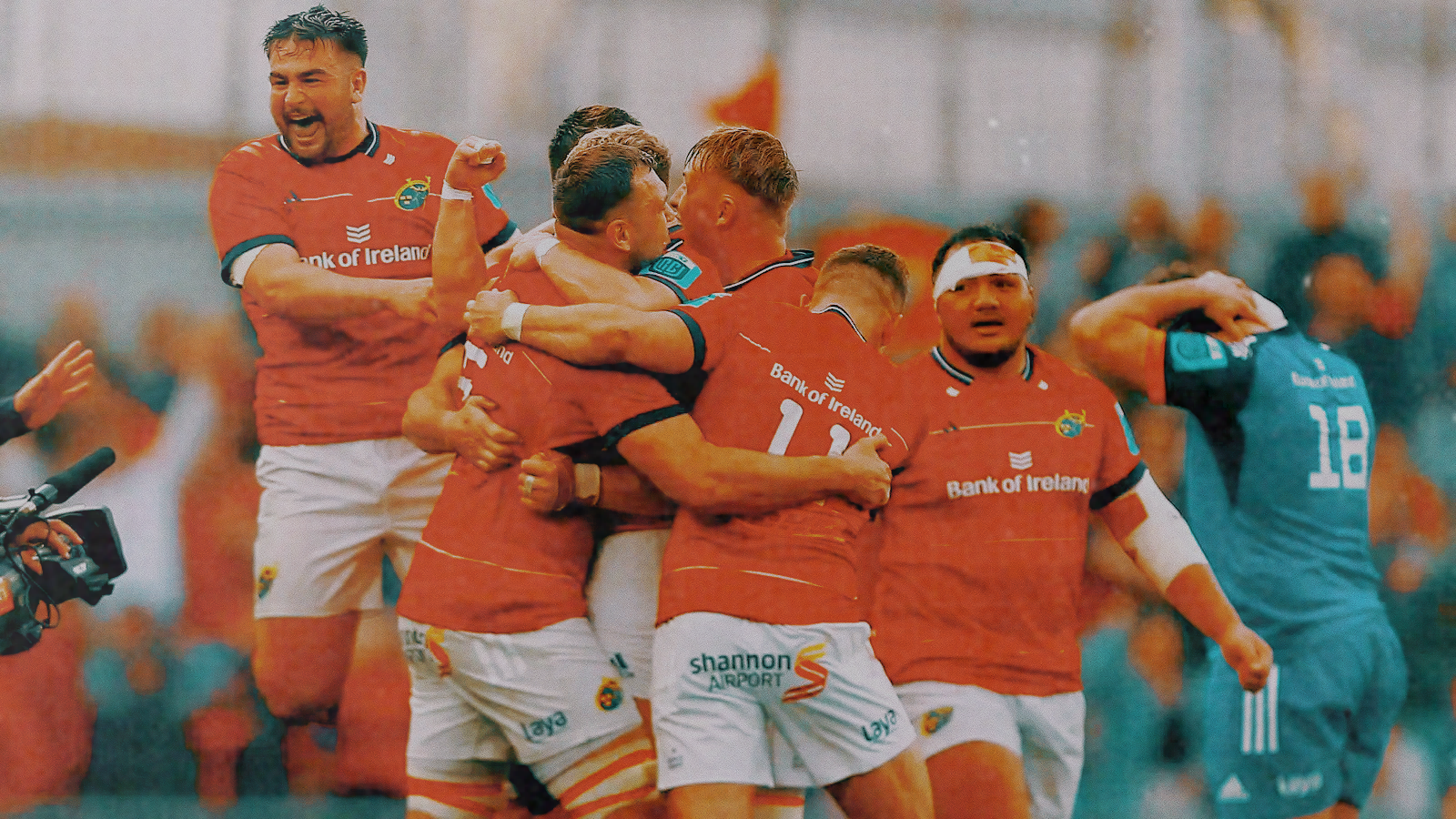
It was badly needed. I wrote this in the preview to that URC semi-final and I think it’s worth looking at again.
The Munster vs Leinster rivalry, such as it is, could be described as being in a bad place as of the end of last season. We are no longer “like for like” rivals as we could have been described in the mid to late 2000s or for a period between 2013 and 2017. This game used to be called the “O’Classico”, a fairly ham-fisted reference to the Real Madrid and Barcelona rivalry but, ham-fisted though it was, it fit. This was the biggest game in club rugby for a while and, while it still has elements of that prestige, it’s not contested on anything close to even terms and that isn’t good for anyone.
The rugby environment that we have in this country needs a balance between Munster and Leinster. When it was imbalanced in Munster’s favour, we got breathless, curdling folk stories that turned every other player into a combination of Fionn Mac Cumhaill and Christy Ring while all playing for the honour of De Parish while Leinster were enervated, champagne charlie bottle jobs. Neither was true, but that’s what results allowed the media to believe and spread around like slurry.
In the last few years, it’s gone completely the other way when it comes to narrative. Leinster are treated with a kind of reverence typically reserved for Elon Musk by that weird subset of anime fans who are also really into crypto.
When one side or the other is too dominant in this fixture, it throws the balance of the rugby eco-system off. The reality is that between 2009 and 2013, and from 2018 until now, Leinster have been the better team with the better players and, more often than not in this game, that means they win, we lose.
It’s the reality of the sport. In soccer, there’s more scope for luck to influence games like this but rugby is different. They say you create your own luck but, for most of the last decade, we’ve managed to create our own bad luck wherever possible. I can think of several losses to Leinster that could and should have been won if not for daft penalties given away in the last ten minutes and/or multiple kicks being missed (JJ Hanrahan had a horror run off the boot against Leinster during his second spell here) or periods where we conceded 14 points while a man up and ended up losing by a point.
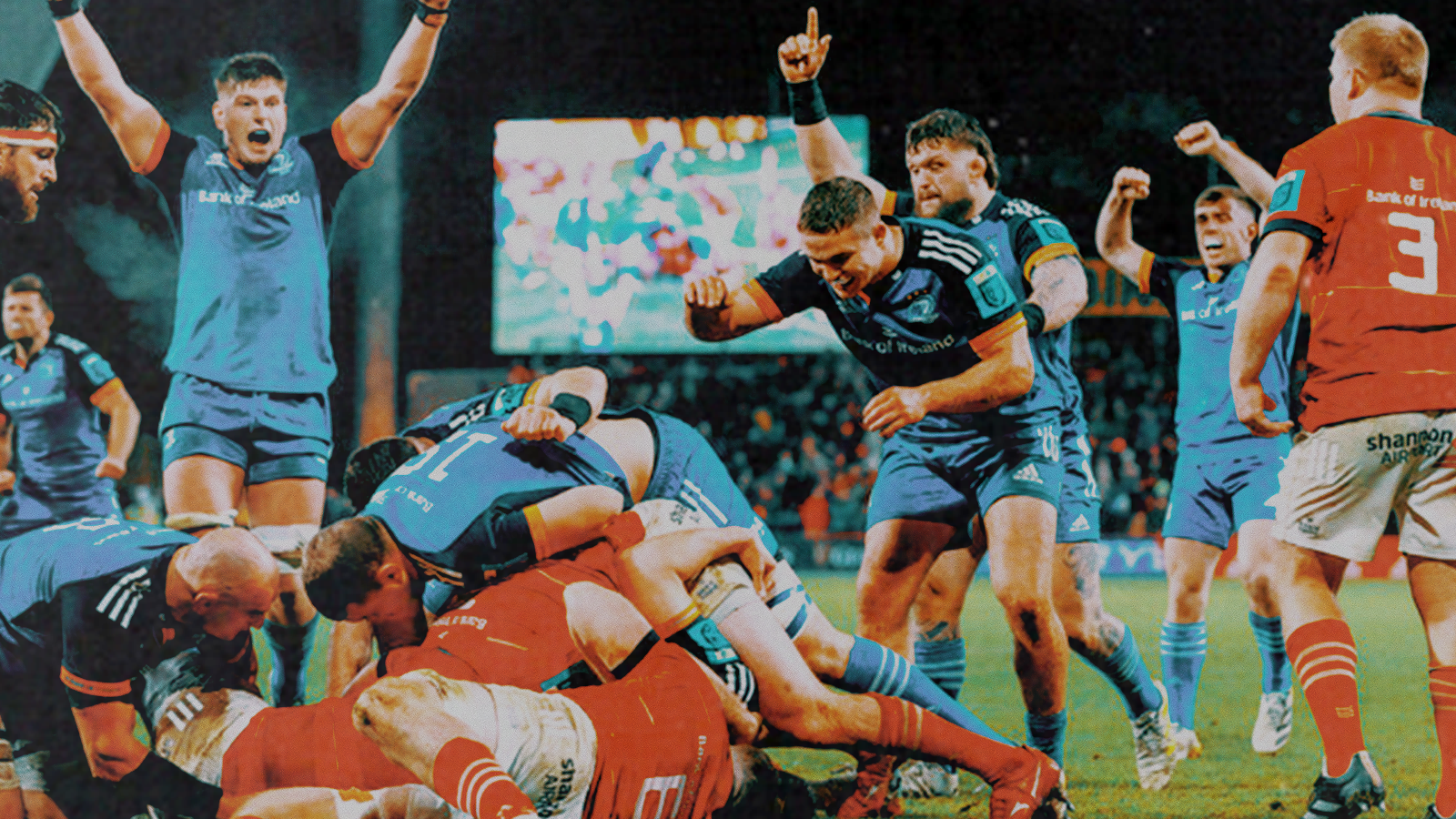
That all adds up to a lopsided relationship between the two teams. Seven Munster wins in 14 years.
And yet.
This Saturday Croke Park will have close to a full sellout – 82,000 people – to see an early season URC game between Munster and Leinster. It’ll be the highest-attended regular season club league fixture since the mid-2010s and one of the largest club rugby attendances of all time. It’ll probably be the largest sporting event of the weekend in Europe, regardless of the sport.
Yeah, some of that is the novelty of the Croke Park factor, without question; this is the first InterPro played in that stadium since Leinster won that European Cup semi-final in 2009.
Sure, Leinster played Northampton at Croke Park a few months ago – and sold out the full 82k tickets – but that was a big European knockout game.
In my opinion, it’s all of these things; playing Munster in that famous stadium, with all the echoes of 2009 that come with it, is an enthralling, and entirely different prospect. I’d hazard a guess that well over 30% of the attendance will be Munster fans too so, as occasions go, it’ll belie the recent win/loss record.
So Do Wins and Losses Even Matter?
Maybe they don’t. In a lot of ways, I think the relationship between Munster and Leinster goes beyond that. It’s had to, quite frankly.
In some ways, I think the modern era of social media has erased the ability to remember much beyond the last six months. Losses sting intensely but are soon forgotten as the next wash of the controversy cycle blows through. It’s the same thing for wins, even trophies. I found that the URC win in 2023 was old news or felt like it less than a week later.
Back in 2009, I distinctly remember feeling crushing disappointment after that semi-final loss but I never had to endure the social media backlash that now happens after every loss. You’d commiserate with your friends, and dread looking at the papers on Monday, but that was it. There wasn’t a blaring cacophony of triumphalism from the worst sociopaths that the opposition can muster clambering out of your phone like Samara from The Ring like there is now.
As human beings, we’re not built to handle seeing the innermost thoughts and scorn of our enemies, even if they are para-social enemies that we only know as avatars on our phones.
Has that wash of para-social jeopardy combined with the short attention span and never-ending cycle of Stuff That’s Going On reset the rivalry to zero? Maybe.
My own opinion is that the fans of both provinces – and the provinces themselves – still view the other as a benchmark of sorts and take their emotional cues from the provinces and players themselves. Munster are not a peer rival for Leinster in the way that La Rochelle and Toulouse currently are. Leinster approach those clubs with a sense of dread that Munster, currently, does not engender in them. That isn’t to say that Leinster don’t fear the idea of losing to Munster; they do. That, for me, is different than the fear they have of La Rochelle and Toulouse.
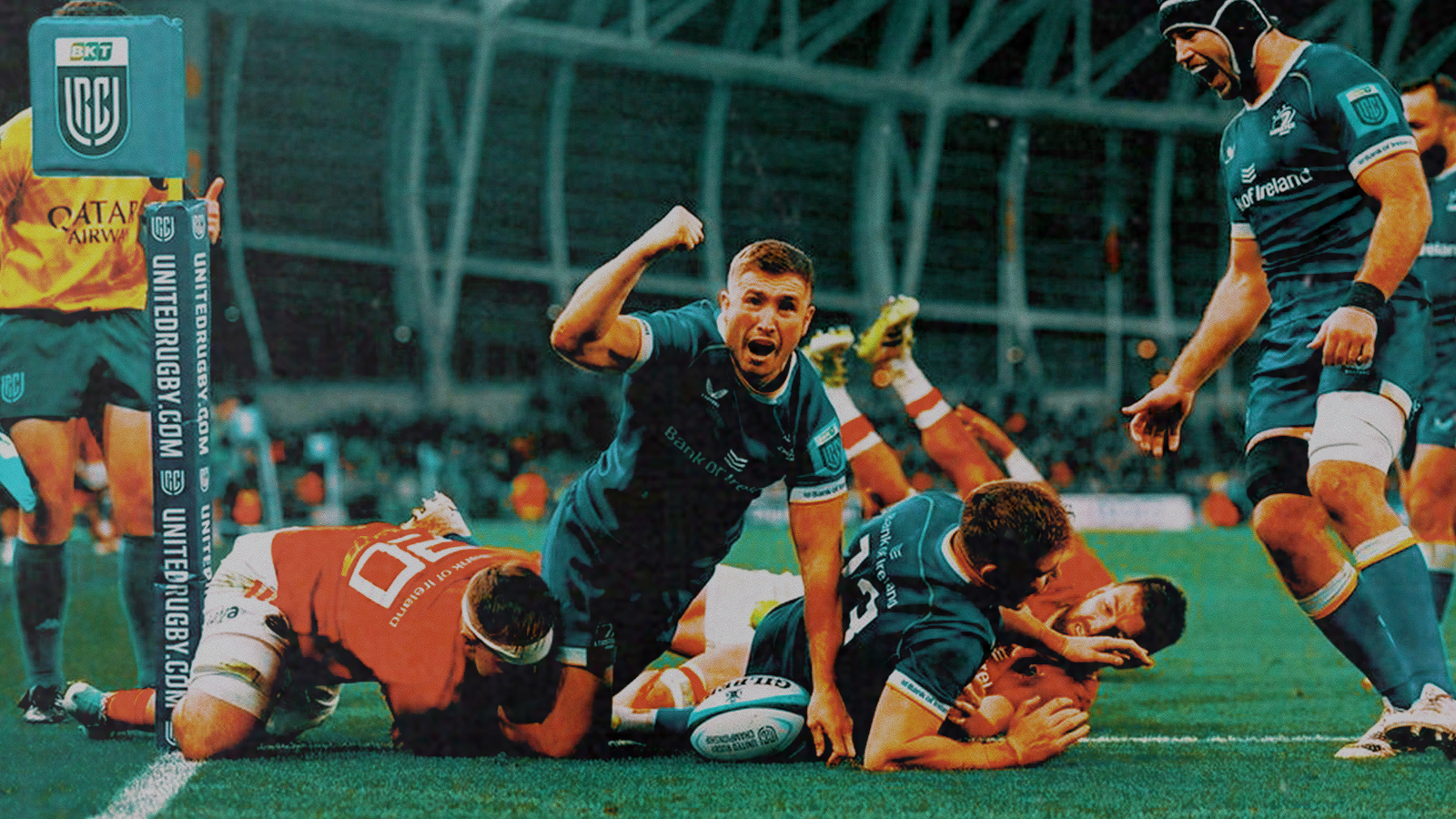
Losing to Munster, home or away, is something that Leinster have not had to deal with all that often since 2009. That win, in a way, slayed the Munster devil of the 90s and 2000s that, by our success, cast Leinster as feeble, weak-minded, fey, fancy dan losers by everyone from the media, to their own fans. Since that day in Croke Park, Leinster have been busy with the business of catching up with our Heineken Cup tally, then surpassing it, then chasing five stars. The devil was dead and buried.
But in the back of their collective mind is that bad memory; a blood-red shadow creeping. Any loss could see that devil remembering who and what they are. That devil brings back the bad old days, as far as they are concerned, far more than any loss to La Rochelle or Toulouse that can be handwaved away to budgets, foreign mercenaries or scheming referees.
Leinster feel that fear in a different way. They react accordingly. Leinster often play with an aggression against Munster that you don’t really see against any other team.
I sometimes feel that Munster forget just how big a boogeyman this province is; not just to Leinster, but to all the great sides in Europe. They’ve all been scarred by the devil if you go back far enough. Sometimes I think we cast ourselves a little too much as underdogs happy to spring a shock.
This Saturday, maybe it’s time that Munster remembers what we are and remind the world that the greatest trick the devil ever played was convincing the world that he did not exist.
