


It wasn’t all that long ago that Munster’s first-choice back three was some combination of Simon Zebo, Andrew Conway, and Keith Earls.
I say “combination” because despite all three players being synonymous with Munster over the last ten years or more, they didn’t play together all that often. Simon Zebo’s move to France combined with some weird spells where either Keith Earls would be fit or Andrew Conway would be fit but not both at the same time meant that Zebo, Conway and Earls never really got to build much time together directly before and after the pandemic. The last time all three started a serious game together was the PRO14 semi-final in May 2018.
Somehow, it feels like it shouldn’t be true, but it’s true all the same.
In the last 12 months, all three players retired in the very Munster tradition of losing vast swathes of experience, seemingly all at once. I’ve spoken a bit about Simon Zebo and Keith Earls in the last year but didn’t get around to writing about Andrew Conway after he missed the entirety of his last season, came back for the opening game of last season and then retired. With Keith Earls retiring a month before and Conway retiring in November the day I was writing a Red Eye for Ulster, it got put on the back burner until I forgot about it entirely with the December crunch.
I’ll put it like this; for four seasons between 2016 and 2020, Andrew Conway had a great argument to be one of the best wingers in the world. In those four seasons, he scored an average of just over 10 tries a season. His lowest scoring season in that period saw him score nine times, twelve was his highest. He had a great knack for scoring in big games, too. Lots of wingers rack up their try-scoring in turkeyshoot games against bottom feeders and while Conway did that, of course, he also made a habit of scoring big tries in big games.

He joined Munster from Leinster in the summer of 2013 after spending three somewhat frustrating seasons in Dublin. Conway was an outstanding school player for Blackrock College and joined the Leinster academy straight out of secondary school, even going so far as to make his full professional debut for Leinster at 18 years of age. He went on to score 20 tries in 22 games for the Irish u20s and Emerging Ireland before finding something of a glass ceiling at Leinster in the following seasons. He found himself in the “league” team with the Heineken Cup team more or less set in stone at that point. Conway was a Munster fan growing up and, when Munster made a pitch to him in 2012/13 about moving for more opportunities, he took it, seeing no real way to break through into Schmidt’s real team. A bit like today at Leinster, there is the Real Leinster that plays the big games in Europe, and then there’s the Rest. Conway was in a weird spot where he was obviously too good to be considered part of the Rest but found his way blocked at Real Leinster by Luke Fitzgerald, Rob Kearney, Dave Kearney and Isa Nacewa.
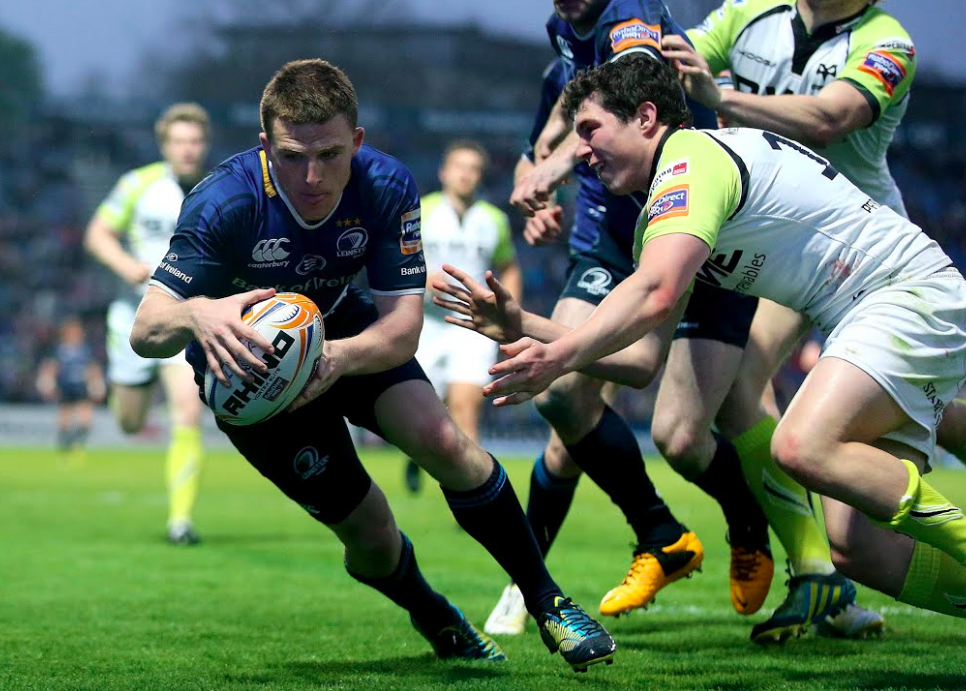
Ironically enough, right after signing for Munster, injuries elsewhere got him a run with Real Leinster in the Challenge Cup knockouts and the league final that season. He finished with two trophies and started a new journey at Munster where it was far from plain sailing, at least initially. Conway didn’t immediately jump into a starting role at Munster, something that frustrated him clearly at the time. He moved from Leinster to play for Real Munster but a combination of factors – including a knock in preseason – saw him limited to league action once again. The next season was much better and he was pretty much a first-choice guy thereafter whenever he was fit.
In Rassie Erasmus’ first season, Conway properly ascended as a top-level scorer and began to deliver on the potential everyone saw he had at eighteen years old seven years later. Conway was the best outside winger in the country right as he turned 25 and finally got an Ireland cap on tour during a Lions year in the summer of 2017 after scoring 11 tries in the previous season.

At his best, Conway was a lock-down defender, an outstanding chaser and aerial operator while also being devastatingly quick and agile in the outside channels.
Once he started getting consistent opportunities for Ireland, he started to bring his outstanding scoring to that level too. After that elite four-season run, Conway started to pick up a few knocks once the added load of consistent test rugby was added to his slate; a fairly consistent thing for most players. Conway made 27 appearances in 2016/17, 23 in 2017/18, 25 in 2018/19 and 22 in 2019/20, which was outstanding durability for a modern winger. At that point, Andrew Conway was close enough to being one of Munster’s best-paid players which makes a lot of sense given his scoring and performance around that time.
Conway’s 20/21 and 21/22 were not at the same level as what had come before but they were still good by the standard of most wingers. His injuries came to a proper head at the end of the 21/22 season where he barely featured after the Six Nations and when he came back he looked a ghost of the player he was. Conway wouldn’t play for the entire following season with a knee injury and, fittingly enough, scored a try in his first game back against the Sharks but that would be his last appearance.
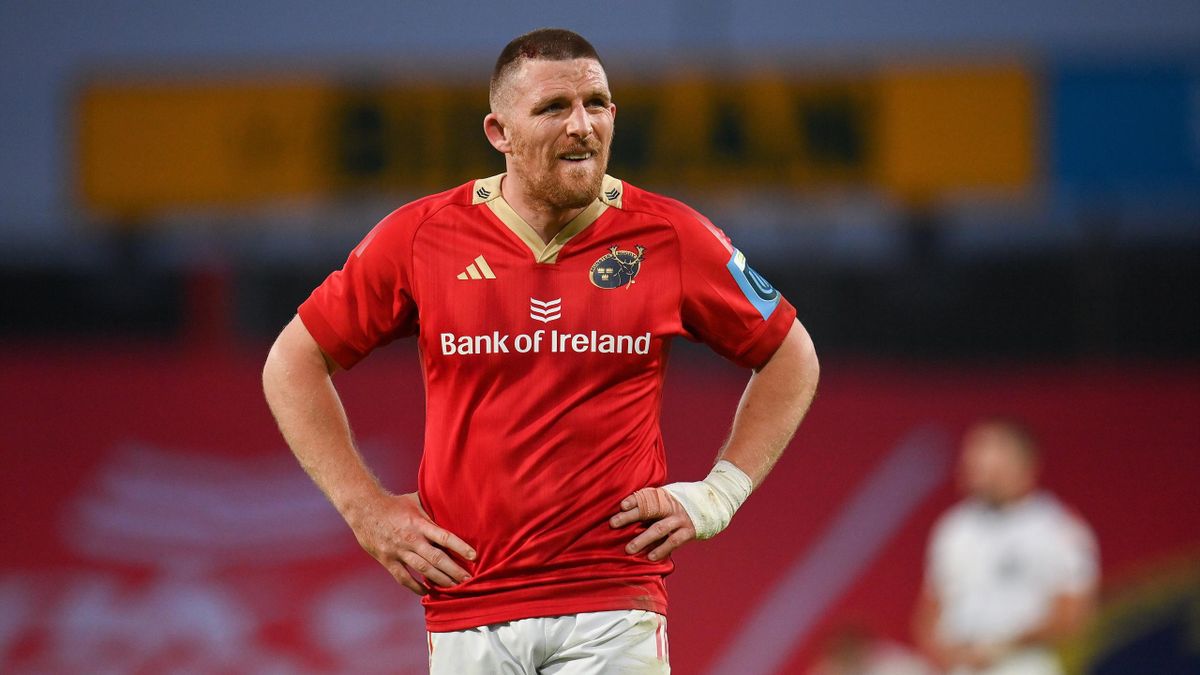
He succumbed to a knee issue after the game and retired immediately a month later. Andrew Conway can say this; he delivered on almost undeliverable levels of hype with a four-season run at the top level of the game that few wingers will ever match when it comes to completeness.
Losing him last season put pressure on our back three rotation, especially with Keith Earls retiring at the same time, but that was the story of last season when it came to Munster’s back three. The never-ending parade of second-row injuries last season was quite effective at hiding the fact that our back three was arguably even more injury-hit.
With Conway and Earls retiring mid-season, followed by long-term injuries to Haley, Coombes and Campbell, we were pressed into using Sean O’Brien – signed as a midfielder – as a winger for most of the season alongside Daly, Nash and Zebo with Shay McCarthy and Ben O’Connor filling in as year one academy players when needed.
It’s no surprise then that Munster made two back three signings in the off-season to repopulate a thinning depth chart but that, in itself, creates a few questions of its own.
- CORE 1: A vitally important player who will start most games or play an important role in them.
- CORE 2: An important senior player who will likely make squads as a starter or replacement in elite games.
- SQUAD 1: A player who can slot in for one of the CORE 1/2 players if they are injured and can be a match day 23 player for lower tier games as a starter or replacement.
- SQUAD 2: A player who is an intermittent option in the match day 23 regardless of opposition.
- FOUNDATION 1: A young player – under 25 – who can become a CORE 1 player.
- FOUNDATION 2: A player expected to top out around CORE 2 or SQUAD 1 level.
- PRIORITY 1/2/3: A player who needs to be cycled out inside one year (most pressing), two years (wiggle room) and three years (ageing but not a pressing matter)
| Player | Role | Age on Jan 31 2025 | Contract Expiry | Rating |
|---|---|---|---|---|
| Calvin Nash | Complete Outside Winger | 27 | 2026 | CORE 1 |
| Thaakir Abrahams | Slashing Outside Winger | 25 | 2026 | CORE 1 |
| Diarmuid Kilgallen | Heavy Strike Runner | 24 | 2026 | CORE 2 |
| Shane Daly | Heavy Strike Runner | 28 | 2025 | ASSESS 1 / CORE 2 |
| Liam Coombes | Heavy Strike Runner | 27 | 2025 | ASSESS 1 |
| Mike Haley | Lockdown Fullback | 30 | 2025 | ASSESS 1 / PRIORITY 3 |
| Patrick Campbell | Slashing Outside Winger | 22 | 2025 | FOUNDATION 2 |
| Shay McCarthy | Heavy Strike Runner | 22 | ACAD | ASSESS 1 |
| Ben O'Connor | Heavy Strike Runner/Inside Kicker | 20 | ACAD | FOUNDATION 1 |
Losing Earls and Conway – our two most established wingers – inside a month would have been an absolute nightmare, had it not been for the emergence of Calvin Nash in 2022/23 as, not only a player capable of performing at the highest level but also as almost an exact role twin for both Conway and Earls.
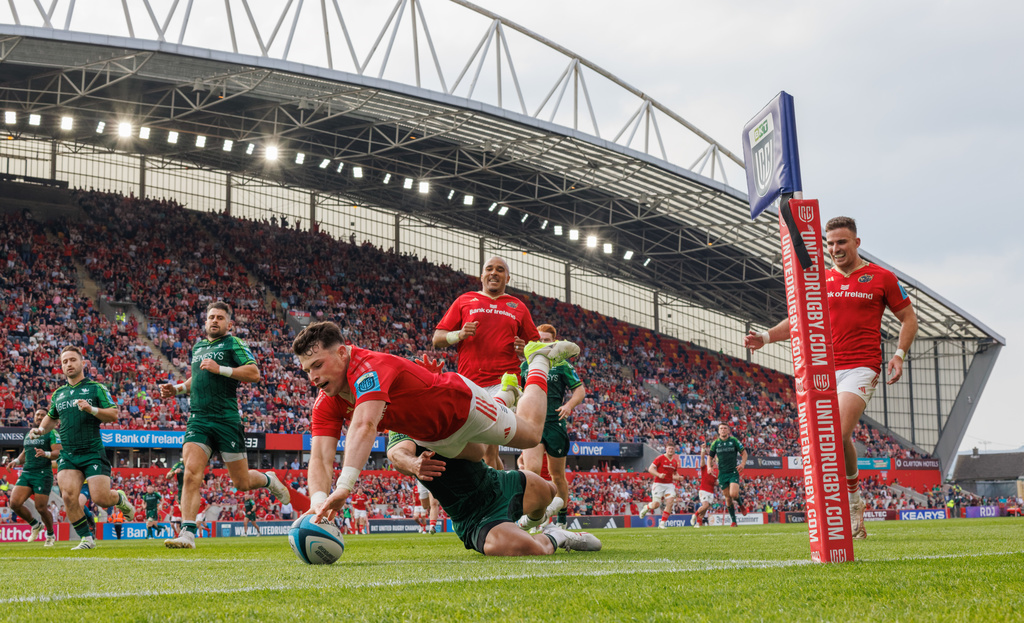
Nash gives you almost a perfect blend of what Conway and Earls gave Munster at their peak; he’s a top-class finisher, a really good defender and chaser, while also having the kind of x-factor to his game that has marked him out as being a top prospect for years.
A bit like Conway, Nash was one of those highly-rated school players who found the transition from underage superstardom to senior rugby quite difficult, especially as he was coming through under Johann Van Graan. Van Graan was a conservative selector who got badly burned by the most radical selection decision of his career in 2017/18 when he selected Alex Wootton ahead of Simon Zebo for a Champions Cup semi-final. I often felt like he was nursing that wound for the rest of his time here and, as a result, he stuck religiously to Conway, Haley, Earls and Sweetnam, with dud minutes aplenty for every other player in his back three roster.
That was Calvin Nash’s lot as recently as 2021/22 when he played just eight times. As I wrote at the time;
Everything that’s true for Shane Daly is equally true for Calvin Nash, who has to hit the ground running this season, impress on the Emerging Ireland tour and, basically, make it plain to Munster that he needs to have Andrew Conway’s spot as the first choice Outside Winger. He has the pace. The defence is a question mark still, but if he can showcase some real attacking fireworks in a system that is being built to produce them, he’ll go far this season. It really is all on him now to deliver on his undoubted potential in a contract year.
As it turned out, he did exactly that in 2022/23. He played 17 times, scored seven tries and played a vital role in Munster winning the URC that season as well as being our best player away to the Sharks in the Champions Cup knockouts. He went on to get called into the World Cup training squad before making his test debut in a warm-up game that summer. Nash didn’t make the cut for the World Cup but he stuck at it with Munster at the start of the new season and, when a few injuries popped up around the test side in February of 2024, he got a start in the Six Nations against France, scored a try, got selected again against Italy and scored there too.
He started every game of that Six Nations and kept his place against South Africa in the Summer Tour where he started both games.
Since the summer of 2022, Calvin Nash has been taking every chance that has come his way and, at 27 years of age, seems to have that ideal balance of elite pace and agility, game sense, top-level defensive and aerial understanding with enhanced durability. He’s a CORE 1 talent and, in a unit with a lot of questions attached to it, is an easy answer. Whatever our Category A back three is, Calvin Nash is a core part of it if fit.
Shane Daly was Munster’s Mr. Consistent last season, making 23 appearances and scoring six tries. In a year where injury touched every single on-field unit, Daly was a constant. That alone is valuable but he produced well on the field too, albeit not to a consistent elite level.
A few years ago, I wrote the following about Daly and I think it’s still true to an extent;
Shane Daly is out of contract this season and finds himself in a weird spot in that he’s been in Andy Farrell’s Ireland camp, got capped, played well but then slowly drifted out of contention in the following two seasons. Did he lose confidence? It often happens when guys come out of Ireland camp a little bamboozled by the levels, different training types and filling different roles.
That question of “role” is a key issue for Shane Daly as he enters a really important season for him personally. He’s played 78% of his rugby as a winger for Munster but he got called into the Ireland camp after impressing at fullback at the end of 2019/20 before being played as a winger in the James Lowe role once he got into a test jersey but he’s been called up to the Emerging Ireland tour and been listed as a centre.
Ultimately, I think he’ll be best served being classified for us as an Inside Winger with a hybrid Layered Power Handler/Heavy Strike Runner classification to fit in at Munster and then for Ireland. If he can, he’ll get a new deal. If he can’t make it stick, I think Munster might look to move on.
He signed a two-year deal later that month – September 2022 – and he comes to the end of that deal this season, as far as I can tell. It feels bizarre to say that a guy who played 23 games for Munster last season while being easily a first-choice option for Category A games is now someone in ASSESS 1 territory.
So I should explain my reasoning.
I think Shane Daly is a really good player but I think he falls into the category of being a little too slow to be an elite winger or fullback and a little too light in the carry and short in the boot to fill a James Lowe-esque inside winger role. The Munster #11 jersey was a magnet for linebreaks last season and I sometimes felt that Shane Daly – who mopped up most of those linebreaks – underscored them a little. Daly has all the qualities that should make him a test-level regular, if not starting every game then at least on the bubble but he isn’t. I think all of the things he isn’t quite able for have moved him down the chart.

There is no question for me that Munster should re-sign Daly but my question would be – in what role and on what payment tier? Daly is coming into the territory where the modern back-three player needs to be getting the biggest possible contract. Contract value is plummeting for all but the elite, test level back three players once they hit 30 so, at 28, the next two-year contract for Shane Daly needs to be either a raise on his current terms or a move elsewhere while his stock is high. Daly is in a tough spot in some ways in that he’s a former international, technically, but he’s been solidly outside the test bubble since directly after the pandemic.
If Munster can get the contract done at more or less his current wage, I think it’s a fantastic deal. Daly is consistent, durable, very solid in the air and the tackle while covering every role in the back three and midfield, in theory. My ideal scenario for Daly would be for him to get more reps in the Munster #13 jersey this season and re-sign on those terms. He had a poor game defensively in his first preseason game at #13 against Gloucester but I think if he plays there alongside Nankivell or Farrell one or two times, we’ll get a better look at what he’s capable of on both sides of the ball in that role.
I’m not saying “make him a utility player” but I am saying that the qualities Shane Daly brings as a complimentary player in our system are hugely valuable and worth retaining. I think his selection at outside centre for the first time since an away game against the Cheetahs in 2018 in the last preseason friendly is a nod to that desired utility.
Daly might feel, however, that there is greater value for him elsewhere. There are some contradictions to unravel in this deal, I feel.

The same is true for Mike Haley, who is coming due on a two-year contract this season. Haley, who signed from Sale in 2018 after Simon Zebo left for Racing 92 has been an unbelievably consistent player for Munster. His outstanding defensive solidity, high ball work, positioning, kicking and power on transition have been almost ever-present for Munster in the last six seasons. Last season was, by some distance, Haley’s worst at the club from a performance level but almost all of that came down to a serious hip injury that saw him miss the first six months of the season and arrive back at a time when there was no time for him to get back up to speed.
That was the longest injury in Haley’s time here and it felt like the time out of the saddle threw him off more than most. Haley is a classic Lockdown Fullback in that his best features are almost all on the defensive and transition side of the ball. For the bulk of his time here, he was the best aerial, positional and tackling fullback in the country with really good length on his kicking but, for me, what consistently kept him out of Farrell’s test consideration was his average to decent work on the offensive side of the ball.
Scoring tries has never really been an issue for Haley. He’s got the same number of tries per game as Hugo Keenan, for example, but the difference in pace, attacking quality and “danger” on transition between the two is night and day. Keenan is a devastatingly effective runner during phase play and in transition. Haley is a decent run-back on first phase in that he’ll rarely go backwards and he’ll set a platform, but he doesn’t beat the first defender all that often and his creativity on the move isn’t elite either. He’s not a Slashing Edge Playmaker like, say, Willie Le Roux or Damian Willemse, so his usage in that capacity is limited.
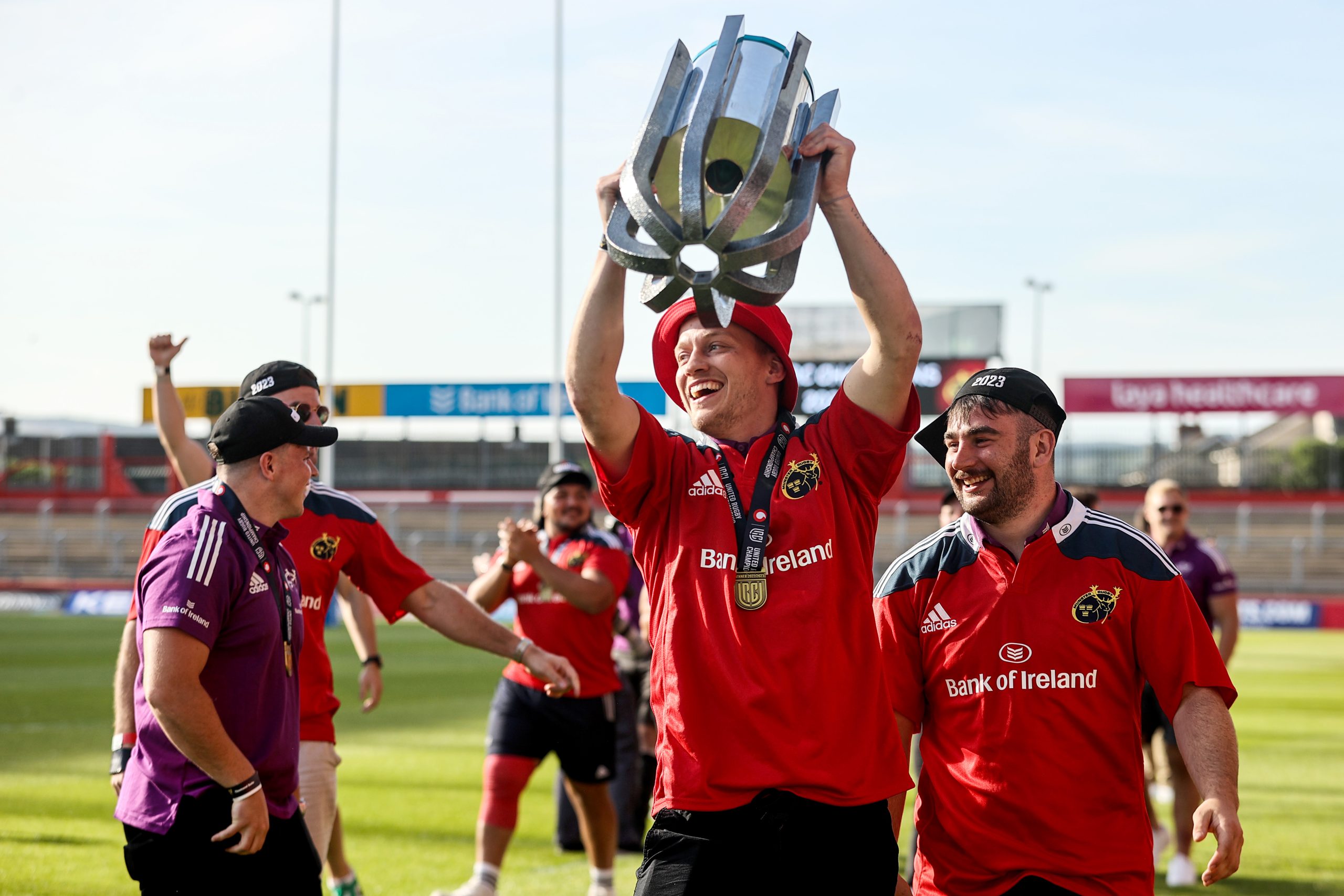
I have Haley down as an ASSESS 1 player here because of this and the fact – and I think it is a fact – that any contract you hand out to a back three player in the modern game aged 30 or over at the elite level has to be perfectly judged. Put simply, is signing Haley on anything close to his current wage good value for Munster going forward? Haley is a senior, established professional who isn’t on Ireland’s radar so, almost immediately, he’s in that zone of contract that the provinces have been cutting in the last few years e.g. Ross Molony, Ed Byrne, Billy Burns, Will Addison etc.
This is the first time that Munster has had a crop of players in that bracket out of contract at the same time and I wonder if Haley’s contract might come under pressure with needs elsewhere. Maybe a move back to England at this stage of his career would make sense with a tonne of possible destinations for his valuable role-set. Mike Haley would be 31 at the start of any new contract he’d sign so a two-year deal brings him up to 33 years of age so that will undoubtedly influence decisions. Remember, it’s not about signing what you have now, it’s about who the player you are paying on July 1 2025; is that guy worth what you’re paying? Haley is already entering the REPLACE bracket so making a clean break there sooner rather than later might be preferable.
Munster’s two signings this offseason – Diarmuid Kilgallen and Thaakir Abrahams – have not been signed to make up the numbers and both, in my opinion, have been signed to immediately upgrade our back three for Category A games.
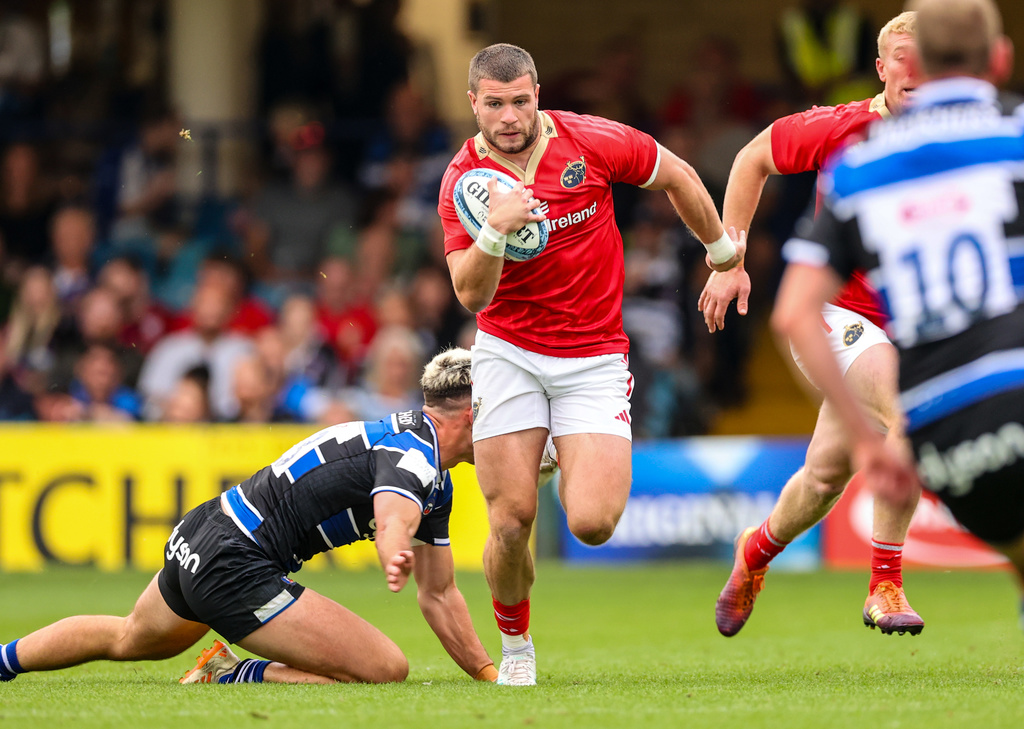
Abrahams, in particular, has not been signed as a depth option. The only question is whether he’ll be wearing what has been Shane Daly’s #11 shirt or what has been Mike Haley’s #15 shirt. If most of Munster’s best linebreak opportunities last season fell to Shane Daly in the #11 role, it stands to reason that Munster might want more pace in that slot to maximise what we’ve been producing there. Abrahams certainly brings that.
In that context, it makes sense to try Daly as a possible utility option at #13 to utilise him a lot like the All Blacks and the Blues have done with Rieko Ioane from a purely stylistic perspective. At the same time, if Nash is a cert in the #14 jersey, as he almost certainly is, does using Abrahams at fullback maximise our danger on transition and in settled phase play? Essentially, do we get the ball in Abrahams’s hands more regularly at fullback?
Kilgallen is also an intriguing option because the role he’s been playing for Connacht in the last few years – when fit – is a perfect match for that #11 role. He’s got Daly’s size, weight and aerial game but he’s considerably faster. If he can match Daly’s durability this season, that will be an interesting battle when it comes to Category A games. That said, I think for a lot of the season Kilgallen and Daly will play in the same back three as Nash will be minute-managed by default.
Both Liam Coombes and Patrick Campbell are solidly in ASSESS 1 territory this season but for different reasons. Both players have been plagued with injury in the last two seasons and both possess massive upsides in a contract year.
Campbell is a Slashing Outside Winger with the kind of pace, agility, acceleration and evasion to be a proper game-changer for Munster at fullback or in the #14 role, albeit with a lot of work to do defensively and under the high ball.

It’s that offensive potential that is the most exciting part of his game and a large reason why he got a 1+2 contract two seasons ago. He’s been plagued with injury since then and that’s been a large reason why he’s dropped off the map since having a breakout season for the Irish u20s off the back of that performance in Coventry against Wasps during COVID.
You’d imagine he’ll get a lot of opportunities early this season to showcase his skillset after a frustrating few seasons but the x-factor here is a rumoured Scottish qualification and rumoured SRU interest in Campbell. Whether agent-talk or not, it does add a wrinkle to his contract negotiations and his potential usage this season. Scottish rugby finds itself in a spot where it only has two clubs at the elite level and so can pour all of the financial benefits of test rugby into those two clubs. Edinburgh and Glasgow are two of the best-resourced clubs in the URC and have a budget higher than a lot of Premiership clubs. Scotland’s underage system is badly under-resourced, however, and they’d had a lot of success lifting players from other unions through either residency qualification – Schoeman, Van Der Merwe and soon-to-be Josh McKay and Tom Jordan – or through ancestry caps.
Sione Tuipulotu, Jones, Rowe, Steyn, Richardson, Dempsey, and Ashman all qualified through Scottish relatives and that list goes on and on. Of course, Ben Healy was a high-profile acquisition for Scotland in the last few years from a Munster perspective. He, along with all the others, was attracted by the comparable money and the promise of easy test caps along with the ancestral connection, so the rumoured risk in Campbell’s case shouldn’t be understated.
The SRU might well take a punt on him. Munster, on the other hand, will be looking to see what they actually have in Campbell’s case to either match what the SRU might, potentially, offer or stick with their idea of where Campbell’s value and potential progression is at. I’d look at a two-year deal right now with the idea of really pushing him this season.
Liam Coombes just needs to stay fit for an extended period so he can offer his strengths consistently; real pace and finishing at #11 and #14 with possible cover in midfield also. If he can, another year extension might make sense for him but he is in danger of getting squeezed out if we’re looking to push some budget into another area of the squad.
In the academy, Shay McCarthy has to continue to momentum that saw him make the academy in the first place. He’s tall, he’s rangy, he’s quick and he’s got decent power when he needs it. He’s still quite raw when it comes to game sense and some of the finer details of the role. I think a good season for Shay, if injuries elsewhere are even at a normal level, would be around 10 appearances this season with 5 starts and then progression into Year 3 of the academy next season.
Ben O’Connor is a player with such a high ceiling that I almost don’t want to get into it too much, lest I hype the lad beyond reason. O’Connor is coming off the back of an outstanding U20 campaign and a season where he played five times for Munster as a Year 1 academy player straight out of secondary school, so you could say he’s already running ahead of schedule but we haven’t even scratched the surface with him. Firstly, I think that’s almost an inevitability that he signs a senior contract this season. Secondly, it’s not outside the bounds of reasonable possibility that he plays 10+ times for Munster this season and starts to push as a serious 1B option at fullback.
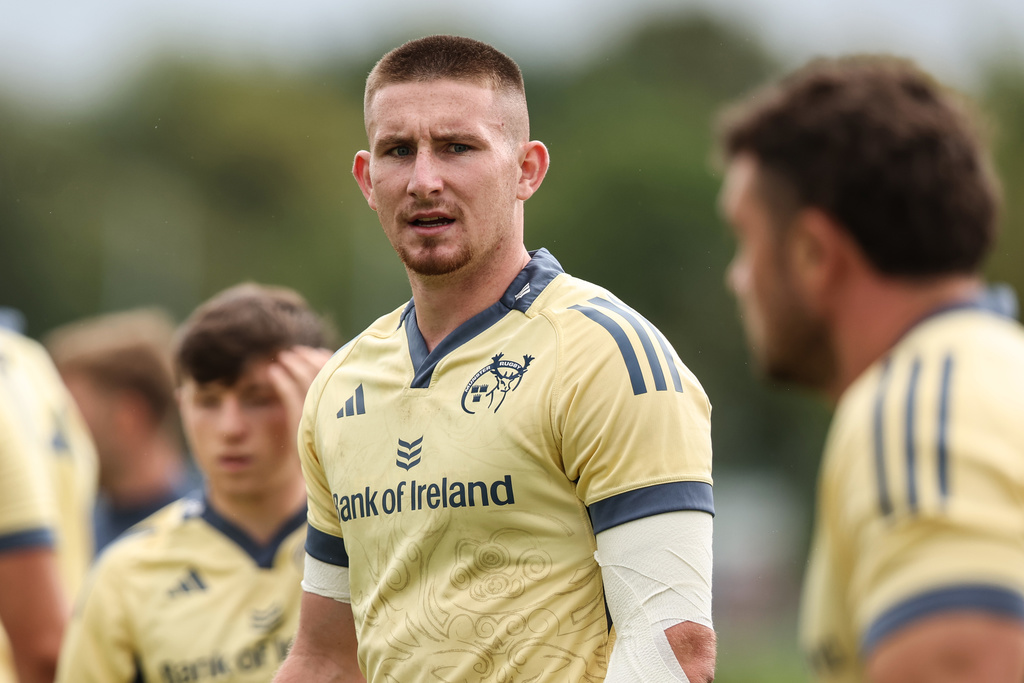
At 6’2″ and 95kg, with scope to fill out that frame even more, O’Connor still has an unbelievable ability to cover ground. He’s dominant in the air, incredibly powerful on the burst and has a massive kicking range that makes him an easy player to select if you’re on the coaching staff.
One of the big drawbacks of selecting young lads at fullback is the boring stuff. It’s less about what they can do with the ball in hand and more about their positioning, their highball work, their ability to exit effectively and their wider ruck support work. A lack of polish in one or all of these areas is what holds most young fullbacks back from earning consistent minutes in teams with big expectations. O’Connor has all of these qualities at a pretty high level, as well as having the kind of athleticism that you can’t really coach.
O’Connor is also an incredibly quick learner. After he got caught in possession against France in the u20 Six Nations this season with a try going begging, you could see him actively looking to avoid that scenario repeating itself in subsequent games. He went looking for those moments again, instead of shrinking away from them. That willingness to learn and improve has been the hallmark of his development to date.
For some reason, I can’t get the idea of Mike Haley’s and Ben O’Connor’s direct future being linked. O’Connor, for me, is a talent that we’ll need to plug into regular minutes as soon as possible to continue his development to where it looks like it could lead – and for me that’s test level.
