


Last time out, I wrote about why World Rugby wants a game that flows more because, in short, it usually means more Ball In Play, more tired forwards, more space, more tries, more speed, more action, more dramatic games and, as a result, higher TV rights deals and, crucially, more fans in through the turnstiles.
I believe this is the version of rugby that World Rugby is trying to shape heading into 2027, with more radical changes on tackle height in the professional game to follow.
Understanding and going with the flow of these law changes is the route to success in the game going through the next four years and beyond. Fighting against them will see you fall behind, like trying to fight gravity as you go over a waterfall in a barrel.
The best teams in both club and test rugby are surfers; riding on top of the trends of the game with the right players, the right coaches and the right systems that all flow into the laws of the game of the time. When World Rugby – then called the IRB but who I’ll refer to as World Rugby going forward – brought in the Experimental Law Variations on August 1st 2008, it radically changed the game. Munster, who were dominant under the pre-2008 laws were used as a negative example of what World Rugby didn’t want in the game during the implementation of these laws.
At the time, rugby was very focused on ball retention. Munster were really good at that, mostly through the process of sealing off the ruck to prevent any possibility of losing the ball against our will once we had it by picking and going, picking and going from absolutely anywhere.
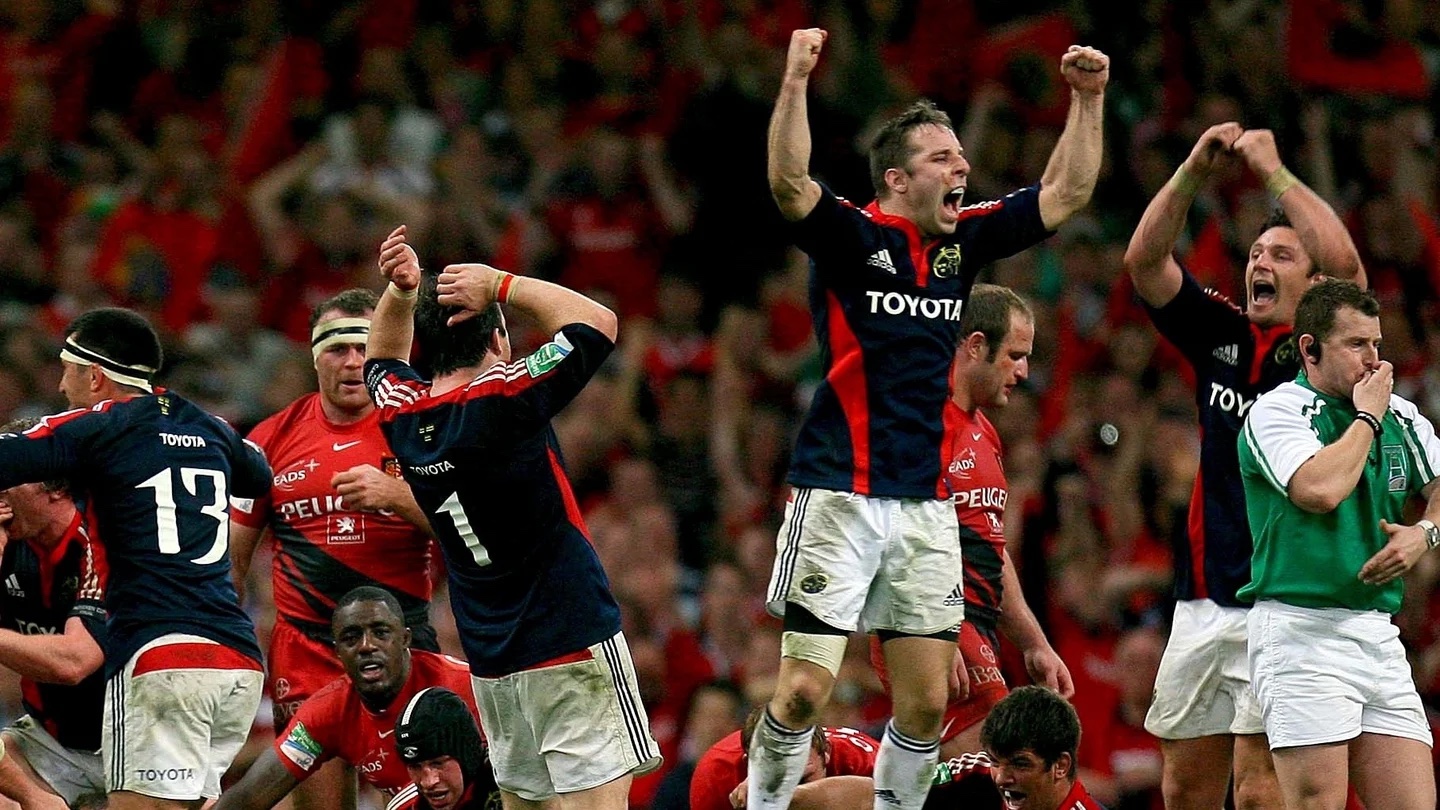
The 2008 Heineken Cup final was seen as the ultimate example of that. After we got ahead with a penalty in the 64th minute, we essentially cheesed the clock with pick-and-go’s for the next 15 minutes to ice Toulouse out of the game. At one point towards the end of the game, we went through 17 phases of pick-and-go rugby in the middle of the field. Hey look, it was ugly, I can see that now but I promise you nobody in Munster gave a shit. We were far from the only team who played that way at the time – Toulouse, for example, were every bit as bad as we were for it.
When you combine that with a World Cup in 2007 that was seen by many as being a penalty-kicking contest in the knockout stages, World Rugby wanted to bring in… well, more counter-attacking rugby. Sounds familiar.
They had three ways to make that happen;
- Prevent “sealing off the ball” at the ruck to encourage more expansive play and give defending teams a chance if Munster, for example, started playing pick-and-go rugby. This gave more power to jackal-build backrows.
- Prevent the back pass into the 22 that allowed you to kick directly to touch while keeping the territory gained from the kick.
- To balance this, they also allowed for mauls to be “sacked” – you could pull down a maul if you did so from above the waist, even if this was rarely implemented properly. It was framed as creating more “ball in play” but was seen by many as manoeuvring by Australian rugby to get rid of a facet of the game they often suffered from.
- Most penalties would now be given for offside or foul play with most other infringements being changed to free kicks.
There were a raft of unintended consequences that came with these law changes, as there almost always are.
This is from a Gerry Thornley article in late 2008 after the first round of the 2008/09 Heineken Cup in the Irish Times that sums up some of the issues;
In further mitigation of Munster, the combined effects of the IRB’s diktat about players going off their feet to “seal” the ball along with the ELVs regarding kicking to touch hardly encourage teams to counter-attack or play from their own half. Why run it when the odds have increased on conceding a penalty? Arguably the two teams most inclined to risk it over the weekend, Munster and Bath, were punished for doing so.
The diktat itself is not a bad thing, for it was meant, presumably, to stop the tactics employed by most teams in an endgame-winning position, regardless of their field position. These pick-and-go drives around the fringes to run down the clock were most famously (but by no means uniquely) exploited by Munster in last May’s final win over Toulouse.
In a further irony, of course, it was Montauban who paid the ultimate penalty over the weekend for this exact offence. That is what the diktat was designed to achieve, for running down the clock in this manner has become an anti-climactic endgame.
The law changes ended up having the opposite of their intended effect in a lot of cases. Now there was more tactical kicking because running the ball from your half was now a massive risk, especially with the laws now favouring “jackals”. It should be no surprise that the emergence of Richie McCaw as a true all-time great, Heinrich Brussow, David Pocock and even the mid-career explosion of guys like George Smith, who was already a three-time Super Rugby player of the year before the ELV changes, all happened post-2008.
But this didn’t mean teams stopped kicking; it just meant they kicked differently to get out of their own half. Box kicking went from a minor kicking tactic in the early 200s – 6% of all kicks at the 2003 World Cup were box kicks – to the only reliable way to exit from your half of the field outside the 22. By the 2011 World Cup, 16% of all kicks were box kicks. By 2015, that number was 23%.
In an attempt to get fewer penalty kicks and more counter-attacking, the law changes of 2008/09 actually encouraged endless kick tennis by tilting the game too much in favour of the defence.
Declan Kidney said the following after a 14-13 win over England in Croke Park that featured near-endless bouts of kicking and very little of the flowing rugby they wanted.
“The changes in the ELVs where you can’t maul means there’s less space. A large percentage of the game is now in the favour of the defence. That’s why you’re getting so much kicking. Hopefully, the lawmakers will look at why there isn’t space on the pitch and the lack of the maul is one of them.
At the ruck situation you have to commit four players to secure the ball, the opposition maybe one or two, so there’s never space with players dropping back.“
This was the beginning of the Ruck Precision Era, but we didn’t realise it at the time. The maul law, in particular, killed a core strength of Munster when it came to winning tight games. Munster had adjusted pretty well to the ELVs after a ropey initial period – new head coach Tony McGahan signed Laurie Fisher as forwards coach in the off-season, which helped. When we were up against most of the teams in our way, we usually had too much for them because the ELVs didn’t make Munster a bad team overnight.
The thought process at the time was that forwards needed to be lighter, quicker and more athletic with all the extra running they would now have to do. We leaned into this game completely in the offseason of 2008/0 with the idea that the ELVs were going to be a long-term part of the game. With mauling now dead as a concept – or so we thought – there was no benefit to carrying that extra 5/10kg that made mauling work. When you could easily sack mauls that weight was needless, especially with the distance forwards now had to cover and McGahan, looking to leave no stone uncovered, conditioned Munster appropriately.
It was most visible in the 2009 Heineken Cup semi-final when Leinster’s punchy and dynamic back-row made Munster’s look old, slow and more than a little outdated by comparison.
Mauling would, essentially, be reinstated by the return of the laws against collapsing the following off-season, but in some ways, the “damage” had been done, such as it was. An ageing Munster forward pack never got back their fearsome reputation.
Leinster weren’t able to go back to back in 2009/10, but when they hired Joe Schmidt to replace Michael Chieka, they set themselves – and Ireland – up for a decade of unprecedented success that we’re still feeling the after-effects of.
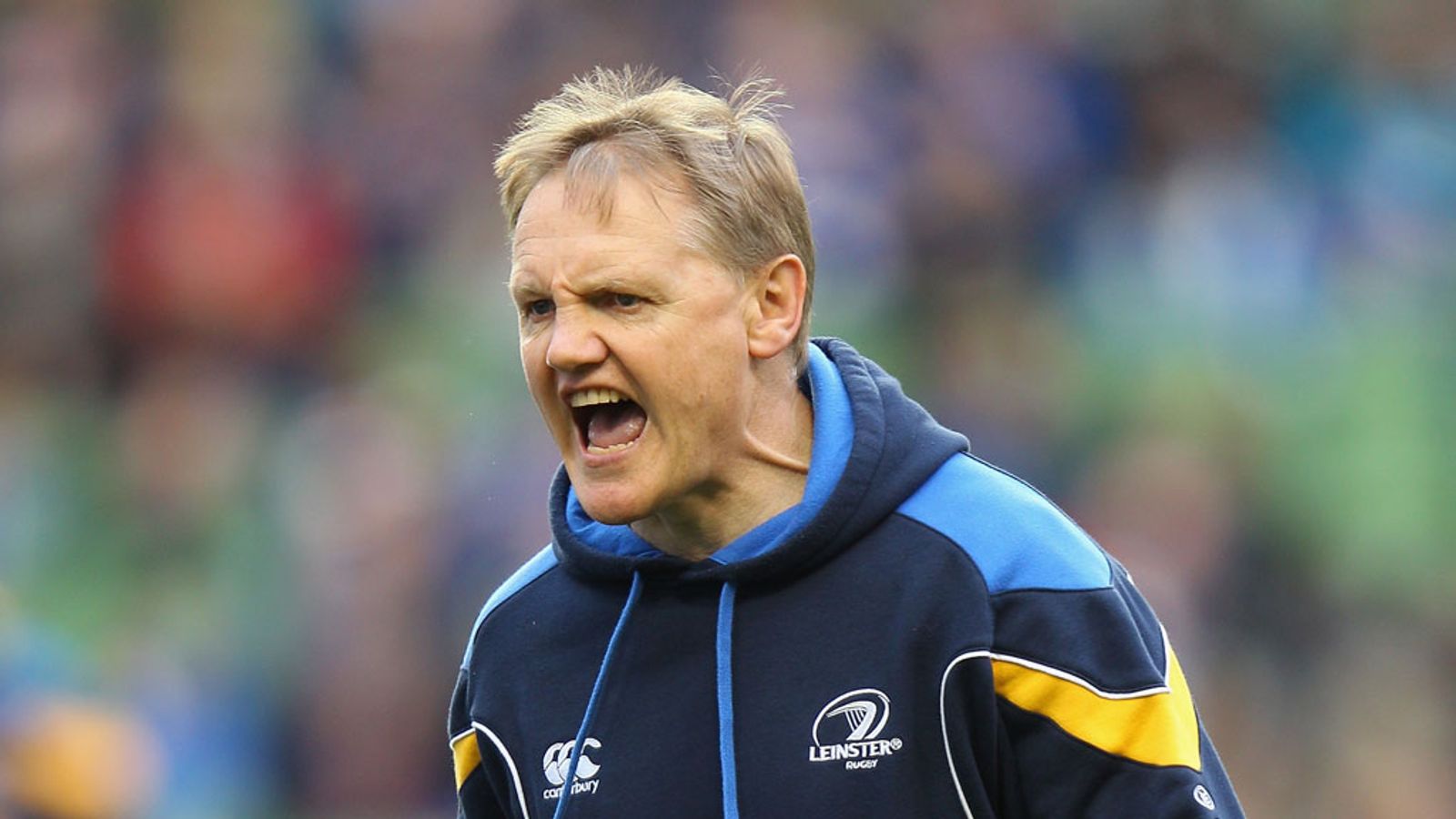
Joe Schmidt is the most important coach in modern Irish rugby history and arguably one of the most influential coaches of the modern era. It’s hard to boil down his philosophy but what he brought to Leinster in 2010/11 was an answer to Declan Kidney’s problem with the ELVs in 2009.
At the ruck situation you have to commit four players to secure the ball, the opposition maybe one or two, so there’s never space with players dropping back.
Schmidt mapped out every breakdown that his team would be expected to hit on specific plays. Players would know where, when and WHO would be expected to clean out any given ruck. Schmidt’s attention to detail at the ruck – and the attention to detail he demanded of his players – was the answer to the fundamental problem posed by the change at the offensive breakdown post ELVs.
Everyone else was still using three or more players to secure the ruck consistently. Leinster often only needed two which, in tandem with Schmidt’s desire to make them “the best passing team in the world” meant Leinster would break you down phase by phase. My biggest memory of Schimdt’s Leinster is how easy most of their tries looked – a pass to the open man who always had space in front of him to run. Like, how was it that easy for them?
They won a Heineken Cup in his first season and then won it again a season later. He won the Challenge Cup and PRO12 in his third and final season before leaving to coach Ireland, where more success followed.
Schmidt was the right coach at the right time with the right players hitting their peak and success followed.
***
I suppose the real question is, are the law changes of the last month and a half going to have as fundamental a change as the modified ELVs?
Probably not, is the simple answer to that, with a more complex answer saying that even if the impact isn’t dramatic, you’d be foolish not to go with the flow of the game as World Rugby wants it legislated.
To me, that means seeing what the law changes are actually telling you;
- The croc roll legislation means, in reality, that long on-ball sequences post-transition with the intent of starting “flow” up again north of phase 9/10 anywhere outside the 22 is now almost impossible to do legally.
- The change to remove the scrum option when a Free Kick is awarded is telling you that over-focusing on scrummaging is a worse mistake than it was last season. You need a good defensive scrum and that’s it. The lineout is and remains the most important set piece, but now it’s by an order of magnitude.
- The change to the so-called Dupont Law means that you have more space and scope for counter-attacking off the opposition’s kicking game.
Understanding what these law changes mean in practice and exploiting the “meta” will lead to success. As a result – and as I wrote in the previous article – I think playing a low Pass Per Kick, low Pass Per Carry game in settled phase play carries the biggest chance of consistent success.
Munster’s point of difference for most of last year was going into long multi-phase possession sequences in the aftermath of a set piece or a kick transition/turnover. Against almost every elite opponent we faced while using this concept, we ended up looking laboured for long stretches as teams got to grips with our 3-3-X shape in settled phase play.
I won’t pretend that being without two of our most dominant and physical locks – Kleyn and Edogbo – for almost every game of consequence played a part in that, as did RG Snyman’s form falling off a cliff after the South African tour didn’t impact our performance. I also won’t try to pretend that guys like Beirne, Coombes, Jager, Casey, Nankivell and others weren’t running on fumes or seriously banged up by the end of May, or early June.
But I think the style of play we engaged with for most of the season played a part in all of that. It’s an exhausting, physically draining and attritional brand of rugby, even with the high Pass Per Carry sequences that came with it.
We never looked better in 2023/24 than we did in South Africa where we played a Counter-Transition style game against the size and physical dominance of the Bulls in Loftus Versfeld.
To me there are some core fundamental truths that we have to accept;
- Defending in the modern game is overpowered and no law change bar a lowering of the tackle height to the waist or removing the jackal turnover will change that.
- The more phases you play, the chances of a turnover increase incrementally via an attacking error or a defensive action.
- Most teams operate under these concepts, so you will almost always be playing against a side that wants to kick the ball early into their possession sequences.
- The easiest way to score in the modern game is via driving lineout maul or on kick transition.
So, understanding this leads us to the following conclusions/open questions;
- Playing a high pass-per-carry game in settled phase play against elite defences increases the chance of a turnover, even with a forward structure designed to sustain it, especially in high-stakes knock-out rugby.
- Playing high pass-per-carry rugby in the first three phases of transition is preferred and generally successful.
- Kicking the ball seems to be a common factor in inviting transition gameplay – as in, kicking the ball to the opposition to create a scenario where they return your kick within two phases of defence – but is it?
And now for another question that might end up answering these questions.
Who The Fuck Is Josh McKay?
Josh McKay is the starting fullback for the Glasgow Warriors. Here’s a picture of him because I couldn’t place him initially.

Here are some weird facts about Josh McKay last season.
- McKay is joint second in the URC for carries made. He is one of only two backs in the top ten for carries made in the URC – the rest are all forwards while being in the top ten for successful carries – ones where he got over the gainline.
- McKay is also in the top two for metres gained and defenders beaten.
- McKay is in the top five for successful offloads.
- McKay kicked the ball less than 19 times in all of these involvements.
Aphele Fassi, who goes stat for stat in some of these departments, also counts as being something of an outlier here but I’m using McKay as my primary example because Glasgow Warriors won the URC last season in part by beating Munster in Thomond Park along the way. The Sharks also won the Challenge Cup, of course, but I don’t have stat lines for that competition.
Both the Sharks and Glasgow do share a common stat line though; they are in the bottom four for kicking volume and the bottom two for kicking distance in the URC
So why, if Glasgow and the Sharks don’t kick the ball very much or very far, are two back three players from both clubs so high up in these stat lines?
Because both the Sharks and Glasgow are some of the most “kicked to” teams in Europe.
Glasgow were second in the URC for metres gained and first in the league for clean breaks. For context, Leinster are second in the league for clean breaks and first in the league for metres gained while also kicking further and more often per kick than any other team in the URC. Logically, it stands to reason that if you kick a lot to the opposition and press them well on defensive transition, they will then kick the ball back to you; your transition unit can then make ground on that kick return which leads to a lot of metres gained, in theory.
So how did Glasgow end up with a player making that many metres when they kick the ball way less often than Leinster?
Their phase defence and lineout defence.
In the URC, no team had a better tackle success rate across their entire team than the Glasgow Warriors. They had the best turnover won per successful tackle percentage of the season with 0.048. Munster were next with 0.045 albeit with a lower tackle success rate.
They were also first for lineout steals and second for lineouts won which tells us;
- Teams kicked the ball out of play a lot against Glasgow
- Teams found it very difficult to launch successfully off the lineout
Glasgow conceded a lot of penalties at the ruck, sure, but their lineout defence compensated for that across the season. So what does it mean?
It means Glasgow ended up with a tonne of transition ball to work with, which they were able to turn into usable possession into key outcomes; either via a try scored or a penalty earned to advance up the pitch. They earned this transition ball by winning a very high level of turnovers per tackle, which encouraged teams to kick to them more often. When Glasgow got this possession, they usually ended that sequence on their own terms one way or the other either via a positive outcome or a short kick to reset the game.
Munster are already some of the way there at the breakdown. Our ability to win turnovers is really good – the best of the Irish provincial sides – but the biggest issue is our offensive and defensive lineout.
A key part of transition rugby is using the lineout as a territorial weapon, both with and without the throw. When you get the ball, you’ve got to retain your ball to control the clock and the possession but your defensive lineout is equally important. If you are a team that encourages the opposition to kick, you will often find value in getting the ball off the field yourself. If you can’t disrupt their chain of possession you’ll often find yourself playing without momentum.
For Munster to thrive under the adjusted laws, our lineout has to improve to a point where it becomes a weapon. Once we can do that, and build on our defensive threat we can start to use the electric outside backline which is up there with one of the fastest in Europe in all three spots.
