


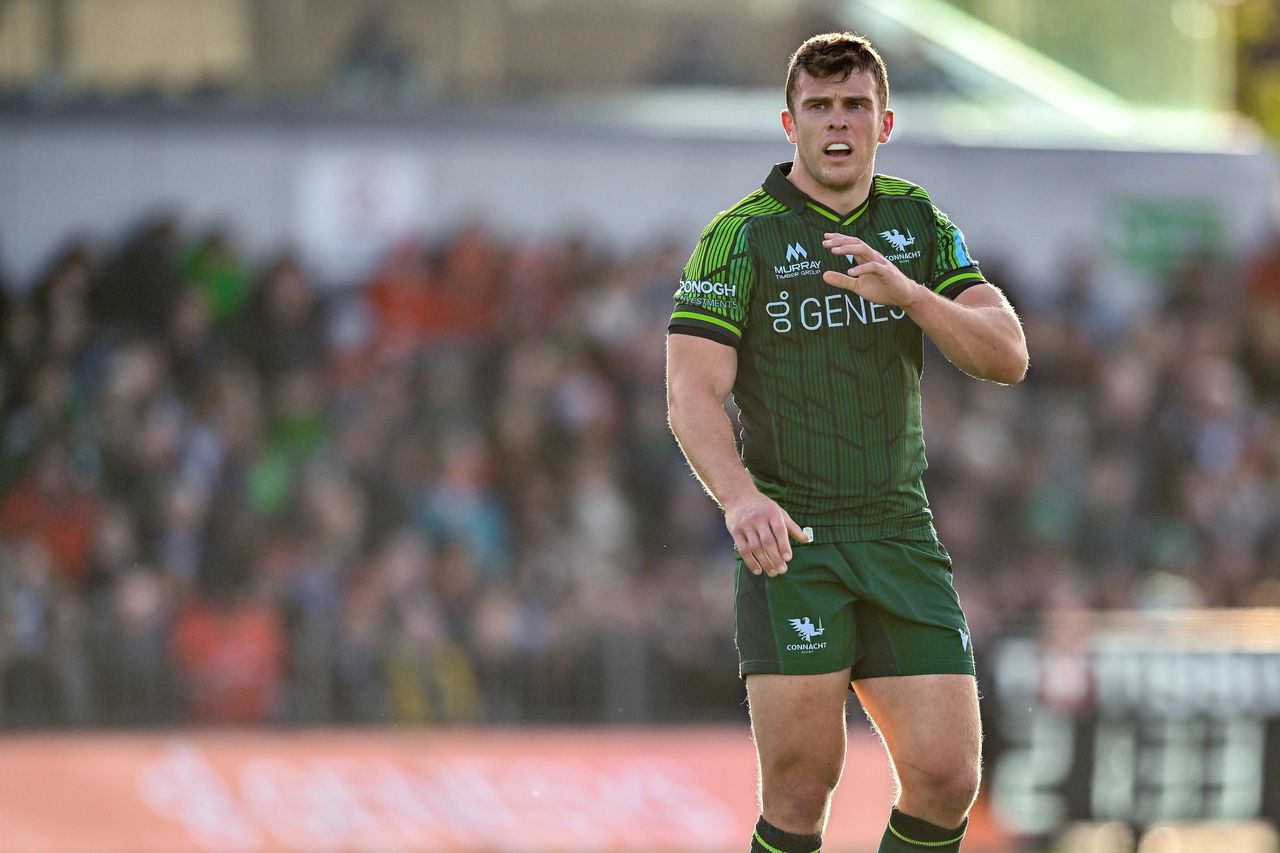
When you lose a player like Antoine Frisch to Toulon and, essentially, the French national team there’s always going to be an expectation that they be replaced like for like.
In Frisch’s case, that means looking for three main criteria; roleset, starting status and “aura”. So we need a starting grade Heavy Edge Playmaker who’s in the tier of player that a union as large as France are making moves to capture for Les Blues and that a club like Toulon are willing to pay handsomely on a four-year deal. Easy!
If only it was. The ugly truth is that you can’t replace Antoine Frisch like for like with the lead in that Munster had.
So, in that context, it’s almost impossible for Tom Farrell to be seen as anything other than a “downgrade” which is both fair in a general sense but also deeply unfair for a player of Farrell’s undoubted quality.
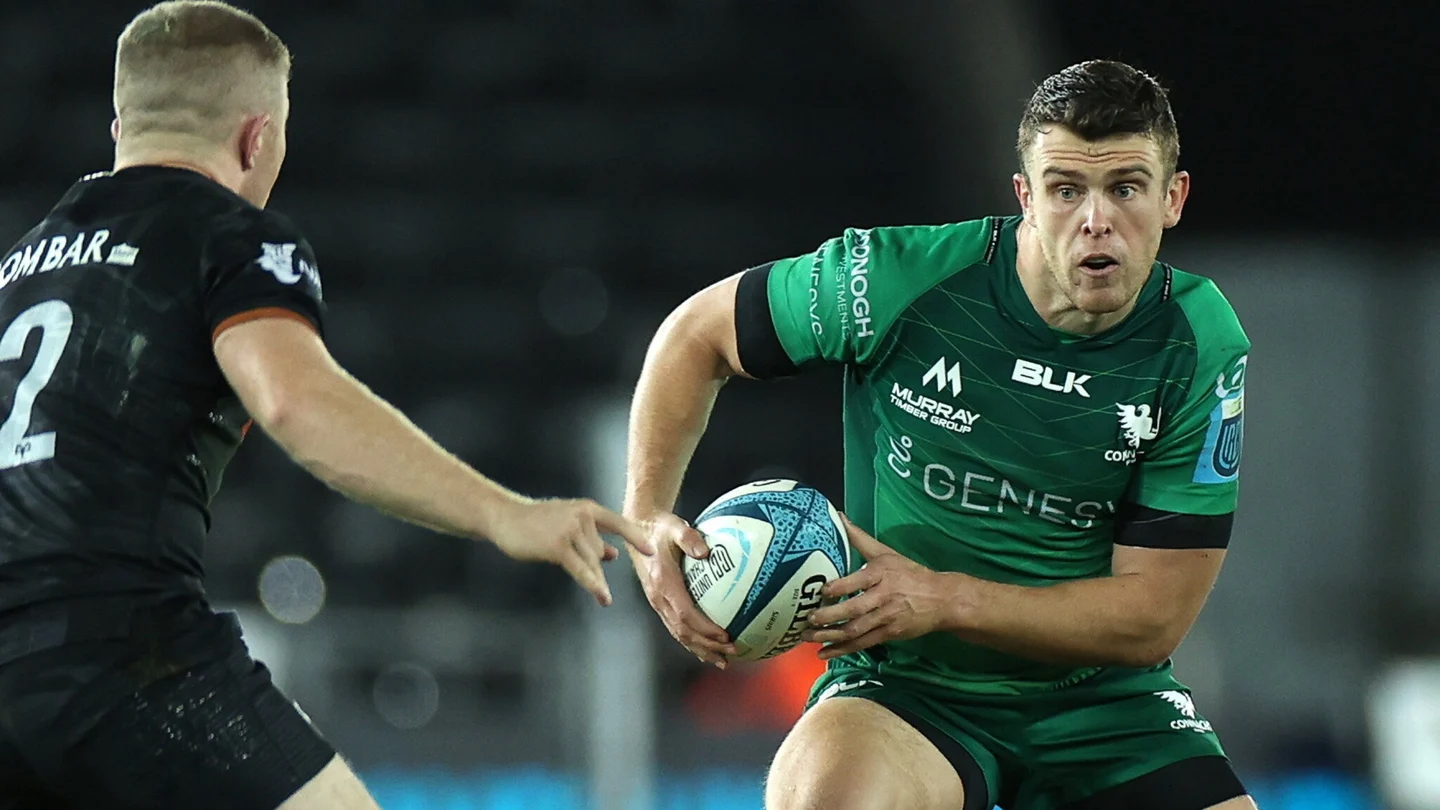
My scorching hot take is that even though Tom Farrell can’t replace Antoine Frisch directly, that doesn’t mean that Munster can’t be better than we were this season with Farrell wearing that #13 jersey next season. I’d go as far as to say that Munster should have signed Farrell even if Frisch wasn’t leaving and, by all accounts, Munster were in contact with Farrell before the news about Frisch caught fire late in the season.
An Interesting Past
Tom Farrell will be 31 this October and has signed a two-year deal with Munster to take him to the summer of 2026. He’s deceptively big – 6’3″ and around 105kg – and has well over a hundred caps for Connacht after joining from the Bedford Blues, who he joined after leaving Leinster without a senior appearance in 2015/16.
Farrell’s trajectory as a player skyrocketed in his second season at Connacht in 2017/18 when he scored 7 tries in 24 appearances. The season after that he scored six tries in 19 starts and played so well he made the wider Six Nations squad in 2019. He was one of the guys that you felt could make a run for the World Cup that year but Schmidt’s plans were set in stone at that point. In 2019/20, Farrell scored a try against Toulouse in the European Cup and it looked like he was right where he needed to be to be part of Andy Farrell’s new Ireland squad in the 2020 Six Nations.
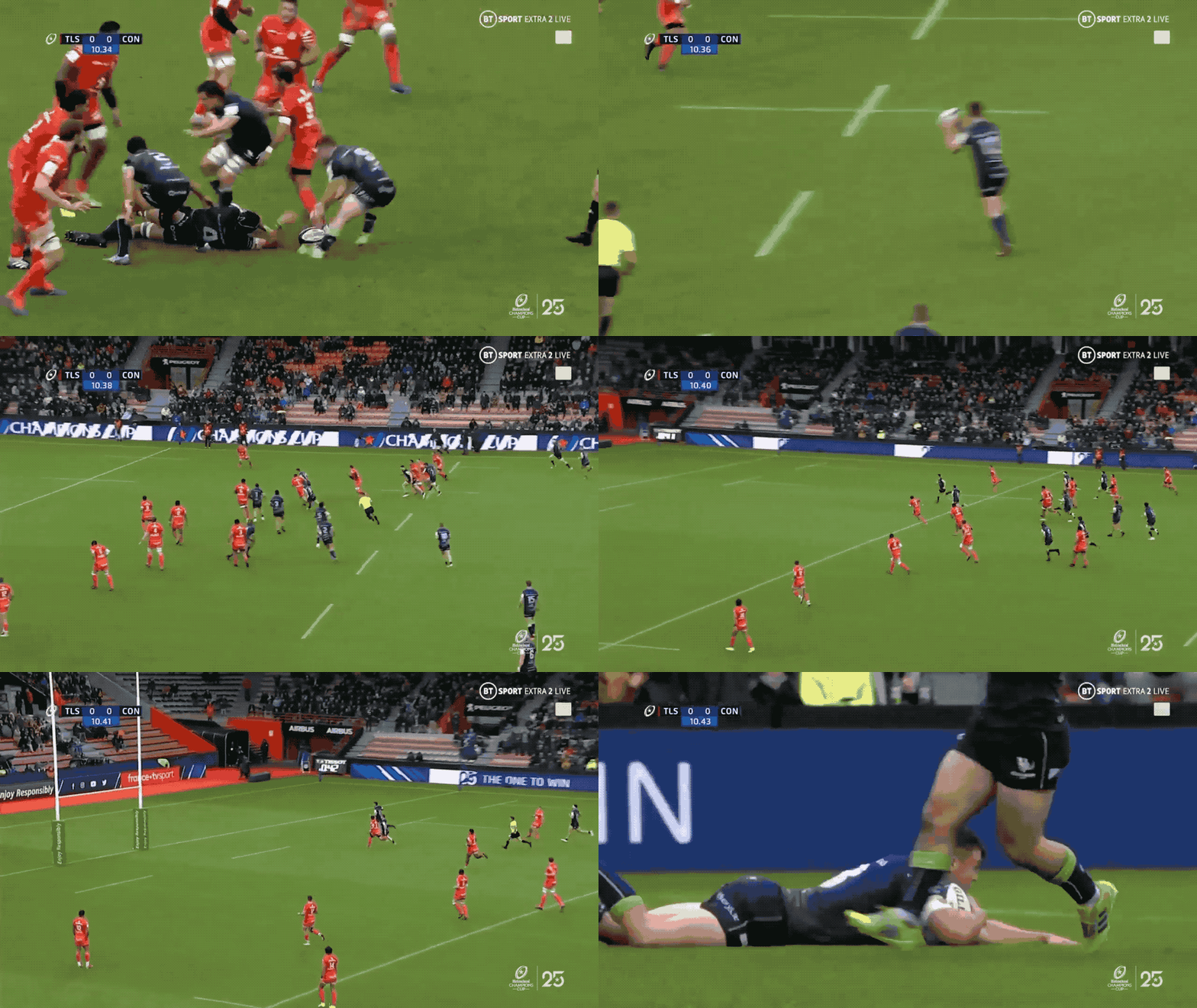
Unfortunately, Tom Farrell picked up a shoulder injury in that game, forcing him off the field early. Not only did Connacht’s attacking effectiveness go with him in that game, but it put his Six Nations aspirations into the blender. It wasn’t a guarantee that he’d be a fit for what Farrell wanted in the wider squad – I’m not sure he would, knowing what we know now – but the injury was more complex than it seemed on the surface. He missed the Christmas interpros and the January run of the Champions Cup which put paid to the chance he had of making the 2020 Six Nations squad as he had done a year previous.
Then the pandemic hit. He didn’t play again until August of 2020 before the season broke up, only to start again a few weeks later. Farrell had a few slight knocks to begin with that season but right when he was getting into the flow of things again, he suffered a brutal ACL injury away to Zebre in November 2020 which ended his season stone-dead and took away any chance he’d have of making it into Andy Farrell’s embryonic Ireland squad in the 2021 Six Nations which featured guys like Keenan, Van Der Flier, Gibson-Park, Kelleher and others establishing key spots for themselves.
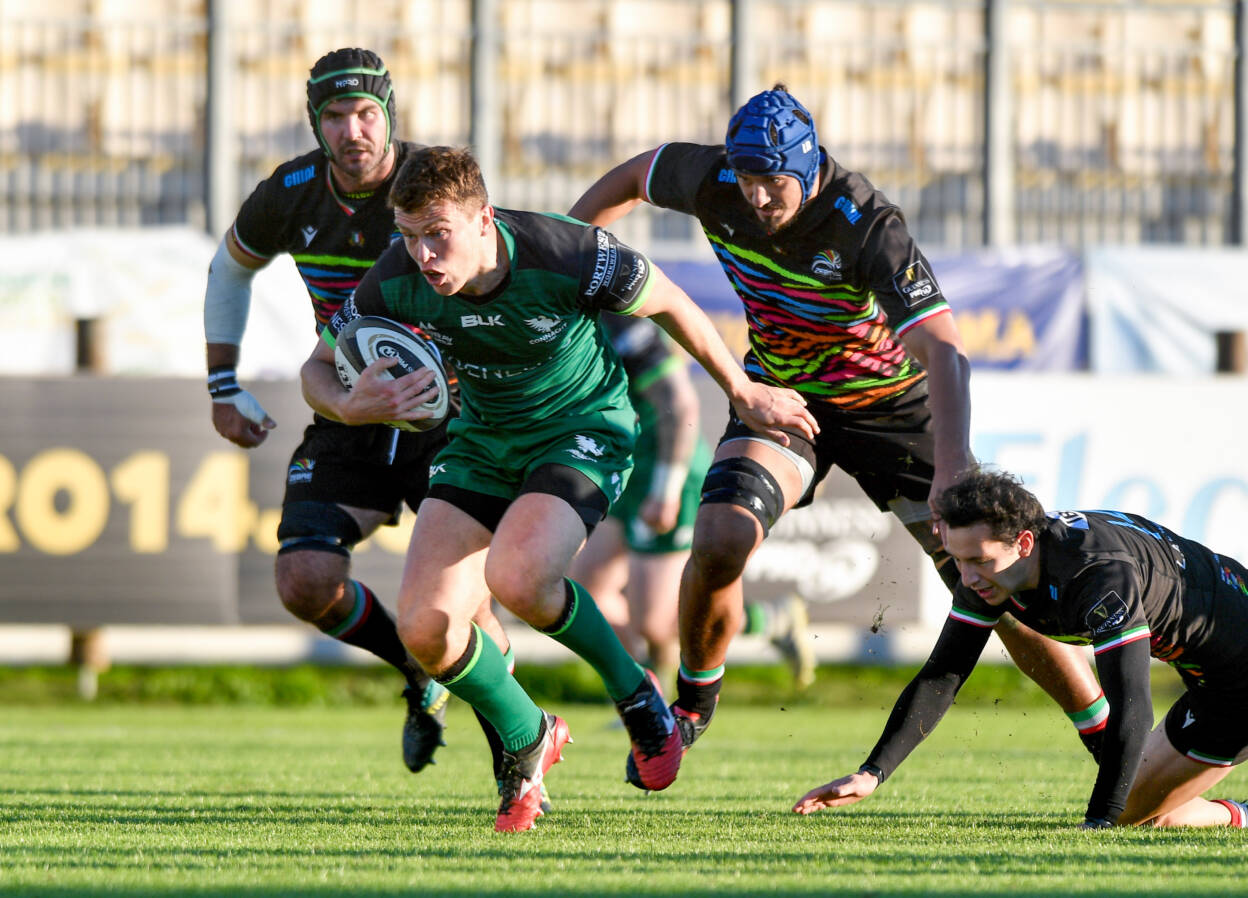
Maybe he wouldn’t have made it but if he continued his performances from the previous two seasons it would have been something of a shock to see him not get a cap at some point.
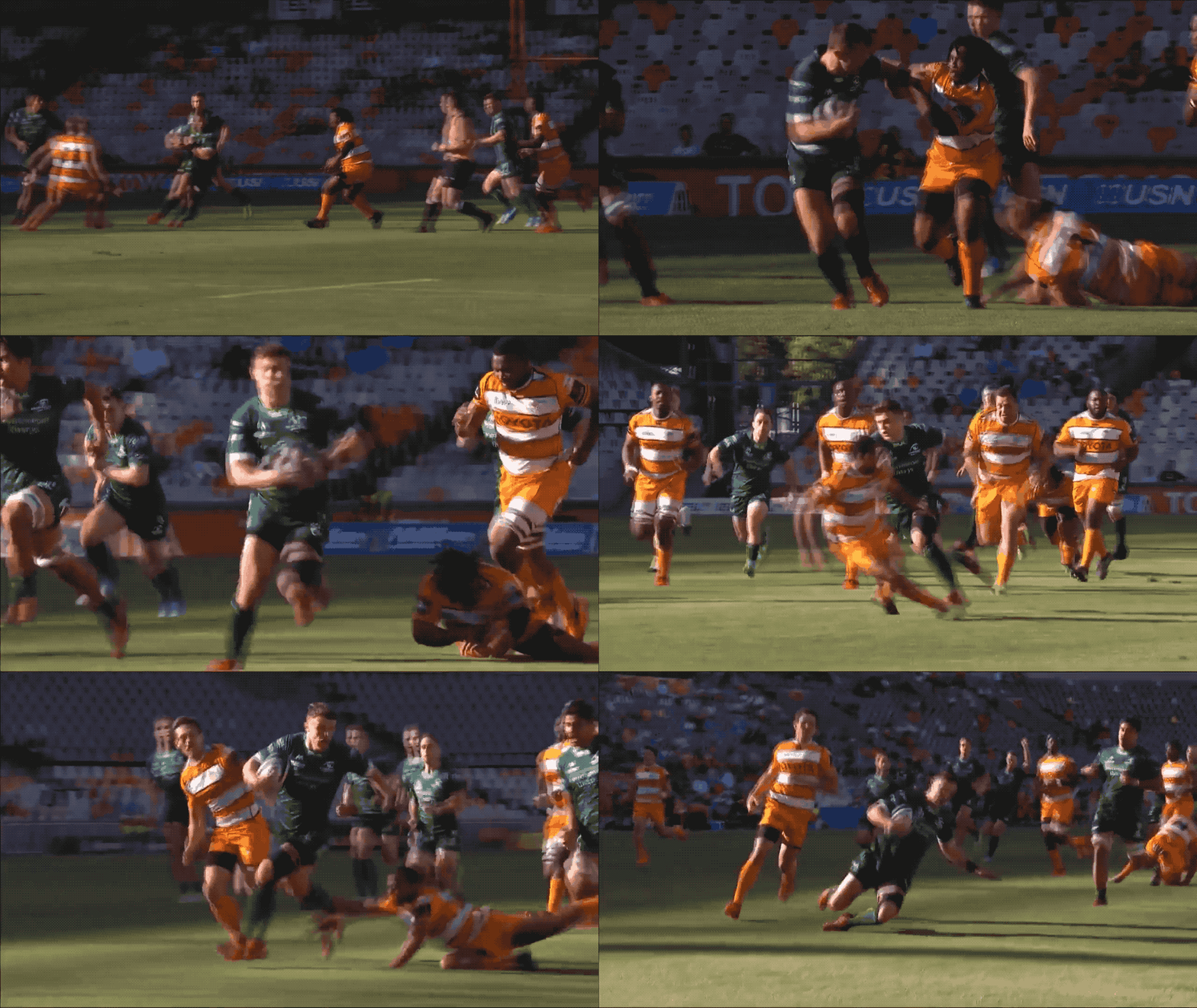
When he returned to action ahead of the 2021/22 season – somewhat ahead of schedule for an ACL injury – he more than hit the ground running. He started the season like a train against the Bulls with four killer offloads and a set-piece try that encapsulates one of his biggest strengths.
Farrell isn’t the quickest midfielder by any means. Neither is he a power-freak ball carrier. Athletically, relative to the elite players in that position, I would rate him as a solid B+ level guy but that never seems to matter to Farrell. As you saw in that break, he just runs straight. He balances that with an excellent, powerful low centre of gravity and the kind of technical ball-carrying and line running that makes him an A+ attacking threat in the right system.
As Connacht’s head coach, Andy Friend said at the time;
“I just think [Tom Farrell’s] ability to break tackles, I think he’s fantastic. We talk about carrying square, he carries square, he takes you upfield, he runs due north pretty much, but he’s got footwork and power with it, and then his ability to get rid of the ball through contact is very good. So that’s always been a strength of Tom’s and it’s great to see him back doing that.”
“I think the other thing that’s really been added to his game is his defensive reads and his ability to shut down defence in that 13 channel. That’s a tough channel to defend in but he’s got his timing right, he’s got his ball awareness right and he’s getting his body in front which is making a big difference for him.”
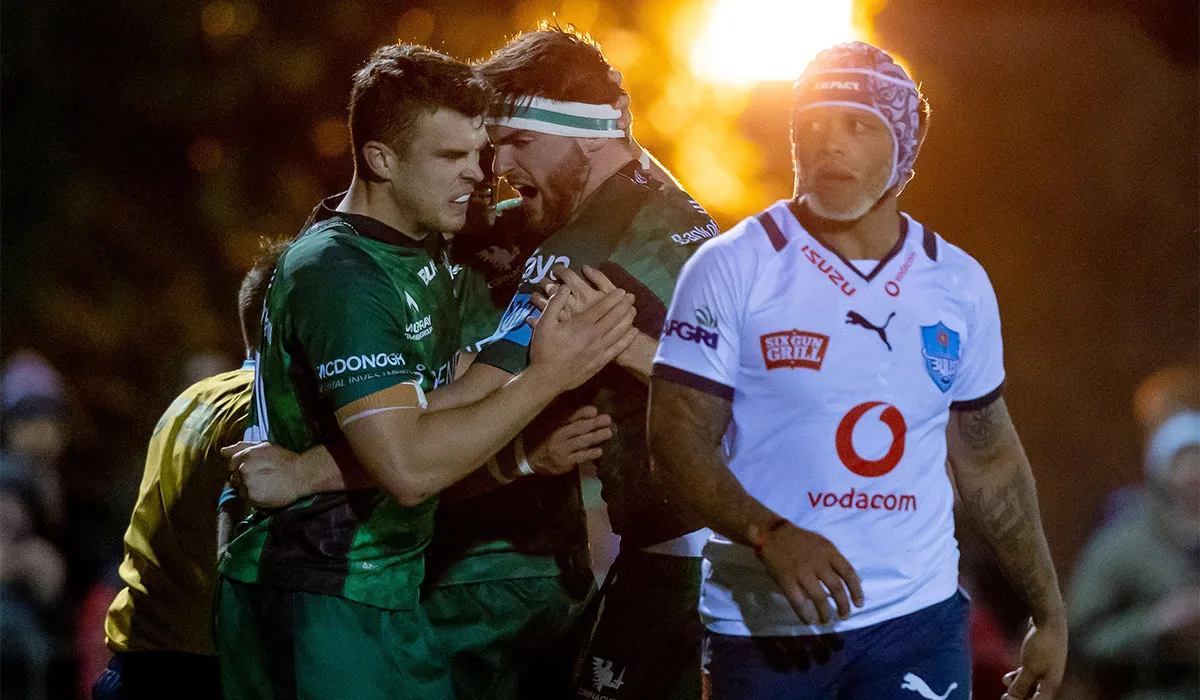
Farrell ended up having a… decent season for Connacht that year, but no more than that as the province struggled for consistency, in part due to injuries to key guys throughout the campaign.
Not much was expected from Connacht in what would be Andy Friend’s last campaign at the club in 2022/23, but they ended up in a playoff semi-final after a great season. Tom Farrell was, genuinely, one of the best players in the league that season. He was Top 10 in the league for successful carries – tied with Malakai Fekitoa – and seventh overall for carry volume. When it came to getting on-ball, he was one of only two backs to make the top ten, the other being Shane Daly. He was the only midfielder to make the top 10 for metres gained and was joint seventh for successful offloads with Mack Hansen.
The most impressive state is that nobody beat more defenders – as in, caused them to miss a tackle – than Tom Farrell that season. He beat out agility monsters like Edwill Van Der Merwe and Darcy Graham and drop-the-shoulder merchants like Rohan Janse Van Rensburg. It was the kind of rugby that should have seen him called up for a look at test level if Andy Farrell’s system worked like that.
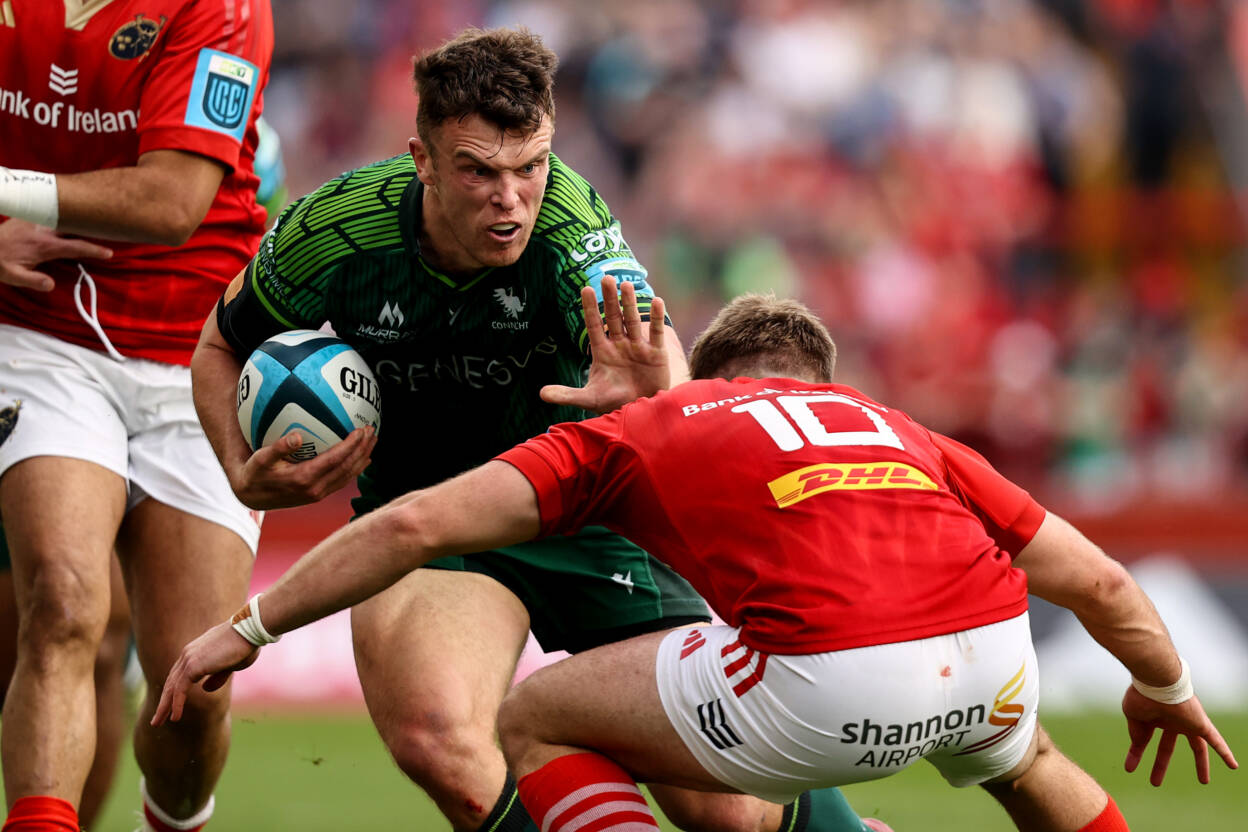
That brings us to 2023/24 and Farrell’s change in circumstances mirrored that of Connacht. Without the clarity and coaching quality of Andy Friend, Connacht’s backplay and general attack quality plummeted. Connacht went from being a counter-transition team with massive kicking volume and distance into a middling on-ball team under the guidance of Peter Wilkins and Mark Sexton (Johnny Sexton’s brother).
Farrell’s effectiveness dropped like a stone. His usage followed with it, even with Bundee Aki only playing 11 games for Connacht all season and former captain Tom Daly effectively being iced out. Farrell was only involved in 13 games all season, well below his non-injury average of 18 games a season. Connacht were trying out new combinations with Hawkshaw and Forde as they grappled with their new system and it seemed that Farrell’s days as a certain starter alongside Aki were done. Munster stepped in and now Farrell will be playing his rugby in Limerick and Cork for the next two seasons.
So What Is The Story with Tom Farrell?
So a deceptively big centre without elite-level acceleration who excels in a counter-transition system with a lot of pace and punch around him. As a playmaker, his best qualities are his passing through the contact – offloads – and his short and mid-range linkup play. Defensively he’s solid – way more solid than he might be given credit for. He did get scorched by Calvin Nash against Munster recently but to criticise him too harshly for that would be to suggest that stopping Nash on those slashing outside loop lines he takes is something every midfielder can do as a matter of course.
I wouldn’t use this as an example of Farrell being a bad defender or even an average one. He makes good reads, he hits hard and legal and he does most of his best defending while the ball is still in the ruck. He’s very comfortable defending space and Connacht usually had him split sides with Aki to the blindside of any attacking sequence post-set piece.
I’d be comfortable saying that he’s a reliable defender who’s comfortable against all but the most powerful or most agile attacking threats in isolation.
It is on the offensive side of the ball, however, that Farrell really excels and why he’s been signed in the first place. Farrell is comfortable at #12 or #13 but I think he’ll primarily take up Munster’s #13 role. Most complex midfield roles involve a lot of looping and time on the wing these days and Farrell can be a threat in those zones, primarily due to his deceptive line running and footwork.
He’s at his best when he’s in the second or third attacking layer, though, because his reading of defences is so sharp. It’s simplistic to say that a player without elite-level pace has to be an elite reader of the game to be as good as Farrell has been at his best, but I think it fits.
This is where he’s dangerous.
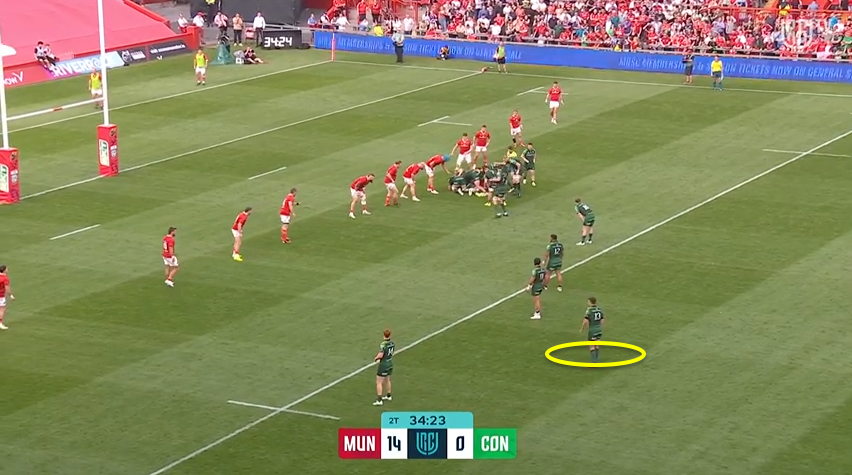
When he gets this kind of depth – ideally lined up outside the gap defender before the edge – he can attack them off a screen with that deceptive straight-line running. Here’s an example from earlier in the game where he runs off a screen and, if he gets the ball here, Connacht probably score directly on this phase.
Farrell is the perfect guy to get his line right in this circumstance because he understands exactly how he creates opportunities. He’s just strong enough to burst through side on contact, just fast enough to escape trailing defence, and has the kind of ball-in-two-hands deception that you can never really be sure what he’s doing with the skills to transfer the ball quickly. He executes these kinds of scenarios so well because he’s read the situation before the break.
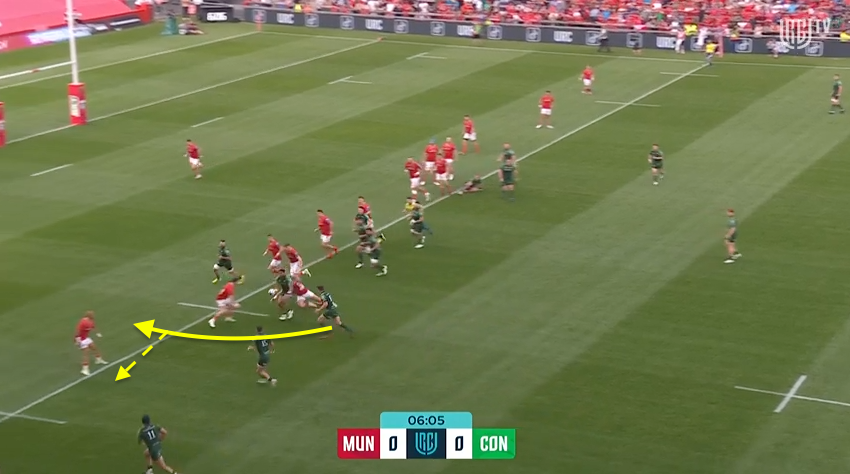
You can have him in the primary line and he’ll carry well if required – at his best, during his best season, that’s exactly what he did. He’s not Jonathan Danty with the ball in hand but if he can shift his weight where you don’t have yours, he can win collisions. He’s assisted by a latch from Aki here, but Farrell’s timing and late line win the first collision with Scannell.
But when you need him to pop an accurate swivel pass out, he can do that too and look broadly like he does when he’s about to carry.
When he has time and space to read defences on the loop, he combines all of those qualities to be a dangerous runner in those edge spaces. His read of the defence and how various screens and blocks might affect their scramble lines and open windows of space. Farrell knows exactly the type of windows he can attack, and the ones he can’t.
He follows this up by constantly showing up two or more times in an attacking sequence with his near-perfect timing and game-sense sending him to the right spot almost always.
The only thing holding back Tom Farrell from being a 1/5 cap-level guy is that relative lack of athleticism and a badly timed ACL injury as if there ever were a good time to get one.
He’s quite different from a lot of the midfielders that tend to come out of the Leinster system in that while he’s technically polished, he’s not afraid to offer himself as a playmaker. This would be his big differential between his contemporaries like Rory O’Loughlin, Tom Daly and even Garry Ringrose. Farrell beats more defenders, offloads more regularly and adds a tonne of value that goes beyond his relatively limited athleticism.
Does that mean he’s better than Garry Ringrose or, indeed, Antoine Frisch? No. It doesn’t. It means that, in the right system, Farrell can be incredibly effective as a functioning cog. There are midfielders who are faster, more elusive and hit harder, there are lockdown defenders, who are bigger, more explosive and more creative with better kicking games. That’s just in Ireland alone. But there are very few who balance a little bit of all of these qualities with Farrell’s top-level game sense. He reminds me of a John Kelly or Mikey Mullins-type player. Not necessarily a superstar but a deeply intelligent and effective player in the right environment.
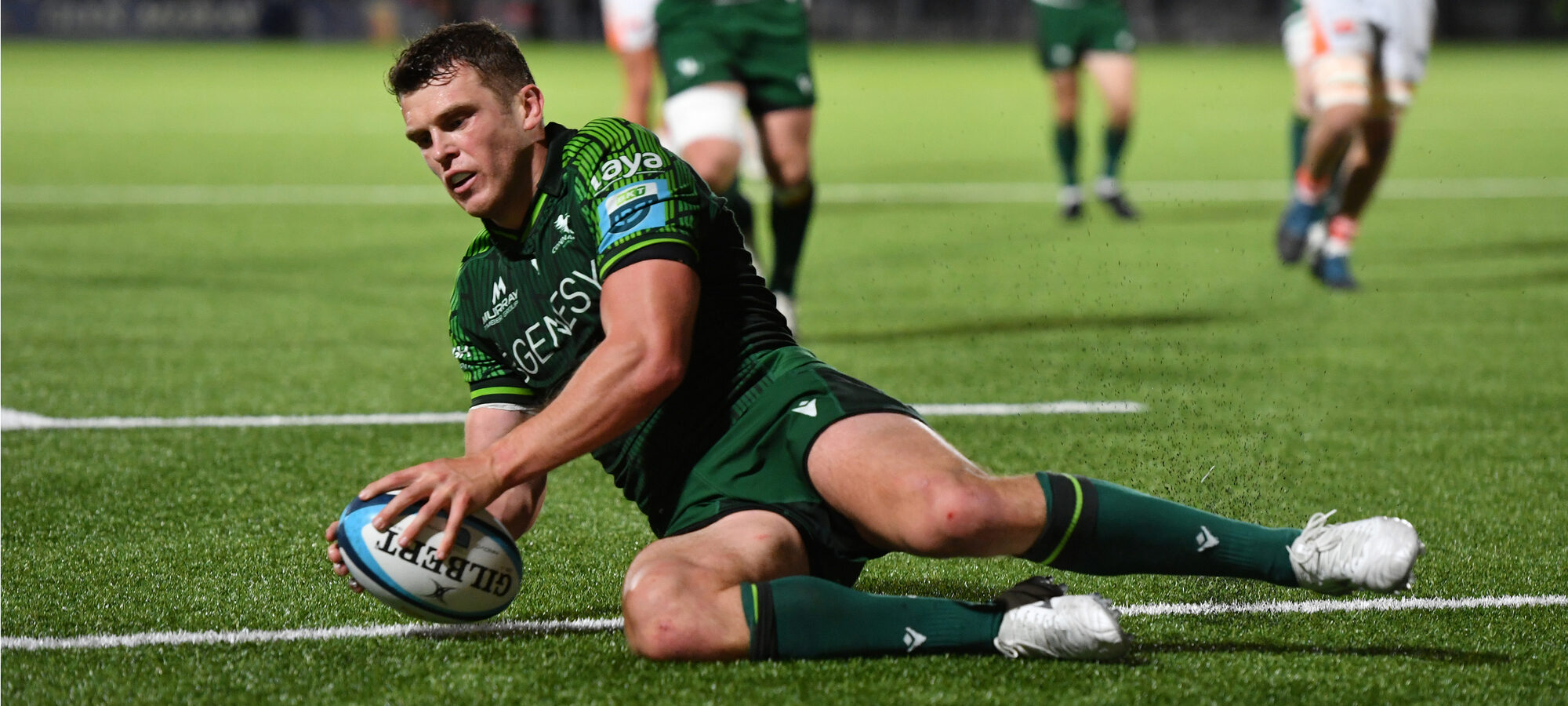
One of his best strengths is his ability to fit in as a complementary player in a wider attacking system. Farrell has no issue whatsoever playing a facilitator role and, for me, will be a better fit as a midfield partner with Alex Nankivell than Antoine Frisch was. For me, Frisch was never able to get the same level of understanding with Nankivell that he had with Fekitoa in the previous season. Watching them back this season it felt like Nankivell and Frisch were often playing separately from each other – not in a way where the discord would be obvious, but I was shocked at how little I saw them interplay with each other. It felt like their styles didn’t quite mesh. Farrell is such a balanced player that he’ll mesh incredibly easily, in my opinion, and will have no issue with Nankivell being the man who gets most of the headlines.
Connacht didn’t have a use for Farrell in their new system. To be fair, they have players like Forde, Jennings and Hugh Gavin who need game time alongside Hawkshaw and Bundee Aki so space was limited and Farrell was the oldest of all the incumbents. Does this mean that he’s rubbish? Far from it. If you frame it that Connacht were cutting him because he’s rubbish, supposedly, then his signing makes no sense. I think it’s far more likely that they were focusing their limited funds and playing time in the zone where they have a lot of young talent coming through. Farrell, in that context, was an expense they couldn’t justify.
For Munster, however, we have to make sure that we’re getting the most out of a guy who will likely start at #13 outside Alex Nankivell next season. I think Farrell along with Burns, Kilgallen and Abrahams are more evidence of Munster moving away from the strict on-ball rugby we’ve seen for most of the last two seasons. The signing of Killgallen and Abrahams alone, in combination with Nash, Nankivell and Crowley puts Munster in the conversation as one of the quickest teams in Europe and we’re already a team that scores more on turnovers than anyone in the URC.
If my theory is correct then I think Farrell’s signing puts him right back into a system where he’ll be playing mostly on transition with a core of power runners around him.
So you don’t replace Antoine Frisch with a player who doesn’t play on-ball rugby, you change your system and bring someone in who’s best season was in a similar game-state.
