


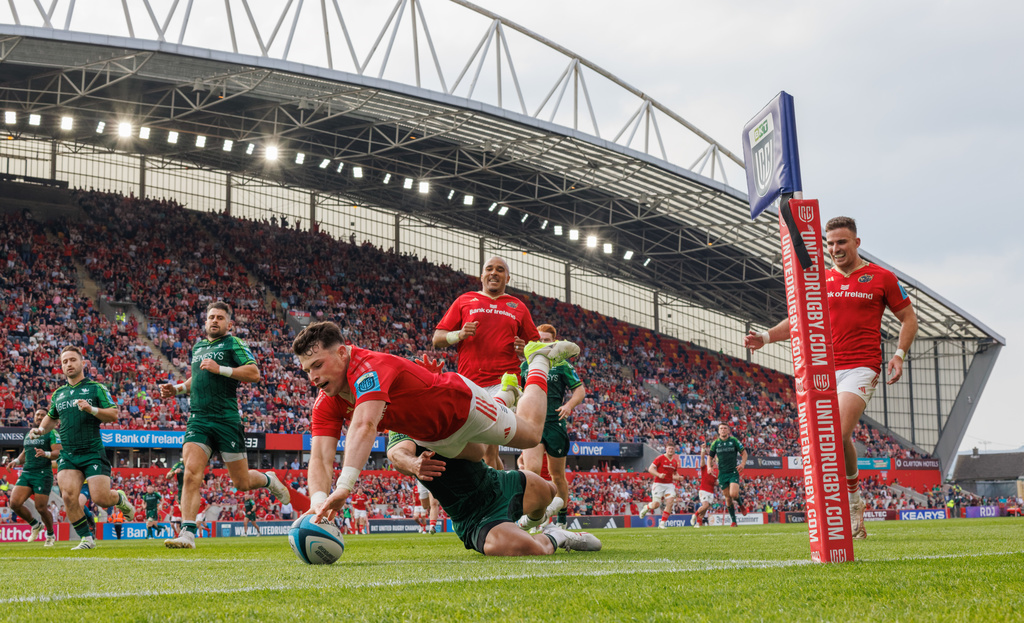
The job now is simple; keep winning until the end of the season, whenever that is.
We’ve managed the second half of the season about as well as it’s possible to manage, so far at least. After Round 9 we were 11th on 24 points. Seven games later we’re clear in third with 58 points. Seven games, 34 points, and six bonus point wins put us in a spot where we can realistically say we can finish this round on top of the log with a home quarter-final, semi-final and final within reach with just one regular season game to play if results go our way this weekend, including our own.
It’s tantalizing to think about but there’s poison in that dream, too. We’ve built this momentum day to day, week to week and looking too far beyond that can walk you straight into a pothole.
Our opponents, Edinburgh, are scrapping hard in the URC play-off moshpit with the real fear that they could drop out of the playoff spots in the next two games. There’s nothing easy from here on out; everyone we’ll play in these next two rounds will be treating us like the big fish they’ve badly got to fry.
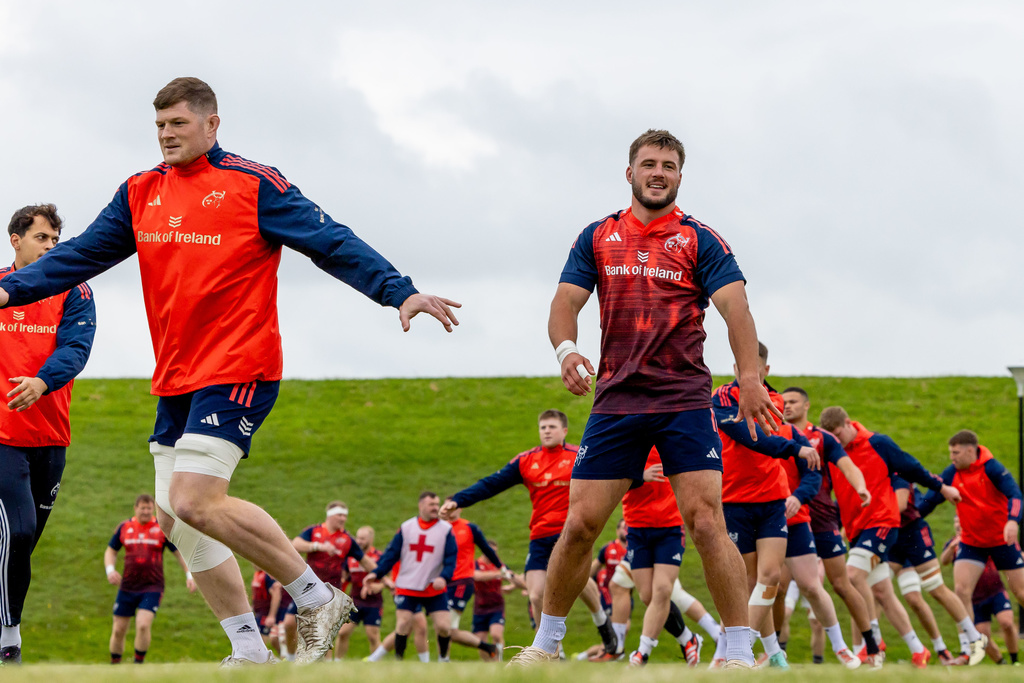
But this is the life of reigning, defending champions, especially in the last few months for this Munster squad. You don’t fly under the radar – you light up the screen. We’re the Big One for a lot of these teams as the regular season resolves to its end and we have to be able to take the heat that comes with that. If we can, finishing first is within our grasp.
Edinburgh: 15. Wes Goosen; 14. Matt Currie, 13. Mark Bennett, 12. James Lang, 11. Duhan van der Merwe; 10. Ben Healy, 9. Ben Vellacott; 1. Pierre Schoeman, 2. Ewan Ashman, 3. WP Nel; 4. Sam Skinner, 5. Grant Gilchrist; 6. Jamie Ritchie, 7. Hamish Watson, 8. Viliame Mata
Replacements: 16. Dave Cherry, 17. Boan Venter, 18. Javan Sebastian, 19. Marshall Sykes, 20. Luke Crosbie, 21. Ali Price, 22. Cammy Scott, 23. Chris Dean
Munster: 15. Mike Haley; 14. Calvin Nash, 13. Antoine Frisch, 12. Alex Nankivell, 11. Shane Daly; 10. Jack Crowley, 9. Craig Casey; 1. Jeremy Loughman, 2. Niall Scannell, 3. Oli Jager; 4. Fineen Wycherley, 5. Tadhg Beirne (c); 6. Jack O’Donoghue, 7. Alex Kendellen, 8. Gavin Coombes.
Replacements: 16. Eoghan Clarke, 17. Mark Donnelly, 18. John Ryan, 19. RG Snyman, 20. Tom Ahern, 21. Conor Murray, 22. Rory Scannell, 23. Brian Gleeson.
Edinburgh are a good side with a settled, strong game plan and key players in place to execute that game plan.
I say this a lot, I know, but they are arguably four or five match points better than their current standings suggest but, at the same time, for a team that plays Zebre twice a season, it’s a little that they find themselves scrambling to make the playoffs and Europe. That’s almost exclusively down to how few bonus points they’ve accrued this season. Edinburgh have the same number of wins as Munster and the Bulls but they only have four bonus points, which is joint lowest in the league with the Dragons in 15th place.
Part of this is that they’ve struggled to score tries in line with the dominance they’ve often shown in games to this point. They’re ranked 10th in the league for tries scored, despite being joint 4th in the league for clean breaks. Every other side in that top four for clean breaks has scored at least eight more tries throughout the season. Part of this is down to their tendencies on penalty advantage; Edinburgh kick for goal on penalties more than any other team in the league. 28% of all their points this season have come from the boot of Ben Healy, which is the highest ratio in the league.
Glasgow, on the other extreme, have only scored 18 points off the tee all season, for a ratio of 3.91%. I know you’re wondering; 12.1% of Munster’s points this season have come from penalties.
Stylistically, I would class Edinburgh as an on-ball team that plays a low Pass Per Carry style with the ball in hand that mainly focuses on retention and penalty generation, even though the long sling pass and crossfield kick accuracy of Ben Healy is a nice change-up to their game. Edinburgh go into their on-ball state around the opposition’s 10m line. They’ll still have a cut around their 10m line – Velacott and Healy are really good at sniping off the base or cutting back inside from first receiver and offloading in this zone – but further back than that and they’ll kick exit after two phases max without any advance of the ball.
This is a good example of an Edinburgh sequence in and around the 10m line/halfway;
You’ll notice the bulk of the high PPC sequences come when Edinburgh are trying to release to Van Der Merwe’s wing to advance the ball before tightening up and grinding back across the face of the defence.
On the set piece, Edinburgh like to shoot wide-wide off the scrum to get Duhan Van Der Merwe into the game up the opposite wing so they can advance up the tramlines and then bring the likes of Viliame Mata around the corner off Healy to hurt you post-scramble.
Van Der Merwe is, obviously, a key attacking centre-piece for Edinburgh, both as a weapon on set piece but also as a counter-transition deterrent. Van Der Merwe and the Edinburgh fullback Goosen have the most defenders beaten in the league this season and Darcy Graham would 100% be up there too had he been fit. Kicking long to Edinburgh is almost always a mistake because they have the weapons to find linebreaks on transition; Van Der Merwe is a child’s drawing of a rugby player come to life and he plays like it when you give him grass to run into and the ball in his hands, Goosen is an elusive, strike running threat, Matt Currie isn’t as fast as either but he’s a big strong runner too and Ben Healy has the passing and kicking range to find all of them.
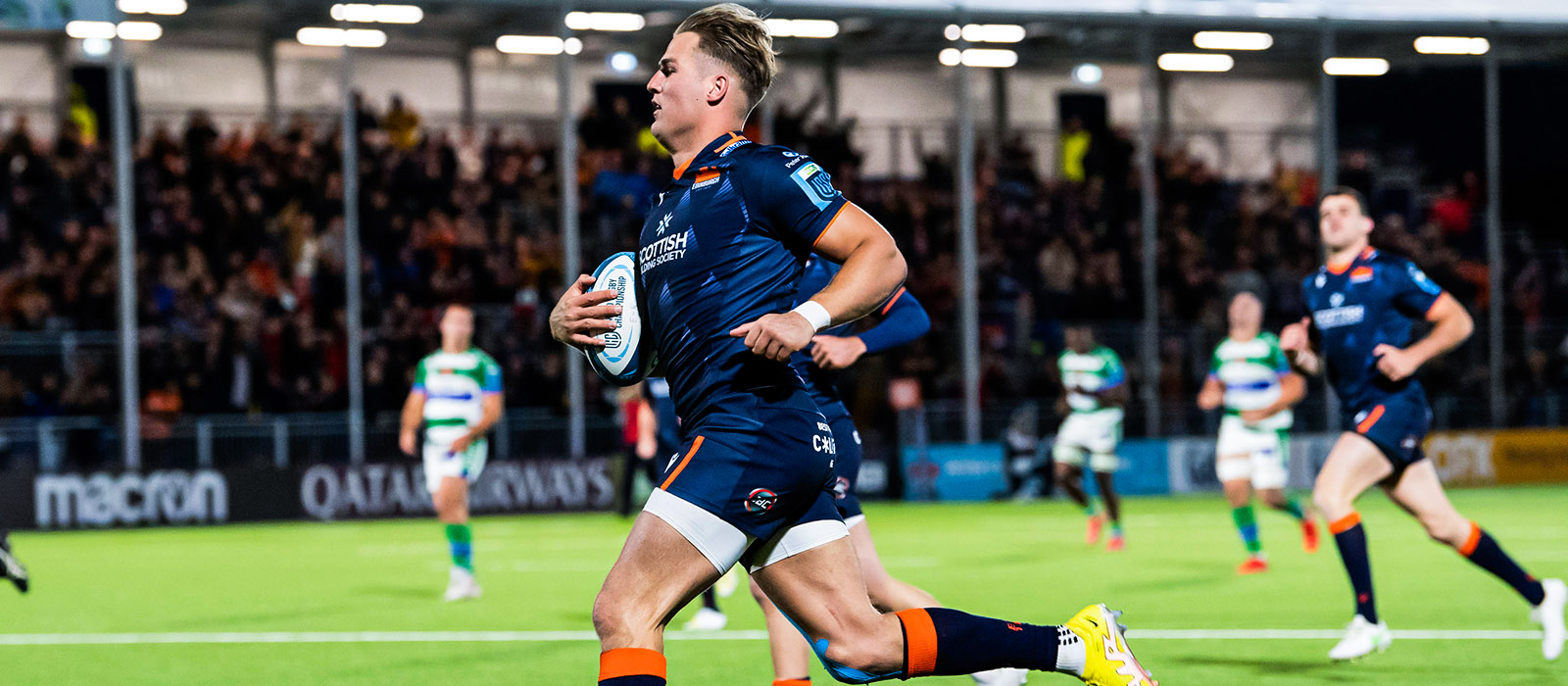
Edinburgh like to hang onto the ball, they like to box kick to advance up the field and are quite good at retaining it too. To top it off, Edinburgh have a very reliable lineout and a scrum that has generated the third most penalties in the URC this season to date.
Now, part of the reason for their lineout success – second most lineouts total and second-best success rate – is that they’re really conservative with their throwing. Edinburgh send a lot of their ball directly to the front, the front of the middle and the middle with Gilchrist being their most reliable target. As you’d expect, they have a decent maul and, in a way, they’re built to be good in this area of the game when you look at the weight they have in their front five + Mata.
Richie and Watson are two strike wing forwards who offer huge tackle volume, defensive scrambling and a live turnover threat.
So how do Munster beat them?
We have to play on-ball rugby from the start, with a box kick focus that keeps the ball infield. Edinburgh do best when they have a lot of lineout possession to work with so I think we start with a mindset that we want to limit the lineout ball we give them by default. You could make an argument for getting the ball off the field and attacking them in the air but that’s a low-percentage play at the best of times and even more so when Edinburgh throw so much to the front anyway.
When we get inside their 10m line, we should look at getting diagonal grubber kicks in behind Matt Currie and Van Der Merwe as well as going hard on first-phase transition whenever we get a long kickback from Healy.
Edinburgh’s starting front five plus Mata is really slow and they’re a constant worry for them on defensive transition. That’s the great risk in the change of kicking style they’ve taken this season after signing Healy. Last season, Edinburgh were 16th in the league for kick volume and kick distance.
This season, they’re 9th on kick volume and 10th on kick distance in the league to date, while still retaining an on-ball profile in their play style. When they do kick long – usually when under pressure defensively – the middle of the field is always attackable on first phase of transition.
Edinburgh try to hide it as much as possible but it’s almost always there, especially if you can bypass their chronically overworked small forwards and midfield.
RED EYE DIGEST
GENERAL GAME STRATEGY:
- Box kick or high bomb in the contestable mid-range. Focus on getting after Currie in the air.
- Play on-ball rugby to overload Edinburgh’s defence with a focus on dragging their front five out of the middle of the field.
- Huge attention to offensive ruck around Ritchie and Watson.
- Keep the ball infield to wear out their front five.
