


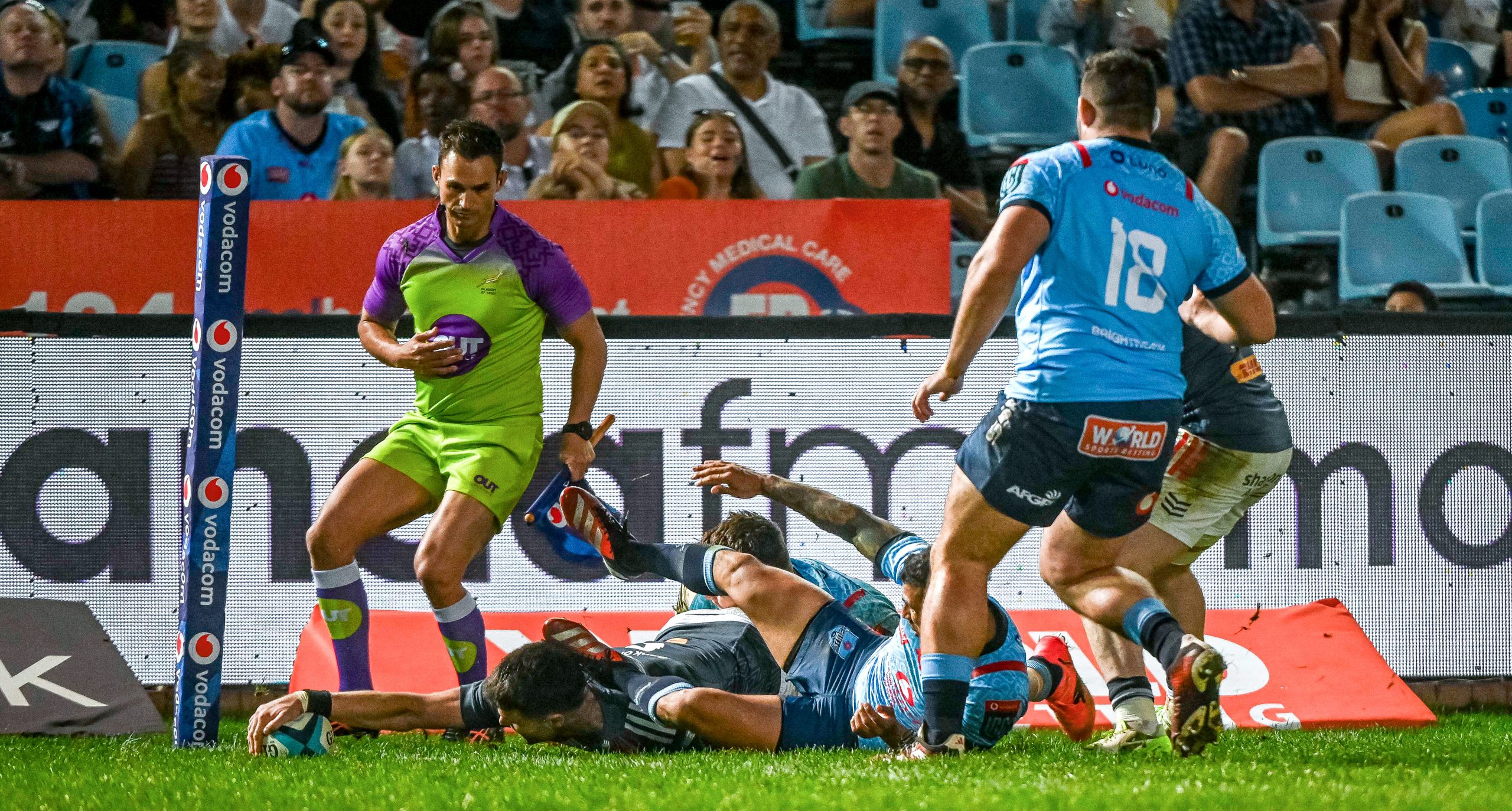
Zero.
That was the number of club sides who have ever beaten the Vodacom Bulls in Loftus Versfeld from the Northern Hemisphere before Saturday.
Now there is one.
Munster Rugby.
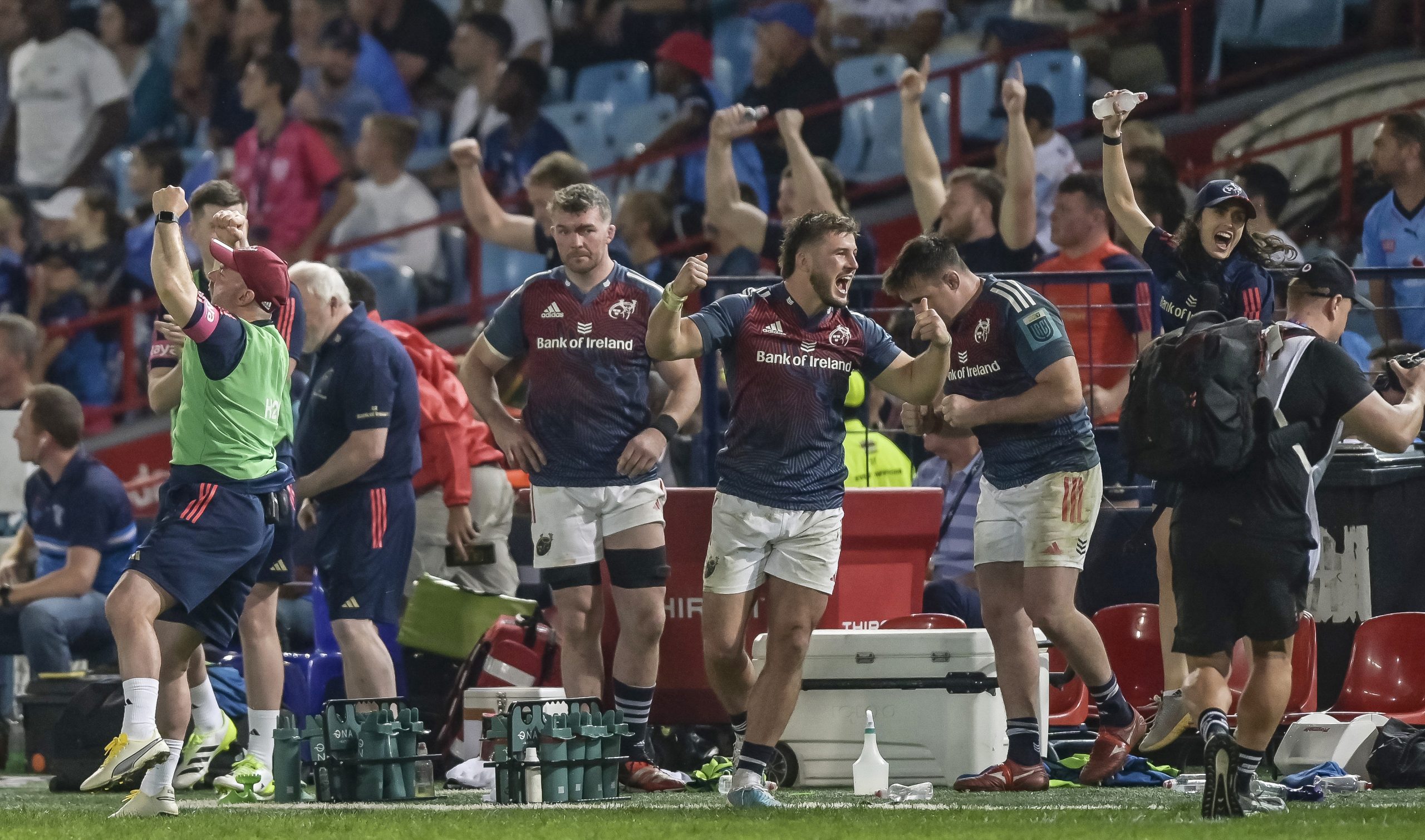
If you want to make it a little more broad, the last team to beat the Bulls – or Northern Transvaal as they were known at the time – in this stadium was the British & Irish Lions in 1980. I’m going overboard now, I know, but I want to illustrate just how big an achievement this was for Munster. How big a result it is to beat this team here.
In the last three years since playing northern hemisphere teams became a reality for the Bulls, they have beaten every northern URC team they’ve played in this stadium, including us. In Europe, they’ve beaten Lyon (twice), Saracens, Exeter and Bordeaux.
The reason they have this list of names on their check sheet is because they pose a simple question with a complex answer; how do you beat a team full of giant men who stay fresh as daisies while you wither in the altitude? For most teams the answer became a simple one; you don’t.
Some of this is because, for the most part, northern teams have skipped this test. You only play the Bulls away once every two seasons under the current agreement so, ideally, you will never need to beat them here. Leinster, for example, threw a B-team at this fixture last year and got walloped 62-7 because they didn’t need to win here. They had their business done before that point so when it came to finding that complex answer to the Bulls’ simple question, they just didn’t need to.
We did not have that luxury, either from a points perspective or a worry about keeping players fresh for Europe. The URC is the be-all and end-all for us now and, quite simply, we want some home knockout games. We won’t get those without earning 62 points plus and that means we have to get six points, at least, on this tour to ensure a top-four finish.
Mentally, I had budgeted one point, maybe two for this game at Loftus Versfeld, with the big focus being the Lions in Jo’burg next week. To win – with a bonus point, no less – means that if we can win against the Emirates Lions (no easy feat) it is not out of the question that we could finish in the top two depending on how Leinster get on next week in Cape Town and how Glasgow do when they tour South Africa in the next few rounds. Round 16, in particular, looks set up to be the decisive round with Leinster playing the Ospreys the week after their Champions Cup semi-final, the Bulls playing Glasgow in Loftus and Munster playing Connacht in Thomond Park.
But that’s for later.
For now, let’s see how we beat the Bulls on the moon.
***
In the Red Eye, I spoke about the following concepts;
They can be beaten – even at home – if you can stop them from building momentum. They build momentum in three main ways; through their kicking game, through winning scrum penalties and through playing incredibly direct through their massive pack.
(…)When it comes to our own possession, I’d box kick early and often against this Bulls side to create transitions, yes, but to mainly keep their pack marching backwards and constantly resetting. We also should be comfortable getting the ball off the field…
(… ) The key for Munster is to be within striking distance of the Bulls as we hit the 55th minute. That’s when the Bulls will switch to their players who played in Franklins Gardens last weekend. That’s when we move from a stand-off-ish kicking game to full-on-ball rugby.
On 55 minutes, Munster were five points down right after making four changes in the 51st minute on the back of a poor opening to the third quarter. By the 57th minute, with another change in the front five, we were level. By the 72nd minute, we were ahead.
We did this by sticking to the core principles of denying the Bulls momentum.
In the first instance, this was by playing a very conservative kicking game in the first 50 minutes that relied on a massive defensive work rate by the back three and midfield. In practice, this would see Munster exiting via the box kick inside our 10m line on static rucks, with an angled contestable as an option depending on the positional read of the Bulls backfield.
We knew – or at least figured – that kicking at Arendse and De Klerk in the short-t0-midrange with contestables was a really good way to get the Bulls where we wanted them. That is to say, with their pack running backwards and forwards in 20m increments multiple times while they go through slow, low PPC phases we could double tackle at high volume before awaiting kick returns of varying quality. Goosen is a good kicker when he’s looking for touch but, like Papier, he is prone to making mistakes on longer kicking sequences.
All this meant that Munster were compressing the Bulls into a tight, 30m box in the middle of the field and stuffing their momentum.
We set out a pack build that was designed to meet the Bulls in this space and frustrate them, while also giving us plenty of lineout ball to rest and restructure. We weren’t overly concerned about attacking the Bulls in the air, we just wanted to get them into midfield, stuff their setups and then force them to kick when they ran out of momentum.
This is a really good early example of that principle.
It was really effective. We played low error defence, with very few poach attempts and a real premium placed on staying active in the defensive line. We knew the Bulls were going to play directly, so we met that physicality with numbers and physicality of our own.
Our kick-to-pass ratio was really low in the first half and our kick distance was right down there too – we wanted to box the Bulls in, prevent them from getting any transitions and, essentially, make them play phase ball until they kicked the ball back to us.
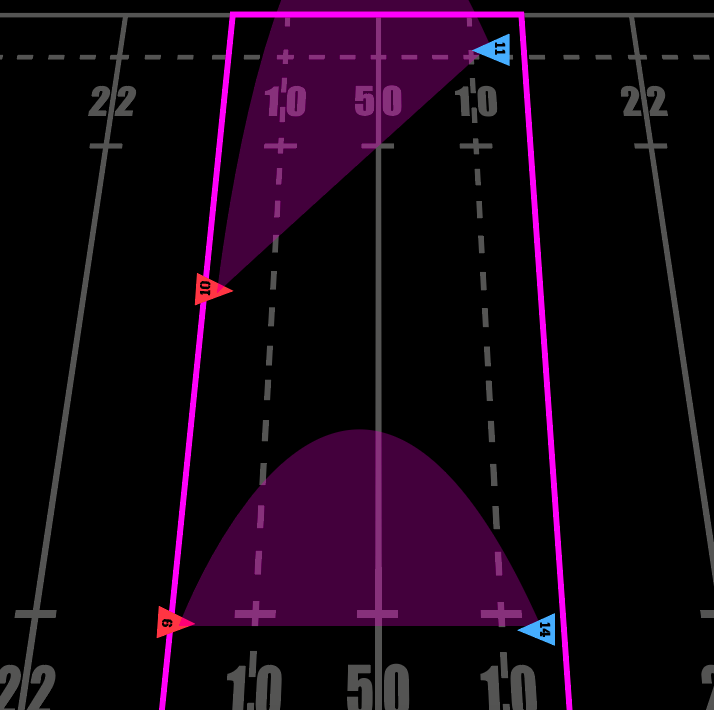
When this formula worked, we made the Bulls look quite limited. We kicked to them, we defended their low PPC phases, we guarded their offloads and then, when they had to kick inside three phases, we mopped almost everything up.
When we didn’t mop up those high balls, that’s when the Bulls looked their most dangerous.
We started to flag with this game plan in the early part of the second half, so we needed to switch to the second part of the game plan – designed to catch the Bulls when they moved to their bench, full of players who had spent the last two weeks travelling across the equator and getting beaten in Northampton.
That’s when we made our first batch of replacements. Wycherley for Loughman, Coombes for O’Mahony, Hodnett for Kendellen and Casey for Murray. Casey would go off injured a few minutes afterwards but the intent was clear – we had kicked short and stuffed them defensively for long enough, and now we wanted to run.
We also started kicking longer to create more gaps for us to work with on transition, and this was where Simon Zebo’s massive left boot came into play in the end game. For the first 50 minutes, we stayed out of rucks, but now we were going for them and winning key turnovers.
We are the best team in the URC for scoring tries after forcing turnovers, and so it went. We started to pull the Bulls five lock pack across the pitch during on-ball sequences, and got really good width on our passing structures.
This one is a good example;
We get a good 30m of width on this play with Nash running a loop behind the first pod of three arrayed off Crowley. That distance from the previous ruck forces those big Bulls forwards to cover a lot of ground on the fold.
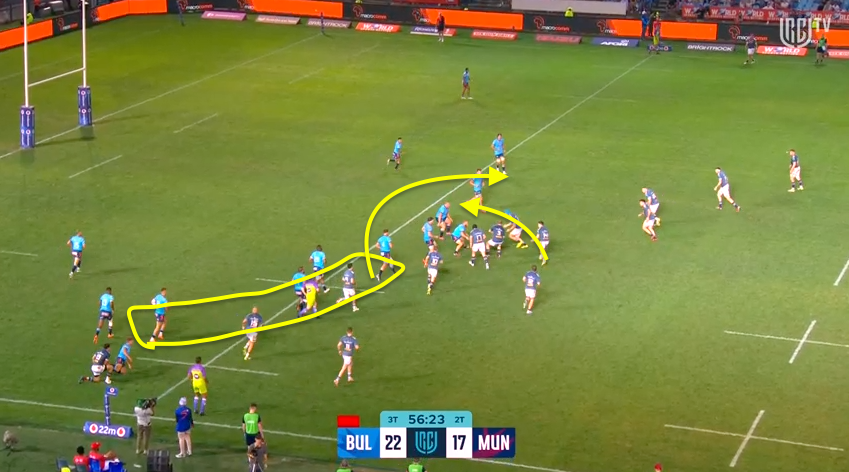
That’s what we want. Now they’re feeling the heat, especially with a red card to one of their backfield defenders. Their pack build is already straining around the edges.
This is the kind of spacing that we’ll pick off all day every day, especially with guys like Crowley and Zebo running the screen. When you see this kind of half-assed blitz 56 minutes in, you know you’ve got a massive chance.
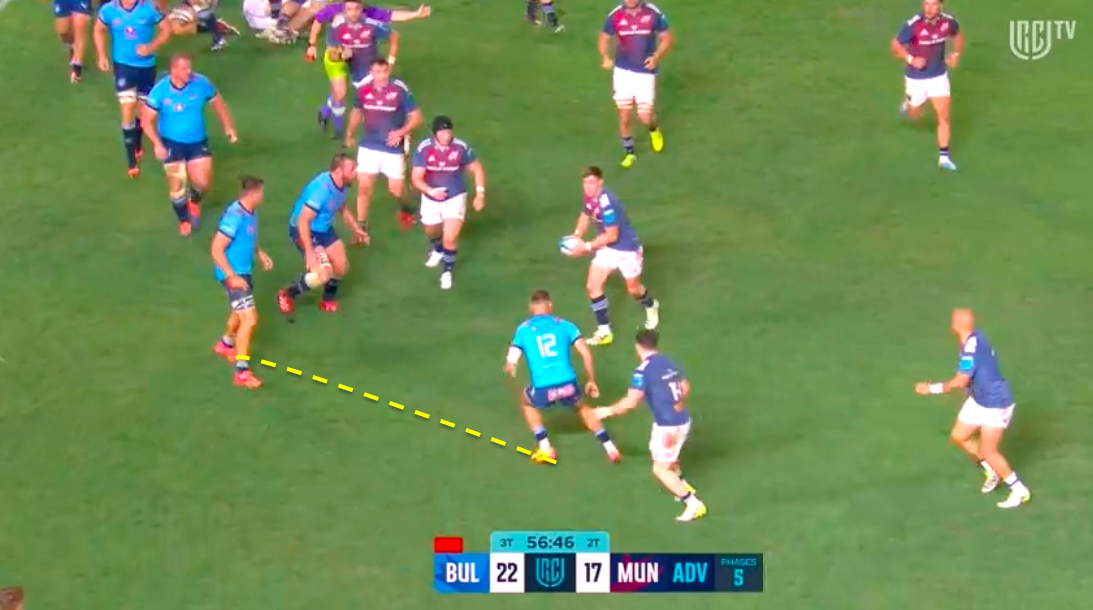
Look at the space Josh Wycherley could target directly – the Bulls are blowing hard at this point, and I think that we knew we had them at that point.
When the ball comes back to Crowley here – the inside screen pass holds the defenders for an extra step – he knows that if he can find Hodnett from the kick, they have nobody out there that can stop him.
The Bulls have a 2 on 1 here but this is John Hodnett we’re talking about. The Bulls need more guys. Hodnett is one of our most explosive and hard-to-stop carriers and I’d put him up against any two-backs in this spot because they have nothing for him by default.
And just like that, we were level, with all the momentum against a Bulls side bringing on weary men. Our game plan was designed to keep us in touch with the Bulls to this point and now we had to push on for the win.
We almost caught them on this kick transition when Crowley hit their edge defence with a no-look pass to Beirne; if Beirne holds that, it’s a try under the posts.
We were kicking longer now because the Bulls’ forwards were already drained. Watch how lethargic they looked after Carbery’s long counter-transition starter kick here (as well as Nash’s relentless take of another Bulls high bomb).
The Bulls have nothing left at this point, and if Frisch had kept this in the hands at the end, Ahern scores in the corner.
After that kick went dead, the Bulls took a scrum rather than clearing their lines. I think it was because they felt their legs were gone as is and a scrum penalty was the best way for them to advance up the field in a way they could sustain.
Gumede went for a big fend on Murray, knocked on and Munster had the scrum put in. Jake White had left Louw and Steenekamp on the bench until the last 10 minutes which tells me that both men were redlining after the travel. Both are usually good for half an hour of rugby – the Bulls run their props on 50/30 splits – so when I saw them coming on, I thought we’d have a shot in the scrum, offensively.
Munster have the best defensive scrum in the league on a per-scrum basis. What does this mean? It means we concede very few penalties (0.28 penalties per scrum this season), even against very big scrummaging teams. As a counter-example, the Scarlets have the worst scrum in the league and concede a penalty every 0.6 scrums).
When our moment came, Matanzima couldn’t live with the pressure from Oli Jager. Elbow down = penalty.
Could we convert from close range? You bet we could.
We saw out the game defending a five-point lead. Look at how we stayed half a metre behind the ruck on this defensive set to ensure there would be no cheap off-side penalty to help the Bulls back into the game.
We knew that hanging onto the ball for five minutes was impossible so we backed our defence to do what it had done all day long – deny the Bulls over and over again. In the end, it was fitting that the game ended with a Beirne jackal turnover.
It was all over. Munster had won on the moon and established our champion credentials by winning in the toughest building in the league.
| Players | Rating |
|---|---|
| Jeremy Loughman | ★★★★ |
| Niall Scannell | ★★★★ |
| Stephen Archer | ★★★★ |
| RG Snyman | ★★★★ |
| Tadhg Beirne | ★★★★★ |
| Peter O'Mahony | ★★★★ |
| Alex Kendellen | ★★★★ |
| Jack O'Donoghue | ★★★★ |
| Conor Murray | ★★★★★ |
| Jack Crowley | ★★★★★ |
| Shane Daly | ★★★ |
| Alex Nankivell | ★★★★ |
| Antoine Frisch | ★★★ |
| Calvin Nash | ★★★★★ |
| Simon Zebo | ★★★★ |
| Eoghan Clarke | ★★★★ |
| Josh Wycherley | ★★★★ |
| Oli Jager | ★★★★ |
| Tom Ahern | ★★★★★ |
| Gavin Coombes | ★★★★★ |
| Craig Casey | N/A |
| Joey Carbery | ★★★ |
| John Hodnett | ★★★★★ |
