

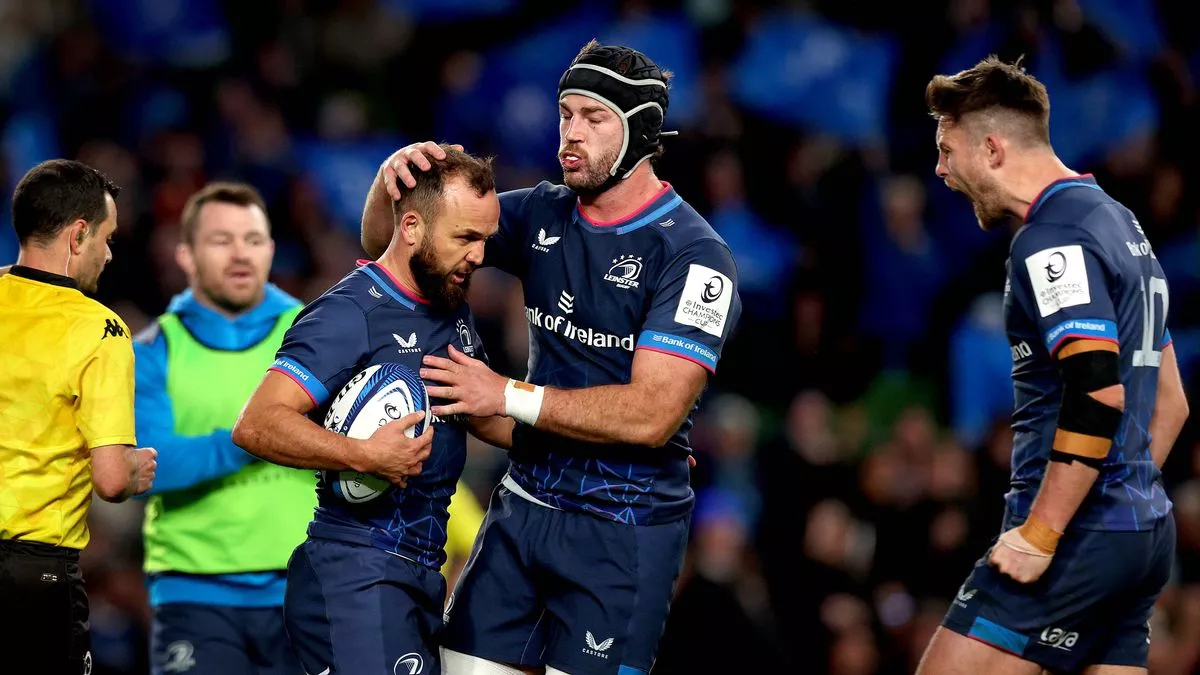
It could be the final.
It has been a final, repeatedly. Leinster and La Rochelle seem destined to do this forever and, over the last four years, they have been tangled up in each other in the way this tournament regularly produces. The old Heineken Cup would regularly throw the same teams together year after year until they were sick of the sight of each other. The new Champions Cup (sponsored by Investec)(#ad) has many faults but regularly locking two mortal enemies in a room to see who walks out isn’t one of them.
Rarely has a rivalry taken place on stages with such high stakes as Leinster vs La Rochelle. This is their fifth-ever meeting and all but one of the previous four games have been European knockout games.
La Rochelle beat them in a semi-final in 2021, beat them in the final in 2022, and then beat them in another final in 2023 before Leinster got some measure of revenge with a narrow, rain-soaked win in La Rochelle earlier this season. They play each other on Saturday for the right to march onto a semi-final. One way or another, two big beasts will enter the Aviva Stadium, one will march on and one previous finalist will crash out at this stage for the first time since the pandemic hit.
Both sides have their injury troubles. Leinster are without James Ryan and Garry Ringrose, with worries about Hugo Keenan and Andrew Porter. La Rochelle are missing Reda Wardi, their usual starting tighthead, their 1B tighthead prop in Georges Henri Colombes and their test hooker, Pierre Bourgarit.
Will any one of those be decisive?
It’s hard to say with any certainty. The margins between these two teams are razor thin, with an average winning margin of five across their two games and just two if you count the finals.
This has all the feel of a Big One.
Leinster: 15. Hugo Keenan; 14. Jordan Larmour, 13. Robbie Henshaw, 12. Jamie Osborne, 11. James Lowe; 10, Ross Byrne, 9. Jamison Gibson-Park; 1. Andrew Porter, 2. Dan Sheehan, 3. Tadhg Furlong; 4. Joe McCarthy, 5. Jason Jenkins; 6. Ryan Baird, 7. Will Connors, 8. Caelan Doris (c).
Replacements: 16. Ronan Kelleher, 17. Michael Milne, 18. Michael Ala’alatoa, 19. Ross Molony, 20. Jack Conan, 21. Luke McGrath, 22. Ciaran Frawley, 23. Josh van der Flier.
La Rochelle: 15. Dylan Leyds; 14. Jack Nowell, 13. UJ Seuteni, 12. Jonathan Danty, 11. Teddy Thomas; 1o. Antoine Hastoy, 9. Tawera Kerr-Barlow; 1. Louis Penverne, 2. Tolu Latu, 3. Uini Atonio; 4. Ultan Dillane, 5. Will Skelton; 6. Judicaël Cancoriet, 7. Levani Botia, 8. Gregory Alldritt (c).
Replacements: 16. Quentin Lespiaucq, 17. Alexandre Kaddouni, 18. Joel Sclavi, 19. Thomas Lavault, 2o. Pierre Boudehent, 21. Yoan Tanga, 22. Teddy Iribaren, 23. Ihaia West.
Leinster are hoping that the addition of Jacques Neinaber will be a decisive move in their ongoing battle with La Rochelle.
This game, more than any other, is his proving ground. He was brought to the province to vanquish this foe on days like this. The win in Stade Marcel-Deflandre earlier in the season was a good start but I don’t think Leinster will be too in love with that result – this game, in the playoffs, without the x-factor of heavy rain, will be different. Neinaber and Cullen know that for sure.
One thing that Leinster have stuck with from that game in the pools is the 6/2 split and the choice to start with Will Connors.
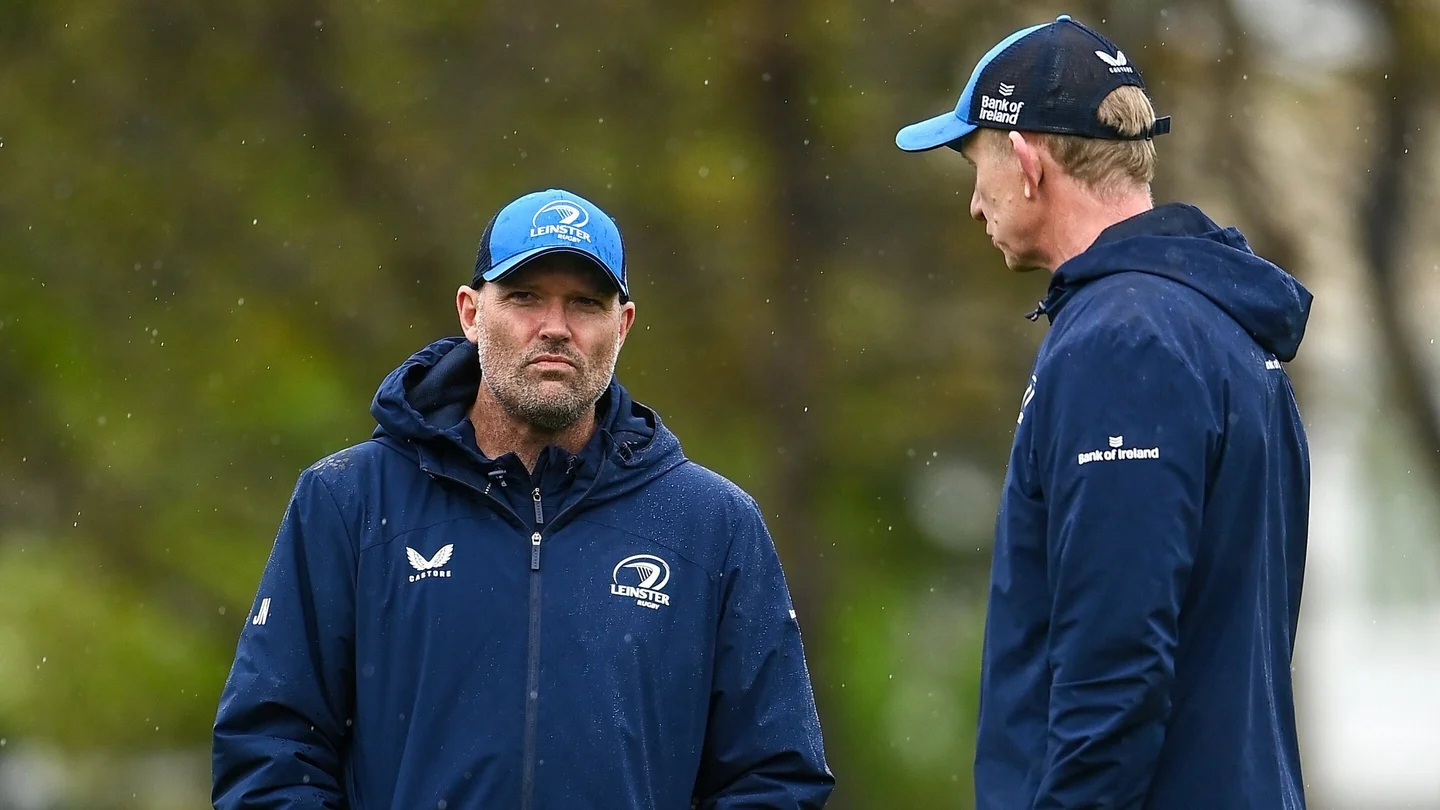
Why? It comes back to Neinaber and what he has brought to Leinster; the permission to be an off-ball team. Under Lancaster, Leinster were probably the perfect example of a counter-transition team. This was so effective that Andy Farrell based his nascent Irish team on that style and the team best suited to running it.
When Lancaster left, I had questions about Leinster’s future direction and the hiring of Neinaber answered those questions almost immediately – Leinster were going to transition to become an off-ball team when it counted. For Leinster, it only counts at the higher level of European rugby when they meet teams who can threaten them physically. That excludes 90% of the teams they face during a season so how they play in those games, for me, can be disregarded.
I learned this before the World Cup when it seemed like the Springboks were experimenting with an on-ball style. They had a high pass-per-kick ratio against the All Blacks in Twickenham and the Wallabies in the Rugby Championship and that convinced me that we were looking at a potential style change.
But after watching Chasing The Sun 2, it’s clear that I just didn’t understand the thinking of Erasmus and Nienaber at the time. They knew that the only games that mattered to them in the World Cup were Scotland and then the ensuing knockout games, which would follow automatically once Scotland were beaten.
Did they play on-ball rugby against Scotland? No. They played high kick volume off-ball rugby with a modest pass-per-carry ratio.
Did they play on-ball rugby in the knockouts? Fuck no. They went back to heavy off-ball rugby with a really conservative Kick to Pass ratio across all three knockout games that I’ll reveal in a few sentences for dramatic effect. Their work with the ball completely tightened up too.
The Pass Per Carry ratio against France? 1.025
The Pass Per Carry ratio against England? 0.97
The Pass Per Carry ratio against New Zealand? 0.98
When the going gets heavy, Neinaber teams back their defence, back their first phase transition attack and back their set piece.
That’s what they did against La Rochelle back in the pools when they had a kick-to-pass ratio of one kick for every 2.5 passes, which was the exact average KTP ratio the Springboks had in the World Cup knockouts.
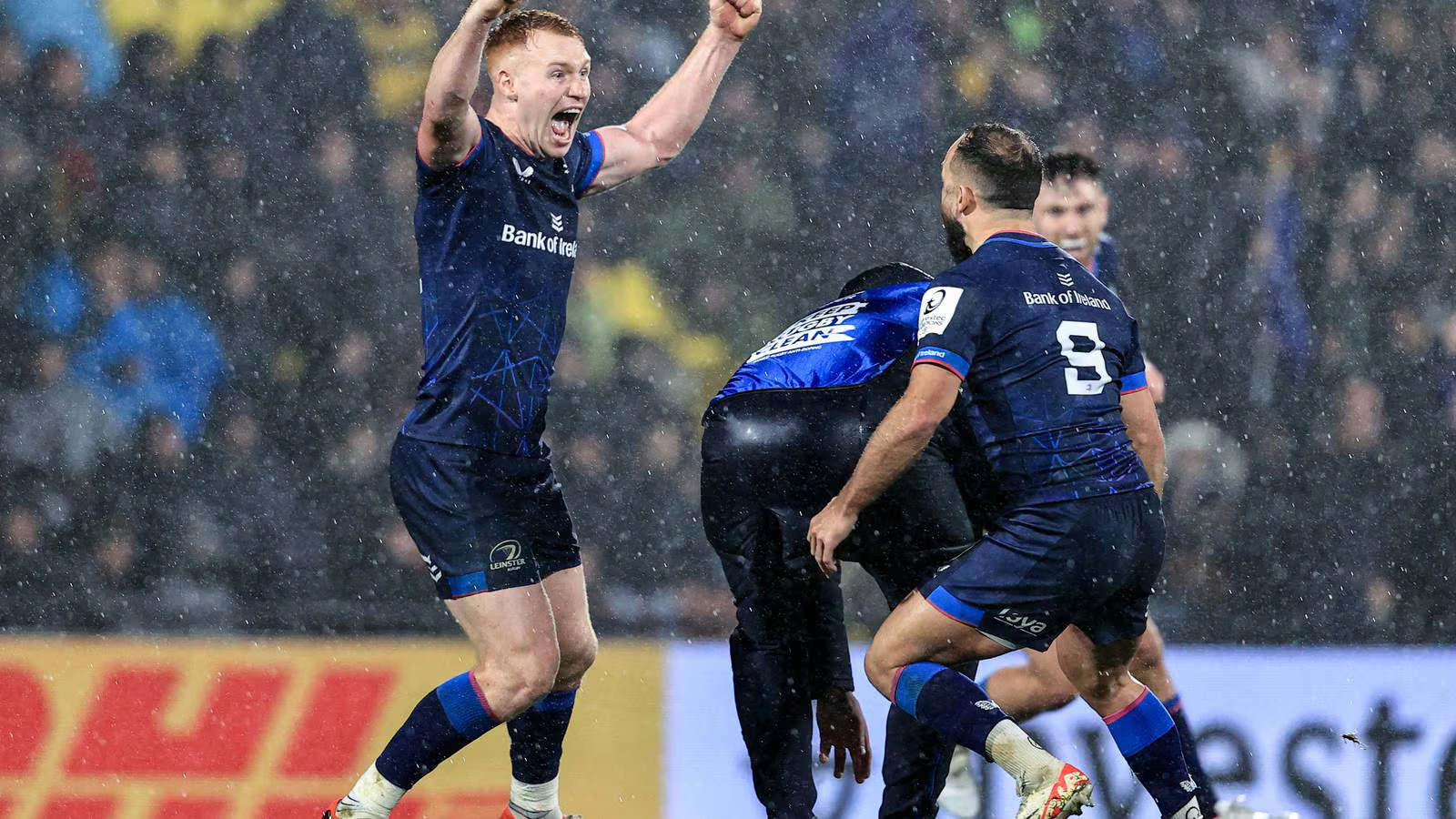
Knowing this, I decided to guess earlier in the week what changes Nienaber would insist upon for this game, given the absences Leinster have. I predicted two things; Will Connors to start in the back row and Jason Jenkins to start in the second row instead of Ross Molony.
Why would you cycle one of the highest accumulating ORW players in the game – Josh Van Der Flier – to the bench for a game like this in favour of a defence-dominant chop-and-stop specialist? Because I believe that accumulating ORW points at offensive breakdowns is not important to the game plan, stopping La Rochelle’s on-ball game is, at least for the mid-game. Neinaber teams back their defence when the going gets tough and they feel threatened physically by the opposition.
Why Jenkins ahead of Ross Molony? The scrum.
When I was researching this game, I felt that the game against Leicester Tigers was a poor example of the kind of game that Leinster and Neinaber would react to in the manner I suspected and that was, in part, because I didn’t think Leicester were a threat at the scrum. Dan Cole is a wily operator, with good technical skills, but that is meaningless against Andrew Porter, who bullies props of this profile with his power.
There is one profile of tighthead who can turn Porter into a penalty vending machine and that is the super-heavyweight, 6’4″+ power scrummaging tighthead, or Uini Atonio for short. That nightmare matchup is exacerbated by Will Skelton pushing behind him. If Leinster are going to try and off-ball La Rochelle – and I think they are – that means you take the risk of more scrums and you’ve got more scrums, you can’t afford to have your loosehead side getting crumpled. How do you mitigate that? Take your lightest lock – Ross Molony – and move him to the bench and start your heaviest lock, Jason Jenkins. You can put Jenkins behind Furlong (I wouldn’t) to give McCarthy more calories to spend on defence, or you can do what I’d do and start Jenkins on the loosehead side behind Porter to give as much pressure as possible to guard against Atonio and Skelton.
I knew that if I saw those two changes, it would make no sense for Leinster to do anything other than play off-ball rugby to start with their heaviest build before switching to a lighter, more offensive build in the last 25 minutes – something the Springboks also do with a 6/2 bench, btw.
Because Leicester were such a mid-level opponent – their midfield and front five weren’t anywhere near good enough to threaten Leinster for long – I spent my focus on the last game where I felt Leinster felt threatened physically and that was a few weeks ago against the Vodacom Bulls.
Here, you can get a great idea of how Leinster play when they are wary of the opponent’s physicality. Look at this kickplay off a lineout on the 10m line, for example. When was the last time you saw Leinster make a play like that?
It’s all about turning possession on the 10m line into defensive pressure on the opponent’s 22. This is where Leinster will use the likes of Connors, Baird, McCarthy and Doris to hem in La Rochelle and force mistakes out of them. When Leinster win penalties from these mistakes, they almost always kick to the corner and they almost always score from these opportunities.
The key is to limit your exposure to these moments, which is easier said than done when you’re playing against an off-ball team that kicks to the areas where it’s most uncomfortable. This is also why I feel Leinster selected Ross Byrne ahead of Harry Byrne, despite the drop in offensive output that brings. Ross Byrne is a more accurate and disciplined kicker of the ball and I feel this will be important for Leinster in the early and mid-game.
Leinster’s transition game, especially on the first and second phases, has to be incredibly good to ward off the immediate counter to an 0ff-ball team; kicking the ball back to them and making them play.
Leinster’s focus this season has, it seems to me, been on three things – embedding Neinaber’s defensive system, tightening up their set-piece strike plays and building on their direct transition game. I believe their phase play attack has degraded as a result.
To prevent teams from off-balling them – and forcing them to rely on a game they don’t want to play, especially with an expectant home crowd – they will look to back their transition game.
Here, Osbourne exits really long and Leinster wait to strike off a poor kick return from Goosen – it drifts onto the side where the Bulls have fewer players, and Leinster pounce immediately. Gibson-Park is an outstanding transition scrumhalf and he finds the runners who isolate the edge quickly.
This is an even better example from the first half where the Bulls kicked relentlessly and built their lead off scrum penalties – Neinaber’s worst nightmare. The Bulls exited with a box kick from a maul and, when the ball drifts infield, it gives Larmour just enough spacing to work with against a heavier defence.
That try broke the game open for Leinster but the worry would be that La Rochelle have recognised the matchup for what it is. Back in the pools, La Rochelle had so much possession but they found making ground incredibly hard to do consistently with the rain and the physicality of Leinster’s defence. As a result, they coughed up a tonne of turnovers, which helped Leinster to relieve the pressure and gain energy relentlessly.
What if Ronan O’Gara decides to off-ball Leinster? What if Hastoy and Kerr-Barlow kick contestably to the middle zone of the field and keep the ball on the tramlines so they can attack Leinster’s phase play with Botia, Aldritt, Dillane and Skelton?
That’s the big question. I think if La Rochelle do this and hem Leinster in on the first two phases of transition, La Rochelle will probably win. I think if La Rochelle – who are built to get heavier off the bench to on-ball Leinster in the last third of the game – don’t kick accurately and don’t match Leinster on transition, this probably swings Leinster’s way. Either way, it’s going to be fascinating.
As an aside, keep an eye out for a La Rochelle strike play like this that looks to target Joe McCarthy and Ryan Baird on the high blitz as it comes back in the direction of the lineout. It’ll look like Danty targeting Byrne and Osbourne on a full lineout to ensure McCarthy and Baird are on the lineout side.
Then the pass back will deliberately skim the first receiver before hitting a deeper runner.
Look at how that takes out McCarthy and opens a huge gap between his blitz and Bairds.
One to watch.
